A Tanzania safari in September lands in the best part of the dry season. Grass is short, water is scarce, and animals gather along the rivers, which makes them easier to find. In the far north of the Serengeti, the wildebeest migration is usually spread across the Mara River country, with river crossings possible on many days. This guide shows you what the month is really like, where to go and in what order, how many nights to give each park, what to book first and how to finish on the beach in Zanzibar.
A Tanzania safari in September means dry, mild weather (Arusha averages about 24 °C by day and 8 °C at night with very little rain), migration herds usually in the northern Serengeti around Kogatende and the Lamai wedge, strong dry-season game viewing in Tarangire and a cold-night crater stop at Ngorongoro. Book northern Serengeti camps first, allow at least three nights there, and keep Zanzibar for the end: September is one of its dry months too.
✅ Key takeaways
- ✓September sits in Tanzania’s June-to-October dry season, between the long rains (March to May) and the short rains (usually November and December).
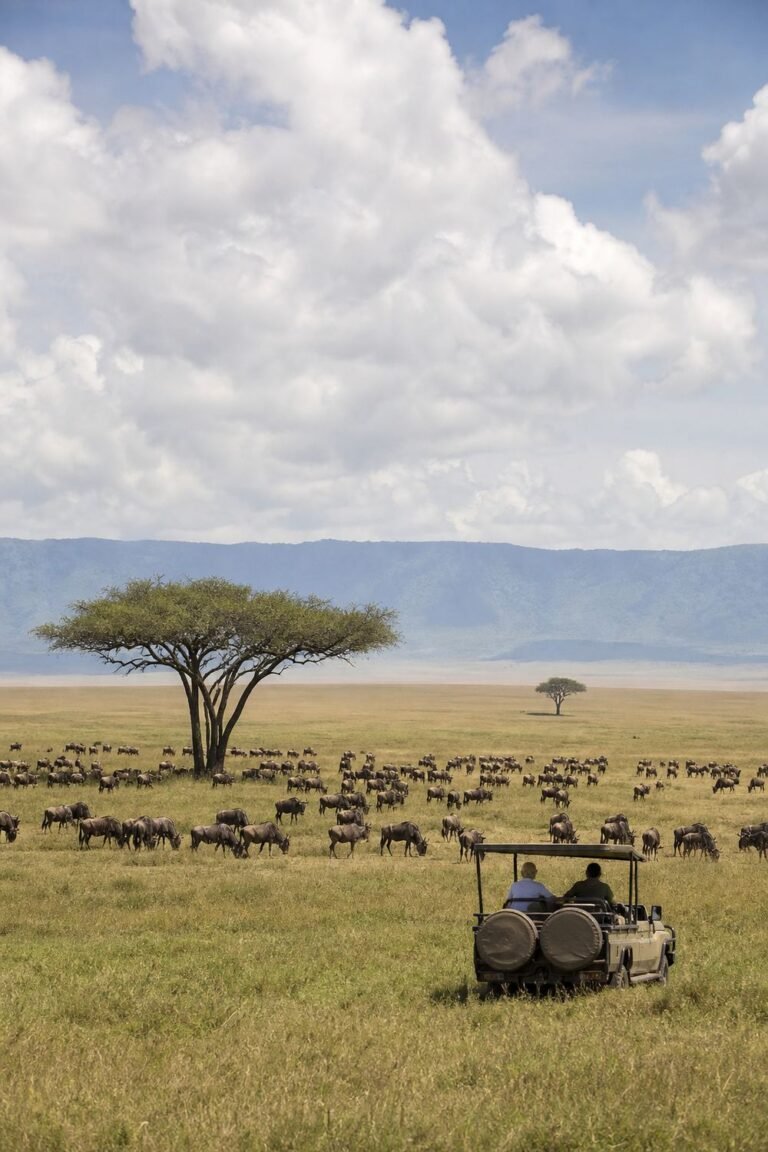
- ✓The migration herds are usually in the northern Serengeti in September; river crossings can happen on many days, but never on a timetable.
- ✓Tarangire is at its best in the dry months, when elephants and other wildlife crowd along the Tarangire River.
- ✓Ngorongoro’s crater floor sits about 1,800 m above sea level: pack a warm layer for early game drives and nights on the rim.
- ✓Zanzibar is dry in September too, which makes safari-and-beach an easy pairing.
What a Tanzania Safari in September Is Really Like
September is cool in the morning and warm by midday across the northern safari circuit. Arusha, the gateway town for most trips, averages a daytime high of about 24 °C and a night-time low of about 8 °C in September, with only around 20 mm of rain in the whole month. Compare that with April, when Arusha averages around 360 mm. That difference is why September is such a reliable month to plan around.
≈24 °C
Arusha average high in September
≈8 °C
Arusha average low: early drives are chilly
≈20 mm
September rain in Arusha
Jun–Oct
Tanzania’s main dry season

The dry season shapes everything you see. As waterholes dry out, animals move towards permanent rivers, and the bush thins out, so spotting is easier. The trade-off is dust: open-sided vehicles and gravel roads mean you will spend some hours with a scarf over your face. The Serengeti and the crater are higher and cooler than the coast, so the days that feel warm at noon start and end in a fleece.
🧰 Try it while you read: a free tool for this trip
Free trip timing tool
When to Book Calculator
Tells you how early to lock in flights and rooms for your month and country.
Loading the tool…
Where the Migration Usually Is in September
The Serengeti covers about 14,763 km² of northern Tanzania and joins Kenya’s Maasai Mara along the border. Around 1.5 million wildebeest and some 250,000 zebras move through this ecosystem in a loop that follows the rain and the grass. By the dry season they have pushed north, and they usually begin the journey south again once the rains return, from around late October.
In September, the herds are usually in the same northern areas as in August: around Kogatende and the Lamai wedge in the far north of the Serengeti, and sometimes across the border in the Mara. A specialist operator’s guide to the migration in September notes that the herds move back and forth across the Mara River rather than crossing once, so crossings can happen on many days from July to late October. It also points out that September tends to bring a few fewer vehicles than July and August, once school holidays are over.
| Area | What you can expect in September | How long to stay |
|---|---|---|
| Northern Serengeti (Kogatende, Lamai) | Migration herds, Mara River crossings possible, big cats following the herds | 3 to 4 nights |
| Central Serengeti (Seronera) | Resident wildlife and predators all year, main airstrip, busier roads | 1 to 2 nights |
| Ngorongoro Crater | Dense resident wildlife on the crater floor, small black rhino population | 1 to 2 nights on the rim |
| Tarangire | Elephants and other wildlife concentrated on the Tarangire River | 2 nights |
🗓️ Free: the 12-Month Map for Tanzania & Zanzibar
Every month on one page: best weeks, shoulder weeks and the ones to skip. Print it or keep it on your phone.
Building a 9-Day Northern Circuit for September
Many September safaris start at Kilimanjaro International Airport, about 60 km east of Arusha, and then run as a loop by road and light aircraft. Driving all the way to the far north and back is possible but takes long days, so many travellers drive the southern parks and fly between the northern Serengeti and Arusha. This sample plan puts the parks in an order that suits the month.

The Smart Timing Bundle
Pick the month, book in the right order, pack once
Six printable timing tools for any trip: the Trip Timing Planner, When to Book, When NOT to Go, the Shoulder Season Playbook, the family timing guide and the Packing by Season System.
See the bundle · $37Six products, $100 separately · Digital download · All sales final
Day 1 · Arrive in Arusha
Land at Kilimanjaro International Airport and rest near Arusha. A slow first night helps after a long flight.
Days 2–3 · Tarangire
Under two hours by paved road from Arusha. Spend two days with the elephant herds along the river, the baobabs and a bird list that runs to hundreds of species.
Days 4–5 · Ngorongoro
Drive up to the crater rim. Take an early game drive down to the floor the next morning, then continue to the Serengeti.
Day 6 · Central Serengeti
Cross the plains to Seronera for resident lions and leopards, and break the long journey north.
Days 7–9 · Northern Serengeti
Three nights near Kogatende or Lamai for the herds and the Mara River. Fly back to Arusha at the end, or continue to Zanzibar.
Travelling as a family? Our guide to safaris with kids in September compares easier, malaria-free options elsewhere in Africa with the longer East African circuit.
When to Go: Tanzania & Zanzibar
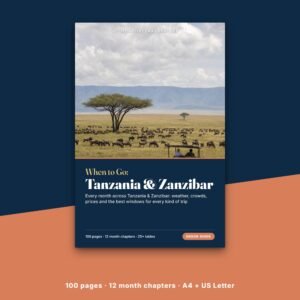
Still choosing between September and another month? This guide takes you through Tanzania and Zanzibar month by month, with the rains, the migration’s usual position, crowds and beach weather, so you choose the weeks that match the safari you want. About 100 pages.
See When to Go: Tanzania & Zanzibar · $19 →Digital download · All sales final
Ngorongoro and Tarangire in the Dry Season
Ngorongoro Crater
The crater floor covers about 260 km², sits about 610 m below the rim and lies around 1,800 m above sea level. Roughly 25,000 large animals live inside it, many of them resident, although some of the wildebeest and zebra leave in the wet season. That makes it one of the most reliable places in Tanzania to see lions, buffalo and, with luck, one of the crater’s small number of black rhinos.
The number of vehicles allowed in the crater at one time is capped, which is one reason to go down early. The other is the light: mornings at the rim are cold and clear in September, and the floor fills with vehicles by late morning.
Tarangire National Park
Tarangire is named after the river that runs through it, and in the dry season that river is the main source of fresh water for wildlife across the wider area. Tanzania National Parks describes it as having a higher density of elephants than any other national park in the country, with around 550 bird species recorded. It lies about 120 km south-west of Arusha. Thousands of animals gather here between June and November, so September is right in its best window.
Planning a trip in another month instead? Compare the calving season in the south with our guide to a safari in Africa in January, or see what changes in the following month with our wildlife safaris in October.
A Quieter Alternative: Ruaha in September
If the northern circuit feels too busy, Ruaha in southern Tanzania is the big alternative. It covers about 20,226 km², lies about 130 km west of Iringa and is served by two airstrips. From May to October it is hot and dry, with daytime highs that can reach 35 °C, and game viewing focuses on the shrinking Great Ruaha River. Lions, leopards, cheetahs and African wild dogs are all part of its wildlife list.
Ruaha does not have the migration, and it is hotter than the north. In exchange you get fewer vehicles, wilder country and a different style of safari. It works well as a second safari for people who have already seen the Serengeti, or as a quieter first trip for those who care more about space than about river crossings.
What to Book First (and What Can Wait)
September is a popular month, so the order you book in matters more than the exact price you pay.
| Booking | When | Why |
|---|---|---|
| Northern Serengeti camp | First | The closest camps to the Mara River fill first for September |
| Light-aircraft flights | With the camp | Seats on small planes are limited and tied to camp locations |
| International flights | Once camps are confirmed | Build the trip around the safari dates, not the other way round |
| Ngorongoro and Tarangire lodges | Next | More choice, but crater-rim rooms are limited |
| Zanzibar hotel | Last | More options; pick an east or north coast hotel to suit your style |
| Medical advice and vaccinations | Early | Ask a travel clinic about malaria and vaccinations well before you go |
Our packing tips for adventure travel in September cover the layers and dust protection a September safari needs.

The complete kit
Every country guide, every timing tool
All 24 When to Go country guides, the six Smart Timing tools and every 12-Month Map, with a Start Here that tells you what to open first.
See the kit · $127The five bundles cost $225 separately · Digital download · All sales final
Adding Zanzibar After Your Safari
Zanzibar is the natural ending for a northern safari, and September suits it well. Zanzibar City averages about 30 °C by day and 21 °C at night in September, with around five days of meaningful rain in the month. The island’s long dry period runs from June to October, before the smaller rains of November and December.
Our guide on how to get to Zanzibar covers the transfer options, the best time to visit Zanzibar explains its seasons in detail, and our Zanzibar itinerary shows how to split a few days between Stone Town and the beaches.
In September, Tanzania gives you dry trails, gathered herds and a beach waiting at the end. Book the north first.
When Not to Go on a Tanzania Safari
September is one of the safest months to choose, but these are the periods to think twice about, and why:
- April and May (the long rains): the heaviest, most reliable rain of the year. Roads turn muddy and the bush grows thick and green. Arusha averages around 360 mm in April alone.
- November and December (the short rains): usually lighter and shorter, but enough to change road conditions and shift the herds south.
- July and August, if you dislike crowds: the herds are in the north and the weather is dry, but school holidays bring more vehicles to the Mara River.
- Late October, if crossings are your only goal: the herds can start moving south once the rains return, so September is the safer bet for the Mara River.
Weighing your own dates? You can check whether your month is a bad one with our free tool, or read the When Not to Go hub for the main storm, heat and crowd seasons worldwide.
5 September Safari Mistakes to Avoid
1. Giving the north only one night
Crossings happen when the herds decide. One night is a gamble; three or four turn it into a real chance.
2. Packing for heat only
Early game drives in open vehicles are cold, and the crater rim is colder still. A fleece, a hat and a light down jacket earn their place.
3. Driving every leg
The far north is a long way from Arusha by road. A flight back saves a full day of dust and bumps for more time with the animals.
4. Skipping Tarangire
Many trips rush through it on the way to the Serengeti. In September it is one of the best parks in the country for elephants.
5. Booking hard bags
Small planes can have tight luggage rules. Ask your operator about bag type and weight before you buy luggage.
Tanzania Safari in September: Your Questions Answered
A Tanzania safari in September rewards early booking and a slow pace in the north. For more ideas, browse our best travel destinations in September, more Tanzania travel guides, other warm places to go in September, or plan any other month from the month-by-month travel planner.
Free download
See the whole year before you book
Our free 12-Month Map puts every month for one country on four pages: when the weather works, when the crowds and prices peak, and the weeks to skip.
- 24 countries to choose from
- Region-by-region verdicts
- Printable PDF
Your download page opens as soon as you sign up. 24 countries available.