Everyone assumes the northern lights are a deep-winter show — parkas, frozen eyelashes, minus twenty. So every September, while the aurora dances over ice-free lakes in twelve-degree weather, most travelers aren’t even looking up. Seeing the northern lights in September is not just possible; statistically, it’s one of the smartest months of the entire season to try. This guide explains the science behind the autumn aurora advantage, the best places to go, and how to plan a trip that doesn’t require surviving an Arctic winter.
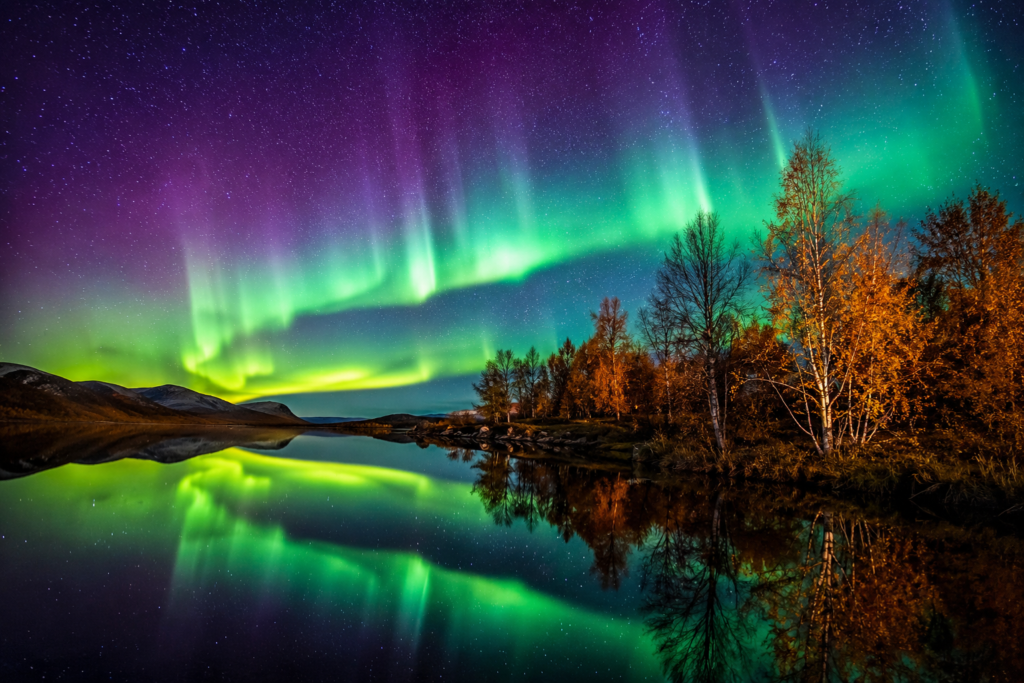
The short answer: Yes — you can absolutely see the northern lights in September. Dark nights return to the Arctic in late August, and geomagnetic activity statistically peaks around the September equinox, producing some of the strongest displays of the year. Bonus: temperatures are mild, roads are ice-free, and unfrozen lakes double the aurora with mirror reflections. The viewing window runs roughly 10 PM to 2 AM under clear, dark skies.
Key Takeaways
- Aurora season restarts in late August the moment true darkness returns to the Arctic — September is a full, legitimate aurora month.
- The equinox effect is real: geomagnetic storms occur more frequently around the September and March equinoxes than in midwinter.
- September offers what winter can’t: unfrozen lakes reflecting the aurora, autumn colors by day, and temperatures around 0–12°C instead of −25°C.
- Top September destinations: Tromsø and Senja (Norway), Abisko (Sweden), Finnish Lapland, Iceland, Yellowknife (Canada), Fairbanks (Alaska), and Greenland.
- Flights and lodging cost significantly less than in December–February, and rental-car road trips are safe without winter driving skills.
- You still need the same three ingredients as winter: darkness, clear skies, and patience — plan at least 3–4 nights to beat the weather odds.
Can You See the Northern Lights in September? Yes — Here’s the Science
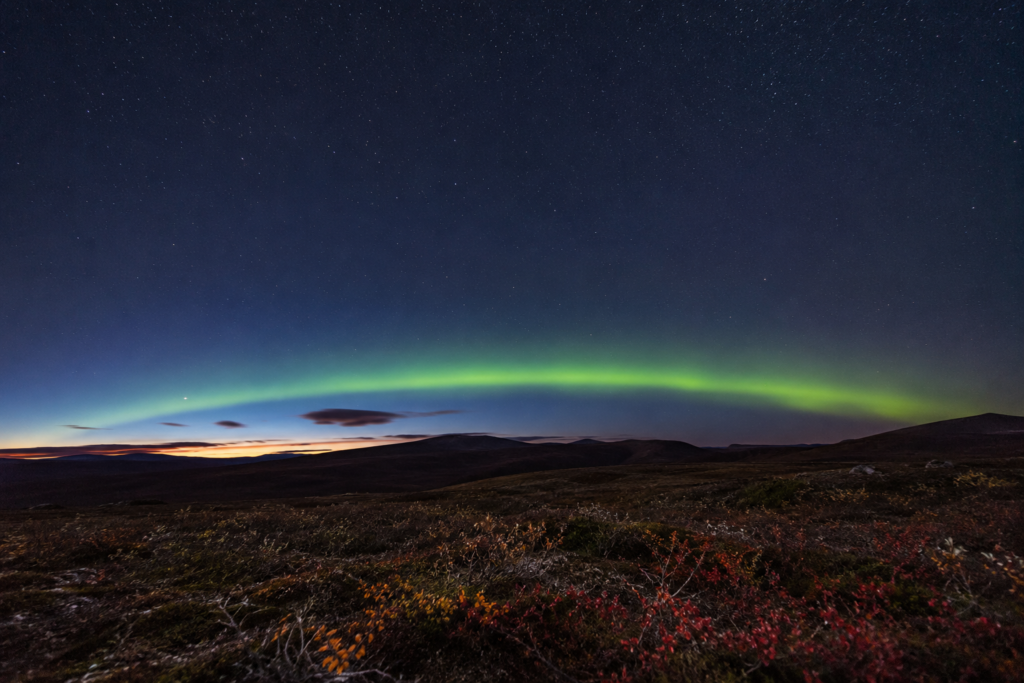
This section clears up the single biggest misconception in aurora travel: that the lights are a winter phenomenon.

A hundred pages on timing one country properly — six regions, twelve months, and the weeks that go wrong.
The aurora borealis has nothing to do with cold. It happens when charged particles from the sun collide with gases in Earth’s upper atmosphere, roughly 100–300 kilometers up — a process running year-round, twenty-four hours a day. The only reason nobody sees auroras in June is the midnight sun: Arctic summer skies never get dark enough. The lights are there; the backdrop isn’t.
That changes in late August. Night returns to the auroral zone — the ring of latitude roughly between 65° and 72° north — and by early September, high-latitude destinations get five to seven hours of genuine darkness. That’s a wide-open viewing window from about 10 PM to 2 AM, which is exactly when auroral activity tends to peak locally anyway.
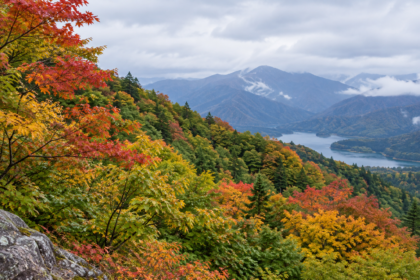
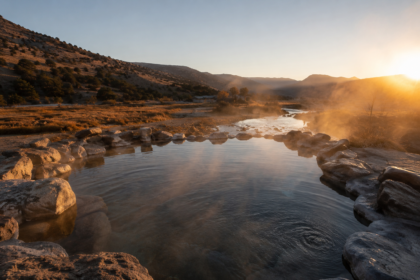

Then comes the part that surprises people. Scientists have documented for over a century that geomagnetic disturbances — the storms that produce strong auroras — occur more often around the equinoxes than at any other time of year. The leading explanation, known as the Russell-McPherron effect, comes down to geometry: around late September and late March, the tilt of Earth’s magnetic field aligns more favorably with the solar wind, letting more solar energy pour into the atmosphere. In plain terms: the door between the sun and Earth’s magnetic field opens wider in September. The same equinox physics powers the spring window we covered in our guide to the best places to see the northern lights in March — September is its autumn twin.
Why September Is Secretly One of the Best Aurora Months
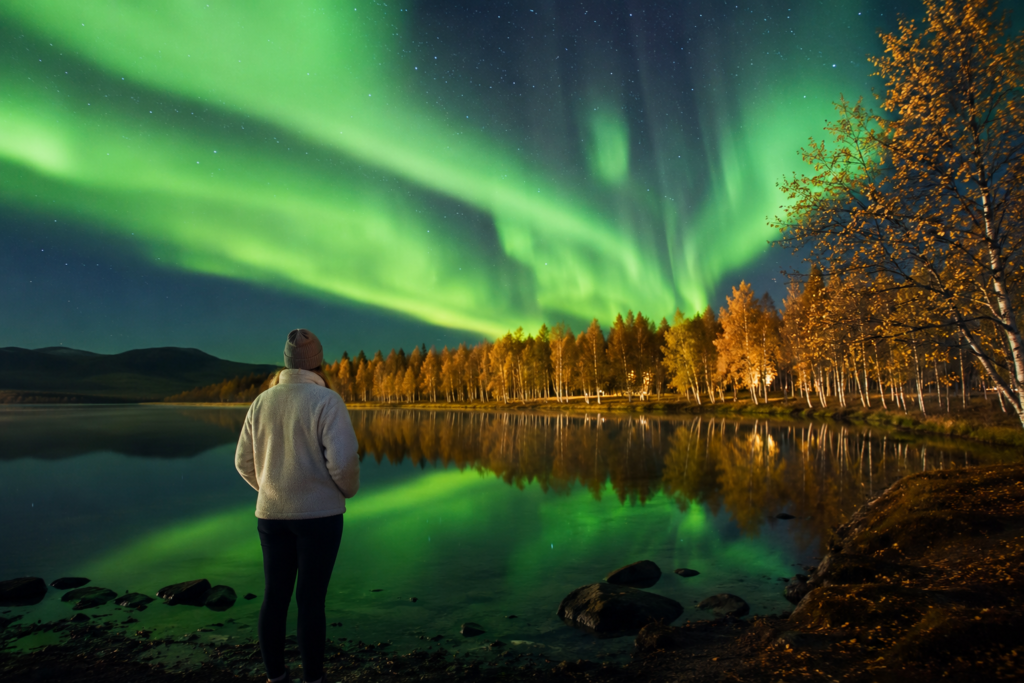
This section lays out what September gives you that the famous winter months can’t — because the equinox boost is only half the story.
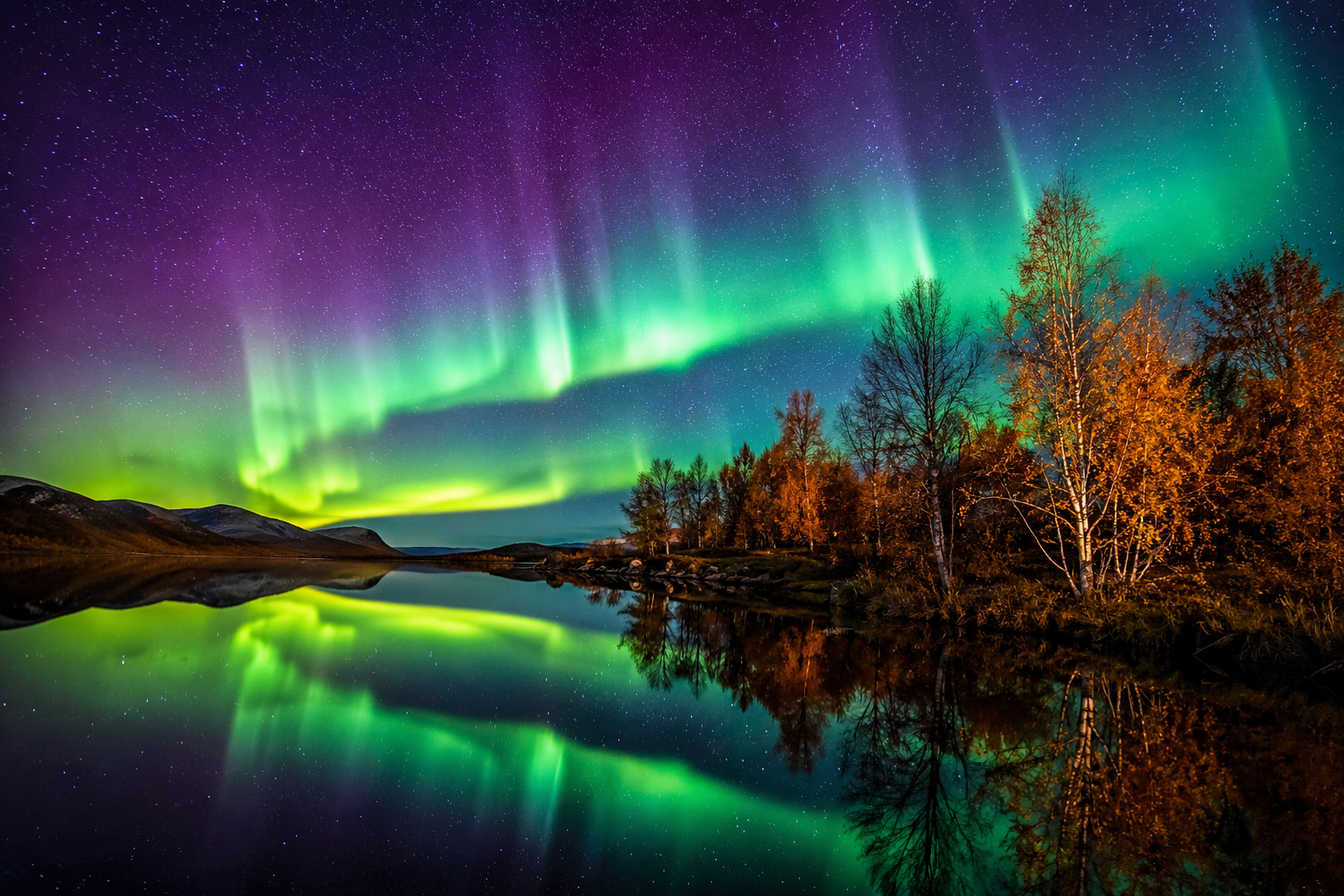
The lake reflections. This is the photographer’s secret. In deep winter, every lake in the auroral zone is frozen and snow-covered. In September, water is still open — and a strong aurora over a calm Arctic lake produces a mirrored double display that winter physically cannot offer. Some of the most striking aurora photographs ever taken are September shots for exactly this reason.
The weather is humane. Expect roughly 0–12°C across the Nordic auroral zone in September. You can stand outside watching the sky for two hours in a fleece and a rain shell instead of rotating in and out of a heated cabin every fifteen minutes. Aurora watching is a waiting game; comfort directly increases your odds, because comfortable people stay out longer.
The roads are open and ice-free. Winter aurora trips in Norway, Iceland, or Finland often mean icy-road driving or expensive guided minibus chases. In September, an ordinary rental car and an ordinary driver can chase clear skies safely — which matters, because mobility is the number-one skill of successful aurora hunters.
Daytime is spectacular too. Mid-September is peak autumn color in the Arctic — the season Finns call ruska, when birch forests and tundra turn gold, orange, and crimson. Your days fill with hiking, fjords, and fall landscapes; your nights fill with the aurora. In February, your days fill with four hours of blue twilight.
It’s cheaper. September sits in the shoulder season across the entire auroral zone — after summer crowds, before the winter aurora-tourism machine switches on. Flights, cabins, and cars all run meaningfully below December–March prices, which makes this one of the rare bucket-tier experiences that rewards the strategies in our budget travel playbook. It’s also why the far north keeps earning a place among the best travel destinations in September.
Where to See the Northern Lights in September: The Best Places
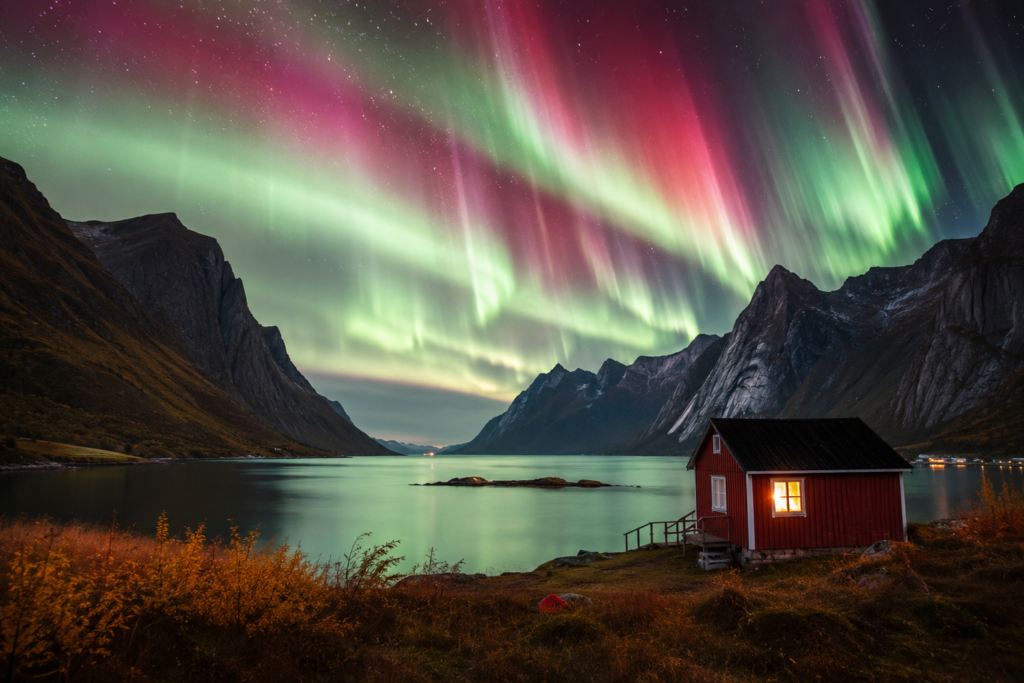
This section ranks the destinations that work best specifically in September — because autumn changes the usual winter hierarchy.
| Destination | Why it works in September | Best for |
|---|---|---|
| Tromsø & Senja, Norway | Reliable latitude (69°N), fjord scenery, mild coastal temps, easy flights | First-timers who want infrastructure |
| Abisko, Sweden | Famous rain-shadow microclimate — the clearest skies in the auroral zone | Maximizing odds above all else |
| Finnish Lapland | Peak ruska autumn colors, lake reflections, quiet cabins | Scenery + aurora combination |
| Iceland | Whole-country road trip weather, waterfalls by day, aurora by night | Road trippers and photographers |
| Yellowknife, Canada | Flat horizons, statistically superb clear-sky rates, hundreds of lakes for reflections | Serious aurora hunters |
| Fairbanks, Alaska | Season starts late August; dry interior climate; strong viewing culture | North American travelers avoiding long-haul flights |
| Greenland | Exceptionally clear inland skies and near-zero light pollution | Remote-adventure travelers |
Two honest notes on this list. First, coastal Norway is beautiful but cloudier than inland spots — if you go, build in mobility to drive inland when the forecast turns. Second, Iceland’s September weather is genuinely changeable; its advantage isn’t clear-sky statistics but the fact that an aurora miss still leaves you with one of the world’s great road trips. Wherever you choose, the aurora belongs on the same planning shelf as any other nature travel phenomenon with a hard season — the sky keeps a calendar, and late August opens it, right as the August wildlife and nature season hands over to autumn.
September vs Winter Aurora Trips: The Honest Trade-Offs
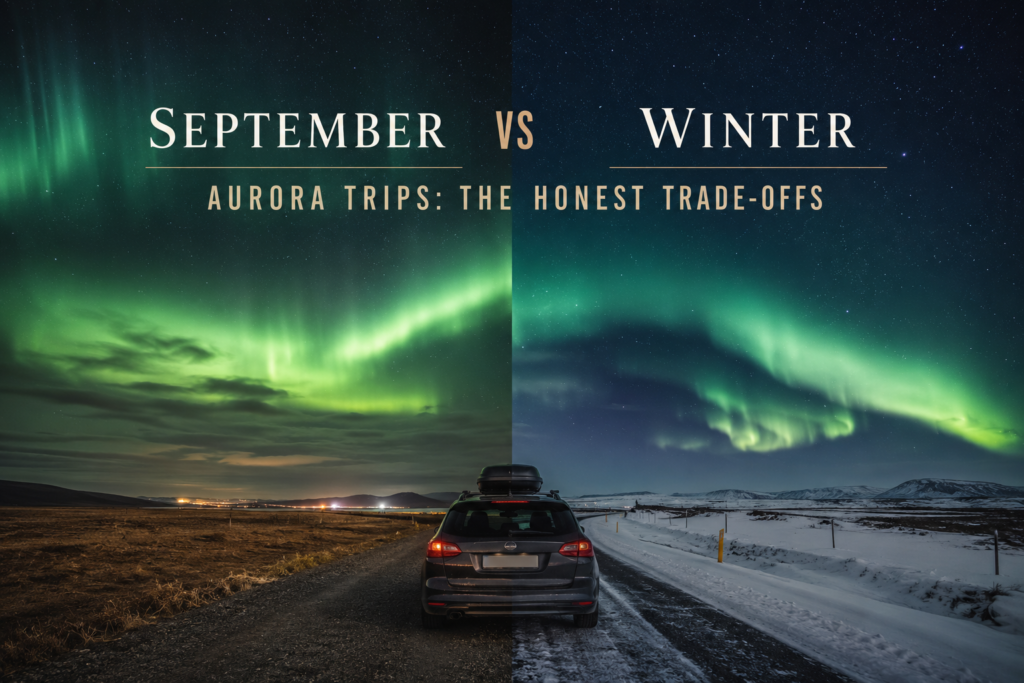
This section gives you the fair comparison, because September is underrated — not flawless.
What winter does better: longer nights. By December, the auroral zone offers 18+ hours of darkness versus September’s five to seven, so a strong display at 4 AM or 8 PM is catchable in winter and invisible in September’s twilight. Winter also delivers the classic postcard: aurora over snow, huskies, ice hotels. If your dream is specifically green light on white snow, September can’t paint that picture.
What September does better: everything else. Equinox-boosted activity, humane temperatures, open roads, lake reflections, autumn color, lower prices, and thinner crowds. The five-to-seven-hour dark window sounds short until you remember it covers 10 PM to 2 AM — the statistical sweet spot for auroral substorms anyway. Most winter sightings happen inside that same window; winter’s extra darkness mostly adds hours when you’d be asleep.
The cloud factor is a wash. September brings autumn rain fronts; winter brings snow fronts. Neither season owns clear skies — which is why destination microclimates (Abisko’s rain shadow, Yellowknife’s dry interior) matter more than the month, and why every serious aurora trip needs length and mobility regardless of season.
How to Plan a September Aurora Trip
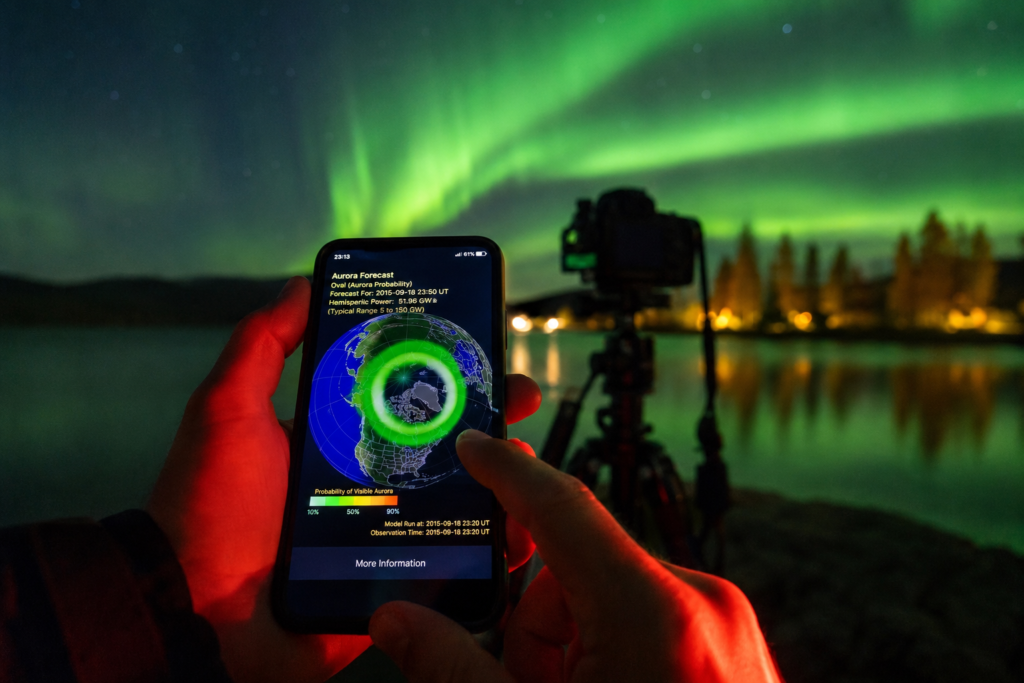
This section turns the theory into a working plan — the tools, timing, and setup that raise your odds from hopeful to likely.
Pick your dates around the new moon. A bright full moon washes out faint auroras. Check a moon calendar and aim your trip at the darker half of the lunar cycle; mid-to-late September also adds a few more minutes of darkness per night and sits closest to the equinox activity peak.
Learn to read the forecast — it takes ten minutes. Two numbers matter: the KP index (a 0–9 scale of geomagnetic activity; at 69°N latitude, even KP 2–3 produces overhead displays) and local cloud cover. NOAA’s Space Weather Prediction Center publishes a rolling 30-minute aurora forecast, and any weather app handles the clouds. The winning move most nights is simple: drive to where the cloud map is clear.
Stay somewhere dark, or keep a car. Light pollution kills faint displays. Book a cabin outside town, or keep a rental car so town-based stays can escape the streetlights in twenty minutes. In September this is trivially easy — no ice, no winter tires, no drama, though multi-stop Arctic logistics still deserve the same care as any itinerary, as we cover in our guide to navigating travel booking and planning.
Set a sky-watching rhythm. Check the sky (or an aurora alert app) every 20–30 minutes between 10 PM and 2 AM. Displays often build in waves: a faint grey-green arc on the northern horizon can erupt into a full-sky storm within minutes, then fade, then return an hour later. The travelers who quit at midnight miss a remarkable share of the season’s best shows. If you’re crossing many time zones to get there, land a day early and use our jet lag adjustment tactics — a 1 AM aurora is wasted on someone whose body thinks it’s 7 PM and shutting down.
Pack for autumn, shoot for night. Layers, waterproof shell, warm hat, headlamp with a red-light mode. For photos: any camera with manual mode on a tripod — start around ISO 1600–3200, f/2.8 or your widest aperture, 5–10 second exposures — and know that modern phones’ night modes now capture respectable auroras braced on a rock.
National tourism boards publish solid destination-level aurora guidance — Norway’s official portal at visitnorway.com is a good example — but always pair their optimism with the NOAA forecast on the night.
Common Mistakes That Ruin September Aurora Trips
These are the errors that catch travelers who did their research — not the beginners.
1. Going in early September at lower latitudes. Darkness returns to 69°N by late August, but at 64–65°N (Reykjavik, Fairbanks), the first week of September is still twilight-bright late into the evening. If you’re traveling in the first ten days of the month, go far north; if you’re going to Iceland or southern Lapland, favor mid-to-late September.
2. Booking a single “aurora tour” and calling it a plan. A guided chase is one night’s weather bet. Guides add local knowledge, not clear skies. Structure the trip so you have three or four self-directed nights, and add a guided night as a bonus — not the foundation.
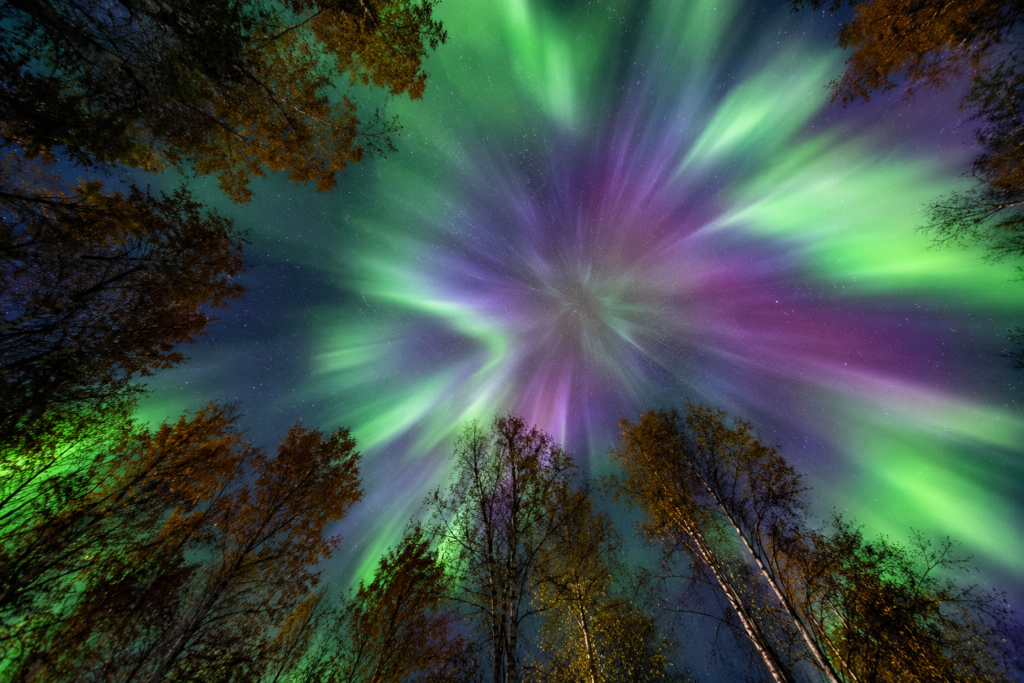
3. Staring only at the northern horizon. During strong equinox displays, the aurora forms overhead and even to the south. Watchers fixated northward regularly miss the corona — the crown-like burst directly above — which is the single most spectacular thing the night sky does.
4. Trusting the KP index as a yes/no switch. KP is a global average, updated in coarse steps. Local substorms erupt at “boring” KP 2 all the time in the auroral zone. Low KP means check the sky anyway; it does not mean stay inside.
5. Filling daytime so full that nights collapse. September’s gorgeous days seduce people into ten-hour hikes — then they sleep through a 1 AM display. Aurora trips run on a night-shift rhythm: slow mornings, afternoon activity, evening nap, night watch. Protect the night.
FAQ
Is September a good month to see the northern lights?
Yes — one of the best. Dark skies return to the Arctic in late August, and geomagnetic activity statistically peaks around the September equinox, producing some of the strongest displays of the year. You also get mild temperatures, ice-free roads, autumn colors, and aurora reflections in unfrozen lakes — advantages winter can’t match.
What time do the northern lights appear in September?
The prime window is roughly 10 PM to 2 AM local time, once the sky reaches full darkness. Activity often comes in waves, so check the sky every 20–30 minutes rather than giving up after one quiet hour. Mid-to-late September offers slightly longer darkness than the start of the month.
Where is the best place to see the northern lights in September?
Tromsø and Senja in Norway, Abisko in Sweden, Finnish Lapland, Iceland, Yellowknife in Canada, Fairbanks in Alaska, and Greenland all deliver in September. Abisko and Yellowknife have the best clear-sky statistics; Finnish Lapland pairs the aurora with peak autumn colors; Iceland suits road trippers who want a great trip even on cloudy nights.
How cold is it during September aurora trips?
Mild by Arctic standards: typically 0–12°C (32–54°F) across the Nordic auroral zone, dropping toward freezing at night later in the month. A warm base layer, fleece, waterproof shell, hat, and gloves are enough for hours of comfortable sky watching — no expedition-grade winter gear required.
Can you see the northern lights in September in Iceland?
Yes. Iceland’s aurora season runs from late August, and September is a popular month because roads are still easy to drive and days are full of waterfalls and highlands. Skies are changeable, so build in several nights and be ready to drive toward clear weather — mobility matters more in Iceland than anywhere.
Do you need a tour to see the northern lights in September?
No. With a rental car, a dark location, NOAA’s aurora forecast, and a cloud map, independent travelers see the lights constantly in September — ice-free roads make self-driving easy. Tours add local sky knowledge and photography help, so they’re a worthwhile bonus night, but they’re not a requirement.
The Bottom Line
The northern lights in September are the aurora world’s best-kept open secret: equinox-boosted activity, mirror-lake reflections, golden autumn days, and none of winter’s brutal cold or prices. Go far north, stay three or four nights, chase clear skies instead of high KP numbers, and protect the 10 PM–2 AM window. Timing calls like this — knowing which month quietly beats the famous one — are exactly what our When To Go: The Travel Timing Atlas scores for 50 countries, and the aurora’s answer is already written in the geometry of the equinox: while everyone else waits for winter, September watchers are already standing under the lights.

The Modern Traveler's Starter Kit
The best chapter from each of our three travel books — one free PDF:
- The first-5-minutes protocol for any travel emergency
- A full country timing scorecard, every month scored
- 5 AI prompts that turn ChatGPT into a travel agent
No spam. Instant download. Unsubscribe anytime.