You searched this because you’ve decided August is your window and now you need the truth about where the wildebeest actually cross — not a recycled brochure. Most articles tell you the herds are “in the Mara” and leave it there, which is useless when crossing points sit hundreds of kilometers apart across two countries. This guide tells you exactly where the action concentrates during the Great Migration August peak, what it costs in 2026, and how to plan a trip that doesn’t end with you staring at an empty riverbank. By the end you’ll know whether to point your safari at Tanzania, Kenya, or both.
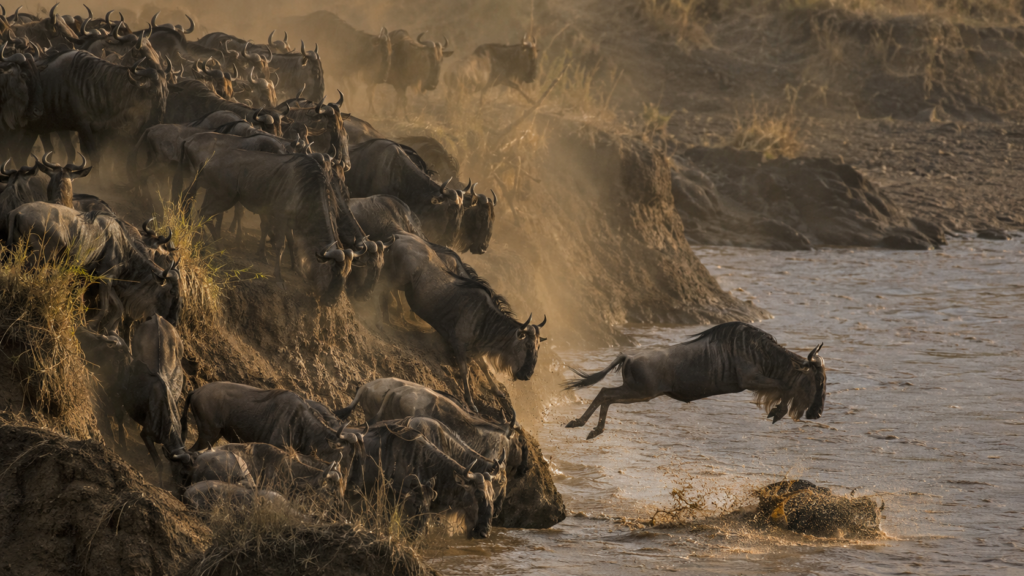
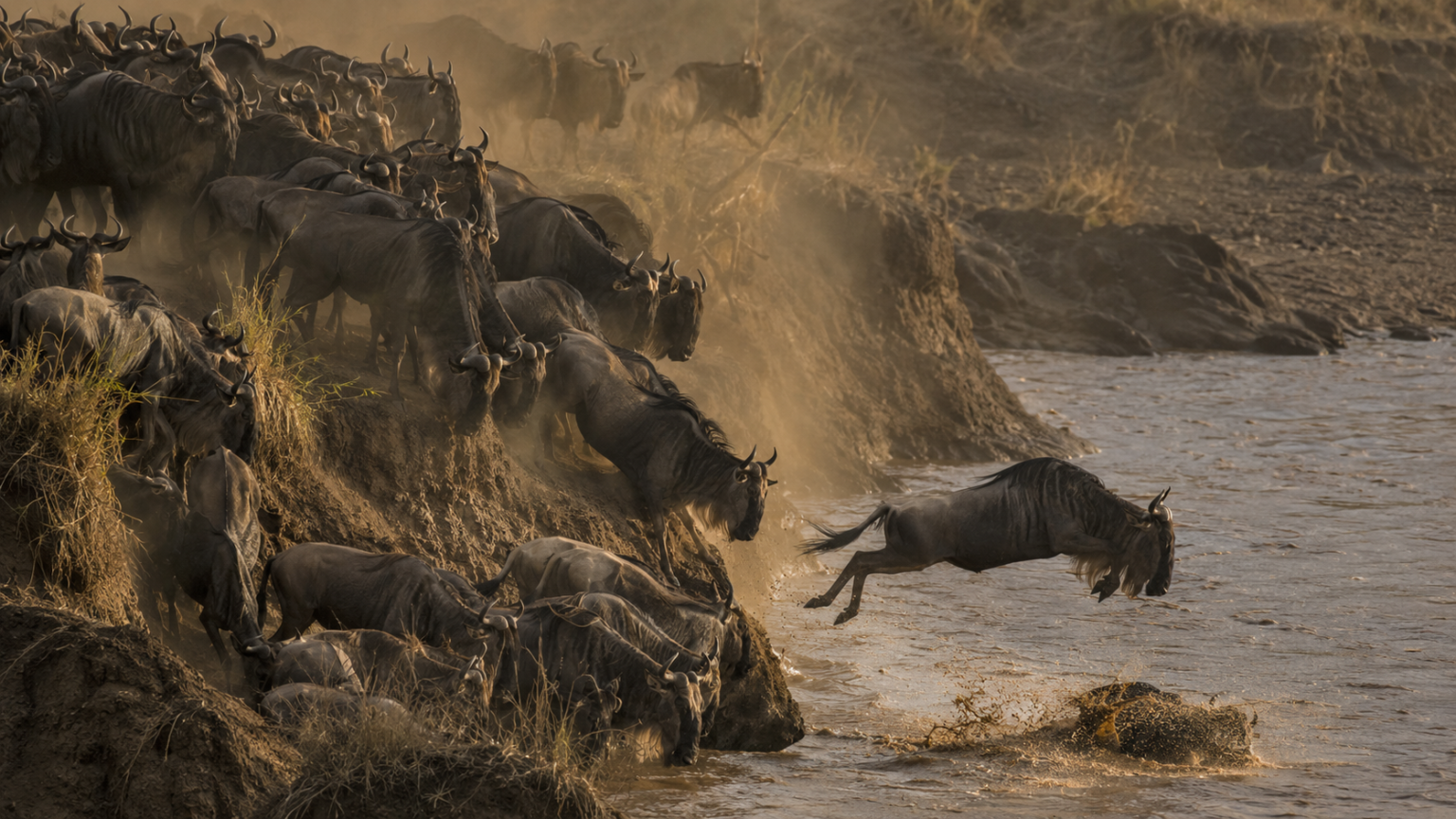
August is the single best month to witness the Mara River crossings of the Great Migration. The herds — roughly 1.5 million wildebeest plus several hundred thousand zebra and gazelle — are massed across the northern Serengeti in Tanzania and the Maasai Mara in Kenya, where they plunge down steep banks into crocodile-filled water. Crossings happen on both sides of the border in August, peak around the middle of the month, and can’t be scheduled. Plan six to seven days near a known crossing point to give yourself real odds.
Key takeaways
- August offers the highest probability of seeing a Mara River crossing, but it also brings the heaviest crowds and the steepest park fees of the year.
- The crossings split across two countries: the Kogatende and Lamai areas of Tanzania’s northern Serengeti, and the Mara Triangle and reserve on Kenya’s side.
- A non-resident adult pays USD 200 per day to enter the Maasai Mara in August versus roughly USD 70 for the Serengeti — a gap that should shape your itinerary, not just your budget.
- Crossings follow rain and instinct, never a calendar, so a two-day trip is a gamble while six to seven days on the ground turns the odds in your favor.
- Staying in a private conservancy bordering the Maasai Mara costs more per night but buys off-road driving, night drives, and far fewer vehicles at the riverbank.
- September delivers nearly the same crossing odds with thinner crowds — worth weighing if your dates have any flex.
What the Great Migration August crossings actually are
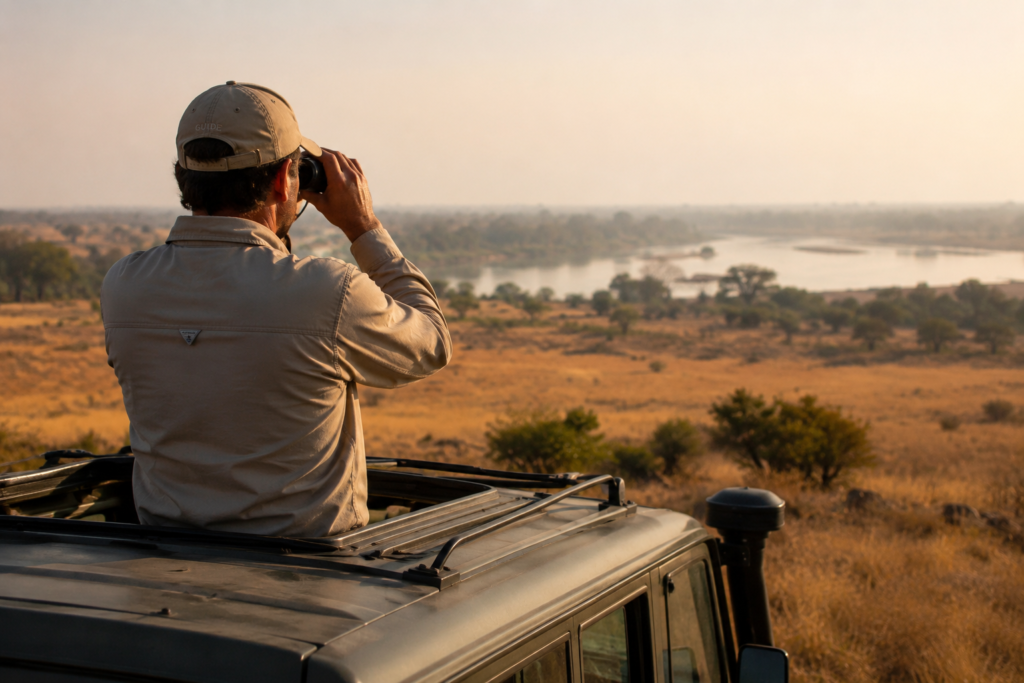
This section explains what you’re actually watching in August and why this month, specifically, draws every safari camera on the continent. The Great Migration is not a single event with a start whistle. It’s a year-round, roughly 800-kilometer clockwise loop that around two million animals walk through the Serengeti–Mara ecosystem, chasing fresh grazing and water that the rains keep moving. The cast is mostly wildebeest — about 1.5 million of them — joined by an estimated 250,000 to 400,000 zebra and several hundred thousand Thomson’s and Grant’s gazelle. You can read the full biology of the wildebeest and its annual circuit on Wikipedia’s wildebeest entry if you want the species-level detail.
Morocco runs on six clocks, not one. The full guide works each region out separately, then shows you where the answers overlap.
Read what's inside
What makes August the headline month is geography meeting water. By late July the leading herds have pushed north and reached the Mara River, the natural barrier between Tanzania’s northern Serengeti and Kenya’s Maasai Mara. Cross they must, because the greener grazing sits on the far bank. The river holds an estimated 3,000 Nile crocodiles, some of them four meters long, that wait for exactly this. The result is the scene you’ve seen in documentaries: thousands of animals bunching, hesitating, then pouring off a cliff into the current in a panic of dust and noise.
A point most guides won’t volunteer: the crossing is dangerous, but the river isn’t the main killer. Of the roughly 250,000 wildebeest that die over the full annual circuit, crocodiles account for only about 3,000. The rest go to exhaustion, thirst, predators, and the sheer brutality of the walk. The drama at the bank is real, but it’s a small, concentrated slice of a much larger attrition. Knowing that helps you set expectations — you’re there for a few violent minutes that may or may not happen on any given morning, not a guaranteed daily show.
For contrast, the same herds produce a completely different spectacle in February, when around 500,000 calves are born in a three-week window down in the southern Serengeti. That’s the calving season. August is its mirror image: the survivors of that birth pulse, now grown, facing the toughest obstacle of their year.
Where the river crossings actually happen
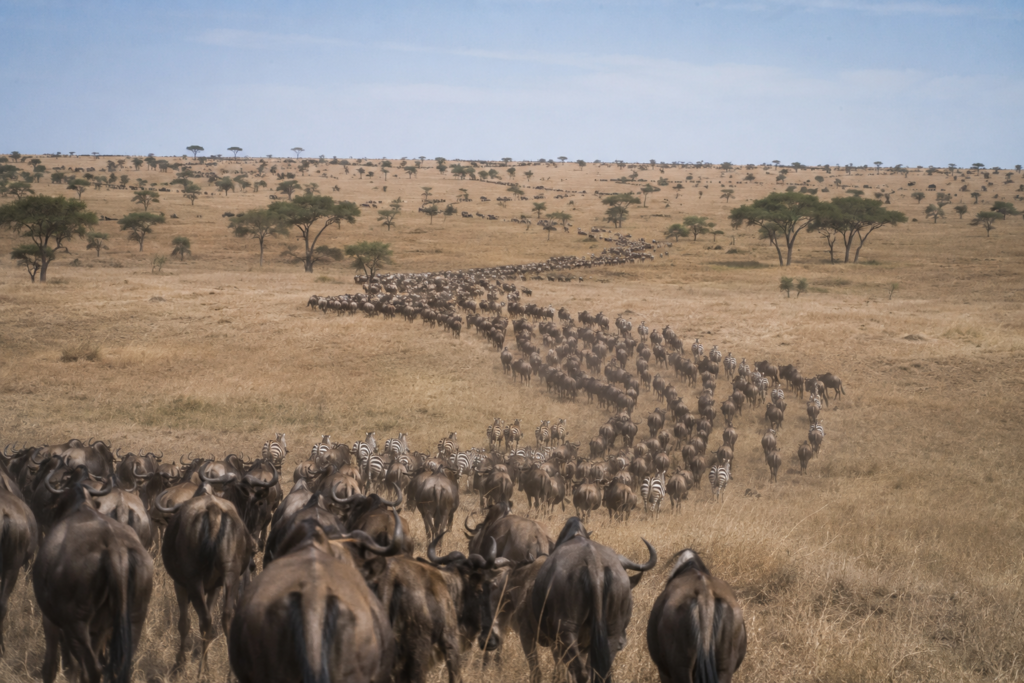
This section answers the question that sends most people to this page: which specific places to point your safari at in August. The crossings concentrate in two zones on either side of the Tanzania–Kenya border, and choosing between them shapes everything from your visa to your budget.
On the Tanzanian side, the action sits in the far north of the Serengeti, around Kogatende and the Lamai Wedge (also called the Lamai Triangle). This is where the herds first hit the Mara River. Camps here are smaller and fewer, the vehicle density is lower, and you’re often watching crossings with a handful of other vehicles rather than a queue. The trade-off is access: getting to Kogatende usually means a light-aircraft flight from the central Serengeti, which adds cost and a travel day.
On the Kenyan side, the crossings happen inside the Maasai Mara National Reserve, with the western Mara Triangle (managed separately as a conservancy-style zone) being the prized real estate. Guides work named crossing points — places like Paradise Crossing with its three-to-four-meter cliffs, and the grimly named “Mortuary” with its deep water and heavy crocodile presence. Lookout Hill is a classic vantage where guides watch herd behavior to predict whether a crossing is brewing. The Kenyan side is more accessible and has more lodges, which is both its convenience and its curse: more beds means more vehicles at the river.
A planning truth worth stating plainly: roughly half the herd typically stays on the Tanzanian side even at the August peak, and smaller groups cross the Mara River back and forth, sometimes several times a day, for no obvious reason. So “the herds have gone to Kenya” is a myth. Both countries deliver in August.
| Northern Serengeti (Tanzania) | Maasai Mara (Kenya) | |
|---|---|---|
| Key crossing zones | Kogatende, Lamai Wedge | Mara Triangle, main reserve |
| Crowds at the river | Lighter | Heaviest in Africa during peak |
| Non-resident park fee (Aug) | ~USD 70/day, 24-hour | USD 200/day, 12-hour ticket |
| Access | Light-aircraft flight, extra travel day | Easier road and air access, more lodges |
| Off-road & night drives | Not permitted in the park | Permitted in private conservancies only |
| Best for | Fewer vehicles, wilder feel | Convenience, more crossing-point options |
If your priority is the scene with the fewest other humans in it, lean Tanzania. If it’s logistical ease and the widest menu of crossing points, lean Kenya — but book a conservancy, not the public reserve. For the deepest comparison, our country guides for Tanzania and Kenya break down the rest of each itinerary beyond the migration.
What August looks like on the ground
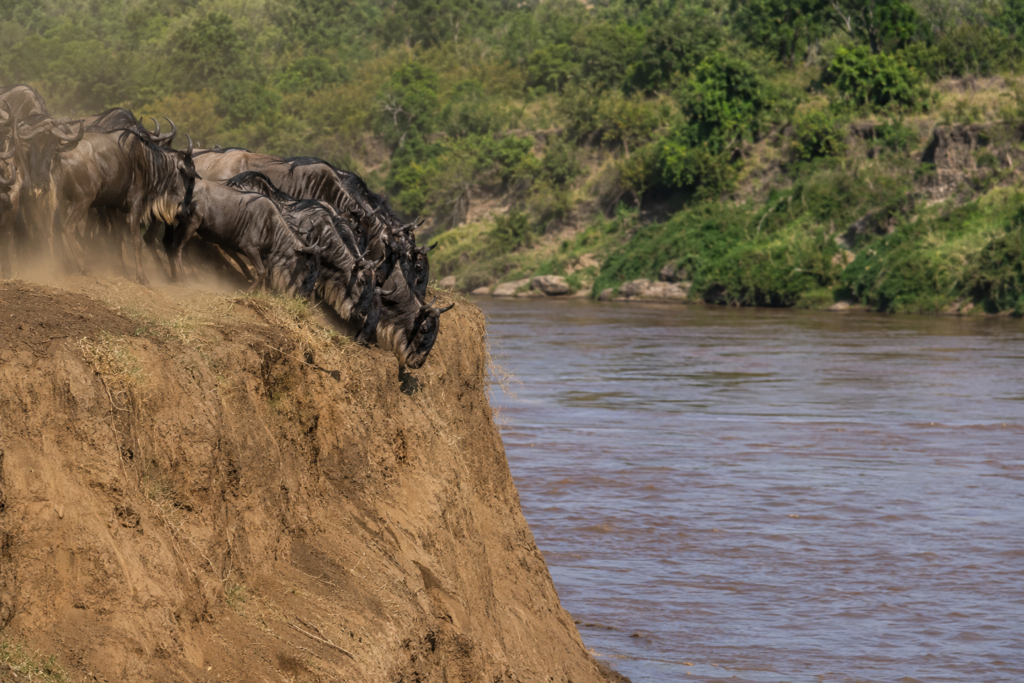
This section covers the practical reality of being in the ecosystem in August — the weather, the light, and the crowds nobody photographs. August falls squarely in the dry season, and that’s the whole reason the crossings happen: the plains have browned out, the grazing has thinned, and the animals are forced to move and to mass at water.
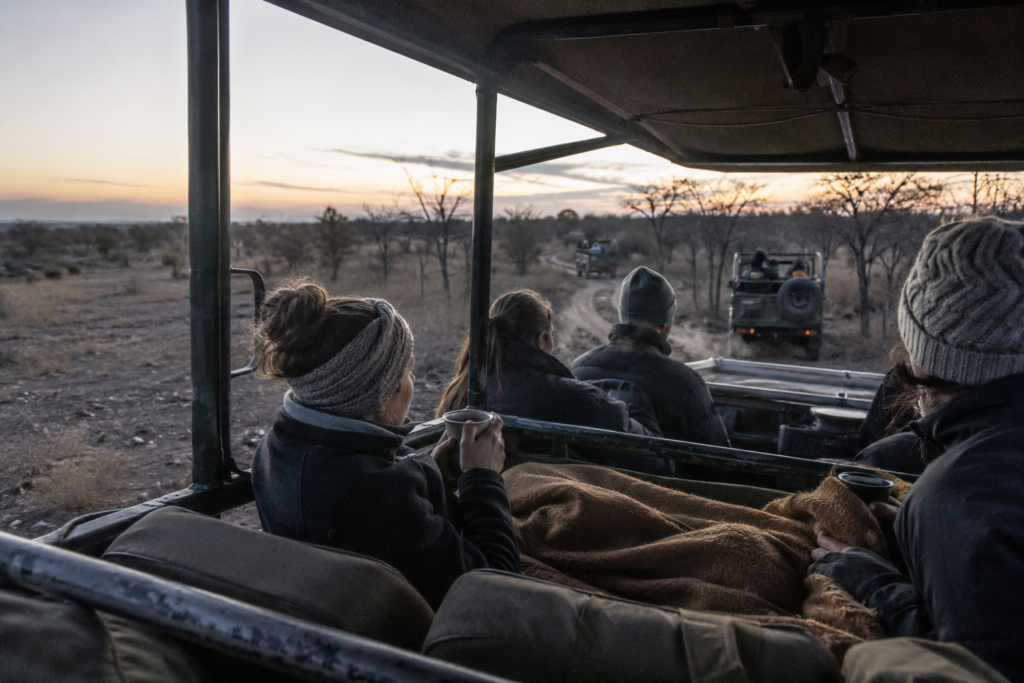
Expect daytime temperatures in the 20–30°C (68–86°F) range, with strong sun and a lot of dust kicked up by hooves and vehicles. The surprise for first-timers is the cold. At this altitude nights and dawn drives can drop toward 5–10°C (41–50°F), so the open-vehicle game drive at 6 a.m. is genuinely chilly. Pack layers you can shed by 9 a.m. — a fleece and a windbreaker over short sleeves is the standard kit. Our summer travel packing notes cover the layering logic for trips like this.
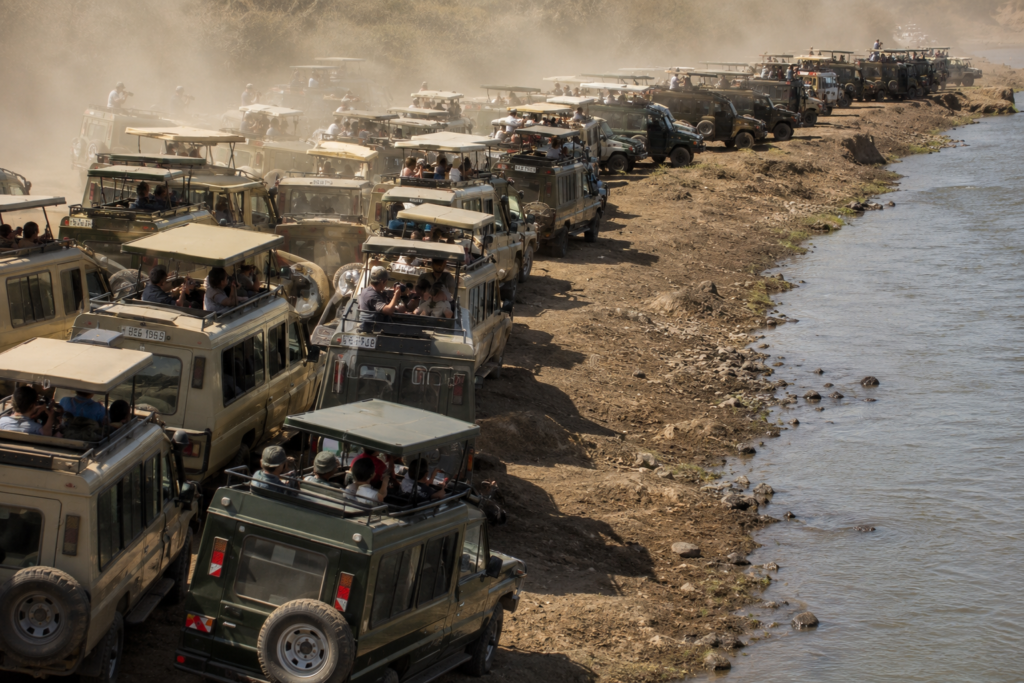
Now the honest part. August has the best crossing odds of the year, and it also has the worst crowds. The “July to October” window everyone quotes is also the busiest stretch in both reserves. On the Kenyan side especially, a crossing can draw dozens of vehicles to a single bank, engines idling, and you may queue on the access tracks. This isn’t a reason to avoid August — the odds genuinely are best now — but it’s a reason to spend the money on a conservancy or to weight your trip toward the Tanzanian side, where the same river produces the same drama with a fraction of the audience.
If you’ve got any flexibility in your dates, here’s a quiet opinion from people who guide this for a living: September often edges out August. The crossing odds stay strong, the initial rush of tourists thins slightly, and the herds settle into the greater Mara. You trade a small amount of peak probability for a noticeably calmer experience.
What a Great Migration August safari actually costs
This section breaks down the real 2026 numbers so your budget survives contact with the gate. The headline figures most people miss are the park fees, because August is the most expensive moment of the year to be in this ecosystem — by design.
On the Kenyan side, Narok County set the Maasai Mara non-resident adult fee at USD 200 per day from 1 July through 31 December 2026, up from USD 100 in the low season. Critically, that ticket is now valid for only 12 hours (roughly 6 a.m. to 6 p.m.), not 24 — so an overnight stay inside the reserve effectively means paying for two days. Children aged 9–17 pay USD 50. You can confirm the current structure on the Maasai Mara entry-fee breakdown before you travel, since these rates change. Vehicles are charged separately.
The Serengeti is far cheaper to enter — roughly USD 70 per adult per day for non-residents on a 24-hour basis — which is one quiet argument for weighting time toward Tanzania. The catch is that Tanzania’s northern crossing camps are remote and the flights add up.
For the full trip, plan on roughly USD 3,000 to USD 6,500 or more per person for a four-day migration safari, depending almost entirely on camp tier. That spread runs from solid tented camps to the high-end mobile camps that follow the herds. A few line items people forget:
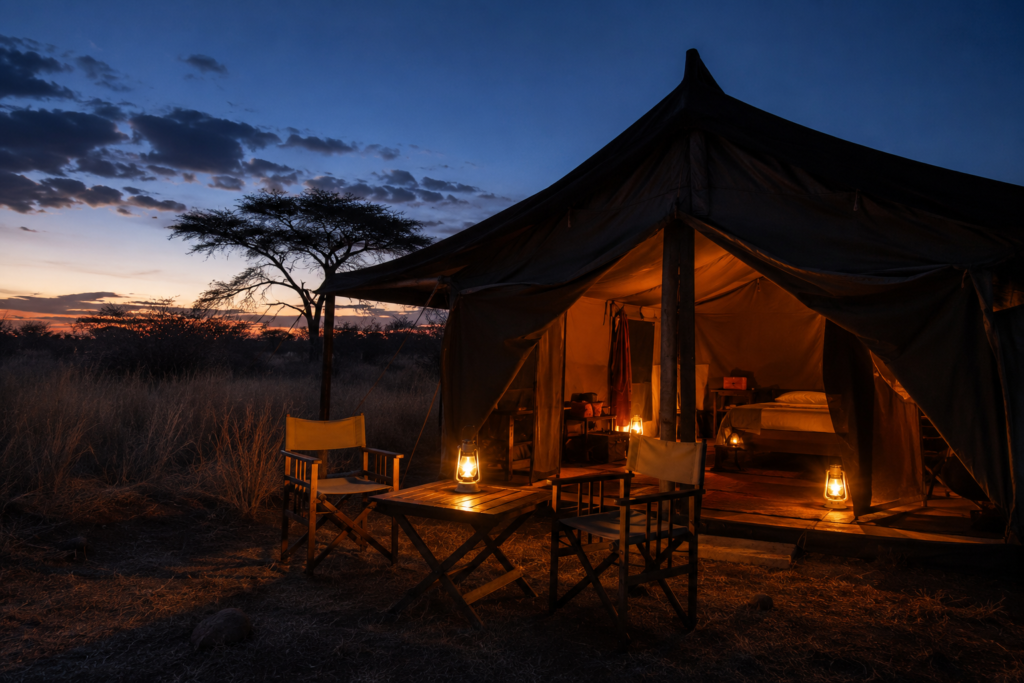
- Private conservancy fees of USD 80–150 per person per day bordering the Maasai Mara (Mara North, Olare Motorogi, Naboisho, Ol Kinyei). These are usually bundled into the lodge rate, and they’re what buys you off-road driving and night drives the public reserve forbids.
- Vehicle entry fees, charged per vehicle per day on top of your personal fee.
- Kenya’s eTA, the electronic travel authorization most nationalities need, around USD 30, applied for online before you fly.
The single highest-value spend here is the conservancy. Paying USD 100-ish more a night to avoid the vehicle scrum at a crossing, and to be allowed to drive off the track toward the action, changes the trip more than almost any other choice.
How to actually catch a crossing
This section is the tactical core: what separates travelers who see a crossing from those who don’t. The first principle is humbling — nobody controls the herds. Light showers won’t stop movement, but a big storm can delay or redirect them. Some days the herds cross four times before lunch; the next day they sit on the bank doing nothing for eight hours. Anyone who promises you a crossing on a specific date is selling, not guiding.
Given that, your job is to maximize chances, and chances come down to time and position.
Give it six to seven days in the region. A two-night, “see a crossing” trip is a coin flip at best. With most of a week, you get multiple mornings and afternoons at different crossing points, and the law of averages starts working for you. Even four days, the common minimum, is tight.
Book a year ahead. The good camps near the river in both the northern Serengeti and the Maasai Mara sell out twelve months or more in advance for August. This isn’t camp marketing — it’s the genuine constraint. If you’re reading this for this coming August and haven’t booked, you’re already late, and next year’s planning starts now.
Position over luxury. A modest camp an hour from the river will cost you the best light and the early-morning window when crossings often start. A camp perched near known crossing points is worth more than thread count. Ask operators specifically how long the drive is from camp to the prime crossing zones.
Be at the river early and stay patient. Crossings frequently build in the morning. Guides read the herd — animals bunching at the bank, the front rank hesitating, a lead wildebeest testing the water — and a good one will park you and wait, sometimes for hours. The travelers who leave for lunch are the ones who miss it.
Use a conservancy to break the rules in your favor. Inside the Maasai Mara reserve you’re stuck on the tracks. In a private conservancy you can drive off-road toward a developing crossing and do night drives for the predators that shadow the herds. That flexibility converts near-misses into sightings.
Pair the safari with a few days on the coast and you’ve got a complete trip — many travelers tack on Zanzibar after the dust of the Serengeti, and the timing in August works beautifully.
Common mistakes travelers make in August
These are the errors that even experienced travelers make on a migration trip — the ones that quietly wreck an otherwise well-planned safari.
Booking too late. The biggest one. Prime riverside camps fill a year out for August, so travelers who start planning in spring end up in camps far from the crossing points, losing the early-morning window where the odds live. Fix: treat twelve months ahead as the deadline, not the suggestion.
Allotting only two or three days. People budget a long-haul flight and a week of leave, then give the actual crossings 48 hours. Crossings are unpredictable, so a short stay is a gamble. Fix: protect at least four days in the crossing zone, ideally six to seven, even if it means cutting somewhere else.
Defaulting to the public reserve over a conservancy. The Maasai Mara National Reserve is iconic, but in August it’s the most crowded wildlife area in Africa, and you’re confined to the tracks. Travelers pick it for the name and then spend the trip in a vehicle line. Fix: stay in a bordering conservancy for off-road access and far fewer vehicles, even at a higher nightly rate.
Ignoring the 12-hour ticket rule. Many 2026 itineraries still assume the old 24-hour Maasai Mara ticket. The reserve now runs on a strict 12-hour, calendar-day basis, and rangers enforce it — a late final-morning game drive without a valid new-day ticket can trigger the full USD 200 fee on the spot. Fix: confirm your exit timing with your camp and don’t try to squeeze a final drive past 10 a.m. on departure day.
Treating the crossing like a scheduled show. The most corrosive expectation. Travelers arrive believing the river crossing runs daily at a set time, then feel cheated when the herds sit still. Fix: go in understanding you’re chasing a wild, weather-driven event. Build in extra days, and treat any crossing you witness as the payoff for patience, not a ticketed performance.
FAQ
Is August really the best month for the Great Migration? For the Mara River crossings, yes. August has the highest probability of seeing wildebeest plunge into the river in both the northern Serengeti and the Maasai Mara. It’s also the busiest and most expensive month, so September is a strong alternative if you want similar odds with thinner crowds and slightly lower pressure on camps.
Should I go to the Serengeti or the Maasai Mara in August? Both work, since the herds straddle the border. Choose the northern Serengeti (Kogatende, Lamai) for fewer vehicles and a wilder feel, at the cost of remote access and extra flights. Choose the Maasai Mara for easier logistics and more crossing points, but book a private conservancy rather than the crowded public reserve to get the best of it.
How much does a Great Migration safari cost in August? Budget roughly USD 3,000 to USD 6,500 or more per person for four days, driven mostly by camp tier. On top of accommodation, expect Maasai Mara park fees of USD 200 per non-resident adult per day, Serengeti fees near USD 70 per day, separate vehicle charges, conservancy fees of USD 80–150 per day where they apply, and visa or eTA costs.
Can anyone guarantee I’ll see a river crossing? No, and be wary of anyone who claims otherwise. Crossings depend on rainfall, grazing, and the herds’ own unpredictable behavior — they might cross several times in a morning or not at all that day. The realistic strategy is to spend six to seven days near known crossing points, which stacks the odds heavily in your favor without ever promising a result.
How many days do I need for a migration safari? Four days is the common minimum and a real gamble for crossings. Six to seven days in the crossing region is the sweet spot, giving you multiple mornings and afternoons at different points. If you’re combining the Serengeti and the Maasai Mara, add travel days for the flights between them, since they sit in different countries.
What should I pack for an August safari? Layers are the key insight. Days run warm at 20–30°C, but dawn game drives can drop near 5–10°C, so bring a fleece and windbreaker over lighter clothing. Add neutral colors, a wide-brim hat, strong sun protection, a buff or scarf for the dust, binoculars, and a camera with a long lens. Nights are cold; mornings are the coldest part of the day.
The bottom line
The Great Migration August window gives you the best odds on the planet of watching a Mara River crossing — but those odds only pay out if you give them time, position yourself near a real crossing point, and accept that the herds answer to rain and instinct, not your itinerary. Decide now whether you want Tanzania’s quieter banks or Kenya’s accessible drama, book a year ahead, and protect a full week on the ground. Then start watching the rains, because the timing of the 2026 crossings will be written by them long before you arrive.
Stop planning trips the hard way.
Get the best of all three of our travel books in one free 21-page PDF — crisis protocols, country timing scorecards, and 5 AI travel-planning prompts.
Free · Instant download · No spam, ever