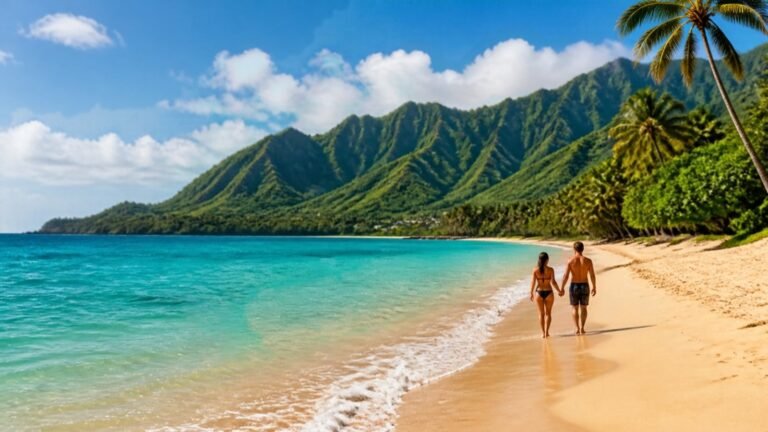
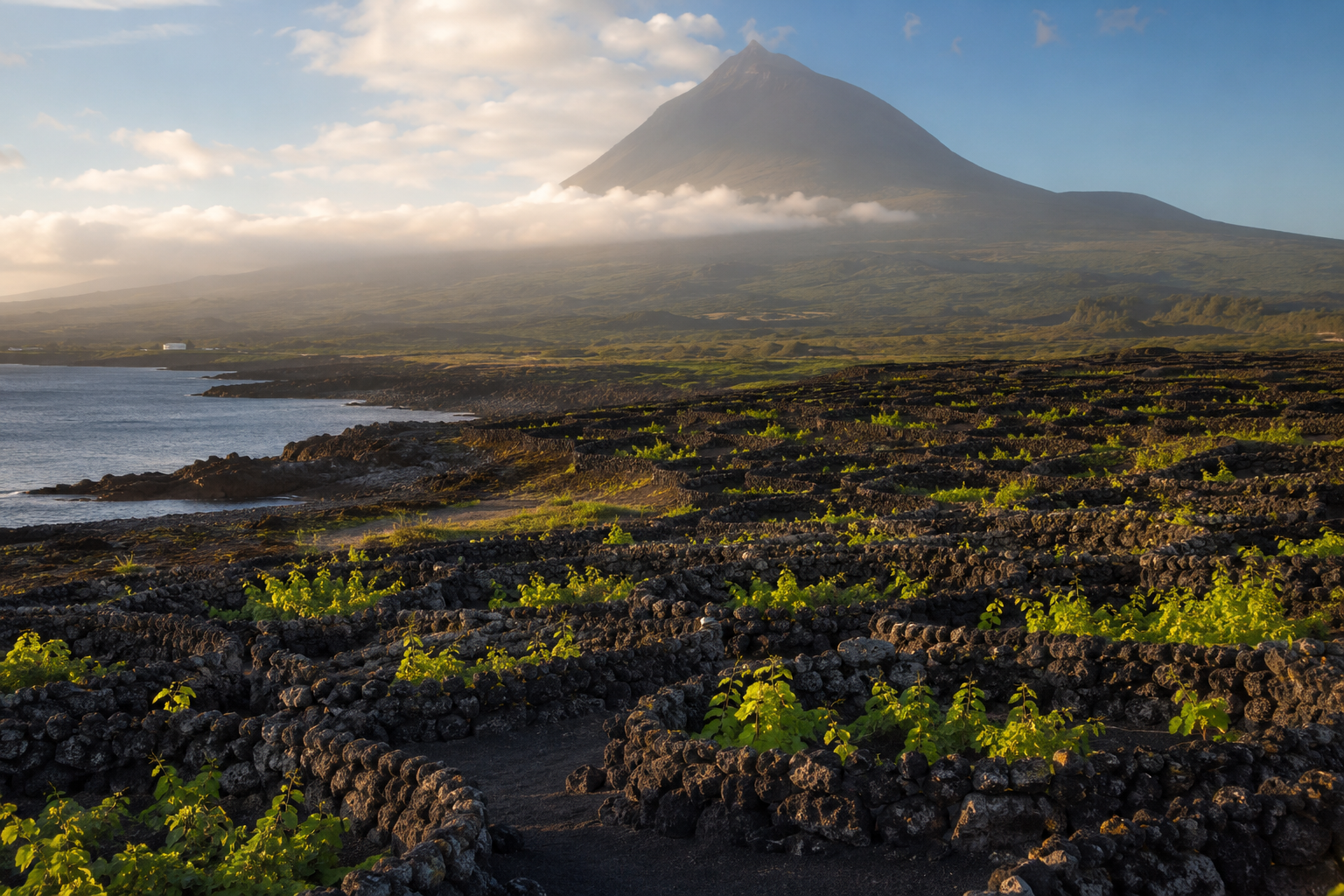
Pico Island in September is the Azores at their most settled. The sea is at its warmest, the summer crowds have thinned, whales and dolphins are still offshore, and the vineyards on the black lava fields are close to harvest.

The Smart Timing Bundle
Pick the month, book in the right order, pack once
Six printable timing tools for any trip: the Trip Timing Planner, When to Book, When NOT to Go, the Shoulder Season Playbook, the family timing guide and the Packing by Season System.
See the bundle · $37Six products, $100 separately · Digital download · All sales final
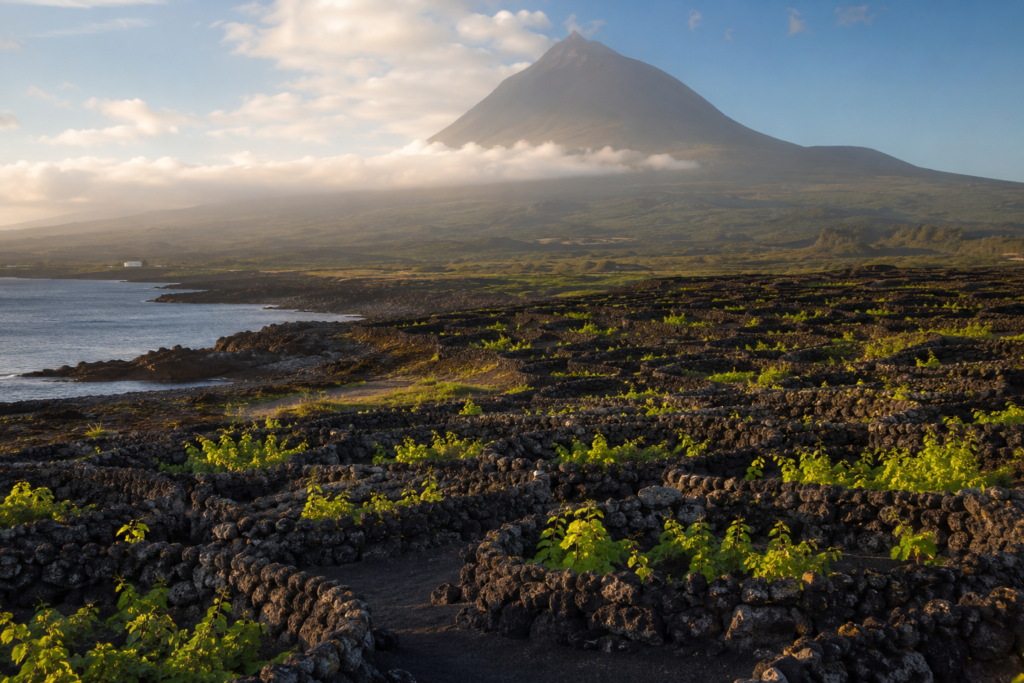
Pico is the second-largest island of the archipelago and home to Mount Pico, the highest point in Portugal. This guide covers September weather, climbing the mountain, whale watching, the wine country and how to plan a week on the island.
Why Go to Pico Island in September
September is often the best all-round month for the Azores. You keep most of summer’s advantages and lose some of its pressure.
- Warm sea: the water around the Azores is usually at its warmest in late August and September, often in the low 20s °C.
- Mild air: daytime highs are usually in the low to mid 20s °C, with comfortable nights.
- Fewer people: European school holidays are over, so ferries, restaurants and the mountain trail are calmer than in August.
- Long enough days: still about 12 to 13 hours of daylight, plenty for a summit climb.
- Wildlife: a good month for dolphins and resident sperm whales.
- Harvest time: the grape harvest (vindima) usually falls in late August and September.
The trade-off is weather variability. The Azores sit in the middle of the Atlantic, and September can bring the first autumn systems. A sunny morning can turn to cloud and rain by afternoon, and Mount Pico often wears a cap of cloud.
🧰 Try it while you read: a free tool for this trip
Free trip timing tool
Best Month Finder
Pick a country and your priorities; get the three months that suit you best.
Loading the tool…
Pico Island in September: Weather at a Glance
| Typical September conditions | |
|---|---|
| Daytime high | About 22–25 °C |
| Night low | About 17–19 °C |
| Sea temperature | About 22–23 °C |
| Rain | Some rainy days, usually short showers; wetter towards the end of the month |
| Daylight | About 12–13 hours |
| Summit of Mount Pico | Around 10 °C colder than the coast, windy, often in cloud |
Figures are typical ranges, not forecasts. Weather in the Azores changes fast, so build flexibility into your plans.
When to Go: Portugal puts the whole year on one page: the best months, the shoulder weeks and the ones to skip, region by region.
See the Portugal guide →Climbing Mount Pico in September
At 2,351 m, Mount Pico is the tallest mountain in Portugal and the main reason many visitors come. September is one of the best months to climb: the trail is free of snow, nights are mild enough for a summit sunrise, and the heat of midsummer has eased.
How the climb works
Every climber starts at the Casa da Montanha (Mountain House), at about 1,200 m. You register, pay a fee and receive a GPS tracking device, which you return at the end. From May to September the Mountain House usually operates around the clock, which makes night and sunrise climbs possible.

When to Go guides
Choose your country, then your month
24 country guides, each about 100 pages: every month rated for weather, crowds and prices, region by region, with a 7-day booking plan. Six guides per region bundle.
Browse the 24 guides · $19 eachRegion bundles: Europe, Asia & Pacific, Sun Souks & Safari, Americas · $47 each
The trail is about 3.8 km each way, with roughly 1,150 m of ascent, marked by numbered posts. Most fit hikers take 3 to 4 hours up and a similar time down. The final scramble to the Piquinho, the small summit cone, is steep and limited to a small number of people at a time.
Rules and safety
- Numbers are capped. The trail has a daily limit and a limit on the number of people at once. In busy weeks, arrive early.
- Overnight stays in the crater require a reservation and specific equipment: tent, sleeping bag, torch and warm clothing.
- No shade. Bring at least 1.5 litres of water, sun protection and food.
- Fog is the main danger. If you cannot see the next marker, go back to the previous one rather than guessing.
- Start the descent early. The official advice is to begin coming down at least four hours before sunset.
- Wear proper boots. The volcanic rock is loose and sharp.
Hiring a certified local guide is a good idea for first-timers and in doubtful weather. Rules, fees and limits are set by the regional government; check the official Mount Pico website before you go.
Whale and Dolphin Watching From Pico
Pico has a long relationship with whales. For generations, its people hunted sperm whales from open boats; today the same coast is one of the best whale-watching areas in Europe.
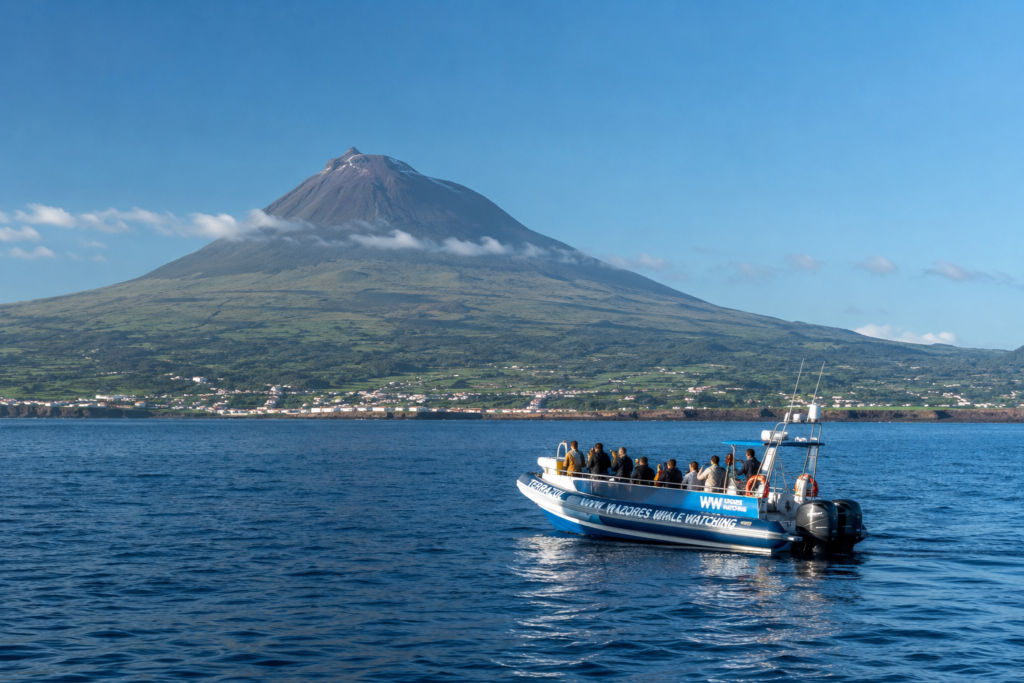
Sperm whales are present around the Azores all year, and September is a good month to see them. Common, bottlenose and Risso’s dolphins are often sighted too. The big migrating baleen whales, such as blue and fin whales, are mainly a spring sight, so do not count on them in September.
Tours usually leave from Lajes do Pico and Madalena. Operators traditionally use lookouts (vigias) on the cliffs, where spotters scan the sea and direct the boats by radio, a system inherited from the whaling days.
- Choose a licensed operator that follows the Azores’ whale-watching rules on distance and approach.
- Go in the morning for calmer seas when possible.
- Allow a spare day. Trips are cancelled in rough weather.
- Visit the whalers’ museum in Lajes do Pico to understand the island’s history.
Pico’s Wine Country
The vineyards of Pico are one of the most striking landscapes in the Atlantic. Vines grow in thousands of small enclosures called currais, walled with black basalt stones that shelter the plants from wind and salt spray. The Landscape of the Pico Island Vineyard Culture is a UNESCO World Heritage Site.
September is a good time to see the vineyards working. The harvest usually takes place in late August and September, depending on the weather. Visit a local cooperative or winery for a tasting of the island’s whites, including verdelho.
The best areas to explore are around Madalena, Criação Velha and the coast north towards Lajido, where old wine-makers’ houses and windmills stand among the stone walls. Walking trails cross the vineyard zone and are easy to follow.
Other Things to Do on Pico in September
- Swim in natural lava pools. Many coastal villages have rock pools and swimming areas, at their best in the warm September sea.
- Walk the coastal trails. Marked paths link villages, lava fields and lookouts.
- Explore the Gruta das Torres. One of the longest lava tubes in the Azores, visited on guided tours.
- Drive the island’s high road. The central plateau has lakes, cattle pastures and views of the mountain when the clouds lift.
- Cross to Faial. Frequent ferries link Madalena with Horta, about half an hour away, making a day trip easy.
- Taste local food. Look for fresh fish, octopus, local cheese and sweet bread.
Summer festivals tied to the whaling heritage usually take place in August. In September, village life is quieter but still lively at weekends.
When to Go guides
Choose your country, then your month
24 country guides, each about 100 pages: every month rated for weather, crowds and prices, region by region, with a 7-day booking plan. Six guides per region bundle.
Browse the 24 guides · $19 eachRegion bundles: Europe, Asia & Pacific, Sun Souks & Safari, Americas · $47 each
How to Get There and Get Around
Pico has its own small airport with flights from other islands in the archipelago; check schedules, as routes and frequencies change by season. Many visitors arrive via Faial, a short ferry ride away, or by inter-island ferry from São Jorge.
A hire car is the easiest way to explore. Buses exist but are infrequent. Book cars early even in September, as the island’s fleet is small.
The main bases are Madalena, close to the ferry, the vineyards and the mountain road, and Lajes do Pico on the south coast for whale watching. São Roque do Pico on the north coast is quieter.
A Simple Week on Pico in September
- Day 1: arrive, settle in Madalena, sunset walk in the vineyards.
- Day 2: whale watching from Lajes do Pico; whalers’ museum in the afternoon.
- Day 3: rest day with lava pools and coastal walks.
- Day 4: climb Mount Pico on the first clear-forecast day; keep a backup day.
- Day 5: Gruta das Torres and the central plateau lakes.
- Day 6: ferry to Faial for Horta and the Capelinhos volcano.
- Day 7: winery visit and a last swim.
Build the week around the weather, not the plan: move the summit day and the boat trip to the calmest forecast.
What to Pack for Pico in September
- Hiking boots with good grip for the mountain and lava trails.
- A warm layer and a waterproof jacket. The summit is cold and the weather changes quickly.
- A headtorch if you plan a sunrise climb.
- Swimwear and water shoes for the rocky lava pools.
- Sun protection. The Atlantic sun is strong even through thin cloud.
- Seasickness tablets for whale-watching trips and inter-island ferries.
- Cash and card. Small villages may have limited card payment.
Plan the Rest of Portugal
Pico pairs well with Faial and São Jorge, and with Lisbon or Porto at either end of the trip. September is one of the best months for mainland Portugal too, with warm seas and the Douro harvest.
For a month-by-month view of the whole country, including the Azores and Madeira, see When to Go: Portugal. If Portugal is one stop on a longer European journey, the Europe Bundle brings our six European country guides together. September is a textbook shoulder month, and The Shoulder Season Playbook shows how to make the most of these weeks.
Flight schedules, mountain rules and ferry timetables change. Check official sources before you book.
📘 Monthly Travel Guide
Plan Portugal month by month
When to Go: Portugal is a printable PDF of about 100 pages: the year at a glance, a chapter for every month, a calendar for each region, festivals usually held each month, costs by season and a 7-day booking plan. It comes with the free 12-Month Map.
Get the Portugal guide · $19Going further? The Europe Bundle covers Greece, Portugal, Iceland, Italy, Spain and France for $47.
Digital download · All sales final
Free download
See the whole year before you book
Our free 12-Month Map puts every month for one country on four pages: when the weather works, when the crowds and prices peak, and the weeks to skip.
- 24 countries to choose from
- Region-by-region verdicts
- Printable PDF
Your download page opens as soon as you sign up. 24 countries available.