The best February hiking destinations are not one region but four kinds of place, each in its own good season. The southern hemisphere is in high summer, so New Zealand and Patagonia have long days and open huts. East Africa sits in a short dry window between rains. North American deserts are at their mildest before the heat arrives. And the southern edge of Europe offers sunny, cool walking with almost nobody on the path. This guide picks eight trails across those four groups, gives the real numbers for each, and flags the one famous route you cannot walk in February at all.

For February hiking, head south or go low: New Zealand’s Great Walks and the Fitz Roy trails above El Chaltén are in summer season, Kilimanjaro is between its rainy seasons, Death Valley averages about 23 °C by day, and Madeira and the hills behind Málaga give mild, sunny walking. Book New Zealand huts and Madeira trail slots ahead, plan for strong Patagonian wind, and skip the classic Inca Trail, which closes every February.
✅ Key takeaways
- ✓February is peak summer for southern-hemisphere trails, so the most popular huts and tracks are booked out: reserve New Zealand Great Walks as early as you can.
- ✓Kilimanjaro’s rainy seasons run roughly March to May and around November, which makes January and February one of its two drier climbing windows.
- ✓Death Valley averages around 23 °C by day in February, against summer highs that often pass 49 °C: this is the month to walk it.
- ✓Madeira now requires a paid, timed reservation for every classified PR trail, including the famous levadas and Pico Ruivo.
- ✓The classic Inca Trail to Machu Picchu closes for the whole of February for maintenance; Machu Picchu itself stays open.
How to Choose Among February Hiking Destinations
Before you look at a single trail, decide which kind of February you want. The same month gives you summer alpine walking, a dry-season summit, desert canyons or mild coastal paths, and each comes with its own trade-off. Use the four groups below as your shortlist, then read the trail sections for the details that matter.
☀️ Southern summer
New Zealand and Patagonia: long daylight, open huts and full services, but peak demand and changeable alpine weather.
⛰️ Dry-season summit
Kilimanjaro: a drier window between the rains, for climbers ready for serious altitude.
🌵 Desert at its mildest
Death Valley and Anza-Borrego: warm days, cold nights and the only time of year long desert hikes are comfortable.
🌿 Mild Europe
Madeira and Andalusia: cool, often sunny walking, short days and quiet trails without a long-haul flight.
| Trail or area | February season | Typical conditions | Book ahead? |
|---|---|---|---|
| Milford Track, NZ | Great Walks season (1 Nov to 30 Apr) | Summer, frequent rain in Fiordland | Yes: huts required |
| Tongariro Alpine Crossing, NZ | Summer (Nov to Apr) | 7 to 8 hours, alpine weather | Shuttle, yes |
| El Chaltén and Fitz Roy, Argentina | Summer | Highs around 17 °C, very windy | Beds in town |
| Kilimanjaro, Tanzania | Drier window | Freezing summit nights | Yes: licensed operator |
| Table Mountain, South Africa | Summer | Hot, high fire risk, wind | No |
| Madeira levadas, Portugal | Mild winter | About 20 °C by day in Funchal | Yes: timed slot |
| Caminito del Rey, Spain | Mild winter | About 18 °C by day in Málaga | Yes: ticket |
| Death Valley and Anza-Borrego, USA | Cool season | About 23 °C by day, cold nights | Campsites only |
🗓️ Free: a 12-Month Map for your country
Every month on one page: best weeks, shoulder weeks and the ones to skip. Print it or keep it on your phone.
🧰 Try it while you read: a free tool for this trip
Free trip timing tool
What Kind of Traveller Are You?
Seven quick taps pick your travel type, then show the countries and months where it shines.
Loading the tool…
Southern Summer: New Zealand’s Great Walks in February
February is the heart of the New Zealand hiking season, and that brings two things: the best conditions of the year for many alpine routes, and the strongest competition for beds. Two trails show the range.
Milford Track, Fiordland
The Milford Track runs for about 53.5 km over four days and three nights, in one direction only, from the head of Lake Te Anau to Milford Sound. Both ends are reached by boat, and you sleep in three Department of Conservation huts: Clinton, Mintaro and Dumpling. During the Great Walks season, which runs from 1 November to 30 April, a hut booking is required for every night. Walkers without a valid booking can be charged a penalty or turned away if the hut is full. Camping is not allowed and there is no food for sale on the track, so you carry everything.
Fiordland is famously wet even in summer. The official advice is simple: do not cross flooded rivers, and if in doubt, stay out. Build a spare day around the walk so a flooded section does not wreck your onward plans. The track is not recommended for children under ten.
Tongariro Alpine Crossing, North Island
The Tongariro Alpine Crossing is a long, high one-day hike across volcanic terrain. It starts at 1,120 m, climbs to Red Crater at 1,886 m and finishes at Ketetahi Road at 760 m. The Department of Conservation’s Tongariro Alpine Crossing page gives a completion time of seven to eight hours from November to April and rates the fitness required as high.

The Smart Timing Bundle
Pick the month, book in the right order, pack once
Six printable timing tools for any trip: the Trip Timing Planner, When to Book, When NOT to Go, the Shoulder Season Playbook, the family timing guide and the Packing by Season System.
See the bundle · $37Six products, $100 separately · Digital download · All sales final
Book a shuttle, not a parking space
In summer there is no visitor parking for the crossing at the Mangatepopo car park, and DOC advises against parking on state highways. A shuttle is the standard way in.
Register your walk
Bookings are recommended for everyone using the track and cost nothing. Guided walks and shuttles need their own booking.
Check the daily advisory
In summer, DOC issues a “Not Recommended Today” advisory when forecasts show hazards such as gusts of 70 km/h or more. Respect it: snow can fall in any month.
If you are combining New Zealand with Australia, our guide to February travel hotspots in Australia and New Zealand helps you split the time between hiking and beaches.
Patagonia in February: Fitz Roy Trails From El Chaltén
El Chaltén, inside Los Glaciares National Park, calls itself Argentina’s National Trekking Capital, and February is the second-warmest month of its year. Mean daily highs are around 17 °C, with January a degree warmer. The two classic day hikes lead to Laguna Torre and to Laguna de los Tres, the lake below Fitz Roy’s granite towers. El Chaltén is about 220 km north of El Calafate, the nearest main airport.
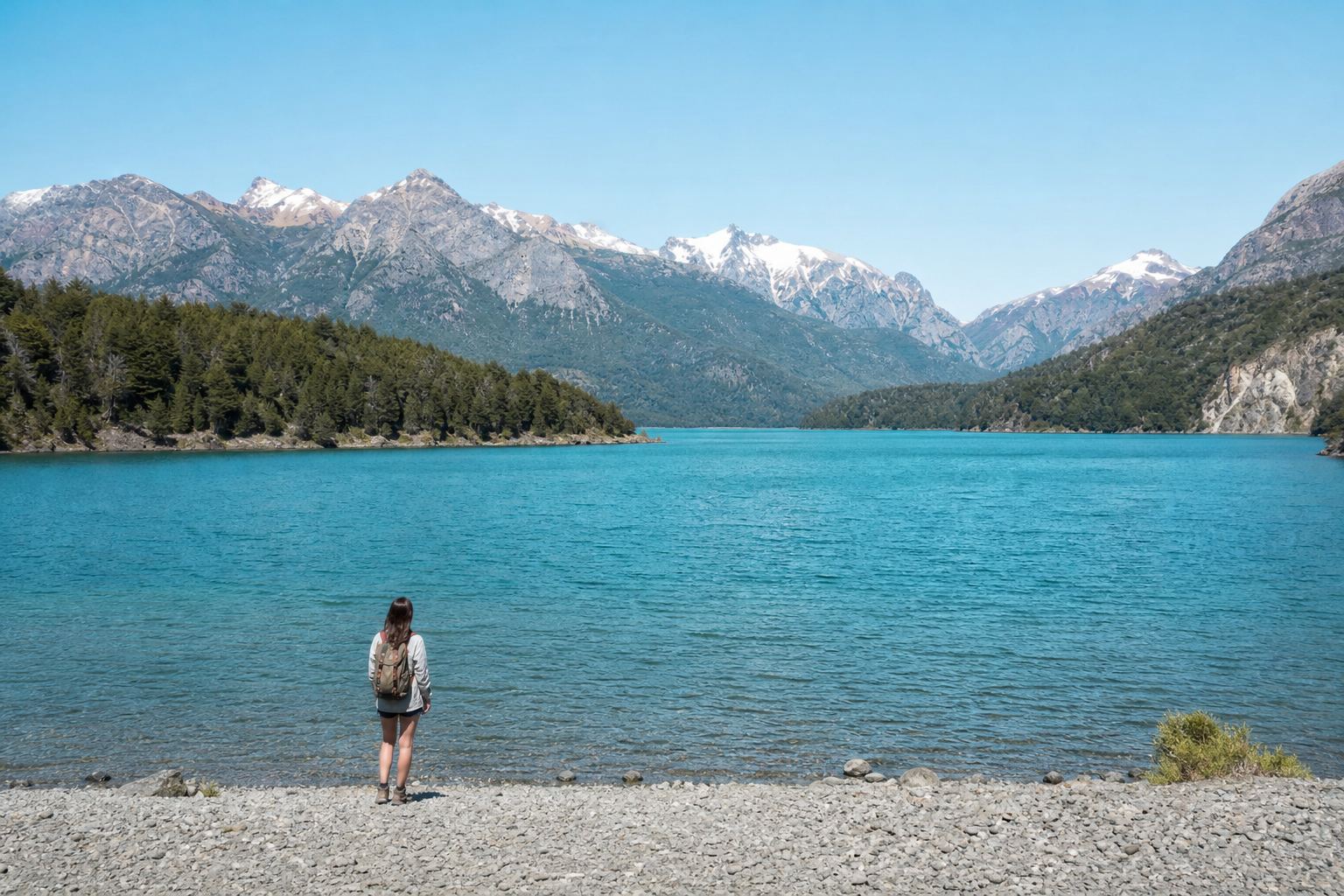
The weather to plan for is wind, not cold. Patagonian summers are very windy, and gusts on exposed ridges can stop you in your tracks. Pack a proper windproof shell, a warm layer for the lake viewpoints, and sunglasses for dust. Then keep the plan flexible: if the towers are hidden in cloud, swap your Fitz Roy day with a lower forest walk and try again tomorrow.
Torres del Paine, across the border in Chile, is the other summer classic, but it needs campsite or refugio reservations for each night on the W route. If you are deciding between the two, our guide to the best places to hike in January covers the W in detail.
When to Go: Argentina
Thinking about Patagonia but not sure February is your month? This month-by-month guide sets out Argentina from the southern trails to Buenos Aires and the north, with weather, crowds and what each season suits, so you pick the right weeks for your hike. About 100 pages.
See When to Go: Argentina · $19 →Digital download · All sales final
Kilimanjaro and Table Mountain: Africa’s February Summits
Kilimanjaro, Tanzania: the drier window
Kilimanjaro’s summit, Uhuru Peak, stands at 5,895 m. The mountain has two rainy seasons, from March to May and around November, so January and February form one of its two drier climbing windows. That makes February a sound month to go, but altitude, not weather, is the real challenge.
Studies of climbers on the mountain have found that most people get some acute mountain sickness, and the average summit success rate is about 70 to 80 percent, varying by route. Marangu has the lowest success rate of any route, and fast schedules raise the risk of the life-threatening forms of altitude illness. So pick a longer itinerary with extra acclimatisation days, book with a licensed operator, and treat the summit as a goal rather than a promise.
Table Mountain, South Africa: summer above Cape Town
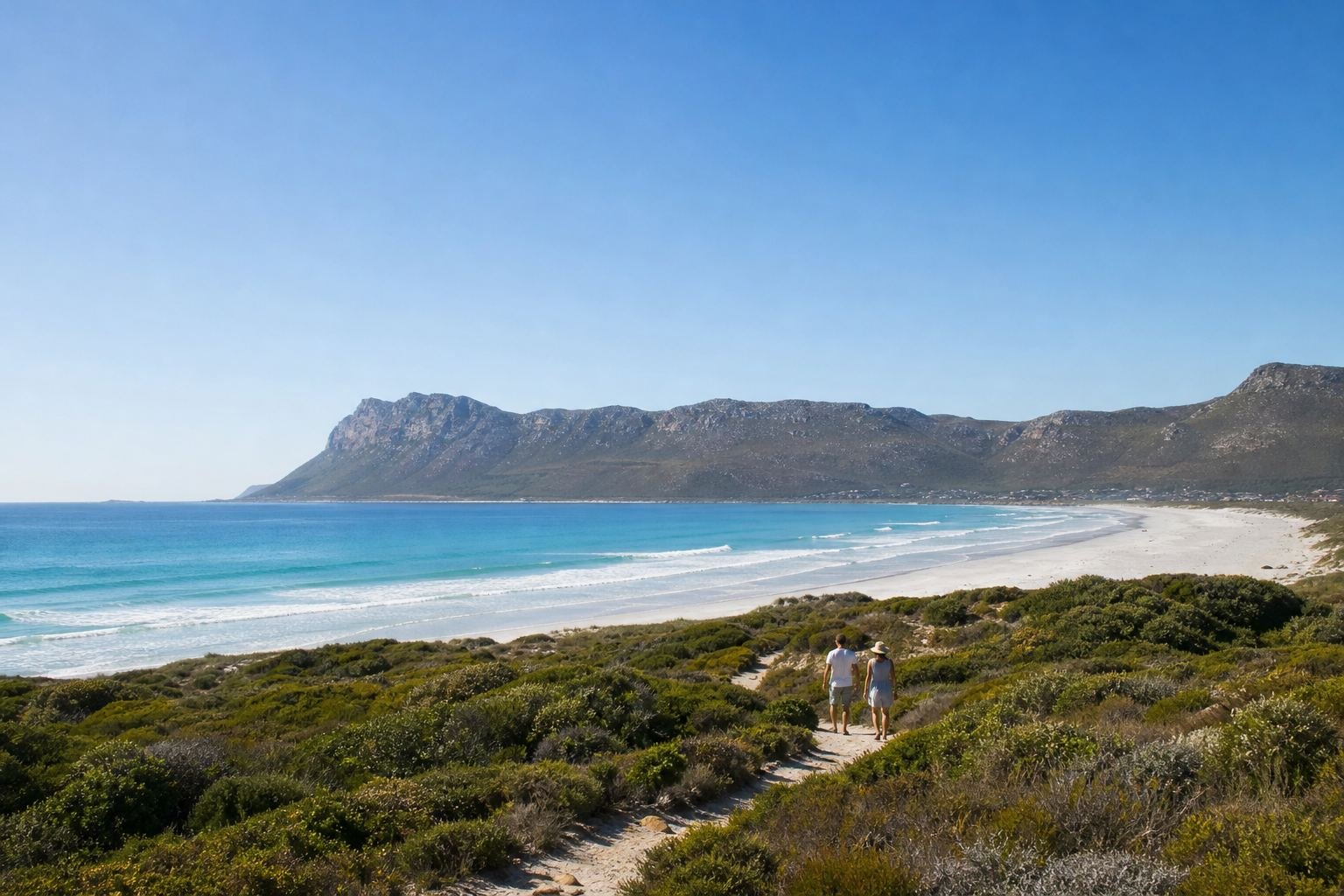
February is high summer in Cape Town, which means long days, sun and a real fire risk on the mountain. Cape Town Tourism’s safety advice is clear: hike in a group of at least four, carry at least a litre of water each, because there is no water on the way up except on Skeleton Gorge, and check the weather the day before and on the morning itself, since wind, heat and fog can arrive on the same day. Platteklip Gorge is the most direct route and arguably the most demanding, with a steep, straight climb from the start.
For a safari before or after the climb, our pick of the best wildlife safaris in February sets out which parks are in season.
Mild Europe: Madeira’s Levadas and the Caminito del Rey
If you want to hike in February without a long-haul flight, southern Europe and its Atlantic islands are the answer. Days are short, but temperatures are kind and the trails are far quieter than in spring.

The complete kit
Every country guide, every timing tool
All 24 When to Go country guides, the six Smart Timing tools and every 12-Month Map, with a Start Here that tells you what to open first.
See the kit · $127The five bundles cost $225 separately · Digital download · All sales final
Madeira, Portugal
Funchal averages about 20 °C by day and 14 °C at night in February, with only five or six days of meaningful rain in the month. The island’s weather varies sharply, though. The northern slopes are often in cloud, fog and rain while the south is clear, so a levada walk on the north side can feel like a different season.
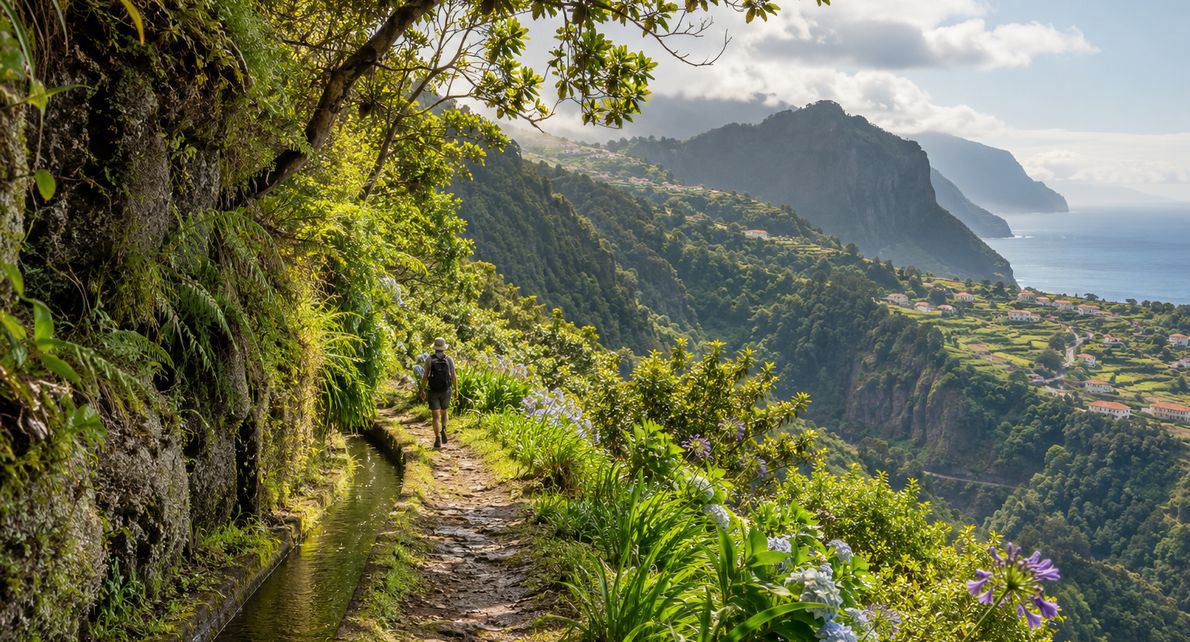
Madeira now requires a reservation for every classified PR trail, for every visitor, booked through the regional government’s SIMplifica portal. You choose a trail, a date and a 30-minute entry slot, pay a small fee per trail and carry the confirmation. Hiking a classified trail without a valid reservation can lead to fines. Check each trail’s status (open, restricted or temporarily closed) on the morning you go, because mountain weather changes quickly.
Caminito del Rey and the hills behind Málaga, Spain
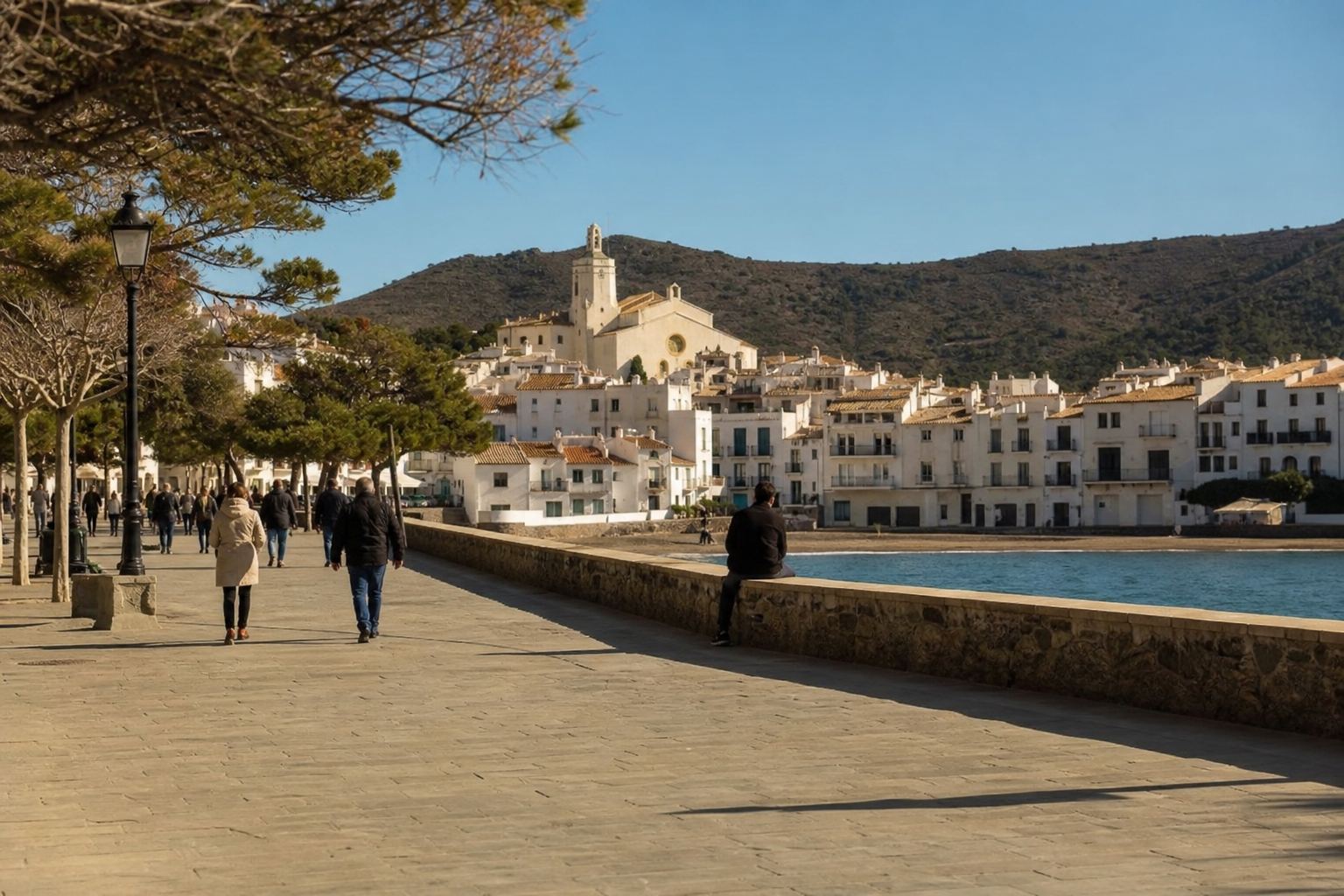
Málaga airport averages about 18 °C by day and 8 °C at night in February, with around 189 hours of sunshine in the month. That makes inland Andalusia one of the sunniest places in Europe for a winter walk. The best-known route is the Caminito del Rey, a walkway of about 3 km pinned to the walls of a gorge near Ardales, in the El Chorro area. Tickets are sold through the official website, and children under eight are not allowed on the walkway.
For more ideas close to home, our guide to warm European getaways in February lists the mildest places for a city-and-hills break.
Desert Hiking at Its Mildest: Death Valley and Anza-Borrego
In the deserts of California, February is the sweet spot. Death Valley’s Furnace Creek averages about 23 °C by day and 8 °C at night in February, according to the National Park Service weather page for Death Valley. In summer, highs often pass 49 °C in the shade and nights can stay above 29 °C, which makes long hikes dangerous. Winter and spring are the seasons the park itself describes as very pleasant.
Further south, Anza-Borrego Desert State Park runs its visitor centre daily only from October to May, and warns that summer days can reach about 52 °C. Its spring wildflower bloom varies a lot from one season to the next, so check the park’s bloom reports before you build a trip around it. The Borrego Palm Canyon Trail is a three-mile round trip from the campground; the first palm grove was damaged by fire, and the trail now ends at a viewpoint over it.
≈23 °C
Death Valley February average high
≈8 °C
Death Valley February average low
49 °C+
typical summer highs in the shade
1 gallon
water per person per day, Anza-Borrego advice
If you prefer to compare the US national parks across seasons, our guide to winter hiking trails in December covers the colder, snowier side of the same parks.
When Not to Go: February Hiking Trails to Skip or Rethink
February is not a good month everywhere. These are the trails and seasons to avoid, and why:
- The classic Inca Trail, Peru (closed all February): the Classic four-day and Short two-day treks close for the whole month for maintenance, in the heart of the rainy season, and no permits are issued for February dates. Machu Picchu itself stays open by train.
- Kilimanjaro from March to May: the long rains start straight after February, so if your dates slip, aim for the next dry window rather than climbing in the wet season.
- Desert parks in summer: Death Valley and Anza-Borrego become dangerously hot from late spring; February to April is the window.
- Madeira’s north coast on a cloudy week: fog and rain on the northern slopes can hide the views entirely; switch to a sunnier southern levada that day.
- New Zealand walks without a booking: February is peak season; turning up hoping for a hut bed on a Great Walk is the wrong plan.
Not sure whether your own month is a bad one for a trail? You can check whether your month is a bad one with our free tool, or browse the When Not to Go hub for the big seasonal traps.
In February, the best trail is the one in its own good season: summer in the south, dry on the summit, mild in the desert.
5 February Hiking Mistakes to Avoid
1. Booking flights before huts
On the Milford Track or the W in Torres del Paine, the beds decide your dates. Secure the huts or campsites first, then book the flights around them.
2. Treating Patagonian wind as a forecast detail
Summer wind in Patagonia is the main hazard, not the temperature. Plan buffer days and a lower-level alternative for each big hike.
3. Rushing Kilimanjaro
Short itineraries save money and cost summits. Choose a route with time to acclimatise and pull back at the first serious symptoms.
4. Forgetting short European days
February daylight in southern Europe is still short. Start early on long walks so you are not finishing a gorge or a levada in the dark.
5. Dressing for the desert afternoon only
A desert hike can start near freezing and finish in hot sun. Layers, a hat and extra water belong in the same pack.
Want a quick list for your kit? Our adventure travel packing tips cover the layer system, and our free Best Month Finder shows how other months compare for any trip.
February Hiking Destinations: Your Questions Answered
February hiking works best when you match the trail to its season and book the bottlenecks first. For more ideas, browse our best travel destinations in February, more hiking travel guides, the wider list of adventure travel destinations in February, our overview of the best places to travel in February, or plan any other month from the month-by-month travel planner.
Free download
See the whole year before you book
Our free 12-Month Map puts every month for one country on four pages: when the weather works, when the crowds and prices peak, and the weeks to skip.
- 24 countries to choose from
- Region-by-region verdicts
- Printable PDF
Your download page opens as soon as you sign up. 24 countries available.