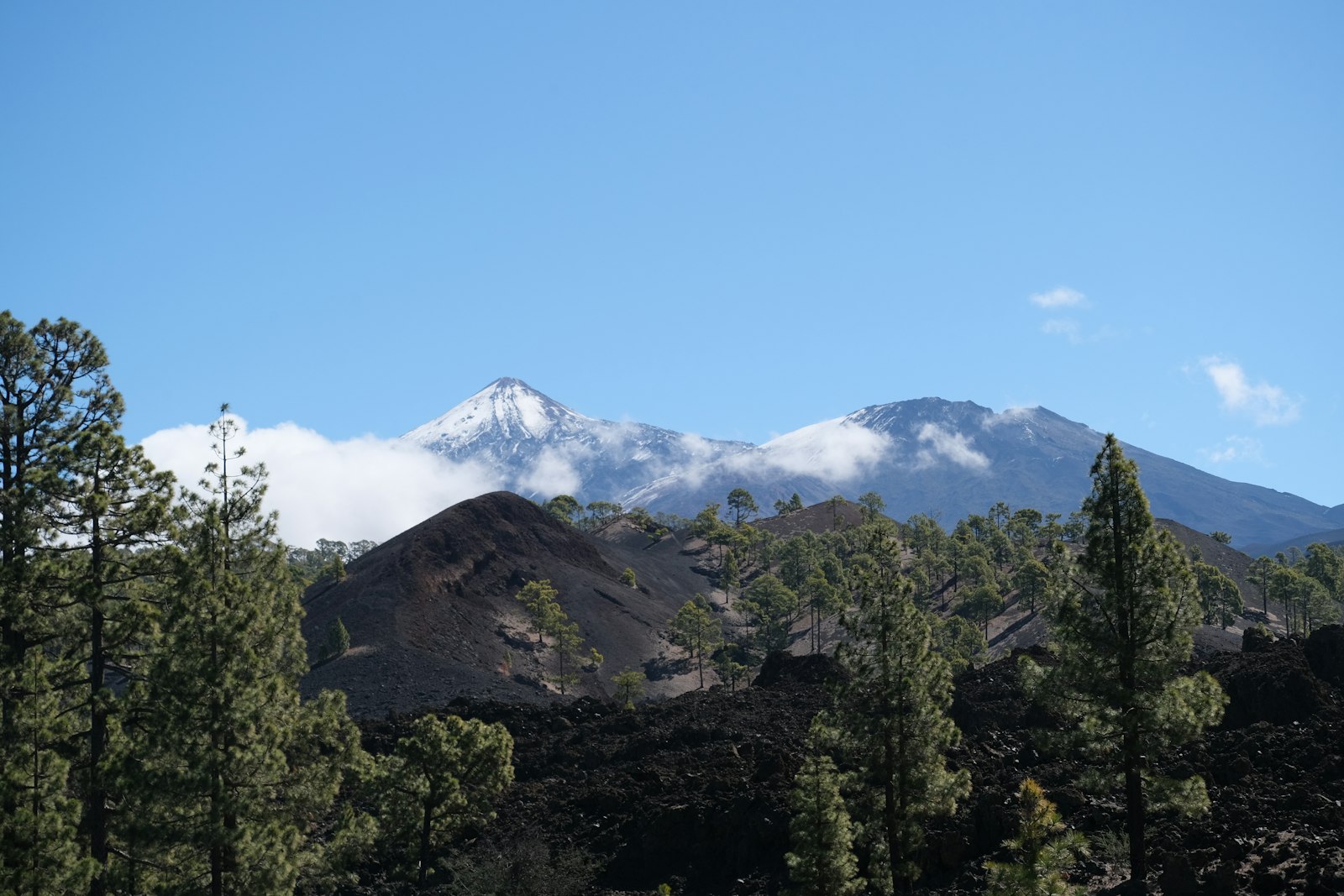
Canary Islands in January means the mildest winter weather in Europe, with coastal days of about 20 to 22 °C, a sea of about 19 to 20 °C and roughly six hours of sun a day on the southern and eastern coasts. It isn’t summer, though: nights drop to about 14 to 16 °C, the north of the high islands is greener and cloudier, Atlantic swells hit the exposed shores, and there is often snow on Mount Teide. This guide gives the verdict first, then goes island by island with official numbers, the Three Kings dates and the point in the month when crowds thin out.

Quick answer
Yes, for warm, mostly dry days rather than hot beach weather. Stay on the south coast of Tenerife or Gran Canaria, or on Lanzarote or Fuerteventura, for the most sun. Expect fresh evenings, a cool sea and snow on Teide. Prices ease after Three Kings on 6 January.
Key facts
Coastal days
About 20 to 22 °C
Nights
About 14 to 16 °C
Sea
About 19 to 20 °C
Sun, south and east
About 6 to 6.5 h a day
Daylight
About 10.5 hours
Busiest stretch
1 to 6 January
The January verdict, island by island
Best for: winter sun breaks, coastal walks, volcano and forest hiking, winter surf, a quiet week after the holidays. Not for: hot beach days, long warm swims or cheap rooms over New Year and Three Kings.
South Tenerife
GoSunniest base, about 2 rain days
North Tenerife
Go with careCool, about 8 rain days in the hills
Teide National Park
Go with careSnow possible, roads can close
South Gran Canaria
GoDunes, warm, about 6 h of sun
Lanzarote
GoDriest skies, 6.5 h of sun
Fuerteventura
GoLong beaches, steady wind
La Palma
Go with careWettest island, green walking
La Gomera & El Hierro
GoQuiet, mild, slow travel
Canary Islands in January: The Numbers for Every Island
This section is the reference table. The gap between a sunny south coast and a cloudy northern hillside is bigger than the gap between islands. Read across for the place you plan to sleep, not just the island name.
| Island (station) | Day / night | Rain days (rain) | Sun a day | Sea | Crowds | Price level |
|---|---|---|---|---|---|---|
| Tenerife south (Tenerife Sur airport) | About 22 °C / 15 °C | About 2 (15 to 17 mm) | About 6 h | About 20 °C | High in week one, then medium | High, easing after 6 Jan |
| Tenerife north-east (Santa Cruz) | About 21 °C / 15 °C | About 4 to 5 (30 to 34 mm) | — | About 20 °C | Medium | Medium |
| Tenerife north hills (Tenerife Norte airport, about 630 m) | About 16 °C / 10 °C | About 8 (about 80 mm) | About 5 h | — | Low to medium | Medium |
| Teide area (Izaña, about 2,370 m) | About 7 to 8 °C / 1 °C | About 4 to 5 (50 to 87 mm) | — | — | Medium on clear weekends | — |
| Gran Canaria (airport, east coast) | About 21 °C / 15 °C | About 3 (18 to 25 mm) | About 6 h | About 19 °C | High in week one, then medium | High, easing after 6 Jan |
| Lanzarote (airport) | About 21 °C / 14 °C | About 3 to 4 (15 to 24 mm) | About 6.5 h | About 19 °C | Medium to high | Medium to high |
| Fuerteventura (airport) | About 21 °C / 15 °C | About 2 to 3 (14 to 17 mm) | About 6 h | About 19 °C | Medium | Medium |
| La Palma | About 20 to 21 °C / 15 to 16 °C | About 5 to 6 (40 to 58 mm) | — | About 20 °C | Low | Medium |
| La Gomera (San Sebastián) | About 22 °C / 17 °C | Not published (about 35 mm) | — | About 20 °C | Low | Medium |
| El Hierro | About 21 °C / 16 to 17 °C | About 3 (25 to 28 mm) | — | About 20 °C | Low | Low to medium |
🗓️ Free: the 12-Month Map for Spain
Every month on one page: best weeks, shoulder weeks and the ones to skip. Print it or keep it on your phone.
Ranges combine two long-term sets of averages: the official normals of Spain’s state weather agency, AEMET (for example its Tenerife Sur airport table), and Climates to Travel’s January tables for the Canary Islands, which also supplies the sea temperatures. A rain day means a day with at least 1 mm of rain, often a short shower. Sunshine is AEMET’s monthly total divided by 31, given only where AEMET publishes it for that station; a dash means no published figure, not no sun. Daylight is about 10.5 hours across the islands. Crowd and price levels are the Monthly Travel Guide editorial team’s ratings, not statistics.
203 h
of January sun at Lanzarote airport
1.8
rain days at Tenerife Sur airport
19.5 °C
average sea around the islands
1 °C
average night near Teide
🧰 Try it while you read: a free tool for this trip
Free trip timing tool
Shoulder Season Detector
Find the months just before and after the peak: good weather, fewer people.
Loading the tool…
Three Things That Shape a January Week
These three weather patterns decide whether a given day is a beach day, a hiking day or a museum day.
Trade-wind cloud on the northern slopes
The north-east trade winds push damp air against the high islands, where it rises and forms a band of cloud on the northern slopes. That’s why Tenerife’s northern airport, at about 630 metres, averages about 16 °C by day and about eight rain days, while the southern airport, under an hour’s drive away, sees about 22 °C and fewer than two. Lanzarote and Fuerteventura are low and flat, so the cloud mostly passes over them.
Calima: the Saharan dust spells
Calima is a warm, dry wind from the Sahara that fills the air with fine dust. Local guides note that it’s more frequent in winter, with the highest dust concentrations in winter and early spring, and that an episode usually lasts two or three days. The eastern islands, closest to Africa, tend to notice it most. In strong episodes, people with asthma or heart and lung conditions are advised to limit time outdoors.
Tip
Keep one flexible day in a January plan. If a calima arrives, use it for a museum, a winery lunch or a spa, and move your long hike or Teide trip to the clear day after.
Atlantic swell and winter surf
Winter storms far out in the North Atlantic send long swells toward the islands, and the north- and west-facing coasts take the biggest of them. Lonely Planet describes winter as the top surf season at breaks such as Famara on Lanzarote, El Cotillo on Fuerteventura and Playa de las Américas on Tenerife, while beginners usually find calmer conditions in summer. For swimmers, that means choosing sheltered southern beaches, coves behind breakwaters or natural pools, and respecting the red flag when it flies.

The Smart Timing Bundle
Pick the month, book in the right order, pack once
Six printable timing tools for any trip: the Trip Timing Planner, When to Book, When NOT to Go, the Shoulder Season Playbook, the family timing guide and the Packing by Season System.
See the bundle · $37Six products, $100 separately · Digital download · All sales final
Tenerife in January: Sunny South, Greener North, Snow on Teide
This section covers the largest island, which has the widest range of January weather in the archipelago: beach weather on the south-west coast, a cooler and greener north, and a high volcano that can be white with snow.
South Tenerife in January
GoCosta Adeje, Los Cristianos and Playa de las Américas
22 °C
average high
1.8
rain days
6 h
of sun a day
20 °C
sea
The south and south-west coast
AEMET’s long-term figures for Tenerife Sur airport show an average high of about 22 °C, a low of about 15 °C, about 17 mm of rain on fewer than two days and about 193 hours of sunshine across the month. That makes the south-west resorts the island’s safest January base.
Puerto de la Cruz and the north
The north coast around Puerto de la Cruz and Garachico is about as warm by day, but cloudier and showerier, and the hills around La Laguna are noticeably cooler: about 16 °C by day and 10 °C at night, with about eight rain days. It suits gardens, old towns and coastal walks; treat it as a day trip if you came for the sun.
Mount Teide and the national park
At Izaña, about 2,370 metres up on the flank of Teide, the January average is about 7 to 8 °C by day and about 1 °C at night. The summit is higher and colder still, and snow is common in winter. After heavy snow or ice, the island authorities sometimes close the access roads into Teide National Park, and the cable car stops in strong wind or ice. Check road and cable car status in the morning and go early.
Warning
The final path to Teide’s summit needs a permit booked well ahead, and Lonely Planet notes the trail can close in winter because of snow. Bring a warm jacket, hat and gloves even if the coast is 22 °C.
Gran Canaria in January: The South Coast Does the Heavy Lifting
This section covers the island that pairs dependable beach weather with a real city. AEMET’s figures for Gran Canaria airport, on the east coast, show about 21 °C by day, 15 °C at night, about three rain days and about 184 hours of sunshine in January, roughly six hours a day. The sea is about 19 °C.
South Gran Canaria in January
GoMaspalomas, Playa del Inglés, Puerto de Mogán
21 °C
average high
3
rain days
6 h
of sun a day
19 °C
sea
The south coast, from Playa del Inglés and the Maspalomas dunes west to Puerto de Mogán, is the sunniest part of the island and the busiest in January. Las Palmas, on the cloudier north-east tip, adds a city and Las Canteras, a long beach sheltered by a natural reef.
The highlands and Roque Nublo
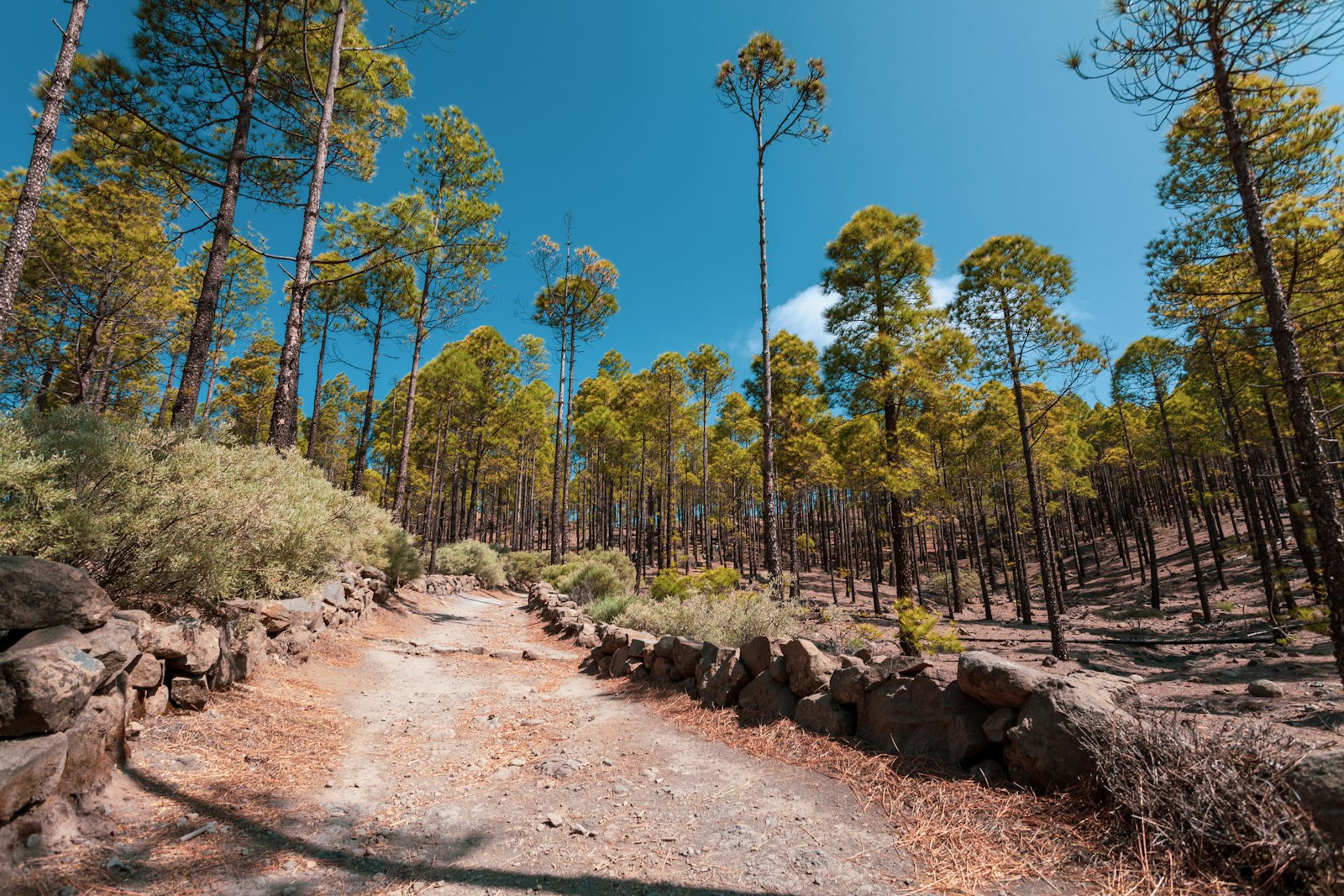
The centre of the island rises to well over 1,800 metres. January is a good month for the walks to Roque Nublo, the basalt monolith above the pine forest, as long as you start early and carry a layer: the highlands are much cooler than the coast and can sit in cloud. Lonely Planet notes that almond blossom appears in the countryside from about mid-January, which brings colour to the inland villages.
Lanzarote and Fuerteventura: Driest Air, Steadiest Wind
The two eastern islands are low, flat and close to Africa, which makes them the driest and among the sunniest in January. The trade-off is a steadier wind and a sea of about 19 °C, a degree cooler than around the western islands.
Lanzarote
Lanzarote in January
GoPuerto del Carmen, Playa Blanca, Costa Teguise
21 °C
average high
3 to 4
rain days
6.5 h
of sun a day
19 °C
sea
AEMET’s Lanzarote airport station logs about 203 hours of January sunshine, the highest of the airport stations we checked, with an average high near 21 °C and about 16 mm of rain. It’s the island for black lava fields, white villages and the volcanic landscapes of Timanfaya National Park. Playa Blanca in the south and Puerto del Carmen are the most sheltered bases. Famara, on the north-west coast, is where the winter surf rolls in.

The complete kit
Every country guide, every timing tool
All 24 When to Go country guides, the six Smart Timing tools and every 12-Month Map, with a Start Here that tells you what to open first.
See the kit · $127The five bundles cost $225 separately · Digital download · All sales final
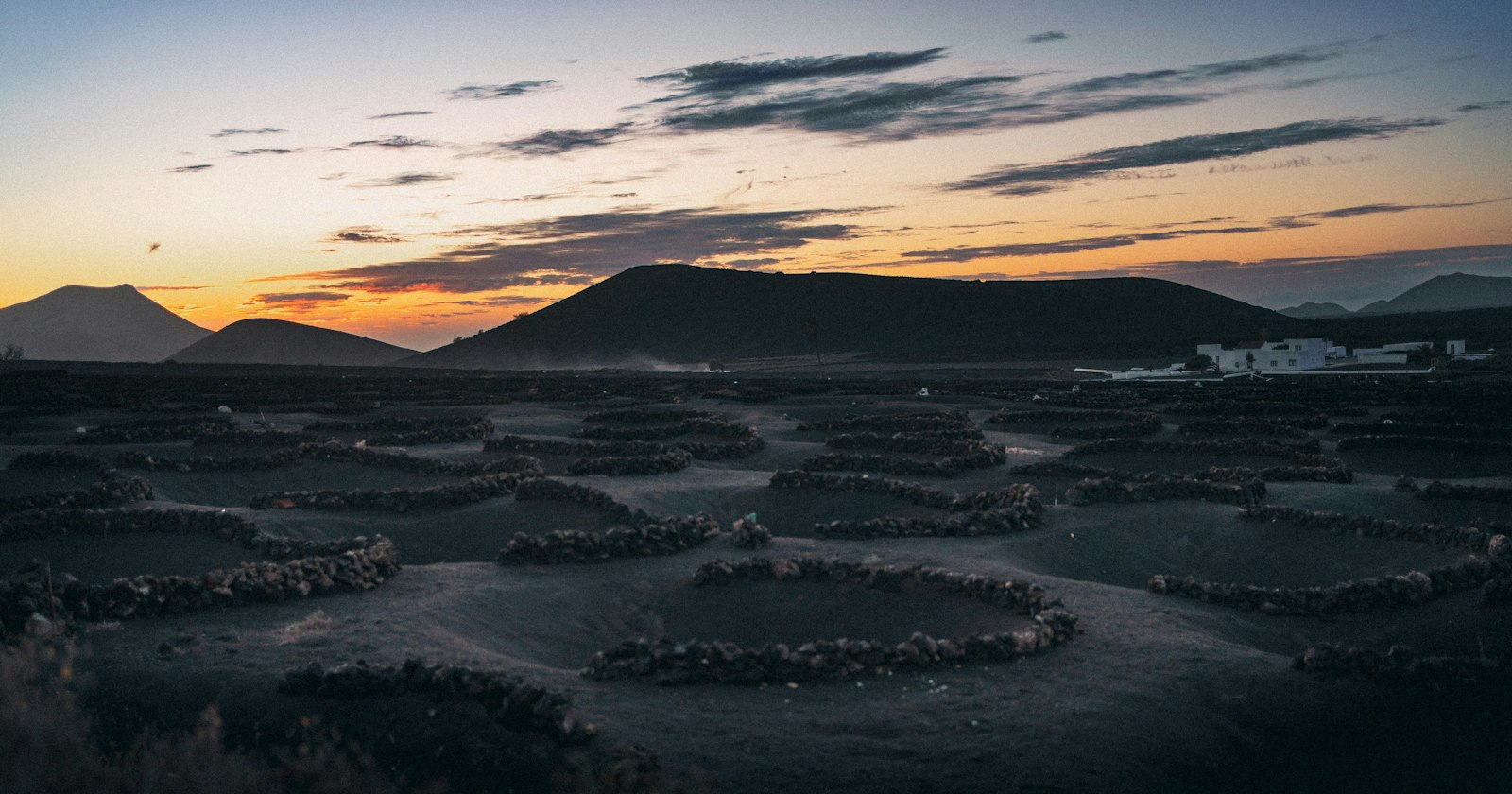
La Geria’s vineyards, where each vine grows in a hollow dug into volcanic ash and protected by a low curved wall, make an easy half-day drive.
Fuerteventura
Fuerteventura in January
GoCorralejo, Costa Calma, Morro Jable
21 °C
average high
2.5
rain days
6 h
of sun a day
19 °C
sea
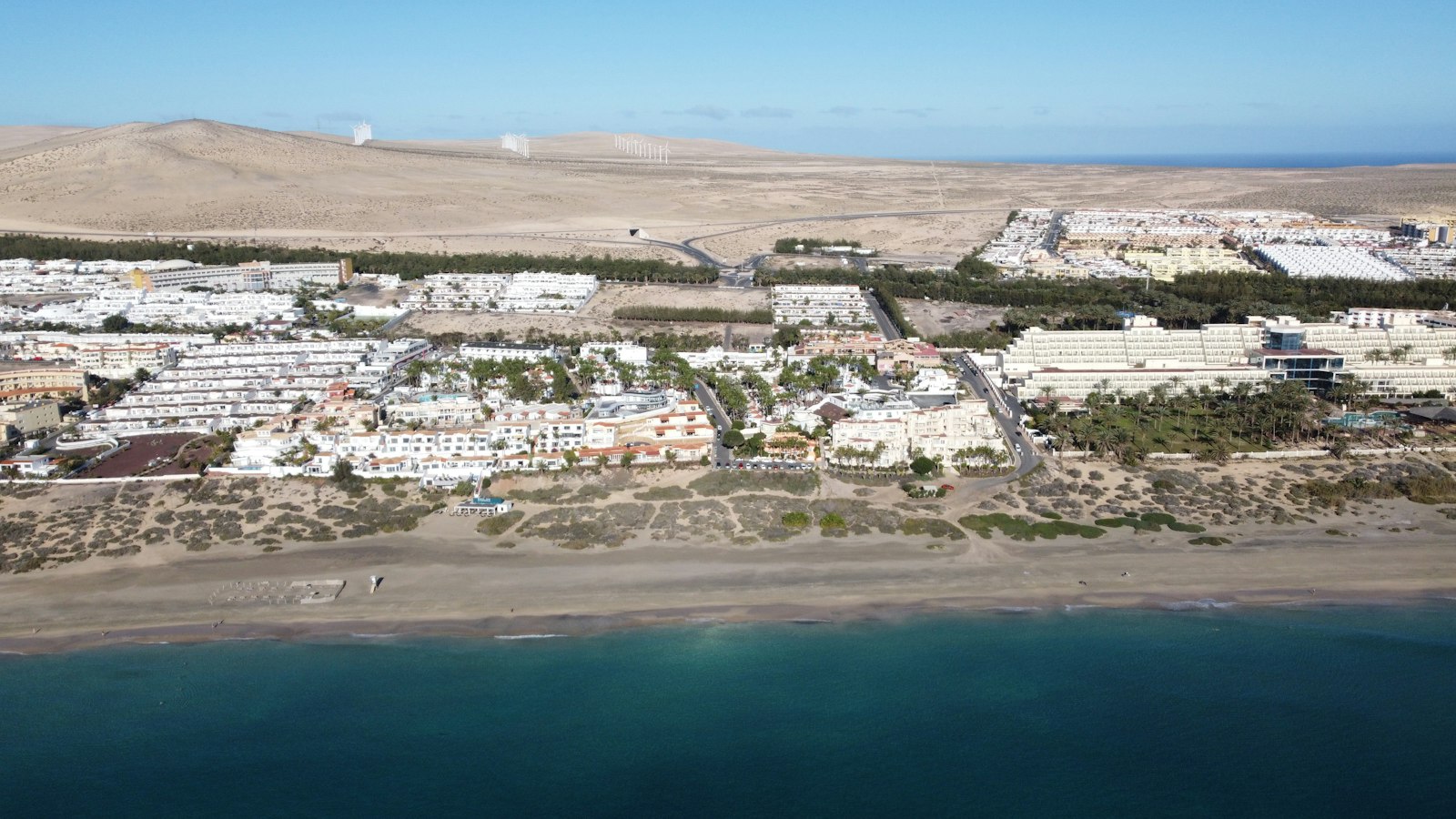
Fuerteventura averages about 21 °C by day, 15 °C at night, about 14 mm of rain on two or three days and about 190 hours of sunshine at its airport. It has the longest sandy beaches in the archipelago, from the dunes at Corralejo in the north to the wide lagoons and bays of the south. The steady wind that draws kitesurfers can make beach afternoons blustery, so pick a south-facing bay. El Cotillo, in the north-west, has winter surf.
La Palma, La Gomera and El Hierro: The Walking Islands in Winter
This section covers the three smaller western islands. They’re walking islands first and beach islands second, and quiet once the holiday weeks end.
La Palma
La Palma is the wettest island in January, with about five or six rain days and about 40 to 58 mm of rain in the long-term averages. That rain feeds deep ravines and pine and laurel forests. The coast stays mild at about 20 to 21 °C, but the high ridge around the Roque de los Muchachos averages close to freezing at night and can get snow. Keep a spare day for weather.
La Gomera
La Gomera is about an hour by ferry from Los Cristianos in south Tenerife, so it’s the easiest to add to a trip. San Sebastián averages about 22 °C by day and 17 °C at night in January, with about 35 mm of rain. The laurel forest of Garajonay National Park, often in mist on the heights, is the reason to come; Valle Gran Rey on the west coast is the sunny base. Lonely Planet notes that winter is good for whale watching off Tenerife and La Gomera.
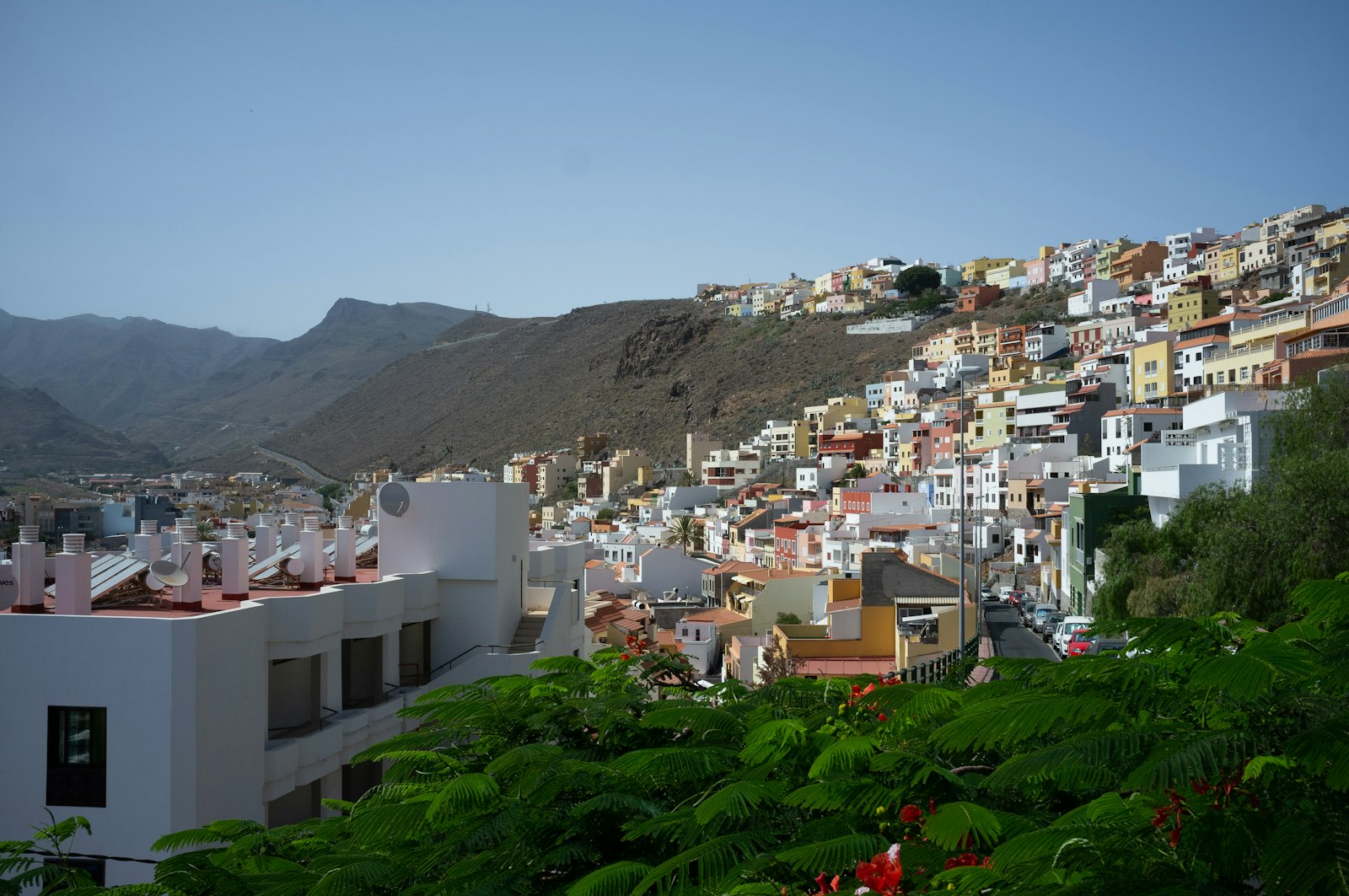
El Hierro
El Hierro is the smallest and quietest of the main islands, with about 21 °C by day, about three rain days and a sea near 20 °C. It suits divers, walkers and anyone who wants a slow week with very few other visitors. Connections are limited, so book early.
Beyond January
When to Go: Spain
January is only one month in the Canaries, and the islands change a lot over the year. When to Go: Spain rates every month across the mainland regions and both island groups, with sun, sea and rain, festival weeks, crowd and price seasons and the dates to avoid, so you can pick the island and the week before you book.
See When to Go: Spain →Digital download · All sales final
January Dates: Three Kings First, Then the Quiet Weeks
January has a busy first week, a quieter middle and a slow build toward carnival.
| Dates | What happens | Crowds | Price level |
|---|---|---|---|
| 1 January | New Year’s Day; many Las Palmas residents start the year with a swim at Las Canteras | Very busy | Highest |
| Usually 5 January (evening) | Three Kings parades (cabalgatas de Reyes) in the main cities and towns; Three Kings plays in some villages | Very busy in town centres | Highest |
| 6 January | Three Kings Day, a public holiday across Spain; many shops close | Busy | High |
| About 7 January to late January | Holiday travel ends and schools go back; the quietest stretch of the winter season | Medium | Medium to high |
| Usually second half of January | Carnival season can open in Santa Cruz de Tenerife and Las Palmas with contests and galas | Medium, busier in the two capitals | Medium to high |
| Usually February, sometimes early March | The big carnival street days, following the Easter calendar | Very busy in the capitals | High |
According to the islands’ official tourism site, Hello Canary Islands, the parade of the Three Wise Men passes through the main cities and towns on 5 January, with floats, bands and dance groups, and Three Kings plays are acted out the same night in places such as Agüimes on Gran Canaria, El Sauzal and Tejina on Tenerife, and Garafía on La Palma.
Crowds and prices through the month
The Canaries are Europe’s main winter-sun destination, and Lonely Planet places January inside the high season that runs from about mid-December to February. The first week is the peak, when flights, family rooms and hire cars fill up. From about 7 January, holiday travel drops away and the middle of the month is usually the calmest and best-value part of the winter, though never cheap. Prices firm up again toward carnival.
Pack and book for the Canary Islands in January
- ✓A warm layer and a light rain jacket for evenings and the north
- ✓Hat, gloves and a proper jacket for Teide or the La Palma ridge
- ✓Teide summit permit, booked well ahead
- ✓A sheltered south-coast base on the high islands
- ✓Hire car and ferry seats for 1 to 6 January, or travel after the holiday
When Not to Go to the Canary Islands in January
This section is the honest one. January is a strong month for most winter-sun trips, but it’s the wrong pick if any of these is your priority:
| If you want… | January is… | Better month |
|---|---|---|
| Hot beach days and a warm sea | About 20 to 22 °C with a sea near 19 to 20 °C | August to October, when the sea is usually at its warmest |
| Calm surf for a first lesson | Peak season for big Atlantic swell on exposed coasts | Summer, when the swell is usually smaller |
| Reliable summit hikes on Teide | Snow and ice can close the trail and roads | Spring or autumn |
| The lowest prices | High season, with a peak in the first week | May, June or early November |
| The big carnival parades | Usually too early for the main street days | February, sometimes early March |
| Guaranteed clear skies in the north | The cloudiest, wettest time on northern slopes | Summer for the north coast |
Compare the Canary Islands in December, Spain in December and Portugal in December, or see our December destination guide. Our when-not-to-go guide explains how to spot the wrong months anywhere, and our guide to winter festivals in Europe in January covers the month’s big events.
Better month if you want…
For whales, wolves and other cold-weather wildlife trips, see our best destinations for winter wildlife spotting in January.
5 Common Mistakes With a January Canaries Trip
1. Expecting summer heat
Nights fall to about 14 to 16 °C and the wind can feel cool. Pack a sweater and a light jacket, not just beachwear.
2. Basing yourself in the north for a beach week
Tenerife’s northern hills average about eight rain days and 16 °C in January. If sun is the point, sleep on the south or south-west coast of the high islands and visit the north for a day.
3. Driving up Teide without checking first
Snow and ice sometimes close the park roads and stop the cable car, and Izaña averages about 1 °C at night. Check the road and cable car status the same morning and bring winter layers.
4. Swimming wherever the sand looks good
January is the main swell season on exposed north- and west-facing coasts. Swim on sheltered beaches with lifeguards, follow the flags and leave the big-wave beaches to experienced surfers.
5. Booking the first week by accident
1 to 6 January is the peak of the holiday season, with the highest prices and fullest flights. A week later often brings the same weather for less.
Canary Islands in January: FAQ
Q. Is January a good time to visit the Canary Islands?
Yes, for winter sun. Coastal days average about 20 to 22 °C, the sunniest southern and eastern stations log about six hours of sun a day, and rain usually comes in short spells. The trade-offs are a cool sea of about 19 to 20 °C, chilly nights, a cloudier north and high-season prices in the first week.
Q. Which Canary Island is warmest in January?
The differences are small at sea level: most coastal stations average about 21 to 22 °C by day. South Tenerife and La Gomera are among the warmest, and south Tenerife is also one of the driest, with fewer than two rain days. For the most sunshine, Lanzarote’s airport station logs about 203 hours in January, roughly six and a half hours a day.
Q. Can you swim in the Canary Islands in January?
Yes, but the sea is fresh, about 19 to 20 °C, so most people swim for a short time on sunny afternoons. Choose sheltered southern beaches or natural pools, because Atlantic swells hit the exposed north- and west-facing coasts hardest in winter. Many hotels heat their pools, which is the warmer option for children and long swims.
Q. Is there snow on Mount Teide in January?
Often, yes. Snow is common on Teide’s upper slopes in winter, and the Izaña station, at about 2,370 metres, averages about 7 to 8 °C by day and 1 °C at night in January. After heavy snow or ice, access roads to the national park and the cable car can close for a time, so check the same morning before you drive up.
Q. When is carnival in the Canary Islands?
The big carnivals of Santa Cruz de Tenerife and Las Palmas de Gran Canaria usually hold their main street days in February, sometimes in early March, because the dates follow Easter. The official season can open earlier, with contests and galas from the second half of January. Check each city’s programme before you book if carnival is the reason for your trip.
Q. Are the Canary Islands busy in January?
The first week is very busy, with New Year and the Three Kings parades on 5 January, followed by the 6 January holiday. After that, holiday travel drops off and the rest of the month is usually calmer, though still part of the winter high season. Mid-January is often the best balance of weather, prices and crowds.
The Bottom Line
The Canary Islands in January give dependable mild sun if you sleep in the right place: south Tenerife or south Gran Canaria for a classic beach base, Lanzarote or Fuerteventura for the driest skies, and La Gomera, La Palma or El Hierro for walking and quiet. Your next step is to choose your dates around the 1 to 6 January peak, then book flights, rooms and a car together. For the month before, read the Canary Islands in December.
Monthly Travel Guide
Pick the right island for every month
When to Go: Spain is a month-by-month guide to the mainland and the islands, the Canaries included: sun and rain by region, sea temperatures, festival weeks, crowd and price seasons, and the dates to avoid.
See When to Go: SpainDigital download · All sales final
Free download
The 12-Month Map, free
The whole year for one country on four printable pages, so you can see the right months before you read anything else.
- Good, shoulder and avoid months at a glance
- Region by region, not one average for the whole country
- Prints cleanly on US Letter
Your download page opens as soon as you sign up. 24 countries available.