
Red Sea diving in September means the warmest water of the year, long sunny days and the start of the autumn season for oceanic whitetip sharks on the offshore reefs of Egypt. The sea sits at about 27 to 28.5 °C from Hurghada to Marsa Alam, rain is close to zero, and visibility is often 30 m or more. The catch is the air: highs reach about 32 to 36 °C on shore, and the wind can pick up on exposed sites. Below you’ll find water and air temperatures by resort, the sites that work best in September, what wind and visibility mean in practice, and a short look at Aqaba in Jordan.

When to Go guides
Choose your country, then your month
24 country guides, each about 100 pages: every month rated for weather, crowds and prices, region by region, with a 7-day booking plan. Six guides per region bundle.
Browse the 24 guides · $19 eachRegion bundles: Europe, Asia & Pacific, Sun Souks & Safari, Americas · $47 each
Short answer
Yes, September is a strong month to dive the Red Sea. Water is about 27 to 28.5 °C, so a thin wetsuit is enough, visibility is usually excellent and seas are often calm, with moderate currents. Oceanic whitetips start to appear offshore. The trade-offs are hot afternoons on land and days when wind limits the exposed reefs, so build in a spare day.
Key takeaways
The sea is near its yearly peak: about 27 °C at Hurghada and about 28 to 28.5 °C at Sharm el-Sheikh and Marsa Alam.
Air temperatures stay high, with average highs of about 32 °C in Hurghada and about 36 °C in Sharm el-Sheikh.
Autumn is one of the clearest periods, with visibility often reaching 30 m or more.
Oceanic whitetips become common from September at the Brothers, Elphinstone and St Johns.
Wind is the main variable: Sharm averages about 21.5 km/h in September, a little more than in August or October.
Aqaba in Jordan offers easy shore diving on the same gulf, with 23 sites in its marine park.
Red Sea Diving in September: Water, Air and Visibility
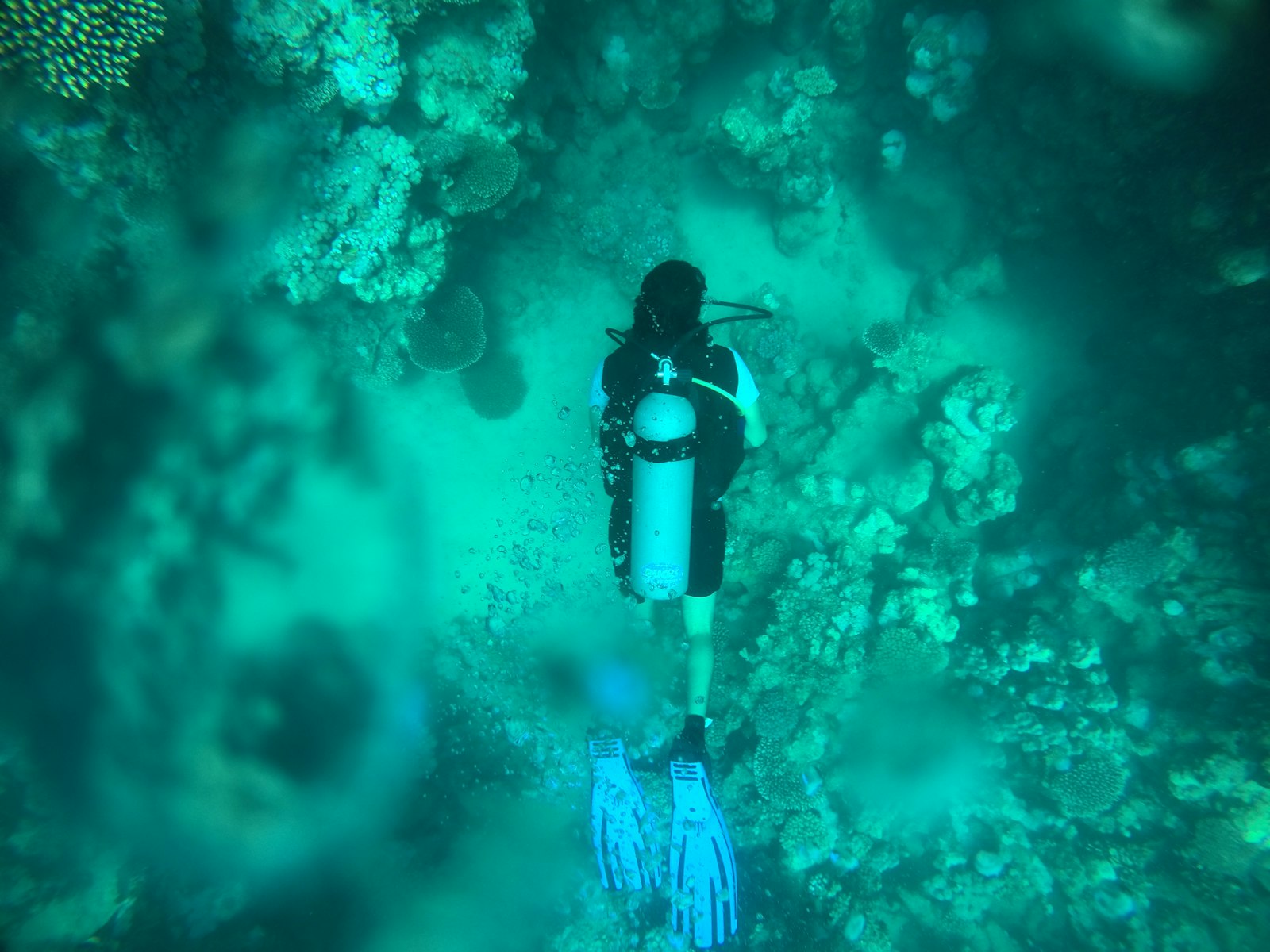
This section sets out the numbers behind a September dive trip. The Egyptian Red Sea coast runs for hundreds of kilometres, so conditions shift a little from the Sinai in the north to Marsa Alam in the south, but the overall picture is the same: hot, dry and very clear.
| Area | Air high / low | Sea | Sun | What it means |
|---|---|---|---|---|
| Sharm el-Sheikh (South Sinai) | About 36 / 27 °C | About 28 °C | About 11 h a day | Hottest air; dive early, rest at midday |
| Hurghada | About 32 / 24 °C | About 27 °C | About 11 h a day | Slightly cooler air, very dry |
| Marsa Alam (south) | About 34 / 25 °C | About 28.5 °C | Long sunny days | Warmest water; base for the southern reefs |
🗓️ Free: the 12-Month Map for Egypt
Every month on one page: best weeks, shoulder weeks and the ones to skip. Print it or keep it on your phone.
Sources: Weather2Travel for Hurghada, which lists no rain days at all from June to November; Climates to Travel for Sharm el-Sheikh and Marsa Alam. Water this warm is near the top of the Red Sea range, which runs from about 21 °C in late winter to about 30 °C at the end of summer, according to LiveAboard.com.
Visibility is the other headline. The same LiveAboard.com guide gives a normal range of about 20 to 40 m and puts spring and autumn, from March to May and September to November, at the top of it, often 30 m or more. Calm seas and moderate currents are typical of these months. Emperor Divers simply describes the Red Sea as clear for most of the year.
Tip
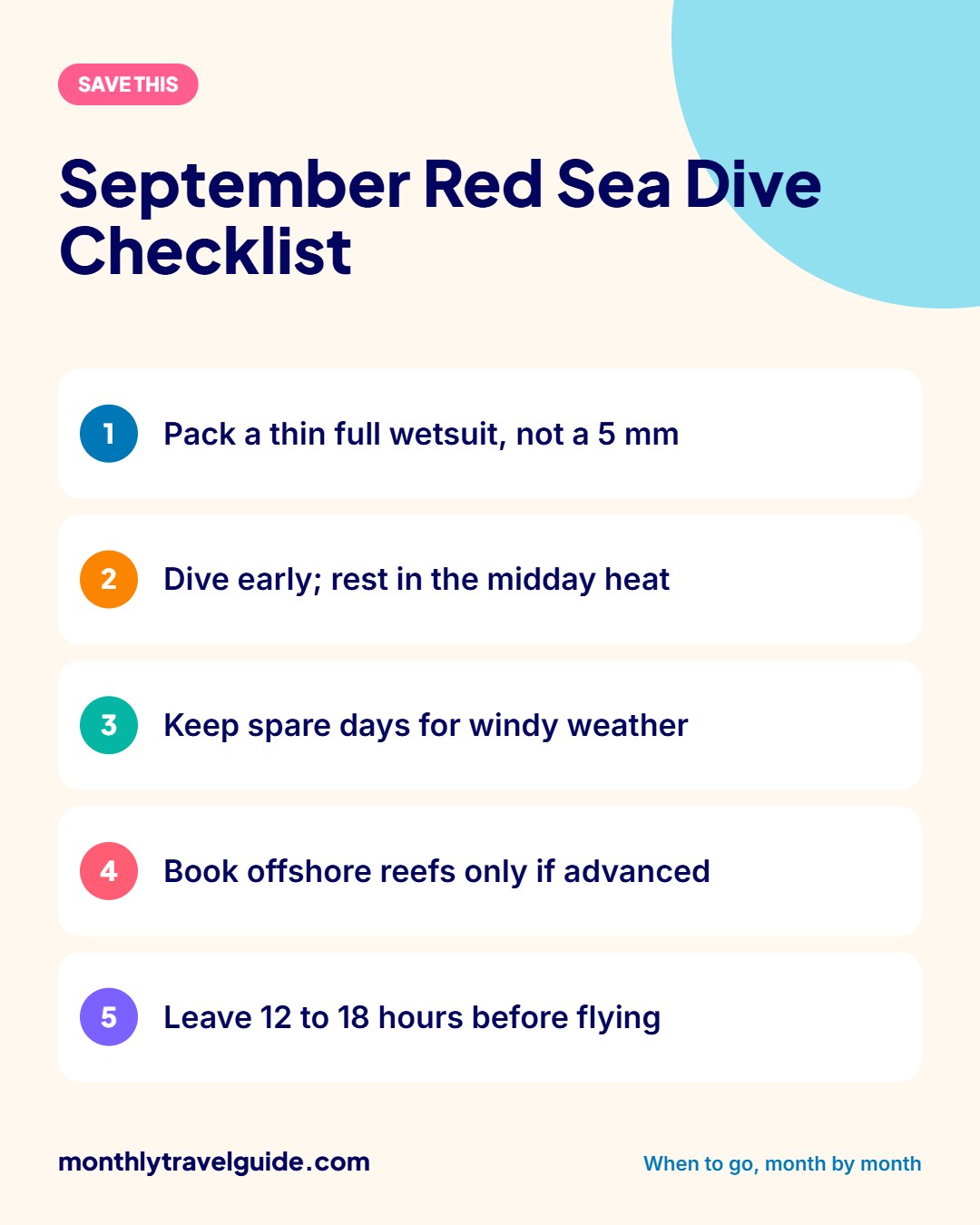
In water this warm, many divers wear a thin full-length suit rather than a winter 5 mm. A full suit still protects you from sun, stings and coral scrapes on long boat days. Pack reef-safe sun protection, a hat and a long-sleeved top for the surface intervals, when the deck can get very hot.
Red Sea dive months at a glance
Hurghada averages, °C
Jan
Sea 23° · Air 21°
Cooler water, windier
Go with careFeb
Sea 22° · Air 22°
Coldest sea, 5 mm suit
Go with careMar
Sea 22° · Air 25°
Spring clarity begins
GoApr
Sea 23° · Air 28°
Peak season, busy
GoMay
Sea 24° · Air 31°
Warming, still busy
GoJun
Sea 26° · Air 33°
Hot; Daedalus hammerheads shallow
Go with careJul
Sea 27° · Air 34°
Hottest air, family holidays
Go with careAug
Sea 28° · Air 34°
Warmest sea, very hot on land
Go with careSep
Sea 27° · Air 32°
Warm sea, clear, whitetips start
GoOct
Sea 27° · Air 30°
Best balance, busy
GoNov
Sea 26° · Air 27°
Comfortable, peak season
GoDec
Sea 24° · Air 23°
Cooler, windy spells
Go with careSea and daytime air temperatures for Hurghada from Weather2Travel; notes from LiveAboard.com and Emperor Divers. Sharm el-Sheikh runs hotter on land.
Read across the year and September sits in a useful spot: the sea is still as warm as midsummer, the air is a few degrees cooler than in July and August, and the busiest autumn weeks of October and November have not yet arrived. LiveAboard.com notes that the April to May and October to November peaks fill up quickly, so early September can be the easier window to book.
🧰 Try it while you read: a free tool for this trip
Free trip timing tool
Beach Water Temperature Picker
Set the sea temperature you like; see which countries reach it in your month.
Loading the tool…
Wind and Sea State: The One Thing to Watch
This section explains how wind shapes a September dive week. It’s rarely strong enough to stop diving altogether, but it decides which reefs a boat can reach and how comfortable the crossing feels.
Climates to Travel lists an average wind of about 21.5 km/h in Sharm el-Sheikh in September, compared with about 19.6 km/h in August and 18.2 km/h in October. For Marsa Alam, the same source says wind often blows in summer, which takes the edge off the heat. LiveAboard.com, by contrast, flags windy conditions mainly from December to February and describes autumn seas as generally calm.

The Smart Timing Bundle
Pick the month, book in the right order, pack once
Six printable timing tools for any trip: the Trip Timing Planner, When to Book, When NOT to Go, the Shoulder Season Playbook, the family timing guide and the Packing by Season System.
See the bundle · $37Six products, $100 separately · Digital download · All sales final
| Site type | Wind effect | Plan |
|---|---|---|
| Sheltered bays and house reefs | Little effect | Good fallback on windy days |
| Ras Mohammed and Tiran reefs | Exposed points can get choppy | Go early, when water is often calmer |
| Thistlegorm (open water in the Gulf of Suez) | Long crossing; currents vary | Keep a flexible day for it |
| Brothers, Daedalus, Elphinstone | Offshore; mooring and drift depend on sea state | Liveaboard or day boat with a backup site |
Warning
Offshore reefs such as Elphinstone are rated for advanced divers because of strong currents and unpredictable conditions, according to PADI. Wind against current can make surface pick-ups hard. Carry a surface marker buoy, follow the boat briefing exactly and skip the dive if you feel unsure; there’s always another reef.
Where to Dive in Egypt in September
This section rates the main Egyptian dive areas for September. The verdicts weigh water temperature, likely sea state and what you can expect to see, not who runs the trips.
September site verdicts
Ras Mohammed
GoSouth Sinai
Shark and Yolanda Reef: three coral pinnacles and the Yolanda wreck. Big fish schools gather in summer.
Straits of Tiran
GoSouth Sinai
Jackson Reef: rich coral, tuna, barracuda and trevally, the Lara wreck on the back.
Thistlegorm
Go with careGulf of Suez
Famous wartime wreck to about 35 m with motorbikes and trucks in the holds. Weather-dependent.
Dahab
GoGulf of Aqaba
Shore diving on walls like the Blue Hole; the Arch below is for technical divers only.
Hurghada reefs
GoMainland coast
Easy reefs within a short boat ride, slightly cooler air than Sinai.
The Brothers
Go with careOffshore
Grey reef sharks, hammerheads, occasional threshers, the Aida II and Numidia wrecks.
Elphinstone
Go with careOff Marsa Alam
Soft corals and pelagics; oceanic whitetips in autumn. Advanced divers.
Abu Dabbab
GoMarsa Alam
Shallow bay to about 20 m for all levels: green turtles, rays, sometimes dugongs.
Site details from PADI and Emperor Divers. “Go with care” means good diving that depends on sea state or experience level.
Sharm el-Sheikh, Ras Mohammed and Tiran
The southern tip of Sinai packs the best-known reefs into a short boat ride. At Ras Mohammed, PADI describes Shark and Yolanda Reef as three coral pinnacles with the wreck of the Yolanda and its cargo, turtles and nudibranchs, and notes that summer brings big schools of fish that gather to reproduce. In the Straits of Tiran, Jackson Reef has abundant coral, tuna, barracuda and trevally, with the wreck of the Lara on its far side. In September, morning dives tend to be the calmest and the coolest on deck.
The Thistlegorm
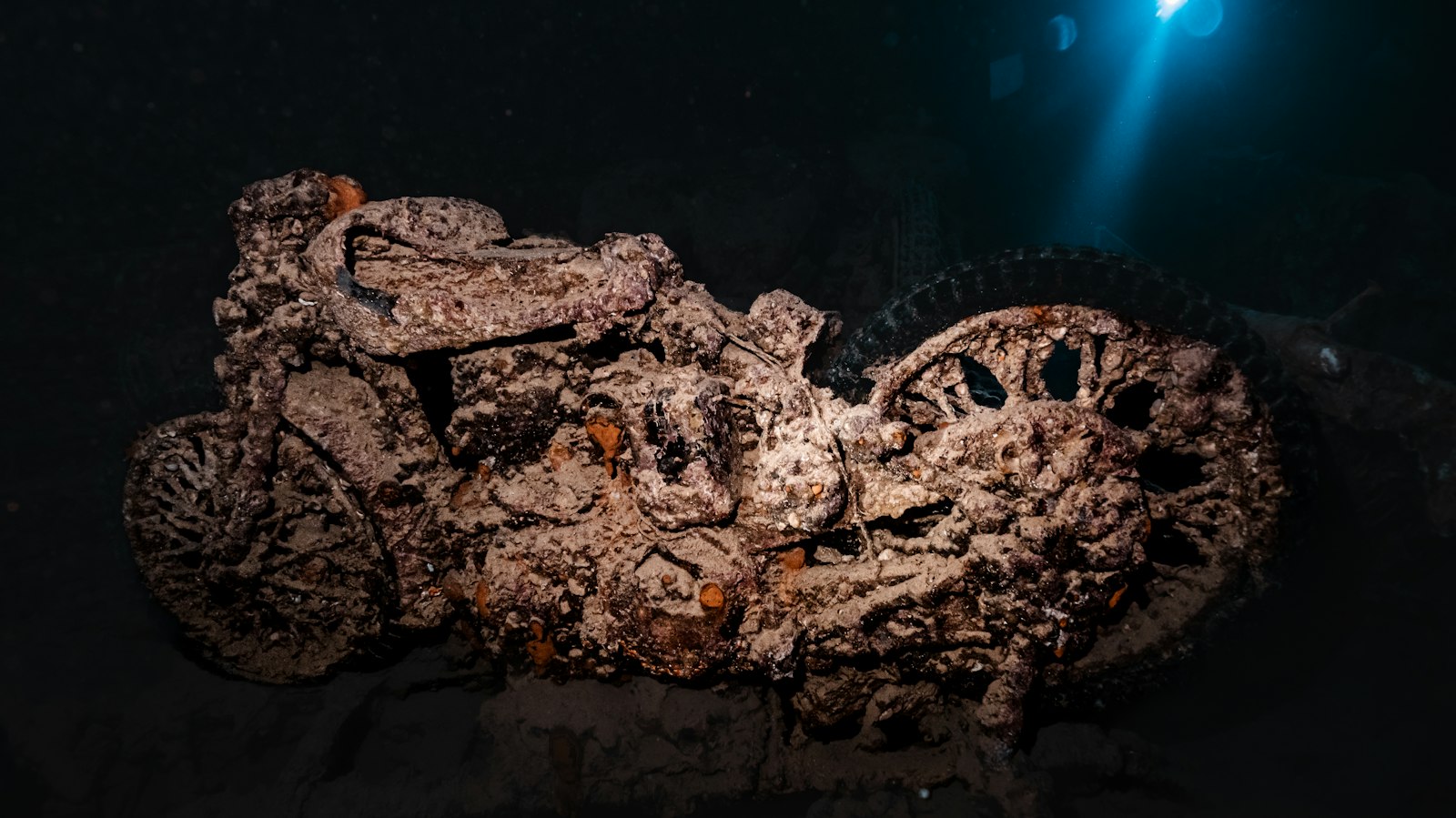
The wreck of the Thistlegorm lies in open water at Sha’ab Ali, at a maximum depth of about 35 m. It’s a Second World War cargo ship whose holds still carry motorbikes and Bedford trucks, alongside munitions and plenty of fish life. Day trips run from Sharm el-Sheikh and Hurghada, and it’s also a fixture on northern liveaboard routes. Because the crossing is long and the site is exposed, treat it as a weather-dependent dive and keep a spare day in your plan.
Dahab
Dahab sits on the Gulf of Aqaba coast of Sinai and is best known for shore diving. The Blue Hole is a reef wall with soft corals, anemones and large barracuda. Below it lies the Arch, which PADI says is for experienced technical divers only. Recreational divers stay on the wall and the shallow saddle, and never chase depth here.
Hurghada and the south
Hurghada is the busiest base on the mainland coast, with reefs a short ride from the marina and day trips north to the Thistlegorm. Further south, Marsa Alam has the warmest water of the three resorts and sits closest to Elphinstone and the southern reefs. Abu Dabbab is a sheltered bay with a maximum depth of about 20 m, suitable for all levels, where green turtles, guitar rays and sometimes dugongs feed on the seagrass. Emperor Divers says dugong dives happen mainly in bays north and south of Marsa Ghalib.
Sharks and Big Fish: What September Brings
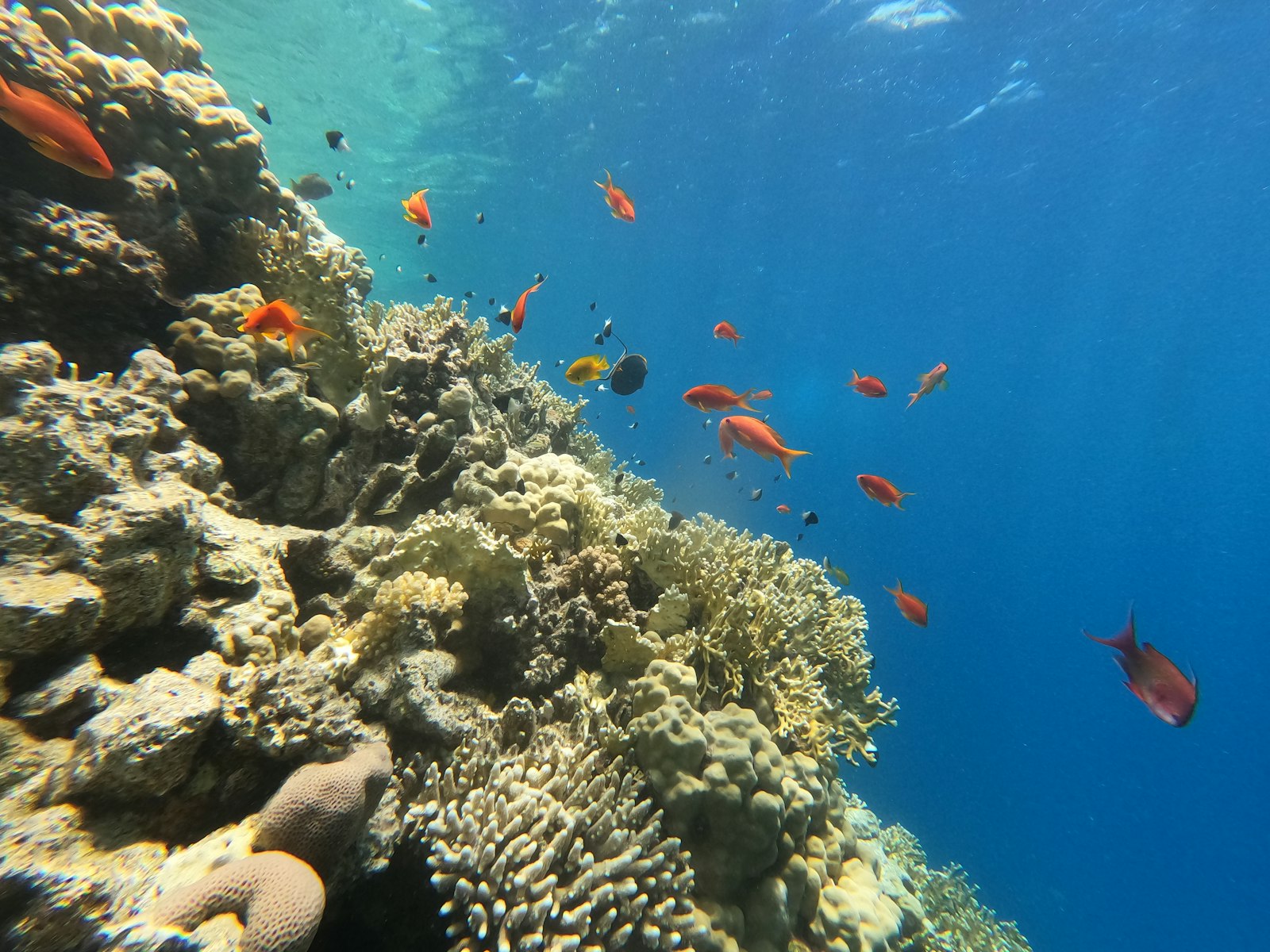
This section covers the pelagic season, which is the main reason many experienced divers choose late summer and autumn. Encounters are never guaranteed, so treat these as chances, not promises.
| Animal | Where | September outlook |
|---|---|---|
| Oceanic whitetip shark | Brothers, Elphinstone, St Johns | Common from September to June (Emperor Divers); autumn at Elphinstone (PADI) |
| Scalloped hammerhead | Daedalus, Brothers, Elphinstone, Tiran | Shallowest at Daedalus in May and June, deeper through summer and autumn |
| Thresher shark | Brothers and Daedalus | Seen all year, often early in the morning |
| Grey reef shark | The Brothers | Regular on the walls |
| Dugong | Bays around Marsa Alam | Sometimes seen; no clear season |
| Turtles, rays | Coastal reefs, Abu Dabbab | All year |
Sources: Emperor Divers, PADI and LiveAboard.com. Hammerheads are the trickiest in September: they are still around, but usually deeper and further off the wall than in early summer, so sightings reward patience and good air consumption.
Important
Oceanic whitetips are curious and can come close at the surface. Follow the boat’s shark briefing, keep your group tight, avoid splashing and don’t snorkel alone off the stern when whitetips are around.
Aqaba, Jordan: The Short Alternative
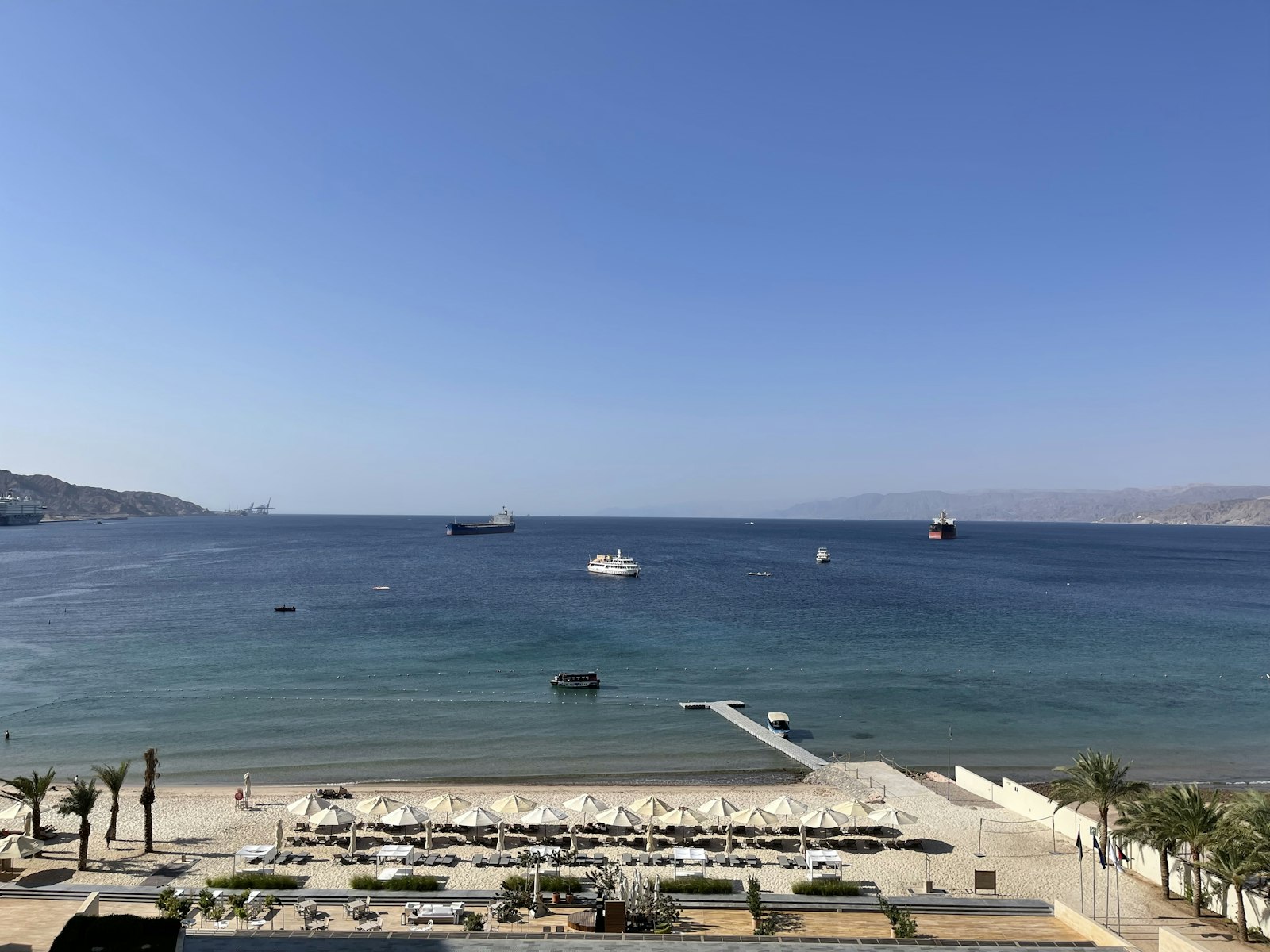
This section covers the Jordanian side of the Red Sea, at the top of the Gulf of Aqaba. It’s a small, easy diving area that pairs well with Petra and Wadi Rum.
According to Lonely Planet, Aqaba Marine Park has 23 dive sites, many reached straight from the shore at South Beach, about 20 minutes by taxi from the city. Visibility is described as outstanding because no rivers flow into the Red Sea. The headline sites are wrecks: the Cedar Pride, a cargo ship sunk deliberately as an artificial reef, a sunken tank close to the beach and a C-130 Hercules aircraft donated by the Royal Jordanian Air Force. Aqaba sits on the same gulf as Dahab, so expect a hot, dry September, and if you’re flexible, the same source rates November as the best month to dive there.

The complete kit
Every country guide, every timing tool
All 24 When to Go country guides, the six Smart Timing tools and every 12-Month Map, with a Start Here that tells you what to open first.
See the kit · $127The five bundles cost $225 separately · Digital download · All sales final
When September Diving Is Not the Right Call
This section is the honest part. September suits most divers, but a few situations call for a different plan or a different month.
| Avoid | Why | Do this instead |
|---|---|---|
| A short trip built around one offshore dive | Wind and sea state can cancel exposed sites | Allow at least two spare days, or pick a coastal base |
| Long midday walks or desert trips | Air highs of about 32 to 36 °C | Dive mornings; sightseeing after sunset |
| Flying home the same day as your last dive | Decompression risk at altitude | Leave 12 to 18 hours, per DAN guidelines |
| Expecting shallow hammerheads | They tend to sit deeper by autumn | Go in May or June for Daedalus |
| Heat-sensitive travellers or small children | Very hot afternoons | Choose late October or November |
DAN recommends a minimum surface interval of 12 hours after a single no-decompression dive and 18 hours after multiple dives a day or several days of diving, and substantially longer after decompression dives (DAN). Book your last dive day with that in mind. To test any travel dates for weather risks, try the free When Not to Go checker.
A Better Month If You Want Something Else
This section helps if your priorities point to another month.
If you want
Cooler days on land
Go from late October to November: the sea is still about 26 to 27 °C and the air is far easier. For winter, see Egypt in December.
If you want
Shallow hammerheads
Go in May or June for Daedalus, when Emperor Divers says they come shallow.
If you want
Quieter boats
Go in early September rather than October or November, the busy autumn peak.
If you want
Snorkelling with children
Pick a sheltered bay such as Abu Dabbab, and swim in the morning before the heat.
If you want
Other reef trips
Compare top diving and snorkelling destinations and lesser-known reefs for diving.
Still choosing where to go in September? Our September travel guide, September sun destinations and where to travel in September cover warm-water trips beyond Egypt, and the free Best Month Finder matches any month to the places that suit it.
Planning a Red Sea Diving Trip in September
This section turns the conditions into a simple plan. The aim is to dive in the cooler, calmer part of the day and keep the hot afternoons light.
Pick one base
Sharm for Ras Mohammed and Tiran, Hurghada for the Thistlegorm and easy reefs, Marsa Alam for Elphinstone and the south.
Choose boat style
Day boats suit mixed groups; liveaboards reach the Brothers and Daedalus.
Front-load hard dives
Put offshore or deep dives early in the week, so wind delays have room.
Pack for heat
Thin full suit, hat, long sleeves, reef-safe sun protection, plenty of water.
Protect the last day
Finish diving 12 to 18 hours before your flight.
Prices change; check before you book. Dive centres, boat schedules and marine park rules also change, so confirm the details directly before you travel. If you’re weighing up when to book flights for an autumn trip, the free When to Book calculator gives a simple guide.
5 Common Mistakes on a September Red Sea Dive Trip
1. Underestimating the heat between dives
The water feels perfect, so it’s easy to forget the deck and the shore are often above 32 °C. Dehydration adds to dive fatigue. Drink steadily, cover up on the boat and rest in the shade at midday.
2. Building the whole trip around one site
If your week depends on the Thistlegorm or the Brothers, a windy spell can leave you disappointed. Choose a base with good reefs close by and treat the big offshore dives as a bonus.
3. Overreaching on depth or current
Clear water makes depth hard to judge, and walls like the Blue Hole drop far below recreational limits. Elphinstone and the offshore reefs have strong currents. Dive within your training and your computer.
4. Packing a winter wetsuit
A thick 5 mm suit is right for February, not for 28 °C water. You’ll overheat on the surface and need more weight. A thin full suit is usually enough.
5. Flying out too soon
Leave at least 12 hours after a single dive and at least 18 hours after a multi-day dive trip before you fly, following DAN guidance. Plan a land day at the end of the week.
Red Sea Diving in September FAQ
Is September a good time to dive in the Red Sea?
Yes. September has some of the warmest water of the year, about 27 to 28.5 °C along the Egyptian coast, and autumn is one of the clearest periods, often with 30 m or more of visibility. Oceanic whitetips start to show up offshore. The downsides are hot days on land and some windy days that can limit exposed reefs.
What is the water temperature in the Red Sea in September?
In September the sea averages about 27 °C at Hurghada and about 28 °C at Sharm el-Sheikh, according to Weather2Travel and Climates to Travel. Marsa Alam, further south, is slightly warmer at about 28.5 °C. That is close to the yearly peak, which comes in August, and far warmer than the 21 to 23 °C of late winter.
What wetsuit do I need for the Red Sea in September?
Most divers are comfortable in a thin full-length wetsuit in September, because the water sits at about 27 to 28.5 °C. A full suit still protects against sun, stings and coral scrapes, which matters on long boat days. Divers who feel the cold on repeated dives may prefer a slightly thicker suit, but a winter 5 mm suit is unnecessary.
Is it windy in Egypt in September?
It can be. Climates to Travel gives an average wind of about 21.5 km/h for Sharm el-Sheikh in September, slightly higher than in August or October, and says wind often blows in summer at Marsa Alam. Sheltered bays are rarely affected, but exposed reefs and long crossings, such as the Thistlegorm or the Brothers, can be changed or cancelled on rough days.
Can you see sharks in the Red Sea in September?
Yes, with luck. Emperor Divers says oceanic whitetips are common from September to June at the Brothers, Elphinstone and St Johns, and thresher sharks are seen at the Brothers and Daedalus all year. Hammerheads are still present but tend to sit deeper than in early summer. Sightings depend on the day, the site and the sea state.
Is Aqaba or Egypt better for diving in September?
Egypt offers more variety, from Sinai reefs and the Thistlegorm to offshore shark sites and dugong bays near Marsa Alam. Aqaba in Jordan is smaller and simpler, with 23 sites in its marine park, easy shore dives and well-known wrecks such as the Cedar Pride. Choose Aqaba for a short add-on to Petra and Wadi Rum, Egypt for a full dive week.
The Bottom Line
Red Sea diving in September gives you warm water, excellent visibility and the first oceanic whitetips of the autumn season, as long as you dive in the mornings, respect the heat and leave room for windy days. For more trips that suit September, browse our best travel destinations in September.
Red Sea, desert and medina trips
Time the whole route with The Sun, Souks & Safari Bundle
If the Red Sea is one stop on a longer trip, the bundle brings together the When to Go guides for Egypt, Morocco, Dubai and the UAE, Tanzania and Zanzibar and South Africa, so you can see the hot months, busy weeks and best windows for each place side by side before you commit.
See the bundle →Digital download · All sales final
Free download
See the whole year before you book
Our free 12-Month Map puts every month for one country on four pages: when the weather works, when the crowds and prices peak, and the weeks to skip.
- 24 countries to choose from
- Region-by-region verdicts
- Printable PDF
Your download page opens as soon as you sign up. 24 countries available.