These seven underrated dive sites give you healthy coral, big fish and clear water without the queues of the world’s best-known reefs, as long as you go in the right months. Each one has a short window when visibility peaks and seas are calm, and a season when boats stop running or the wind turns the water green. This guide sets out both for Raja Ampat, Tubbataha, Wakatobi, Bonaire, Belize’s outer atolls, Fiji’s Rainbow Reef and Ningaloo. It also covers how to dive and snorkel them without harming the coral you came to see.

When to Go guides
Choose your country, then your month
24 country guides, each about 100 pages: every month rated for weather, crowds and prices, region by region, with a 7-day booking plan. Six guides per region bundle.
Browse the 24 guides · $19 eachRegion bundles: Europe, Asia & Pacific, Sun Souks & Safari, Americas · $47 each
Seven reefs, seven windows
The best months for each reef at a glance
Raja Ampat
Indonesia
Oct to Apr
Tubbataha
Philippines
Apr to May
Wakatobi
Indonesia
Nov to May
Bonaire
Caribbean
Jan to Sep
Belize atolls
Central America
Apr to Jun
Rainbow Reef
Fiji
May to Oct
Ningaloo
Australia
Apr to Aug
Windows from dive-season guides and official sources listed below. Sea conditions vary from year to year.
Quick answer
For calm seas and clear water, dive Raja Ampat from October to April, Tubbataha in April or May, Wakatobi from November to May, Belize’s atolls from April to June and Fiji’s Rainbow Reef from May to October. Bonaire works most of the year. Ningaloo peaks from April to August for whale sharks. Avoid Raja Ampat in July and August, and Belize from August to October.
Key takeaways
Tubbataha can only be dived from roughly March to June, by liveaboard from Puerto Princesa.
Raja Ampat’s strong southern winds in July and August push many liveaboards to stop operating.
Wakatobi can be dived all year, but the water cools to about 25 to 27 °C from June to October.
Bonaire sits outside the main hurricane belt and has banned sunscreens with oxybenzone, octocrylene and octinoxate.
Belize’s whale sharks gather off Gladden Spit from April to June, around the full moon.
Ningaloo’s whale shark tours run from mid-March to October, with July and August the peak.
Underrated Dive Sites by Month: The Reef Calendar
This section shows, month by month, when each reef is at its best, when it needs care and when to stay away. The verdicts weigh visibility, sea state, storm risk and whether boats run at all, using the dive-season sources named under each reef below.
Reef calendar: when to go
Go Go with care Skip
G = go, C = go with care, S = skip or no trips. For Ningaloo the verdicts follow whale shark season; the reef itself can be snorkelled all year.
Read the calendar as a starting point. Two reefs, Tubbataha and Raja Ampat, have hard limits set by the monsoon winds; the rest move between good and very good. Prices change; check before you book.
🧰 Try it while you read: a free tool for this trip
Free trip timing tool
Beach Water Temperature Picker
Set the sea temperature you like; see which countries reach it in your month.
Loading the tool…
Seven Underrated Dive Sites Compared
This section compares the seven reefs side by side so you can match one to your skills, your dates and how you like to dive. Visibility and water temperature are typical ranges reported by the sources for each reef, not guarantees.
| Reef | Best window | Typical visibility | Water | How you dive it | Snorkelling |
|---|---|---|---|---|---|
| Raja Ampat, Indonesia | Oct to Apr | 20 to 30 m or more in the dry season | About 27 to 30 °C | Liveaboard or island resort | Good from shore and boat |
| Tubbataha, Philippines | Apr to May | About 20 to 40 m | About 27 to 30 °C | Liveaboard only | Limited; open ocean |
| Wakatobi, Indonesia | Nov to May | About 20 to 50 m | 25 to 30 °C by season | Resort or liveaboard | Good on house reefs |
| Bonaire, Caribbean | Jan to Sep | 18 m or better, often 30 m | About 26 to 28 °C | Shore diving, boat dives | Very good from shore |
| Belize atolls | Apr to Jun | About 20 to 40 m | About 26 to 29 °C | Day boats, liveaboards | Good in back-reef lagoons |
| Rainbow Reef, Fiji | May to Oct | About 20 to 40 m | About 25 to 29 °C | Resorts on Taveuni and Vanua Levu | Fair; currents on the walls |
| Ningaloo, Australia | Apr to Aug | Varies with season | Warmest in early autumn | Tours from Exmouth and Coral Bay | Excellent close to shore |
🗓️ Free: a 12-Month Map for your country
Every month on one page: best weeks, shoulder weeks and the ones to skip. Print it or keep it on your phone.
Sources: Bluewater Dive Travel, Dive The World, Wakatobi, PADI, Liveaboard.com on Belize and Liveaboard.com on Fiji. Ningaloo’s reef lies close to the beach in many places, which is why it suits snorkellers as well as divers.
Tip
If you can choose only one trip, pick by season first and reef second. A good reef in its bad month is a worse trip than a lesser reef in its best month. The free Best Month Finder narrows your options by month in a few clicks.
Raja Ampat and Wakatobi: Indonesia’s Underrated Dive Sites
This section covers Indonesia’s two reef regions on this list, which sit on opposite sides of the same weather pattern. Both are well known to experienced divers but still far quieter than the country’s busiest dive areas.
Raja Ampat: October to April
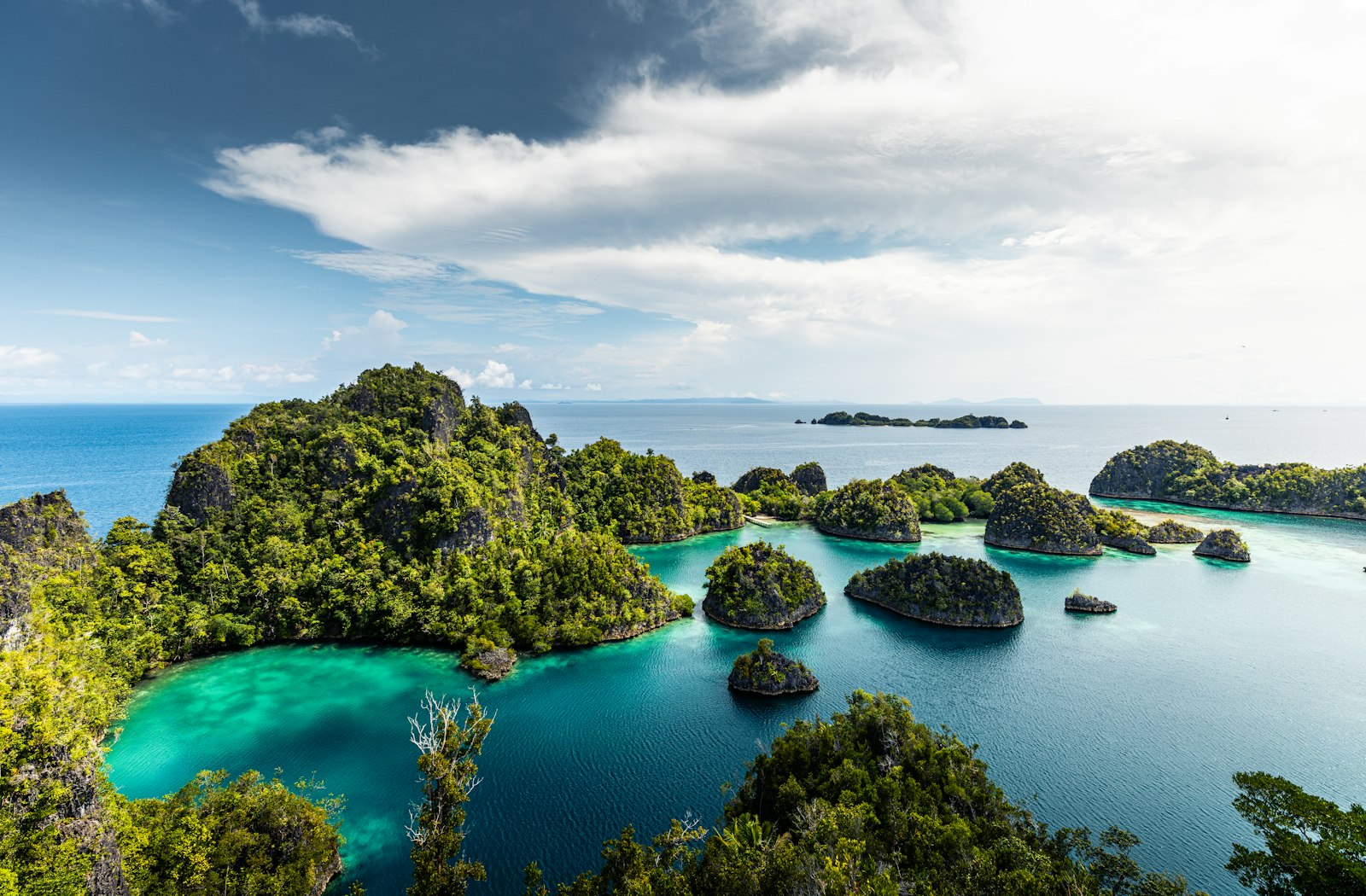
Raja Ampat, off the western tip of New Guinea, is at its best in the dry season from October to April. Seas are calmer, visibility is often 20 to 30 m or more, and manta activity peaks from around December to March, according to Bluewater Dive Travel. The local marine park authority, KKP Raja Ampat, describes October to April as the ideal time, with drier weather and calmer winds.

The Smart Timing Bundle
Pick the month, book in the right order, pack once
Six printable timing tools for any trip: the Trip Timing Planner, When to Book, When NOT to Go, the Shoulder Season Playbook, the family timing guide and the Packing by Season System.
See the bundle · $37Six products, $100 separately · Digital download · All sales final
July and August are the months to avoid. A strong southerly wind roughens the usually calm seas, visibility can drop to 10 to 15 m or less, and many liveaboards suspend operations; some resorts cancel dives on the windiest days. May and June bring plankton blooms that cut visibility to roughly 15 to 25 m, and September improves only slowly. For the islands above water, read our Raja Ampat travel guide.
Wakatobi: November to May for the warmest water
Wakatobi, a marine national park off southeast Sulawesi, can be dived all year. Wakatobi’s own dive season page says there is no season unsuitable for diving, and that visibility is usually 20 to 50 m, averaging about 35 m, because no rivers bring sediment into the water. What changes is the temperature: about 28 to 30 °C from November to March, 27 to 28 °C from March to June, and 25 to 27 °C from June to October, when a 5 mm wetsuit or thicker is advised.
That makes Wakatobi a strong choice for the months when Raja Ampat is rough. You’ll want more neoprene from June to October, but the reef is still there and the water stays clear. If you’re combining reefs and islands in eastern Indonesia, our Flores travel guide covers the Komodo side of the map.
Tubbataha Reefs: The Short Season in the Sulu Sea
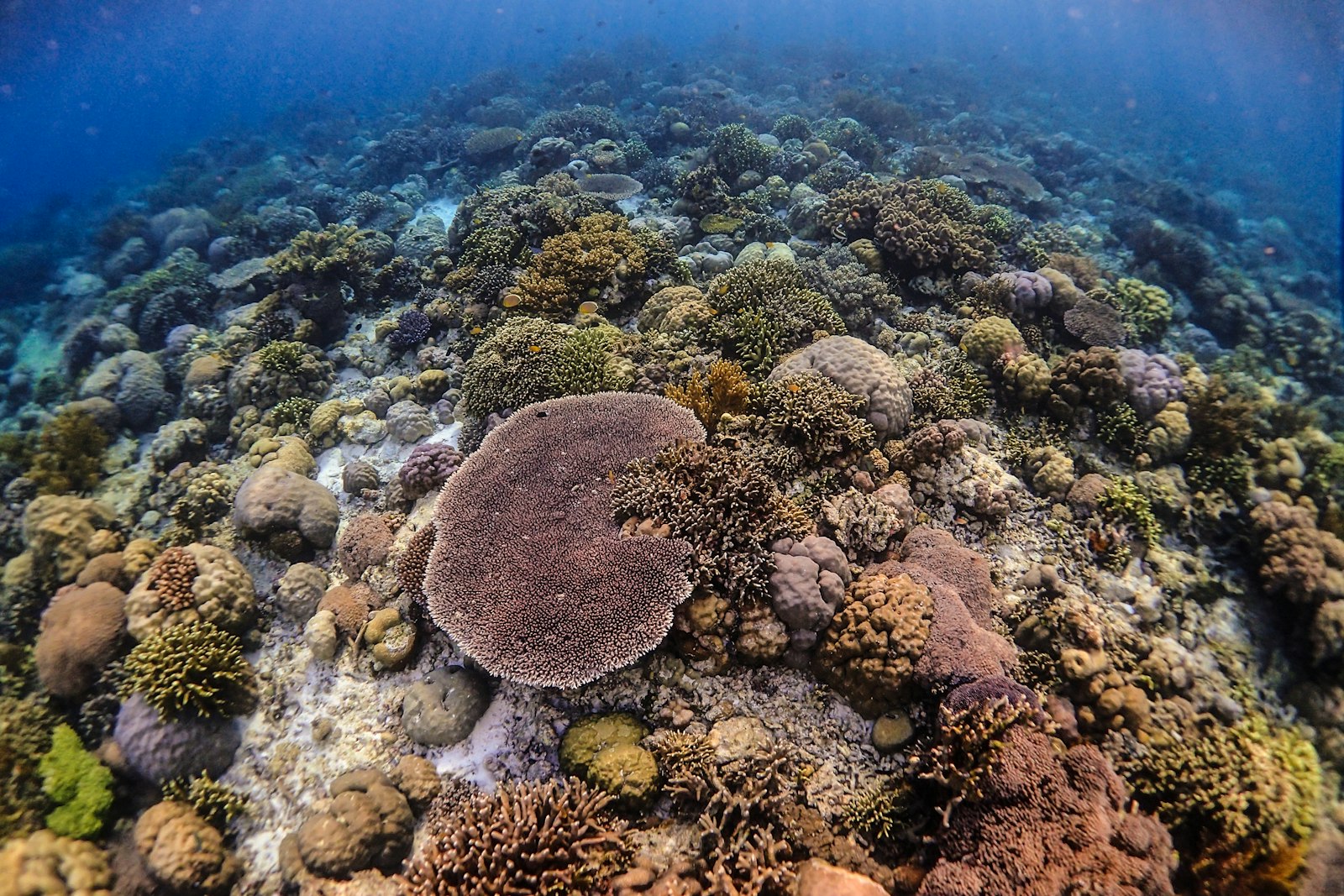
This section covers the most time-limited reef on the list. Tubbataha, two remote atolls in the middle of the Sulu Sea, cannot be visited all year, and the window is short enough that it decides the whole trip.
According to Dive The World, liveaboards generally run from March to June, with April and May the most reliable months. Outside that window, monsoon winds and rough seas make regular trips impractical. Every trip departs from Puerto Princesa on Palawan, and the park lies roughly 145 to 170 km (90 to 105 miles) away, a crossing of about 10 hours, usually overnight. Water sits at about 27 to 30 °C, and visibility is typically 20 to 40 m, sometimes more.
Important
Because there are only a few months and a limited number of boats, Tubbataha trips are usually booked well in advance. Choose April or May for the best odds of calm crossings, and check your operator’s weather policy for March and June departures, which sit at the edges of the season.
Tubbataha is a trip for confident divers. The dives are mostly walls and open-water drifts far from land, there’s no shore snorkelling, and the nearest help is many hours away. Logged experience with currents and a dive computer you know well both make the trip easier.
Bonaire and Belize: Caribbean Reefs With Clear Seasons
This section covers the two Caribbean picks, which have very different seasons. Bonaire is the steadiest reef on the list; Belize is excellent in spring and riskier in late summer.
Bonaire: most of the year
Bonaire, off the coast of Venezuela, is a shore-diving island: you drive to a marked site, walk in and swim out to the reef. PADI rates it as good at any time of year, with visibility of 18 m or better and often over 30 m, and water of about 25.5 to 28 °C. Dozens of sites can be reached from shore, and outside boat dives you’ll rarely share a site with more than a few other divers.
The island’s own visitor site, Bonaire.com, says Bonaire lies outside the official hurricane belt, with an estimated chance of just over 2% a year of a direct strike on the ABC islands. Rain falls mainly from October to January, with November the wettest month at about 96 mm, and showers are usually short. The trade wind is strongest in May and June and lightest in October and November. December to April is the busiest period, while May, June and September are quieter. PADI adds that coral spawning usually follows a full moon by a few days, with the best chances from April to October.

The complete kit
Every country guide, every timing tool
All 24 When to Go country guides, the six Smart Timing tools and every 12-Month Map, with a Start Here that tells you what to open first.
See the kit · $127The five bundles cost $225 separately · Digital download · All sales final
Belize’s outer atolls: April to June
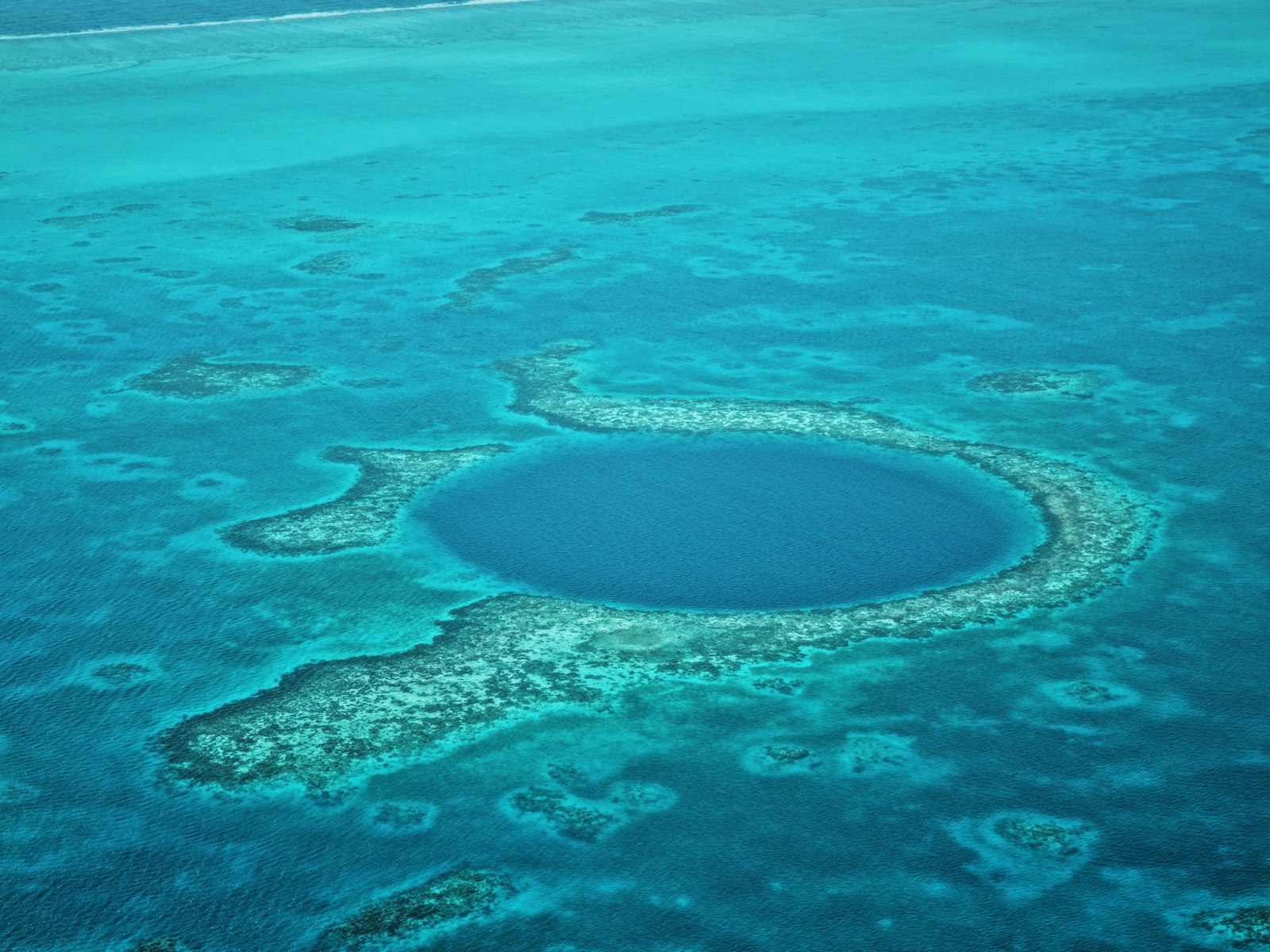
Belize’s Lighthouse Reef, home of the Great Blue Hole, and Turneffe Atoll sit beyond the barrier reef. Liveaboard.com names April to June as the best period for visibility, within a dry season that runs from February to June. Water is about 26 to 29 °C all year and visibility runs about 20 to 40 m. Whale sharks gather in the south, off Gladden Spit, from April to June around the full moon.
The wet season from July to November brings afternoon showers, but diving continues, especially on the atolls. The real risk is hurricanes, from August to October, when operators watch the forecast and change schedules. High season runs from March to June, and the same source suggests booking four to six months ahead for whale shark trips and liveaboards. For more on the mainland and the cayes, see things to do in Belize, and for other quiet islands in the region read underrated Caribbean islands.
Dive the edges of the season
The Shoulder Season Playbook
The weeks just before and after peak season are often where reefs are clearest and boats are emptiest. The Playbook shows how to find those weeks for any destination, what you give up and what you gain, and how to plan around the weather risks at either end.
Digital download · All sales final
Rainbow Reef and Ningaloo: Southern Hemisphere Reefs
This section covers the two southern reefs, whose good seasons fall in the middle of the year, when many northern reefs are at their weakest.
Rainbow Reef, Fiji: May to October
Rainbow Reef lies in the Somosomo Strait between Taveuni and Vanua Levu, and is home to the Great White Wall. According to Liveaboard.com, Fiji’s visibility is best in the dry season from May to October, at about 20 to 40 m, and the soft corals are at their most colourful then, when currents are more predictable. The wet season from November to April brings occasional tropical storms, and rain is heaviest from January to March. Water runs at about 25 to 29 °C.
Ningaloo, Western Australia: April to August
Ningaloo runs along the coast near Exmouth and Coral Bay, and in many places the reef starts a short swim from the beach. According to Ningaloo Whale Sharks, whale shark tours run from 15 March to mid or late October, with July and August the peak, when whale sharks, manta rays and humpback whales can all be seen. March, September and October are shoulder months with fewer sightings. Coral spawning runs from February to March and peaks in April, drawing more whale sharks to the reef. School holidays in April and July are busy, so book early.
Note
Ningaloo’s whale shark swims are snorkel-only encounters, so this is the one reef on the list where non-divers get the headline experience too. Between November and February the sharks have mostly gone, but the shore reef is still there for snorkelling.
Reef-Safe Behaviour on Any Dive or Snorkel
This section covers how to dive and snorkel without damaging the reef. The underrated reefs stay healthy partly because fewer people visit them, so every visitor’s habits matter more.
Choose your sunscreen with care
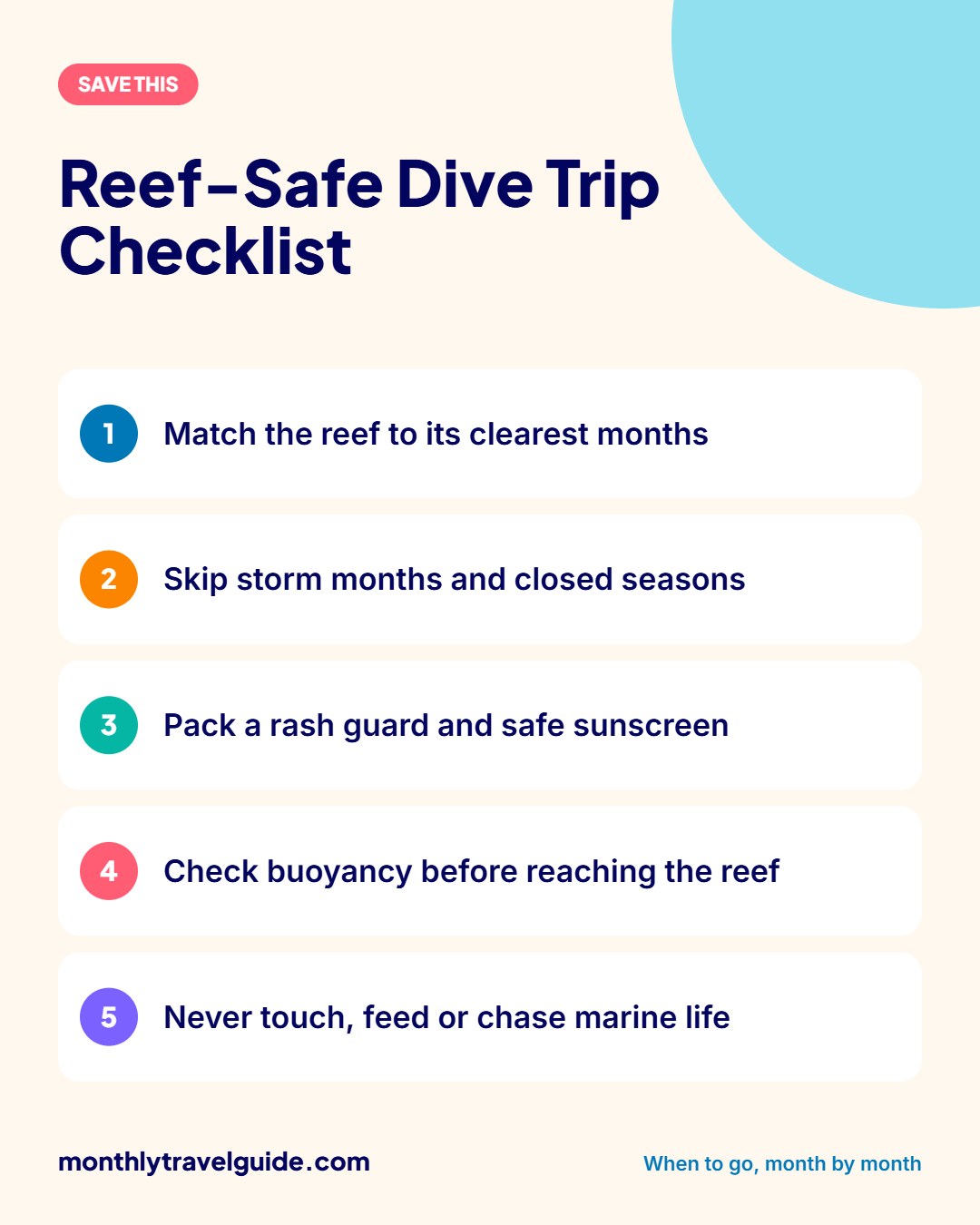
NOAA advises checking the active ingredients and avoiding chemicals that harm marine life. Bonaire has banned sunscreens with oxybenzone, octocrylene and octinoxate. A long-sleeved rash guard means less cream in the water.
Get your buoyancy right first
NOAA’s Florida Keys sanctuary says to keep proper buoyancy through practice and correct weighting, and to do a check before each dive.
Watch your fins
Fluttering fins stir up sand that can smother coral. Stay well above the reef and keep gauges and hoses tucked in.
Hands off
Avoid gloves in coral areas, and don’t touch, handle, feed or chase marine life. Even a light brush can damage coral.
Take nothing home
Coral takes decades or longer to grow, so leave it on the reef, and carry out any rubbish you find.
Sources: NOAA Ocean Service and NOAA Florida Keys National Marine Sanctuary for the behaviour advice; Bonaire.com for the sunscreen ban. NOAA also recommends seeking shade in the middle of the day, wearing UPF clothing and hiring local guides, which supports the communities that look after these reefs.
When Not to Go: The Seasons to Avoid
This section is the honest list. Each of these reefs has weeks that can turn an expensive trip into a run of cancelled dives or murky water.
| Reef | Avoid | Why | Go instead |
|---|---|---|---|
| Raja Ampat | July and August | Strong southerly winds, low visibility, many liveaboards stop | Wakatobi, or Raja Ampat from October |
| Tubbataha | July to February | No regular trips outside the March to June window | April or May |
| Belize atolls | August to October | Hurricane risk; schedules change at short notice | April to June |
| Rainbow Reef, Fiji | January to March on a short trip | Heaviest rain and the chance of tropical storms | May to October |
| Ningaloo | November to February for whale sharks | Most whale sharks have left | April to August |
| Bonaire | Major holiday weeks | Flights and rooms fill quickly | May, June or September |
Sources as cited in each reef section above. To check whether your dates fall in a storm season, use the free Storm Season Check. See Red Sea diving in September for diving at the other end of the year, and the Caribbean off-season guide if a Caribbean reef appeals for late summer.
Better Reef If You Want Something Specific
This section matches the reef to the experience you want most, because the seven are good at different things.
If you want
Manta rays
Raja Ampat from around December to March, when manta activity peaks.
If you want
Whale sharks
Ningaloo from April to August, or Belize’s Gladden Spit around the April to June full moons.
If you want
Easy shore diving
Bonaire, where you can dive dozens of sites from the beach at your own pace.
If you want
Big walls far offshore
Tubbataha in April or May, if you have the experience.
If you want
Soft coral colour
Rainbow Reef from May to October, when currents feed the corals and visibility is best.
If you want
Diving in July or August
Wakatobi or Bonaire, both diveable when Raja Ampat is rough.
For the better-known reefs that didn’t make this list, see our top diving and snorkelling destinations. To find quieter weeks around any peak, try the free Shoulder Season Detector.
5 Common Mistakes When Planning a Reef Trip
1. Booking the right reef in the wrong month
Raja Ampat in August or Belize in September can mean rough crossings, cancelled dives or poor visibility. Check the reef’s season before you look at flights.
2. Assuming every reef runs all year
Tubbataha has no regular trips for most of the year. Some reefs simply close when the monsoon winds arrive, however flexible you are.
3. Packing the wrong wetsuit
Water in the same place can vary by several degrees. Wakatobi drops to about 25 to 27 °C from June to October, enough to make a thin suit uncomfortable on repeat dives.
4. Ignoring local sunscreen rules
Bonaire bans sunscreens containing oxybenzone, octocrylene and octinoxate. Check the label before you pack, and bring a rash guard to cut how much you need.
5. Overestimating your experience
Remote walls and drift dives far from help suit confident divers. If you’re newer, pick Bonaire’s shore dives or a resort house reef, and build up to the offshore trips.
Underrated Dive Sites FAQ
What is the most underrated dive site in the world?
There’s no single answer, but Wakatobi, Tubbataha and Bonaire are often named by experienced divers. Wakatobi offers clear water, averaging about 35 m visibility, in every month. Tubbataha is remote and open only from about March to June. Bonaire lets you shore dive dozens of sites at your own pace, with rarely more than a few other divers around.
When is the best time to dive Raja Ampat?
October to April is the best time to dive Raja Ampat. Seas are calmer, visibility is often 20 to 30 m or more, and manta activity peaks from about December to March. Avoid July and August, when strong southerly winds roughen the sea, visibility can drop to 10 to 15 m or less and many liveaboards stop operating for the season.
Can you dive Tubbataha all year?
No. Tubbataha can only be visited by liveaboard, and boats generally run from March to June, with April and May the most reliable months. Outside that window, monsoon winds and rough seas make regular trips impractical. Trips leave from Puerto Princesa on Palawan, and the crossing to the reefs takes about 10 hours, usually overnight.
Is Bonaire good for snorkelling as well as diving?
Yes. Bonaire’s reef starts close to shore along much of the coast, so snorkellers can reach many of the same sites as divers, straight from the beach. Visibility is reliably 18 m or better and the water stays around 26 to 28 °C. Bonaire also lies outside the main hurricane belt, which makes it a steady choice in most months.
When can you swim with whale sharks at Ningaloo Reef?
Whale shark tours at Ningaloo run from mid-March to mid or late October. July and August are the peak, when you can also see manta rays and humpback whales. March, September and October are shoulder months with fewer sightings, and most whale sharks leave by November. School holidays in April and July are busy, so it pays to book early.
What is reef-safe sunscreen?
Reef-safe usually means a sunscreen without ingredients that harm marine life. NOAA advises checking the active ingredients, and Bonaire has banned sunscreens with oxybenzone, octocrylene and octinoxate. The simplest approach is to wear a long-sleeved rash guard, avoid the midday sun and use as little cream as possible before you get in the water.
The Bottom Line
The best underrated dive sites reward good timing more than famous ones do: Raja Ampat from October to April, Tubbataha in April or May, Belize in spring, Fiji and Ningaloo in the middle of the year, with Wakatobi and Bonaire as steady choices in most months. Dive them gently and they’ll stay worth the trip. For more wildlife trips planned by season, browse our wildlife travel guides.
Plan every trip by the calendar
The Complete Travel Timing System
Reefs are only one kind of trip with a hard season. The Complete Travel Timing System brings the guides, tools and timing methods together so you can find the best weeks, avoid storm and crowd peaks, and know when to book, wherever you are going next.
See the Complete Travel Timing System →Digital download · All sales final
Free download
Which month for your country?
Get the free 12-Month Map: every month marked good, shoulder or avoid, region by region, on four printable pages.
- Greece to Japan, Morocco to Peru: 24 countries
- See the crowd and price peaks before you book
- Free, no purchase needed
Your download page opens as soon as you sign up. 24 countries available.