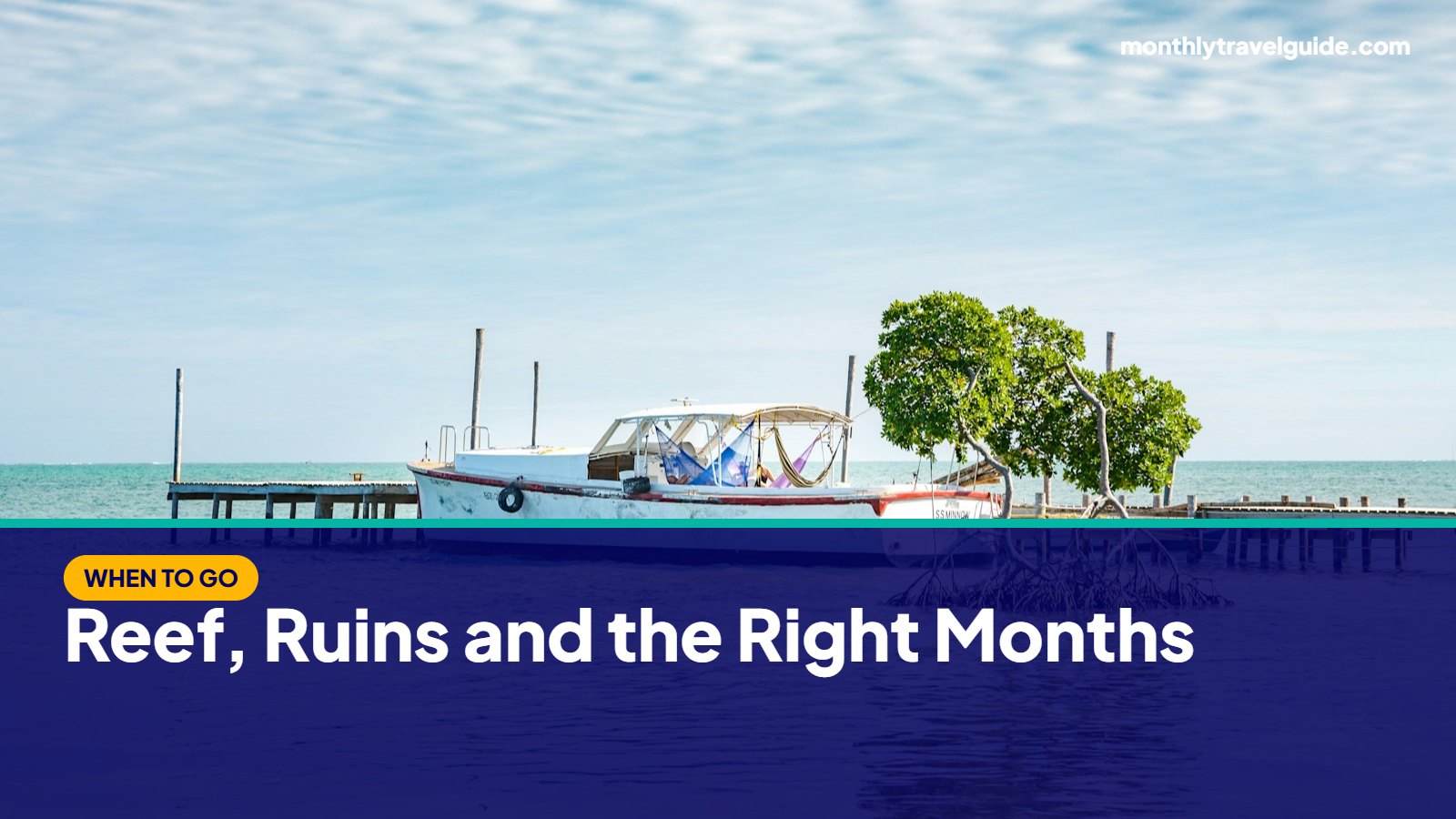
The best things to do in Belize split neatly between the sea and the forest: snorkelling and diving on the barrier reef, island time on the cayes, Maya pyramids in the jungle, river caves and wildlife reserves inland. Each one has its own best months. The dry, sunny stretch from February to April suits almost everything, whale sharks gather off the south coast in spring, and the wet months from June to November bring heavy rain and the hurricane risk that peaks around September and October. This guide pairs every activity with its best months, so you can plan the trip around what you want to do.

When to Go guides
Choose your country, then your month
24 country guides, each about 100 pages: every month rated for weather, crowds and prices, region by region, with a 7-day booking plan. Six guides per region bundle.
Browse the 24 guides · $19 eachRegion bundles: Europe, Asia & Pacific, Sun Souks & Safari, Americas · $47 each
Belize at a glance
Reef, ruins and rainforest, timed right
Feb to Apr
Driest, sunniest months
About 49 to 69 mm of rain a month and 7 to 8 hours of sun a day
26 to 29 °C
Sea temperature
Warm enough to snorkel all year; coolest in January and February
Sep to Oct
Storm and rain peak
October is the wettest month, about 286 mm; storm risk is highest in September
Long-term averages for Belize City from Weather2Travel. The south and the mountains get more rain than the north.
Quick answer
The top things to do in Belize are snorkelling Hol Chan and Shark Ray Alley, diving the Great Blue Hole, slowing down on Caye Caulker, climbing the Maya temples at Xunantunich and Caracol, and touring the ATM cave near San Ignacio. Go from February to April for the driest weather and calmest trips, March to June for whale sharks off Placencia, and avoid September and October if storms would spoil a short trip.
Key takeaways
- ✓March and April are the driest months in Belize City, with about 49 to 55 mm of rain and only five or six rainy days.
- ✓The Atlantic hurricane season runs from June to November; the risk of a tropical storm is highest in September, then October.
- ✓Whale sharks feed at Gladden Spit, off Placencia, roughly from March to June, in the days around each full moon.
- ✓The Great Blue Hole is about 318 m across and about 124 m deep, out on Lighthouse Reef, and is a trip for certified divers.
- ✓Cave and river sites inland can close after heavy rain, so the wet season needs a spare day.
- ✓Lobster season opens on 15 June, and the coastal lobster festivals usually follow in late June and early July.
Things to Do in Belize: Month-by-Month Verdicts
This section rates each month for a mixed reef-and-jungle trip, using long-term averages for Belize City and the main seasonal events. A month marked Go suits almost every activity; Go with care means rain, heat or storm risk will shape your plans; Skip means a short trip is likely to lose days to the weather.
Belize month verdicts
Average high · rainfall · rainy days
Jan
27 °C
143 mm · 14 rain days
Cooler, some northers and showers
Feb
28 °C
69 mm · 9 rain days
Dry season starts; calm reef days
Mar
29 °C
49 mm · 6 rain days
Driest month; whale shark season opens
Apr
30 °C
55 mm · 5 rain days
Dry and sunny; busy holiday weeks
May
31 °C
117 mm · 8 rain days
Hot; whale sharks; rains begin late
Jun
31 °C
241 mm · 17 rain days
Wet season; lobster opens 15 June
Jul
31 °C
214 mm · 19 rain days
Showers; lobster festivals
Aug
31 °C
189 mm · 18 rain days
Humid; storm season builds
Sep
31 °C
256 mm · 18 rain days
Peak storm risk; very wet
Oct
30 °C
286 mm · 17 rain days
Wettest month; rivers run high
Nov
28 °C
225 mm · 15 rain days
Rain easing; Garifuna Day 19 Nov
Dec
27 °C
180 mm · 14 rain days
Drier late in the month; holiday rush
Averages for Belize City from Weather2Travel. Every year differs.
The figures from Weather2Travel show a simple pattern. Rain falls to its lowest in March, at about 49 mm with six rainy days, and stays low in April. From June it jumps above 200 mm a month and peaks in October at about 286 mm. Daytime highs barely move, from about 27 °C in winter to about 31 °C from May to September, and the sea stays between about 26 and 29 °C all year. The same source notes that the north gets mostly showers in the wet season, while the south and the mountains take heavier, longer storms.
🧰 Try it while you read: a free tool for this trip
Free trip timing tool
Beach Water Temperature Picker
Set the sea temperature you like; see which countries reach it in your month.
Loading the tool…
Snorkelling, Diving and the Cayes
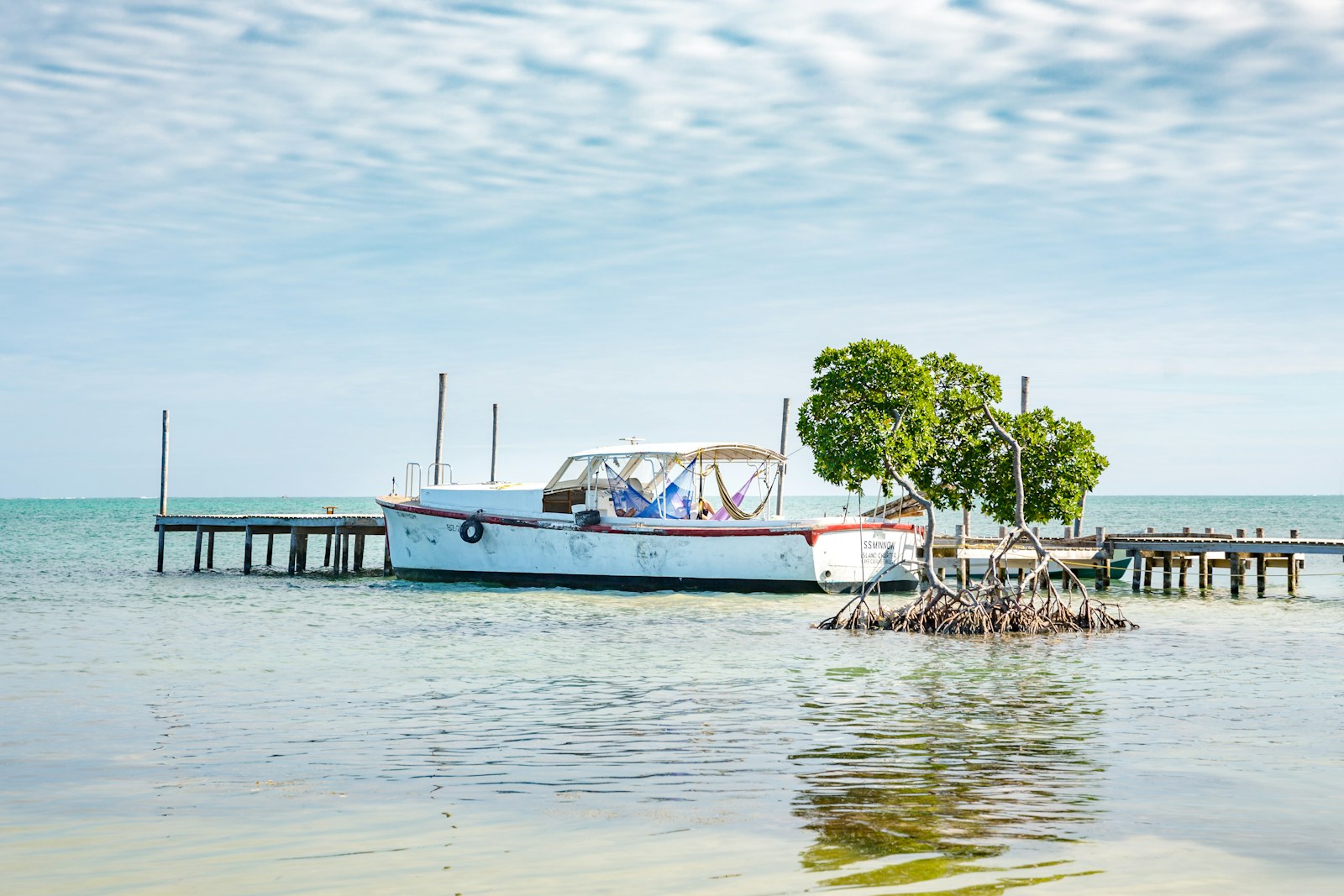
This section covers the sea, which is why most people come. The Belize Barrier Reef runs along the whole coast, and parts of it are protected as the Belize Barrier Reef Reserve System, a UNESCO World Heritage Site. Snorkelling and diving work all year, but visibility and calm crossings are most reliable in the dry months.
Hol Chan Marine Reserve and Shark Ray Alley
Hol Chan sits off the southern tip of Ambergris Caye, about 4 miles south of San Pedro, and is the country’s oldest marine reserve. Its centre is a cut through the reef roughly 9 m deep, and the reserve covers coral, seagrass, mangroves and Shark Ray Alley, where nurse sharks and stingrays come close to boats and swimmers, according to Belizing. Loggerhead and green turtles, Nassau grouper and elkhorn coral also live here. Boat trips leave daily from San Pedro and Caye Caulker, and it’s an easy first snorkel for families.

The Great Blue Hole
The Great Blue Hole is the image on every Belize poster: a near-perfect circle about 318 m across and about 124 m deep, near the centre of Lighthouse Reef atoll, roughly 70 km from the mainland (Wikipedia). The reef edge starts around 5 m, then drops to a near-vertical wall with ledges far below. It’s a long day by boat and a deep dive, so it suits certified divers with some experience. Non-divers usually see it best from a scenic flight on a clear day, which makes the dry season the time to book.
Caye Caulker and Ambergris Caye
The two northern cayes are the easiest bases for the reef. Caye Caulker is small, car-free and relaxed, with water taxis to Belize City and San Pedro; Ambergris Caye is bigger, with more places to stay and eat and the quickest access to Hol Chan. Both sit in the drier north of the country, which helps in shoulder months. For more reefs that see fewer boats, read our guide to underrated reefs for snorkelling and diving, and compare Belize with other options in top diving and snorkelling destinations.

The Smart Timing Bundle
Pick the month, book in the right order, pack once
Six printable timing tools for any trip: the Trip Timing Planner, When to Book, When NOT to Go, the Shoulder Season Playbook, the family timing guide and the Packing by Season System.
See the bundle · $37Six products, $100 separately · Digital download · All sales final
Tip
Book reef trips for the first or second day of a beach stay, not the last. Wind and rain can cancel a boat trip, and a spare day lets you move it. Morning departures usually have calmer water than afternoon ones in every season.
Whale Sharks at Gladden Spit: Timing Is Everything
This section covers one of the most time-sensitive things to do in Belize. Whale sharks gather at Gladden Spit Marine Reserve, off the coast of Placencia, to feed on fish spawn, and the official tourism board site Travel Belize gives the season as roughly March to June.
The feeding follows the moon. Encounters usually run from about two days before each full moon to about ten days after it, so the best windows move every month. Check a lunar calendar before you fix your dates, and stay in Placencia rather than trying a long day trip from the north. The same source notes that sightings can take more than one attempt, so book at least two outings if whale sharks are the reason for your trip.
Whale shark planner
Season
Roughly March to June
Window
About 2 days before to 10 days after each full moon
Where
Gladden Spit Marine Reserve, reached from Placencia
Plan
Book two or more trips; sightings are never certain
Maya Sites and Caves in the Jungle
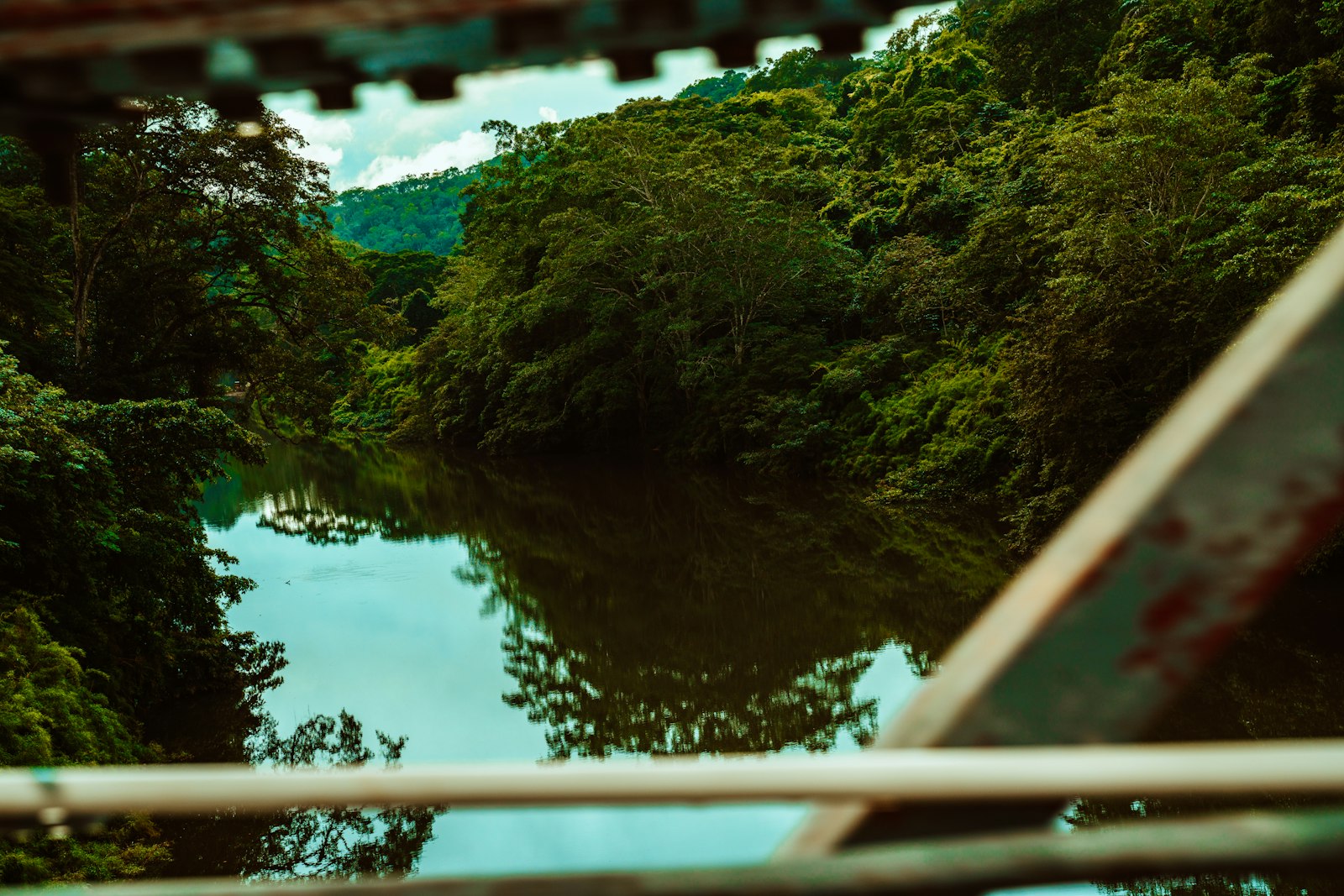
This section covers inland Belize, where the second half of most trips happens. San Ignacio, in the Cayo District near the Guatemalan border, is the base for most ruins and caves; the view from the Hawkesworth Bridge over the river is the town’s calling card.
| Site | Where | What to know |
|---|---|---|
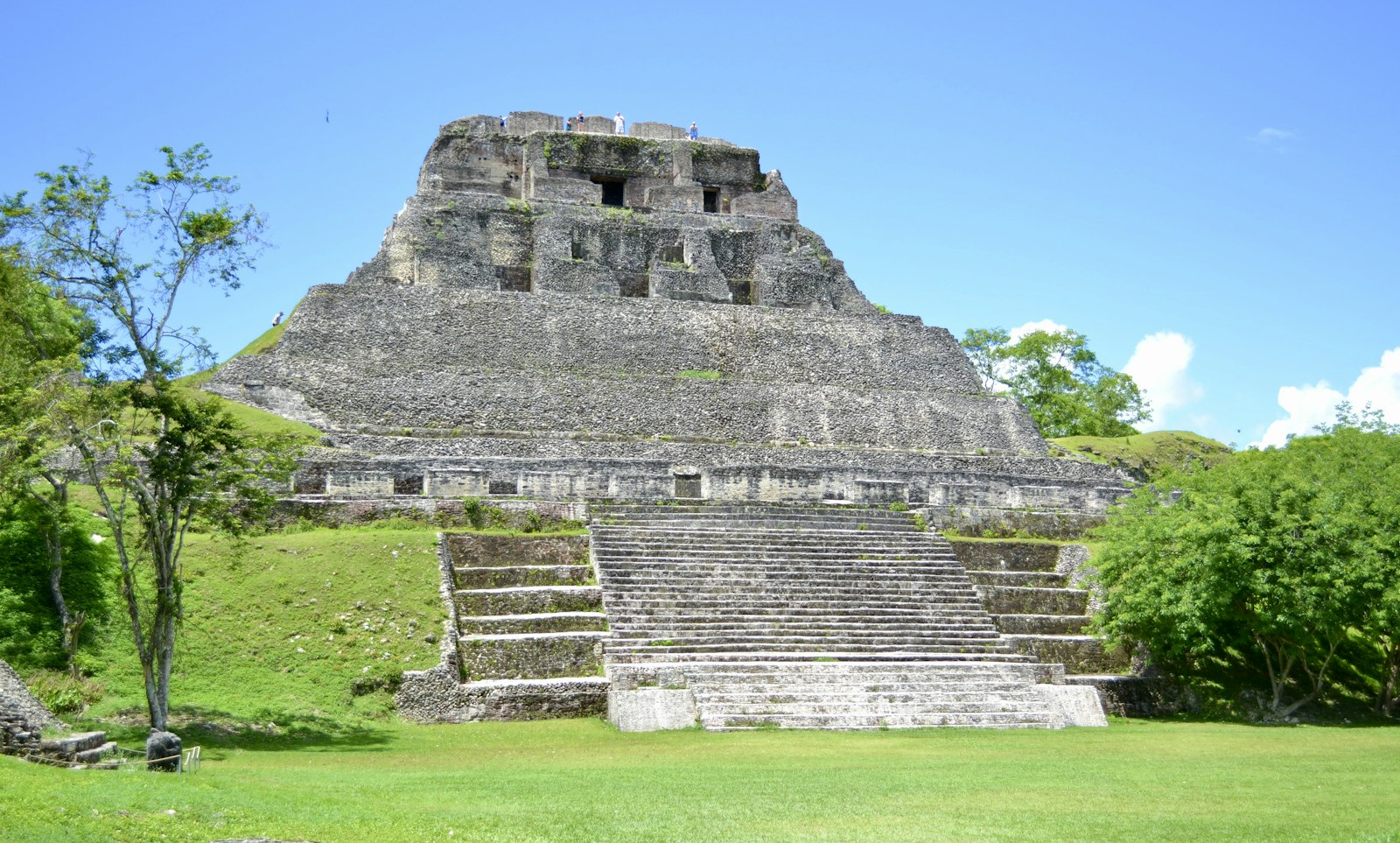
| Xunantunich | Cayo, near the Mopan River and the border | El Castillo pyramid; six plazas with more than 26 temples and palaces |
| Caracol | South of San Ignacio, via the Mountain Pine Ridge road | The tallest building in Belize; a rough road with Rio Frio Cave and Rio On Falls on the way |
| Cahal Pech | On a hill above San Ignacio | Small royal palace complex with seven plazas, museum on site |
| Lamanai | Orange Walk, northern Belize | About 700 structures, less than 5% excavated; often reached by a one-hour boat ride up the New River |
| Altun Ha | About 45 minutes north of Belize City | Easy half-day trip from the city or the cayes |
🗓️ Free: a 12-Month Map for your country
Every month on one page: best weeks, shoulder weeks and the ones to skip. Print it or keep it on your phone.
Source: Afar for site details and access.
Actun Tunichil Muknal (ATM)
The ATM cave lies in the Tapir Mountain Nature Reserve near San Ignacio and is one of the most memorable things to do in Belize. You wade and swim into a cave system where the Maya left ceramics and human remains, including the calcified skeleton known as the Crystal Maiden. Tours run only with licensed guides, cameras are banned, and visitors wear socks in the upper chamber to protect the floor (Wikipedia).
Warning
Rivers rule the inland calendar. After heavy rain, the Institute of Archaeology has closed Xunantunich and halted tours to the ATM, Barton Creek and Nohoch Che’en caves until water levels dropped (Belize Live News). In the wet months, and above all in October, keep a spare day in Cayo and confirm the morning of the trip.
Jungle wildlife and river towns
South of Dangriga, the Cockscomb Basin protects a large tract of rainforest set aside for jaguars. The cats are shy, so most visitors come for the trails, the waterfalls and the birds: one expedition report from the area logged more than 100 bird species in a single day (Lindblad Expeditions). Early mornings in the dry season give the best walking and the most birdsong.
Things to Do in Belize by Activity and Best Months
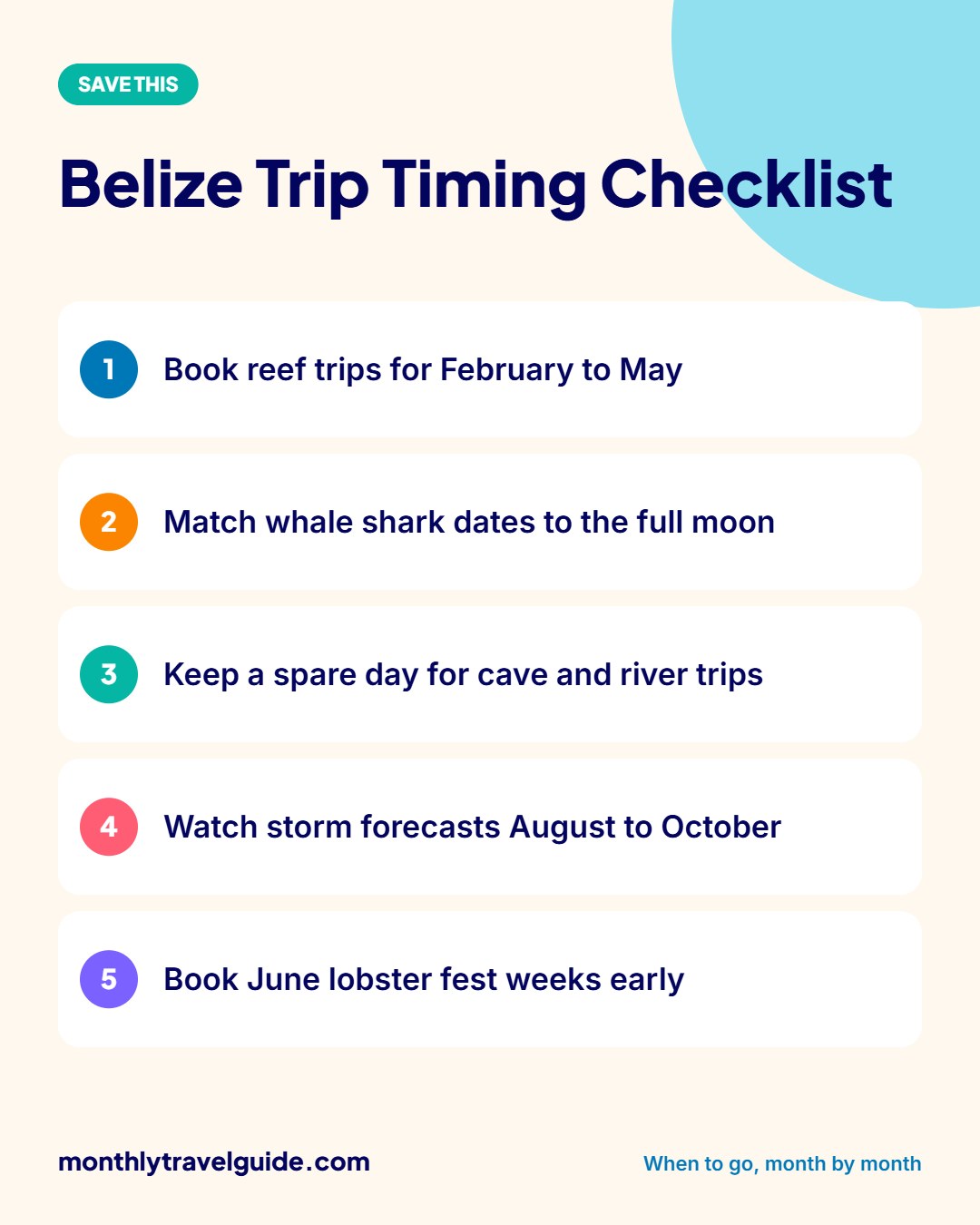
This section puts every main activity side by side, so you can see which months suit the trip you have in mind. Where a month is not listed, the activity still runs, but rain, wind or crowds make it less reliable.
| Activity | Best months | Watch out for |
|---|---|---|
| Reef snorkelling (Hol Chan, Shark Ray Alley) | February to May | Wind and rain can cancel boats from June to November |
| Diving the Great Blue Hole | February to May | Long crossing; rough seas in storm season |
| Whale sharks at Gladden Spit | March to June, around the full moon | Short monthly windows; sightings not guaranteed |
| Maya sites in Cayo | December to April | Heat from May; river closures in the wet months |
| ATM and river caves | February to May | Closures after heavy rain, most likely in October |
| Lamanai by river boat | January to May | Hot middays from April; bring shade |
| Cockscomb and jungle walks | February to April | Muddy trails and more insects in the wet season |
| Lobster on the cayes | From 15 June, festivals late June and early July | Wet-season showers |
| Garifuna Settlement Day | 19 November | Dangriga and Hopkins fill up around the date |
If you’re choosing between Belize and an island elsewhere, our guide on how to choose a Caribbean island explains how storm season, reef access and travel time compare across the region.
Hurricane Season and When Not to Go to Belize
This section is the honest part. Belize is open all year, but the wet season changes what you can do. The Atlantic hurricane season runs from June to November. Weather2Travel shows the share of each month affected by tropical storms at its highest in September, followed by October, with June and November much lower. Most wet-season days still bring sun between downpours, but a single storm can shut the reef and the rivers for several days.

The complete kit
Every country guide, every timing tool
All 24 When to Go country guides, the six Smart Timing tools and every 12-Month Map, with a Start Here that tells you what to open first.
See the kit · $127The five bundles cost $225 separately · Digital download · All sales final
| Avoid | Why | Do this instead |
|---|---|---|
| September and October on a short trip | Peak storm risk and the most rain; October averages about 286 mm | Go from February to April |
| A fixed Blue Hole date in the wet season | Rough seas cancel long boat trips | Book in the dry months and keep a spare day |
| Cave tours with no buffer in October | High rivers have closed caves and Xunantunich | Keep two nights in San Ignacio |
| Whale shark trips away from the full moon | Feeding follows the lunar cycle | Match your dates to the moon |
| The south coast in heavy rain months | The south and mountains get the longest storms | Base yourself on the northern cayes |
Important
If you travel between June and November, buy travel insurance that covers storms, watch official forecasts in the week before you fly, and keep the reef and the cave days flexible. The free Storm Season Check shows the storm months for any coast, and the When Not to Go checker flags risky weeks for your dates.
The off-season has one real upside: fewer boats on the reef and quieter cayes. Our guide to Caribbean islands in the off-season explains how to use those months well, and the same logic applies to Belize.
Festivals and Food Events Worth Planning Around
This section covers the dates that shape bookings. Two events stand out, and both are tied to the coast.
From 15 June
Lobster season opens
The season opens on 15 June each year, and the coastal towns celebrate soon after. Island Expeditions lists lobster festivals in San Pedro and Placencia in late June and on Caye Caulker in early July; exact weekends change, so check before you book.
19 November
Garifuna Settlement Day
A national holiday marking the arrival of the Garifuna people in Belize. Absolute Belize describes drumming, food, dance and a reenactment of the landing by sea, with the biggest celebrations in Dangriga and others in Hopkins, Punta Gorda and San Pedro.
Easter and late December
Holiday weeks
Easter in the dry season and the Christmas to New Year weeks are the busiest times on the cayes. Book rooms and boat trips early.
To see whether your dates line up with an event, try the free Festival Month Matcher. Prices change; check before you book.
Better Month If You Want Something Else
This section helps if Belize is one stop in a wider trip, or if one goal matters more than the rest.
If you want
Calm seas and clear water
Go from March to May, when rain is lowest and boat trips are most reliable.
If you want
Whale sharks
Go between March and June, and fix your Placencia nights around a full moon.
If you want
Lobster and festival weeks
Go in late June or early July, and accept wet-season showers.
If you want
Garifuna culture
Go around 19 November and stay in Dangriga or Hopkins.
If you want
A wider Caribbean winter trip
Compare the Caribbean in February and warm destinations in April.
If you want
Belize plus Guatemala
Go in the dry season and add the highlands; see Panajachel in Guatemala.
5 Common Mistakes on a Belize Trip
1. Planning a whale shark trip on the wrong dates
Whale sharks don’t stay at Gladden Spit all spring. They gather in the days around each full moon, roughly from March to June. Book outside that window and the boat goes out for nothing.
2. Booking the Blue Hole for your final day
Long crossings are the first trips to be cancelled in wind or rain. Put the Blue Hole early in your stay so a cancelled trip can move to another day.
3. Leaving no buffer for the caves
High rivers can close the ATM cave and other river sites, especially in the wettest weeks. Two nights in San Ignacio give you a second chance.
4. Treating Belize as one climate
The north is drier than the south and the mountains in the wet season. If you travel from June to November, base yourself on the northern cayes and keep southern plans flexible.
5. Ignoring the holiday weeks
Easter and the Christmas to New Year weeks fill the cayes. If your dates fall then, book rooms and boat trips well before you fly.
Things to Do in Belize FAQ
What is the best month to visit Belize?
March and April are the best months for most travellers. They are the driest of the year in Belize City, with about 49 to 55 mm of rain and five or six rainy days, and they come with long hours of sun and calm seas. February and May are close behind, and May also falls in whale shark season. September and October are the riskiest months for storms and rain.
What is Belize best known for?
Belize is best known for its barrier reef, part of a UNESCO World Heritage reserve system, and for the Great Blue Hole, a circular sinkhole about 318 m across. Inland, it is known for Maya sites such as Xunantunich, Caracol and Lamanai, and for cave tours like Actun Tunichil Muknal. The relaxed cayes, Garifuna culture and spiny lobster season are other draws.
When is hurricane season in Belize?
The Atlantic hurricane season runs from June to November. In Belize the risk of a tropical storm is highest in September, followed by October, and much lower in June and November. Storms are not certain in any year, but they can cancel boat trips and close inland rivers and caves. Keep plans flexible in those months and check official forecasts before you fly.
When can you swim with whale sharks in Belize?
Whale sharks feed at Gladden Spit Marine Reserve, off Placencia, roughly from March to June. Sightings cluster in a window from about two days before each full moon to about ten days after it, so the best days change from month to month. Stay in Placencia, check a lunar calendar before booking, and plan more than one trip, since sightings are never certain.
Is Caye Caulker or Ambergris Caye better?
Caye Caulker suits travellers who want a small, relaxed, car-free island with easy water taxis and good snorkelling trips. Ambergris Caye is larger, with more places to stay and eat and the shortest ride to Hol Chan Marine Reserve. Both reach the same reef, both are in the drier north, and either makes a good base for a first trip to Belize.
How many days do you need in Belize?
A week is enough to see the main sights at a steady pace: about four nights on the cayes for snorkelling and the reef, and three nights in San Ignacio for Maya sites and a cave tour. With ten days, add Placencia for whale sharks in season or a quieter beach. In the wet season, add an extra day as a weather buffer.
The Bottom Line
The best things to do in Belize, from the reef and the Blue Hole to the Maya temples and the ATM cave, all work best from February to May, with whale sharks in spring around the full moon. Avoid September and October if storms would ruin a short trip, and keep a spare day in the wet season. For more ideas, browse our Belize travel guides.
Fewer boats, better weather
Find the in-between weeks
The Shoulder Season Playbook shows how to spot the weeks just before and after peak season, when the weather still works and the crowds thin out. It helps you place a reef trip like Belize in late April, May or early December instead of the busiest holiday weeks.
Digital download · All sales final
Free download
Which month for your country?
Get the free 12-Month Map: every month marked good, shoulder or avoid, region by region, on four printable pages.
- Greece to Japan, Morocco to Peru: 24 countries
- See the crowd and price peaks before you book
- Free, no purchase needed
Your download page opens as soon as you sign up. 24 countries available.