


The monarch butterfly migration in September is one of the only wildlife spectacles you can plan around a specific date on a calendar — and also one where showing up on the “right” date can still mean seeing almost nothing. That contradiction is the whole story here. Millions of monarchs funnel south through a handful of geographic bottlenecks every September and October, but on any single day, whether you see three butterflies or three thousand comes down to something most visitors never check: which way the wind blew two days ago.
Here’s the direct answer: the monarch butterfly migration in September peaks at Cape May Point, New Jersey, and Point Pelee National Park, Ontario, from roughly September 1 through mid-October, with the heaviest concentrations typically appearing in the two to three days following a cold front with northwest winds. Visit Cape May’s dune trails or Point Pelee’s tip at dawn or just before sunset, on the first clear day after a front passes, and you’ll see roosting clusters that can number in the thousands. Visit on a random warm, calm day, and you may see a handful of stragglers and nothing more.
Key Takeaways
Cape May, NJ and Point Pelee, Ontario are the two most reliable monarch migration viewing sites in September.
Numbers spike two to three days after a cold front with northwest winds — check the forecast, not just the date.
Monarchs cluster in roosts near dusk and dawn, which is when they’re easiest to see in large numbers.
Both sites act as natural funnels — narrow land bottlenecks where migrating monarchs concentrate before a lake or bay crossing.
This migrating generation lives up to eight months, unlike every other monarch generation, which lives only a few weeks.
Both viewing sites are free, family-friendly, and require nothing more than a short walk from the parking area.
Why the Monarch Butterfly Migration in September Follows Weather, Not Dates
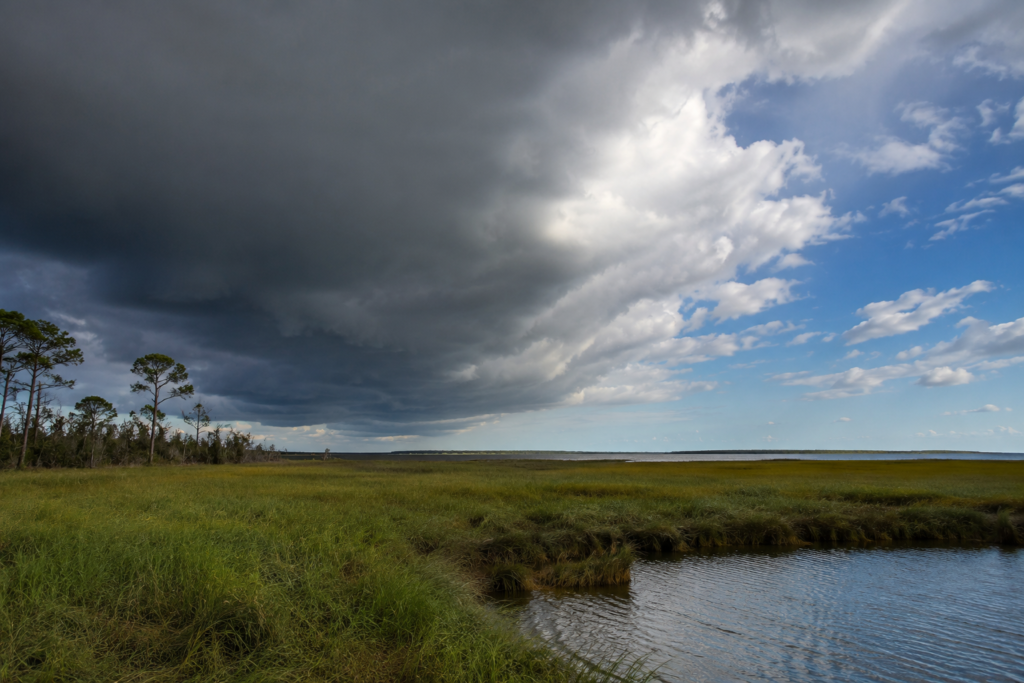
Monarchs migrating south in fall are following shortening daylight and dropping temperatures, which is why the migration reliably falls in the same September-to-October window every year. But the day-to-day volume you’ll actually see is a different question entirely, and it comes down to geography colliding with weather.

A hundred pages on timing one country properly — six regions, twelve months, and the weeks that go wrong.
Monarchs avoid flying over large bodies of open water when they can help it, which means when their southbound path hits a lake or a bay, they bunch up on the shoreline waiting for the right conditions to cross. At Point Pelee, that’s Lake Erie. At Cape May, it’s Delaware Bay. Add a cold front moving through — bringing the northwest tailwinds monarchs prefer for efficient gliding — and you get a sudden pulse of thousands of butterflies arriving at the tip within a day or two, all funneling toward the same narrow strip of land at once.
That’s the entire trick to seeing this migration well: track the weather like a surfer tracks swell, not like a tourist tracks a festival date. A calm, warm, windless week can leave both sites nearly empty of visible monarchs even in the dead center of peak season, while a single sharp cold front can produce a roost so dense it looks like the trees themselves have turned orange.



This is a slightly different planning problem than most seasonal travel, where a single “best month” is enough to build a trip around. If you’re used to picking a September destination off a calendar and locking in flights six months out, this one asks for a bit more flexibility — treat the whole month as your window, and let the week-out forecast decide the exact days.
💡 Tip: Check the local forecast three to four days before your visit. If a cold front with northwest winds is due to pass through one to two days before you arrive, you’ve likely picked a genuinely great day. If the forecast shows a stagnant warm high-pressure system, adjust your dates if you can.
Cape May Point, New Jersey: The Atlantic Coast Bottleneck
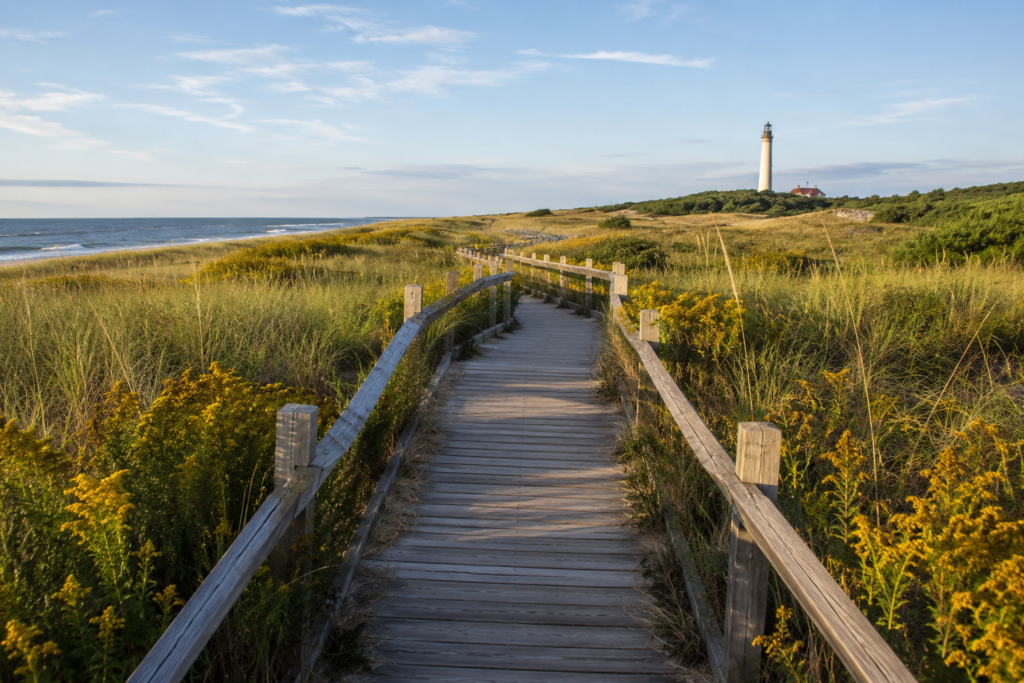
Cape May sits at the very southern tip of New Jersey, where the Atlantic coastline and Delaware Bay meet — a natural funnel that has made it one of the longest-running monarch research sites in North America, with the Cape May Monarch Monitoring Project tracking populations here since 1990. The migration typically runs from September 1 through late October, with the heaviest numbers usually appearing from mid-September through early October.
The best viewing isn’t at the busiest tourist spot. Skip straight past the lighthouse crowds and head for the dune crossovers and meadow trails on the park’s western side, plus South Cape May Meadows, managed by The Nature Conservancy just up the coast — both see noticeably fewer visitors and noticeably more butterflies, since monarchs feed heavily on the goldenrod and seaside asters growing there before their bay crossing. Early evening, just before dusk, is when you’ll find roosting clusters settling into the dune vegetation for the night — that’s the moment to have your camera ready, not the middle of the afternoon.
Cape May Point itself is a small, walkable town, and most of the migration viewing sits within a fifteen-minute walk of free or low-cost parking near the lighthouse and state park lot. That makes it an easy half-day add-on rather than a trip requiring its own logistics — you can genuinely combine a sunrise or sunset monarch walk with a normal beach-town day in Cape May proper, without the two competing for your time.
Point Pelee National Park, Ontario: Canada’s Southernmost Tip
Point Pelee juts into Lake Erie as the southernmost point of mainland Canada, and its geography does the same funneling job as Cape May, just on a Great Lakes scale instead of an Atlantic one. Parks Canada’s own monarch page puts it plainly: for a few special days each autumn, the park becomes a temporary home to thousands of migrating monarchs waiting for conditions to favor the roughly 40-kilometer crossing to Ohio, since flying over open water is a genuine risk for a fragile insect.
Mid-September is typically the height of the migration here, with visible activity continuing into mid-October. The payoff for patience is a genuinely strange, beautiful sight: resting monarchs cluster so densely on tree branches near the Tip that, with wings closed, they can look like dead leaves from a distance — which is exactly the camouflage they’re using — until the whole cluster shifts in a gust of wind and the tree appears to come alive. CBC News has reported on exactly this phenomenon at Point Pelee, describing tens of thousands of monarchs resting along the shoreline before their Lake Erie crossing. Arrive at dawn or the hour before sunset for the best chance at seeing a roost at full density, and bring binoculars, since good roosts are often high in the tree canopy rather than at eye level.
One practical detail that catches first-time visitors off guard: during peak season, Point Pelee restricts private vehicle access to the Tip itself, and visitors take a park shuttle from the Visitor Centre instead. It runs frequently, but arriving right at opening gives you first pick of shuttle times and the best chance at the calmer, less crowded early-morning roost — worth building into your schedule rather than discovering at the parking lot.
| Site | Peak window | Best time of day |
|---|---|---|
| Cape May Point, NJ | Sept 1 – late Oct (peak mid-Sept–early Oct) | Just before dusk |
| Point Pelee, Ontario | Early Sept – mid-Oct (peak mid-Sept) | Dawn or the hour before sunset |
The Butterfly Behind the Spectacle: Why This Generation Is Different

Here’s the detail that turns this from “pretty butterflies” into something genuinely remarkable: the monarchs you’ll see migrating in September are not the same butterflies that emerged in spring. Every summer generation of monarchs lives only a few weeks, just long enough to mate and lay the next batch of eggs. But the generation that emerges in late August and September is biologically different — it doesn’t reproduce at all. Instead, it channels all of its energy into fat storage and can live up to eight months, long enough to fly upward of 3,000 to 4,000 kilometers to overwintering sites in the oyamel fir forests of central Mexico, then start the return journey north the following spring.
No individual monarch makes the full round trip. The butterflies overwintering in Mexico are the great-great-grandchildren of the ones that left Mexico the previous spring, which means the migration route itself has to be encoded somehow in the insect rather than learned through experience — a detail scientists still don’t fully understand, and one worth mentioning to any kids on the trip, because it tends to land harder than anything else in this guide.
“Watching these delicate butterflies stack together like shingles on a roof is truly spectacular.”
— a common description from longtime Point Pelee monarch counters, of a full roost at dusk
The Tagging Program That Proves Where “Your” Butterfly Ends Up

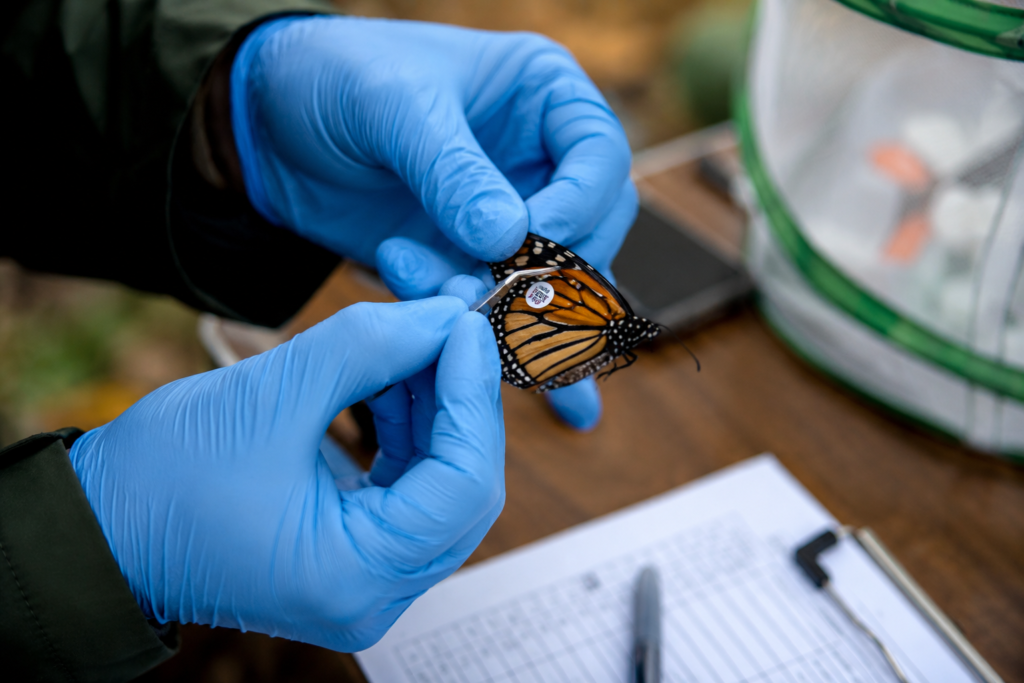
Part of what makes Cape May and Point Pelee more than just a photo opportunity is that both sites are active research stations, not just scenic overlooks. Volunteers with the Cape May Monarch Monitoring Project and similar programs at Point Pelee catch a small sample of passing monarchs, apply a tiny, harmless numbered sticker to a wing, and release them — and monarchs tagged at both sites have since been recovered at their overwintering colonies in central Mexico, thousands of kilometers and months later. If you visit during a tagging demonstration (both parks run public tagging talks on weekends through the season), you can watch a monarch get tagged and released a few feet in front of you, which tends to land far more memorably than reading about the migration afterward.
Eastern monarch populations have also declined significantly over the past few decades, largely due to milkweed loss across their breeding range in the U.S. Midwest — milkweed is the only plant monarch caterpillars can eat, and its disappearance from agricultural land has hit the population hard. Neither Cape May nor Point Pelee can reverse that trend on their own, but the meadow-restoration work both sites do, planting native milkweed and nectar plants along the migration corridor, is a genuine, ongoing part of why the funnel still produces a real spectacle each fall rather than a rapidly thinning one.
Planning a Trip Around the Migration: Timing, Access, and What to Bring
Both sites are genuinely easy to visit — no permits, no guided-tour requirement, no significant cost. Point Pelee charges a standard national park day-use fee, and Cape May Point State Park is free, though nearby South Cape May Meadows has its own small parking area that fills early on good migration days. Give yourself flexibility rather than booking a single fixed date months out: since the best days depend on weather that’s only reliably forecast three to five days ahead, a loose window of four or five days gives you room to adjust which specific day you go once you can actually see the forecast.
Both parks run citizen-science monitoring during the season — the Cape May Monarch Monitoring Project has tracked populations since 1990, and Point Pelee posts regular migration updates through the fall. Following either one in the week before your trip is the single best way to gauge whether numbers are running high or low that year, since migration volume does vary year to year based on the previous summer’s breeding success further north.
Budget-wise, this is one of the cheapest wildlife spectacles on the planet to actually witness — no boat charter, no guide fee, no permit lottery. The only real cost is accommodation, and small-town rates in Cape May Point or the Leamington area near Point Pelee run reasonable outside of peak summer beach season, especially midweek. If you’re flexible on exact dates because you’re chasing a weather window anyway, booking a refundable room and confirming the date once the forecast firms up is the smarter play over locking in a fixed non-refundable booking months in advance.
Check the forecast, not just the date
Look for a cold front with northwest winds one to two days before your planned visit — that’s the single strongest predictor of a big day.
Go at dawn or the hour before dusk
Roosting behavior — the dense clusters that make for a genuine spectacle — happens overnight, so the hours around it are your best viewing window.
Walk the quieter trails, not the main viewpoint
At both sites, the less-trafficked meadow and dune trails consistently outperform the main lookout points for both butterfly numbers and a peaceful experience.
Bring binoculars and layers
Roosts often sit high in tree canopy, and both coastal sites run noticeably cooler and windier at dawn and dusk than the daytime temperature suggests.
Before You Book Anything
Every Wildlife Season Has an Exact Window Worth Knowing
“When To Go: The Travel Timing Atlas” scores 50 countries across weather, crowds, price, and events — so the next natural spectacle you plan around isn’t a guess.
See the Travel Timing Atlas →Building a Longer Trip Around Either Site

Neither Cape May nor Point Pelee needs to be the whole trip. Cape May sits within easy reach of Philadelphia and the Jersey Shore, so a migration morning fits naturally into a longer coastal weekend — it’s the same “build the wildlife moment into a trip you were already taking” approach we recommend for Costa Rica’s turtle hatching season, just on a much shorter drive. Point Pelee is roughly a two-hour drive from Detroit or Toronto, which makes it an easy add-on to a Great Lakes road trip or a longer visit to southern Ontario.
If wildlife-timed travel is becoming a theme for your trips generally, it’s worth browsing our wider wildlife travel coverage — the same “know the exact window, not just the season” logic applies whether you’re chasing whale season in Hermanus or timing a trip around the early aurora season in September. Families exploring this kind of trip for the first time might also enjoy the destinations covered in our family-friendly nature and adventure guide, and if Madagascar’s lemurs or other wildlife-forward destinations are on your radar, our guide on traveling to Madagascar is a natural next stop.
Wherever you’re driving in from, pack as if you’re headed to a coastal or lakeside site in early autumn rather than a summer beach trip — our packing hacks guide covers the layering basics — and book accommodation near either park a few weeks out where possible; our hotel booking tweaks guide has more on getting good shoulder-season rates in small coastal towns like Cape May, where rooms can fill up fast on a forecasted big migration weekend.
Common Mistakes People Make Chasing the Monarch Butterfly Migration in September
- Picking a date months out and refusing to adjust it. The single biggest driver of a great sighting is a cold front one to two days before your visit — a fixed date chosen in spring has no way to account for that.
- Visiting in the middle of the day. Monarchs are actively flying and feeding at midday, spread thin across meadows rather than clustered. Roosting behavior — the dense, visually dramatic clustering — happens overnight, so dawn and dusk are when you’ll actually see the spectacle.
- Heading straight to the busiest lookout point. At both sites, the quieter dune, meadow, and trail sections consistently outperform the main viewing platforms for both butterfly density and crowd levels.
- Forgetting binoculars. Good roosts are often high in tree canopy rather than at eye level, and a lot of visitors miss the densest clusters simply because they never look up with enough magnification to see them clearly.
- Assuming a calm, sunny day is a good sign. It’s often the opposite. Stagnant high-pressure systems with light winds tend to produce thin, scattered sightings compared to the days right after a front passes through.
Frequently Asked Questions
Planning More Than One Trip This Year?
The Complete Travel System bundles the Timing Atlas with an 86-page emergency-handling guide and an AI trip-planning prompt library — 311 pages covering when to go, how to plan it, and what to do when something goes wrong.
Explore the Complete Travel System →The monarch butterfly migration in September rewards exactly one kind of planning: loose enough to chase the weather, specific enough to know where the funnels are. Pick Cape May or Point Pelee, build in a flexible few days, watch for that cold front, and head out at dawn or dusk rather than noon. Do that, and you’ll see something most visitors — even the ones who show up during the exact right week — miss entirely because they never checked the wind. It’s a small habit to build into a trip, and it’s the difference between a quiet meadow and a tree that looks like it’s breathing.

The Modern Traveler's Starter Kit
The best chapter from each of our three travel books — one free PDF:
- The first-5-minutes protocol for any travel emergency
- A full country timing scorecard, every month scored
- 5 AI prompts that turn ChatGPT into a travel agent
No spam. Instant download. Unsubscribe anytime.