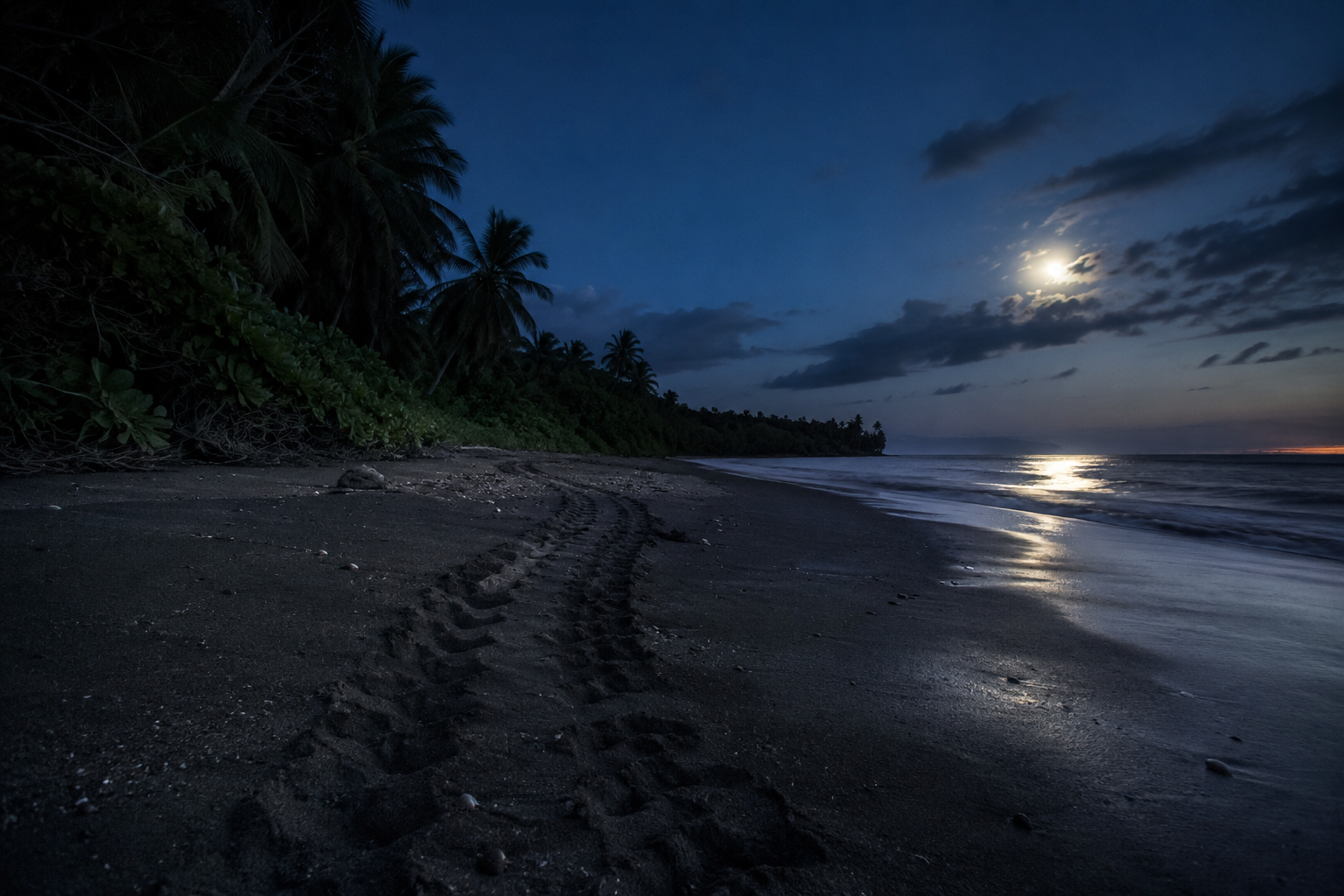
You’ve seen the photos: a beach at night, a green sea turtle the size of a coffee table hauling herself out of the Caribbean. What the photos don’t tell you is that Tortuguero has no roads, the tours run on a spotter system most visitors don’t understand, and the difference between seeing everything and seeing nothing often comes down to which two weeks you book. This guide covers the real season dates, how the night tours actually operate, what it costs in 2026, and the rules that catch travelers off guard.
The short answer: Tortuguero turtle season runs from July to mid-October for green sea turtles, with nesting peaking in August and hatchlings emerging from roughly August 15 through early October. You can only visit the beach at night with a licensed guide, on tours departing at 8 PM or 10 PM. Expect to pay $35–60 per person including the park fee, and leave your camera at the hotel — photography is banned.
Key Takeaways
- Green turtle nesting runs July–October; the sweet spot for seeing both nesting adults and hatchlings is mid-August to late September.
- Night beach access is guided-only — independent walks after 6 PM are prohibited and enforced.
- Tours cost $35–60 per person and use two nightly slots (8 PM and 10 PM); you often learn your slot the same day.
- Cameras, phones, and flashlights are banned on turtle tours — guides locate turtles via a radio spotter system.
- Tortuguero has no road access: arrive by boat from La Pavona (via Cariari) or a 30-minute flight from San José.
- Sightings are likely but never guaranteed — tours run rain or shine and are not refunded for no-shows by the turtles.
When Is Tortuguero Turtle Season? The Real Calendar
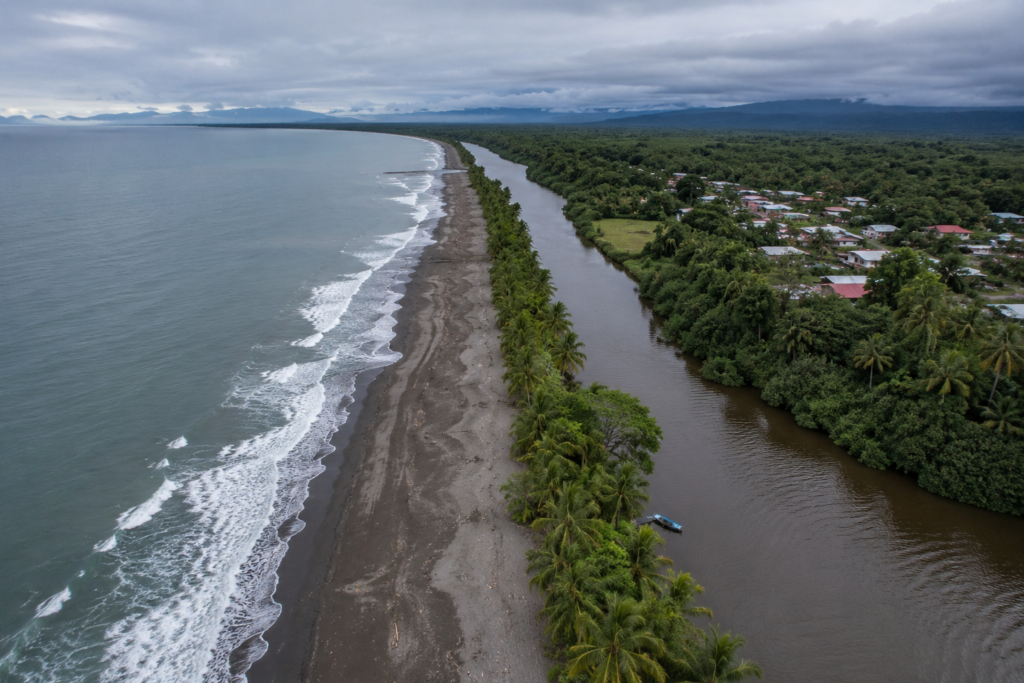
This section breaks down the actual month-by-month rhythm of Tortuguero turtle season, because “July to October” hides important differences.
Morocco runs on six clocks, not one. The full guide works each region out separately, then shows you where the answers overlap.
Read what's inside
Tortuguero’s beach is the most important nesting site in the Western Hemisphere for endangered green sea turtles. Tens of thousands of nests are laid here each season along roughly 22 miles of protected black-sand coastline. But the season is not uniform:
July — nesting begins in earnest. Numbers build week by week. You’ll almost certainly see a nesting female, but hatchlings are still rare because eggs incubate for about 60 days.
August — peak nesting. This is the month with the highest number of females on the beach per night. From mid-August, the first big waves of hatchlings from July nests start emerging. If you want the best odds of seeing both events in one trip, the second half of August is your window. Tortuguero sits alongside the Serengeti river crossings on the shortlist of the best wildlife and nature trips to take in August.
September — nesting continues at high volume and hatching accelerates. Many local guides quietly consider September the best all-around month. It also coincides with a small weather bonus: September and October are the driest stretch of the year on Costa Rica’s Caribbean coast — the reverse of the Pacific side, which is drowning in rain.
October — nesting tails off in the first half of the month, but hatchlings keep boiling out of the sand. Official turtle-walk tours typically wind down by mid-October, depending on activity levels that year. If your trip lands late in the season, pair it with our picks for the best travel destinations in October.
If you’re weighing this against other trips in the same window, our hub of the best travel destinations in September puts Tortuguero’s dry-ish micro-season in context.
Nesting vs Hatching: What You’ll Actually See (and When)
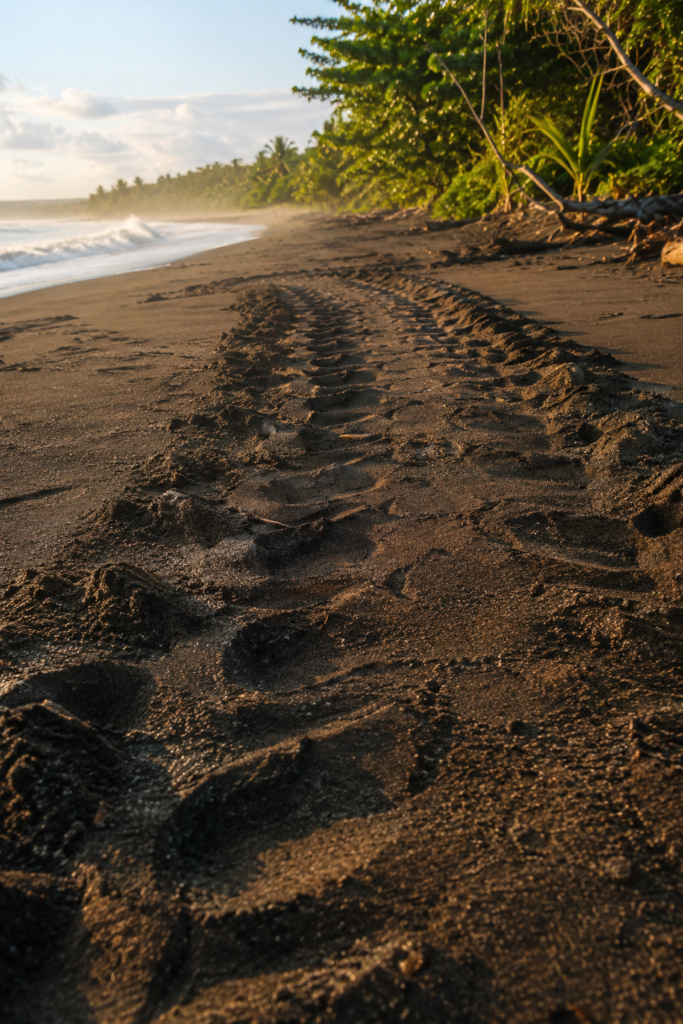
Travelers use “turtle hatching in Tortuguero” as one phrase, but nesting and hatching are two separate events with different timing, different tours, and different odds. This section separates them.
Nesting is the adult event. A female green turtle — typically 300 to 400 pounds — emerges at night, crawls above the high-tide line, digs a body pit and an egg chamber with her rear flippers, deposits around 100 eggs, camouflages the nest, and returns to the sea. The full process takes one to two hours, and once she enters the egg-laying “trance,” guides can bring small groups close without disturbing her. This is what the official night turtle tours are built around.
Hatching is the baby event. About 60 days after laying, hatchlings dig upward together and erupt from the sand — usually at night or dawn, when the sand surface cools — then sprint for the water. It’s fast, unpredictable, and can’t be scheduled. Nobody can sell you a guaranteed hatching tour in Tortuguero; what happens instead is that hatchings are frequently witnessed during nesting tours, on early-morning beach walks, or simply from the beach edge at dusk in September.
| Event | Best window | How you see it | Odds per night (peak) |
|---|---|---|---|
| Nesting (adults) | Late July – late September | Official guided night tour (8 PM / 10 PM) | High — most tours see at least one female |
| Hatching (babies) | Aug 15 – mid-October | Luck: during night tours, dawn walks, dusk on the beach | Moderate — common in Sept, never guaranteed |
| Leatherbacks | March – June (separate season) | Guided night tour, spring only | Low–moderate, small population |
Set your expectation accordingly: book the nesting tour as the anchor of your trip, and treat a hatching as the bonus that September stacks the deck toward. It’s the same logic that applies to other wildlife travel events with hard seasonal windows — like the Great Migration river crossings in August: nature keeps a calendar, not appointments.
Getting to Tortuguero: The Boat, the Flight, and the Honest Math
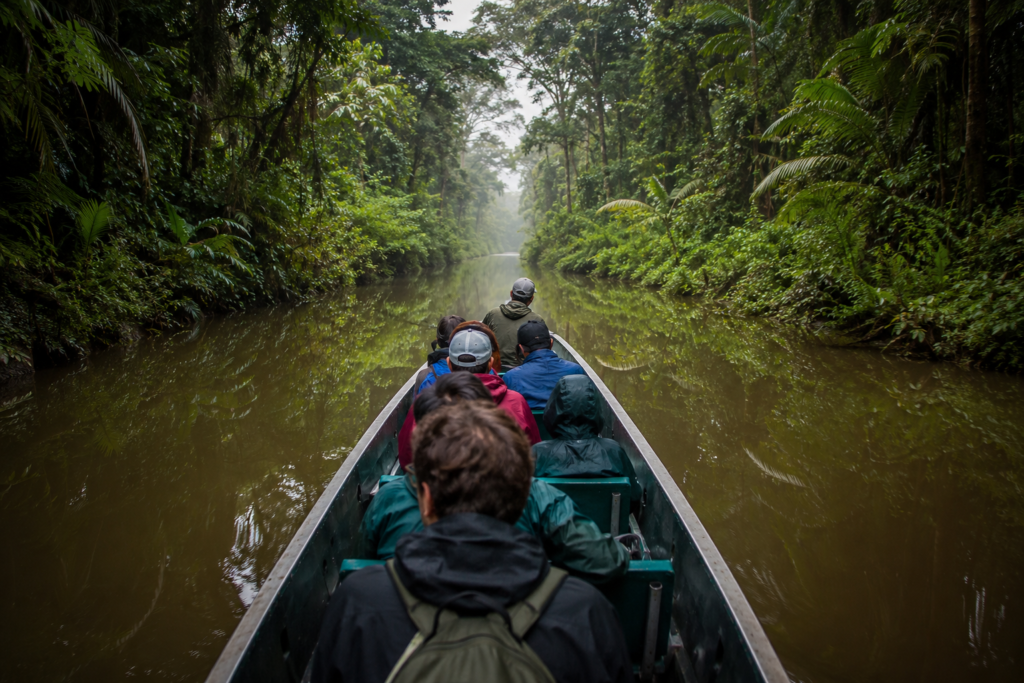
This section covers the logistics that surprise people most — because Tortuguero village sits on a sandbar between the canals and the sea, and no road reaches it.
You have two realistic options:
Option 1: Bus/car + boat via La Pavona. The standard route from San José is a drive or bus to Cariari (about 2 hours), then onward to the La Pavona dock, then a public boat down the canals to Tortuguero village (roughly 1 to 1.5 hours on the water, around $8–10 per person). Total door-to-door from San José: 4 to 5 hours. The boat ride is genuinely part of the experience — the canals are lined with herons, caimans, and howler monkeys, and it costs a tenth of a canal tour.
Option 2: Fly. Sansa operates small-plane flights from San José to Tortuguero’s airstrip in about 30 minutes. Fares typically run $80–130 one way. If your trip is short or you’re prone to bus fatigue, the flight buys you most of a day.
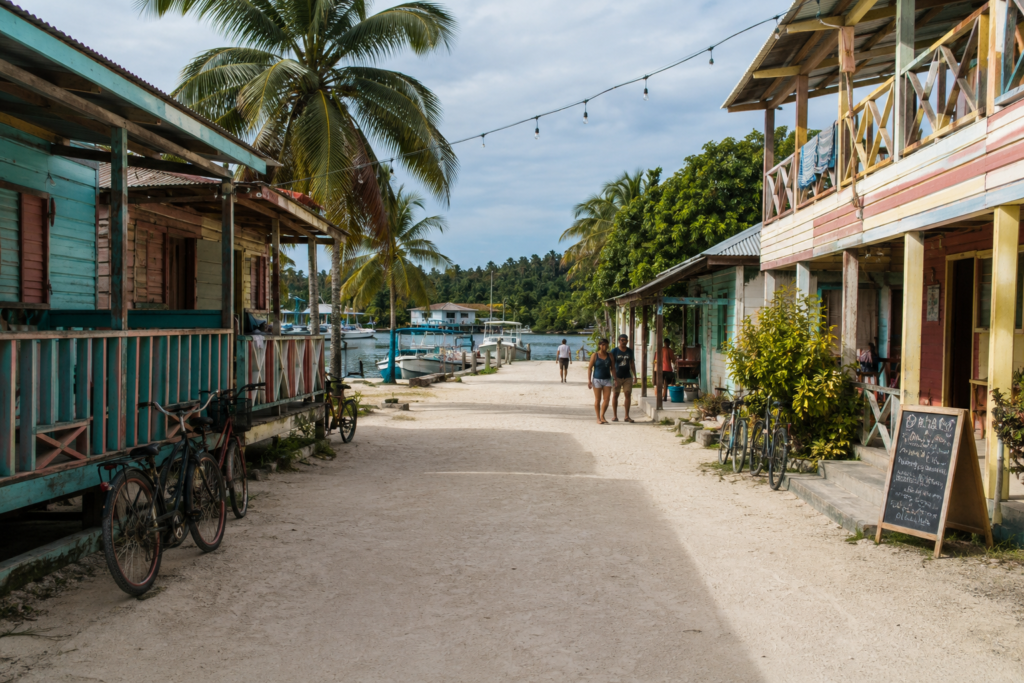
Once you’re in the village, everything is on foot. There are no cars — just sandy paths, a couple of grocery stores, the boat docks, and lodges strung along the canal. Plan two nights minimum: one for the turtle tour, one as a buffer, because tours can’t be rescheduled if weather or turtle activity works against you on your only night. Multi-leg trips like this are exactly where bookings go wrong, so it’s worth reading our guide to navigating the complexities of travel booking and planning before you chain the flight, the bus, and the boat together.
How Tortuguero Turtle Season Night Tours Actually Work
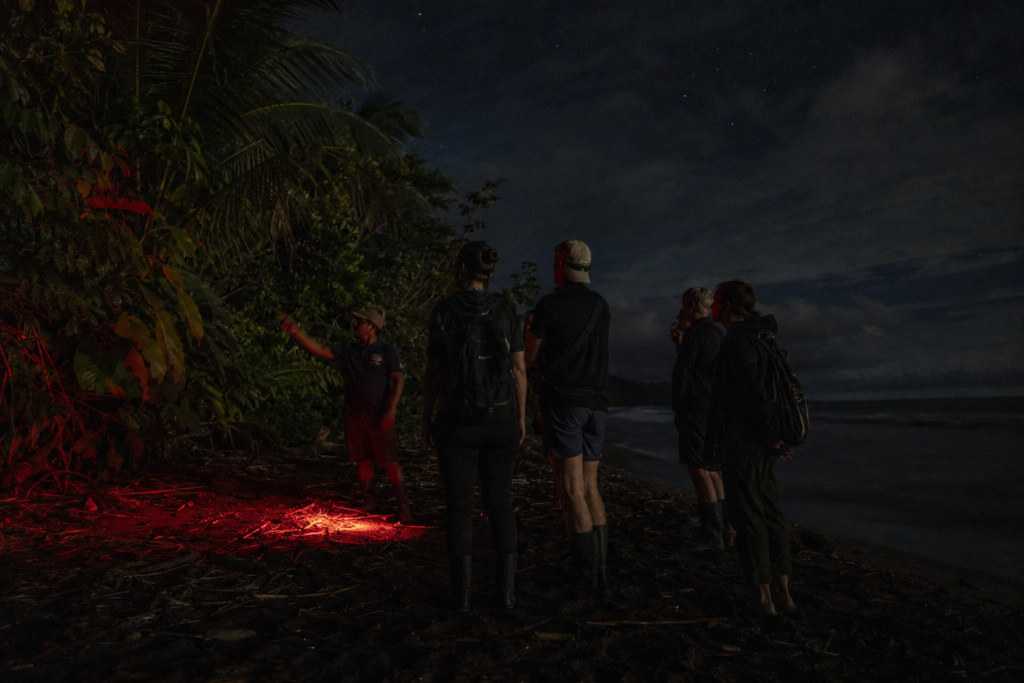
This is the section most guides skip, and it’s where expectations most often collide with reality. The tours are tightly regulated — which is exactly why the turtles keep coming back.
Here’s the system. Each evening, Costa Rica’s park authority (SINAC, under the environment ministry) assigns licensed guides to specific sectors of the beach. Tours depart in two waves — 8 PM and 10 PM — and last two to three hours. You frequently won’t know which slot you’ve been assigned until the afternoon of the tour, so don’t book a 5 AM canal tour for the next morning until you know.
Groups don’t wander the beach hoping. Trained spotters walk the sectors and radio guides when a female has begun laying — the phase when she’s least sensitive to disturbance. Your group may wait at a staging point, then walk quickly (sometimes 10–20 minutes over soft sand) to reach her. On busy peak nights, several groups may rotate past the same turtle in sequence. It’s managed, and it can feel managed — but it’s the reason a beach with this much tourism still hosts one of the healthiest green turtle populations on Earth.
What a good night looks like: you watch a female excavate her chamber, lay eggs by the dozens, and bulldoze sand over the nest before dragging herself back to the surf. If your timing lands in the hatching window, your guide may also show you hatchlings scrambling seaward — several tours per week get this bonus in September.
What an unlucky night looks like: rain (tours run anyway — bring a light rain jacket), a long wait, a distant turtle, or very rarely none at all. Operators are upfront that sightings are probable, not promised, and there are no refunds for nature’s no-shows. Your guide matters more than your tour company here — if you’ve ever wondered how much difference that makes, our story about what happens when a traveler hires the wrong tour guide is the cautionary version.
What It Costs in 2026 — and What the Price Includes
This section lays out real numbers so you can budget the trip properly instead of discovering fees dockside.
- Turtle night tour: $35–60 per person with a certified guide; most standard group tours cluster around $35–45. Prices at the top end usually bundle the protected-area fee and smaller groups.
- Tortuguero National Park day entry: $15 for foreign adults (for daytime trails and canal visits — a separate matter from the night tour, which uses its own permit system).
- Public boat from La Pavona: about $8–10 per person each way.
- Flights from San José: $80–130 one way with Sansa.
- Lodging: village guesthouses from $30–60 a night; jungle lodges with meal packages from $150 upward.
- Sea Turtle Conservancy visitor center: $2.50 — go before your tour. Twenty minutes here makes everything you see on the beach make sense.
The Sea Turtle Conservancy has run continuous research at Tortuguero since 1959 — the longest-running sea turtle monitoring program in the world — and its tagging data is a large part of why this beach recovered from a turtle-soup harvesting site into a conservation success story. A share of tour fees and the spotter system employ local guides, which is why the village economy now protects turtles instead of harvesting them.
A realistic two-night, per-person budget from San José by bus and boat: $180–280 including lodging, tours, transport, and meals — modest by wildlife-travel standards for an event of this caliber. Peak-season demand is real, though: tours sell out days ahead in August and September, so the habits in our guide to mastering peak season travel apply here in full.
The Rules on the Beach — and Why Guides Enforce Them Hard
This section covers the regulations, because Tortuguero’s are stricter than almost any turtle beach in the world, and travelers who don’t know them in advance are the ones who end up frustrated.
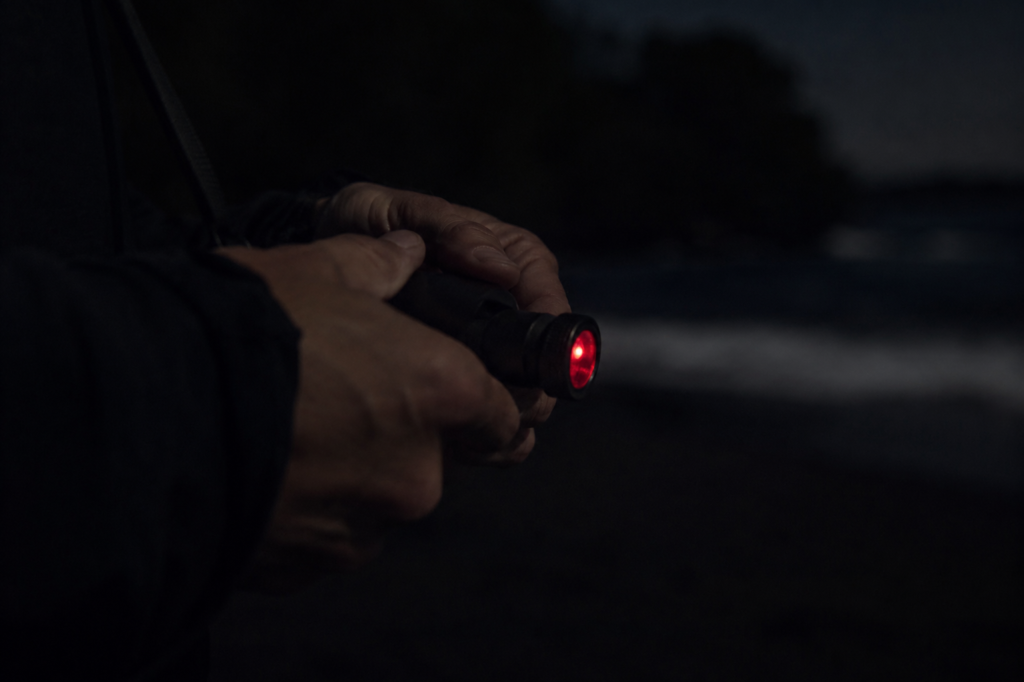
- No cameras, no phones, no flashlights. Not “no flash photography” — no devices at all on the beach during turtle tours. Artificial light disorients nesting females and can send hatchlings crawling inland instead of seaward. Guides will send you back for a visible phone.
- Dark clothing only. Dark long sleeves and trousers; closed shoes for soft sand. White or bright clothing reflects moonlight and is visible to turtles.
- No beach access after 6 PM without a licensed guide during nesting season. This is enforced. The beach at night belongs to the turtles and the patrols.
- Stay behind the guide, speak quietly, never touch. Groups approach only from behind the turtle, only once she’s laying.
- Don’t “help” hatchlings. The crawl to the sea imprints the beach’s location in their navigation system. Picking them up and carrying them to the water — an instinct almost everyone feels — actually harms them.
For the official framework, park status, and current advisories, SINAC — Costa Rica’s national protected-areas system — publishes visitor information at sinac.go.cr, and the national tourism board’s site at visitcostarica.com is reliable for transport basics.
Common Mistakes That Ruin Tortuguero Turtle Trips
These aren’t the obvious errors — they’re the ones intermediate travelers make after reading three blog posts and feeling prepared.
1. Booking one night only. The single most common regret. One night means one shot at the tour, no buffer for a rough weather night, and a rushed dawn departure. Two nights transforms the trip; three lets you add the dawn canal tour, which many visitors rate above the turtles.
2. Confusing the seasons. Travelers arrive in April expecting green turtles (that’s leatherback season, much smaller numbers) or in December expecting anything at all. Green turtle season is July to mid-October. Anchor your dates to that, not to Costa Rica’s general “dry season” logic — which runs backwards on this coast.
3. Treating the 10 PM slot as a downgrade. People fight for the 8 PM tour, but late-slot groups often see more activity — turtle emergence tends to build toward the middle of the night with the tide. Take whichever slot you’re assigned without renegotiating; the spotter system equalizes the odds anyway.
4. Planning Tortuguero around Pacific-coast weather advice. September and October — when most of Costa Rica is at its wettest — are the Caribbean coast’s clearest months. Travelers who skip Tortuguero “because it’s rainy season” have it exactly inverted.
5. Skipping the Sea Turtle Conservancy museum. It costs $2.50 and takes half an hour. Visitors who go in cold watch a large reptile move sand for 90 minutes; visitors who went to the museum first watch a 100-million-year-old navigation miracle they understand. Same beach, different experience.
FAQ
What month is best for turtle hatching in Tortuguero?
Mid-August through late September is the best window. Hatchlings from July’s peak nesting start emerging around August 15, and September combines high hatching activity with continued adult nesting — plus the Caribbean coast’s driest weather of the year. Early October still delivers hatchlings, but adult nesting is fading by then.
Can you see turtles in Tortuguero without a tour?
Not at night. Beach access after 6 PM during nesting season requires a licensed guide, and patrols enforce it. During daylight you can walk the beach freely and occasionally catch late-morning hatchling stragglers or tracks from the night before, but the nesting event itself is a guided-tour-only experience.
How much does a Tortuguero turtle tour cost?
Expect $35–60 per person for the guided night tour, with most group tours around $35–45 including the certified guide and applicable fees. Add roughly $16–20 round trip for the La Pavona public boat and $15 if you also visit the national park trails or canals by day.
Are you guaranteed to see turtles on the night tour?
No — and any operator promising a guarantee is overselling. During peak season the odds are strongly in your favor, since spotters cover the beach sectors and radio guides when a female begins laying. But tours run rain or shine, no-shows happen occasionally, and there are no refunds for wildlife that doesn’t appear.
Can you take photos of the turtles in Tortuguero?
No. Cameras, phones, and flashlights are completely banned on official night turtle tours because artificial light disorients both nesting females and hatchlings. Guides enforce this strictly. Daytime photography on the beach is fine — turtle tracks, the village, and the canals are all fair game.
Is Tortuguero worth it outside turtle season?
Yes, with adjusted expectations. The canal system delivers year-round wildlife — sloths, caimans, river otters, toucans, three monkey species — and dawn canoe tours are outstanding in any month. But if turtles are the reason you’re going, hold out for July through early October rather than settling for the off months.
The Bottom Line
Tortuguero turtle season rewards travelers who respect its mechanics: go between mid-August and late September, book two nights, take whichever tour slot you’re given, and leave the camera behind. Do that, and you’ll stand in the dark a few meters from an animal that has been doing this since before flowers existed. Timing questions like this one are exactly what our When To Go: The Travel Timing Atlas answers for 50 countries, month by month — and the next step here is locking your dates, because September fills earlier every year and the best guides are assigned, not chosen at the dock.

The Modern Traveler's Starter Kit
The best chapter from each of our three travel books — one free PDF:
- The first-5-minutes protocol for any travel emergency
- A full country timing scorecard, every month scored
- 5 AI prompts that turn ChatGPT into a travel agent
No spam. Instant download. Unsubscribe anytime.