The Two-Speed Autumn
You booked October because every article told you it’s the best month in Japan. Then you started looking at photos from past Octobers and the trees were still green. This isn’t a contradiction — it’s two things happening in the same month, at different speeds, depending on where you are. Here’s what October actually delivers, region by region, so you can stop guessing and plan around what’s real.
Already know you want the full picture?
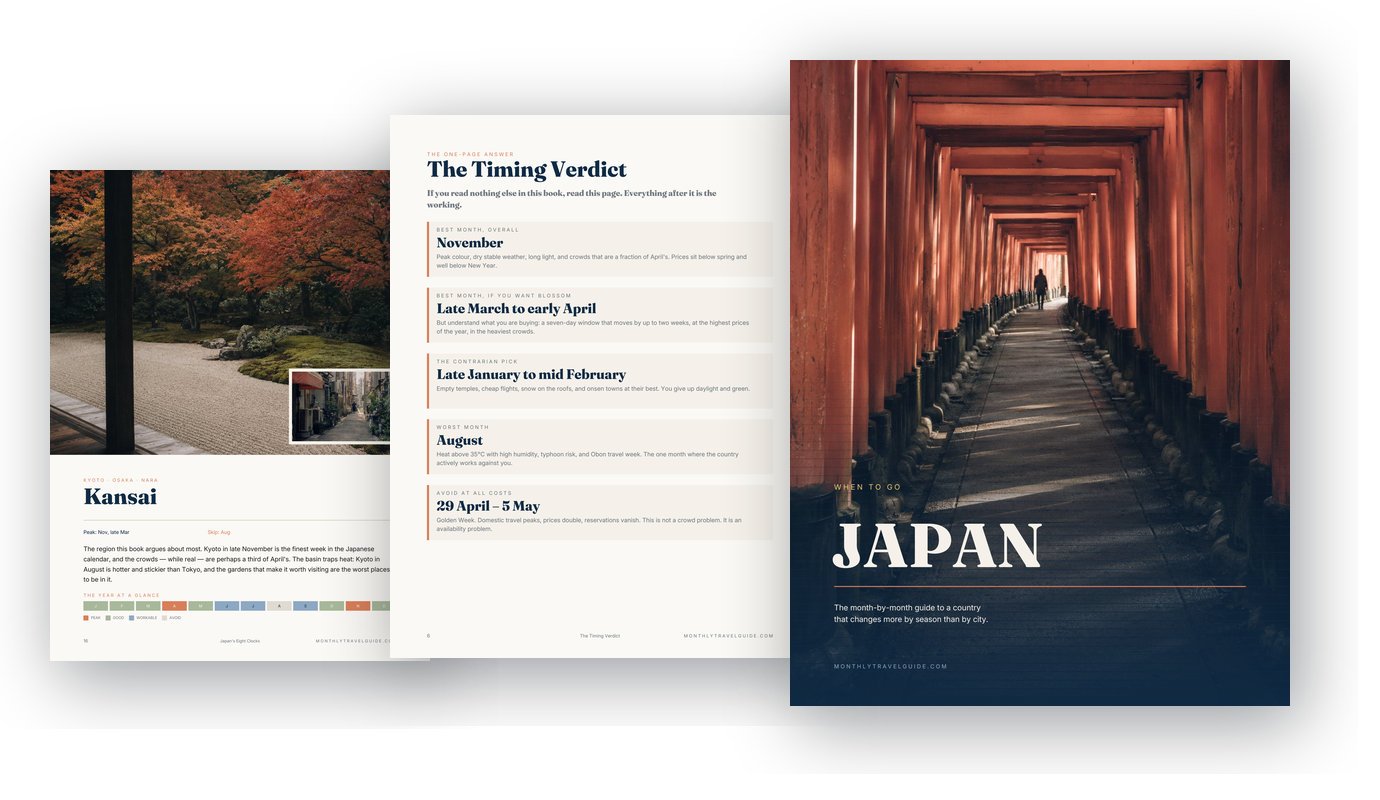
When to Go: Japan covers every month in detail — foliage, weather, crowds and pricing — so you can pick your dates once and mean it.
See the Japan timing guideIs October too early for autumn leaves in Japan? In most of the country, yes — Tokyo, Kyoto and Osaka stay mostly green through late October, with real color arriving in November. Hokkaido and high-altitude spots like the Japan Alps are the exception, turning by mid-October. Typhoon season is winding down but not finished, so early October still carries some storm risk. October rewards travelers who match their route to where the season actually is, not where a calendar says it should be.
Key Takeaways
- Tokyo, Kyoto and Osaka are typically still green for most of October — peak color there usually lands in mid-to-late November.
- Hokkaido and high-elevation areas like the Japan Alps and Nikko turn first, often by early-to-mid October.
- Typhoon season is easing by October but hasn’t ended — early-month trips carry more risk than late-month ones.
- October tourist numbers run close to spring cherry-blossom-season levels, so this isn’t the quiet month it’s sometimes advertised as.
- A north-to-south route can turn a “too early” trip into a well-timed one.
- Rain gear matters more than a heavy coat — October is wet more often than it’s cold.
Is October Too Early for Autumn Leaves in Japan? The Short Answer
Here’s the thing most single-page weather charts get wrong: Japan doesn’t have one autumn. It has a color front that starts in the far north in late September and takes roughly ten weeks to work its way down to the southern tip of the country. October lands somewhere in the middle of that journey — which means the honest answer to “is October too early for autumn leaves in Japan” depends entirely on which Japan you’re picturing.
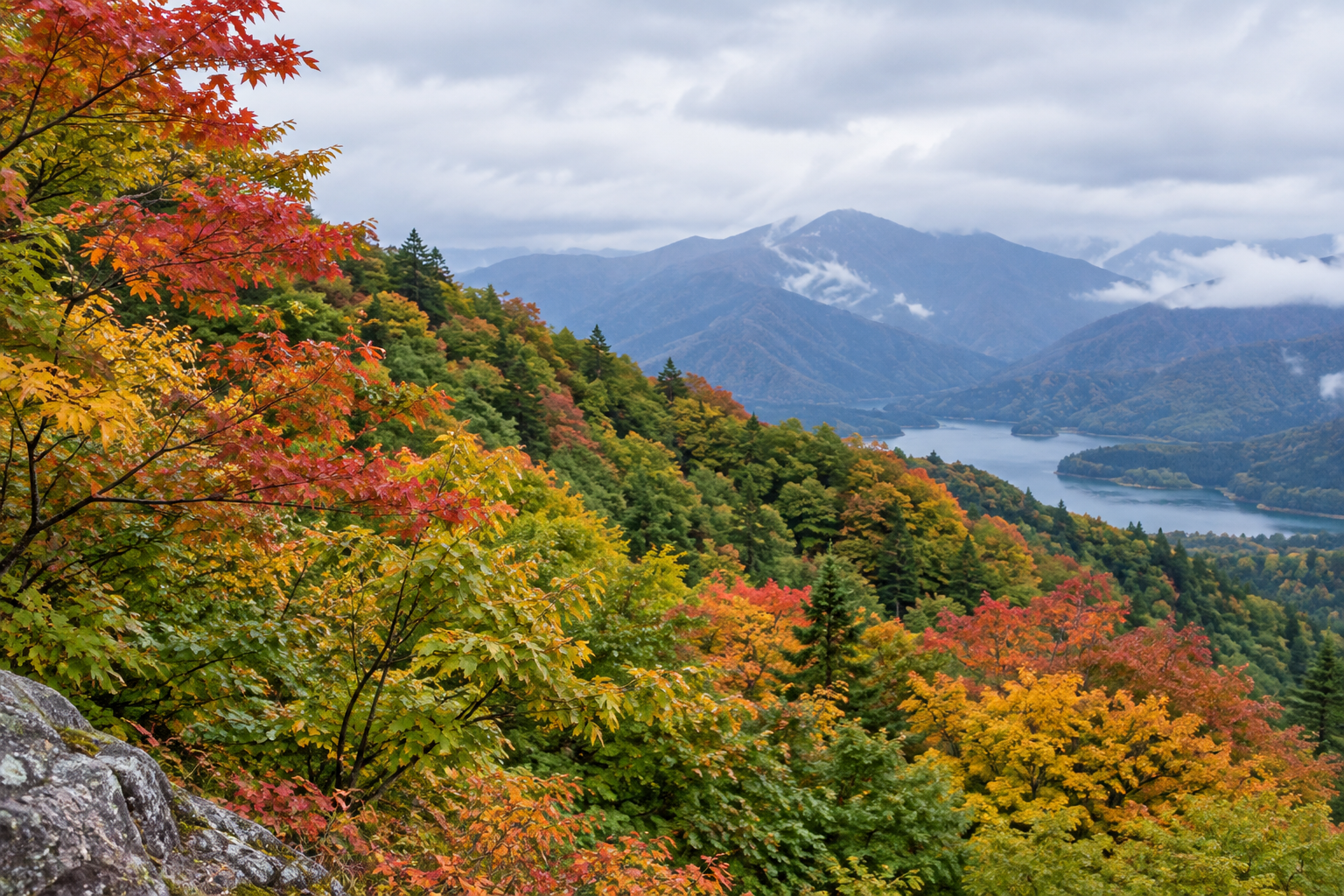
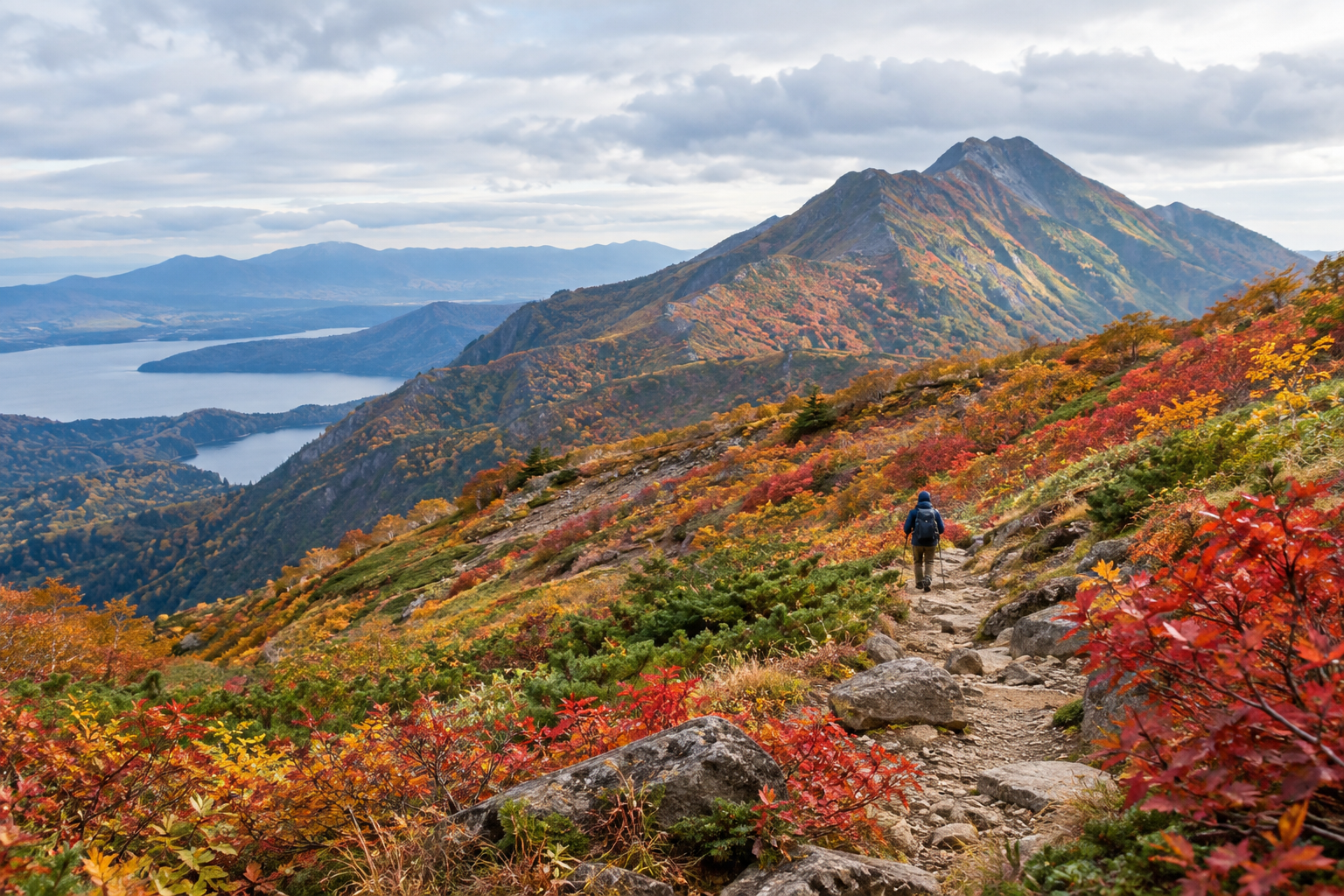
If your mental image is Kyoto’s maple gardens glowing red, or the postcard shot of Shinjuku Gyoen buried in orange leaves, then yes — October is too early. Those places are still running on late-summer green through most of the month, and the shift doesn’t really start until the back half of November. But if your image is Hokkaido’s forests catching fire in reds and golds, or a quiet hiking trail in the Japan Alps with frost on the grass, October isn’t early at all. It’s close to peak.
Morocco runs on six clocks, not one. The full guide works each region out separately, then shows you where the answers overlap.
Read what's inside
The mechanism behind this is worth understanding, because it explains why no two Octobers look quite the same. Leaf color doesn’t change on a fixed date — it changes when nighttime temperatures drop consistently enough, over enough consecutive nights, to trigger the tree’s shift out of chlorophyll production. Northern and mountainous areas hit that threshold weeks before low-lying southern cities do, which is why a single country can have snow-dusted red maples in Hokkaido and swimsuit weather in Okinawa on the exact same October afternoon.
So treat October less like a single answer and more like a map with a moving line drawn across it. Where you land on that line is a choice you get to make.
What “Typhoon Season” Actually Means for an October Trip
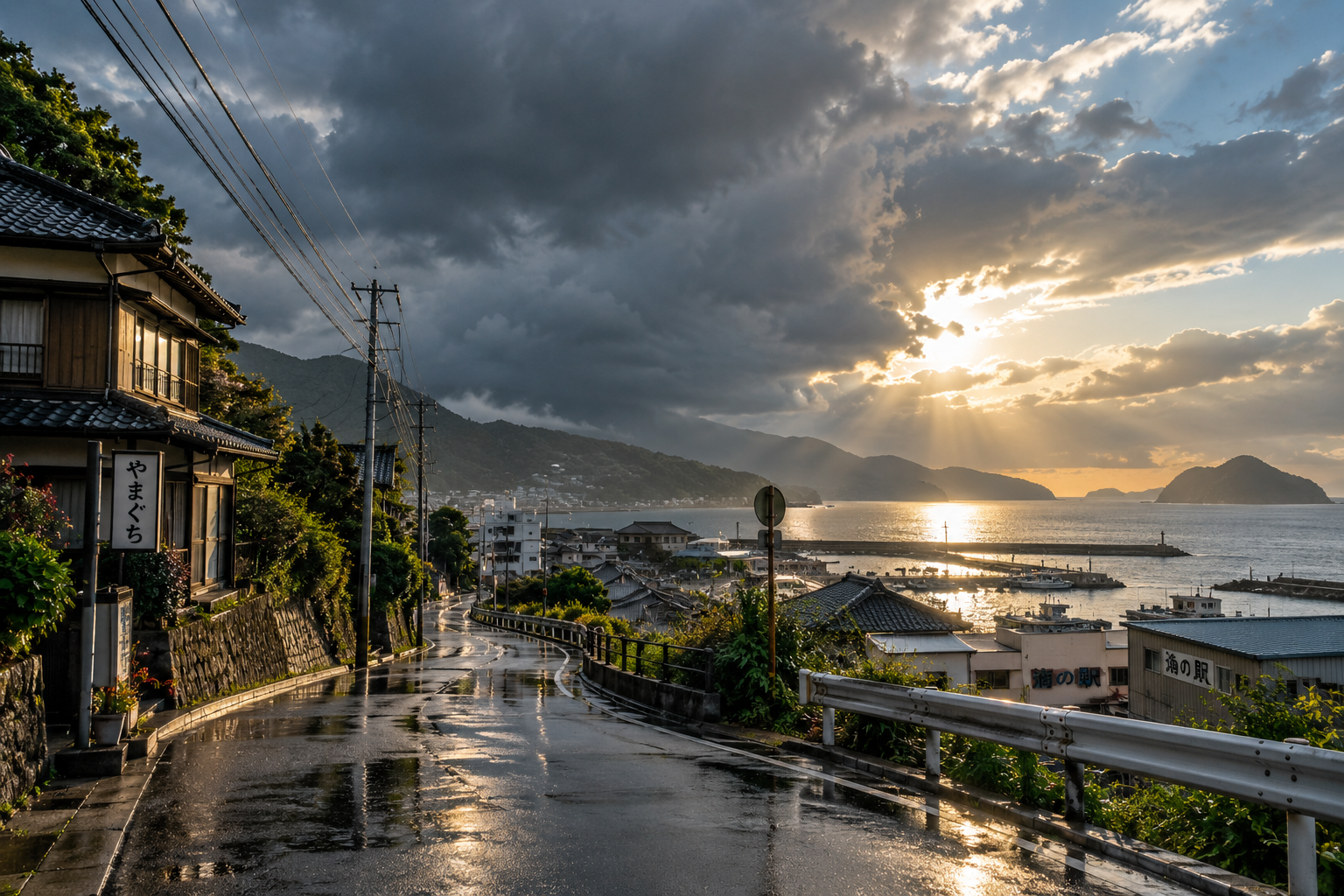
Typhoon season in Japan peaks in August and September, and by the time October opens, the worst of it has generally passed. Japan’s own tourism board describes the season as largely over by the end of September — which is reassuring, but not the same as saying the risk is gone. Storms have reached Japan in October before, and some years bring a genuinely strong one in the first half of the month. It’s rarer than in September, and it gets rarer still as October goes on, but “rarer” isn’t “never.”
What this means in practice is less dramatic than it sounds. Most Octobers pass without a single travel disruption. But a small amount of planning removes almost all of the downside if one does show up:
⚠️ WarningAvoid booking a single-city trip with no buffer days if you’re traveling in the first half of October. A one-day storm can cancel a bullet train schedule and eat the only full day you’d planned somewhere.
Build a day or two of slack into any early-October itinerary, especially around coastal cities and Kyushu. Travel insurance that covers trip interruption is worth the cost specifically for this window — Japan’s official tourism board has a plain-language rundown of what’s typically covered. And keep half an eye on the forecast in the days before you fly rather than locking a rigid hour-by-hour schedule months in advance. None of this should stop you from booking October — it just means October isn’t the one month of the year where you can plan on autopilot.
Where Japan’s Leaves Actually Are in October, Region by Region
This is the part most October guides skip, because it’s easier to write one weather summary for the whole country than to break it apart properly. But the regional split is exactly what decides whether your trip feels early, perfect, or somewhere in between.
| Region | October Foliage Status | Typical Daytime Feel |
|---|---|---|
| Hokkaido (Daisetsuzan, Furano) | Near or past peak, often fading by late October | Cool, jacket weather from early in the month |
| Japan Alps & Nikko | Turning through the month, peaking mid-to-late October | Cool by day, cold at higher elevation |
| Tohoku | Beginning to turn by late October | Mild, cooling noticeably as the month ends |
| Tokyo, Kyoto, Osaka | Mostly green; real color arrives in November | Mild days, cool evenings |
| Kyushu & Okinawa | No meaningful autumn color yet | Warm, close to late-summer conditions |
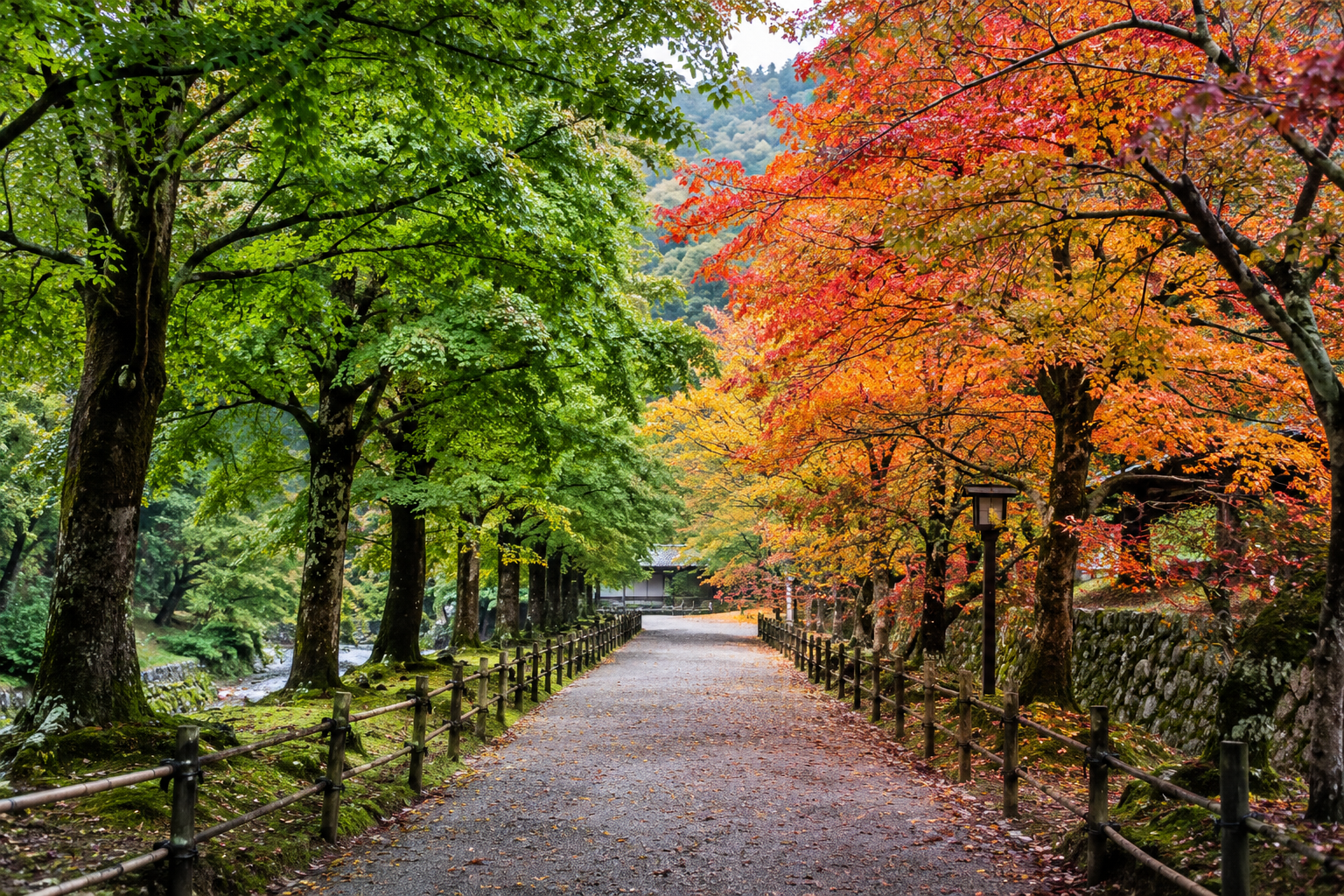
Notice the shape of that table. It isn’t a gradient of “slightly less colorful” as you move south — it’s closer to a switch. Above a certain latitude or altitude, autumn has clearly started. Below it, summer hasn’t quite let go. Most first-time visitors don’t realize how sharp that line is, which is exactly why so many end up standing in a green Kyoto garden wondering where the postcard went.
The Week-by-Week Foliage Calendar: Early, Mid, and Late October
Zooming into the month itself helps more than treating “October” as one block of thirty-one identical days.
Early October (1–10)
Hokkaido is near peak. Everywhere else still feels like late summer. This is the window with the highest remaining typhoon risk of the month.
Mid October (11–20)
Tohoku and the Japan Alps start turning. Regional harvest festivals pick up — the Takayama Autumn Festival, held October 9–10 most years, sits right at the edge of this window.
Late October (21–31)
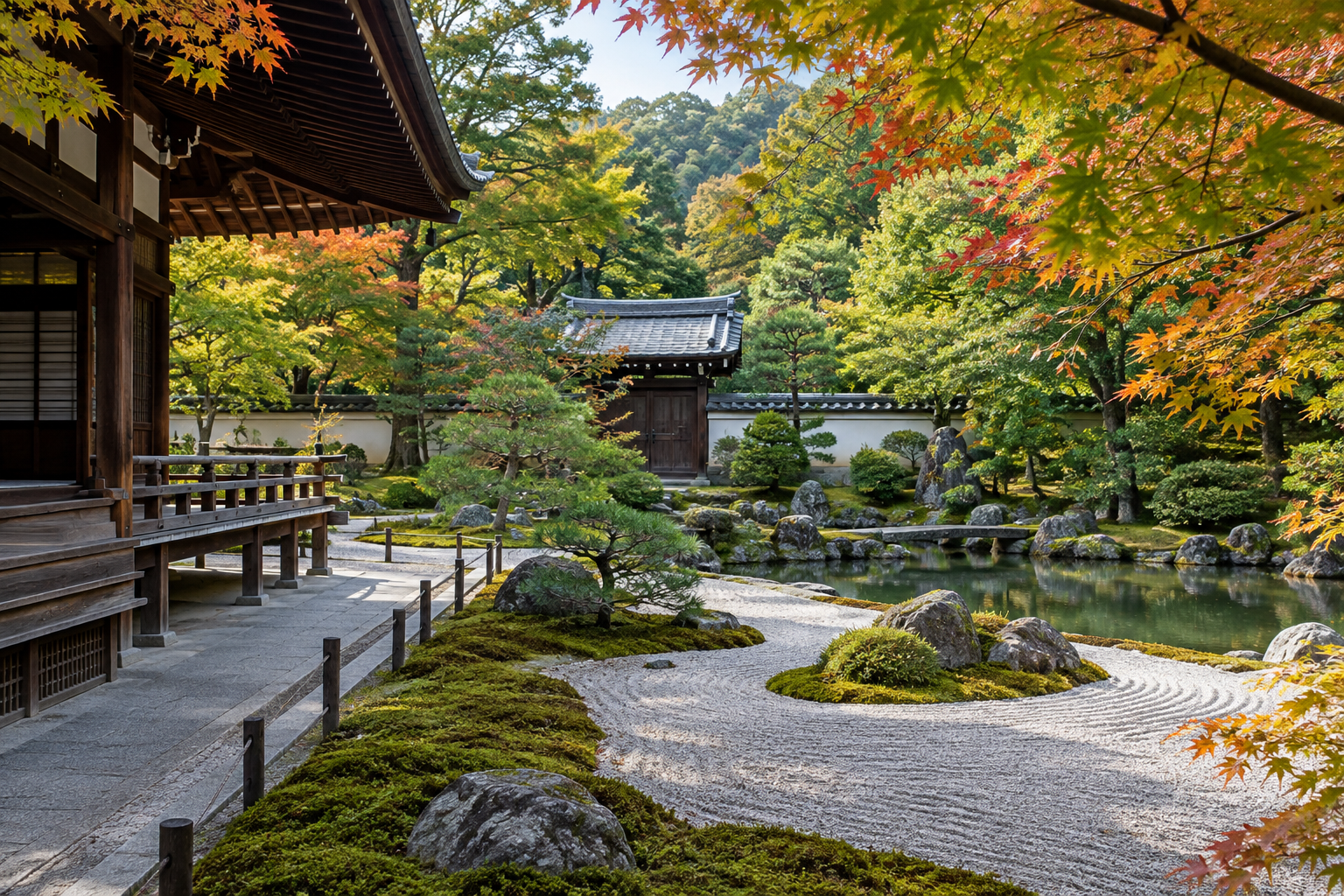
The Japan Alps are close to peak. Tokyo and Kyoto are still mostly green but visibly cooling, with the first hints of color at higher elevations nearby.
📝 NoteFestival dates repeat annually but shift slightly year to year. Treat any date in this guide as “typically around” rather than fixed, and confirm exact scheduling closer to your trip.
So — Is October Too Early for Autumn Leaves in Japan, or Should You Wait for November?
This is really a question about what you came for, not a question with one universal answer.
If red maples in Kyoto are the entire point of the trip — the reason you picked Japan over anywhere else — then wait for November. Pushing into October chasing that specific image usually ends in a green garden and a real sense of having gotten it wrong. There’s no itinerary trick that fixes a tree that hasn’t turned yet.
If you’re more flexible about where the color comes from, October opens up a version of the trip November can’t match. Hokkaido and the Japan Alps are genuinely close to their best. Crowds, while higher than the deep off-season, are still lighter than the true peak that hits the lowlands in November. And the shoulder-season pricing on flights and hotels tends to hold through most of the month before tightening up as November’s leaf-peeping crowds book in.
And if you want both — northern color now, a shot at southern color later — a north-to-south route through the month can thread that needle better than picking one region and hoping.
Building an October Itinerary That Works With the Season, Not Against It
The travelers who come away happiest from an October trip usually did one of two things: they either chased the color deliberately, or they stopped trying to chase it at all.
Chasing it means starting your trip in Hokkaido or the Japan Alps and moving south as the days pass, so the country’s own seasonal shift becomes part of your route instead of something you’re racing against. It’s a genuinely good way to structure a two-to-three-week trip, and it turns “October” from a compromise into the actual selling point.
Not chasing it means accepting that Tokyo, Kyoto and Osaka in October are a different trip — not a lesser one. Regional harvest festivals are in full swing. Museums and gardens are pleasant to walk without summer’s heat. Food is at its best, with new-season rice, pears and persimmons showing up on menus everywhere. None of that needs red leaves to be worth the flight.
✨ Quick WinIf your dates are already fixed and they land in the first half of October, shift your daily plan toward food, festivals and indoor culture in the lowlands, and save any hiking or nature-focused days for Hokkaido or the Alps if your route allows it.
What to Pack and Expect Day to Day
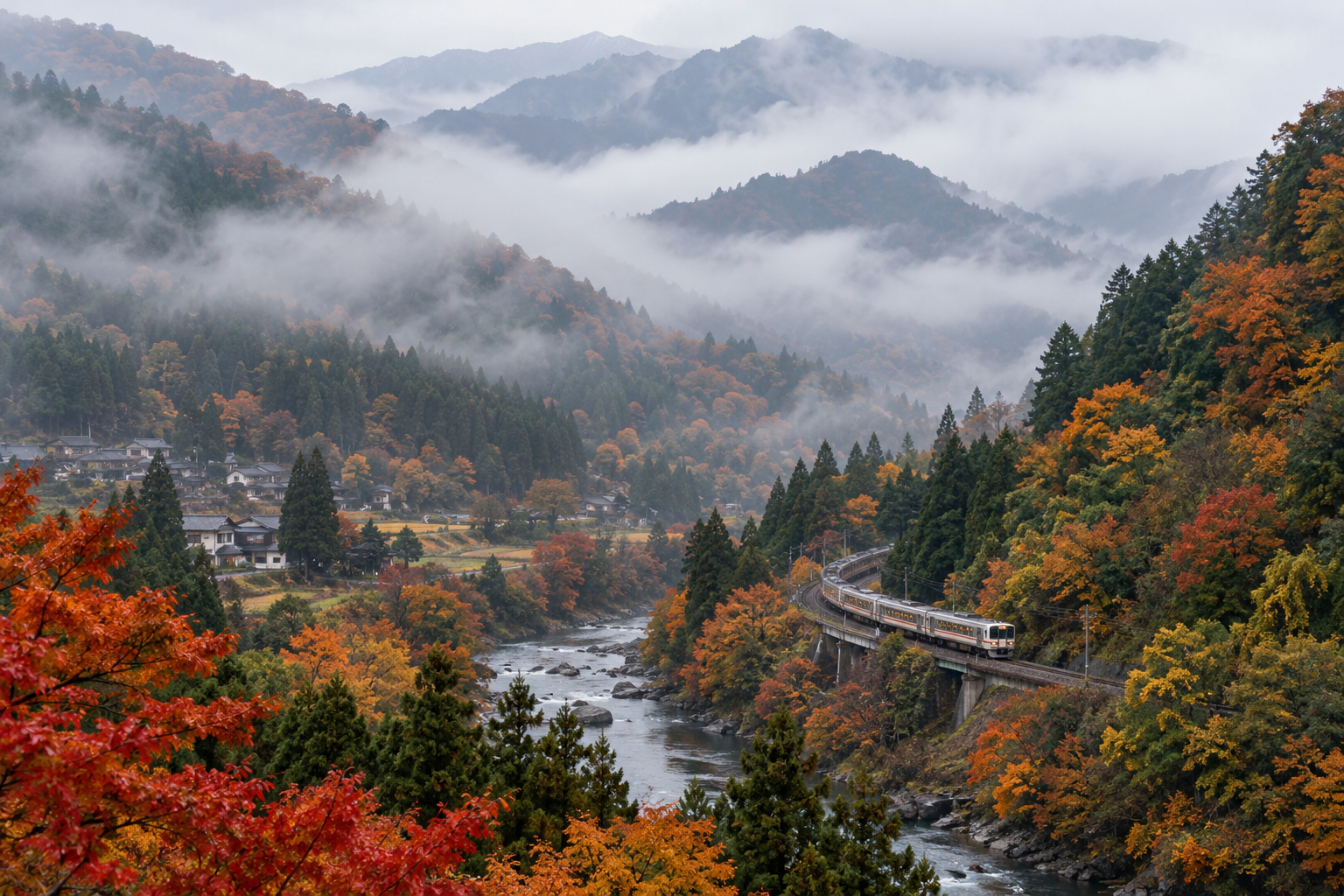
October in Japan runs mild rather than cold in most places travelers actually visit. Tokyo, Kyoto and Osaka typically see daytime highs in the low-to-mid 20s°C (low-to-mid 70s°F), dropping into the mid-teens°C (high 50s°F) overnight. Hokkaido runs noticeably cooler, with daytime highs closer to 16°C (low 60s°F) and evenings that can dip into single digits Celsius by month’s end.
Pack layers rather than a heavy coat — a light rain shell earns its space more than a winter jacket does, except in Hokkaido or at altitude. Rain is common enough across the month that an umbrella or compact waterproof isn’t optional, even on trips that otherwise dodge any storm activity entirely.
Crowds are the other thing people consistently underestimate. October tourist numbers run close to spring cherry-blossom levels — nowhere near empty. Book accommodation and any timed-entry sights well ahead, particularly in Kyoto, where October’s festivals add another layer of demand on top of the usual autumn interest.

Common Mistakes
- Booking Kyoto in early October expecting red maples. The gardens are still green through most of the month. Either shift your dates toward November or shift your expectations toward what early October actually offers — fewer summer crowds and comfortable sightseeing weather.
- Ignoring typhoon tracking because “the season is basically over.” Basically over isn’t over. A single unwatched storm can rearrange a tightly booked schedule. A quick forecast check the week before you fly costs nothing.
- Treating “autumn in Japan” as one uniform season. Planning a trip around a single national foliage date ignores just how differently Hokkaido and Kyoto behave in the same week. Plan by region, not by month alone.
- Skipping travel insurance during the typhoon tail. The cost is small relative to a cancelled internal flight or a missed non-refundable booking, and October is exactly the kind of month where it earns its keep.
- Locking a rigid itinerary months out without checking a live forecast closer to departure. Foliage timing shifts by a week or two most years depending on that autumn’s temperatures. A flexible day or two built into the plan absorbs that easily.
FAQ
❗ ImportantWeather patterns, festival dates and foliage timing shift year to year. Treat every figure in this guide as a typical pattern, and check current conditions and forecasts close to your travel dates before finalizing plans.
Is October too early for autumn leaves in Japan? For most of the country, yes — but the month still has plenty to offer if you build your trip around where the season actually is instead of where you assumed it would be. Head north, go up in elevation, or treat the lowlands as a different kind of trip entirely, and October stops being a compromise.
Plan around the season, not the calendar
When to Go: Japan covers every month in detail, plus a printable timing sheet you can carry through the trip — add the Travel Emergency Vault for buffer-day contingency planning.
Get the Japan timing guideStop planning trips the hard way.
Get the best of all three of our travel books in one free 21-page PDF — crisis protocols, country timing scorecards, and 5 AI travel-planning prompts.
Free · Instant download · No spam, ever