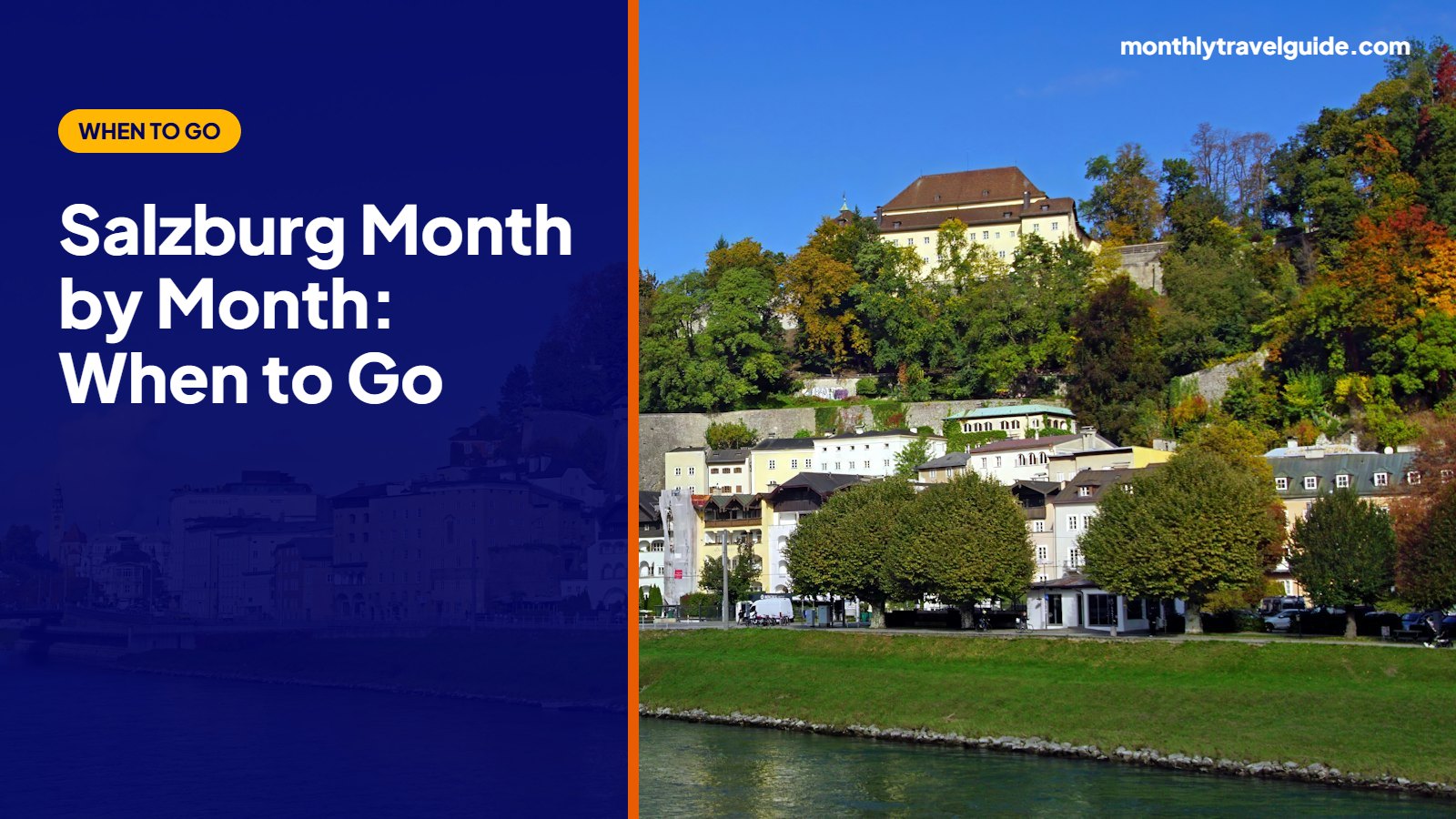
The best time to visit Salzburg is September to mid-October, when the summer crowds thin, the air is still mild and the city has its fewest rainy days of the year. Late May and June are the spring alternative, July and August belong to the Salzburg Festival, and late November to December is Advent market season. Salzburg is a wet city in every month, so the real choice is between music, markets, mild walking weather and quiet streets. The month-by-month guide below sets out what each one brings, the rain to expect and the weeks to avoid.

When to Go guides
Choose your country, then your month
24 country guides, each about 100 pages: every month rated for weather, crowds and prices, region by region, with a 7-day booking plan. Six guides per region bundle.
Browse the 24 guides · $19 eachRegion bundles: Europe, Asia & Pacific, Sun Souks & Safari, Americas · $47 each
Key takeaways
- Salzburg gets rain all year, about 1,300 mm in total, with the most from June to August, when summer thunderstorms add to the totals.
- September and October have the fewest rainy days, 13 and 12 on average, with highs of 19 °C and 14 °C.
- The Salzburg Festival usually runs for about six weeks from mid or late July to the end of August and fills hotels across the city.
- The main Christmas market on Cathedral and Residenz Square usually opens in the second half of November and runs to around New Year.
- January and February are the coldest and quietest months, with highs of 2 to 4 °C, frost most nights and Mozart Week in late January.

Best Time to Visit Salzburg: Month-by-Month Table
This section rates every month for a general city trip, from the Old Town and the fortress to day trips to the lakes. Highs and lows are in °C and rainfall is the monthly average in millimetres, all long-term averages from Weather2Travel.
| Month | High / low | Rain | Rainy days | Sun a day | Verdict |
|---|---|---|---|---|---|
| January | 2 / -6 °C | 74 mm | 15 | 2 h | Go with care: Coldest, quietest; Mozart Week late in the month |
| February | 4 / -4 °C | 71 mm | 14 | 3 h | Go with care: Cold and quiet; some sights on winter hours |
| March | 8 / -1 °C | 78 mm | 15 | 4 h | Go with care: Changeable; Easter Festival some years |
| April | 13 / 3 °C | 97 mm | 16 | 5 h | Go: Spring arrives; Easter Festival some years |
| May | 18 / 7 °C | 126 mm | 16 | 6 h | Go: Green and fresh; Whitsun Festival some years |
| June | 21 / 10 °C | 167 mm | 19 | 7 h | Go: Long days, but the rainiest month by days |
| July | 23 / 12 °C | 176 mm | 17 | 7 h | Go with care: Warmest; festival starts mid to late month |
| August | 22 / 12 °C | 157 mm | 17 | 6 h | Go with care: Festival month; full hotels; thunderstorms |
| September | 19 / 9 °C | 99 mm | 13 | 6 h | Go: Mild, calmer; St Rupert’s fair late in month |
| October | 14 / 4 °C | 79 mm | 12 | 5 h | Go: Fewest rainy days; autumn colour |
| November | 7 / 0 °C | 84 mm | 14 | 3 h | Skip: Grey and damp until the markets open |
| December | 2 / -4 °C | 88 mm | 16 | 2 h | Go with care: Advent markets; busy weekends |
🗓️ Free: a 12-Month Map for your country
Every month on one page: best weeks, shoulder weeks and the ones to skip. Print it or keep it on your phone.
Read the numbers together. February has the lowest rainfall total, but it falls as cold drizzle or snow on 14 days and gives about three hours of sun a day. October gets slightly more rain in total but on fewer days, with five hours of sun, which is why it feels like the driest month on the ground. Lonely Planet also calls October the driest month in the city.
Salzburg month verdicts
What each month is best for in the city
🧰 Try it while you read: a free tool for this trip
Free trip timing tool
Festival Month Matcher
Choose a month and see the festivals and events our guides list for it.
Loading the tool…
Rain in Salzburg: What to Expect Month by Month
This section explains the city’s rain, because it shapes every season more than temperature does. Salzburg sits at the northern edge of the Alps, and moist air pushed against the mountains brings frequent showers. Locals even have a word for the steady, string-like downpours: Salzburg’s tourist board describes how the rain is so tied to the city that it was given its own name, Schnürlregen.
Average monthly rain in Salzburg (mm)
Source: Weather2Travel long-term averages
74
Jan
71
Feb
78
Mar
97
Apr
126
May
167
Jun
176
Jul
157
Aug
99
Sep
79
Oct
84
Nov
88
Dec
Summer is the wettest season by volume. June, July and August each average more than 150 mm, with 17 to 19 rainy days, and much of it falls in short, heavy afternoon storms between warm, sunny spells. Autumn and winter bring less rain but greyer skies: November and December see 14 to 16 rainy days and only two to three hours of sun a day. Snow is most likely from December to February, when lows drop below freezing.
Tip
Pack a compact umbrella and a waterproof layer in every month, and plan one indoor block a day: the Residenz, the Cathedral, the Mozart houses, the museums of the Old Town or a long lunch in a coffee house. In summer, put fortress and hill walks in the morning, before the afternoon storms build.
Salzburg Season by Season
This section turns the averages into what you’ll actually do on the ground, season by season.
Spring (March to May)
March is changeable, with frosty mornings and highs of about 8 °C. April warms to around 13 °C and the Mirabell Gardens begin to flower, while May reaches about 18 °C and the lakes and hills around the city turn green. The Easter Festival takes over the concert halls for about ten days before Easter, so it falls in March or April; the Whitsun Festival follows at Pentecost, in May or June (Panorama Tours events calendar). Rain rises through spring, from about 78 mm in March to 126 mm in May.

The Smart Timing Bundle
Pick the month, book in the right order, pack once
Six printable timing tools for any trip: the Trip Timing Planner, When to Book, When NOT to Go, the Shoulder Season Playbook, the family timing guide and the Packing by Season System.
See the bundle · $37Six products, $100 separately · Digital download · All sales final

Summer (June to August)
Summer brings the warmest days, with highs of about 21 to 23 °C, and the longest light. It is also the busiest and wettest season. June has the most rainy days of the year, and in July and August the Salzburg Festival fills the city. Lonely Planet notes that locals often leave town in July as the visitors arrive. The lakes of the Salzkammergut are warm enough for swimming in high summer, a good escape on the hottest days. For a wider look at the season, see our guide to Europe in July.
Autumn (September to November)
September keeps highs of about 19 °C, with the fewest crowds since spring once the festival closes; Lonely Planet says the visitors leave as it ends. October has the fewest rainy days, clear views of the mountains and autumn colour on the hills. St Rupert’s fair, the Rupertikirtag, fills the squares around the Cathedral for several days around 24 September (Salzburg tourist board). November turns grey and cold, with highs of about 7 °C, until the Advent markets open in the second half of the month. Compare other European cities in September if you are planning a wider autumn route.
Winter (December to February)
Winter is cold, with highs of about 2 to 4 °C and frost most nights, and snow is common. December is the busiest winter month because of the Advent markets and the run-up to Christmas. January and February are the quietest months of the year in the Old Town, apart from Mozart Week, which is held around Mozart’s birthday on 27 January. Nearby ski resorts stay busy, so weekend trains into the mountains can be full. Our winter festivals in Europe in January covers the season across the continent.
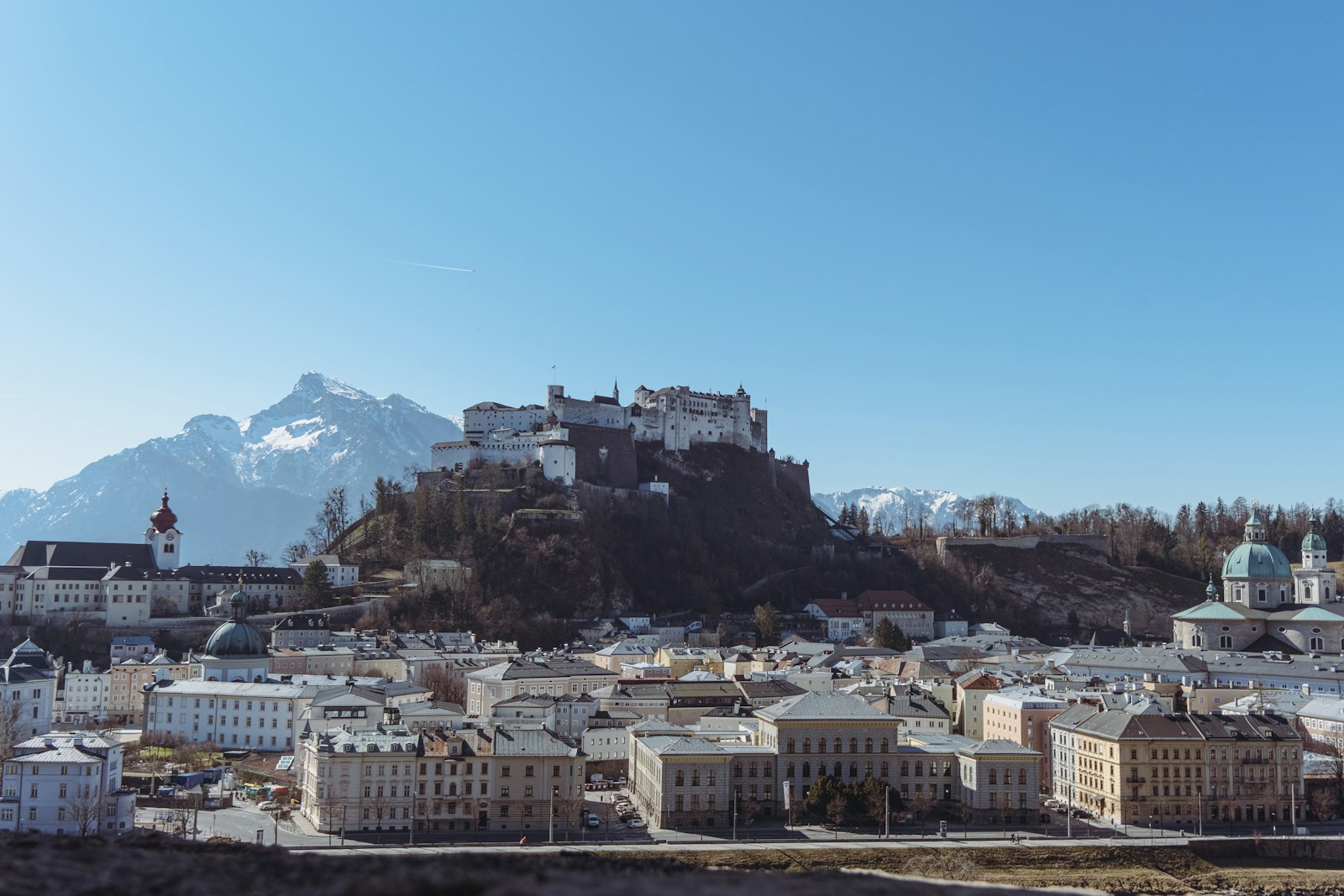
Salzburg Festival and Advent Markets: The Two Peak Seasons
This section covers the two events that shape Salzburg’s busiest weeks, so you can choose them on purpose or plan around them.
The Salzburg Festival (usually mid-July to late August)
The Salzburg Festival is one of the world’s most important festivals for opera, music and drama, according to the Salzburg tourist board. It usually runs for about six weeks, from mid or late July to the end of August. Hotels across the city and the nearby towns fill early, the Old Town is busy from morning to late evening, and the big performances need booking well ahead. If you want the festival, plan around it first and the weather second. If you don’t, it is the strongest reason to come in June or September instead. Our guide to Salzburg’s music festivals covers the programme, venues and the smaller festivals through the year.
Advent and Christmas markets (usually late November to early January)
The city’s Christmas market dates back to the 15th century, according to the Austrian tourist board. The main Christkindlmarkt on Cathedral and Residenz Square usually opens in the second half of November and runs to around New Year, closing early on 24 December. Smaller markets follow the same season, in Mirabell Square, in the fortress courtyard on weekends, and at Hellbrunn Palace, about 20 minutes by bus from the centre. Weekend evenings are the busiest; weekday afternoons are calmer. See our December markets and seasonal food for more of Europe’s market season.

Salzburg event calendar
Usually late January
Mozart Week
Concerts around Mozart’s birthday on 27 January.
Usually March or April
Easter Festival
Runs from ten days before Palm Sunday to Easter Monday.
Usually May or June
Whitsun Festival
Held over the Pentecost weekend.
Usually mid-July to August
Salzburg Festival
About six weeks of opera, concerts and drama.
Usually around 24 September
St Rupert’s fair
Folk music, crafts and food around the Cathedral, free entry.
Usually late November to New Year
Advent markets
The Christkindlmarkt plus smaller markets across the city.
Dates move each year; confirm with the organisers before you book.
To match your own dates to festivals and events, try the free Festival Month Matcher.
How to Plan the Best Time to Visit Salzburg
This section turns the timing into a short planning routine, so the month you pick works in practice.
| If you want | Best months | Why |
|---|---|---|
| Mild walking weather and calm streets | September to mid-October | Highs of 14 to 19 °C, fewest rainy days, festival over |
| Long days and green gardens | Late May and June | Highs near 18 to 21 °C, before peak summer |
| Opera and big concerts | Mid-July to late August | Salzburg Festival season |
| Christmas atmosphere | Late November to 23 December | Advent markets and carol concerts |
| Lowest crowds | January and February, outside Mozart Week | Coldest and quietest months |
| Lake swimming day trips | July and August | Warmest weeks of the year |
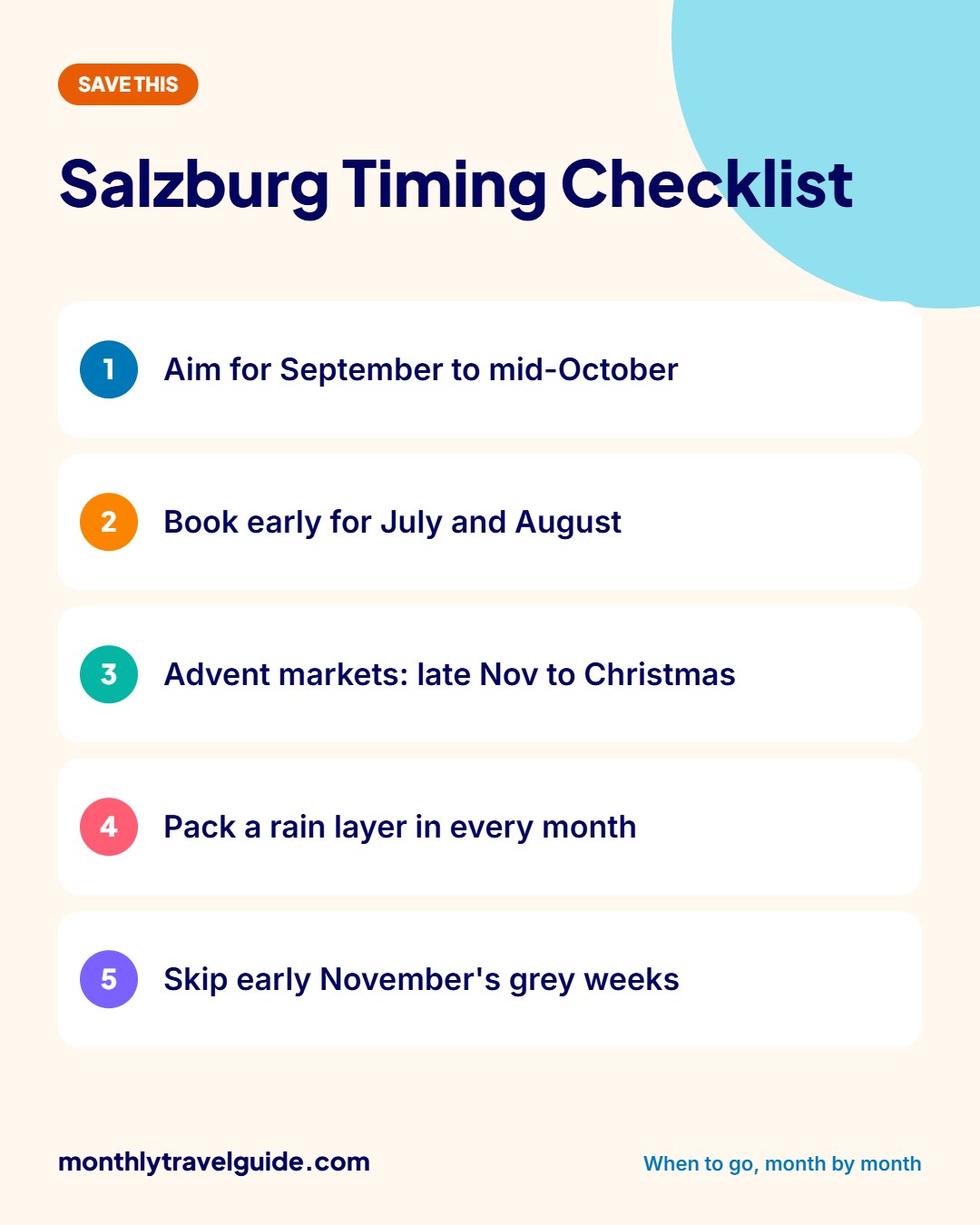
Base yourself in or near the Old Town for short trips so you can retreat indoors when the rain comes. Use our three-day Salzburg itinerary to fill the days, and add the lesser-known corners of Salzburg once you know the main sights. If you’re pairing Salzburg with the lakes in winter, see Hallstatt in December.

The complete kit
Every country guide, every timing tool
All 24 When to Go country guides, the six Smart Timing tools and every 12-Month Map, with a Start Here that tells you what to open first.
See the kit · $127The five bundles cost $225 separately · Digital download · All sales final
Still deciding? The free Best Month Finder weighs weather, crowds and events for you, and the Shoulder Season Detector shows the quieter weeks either side of a peak.
When Not to Go to Salzburg
This section is the honest list. Salzburg works in every month, but these weeks can spoil a short or fixed trip.
| Avoid | Why | Go instead |
|---|---|---|
| Peak festival weeks in late July and August | Full hotels, busy Old Town, summer storms | June or September |
| Early and mid-November | Grey, damp and cold, before the markets open | October or late November |
| Advent weekends if you dislike crowds | Busiest evenings at the markets | Advent weekdays, afternoons |
| June for a fixed outdoor plan | The most rainy days of the year | Late May or September |
| A short January break if sights matter | Short days, cold, some sights on winter hours | March or April |
Important
Festival and Advent dates change every year. Before you book, confirm the festival programme and market opening days with the organisers, and check your dates with the free When Not to Go checker.
A Better Month If You Want Something Specific
This section matches common trip goals to the month that suits them best.
Photography
October, for clear air and autumn colour on the hills.
Families
June or September, for mild days without peak crowds.
Budget-minded trips
January to March, outside Mozart Week and Easter. Prices change, so check before you book.
Hiking nearby
September and early October, after the summer storms ease.
Music
Late January for Mozart Week, or the festival weeks in summer.
Snowy streets
January, when snow is most likely and the city is quiet.
5 Common Mistakes When Timing a Salzburg Trip
1. Expecting summer to be the driest season
Summer is the warmest time, but June, July and August are also the wettest months by volume. Expect short, heavy storms, and keep an indoor plan for every afternoon.
2. Arriving in festival weeks without a booking
The festival fills hotels across the city and nearby towns. If you arrive in August without a room, you may end up far from the Old Town, paying more for less.
3. Coming in early November for the markets
The Advent markets usually open in the second half of November. Come earlier and you get the grey weather without the lights, mulled wine and carols.
4. Writing off autumn
Many visitors think of Salzburg only for summer or Christmas. September and October are calmer, milder than most expect, and the best months for walks on the city hills.
5. Packing only for the season
Even in July, a cool rainy day can feel like autumn. Bring a waterproof layer and closed shoes all year, and warm layers and grippy soles from November to March.
Best Time to Visit Salzburg: FAQ
What is the best month to visit Salzburg?
September is the best single month for most travellers. Highs sit around 19 °C, the festival crowds have gone and rainy days drop to about 13. October is almost as good, with the fewest rainy days of the year and autumn colour on the hills, though it is cooler. For long days and green gardens, choose late May or June instead.
When is the Salzburg Festival held?
The Salzburg Festival usually runs for about six weeks, from mid or late July to the end of August, with opera, concerts and drama across the city’s halls. It is the busiest time of year, so book rooms and tickets early. Dates change each year, so confirm the programme on the official festival website before you plan the rest of your trip.
When are the Christmas markets in Salzburg?
The main Christkindlmarkt on Cathedral and Residenz Square usually opens in the second half of November and runs to around New Year, closing early on Christmas Eve. Smaller markets in Mirabell Square, the fortress courtyard and Hellbrunn Palace mostly close by Christmas. Weekday afternoons are the calmest times, while weekend evenings are the busiest.
What is the rainiest month in Salzburg?
July has the most rain by volume, at about 176 mm on average, while June has the most rainy days, about 19. Much of the summer rain falls in short, heavy afternoon storms. Salzburg is wet in every month, with about 1,300 mm a year, so pack a compact umbrella and a waterproof layer whenever you travel.
Is Salzburg worth visiting in winter?
Yes, if you like cold, quiet cities. December brings the Advent markets and carol concerts, while January and February are the quietest months, with Mozart Week in late January. Expect highs of about 2 to 4 °C, frost most nights, short days and a good chance of snow. Pack warm layers and shoes with grippy soles for icy streets.
How many days do you need in Salzburg?
Two to three days cover the Old Town, the fortress, Mirabell Gardens and the main Mozart sites at a comfortable pace. Add a fourth day for the lakes or Hallstatt. In summer and winter, keep one flexible half-day for rain or snow, and in festival season build your sightseeing around performance evenings rather than the other way round.
The Bottom Line
The best time to visit Salzburg is September to mid-October, with late May and June as the spring alternative. Choose the festival weeks or the Advent markets on purpose rather than by accident, pack for rain in every month, and treat January and February as a quiet, cold city break. For more short trips, browse our city break guides.
Free download
Which month for your country?
Get the free 12-Month Map: every month marked good, shoulder or avoid, region by region, on four printable pages.
- Greece to Japan, Morocco to Peru: 24 countries
- See the crowd and price peaks before you book
- Free, no purchase needed
Your download page opens as soon as you sign up. 24 countries available.