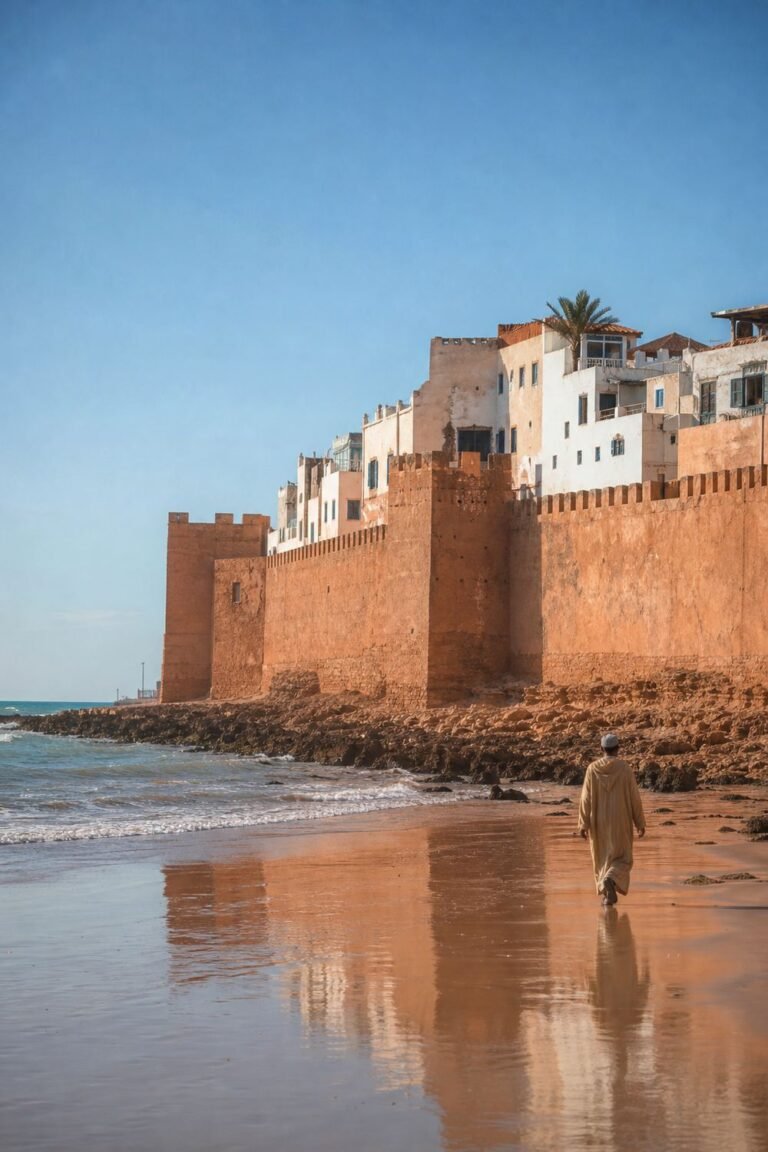
Morocco in October is the moment the country switches from “too hot” to “just right”. Marrakech drops from summer furnace to warm, the desert becomes bearable for a night under the stars, and the High Atlas is still dry enough to hike. The catch is that Morocco is big and varied, so October feels very different in Fes than in Merzouga or Essaouira. This guide gives you the numbers region by region, a 10-day route that follows the weather, and the bookings to make first.

Morocco in October is one of the best times to visit: Marrakech averages about 28 °C by day and 16 °C at night with only two or three rainy days, the Sahara gateway towns run around 27 °C with cool nights, and Essaouira on the coast sits near 22 °C. Rain starts to arrive in the north (Tangier, Fes) late in the month. Plan cities by day, the desert for one or two nights, and the Atlas before winter snow.
✅ Key takeaways
- ✓Marrakech cools from an average high of about 32.5 °C in September to about 28.5 °C in October, which makes walking the medina comfortable again.
- ✓The north is the only region where October rain matters: Tangier averages about 8 rainy days, Fes about 5, Marrakech fewer than 3.
- ✓Desert nights are much cooler than desert days, so pack a warm layer even if the afternoon feels like summer.
- ✓Hire a professional guide for Atlas hikes such as Toubkal (4,167 m), and start early to finish before the short afternoon light fades.
- ✓Ramadan moves about 10 to 11 days earlier each year, so check whether it overlaps your dates before you book.
What Morocco in October Feels Like, Region by Region
October is warm and mostly dry across Morocco, but the spread between regions is wide. The interior and the desert edge are still hot by day, the Atlantic coast is mild and breezy, and the north picks up the first autumn rain. Read the table below before you decide the order of your route.
| Place | Avg high | Avg low | Rain | What it means |
|---|---|---|---|---|
| Marrakech | 28.5 °C / 83 °F | 15.7 °C / 60 °F | ≈19 mm, 2–3 rainy days | Warm days, pleasant evenings: prime medina weather |
| Fes | 26 °C / 79 °F | 12.6 °C / 55 °F | ≈54 mm, about 5 rainy days | Comfortable, a few showers; cool nights |
| Ouarzazate | 27.5 °C / 82 °F | 13.3 °C / 56 °F | ≈15 mm | Dry and sunny; gateway to the kasbahs and gorges |
| Errachidia (towards Merzouga) | 26.8 °C / 80 °F | 14.2 °C / 58 °F | Very little | Warm desert days, noticeably cooler nights |
| Essaouira | 22.2 °C / 72 °F | 17 °C / 63 °F | ≈33 mm, about 3 rainy days | Mild and breezy; little difference day to night |
| Tangier | 23.7 °C / 75 °F | 15.6 °C / 60 °F | ≈65 mm, about 8 rainy days | Wettest region in October, and wetter again in November |
🗓️ Free: the 12-Month Map for Morocco
Every month on one page: best weeks, shoulder weeks and the ones to skip. Print it or keep it on your phone.
28.5 °C
Marrakech average October high (32.5 °C in September)
≈250 hrs
of sunshine in Marrakech in an average October
2.4
average rainy days in Marrakech in October
8
average rainy days in Tangier, the wettest stop
🧰 Try it while you read: a free tool for this trip
Free trip timing tool
When to Book Calculator
Tells you how early to lock in flights and rooms for your month and country.
Loading the tool…
Marrakech in October: Hot Noons, Golden Evenings
Marrakech is the easiest place to start a Morocco in October trip. The average high falls to about 28.5 °C, down from roughly 32.5 °C in September and on its way to 23 °C in November. That four-degree drop matters: you can walk the medina in the morning and late afternoon without the exhausting heat of summer.
Shape each day around the sun. Morning is for the busy, sun-exposed sights: the Koutoubia minaret, the Bahia Palace and the Saadian Tombs. Midday is for a long lunch and a rest in your riad, the traditional courtyard house where most visitors stay inside the medina. Late afternoon belongs to Jemaa el-Fnaa, the main square, which fills with food stalls and storytellers as the light turns gold.
- Stay inside the medina for atmosphere, or in Gueliz (the newer district) if you want wider streets and easier taxis.
- Expect evenings around 16 °C: a light jacket or shawl is enough for rooftop dinners.
- Use Marrakech as your hub for day trips to the Atlas foothills and as the start of the desert road via Ouarzazate.
The Sahara in October: Warm Days, Cool Nights and the Date Harvest
October is one of the most comfortable months for a desert trip. Errachidia, the main town on the road towards Merzouga and the Erg Chebbi dunes, averages about 27 °C by day and 14 °C at night. In the open dunes the night can feel colder than that, so the classic sunset camel ride followed by a night in a desert camp suddenly becomes pleasant rather than punishing.
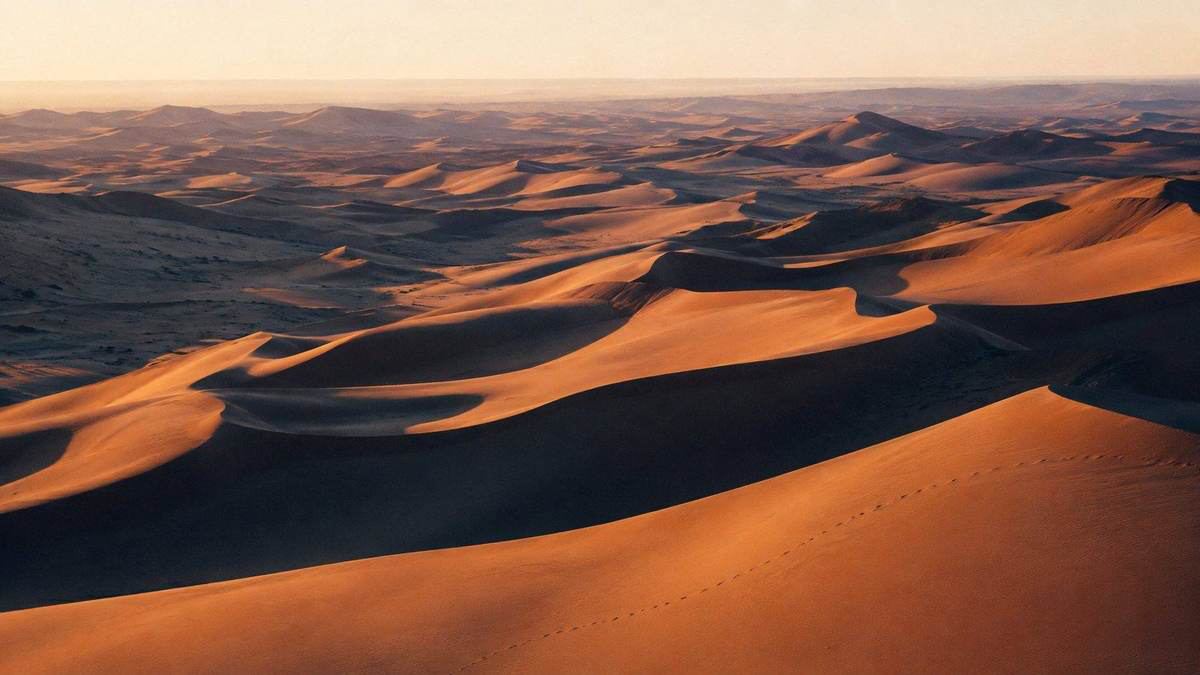
There are two common ways in. From Marrakech, the road crosses the High Atlas by the Tizi n’Tichka pass to Ouarzazate, then continues east past the kasbahs and gorges towards Merzouga. From Fes, the route heads south through the Middle Atlas. Either way it’s a long drive, so most travellers split it over two or three days rather than racing to the dunes in one.
The Sun, Souks & Safari Bundle
Morocco and five more, month by month
Morocco, Türkiye, Egypt, Dubai & the UAE, Tanzania & Zanzibar and South Africa: heat, Ramadan and migrations timed right.
See the bundle · $47Six guides, $114 separately · Digital download · All sales final
October is also date season in the Tafilalet oases. The international date fair in Erfoud, a town on the way to Merzouga, is usually held in late October or early November, with producers, cooperatives and regional products on show. Treat it as a bonus if your dates line up, not a reason to rebuild the trip.
The Atlas Mountains in October: Hike Before the Snow
October sits in a good window for the High Atlas. Summer heat has eased, the trails are generally dry, and the heavy winter snow and ice that make the mountains a serious undertaking usually haven’t arrived. Mornings and nights at altitude are cold, though, so this is not a T-shirt hike.
The headline climb is Jebel Toubkal, at 4,167 metres the highest peak in North Africa. Most people start in the village of Imlil and take two days: about seven hours up to the stone refuges at around 3,207 metres on day one, then an early summit push and the long walk back on day two. In summer conditions the route is non-technical but still demanding, mainly because of the altitude.
The UK government’s Morocco travel advice recommends hiring a professional guide for Atlas hikes, researching the trail, carrying water and suitable clothing, and having travel insurance that covers your activity. For a gentler taste of the mountains, the valleys around Imlil and the Ourika Valley make good day trips from Marrakech.
Start from Imlil
It’s the trailhead for Toubkal and the easiest base for valley walks.
Book a guide and refuge bed
A professional guide knows current conditions; the refuges are the usual overnight stop.
Start at first light
October days are shorter and the high trail gets cold fast after sunset.
Carry winter layers
Even when Marrakech is warm, the summit can be near or below freezing at dawn.
When to Go: Morocco
Planning a different month, or not sure October beats spring for your route? Our Morocco guide sets out all twelve months for the cities, the desert, the mountains and the coast, with weather, crowds and seasonal highlights, so you can pick your dates with confidence.
See When to Go: Morocco · $19 →Fes, Chefchaouen and the North: Where Autumn Rain Starts
The north is the one part of Morocco where October weather needs a backup plan. Fes averages about 26 °C by day and 13 °C at night, with around 54 mm of rain spread over five days. Tangier, on the Strait of Gibraltar, gets about 65 mm over eight days in October, and roughly double that in November.
That’s not a reason to skip the north; it’s a reason to go earlier in the month and keep the plan flexible. Fes is a medina city, where the old town is a maze of lanes best explored with a local guide on your first day. Rain there is usually showery, and the city’s madrasas, museums and covered souks give you plenty to do under a roof.
- Fes: two full days for the medina, the tanneries and the madrasas. Book a guide for the first morning.
- Chefchaouen: the blue-washed mountain town is popular for photos; stay a night to see it before and after day-trippers.
- Tangier: best as the start or end of a trip if you’re arriving from Spain, rather than a stop in the middle of the route.
The Atlantic Coast in October: Mild, Breezy and Easy
The coast is where you rest between big days. Essaouira averages about 22 °C by day and 17 °C at night in October, with only around three rainy days, so the temperature barely changes from noon to evening. Strong Atlantic trade winds blow along this stretch of coast, which keeps it comfortable but makes long, still beach afternoons less likely.
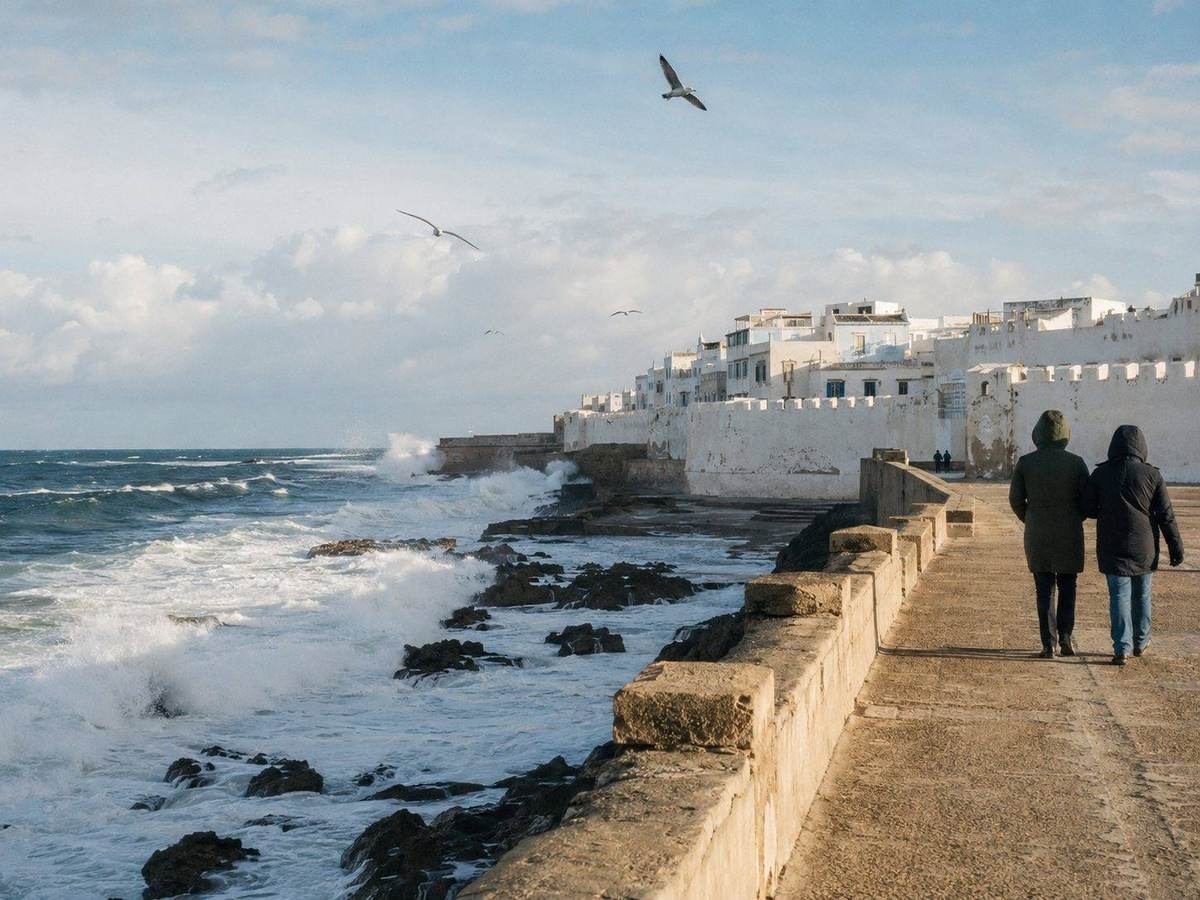
Essaouira is about the right distance for a two- or three-night stop at the end of a Marrakech trip. Spend the mornings in the walled medina and on the ramparts, have grilled fish by the harbour at lunch, and keep the late afternoons for walking the long beach. Bring a windproof layer; the breeze off the Atlantic makes 22 °C feel cooler than it sounds.
A 10-Day Morocco in October Route That Follows the Weather
This route starts in the north while it’s still dry, swings south into the desert and ends on the coast. It suits a first trip and keeps driving days reasonable.

The Smart Timing Bundle
Pick the month, book in the right order, pack once
Six printable timing tools for any trip: the Trip Timing Planner, When to Book, When NOT to Go, the Shoulder Season Playbook, the family timing guide and the Packing by Season System.
See the bundle · $37Six products, $100 separately · Digital download · All sales final
| Days | Where | Why in October |
|---|---|---|
| 1–3 | Fes (with a night in Chefchaouen if you can) | Visit the north early in the month, before the rain builds |
| 4–5 | Road south through the Middle Atlas to Merzouga | Comfortable desert temperatures; night in a dune camp |
| 6 | Todra Gorge and the kasbah road to Ouarzazate | Dry, sunny, around 27 °C |
| 7–8 | Over the Tizi n’Tichka pass to Marrakech | Warm days, pleasant evenings; Atlas day trip optional |
| 9–10 | Essaouira | Mild, breezy wind-down by the sea |
Short on time? Cut Fes and do Marrakech, a three-day desert loop and Essaouira in a week. Have more time? Add two days around Imlil for Atlas walking between the desert and Marrakech.
Food is one of the easy pleasures of October. With the heat gone, a slow-cooked tagine at lunch, harira soup in the evening and mint tea at any hour all feel right again.
What to Book Before You Fly (and What to Leave Flexible)
October is a popular month, so the best-located places in the medinas and the better desert camps can fill up. Book the scarce things first and leave the rest open.
Check the Ramadan dates
Ramadan moves about 10 to 11 days earlier each year. If it overlaps your trip, expect changed opening hours and quieter daytime streets, and plan meals around sunset.
Book riads in Marrakech and Fes
Small courtyard houses have only a handful of rooms, and the best-placed ones go early.
Reserve your desert camp and transport
Whether you self-drive or join a tour, lock in the camp night first; it anchors the whole route.
Arrange an Atlas guide if hiking
Especially for Toubkal, where conditions change quickly at altitude.
Leave day trips and restaurants flexible
Decide on the spot depending on the weather and how tired you are.
For an overview of the whole year, see our main Morocco travel guide and our list of top destinations in Morocco. Travelling alone? Our piece on why October suits solo travel has more ideas for the month. The official Morocco tourism site lists regional destinations and practical information.
In Morocco in October, let the map follow the weather: north first while it’s dry, desert in the middle, coast at the end.
5 Morocco in October Mistakes That Cost Travellers Time
1. Packing only for summer
Days are warm almost everywhere, but nights in Fes, the Atlas and the desert are cool. A fleece and a light jacket earn their space in your bag.
2. Saving the north for the end
Tangier and Fes get wetter as autumn goes on. If you’re travelling in late October, visit them first.
3. Trying to reach the dunes in one day
The drive from Marrakech or Fes to Merzouga is long. Splitting it over two days lets you see the kasbahs and gorges in daylight instead of passing them in the dark.
4. Ignoring Ramadan when it falls in autumn
Because it moves every year, Ramadan can overlap an October trip in some years. It doesn’t stop travel, but it changes the rhythm of the day; check the dates before you book.
5. Hiking the Atlas without a guide or warm kit
October is a good hiking month, but conditions at altitude change quickly. A professional guide and proper layers make the difference between a great climb and a cold, risky one.
Morocco in October: Your Questions Answered
Morocco in October rewards travellers who let the weather set the order: the dry north first, the desert while nights are cool but not cold, the mountains before the snow and the coast to finish. Get those three bookings in place and the rest falls into line. For more autumn ideas, browse our best travel destinations in October, our Morocco travel guides, the warm places to visit in October, or get the free 12-month map and plan any month from the month-by-month travel planner.
Free download
See the whole year before you book
Our free 12-Month Map puts every month for one country on four pages: when the weather works, when the crowds and prices peak, and the weeks to skip.
- 24 countries to choose from
- Region-by-region verdicts
- Printable PDF
Your download page opens as soon as you sign up. 24 countries available.