Svalbard in January is one of the strangest and most striking trips you can take in Europe’s far north. The sun doesn’t rise at all, the town of Longyearbyen sits under blue darkness and moonlight, and you can’t walk past the edge of town without a guide because of polar bears. That’s the deal. Plan around it and you get dog sledding under the stars, ice caves, deep snow and a real chance of the northern lights at midday. This guide gives you the light calendar, the safety rules, the tours that actually run in January and what to pack.

The Smart Timing Bundle
Pick the month, book in the right order, pack once
Six printable timing tools for any trip: the Trip Timing Planner, When to Book, When NOT to Go, the Shoulder Season Playbook, the family timing guide and the Packing by Season System.
See the bundle · $37Six products, $100 separately · Digital download · All sales final
Svalbard in January is in the polar night: the sun stays below the horizon all month, and the darkest stretch, the civil polar night, ends around 29 January. Average January temperatures in Longyearbyen are about −8 °C by day and −14 °C at night, and tours often see −10 to −20 °C. With solid snow cover, dog sledding, snowmobile trips, ice caves and northern lights tours all run. You must go outside the settlement with a professional guide because of polar bears.
✅ Key takeaways
- ✓Expect no daylight in January: the civil polar night lasts until about 29 January, and the sun isn’t seen in Longyearbyen itself until around 8 March.
- ✓Book every trip outside town with a professional guide: guides carry the polar bear protection equipment visitors aren’t expected to have.
- ✓January has the snow cover that dog sledding and snowmobiling need, so it’s a full winter-activity month, not a quiet one.
- ✓Tour operators usually provide warm outer clothing, but bring your own wool layers, warm boots with room for two pairs of socks, and mittens.
- ✓Check that your travel insurance covers Svalbard and search and rescue; standard policies often don’t.
What Svalbard in January Is Really Like: Blue Darkness, Moonlight and Snow
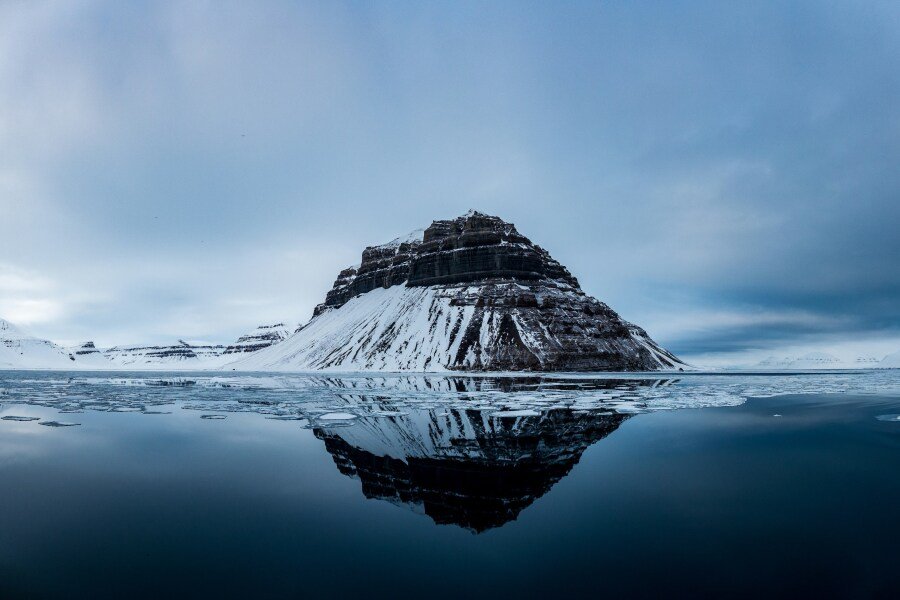
January is the deep middle of Svalbard’s polar night. Longyearbyen sits at about 78° north, far enough that the sun stays below the horizon from late October to mid-February. Within that, the civil polar night, when there’s not even a bright twilight at midday, runs from mid-November until about 29 January. So for most of January, “daytime” means a faint blue glow at best, and darkness the rest of the time.
That sounds grim. In practice it rarely is. The snow reflects every scrap of light, a full moon lights up the mountains around town, and the town is cosy, lit and lively. Towards the end of the month, you’ll notice the first hints of blue twilight returning around midday.
≈29 Jan
end of the civil polar night (the darkest period)
−8° / −14°C
Longyearbyen avg January high / low · 18° / 6°F
≈8 Mar
first day the sun is seen in town again
21 mm
average January precipitation: little snowfall, lots of wind chill
The temperature numbers come from the Svalbard Airport climate normals: a January average high of −7.7 °C and low of −14.2 °C. Tour operators describe typical January conditions as −10 to −20 °C. Wind is the multiplier here, as it is anywhere in the Arctic: a breeze across the open valley makes −12 °C feel far harsher, and frostbite is one of the most common injuries in Svalbard.
| Period | Light in Longyearbyen | What it means for you |
|---|---|---|
| October to mid-November | Twilight, shortening fast | Last light; snow cover still building |
| Mid-November to ≈29 January | Civil polar night: dark around the clock | Moon, snow and aurora light; all activities by headlamp |
| Late January to mid-February | Blue and pink twilight returns at midday | Best mix of darkness and colour |
| Mid-February to early March | Sun above the horizon, hidden by mountains | Longer days; sun seen in town around 8 March |
🧰 Try it while you read: a free tool for this trip
Free trip timing tool
What Kind of Traveller Are You?
Seven quick taps pick your travel type, then show the countries and months where it shines.
Loading the tool…
Getting to Svalbard in January and Where to Base Yourself
Nearly every trip to Svalbard in January starts and ends in Longyearbyen, the main settlement. Scandinavian Airlines flies there daily from Oslo and Tromsø. There’s no point hiring a car: there are only about 40 km of roads in the whole archipelago and no roads at all between settlements. Between them, people travel by snowmobile in winter or boat in summer.
Longyearbyen is small, with hotels, restaurants and sports shops selling outdoor clothing and gear at tax-free prices. Stay in or close to the centre so you can walk to dinner, and ask each tour operator where the trip starts.

When to Go guides
Choose your country, then your month
24 country guides, each about 100 pages: every month rated for weather, crowds and prices, region by region, with a 7-day booking plan. Six guides per region bundle.
Browse the 24 guides · $19 eachRegion bundles: Europe, Asia & Pacific, Sun Souks & Safari, Americas · $47 each
Four or five nights is a good length. It gives you three full days of tours with a spare evening for weather, plus enough nights for a fair chance at clear skies. If you’re combining Svalbard with the Norwegian mainland, the Lofoten Islands and northern Norway for the aurora are natural partners.
The Polar Bear Rule That Shapes Every Day in Svalbard
Polar bears are the reason a Svalbard trip works differently from any other Arctic holiday. Svalbard’s tourism board says plainly that visitors should not leave the settlements without a professional guide. The Governor of Svalbard’s firearms page sets out the rule behind it: anyone travelling outside the settlements must carry suitable means of scaring off polar bears, and the Governor recommends carrying a firearm.
For visitors, the practical answer is simple. Book tours. Guides always bring the required polar bear protection equipment, plus long-range communication for areas without phone coverage, and they plan routes around avalanche risk too. Inside Longyearbyen, a zone marked in red on the tourist office’s free map is where you can walk without protection equipment. Past that line, you go with a guide.
You’ll also see a few rules that surprise first-time visitors: loaded firearms are forbidden in the settlement, guns aren’t allowed in shops or public buildings, and drones are banned in Longyearbyen. It’s a place with its own logic, and it takes it seriously.
In Svalbard, the town edge is the trail head. Past it, you don’t go without a guide.
What You Can Do in Svalbard in January (Tour by Tour)
January is a full activity month. With solid snow cover, the classic Svalbard winter tours all run, just in the dark. Expect headlamps, reflective vests and guides who know the valleys by heart.
| Tour | What it’s like in January | Good for |
|---|---|---|
| Dog sledding | Husky teams through snowy valleys by headlamp; some trips combine with an ice-cave visit | Everyone who wants the classic Arctic trip |
| Snowmobile safari | Longer distances across valleys; electric snowmobiles offered by some operators for quieter aurora trips | Covering ground; aurora chances away from town |
| Ice cave | Step inside a cave in the ice, sometimes combined with a dog-sledding trip | A highlight that works in most weather |
| Snowcat / northern lights tour | Heated vehicle or camp out of town, away from street lights | Families, cold-sensitive travellers, photographers |
| Town and culture | Svalbard Museum, a guided tour of a historic mining building, local food | Stormy days and evenings |
Book one big tour per day
Dog sledding, a snowmobile safari or an ice cave. Two in one day in this cold is tiring, and the darkness makes everything slower.
Put the aurora tour in the middle of your stay
If the first night is cloudy, you have spare evenings to rebook. Ask the operator about their cancellation policy.
Keep one evening free
Use it for a second aurora attempt, the museum or a long dinner if the wind picks up.
Check physical demands
Driving a snowmobile and handling a dog sled both take some strength. Read each tour’s age, fitness and driving requirements before you book.
If you want wildlife beyond the bears you’ll hopefully never meet, see our January winter wildlife destinations. For more snow-sport ideas outside the Alps, read skiing beyond the Alps.
Northern Lights in Svalbard in January: Why Midday Can Count
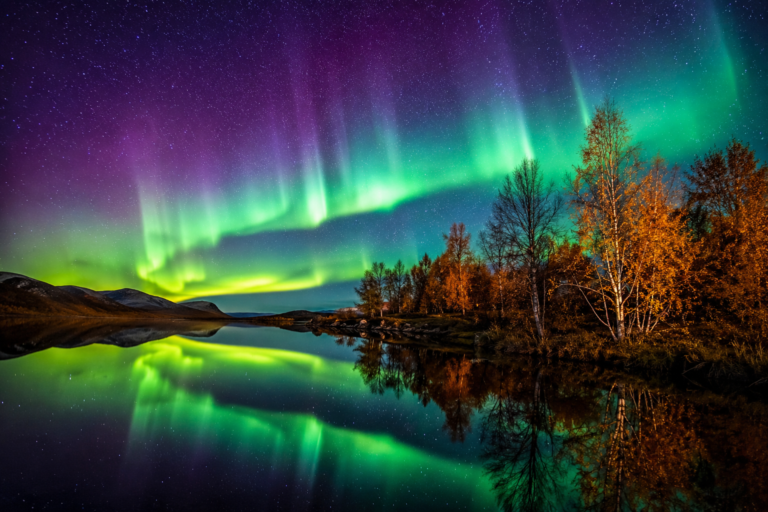
The polar night gives Svalbard something unusual: because it’s dark around the clock in January, the aurora isn’t limited to late evening. Whenever the sky is clear and there’s activity, you have a chance, and tour operators run northern lights trips by snowcat, electric snowmobile and to camps outside town.
Two things still decide your odds. First, clear sky: cloud blocks the lights no matter how strong they are. Second, activity on the night. Visit Svalbard points visitors to an aurora forecast app for local forecasts, and your guide will be watching both. Stay four or five nights and you give yourself several chances.
If you mainly want the northern lights with some daylight for sightseeing, Iceland in January is the gentler alternative: four to seven hours of light, roads you can drive and aurora at night. Our full guide to Iceland in January covers it, and the free Northern Lights Odds tool compares the best months.
When to Go guides
Choose your country, then your month
24 country guides, each about 100 pages: every month rated for weather, crowds and prices, region by region, with a 7-day booking plan. Six guides per region bundle.
Browse the 24 guides · $19 eachRegion bundles: Europe, Asia & Pacific, Sun Souks & Safari, Americas · $47 each
When to Go: Iceland
Svalbard isn’t one of our country guides, but if you’re weighing it against Iceland for an aurora trip, this guide sets out Iceland month by month: daylight, weather, roads, ice caves and crowds, so you pick dates that fit the trip you want.
See When to Go: Iceland · $19 →Digital download · All sales final
How to Dress for Svalbard in January Without Overpacking
You need warmer clothes than for almost anywhere else in Europe, but you don’t need to buy an expedition wardrobe. Visit Svalbard’s guide on how to dress in Svalbard puts winter temperatures between −30 and −11 °C and recommends windproof outerwear over several layers of wool or fleece. Tour operators usually provide the heavy outer gear for their trips, so ask before you pack a snowmobile suit.
- Base layer: merino or other wool top and long johns. Avoid cotton next to the skin.
- Mid layer: a thick wool sweater or fleece, plus a second, lighter one to adjust.
- Outer layer: windproof jacket and trousers; operators often lend insulated suits for tours.
- Feet: warm winter boots with room for two pairs of wool socks, and spikes for icy roads in town.
- Hands and head: windproof mittens (warmer than gloves), a balaclava and a warm windproof hat.
- Extras: a headlamp, a reflective vest for walking in town in the dark, and indoor shoes or warm socks.
Our winter packing list covers the general cold-weather basics, and the Packing by Season Generator builds a list for your dates.
January, February or March in Svalbard: Which Month Suits You?
January is the month for darkness. If that’s not quite what you want, the next two months change the trip completely, and fast.
| Month | Light | Typical temperatures | Best for |
|---|---|---|---|
| January | Polar night; first blue twilight late in the month | −10 to −20 °C | Total darkness, aurora at any hour, moonlit snow |
| February | Blue and pink twilight; sun above the horizon by mid-month but not yet reaching town | Around −15 °C | Colourful skies; Polarjazz festival usually in early February |
| March | Daylight returns; Solfest celebrates the sun reaching town around 8 March | −10 to −30 °C (often the coldest month) | Long snowmobile days and bright landscapes |
If you’re torn, the last days of January are a good compromise: still polar night for aurora, with the first colour coming back into the midday sky. For other cold-season ideas, see our snowy European villages in January and Nordic cabin stays in January.
Five Mistakes People Make on a January Svalbard Trip
1. Planning to explore on your own
Outside the settlement, you need polar bear protection. For visitors, that means a guide. Build the trip around tours from day one.
2. Booking too few nights
Two nights leaves no room for cloud or wind. Four or five gives you several aurora chances and a spare day.
3. Skipping the insurance check
Many policies exclude Svalbard or search and rescue. Find out before you go, not after a problem.
4. Bringing gloves instead of mittens
Gloves are fine in town, but on a snowmobile in −20 °C wind, warm windproof mittens keep fingers working far longer. Frostbite is one of the most common injuries here.
5. Expecting a daytime sightseeing trip
There’s no daylight in January. Treat it as an Arctic-night experience, and if you want daylight, come in late February or March.
Svalbard in January: Questions Travellers Ask
Svalbard in January asks one thing of you: accept the dark and plan with it. Book guided tours, give yourself enough nights for clear skies and dress in proper layers, and the polar night becomes the reason you came. For more cold-season trips, browse our best travel destinations in January, explore more adventure travel, or plan any month from the month-by-month travel planner.
Free download
Which month for your country?
Get the free 12-Month Map: every month marked good, shoulder or avoid, region by region, on four printable pages.
- Greece to Japan, Morocco to Peru: 24 countries
- See the crowd and price peaks before you book
- Free, no purchase needed
Your download page opens as soon as you sign up. 24 countries available.