

You want snow on the rooftops, a quiet lane, a warm room and a mountain view, not a ski-resort party or a Christmas-market crush. The trouble is that many “winter village” lists mix real villages with busy towns and places where snow is a coin toss. This guide to winter villages in Europe in January picks seven that are snowy, small and genuinely worth the journey, with the practical details you need to plan one.

When to Go guides
Choose your country, then your month
24 country guides, each about 100 pages: every month rated for weather, crowds and prices, region by region, with a 7-day booking plan. Six guides per region bundle.
Browse the 24 guides · $19 eachRegion bundles: Europe, Asia & Pacific, Sun Souks & Safari, Americas · $47 each
The best winter villages in Europe in January are Ortisei in Italy’s Val Gardena and Cogne in the Aosta Valley, Bonneval-sur-Arc and Saint-Véran in the French Alps, car-free Mürren in Switzerland, Hallstatt in Austria, and Abisko in Swedish Lapland for the northern lights. January is a good month for all of them: the holiday rush is over, it’s reliably cold, and these high or northern villages usually have snow.
✅ Key takeaways
- ✓For snow you can count on, choose altitude: Saint-Véran sits at about 2,040 m, and Bonneval-sur-Arc is under snow for six to seven months a year.
- ✓If you don’t want to drive on snow, pick Mürren or Abisko: one is car-free and reached by cable car, the other has a railway station.
- ✓Driving into the French Alps between 1 November and 31 March? Savoie and Hautes-Alpes require winter tyres or carried chains or snow socks.
- ✓Book the quieter weeks after Epiphany on 6 January and before February’s school holidays.
- ✓Plan at least one non-ski activity per day, such as winter walking, cross-country skiing or a cable car ride, so you’re not left waiting for the weather.
Why January Beats December for Europe’s Snowy Villages
January gives you the same snow-covered scenery as December, with fewer people and a calmer village life. Most of the festive traffic is gone once the New Year and Epiphany weekends pass.
December has the lights and the markets, but it also has the queues. In small places, that matters a lot. Hallstatt, a village of roughly 780 people, has had to give tour coaches fixed time slots to manage visitor numbers. In January, after the holidays, you’re far more likely to have the lakeshore to yourself at breakfast.
The cold is the other half of the deal. Hallstatt’s January averages are a high of about 1.5 °C and a low of about −6.5 °C. Higher villages are colder still. That keeps snow on roofs and fields for the whole month, which is exactly what you came for, but it also means you need proper boots and layers. Our winter packing list covers the three-layer system that works here too.
~2,040 m
Saint-Véran, France’s highest commune
56 km²
Seiser Alm, above Val Gardena
140+
frozen waterfalls around Cogne
~200 km
Abisko, north of the Arctic Circle
If you’re open to festivals too, our guide to winter festivals in Europe in January pairs well with a village stay, and our list of winter wonderland destinations for January widens the net beyond villages.
🧰 Try it while you read: a free tool for this trip
Free trip timing tool
What Kind of Traveller Are You?
Seven quick taps pick your travel type, then show the countries and months where it shines.
Loading the tool…
Italy’s Snow Villages: Ortisei in the Dolomites and Cogne in the Aosta Valley
Italy gives you two very different January villages: a lively Dolomites base with craft traditions, and a quiet national-park village built for cross-country skiing and frozen waterfalls.

The complete kit
Every country guide, every timing tool
All 24 When to Go country guides, the six Smart Timing tools and every 12-Month Map, with a Start Here that tells you what to open first.
See the kit · $127The five bundles cost $225 separately · Digital download · All sales final
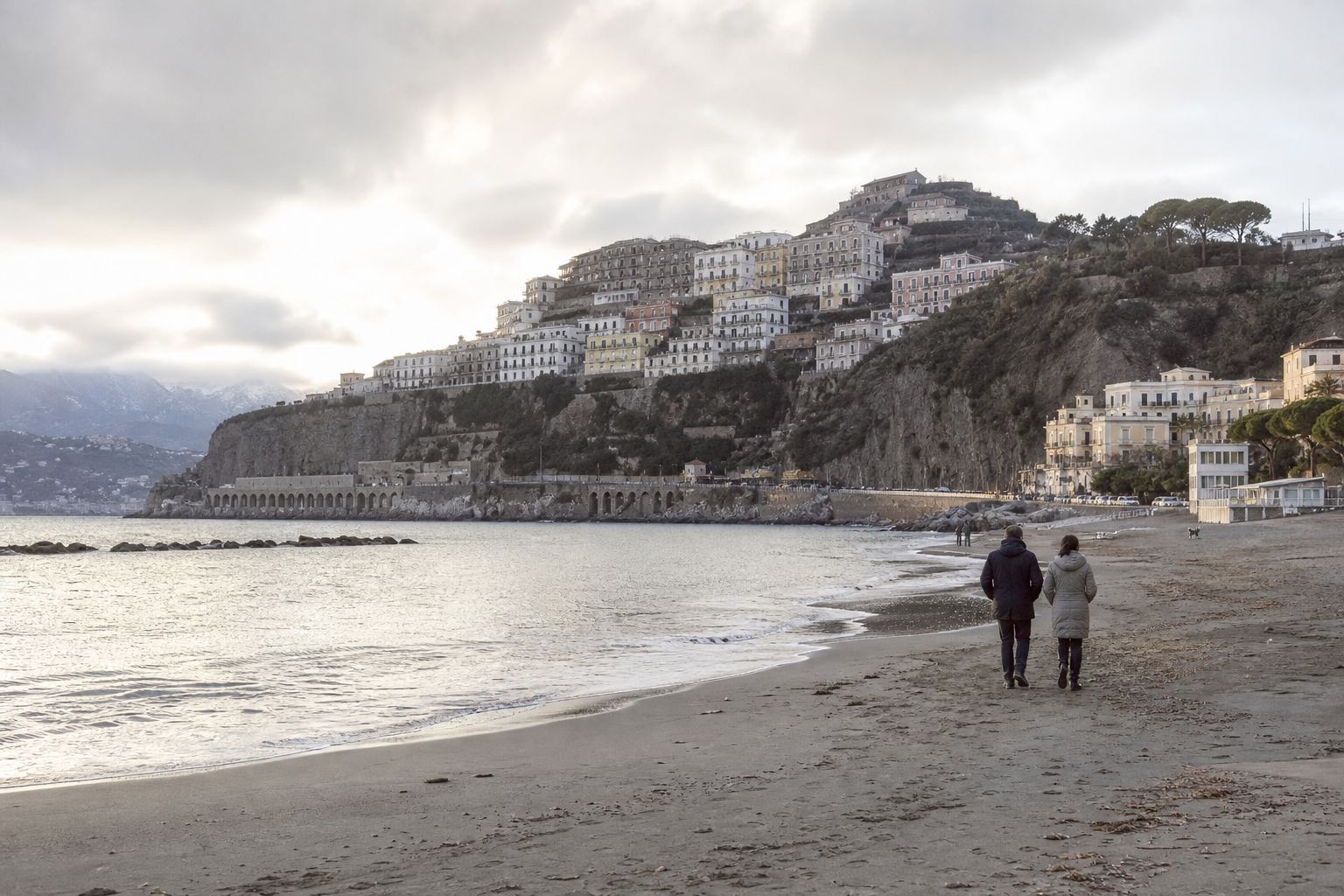
Ortisei (Urtijëi), Val Gardena
Ortisei sits in the middle of Val Gardena at roughly 1,200 to 1,350 m. It’s a mainly Ladin-speaking village (Ladin is a Romance language spoken in a few Dolomites valleys), and woodcarving has shaped it since the 17th century.
For a January stay, Ortisei’s strength is choice. Val Gardena’s tourist board lists about 500 km of slopes linked through Dolomiti Superski, around 115 km of cross-country trails and about 30 km of winter hiking paths, plus tobogganing and sleigh rides. Above the valley lies the Seiser Alm (Alpe di Siusi), which describes itself as the largest high alpine pasture in Europe: 56 km² of rolling snowfields with winter hiking even if you don’t ski. Year-round buses link the valley with Bolzano and Bressanone, and partner hotels give guests a Val Gardena Guest Pass that covers most valley buses.
Cogne, Aosta Valley
Cogne, at 1,534 m and about 26 km from Aosta, is the opposite of a party resort. It’s known internationally for cross-country skiing, with about 40 km of trails, and for ice climbing on more than 140 frozen waterfalls in the surrounding valleys. Right beside the centre is the Meadow of Sant’Orso, a wide open field that local rules protect from any building, so the view from the village stays wide and white. Go for walking, snowshoeing, a first cross-country lesson and very quiet evenings.
When to Go: Italy
Pairing the Dolomites or the Aosta Valley with a city like Venice, Milan or Turin? This guide takes Italy month by month and region by region, so you can see which weeks bring snow in the mountains and calm, mild days in the cities.
See When to Go: Italy · $19 →Digital download · All sales final
France’s High Villages: Bonneval-sur-Arc and Saint-Véran
Both of these are members of Les Plus Beaux Villages de France, the label for the country’s most beautiful villages, and both sit high enough to be deep in snow in January.
Bonneval-sur-Arc, Haute-Maurienne
Bonneval-sur-Arc sits high in the Haute-Maurienne valley of Savoie, at about 1,800 m and partly inside the Vanoise National Park. Its stone houses have slate roofs and tall chimneys, and snow covers the village for six to seven months a year, sometimes so deeply that only the chimneys and the church spire stand clear. The road over the Col de l’Iseran towards Val d’Isère is open in summer only, so in winter Bonneval is a dead end, which is a big part of its calm. Its small ski area runs from December to May on slopes between about 1,800 and 3,000 m, with cross-country trails too.
Saint-Véran, Queyras
Saint-Véran, in the Queyras Regional Nature Park of the Hautes-Alpes, sits at about 2,040 m, making it the highest commune in France. Woodwork was the local craft for centuries, using Swiss stone pine and larch, and the Musée Le Soum, the village’s oldest house, shows how families lived here through the long winters. Above the village, the Pic de Châteaurenard observatory sits at 2,930 m. Skiing began here early, with a first ski lift opening at Christmas before the Second World War, and there’s still an alpine piste today.
Austria and Switzerland: Hallstatt and Car-Free Mürren
These are the best-known names on this list, and January is the month when both feel most like real villages again.
Hallstatt, Upper Austria
Hallstatt sits at the heart of the Hallstatt-Dachstein/Salzkammergut UNESCO World Heritage cultural landscape, squeezed between a lake and steep mountains. Its salt mine is the oldest working salt mine in the world, with production going back to prehistoric times. Above the village, the World Heritage View platform (also called the Skywalk) looks down from 360 m over the rooftops, the lake and the Dachstein mountains. Hallstatt’s railway station is across the lake, with a ferry timed to meet the trains (check winter sailings before you travel). In January, mornings by the water are at their quietest. Our full Hallstatt winter village guide covers photo spots and timing in detail.
Mürren, Bernese Oberland
Mürren sits at 1,638 m on a terrace high above the Lauterbrunnen valley, facing the Eiger, Mönch and Jungfrau. There’s no public road, and no cars: you arrive by cable car and a narrow-gauge railway from Lauterbrunnen, or by cable car from Stechelberg. From the village, another cable car climbs to the Schilthorn and its revolving Piz Gloria restaurant. The Inferno race, billed as the world’s largest amateur ski race, runs from the Schilthorn down towards Lauterbrunnen and usually takes place in January, so book early if your dates overlap.
When to Go guides
Choose your country, then your month
24 country guides, each about 100 pages: every month rated for weather, crowds and prices, region by region, with a 7-day booking plan. Six guides per region bundle.
Browse the 24 guides · $19 eachRegion bundles: Europe, Asia & Pacific, Sun Souks & Safari, Americas · $47 each
In January, choose a village by how you’ll get there and what you’ll do on a grey day, not just by how it looks under snow.
Swedish Lapland: Abisko for Snow and Northern Lights
If you want a tiny village, deep snow and a real chance of aurora, go north of the Arctic Circle to Abisko.
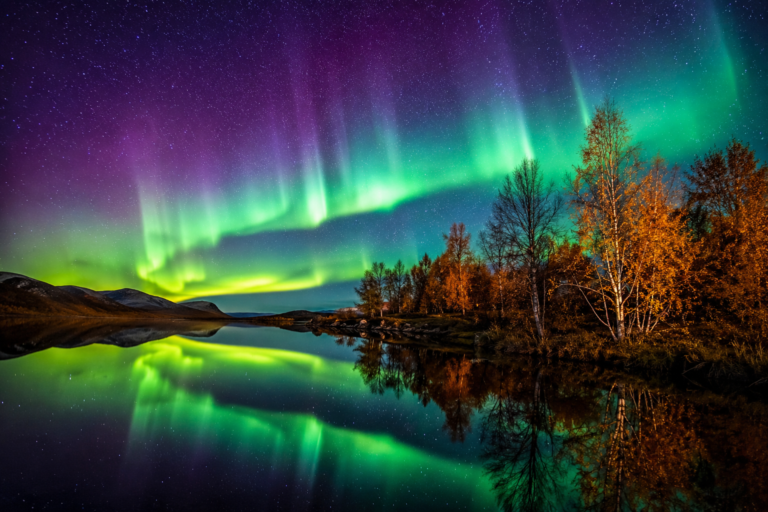
Abisko is a village of under a hundred residents in Swedish Lapland, roughly 200 km north of the Arctic Circle, next to Abisko National Park. Daily trains between Stockholm and Narvik stop at Abisko Östra and Abisko Turiststation, so you can arrive without driving on Arctic roads. The area is one of the driest in Sweden thanks to a rain shadow from the mountains, though it’s also often cloudy, so build several nights into your plan. A chairlift climbs Mount Nuolja, and the park is known for cross-country skiing and snowshoeing.
Check the free Northern Lights Odds tool before you book. For more Nordic options, see our Scandinavian cosy cabin retreats for January or, for something wilder, our guide to January polar expeditions to Svalbard.
Winter Villages in Europe in January, Compared
Use this table to match a village to your trip style, then check transport for your dates.
| Village | Country | Altitude | Car needed? | Best for |
|---|---|---|---|---|
| Ortisei | Italy | ~1,200–1,350 m | No, buses from Bolzano | Skiing plus walks, crafts, choice |
| Cogne | Italy | 1,534 m | Helpful | Cross-country skiing, frozen falls, silence |
| Bonneval-sur-Arc | France | ~1,800 m | Yes, winter equipment required | Deep snow, stone village, small ski area |
| Saint-Véran | France | ~2,040 m | Yes, winter equipment required | Highest commune in France, observatory |
| Hallstatt | Austria | Lakeside | No, train plus ferry | Lake views, history, photography |
| Mürren | Switzerland | 1,638 m | No, car-free | Big-mountain views, easy access by lift |
| Abisko | Sweden | Low, in the Arctic | No, train station | Northern lights, snowshoeing |
Quick rules: for a first winter trip without driving, choose Mürren or Abisko. For a couple’s escape with long walks and good food, choose Ortisei or Cogne. For the deepest snow and the strongest sense of remoteness, choose Bonneval-sur-Arc or Saint-Véran. For more couple-focused ideas, see our romantic January getaways in Europe.
How to Plan a January Village Trip in 5 Steps
Choose your dates around the holidays
Arrive after Epiphany on 6 January and leave before February’s school-holiday weeks. Mid-January is the calmest stretch.
Decide train or car first
Mürren, Abisko and Hallstatt work without a car. The French villages are far easier by car, which means winter tyres or chains, and a confident driver on mountain roads.
Book the room before the activity
Villages this small have few beds. Lock in a room with flexible cancellation, then add cross-country lessons, ski passes or guided ice climbing.
Stay at least three nights
Winter weather in the mountains and the Arctic changes daily. Three nights gives you a realistic chance of one clear day for the views or one clear night for the aurora.
Pack for standing still in the cold
Waterproof boots with grip, wool socks, a hat over your ears and mittens over thin gloves. Use the free Packing by Season Generator for a list built around your trip.
5 Mistakes to Avoid With Winter Villages in Europe in January
1. Choosing a low-lying town and expecting snow
Pretty lowland towns can be grey and wet in January. If snow is the point of the trip, choose altitude (above about 1,500 m in the Alps) or go far north.
2. Arriving after dark on mountain roads
Days are short and roads to the highest villages can be icy. Plan to reach places like Bonneval or Saint-Véran in daylight, and give yourself a buffer if snow is forecast.
3. Booking one night in a famous village
Day-trippers fill the most famous spots in the middle of the day. Staying overnight lets you see Hallstatt or Mürren early and late, when they’re empty and the light is best.
4. Assuming everything is open
Small villages close some lifts, restaurants and attractions for part of the winter. Check before you go, and keep a flexible plan for each day.
5. Booking only one night for the northern lights
One cloudy night ends the chance. In Abisko, plan three or four nights and stay flexible about which evening you go out late.
Questions Travellers Ask About Europe’s Winter Villages
The best winter villages in Europe in January combine three things: altitude or latitude for snow, a way in that suits you, and something to do on a grey day. Pick one of these seven, stay at least three nights, and travel in the quiet middle of the month. For more ideas, browse our best travel destinations in January, compare the best winter destinations in January, or plan by month with the month-by-month travel planner.
When to Go guides
Choose your country, then your month
24 country guides, each about 100 pages: every month rated for weather, crowds and prices, region by region, with a 7-day booking plan. Six guides per region bundle.
Browse the 24 guides · $19 eachRegion bundles: Europe, Asia & Pacific, Sun Souks & Safari, Americas · $47 each
Free download
Which month for your country?
Get the free 12-Month Map: every month marked good, shoulder or avoid, region by region, on four printable pages.
- Greece to Japan, Morocco to Peru: 24 countries
- See the crowd and price peaks before you book
- Free, no purchase needed
Your download page opens as soon as you sign up. 24 countries available.

[…] Candles, gløgg and blankets are the Danish winter toolkit, so pack light and buy them locally. For more snow-and-village ideas, see our snowy European villages in January. […]