
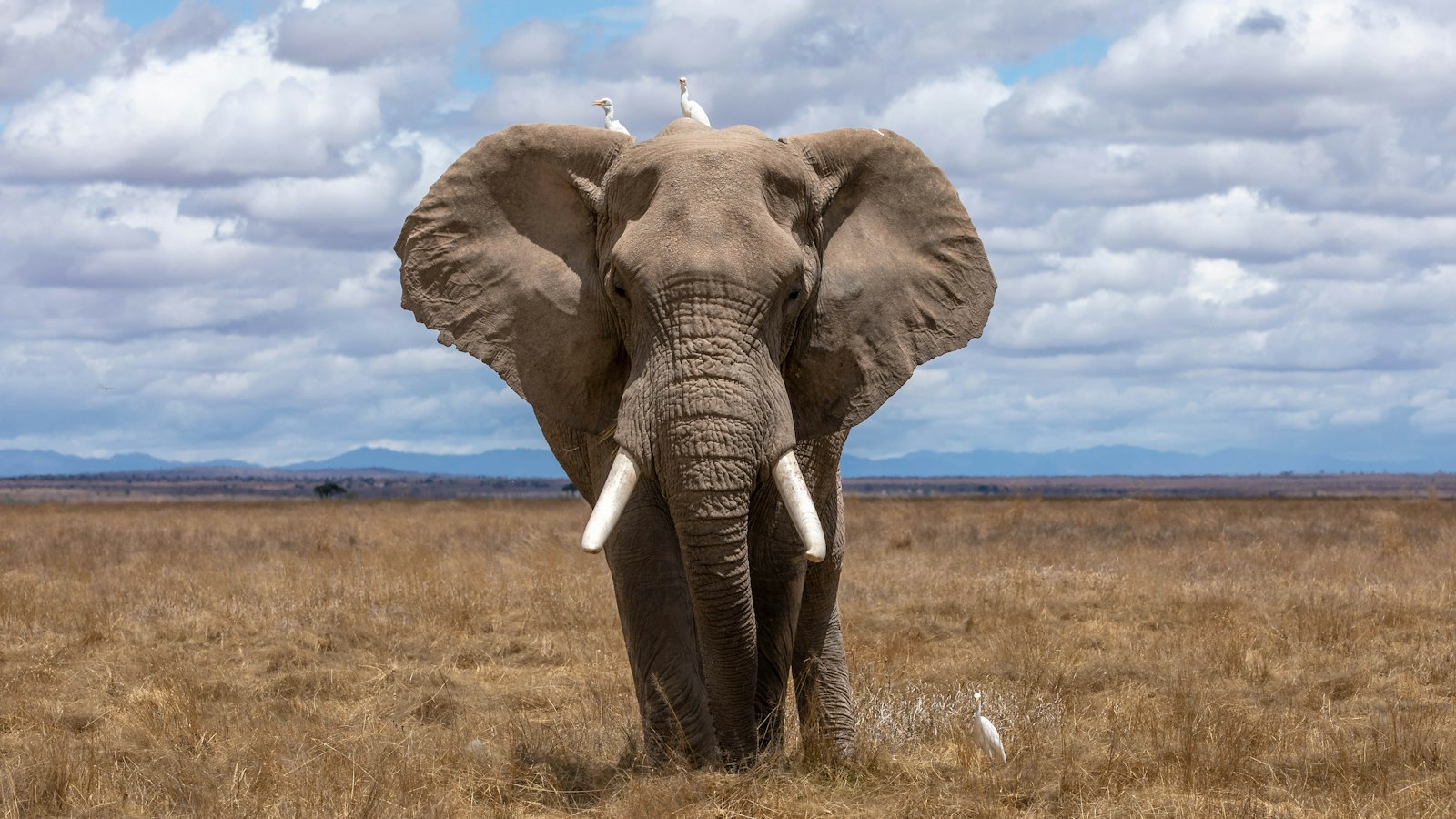
Wildlife viewing in February usually means one of two trips: a calving-season safari in East Africa or a whale-watching boat in Baja or Hawaii. Both are excellent, and we cover them in separate guides. This one is about everything else. Seven places where February lines up with a specific wildlife moment, from sea eagles on the drift ice of Hokkaido to penguin chicks in Patagonia and wading birds crowding the last pools of the Everglades.

When to Go guides
Choose your country, then your month
24 country guides, each about 100 pages: every month rated for weather, crowds and prices, region by region, with a 7-day booking plan. Six guides per region bundle.
Browse the 24 guides · $19 eachRegion bundles: Europe, Asia & Pacific, Sun Souks & Safari, Americas · $47 each
For wildlife viewing in February beyond safaris and whales, go to eastern Hokkaido for Steller’s sea eagles on the drift ice and dancing cranes, Yellowstone for wolves and bison in the snow, the Everglades for dry-season alligators and wading birds, Keoladeo in India for migratory waterbirds, Península Valdés and Punta Tombo in Argentina for penguin chicks and sea lions, the Falklands for penguin colonies, or the Galápagos for warm-season snorkelling and nesting birds.
✅ Key takeaways
- ✓Drift ice and birdwatching cruises in Rausu, eastern Hokkaido, run from February to March, when sea eagles gather to feed.
- ✓Yellowstone’s winter season runs from mid-December to mid-March; only the road from the North Entrance to the Northeast Entrance stays open to cars.
- ✓The Everglades dry season (December to April) concentrates alligators and wading birds around shrinking pools, with far fewer mosquitoes.
- ✓At Punta Tombo, December to February is the best time to see Magellanic penguin adults with their chicks.
- ✓In the Galápagos, waved albatrosses are absent in February; they return in April.
Why February Is a Strong Month for Wildlife Viewing
February sits at a turning point on both sides of the equator. In the northern winter, cold and dry weather push animals together: eagles follow the drift ice in Hokkaido, and wading birds crowd around the last pools of the Everglades. In the southern summer, seabird and penguin colonies are full of growing chicks, and seal and sea lion beaches are busy with young.
That makes February a month of concentration. Animals are easier to find because they gather in predictable places, and good guides know exactly where. The trade-off is that several of these places are cold, remote or popular, so planning matters more than luck.
| Place | Main February wildlife | Season window | Getting there |
|---|---|---|---|
| Eastern Hokkaido, Japan | Steller’s sea eagles, white-tailed eagles, Japanese cranes | Drift ice cruises February–March; cranes best in winter | Fly to eastern Hokkaido, then drive or join a tour |
| Yellowstone, USA | Wolves, bison, elk, foxes | Winter season mid-December to mid-March | Gardiner (North Entrance), Montana |
| Everglades, USA | Alligators, crocodiles, wading birds | Dry season December–April | Homestead or Shark Valley entrances, near Miami |
| Keoladeo, India | Migratory geese, ducks, storks, cranes | Best early December–end of February | About 60 km from Agra |
| Península Valdés and Punta Tombo, Argentina | Magellanic penguins and chicks, sea lions, elephant seals | Penguins September–April | Trelew or Puerto Madryn |
| Falkland Islands | Penguin colonies, seals, albatross | Season October–April; young reared November–February | Flights to Stanley or expedition ships |
| Galápagos, Ecuador | Sea lions, green turtles, frigatebirds, doves | Warm season December–May | Flights from mainland Ecuador |
🗓️ Free: a 12-Month Map for your country
Every month on one page: best weeks, shoulder weeks and the ones to skip. Print it or keep it on your phone.
🧰 Try it while you read: a free tool for this trip
Free trip timing tool
What Kind of Traveller Are You?
Seven quick taps pick your travel type, then show the countries and months where it shines.
Loading the tool…
1. Eastern Hokkaido, Japan: Sea Eagles on the Drift Ice
🦅 Rausu and Kushiro, eastern Hokkaido
What you see: Steller’s sea eagles, one of the largest eagles in Japan, arrive in eastern Hokkaido for the winter alongside white-tailed eagles. From February to March, drift ice and birdwatching cruises from Rausu let you watch them feeding on fish on the ice.
Second spectacle: Japanese (red-crowned) cranes, whose red crowns stand out against the snow. Winter is the best time to see them around the Kushiro wetland, where winter canoe tours also look for eagles.
Plan it: combine two or three nights near Rausu with two nights near Kushiro. Roads are snowy, so a tour or a confident winter driver helps.
Hokkaido’s official tourism site describes the winter wildlife of eastern Hokkaido, including the Rausu drift ice cruises. Cruises depend on the ice actually reaching the coast, which varies year to year, so keep a spare day. Our guide to cold weather destinations in February adds the Sapporo Snow Festival and the drift ice at Abashiri.
2. Yellowstone, USA: Wolves and Bison in the Snow
🐺 Yellowstone National Park
What you see: bison, elk and foxes against deep snow, and a chance of wolves, usually watched from a distance with scopes along the open road corridor.
Access: the winter season runs from mid-December to mid-March. The only road open to cars all year runs from the North Entrance at Gardiner, Montana, to the Northeast Entrance at Cooke City and Silver Gate. Most other areas are reached by guided snowcoach or snowmobile.
Rules: stay at least 100 yards (91 m) from wolves and bears and 25 yards (23 m) from all other wildlife, and never feed animals. Ravens in some areas have learned to unzip backpacks, so keep food sealed.
Yellowstone Forever, the park’s official nonprofit partner, sets out the winter season rules and road access. Bring binoculars or a spotting scope: wolf watching happens at a distance, often at dawn. For the wider snowy picture, see our winter wonderlands in North America.
3. The Everglades, USA: Dry-Season Alligators and Wading Birds
🐊 Everglades National Park, Florida
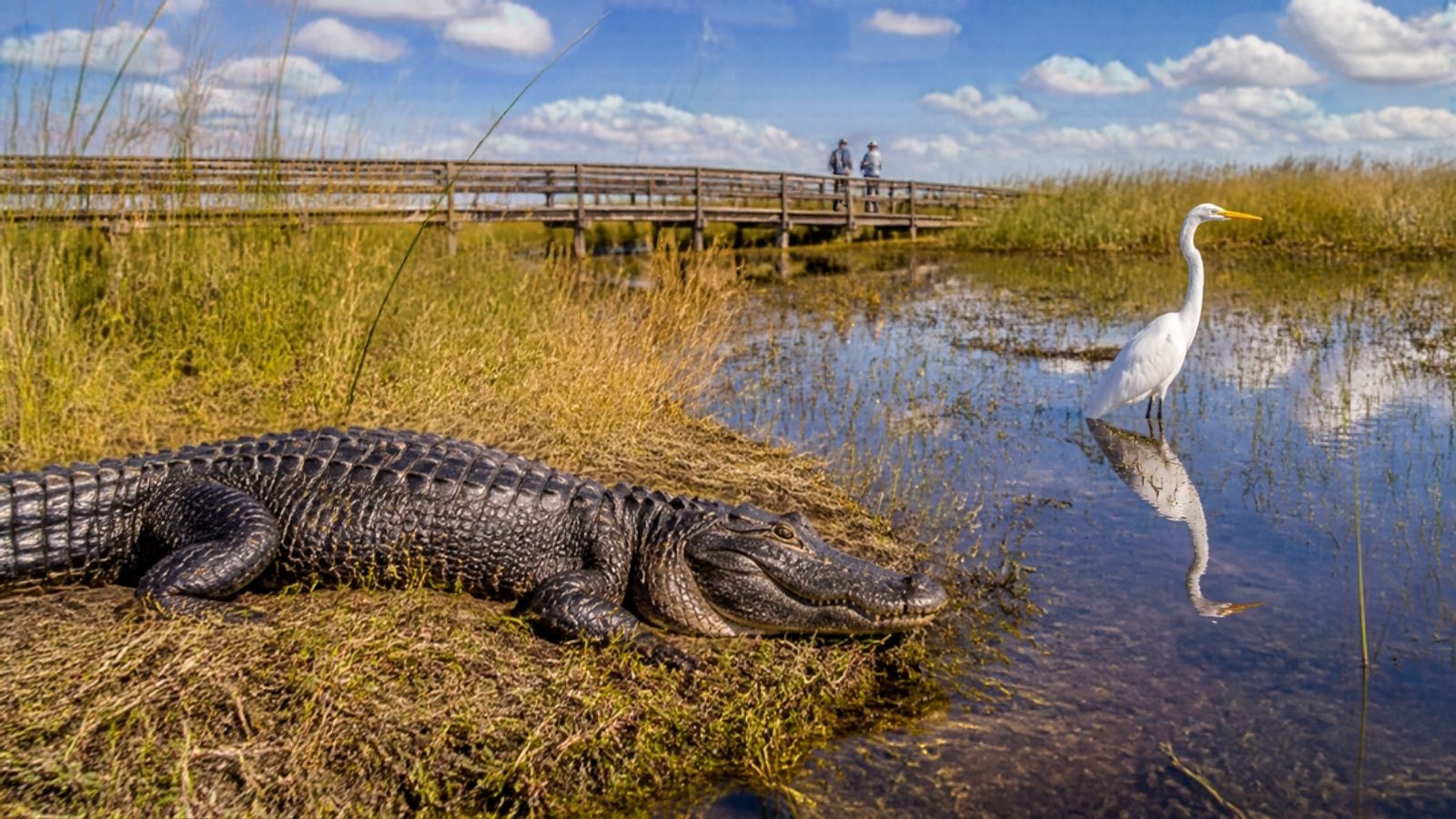
What you see: alligators, crocodiles and wading birds gathered around shrinking pools. Less rain means smaller pools, so the animals are concentrated and easier to watch.
Why February: it’s the heart of the dry season, with far fewer mosquitoes than in the wet season from May to November, and most official ranger-led tours run now.
Plan it: arrive early at the Anhinga Trail near the Homestead entrance and at Shark Valley, which are the busiest spots in the dry season.
4. Keoladeo National Park, India: A Winter Wetland Full of Migrants
🦢 Keoladeo (Bharatpur Bird Sanctuary), Rajasthan
What you see: winter visitors, mostly waterbirds, from Siberia, China, Afghanistan and beyond: bar-headed geese that cross the Himalayas, greylag geese, ducks, plus resident sarus cranes, painted storks, spoonbills and wintering eagles.
Why February: early December to the end of February is the best period for migratory birds. From April to September the park dries out and birding is hard.
Plan it: motor vehicles stop within the first 1–2 km, so explore by bicycle, on foot or by cycle-rickshaw; many rickshaw drivers double as bird guides. The park is about 60 km from Agra, so it fits a Golden Triangle trip.
Keoladeo is a UNESCO World Heritage Site. One honest note: the Siberian cranes that made it famous have not been recorded there for more than two decades, so don’t book for them. If you’re also hoping for big cats in India, our guide to the best wildlife safaris in February covers tiger reserves in central India.

The Smart Timing Bundle
Pick the month, book in the right order, pack once
Six printable timing tools for any trip: the Trip Timing Planner, When to Book, When NOT to Go, the Shoulder Season Playbook, the family timing guide and the Packing by Season System.
See the bundle · $37Six products, $100 separately · Digital download · All sales final
5. Península Valdés and Punta Tombo, Argentina: Penguin Chicks and Sea Lions
🐧 Península Valdés and Punta Tombo, Patagonia
What you see: at Punta Tombo, a Magellanic penguin colony that can number more than a million birds at its peak, adults and fluffy chicks, with December to February the best window to see both. At Península Valdés, a UNESCO World Heritage Site, sea lion colonies and the only breeding southern elephant seals on the Argentine mainland.
Orcas: Argentina’s official tourism site gives the orca season as March to May, when orcas strand themselves on the beach to hunt young sea lions at Punta Norte and Caleta Valdés. February is early, so treat a sighting as a bonus.
Plan it: base yourself in Puerto Madryn. Punta Tombo is about 190 km south of the town, roughly two hours and forty minutes by road, and about 110 km from Trelew.
Read the official orca season page before you lock in late-February dates, and remember that southern right whales, the peninsula’s other headline animal, visit from about May to December, not in February. Our guide to South America in February shows how to combine Patagonia’s coast with its mountains.
When to Go: Argentina
Penguin chicks in February, orcas from March, whales later in the year: Argentina’s wildlife and weather change month by month. This guide walks you through every month, from Patagonia to Buenos Aires and the north, so you choose dates for the animals and the trip you want.
See When to Go: Argentina · $19 →Digital download · All sales final
6. The Falkland Islands: Penguin Colonies at the Height of Summer
🌊 The Falkland Islands
What you see: penguin colonies, seals, sea lions and albatross. From November to February, the wildlife is rearing young, and king penguins gather at Volunteer Point, one of the islands’ best-known sites.
Weather: Stanley averages about 13 °C by day in February, and the islands are always windy and changeable.
Plan it: November to February are the busiest months, so book accommodation on the outlying islands well in advance. Many visitors also see the islands from Antarctic expedition ships.
If you’re choosing between a Falklands stay and a polar voyage, our guide to the best places to cruise in February covers Antarctic and Patagonian sailings.
7. The Galápagos, Ecuador: Warm-Season Snorkelling and Nesting Birds
🐢 The Galápagos Islands
What you see: sea lions, green turtles (most active from December to May), nesting Galápagos doves and nesting frigatebirds on North and South Seymour. Galápagos penguins can be seen around Isabela and Fernandina.
Why February: warm water and calmer seas make it a strong month for snorkelling and swimming, with good underwater visibility.
The catch: occasional rain, and no waved albatrosses: they arrive on Española in April and leave in December.
In February, wildlife gathers where the ice, the water or the chicks are. Go to those places and the animals come to you.
When Not to Go: February Wildlife Trips to Save for Another Month
Some famous wildlife trips are simply out of season in February. Before you book, check whether your month is a bad one with our free checker.
| Skip in February | Why | Go instead |
|---|---|---|
| Southern right whales at Península Valdés | They visit from about May to December | Penguin chicks at Punta Tombo now; whales later in the year |
| Waved albatross on Española, Galápagos | Absent from December until April | Nesting frigatebirds and doves now |
| The Brazilian Pantanal | Peak of the rainy season, with much of the floodplain under water | Come in the dry months for jaguars and waterholes |
| Whale watching from Hermanus, South Africa | Southern right whales are there from about June to early December | Cape Town’s summer coast now; Hermanus in September–November |
| Orcas at Punta Norte, if they are your only goal | The official season is March to May | Book a March or April trip |
February is also peak season in several places on this list, especially the Everglades and the Falklands, so book the bottleneck (a lodge, a cruise berth or a guided tour) first. For risky periods across the year, see our when not to go hub.
How to Plan a February Wildlife Trip in 5 Steps
Choose the animal, then the place
Eagles, wolves, penguins or waterbirds each point to one place on this list.
Check the season edges
Drift ice, orca and bird seasons shift a little each year. Aim for the middle of the window, not the edges. Our Best Month Finder helps you compare.
Book the limited piece first
A drift ice cruise, a snowcoach seat, an outlying-island lodge in the Falklands or a Galápagos boat. The When to Book Calculator gives a timeline.
Hire local guides
Rickshaw guides at Keoladeo, wolf-watching guides in Yellowstone and naturalist guides in the Galápagos see far more than you will alone.
Pack for the conditions
Hokkaido and Yellowstone need serious cold-weather layers; the Falklands need windproofs; the Everglades and Galápagos need sun protection. Try the Packing by Season Generator.
5 Mistakes That Spoil a February Wildlife Trip
1. Booking one day for a weather-dependent sight
Drift ice cruises and snowcoach trips can be cancelled. Give yourself at least one spare day.
2. Chasing the wrong season
Southern right whales at Valdés and waved albatross in the Galápagos aren’t there in February. Pick the animals that are.
3. Sleeping through the best hours
Most animals are most active around dawn. Plan early starts and rest in the middle of the day.
4. Underestimating the cold
Standing still on a frozen viewpoint in Hokkaido or Yellowstone is far colder than walking. Bring insulated boots, mitts and a flask.
5. Forgetting binoculars
Wolves, eagles and many birds are watched from a distance. A good pair of binoculars matters more than a big camera lens.

The complete kit
Every country guide, every timing tool
All 24 When to Go country guides, the six Smart Timing tools and every 12-Month Map, with a Start Here that tells you what to open first.
See the kit · $127The five bundles cost $225 separately · Digital download · All sales final
Wildlife Viewing in February: Your Questions
Wildlife viewing in February rewards travellers who follow the season, not the brochure. Choose your animal, go to where it gathers, and give yourself spare days. For the big-ticket alternatives, see our guides to whale watching in February and wildlife watching in January, browse the wildlife travel guides and the February travel guides, or plan another month from the month-by-month travel planner.
Free download
The 12-Month Map, free
The whole year for one country on four printable pages, so you can see the right months before you read anything else.
- Good, shoulder and avoid months at a glance
- Region by region, not one average for the whole country
- Prints cleanly on US Letter
Your download page opens as soon as you sign up. 24 countries available.
[…] Weather-wise, Kahului averages about 28°C (82°F) by day and 18°C (64°F) at night, with roughly nine days of rain in the month. Most of those showers are short. Plan beach days on the drier leeward coast and keep the rainforest drive for a day when you don’t mind getting damp. For more wildlife ideas in the same month, see our guide to the best places for wildlife viewing in February. […]