Most New Year’s Eve guides pick cities by the size of their fireworks. If you’d rather spend midnight with a spoon in your hand, that list is no use to you. This guide to New Year’s Eve food traditions around the world picks destinations by what people eat, when they eat it, and whether a visitor can realistically join in, from noodles in Tokyo to grapes in Madrid and lentils in Rome.

When to Go guides
Choose your country, then your month
24 country guides, each about 100 pages: every month rated for weather, crowds and prices, region by region, with a 7-day booking plan. Six guides per region bundle.
Browse the 24 guides · $19 eachRegion bundles: Europe, Asia & Pacific, Sun Souks & Safari, Americas · $47 each
For a food-first New Year’s Eve, go where the meal is the main event: Japan for year-crossing soba on 31 December and the boxed osechi feast that follows, Madrid for twelve grapes eaten to the twelve midnight chimes, Italy for cotechino with lentils, Greece for the coin cake cut at midnight, the Netherlands for oliebollen from street stalls, Rio for lentils on a white-clad beach and the American South for lucky peas on 1 January.
✅ Key takeaways
- ✓Decide first whether you want the midnight ritual, the long dinner or the New Year’s Day feast, because each country puts its big food moment at a different hour.
- ✓In Japan most businesses shut from 1 to 3 January, so eat out on 31 December and plan your first days of the year around shrines and hotel or department-store food.
- ✓Madrid’s Puerta del Sol holds about 15,000 people, so arrive hours early or eat your grapes in a bar with the TV on.
- ✓Book your New Year’s Eve dinner as soon as you book the flight; in food-led cities that table is the hardest reservation of the trip.
- ✓Stock up on 31 December wherever you stay: 1 January is a slow day for shops and kitchens in most of the places on this list.
New Year’s Eve Food Traditions Around the World: Pick Your Moment First
The single most useful thing to know is that “New Year’s food” happens at three different times depending on where you are. Some countries pack it into the final seconds before midnight. Others build a long dinner on 31 December. And a few save the real feast for 1 January, which changes how you plan the whole trip.
- The midnight ritual: a short, shared act on the stroke of twelve. Spain’s grapes are the classic. Easy for visitors, because you only need the food and a clock.
- The long dinner: a heavy, symbolic meal on 31 December, as in Italy. Great for visitors, but you need a booking.
- The next-day table: the big meal comes on 1 January, as with Japan’s osechi or Hoppin’ John in the American South. Harder to join, because it usually happens at home.
| Destination | What’s eaten | When | What it stands for | Easy for visitors? |
|---|---|---|---|---|
| Japan | Toshikoshi soba; osechi boxes; ozoni soup | Soba on 31 Dec; osechi and ozoni from 1 Jan | Long life, letting go of the old year | Soba yes; osechi harder |
| Spain | Twelve grapes | Midnight, one per chime | Twelve lucky months | Very easy |
| Italy | Cotechino or zampone with lentils | New Year’s Eve dinner | Lentils look like coins: prosperity | Yes, with a booking |
| Greece | Vasilopita (coin cake) | Usually cut at midnight | Luck for whoever finds the coin | Only if invited or offered |
| Netherlands | Oliebollen (fried dough balls) | 31 Dec; sold from carts in winter | Folk tale of protection | Very easy |
| Brazil (Rio) | Lentils; pomegranate seeds | Midnight | Money and wealth | Easy |
| American South | Hoppin’ John, greens, cornbread | 1 January | Coins, cash and gold | Moderate |
🗓️ Free: a 12-Month Map for your country
Every month on one page: best weeks, shoulder weeks and the ones to skip. Print it or keep it on your phone.
Notice the pattern: almost every one of these dishes is about money or a long life. Round, coin-shaped and golden foods turn up again and again. National Geographic’s round-up of New Year food traditions points out that many of them are simple, cheap foods, lentils in Brazil and black-eyed peas in the American South among them. The food that matters most on the night is rarely the expensive part.
🧰 Try it while you read: a free tool for this trip
Free trip timing tool
Festival Month Matcher
Choose a month and see the festivals and events our guides list for it.
Loading the tool…
Japan: Year-Crossing Noodles, 108 Bells and a Three-Day Feast
Japan is the strongest pick on this list if you want food to shape the whole holiday rather than one night. New Year (shogatsu) is a major holiday, and it’s built around specific dishes eaten in a specific order.
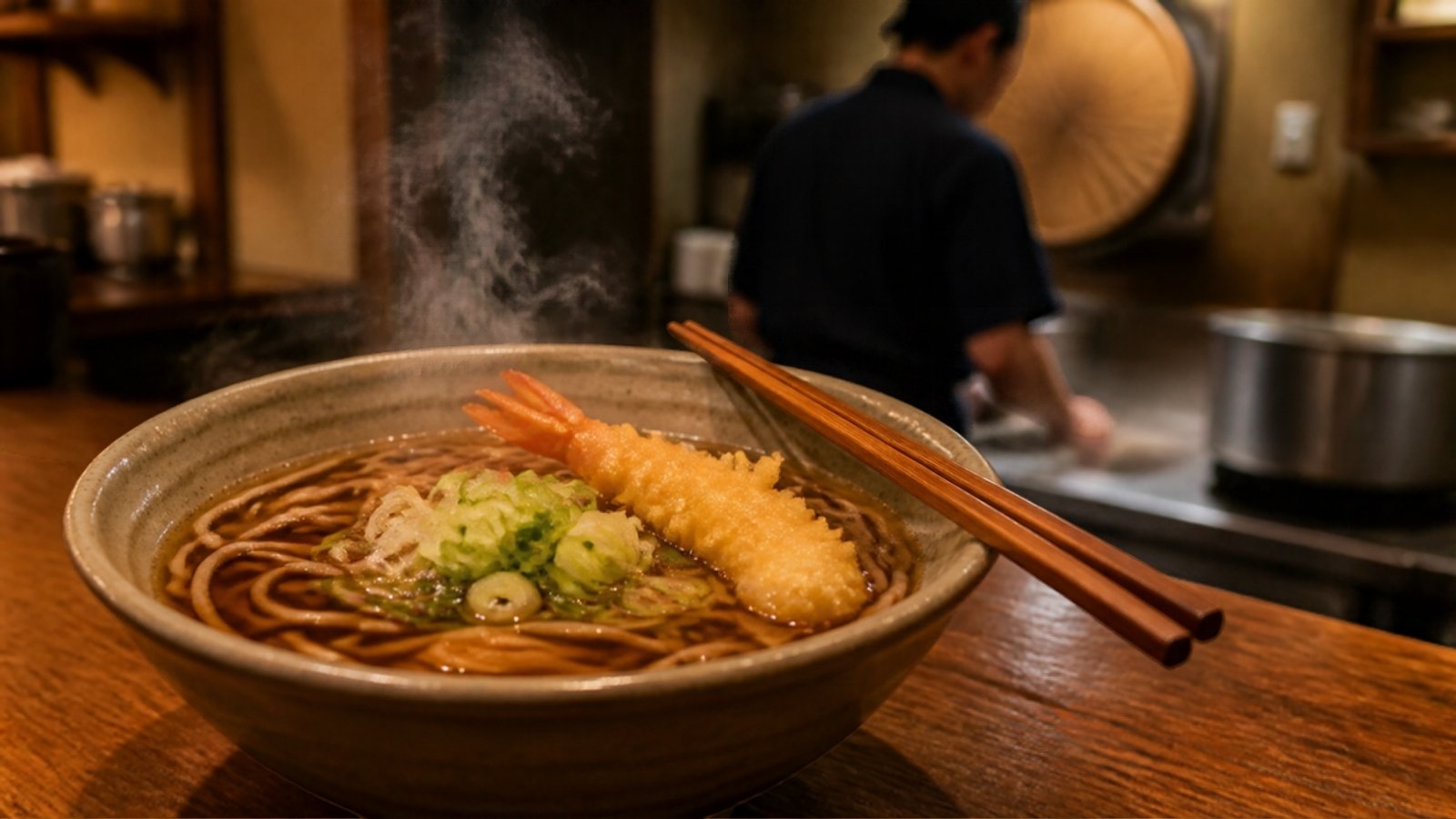
31 December: toshikoshi soba
On New Year’s Eve, called omisoka, people eat toshikoshi soba, which Japan’s national tourism organisation translates as “year-crossing buckwheat noodles”. The long, thin noodles stand for a long life, and because soba cuts easily, the bowl is also about cutting loose the hardships of the old year. Eat it in the evening, then head to a temple.
Midnight: the bell and the first shrine visit
Temple bells are rung 108 times around midnight in a ceremony called joya no kane; the number represents the earthly desires each strike is meant to clear. Some people then make their first shrine or temple visit of the year (hatsumode) straight after midnight, others between 1 and 3 January. In Tokyo, Meiji Jingu and Senso-ji are the big ones, and the most popular shrines draw several million visitors over those three days. Go early in the morning if you want room to breathe.

The Smart Timing Bundle
Pick the month, book in the right order, pack once
Six printable timing tools for any trip: the Trip Timing Planner, When to Book, When NOT to Go, the Shoulder Season Playbook, the family timing guide and the Packing by Season System.
See the bundle · $37Six products, $100 separately · Digital download · All sales final
1 to 3 January: osechi and ozoni
Osechi ryori is a set of small dishes packed into lacquered boxes, made to keep for days so nobody has to cook. Each item carries a wish; the domed red-and-white kamaboko fish cake, for example, resembles a rising sun. It’s eaten with ozoni, a soup with rice cakes. Osechi is mostly a home meal, but department stores now sell it, so ask your hotel whether it serves a New Year breakfast with osechi before you book.
108
bell strikes for joya no kane around midnight
1–3 Jan
when most Japanese businesses close
12° / 4°C
Tokyo December avg high / low · 54° / 39°F
When to Go: Japan
New Year is one of the best food weeks in Japan and one of the most closed. If you’re weighing it against a quieter month, this guide sets out what each month of the year is like for weather, crowds and closures, so you pick the dates that fit how you want to eat and travel.
See When to Go: Japan · $19 →Digital download · All sales final
Madrid: Twelve Grapes, Twelve Chimes, Zero Room for Error
Spain gives you the easiest food ritual to join anywhere: eat one grape on each of the twelve bell strikes at midnight, and you’ve earned twelve lucky months.

The tradition is tied to the clock on the old Royal House of the Post Office in Madrid’s Puerta del Sol, and Spanish television has broadcast the chimes from there for decades. Spain’s official tourism site notes that the square’s capacity is limited to 15,000 people, so you need to arrive several hours in advance. Many people also gather on 30 December for the rehearsal the day before, which is a calmer way to see the square in party mode.
Buy small, seedless grapes
Get them on 30 or 31 December, before shops close early. Small ones go down far faster than big, seeded table grapes.
Count out exactly twelve
Put them in a small cup or bag you can hold in one hand. In a crowded square you won’t have a table.
Follow the broadcast or the clock
If you’re not in the square, put the national broadcast on so you hear the same bells as everyone else. Start on the first of the twelve midnight strikes.
One grape per bell, then toast
Don’t chew carefully; just keep pace. Laughing with a mouth full of grapes is part of the ritual.
You don’t have to be in the square. The grapes are eaten in homes, bars and restaurants all over Spain, with the broadcast on, and that’s how most locals do it. Madrid averages about 10 °C by day and 4 °C at night in December, so a bar with a screen is a perfectly good choice if you’d rather not stand for hours. The custom has also spread to the Philippines and to Latin American countries, so you’ll meet it far beyond Spain.
Italy: Lentils for Coins and a Sausage Worth the Wait
Italy is where New Year’s Eve becomes a proper dinner. The centrepiece is cotechino, a large pork sausage boiled slowly for hours, or zampone, the same kind of filling stuffed into a pig’s trotter, served with lentils. The lentils are the lucky part: their small round shape looks like coins, so a big spoonful is a wish for a prosperous year.

You’ll find it across Italy, though the dish is closely linked with Modena and the Emilia-Romagna region. For a visitor, the realistic way in is a restaurant’s New Year’s Eve dinner. Book it early, ask whether it’s a fixed menu, and check whether cotechino and lentils are on it; in big tourist hubs some menus lean international. Rome sits at roughly 13 °C by day and 5 °C at night in December, so walking to dinner and on to the celebrations afterwards is comfortable with a warm coat.
Two more customs to know. Wearing red on New Year’s Eve is said to bring luck, and shop windows fill with red underwear in late December. And in Naples, the old habit of throwing unwanted things out of the window has largely faded, though you’ll still hear about it. For a quieter Italian alternative with strong café and food culture, look at our December travel guide to Trieste.
The fireworks last a few minutes. The table lasts all night. Book the table first.
Greece and the Netherlands: The Coin in the Cake and the Doughnut Cart

Greece: vasilopita at midnight
Vasilopita is a New Year bread or cake with a coin pushed into the dough before baking. Families usually cut it at midnight on New Year’s Eve, one slice for each person present, from the eldest to the youngest, with extra slices often set aside for the house, the saints or the poor. Whoever finds the coin gets the luck, and these days often a small gift too. Some organisations cut their own cakes later in January. As a visitor, you’ll most likely share in it if you’re invited into a home or your hotel keeps the custom, so it’s worth asking.
Netherlands: oliebollen
Oliebollen are deep-fried dough balls, usually studded with raisins or currants and dusted with powdered sugar. They’re the traditional New Year’s Eve treat, and in the colder months vendors sell them from mobile carts on the street, so you don’t need an invitation, a booking or a word of Dutch. One folk tale says the grease made a witch’s sword slide off people’s bellies. Amsterdam averages about 7 °C by day and 2 °C at night in December, and a warm paper bag of oliebollen is exactly the right snack for it.

The complete kit
Every country guide, every timing tool
All 24 When to Go country guides, the six Smart Timing tools and every 12-Month Map, with a Start Here that tells you what to open first.
See the kit · $127The five bundles cost $225 separately · Digital download · All sales final
If you’re building a longer December food trip around the Low Countries, our guide to Ghent in December pairs well, and the best December markets for seasonal food treats covers the run-up weeks.
Beyond Europe: Lentils on Copacabana and Lucky Peas in the American South

Rio de Janeiro: white clothes, flowers and lentils
Rio’s New Year’s Eve on Copacabana Beach draws crowds of around two million people, with fireworks launched from barges out at sea. Most people wear white, a custom that grew from Candomblé practitioners honouring the sea goddess Iemanjá, and many bring flowers to offer to the waves before midnight. On the food side, lentils are eaten at midnight for wealth, and some people keep pomegranate seeds in their wallets to attract money. December is summer in Rio, so this is the one food-led New Year on our list that happens in the heat.
The American South: Hoppin’ John on 1 January
Across the Southern United States, New Year’s Day brings Hoppin’ John, a dish of black-eyed peas and rice, served with collard or other greens and cornbread. Each part is a wish: the peas stand for coins, the greens for paper money, and the golden cornbread for gold. Some cooks even drop a coin in the pot. If you’re spending the holiday in a Southern city, this is the dish to look for on 1 January menus.
Four more tables worth knowing
| Country | Dish | The custom |
|---|---|---|
| Philippines | Kakanin (rice cakes such as bibingka, biko and tikoy) | Sticky rice cakes for close family bonds and good fortune |
| Bulgaria | Banitsa (filo pastry with egg, yogurt and cheese) | Coins or written fortunes hidden inside; your slice predicts your year |
| Haiti | Soup joumou (squash soup) | Eaten every 1 January to mark independence |
| Latin America | Pork dishes such as Cuban lechón asado or Mexican tamales; lentils | Pork for prosperity; lentils at midnight in Chile and Venezuela |
How to Get a Seat at the Table on New Year’s Eve
Getting fed well on the busiest restaurant night of the year, then again on the quietest day, takes a plan. Work through these in order.
Choose the moment, then the city
Midnight ritual, long dinner or New Year’s Day feast? Use the first table above. It narrows seven options to two in a minute.
Book the dinner with the flight
New Year’s Eve tables in food-led cities go early. Reserve as soon as your dates are fixed, and read the cancellation terms, which are often stricter on this one night.
Ask what’s on the set menu
Many restaurants switch to a fixed menu that night. Ask directly whether the traditional dish is included: lentils in Italy, grapes in Spain, soba in Japan.
Shop for 1 January on the 31st
Buy breakfast, water and snacks during the day on 31 December. In Japan the closures run to 3 January; elsewhere, expect a slow, late start.
Our winter packing list for December travel covers the dressier outfit a long dinner needs. To choose by trip style instead, start with the best December destinations for New Year’s Eve.
5 Mistakes Food Lovers Make on New Year’s Eve Abroad
1. Planning the big meal for the wrong day
In Japan and the American South, the defining food comes on 1 January, not the night before. Turn up expecting a huge 31 December feast in Tokyo and you’ll get a humble bowl of noodles. Read the tradition first, then plan the day.
2. Assuming every restaurant stays open
Plenty of family-run places close on 31 December or 1 January so staff can celebrate at home. The small, local spot you loved on day two may be dark on the night you most want it. Check opening days for both dates.
3. Choosing the square over the meal
Getting into Puerta del Sol means hours standing without a proper dinner. That’s a fine trade if the square is the dream. If food is the reason you travelled, eat well and do the grapes in a bar with the broadcast on.
4. Booking a “gala” without reading the menu
Hotel galas are often priced for the night, not the food. Ask for the menu before you pay; if the traditional dish isn’t there, a neighbourhood restaurant may give you a more authentic table.
5. Forgetting that tradition is mostly at home
Osechi, vasilopita and Hoppin’ John are family meals first. Ask your host, hotel or a food tour whether there’s a way to share them, and take the invitation if one comes. For couples who’d rather keep the night intimate, see our romantic New Year’s Eve getaways.
New Year’s Eve Food Traditions Around the World: Your Questions Answered
The best way to use New Year’s Eve food traditions around the world is to let them pick the hour of your celebration, then book that table before anything else. Get the meal right and the rest of the night takes care of itself. For more December ideas, browse our best travel destinations in December, or compare the big countdowns in the best places to spend New Year’s Eve in Europe.
Free download
Which month for your country?
Get the free 12-Month Map: every month marked good, shoulder or avoid, region by region, on four printable pages.
- Greece to Japan, Morocco to Peru: 24 countries
- See the crowd and price peaks before you book
- Free, no purchase needed
Your download page opens as soon as you sign up. 24 countries available.
Compare the whole month
Where to go in December
Every destination rated for December on one page: weather, crowds and price level, with the places to skip.