South America in September is one of the best adventure windows of the year: the Andes are at the end of their dry season, the Pantanal wetlands are drying out and pushing wildlife onto the riverbanks, and the Atacama has clear skies and almost no rain. It is also a month of edges. Southern Patagonia is only just waking up from winter, the Galápagos are in their cool, misty season, and nights at altitude still drop below freezing. This guide ranks six adventure trips by how well they work in September, with the weather, the catch and the better month for each.

When to Go guides
Choose your country, then your month
24 country guides, each about 100 pages: every month rated for weather, crowds and prices, region by region, with a 7-day booking plan. Six guides per region bundle.
Browse the 24 guides · $19 eachRegion bundles: Europe, Asia & Pacific, Sun Souks & Safari, Americas · $47 each
The September adventure route
Six trips, ranked for September
Pantanal, Brazil
Jaguars on the riverbanks
Inca Trail and Cusco treks, Peru
End of the dry season
Salar de Uyuni, Bolivia
Dry flats, fewer visitors
Atacama Desert, Chile
Clear, dry, cold nights
Galápagos, Ecuador
Cool seas, busy nesting sites
Torres del Paine, Chile
Shoulder season, guided only
Verdicts based on long-term climate averages and seasonal notes from the sources listed at the end. Every year differs.
Quick answer
For adventure in September, head to the northern Pantanal for jaguars, Peru for Andean treks at the tail of the dry season, Bolivia for the Uyuni salt flats and Chile for the Atacama Desert. The Galápagos work if you accept cool water and rougher seas. Torres del Paine is shoulder season: cold, quieter and, for multi-day treks, guided only.
Key takeaways
The Pantanal’s dry season runs roughly July to October, when wildlife gathers around shrinking water.
Peru’s trekking season runs from about April or May to September or October; late September nights are a little milder.
Uyuni can only be driven end to end in the dry season, from May to October.
The Atacama averages about 4 mm of rain in September, with highs near 18 °C and lows near 4 °C.
September is the peak of the Galápagos garúa season, with sea temperatures of about 15 to 22 °C.
Torres del Paine refugios and campsites stay closed to independent hikers until the end of September.
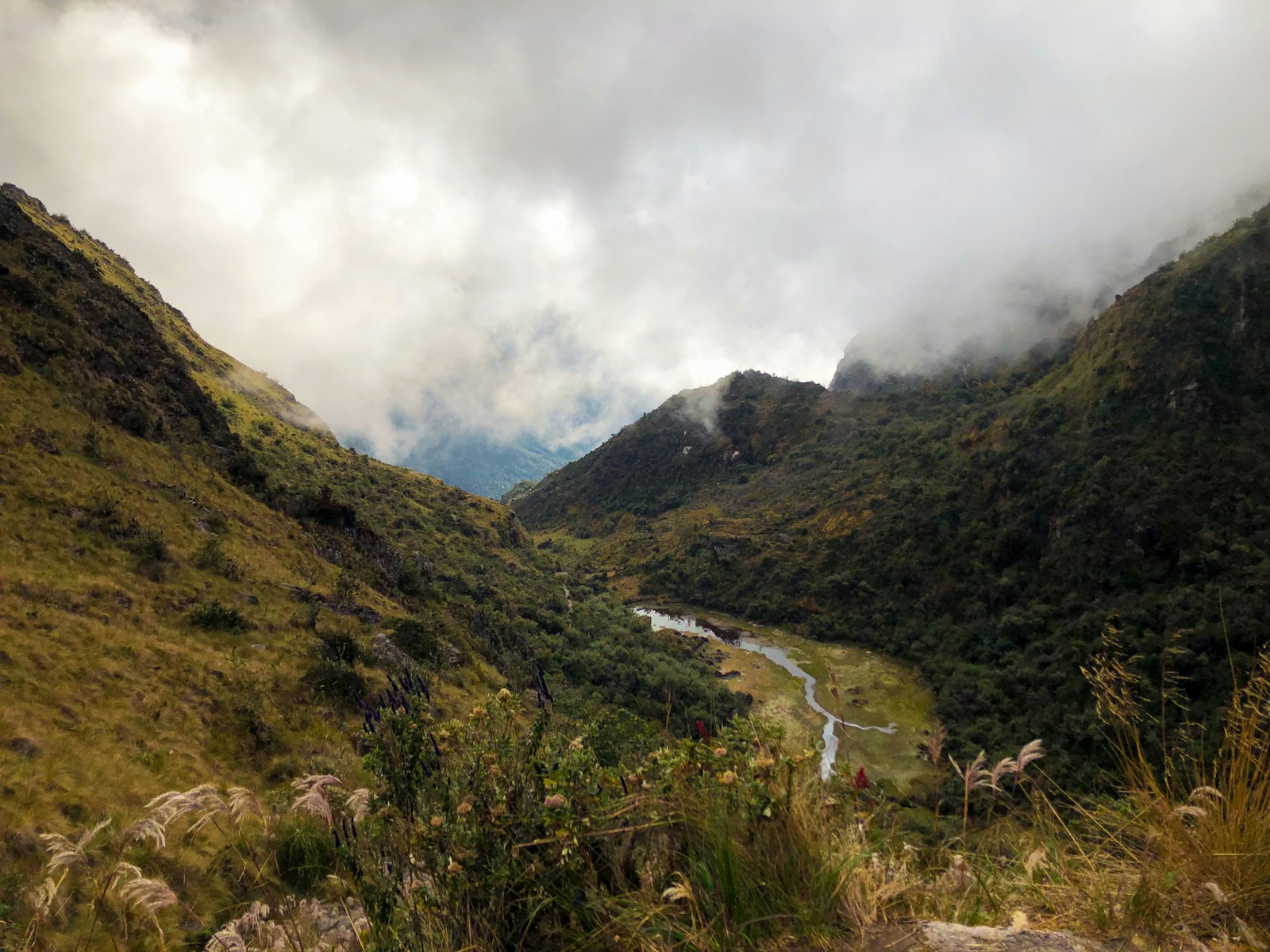
South America in September: The Adventure Trips at a Glance
This section compares the six trips side by side so you can see which one fits your style. September sits at a turning point on the continent: the dry season is ending in the central Andes and the Pantanal, while the far south is moving from winter into spring.
| Trip | September weather | Main draw | Verdict |
|---|---|---|---|
| Pantanal, Brazil | About 17 to 28 °C, about 77 mm of rain | Jaguars and wetland wildlife | Go |
| Inca Trail and Cusco treks, Peru | Cusco roughly 3 to 19 °C in the dry season | Classic Andean trekking | Go |
| Salar de Uyuni, Bolivia | Dry; dry-season average about 12 °C by day and -3 °C at night | Driving the whole salt flat | Go |
| Atacama Desert, Chile | About 18 °C by day, 4 °C at night, 4 mm of rain | High desert, lagoons, clear skies | Go |
| Galápagos, Ecuador | Cool and misty; sea about 15 to 22 °C | Nesting seabirds, sea lions, snorkelling | Go with care |
| Torres del Paine, Chile | About 0 to 10 °C, lengthening days | Quiet trails in early spring | Go with care |
🗓️ Free: a 12-Month Map for your country
Every month on one page: best weeks, shoulder weeks and the ones to skip. Print it or keep it on your phone.
Sources: Responsible Travel for the Pantanal, Horizon Guides for Peru, Andean Trails for Bolivia, Weather2Travel for the Atacama, Andean Trails for the Galápagos and MountainIQ for Torres del Paine.
If you want a broader view of the continent, including cities and beaches, our guide on where to go in South America in September covers every region. This page keeps to the active trips: trekking, wildlife safaris, high-desert days and cold-water snorkelling.
🧰 Try it while you read: a free tool for this trip
Free trip timing tool
What Kind of Traveller Are You?
Seven quick taps pick your travel type, then show the countries and months where it shines.
Loading the tool…
Pantanal: Jaguar Season in the Drying Wetlands
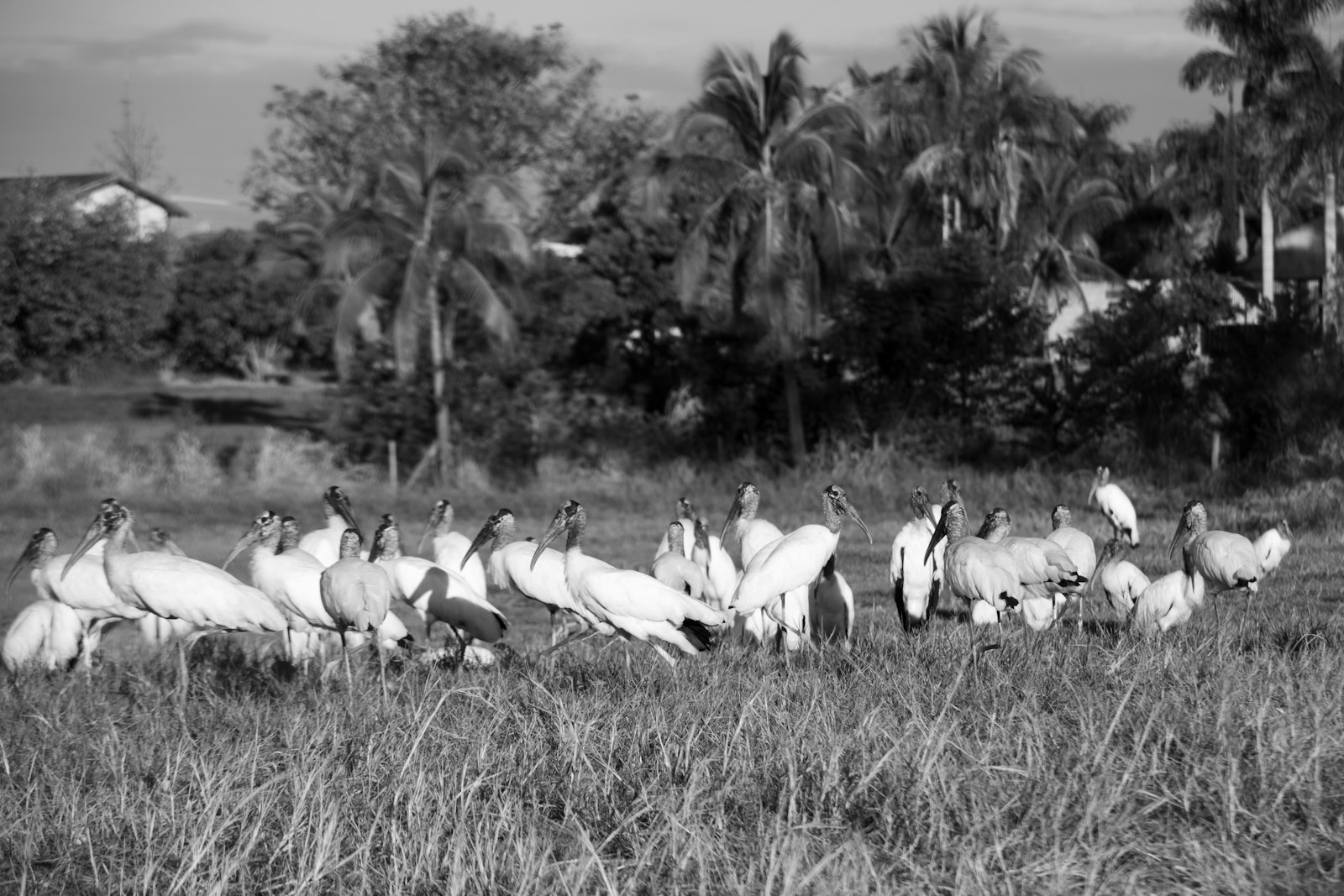
This section covers the Pantanal, the vast wetland in western Brazil and the strongest wildlife trip on the continent in September. According to Responsible Travel, July to October is the best time to go because it is the dry season, and as the water drops, animals gather around the remaining channels and lakes.
September averages a low of about 17 °C and a high of about 28 °C, with around 77 mm of rain. That is wetter than July and August, which sit near 33 to 34 mm, but far drier than October’s 147 mm or the heavy rains of December and January. The month is a transition: the driest weeks are behind you, and the rains build as you move towards October.
The northern Pantanal is the place for big cats. Responsible Travel calls it the best place in the world to see jaguars, and around Porto Jofre the jaguars are used to people, so daytime sightings on the riverbanks are likely. The southern Pantanal is the better fit if you also want caves, rivers and outdoor activities around Bonito, and travellers usually choose one half or the other.

The Smart Timing Bundle
Pick the month, book in the right order, pack once
Six printable timing tools for any trip: the Trip Timing Planner, When to Book, When NOT to Go, the Shoulder Season Playbook, the family timing guide and the Packing by Season System.
See the bundle · $37Six products, $100 separately · Digital download · All sales final
Warning
Fire is the real September risk in the Pantanal. NASA Earth Observatory notes that fire season usually starts in July and peaks in August and September. Smoke can reduce visibility, close areas and affect breathing. Keep your plans flexible, ask your lodge about conditions shortly before you travel and pack a mask if you are sensitive to smoke.
For a jaguar trip, plan on river days with early starts and late-afternoon outings, and leave the middle of the day for rest. Bring long sleeves for the sun and insects, binoculars and a camera with a decent zoom. Prices change; check before you book, and book early, because places to stay close to the jaguar rivers are limited in the dry season.
Peru: The Inca Trail and Andean Treks at the End of the Dry Season
This section covers trekking around Cusco, including the Inca Trail to Machu Picchu. Horizon Guides places Peru’s dry season from about April or May to September or October and calls it the best time to hike, with mostly clear skies.
September is a smart pick inside that window. June to August brings the heaviest demand on the trails, while late September offers slightly warmer nights and still a good chance of staying dry. In the dry season, Cusco ranges from about 3 °C to 19 °C, and nights at altitude can easily drop to freezing. For bigger mountains, the Cordillera Blanca around Huaraz runs at about 4 to 22 °C in the same season.
| What to know | Detail |
|---|---|
| Inca Trail permits | Needed in advance; secure them well before the peak months |
| Inca Trail closure | Closed for maintenance for the whole of February |
| Night temperatures | Can drop to freezing at altitude in the dry season |
| Best September weeks | The second half: milder nights, still mostly dry |
| Altitude | Spend a few days in Cusco before any high trek |
Source: Horizon Guides. Remember that the dry season is not a promise of dry weather; as the article puts it, the name can fool you. Pack a waterproof shell whatever the month.
Tip
If Inca Trail permits are gone for your dates, look at other trekking routes to Machu Picchu. The weather is the same, and in the busy months the alternatives are often the only way to keep your travel dates. For more trails that are at their best in September, see our September hiking trails.
Bolivia: Driving the Salar de Uyuni in the Dry Season
This section covers the Salar de Uyuni and the high plateau of southern Bolivia. Andean Trails puts the best time to visit Bolivia in the dry season from May to October, and notes that this is the only time you can drive across the entire salt flat.
September is rated excellent for the Andes and the salt flats. As winter turns to spring, days are warmer and mostly dry, and fewer visitors reach the main sites than in the middle of the year. The dry-season average is about 12 °C by day and about -3 °C at night, lower in higher areas, and pre-dawn temperatures in July can fall to around -20 °C. The multi-day jeep tours to the lagoons sleep at high altitude, so nights are hard even as spring arrives.
The trade-off is the famous mirror effect. The reflections come with rainwater on the flats, from about December to March, when the rainy season also restricts travel to some areas. In September you get the white, cracked salt surface and the long drives south to the coloured lagoons instead. The southern Altiplano is also colder and windier than the north, so a down jacket, hat and gloves are essential, even if the days feel warm.
Atacama Desert: Clear Days and Cold Nights in Chile
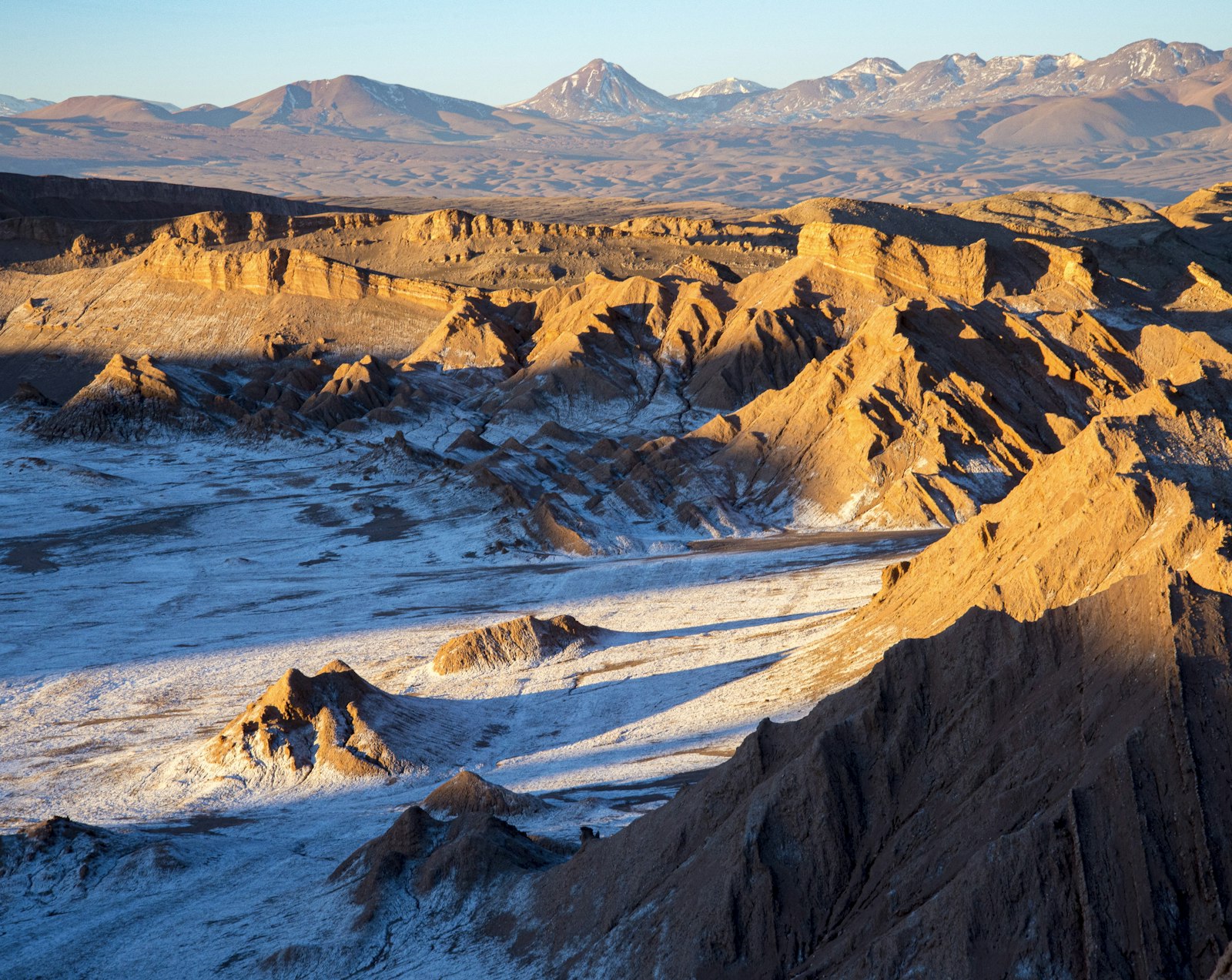
This section covers San Pedro de Atacama, the base for the high desert in northern Chile. September is one of the easiest months here: Weather2Travel gives an average high of 18 °C, a low of 4 °C, about 9 hours of sunshine a day and about 4 mm of rain, usually on a single day.
That makes it a good month for active days: cycling to the valleys near town, hikes among salt formations and early trips up to the high lagoons and geysers. Nights are cold, especially on the pre-dawn excursions that climb far above the town, and in July even San Pedro averages a low of about 0 °C. The UV index can reach 11, which is extreme, so sun protection matters at every hour of daylight.

The complete kit
Every country guide, every timing tool
All 24 When to Go country guides, the six Smart Timing tools and every 12-Month Map, with a Start Here that tells you what to open first.
See the kit · $127The five bundles cost $225 separately · Digital download · All sales final
The wetter season in the Atacama runs from about December to March, when January and February each average 11 days with some rain. September avoids that completely, and it pairs well with Uyuni: the two sit on either side of the same high plateau, so many travellers link them into one overland route.
Galápagos: Cool Seas and Busy Nesting Sites
This section covers the Galápagos Islands, where September brings a different kind of adventure. According to Andean Trails, the cooler, drier months run from about June to December, and September is the peak of the garúa season, named after the morning mist that usually burns off by midday.
August and September are the coolest months, and you may want a jacket in the evenings. The sea drops to about 15 to 22 °C and can be rough, which matters on boat-based trips. Snorkellers will want a wetsuit for longer swims; almost all boats and tours provide one or have them for rent.
| Wildlife in September | What is happening |
|---|---|
| Seabirds | Still active at their nesting sites |
| Galápagos penguins | Start courting around Bartolomé |
| Sea lions | Males fight for territory and females |
| Waved albatross | Present on Española until about mid-December |
Source: Andean Trails. The verdict is go with care: the wildlife is excellent and the islands stay warm because they sit on the equator, but anyone prone to seasickness should think hard about a long boat trip in September, and anyone who wants warm water should look at the first half of the year instead.
Torres del Paine: Patagonia’s Shoulder Season
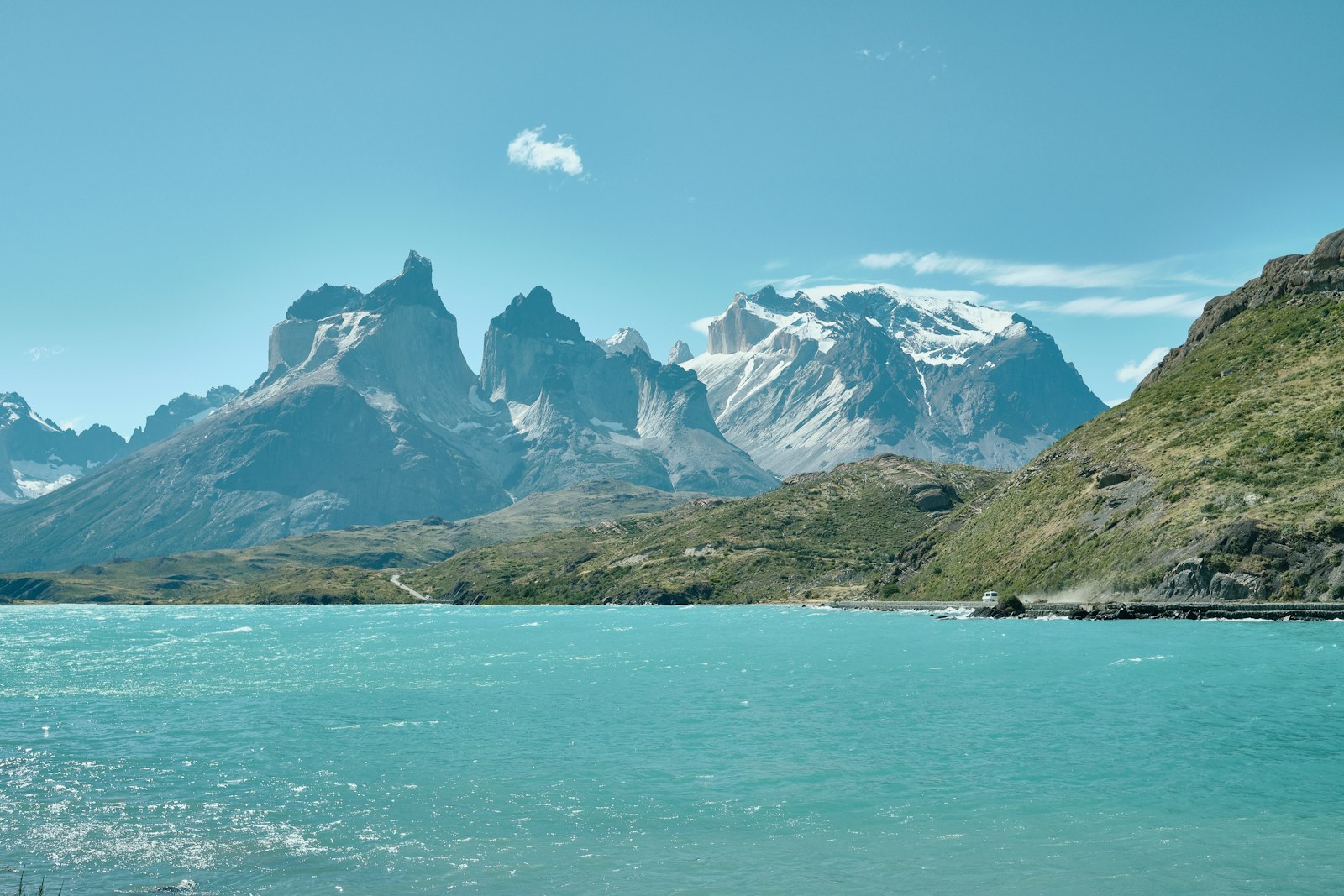
This section covers Torres del Paine in Chilean Patagonia, briefly, because September is the very start of its year. MountainIQ gives the trekking season as October to April, with September to November and March to May as the shoulder months and December to February as the busy peak.
In September, temperatures run from about 0 °C to 10 °C, and the days get longer week by week. The catch is access: refugios and campsites are closed to independent hikers from May to September, so the multi-day routes are only possible with a tour operator. Shoulder months bring fewer visitors and lower prices, with the risk of some wet days, and the views can be superb when the sky clears.
If you want to hike the W independently, wait until October or later. For the wider picture of the south in September, including the Argentine side, read our guide to Patagonia in September.
How to Plan an Adventure Trip to South America in September
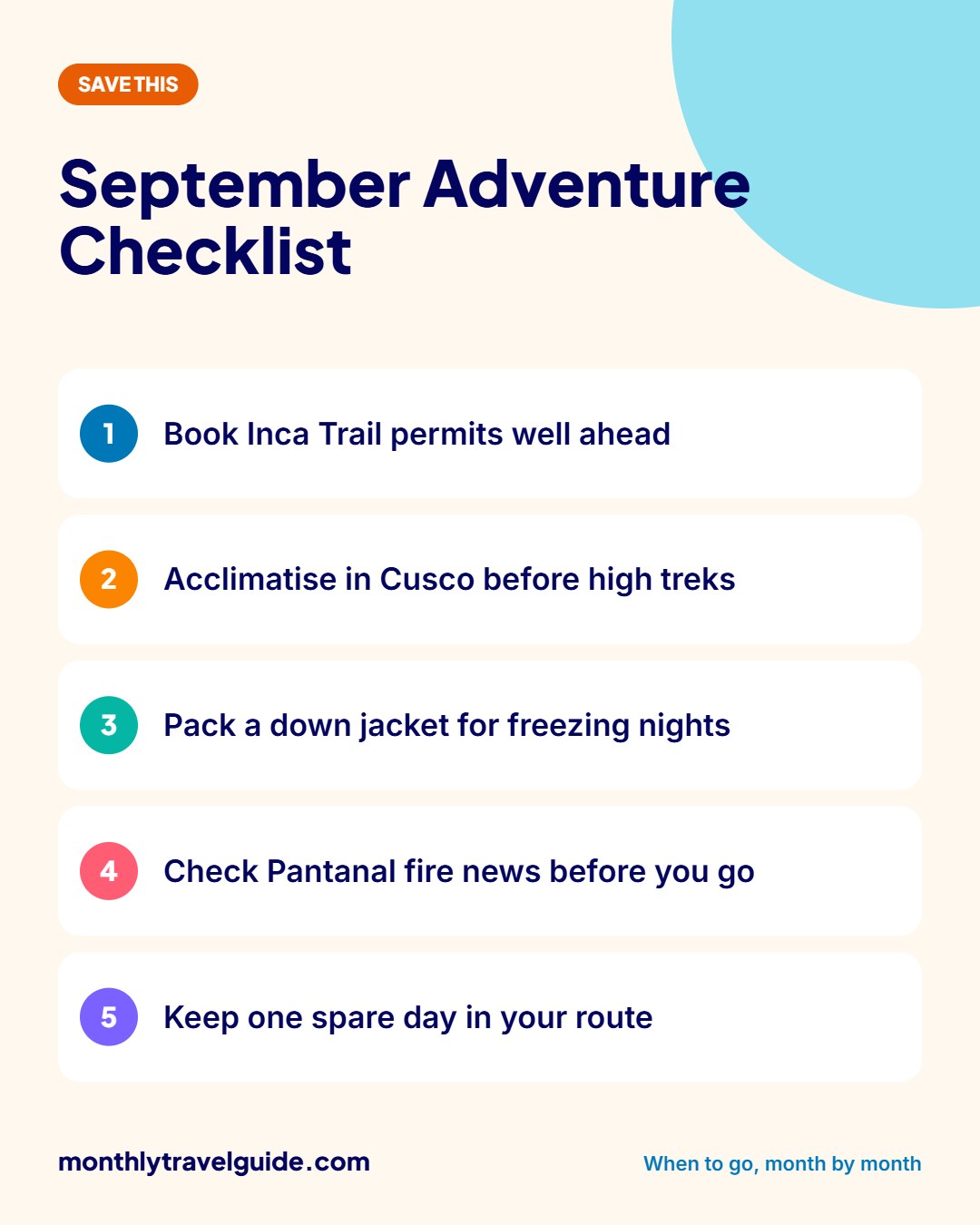
This section turns the six trips into a workable route. Distances are long, altitude changes fast and each place has its own season, so the order of your stops matters as much as the month.
Pick one region
Combine places that share a season: Cusco, Uyuni and the Atacama sit in the same dry Andean belt in September.
Climb slowly
Start lower and sleep a few nights at moderate altitude before high treks, salt flat tours or desert geyser trips.
Put wildlife first or last
The Pantanal and the Galápagos are low-altitude trips, a good way to start or to rest at the end of a high route.
Pack for two seasons
You will need sun protection and thin layers by day, plus a down jacket, hat and gloves for nights below freezing.
Keep a spare day
Smoke, wind, rough seas and road closures happen. One flexible day saves a tight route.
For gear, our guide to packing for adventure travel in September covers layers, footwear and the small things that make cold nights easier. To check your own dates against weather risk, try the free Best Month Finder and the When Not to Go checker.
When Not to Go: Where September Lets You Down
This section is the honest part. September works well across much of the continent, but some plans fail in September.
| Avoid in September | Why | Do this instead |
|---|---|---|
| Independent W Trek in Torres del Paine | Refugios and campsites closed to independent hikers until the end of September | Go guided, or wait for October to April |
| Uyuni for the mirror effect | The flats are dry; reflections need rain on the salt | Go from about December to March |
| Warm-water snorkelling in the Galápagos | Sea at about 15 to 22 °C, peak garúa season | Look at the warmer first half of the year |
| A rigid Pantanal plan | Fire season usually peaks in August and September | Build in flexibility and check conditions |
| Arriving in Cusco and trekking the next day | Nights near freezing and high altitude | Acclimatise for a few days first |
Not sure about your own dates? Run them through the free Storm Season Check, or use the Shoulder Season Detector to spot quieter weeks.
A Better Month If You Want Something Else
This section helps if September is not quite right for the trip you have in mind.
If you want
The Uyuni mirror
Go from about December to March, when rainwater covers the salt.
If you want
Independent W Trek
Go from October to April; December to February is the warmest and busiest.
If you want
Drier Pantanal weeks
Go in July or August, when rain averages about 33 to 34 mm.
If you want
Rainforest wildlife
Our guide to the Amazon in September covers the river trips in September.
And if you are still choosing between continents, our September travel guide compares the strongest trips around the world in September.
5 Common Mistakes on an Adventure Trip in September
1. Packing only for the daytime
Days in Cusco, Uyuni and the Atacama can feel warm in the sun, but nights drop to freezing or below. Bring a proper insulated jacket, a hat and gloves, not just a fleece.
2. Leaving Inca Trail permits too late
Permits are limited and needed in advance. The dry season is the busiest time on the trail, so book as soon as your dates are firm, and have an alternative route in mind.
3. Planning an independent W Trek
In September the refugios and campsites in Torres del Paine are still closed to independent hikers. If you want the full trek on your own, choose October or later.
4. Going to Uyuni for reflections
The mirror photos come from the rainy season. In September the salt is dry and white, which is perfect for driving but will not give you the reflections.
5. Ignoring the fire and smoke season
The Pantanal’s best wildlife months overlap with fire season. Ask about conditions shortly before you go, and keep a backup plan for a day or two.
South America in September FAQ
Is September a good time to visit South America?
Yes, especially for adventure. September is the end of the dry season in the Peruvian and Bolivian Andes and in the Pantanal, and the Atacama averages only about 4 mm of rain. The far south is cold and only just entering its shoulder season, and the Galápagos are in their cool, misty garúa season, so plans there need more care.
Is September a good month to hike the Inca Trail?
Yes. Peru’s dry season runs from about April or May to September or October, and late September brings slightly milder nights with a good chance of dry weather. Demand is highest from June to August. Nights at altitude can still drop to freezing, permits must be booked in advance, and the trail closes for maintenance only in February.
Is September a good time to see jaguars in the Pantanal?
Yes. The dry season, roughly July to October, is the best time, because animals gather around the remaining water. The northern Pantanal is known as the best place in the world to see jaguars, and around Porto Jofre daytime sightings on the riverbanks are likely. Fire season usually peaks in August and September, so keep your plans flexible.
What is the weather like in the Atacama Desert in September?
Dry, sunny and cool. San Pedro de Atacama averages a high of about 18 °C and a low of about 4 °C in September, with about 9 hours of sunshine a day and around 4 mm of rain. Pre-dawn trips to high geysers and lagoons are much colder, and the UV index can reach 11, so pack warm layers and strong sun protection.
Can you see the Uyuni mirror effect in September?
No. September is in the dry season, from May to October, when the salt flat is dry and you can drive across all of it. The mirror effect needs rainwater on the surface, which usually comes from about December to March. In September you get dry salt, clear skies, fewer visitors and very cold nights on the high plateau.
Is September a good time to visit the Galápagos?
It works, with trade-offs. September is the peak of the garúa season: misty mornings, cooler air and sea temperatures of about 15 to 22 °C, with rougher seas. In return, seabirds are active at their nests, penguins start courting and waved albatross are on Española. Bring or rent a wetsuit, and think about seasickness before a long boat trip.
The Bottom Line
For adventure, South America in September is at its best in the dry belt: the Pantanal for jaguars, Peru for treks, Uyuni and the Atacama for high-desert drives. Treat the Galápagos and Torres del Paine as trips with trade-offs, pack for freezing nights and keep a spare day. For more September ideas, browse our September travel guides.
Every trip, the right weeks
The Complete Travel Timing System
The country guides, timing tools and bundles in one kit: best and worst months, shoulder seasons, storm and wet seasons, holiday crowds and when to book, so your next adventure lands in the right weeks wherever you go.
Digital download · All sales final
Free download
See the whole year before you book
Our free 12-Month Map puts every month for one country on four pages: when the weather works, when the crowds and prices peak, and the weeks to skip.
- 24 countries to choose from
- Region-by-region verdicts
- Printable PDF
Your download page opens as soon as you sign up. 24 countries available.