Cultural festivals around the world in February have one thing in common that catches travellers out: most of them don’t have a fixed date. Some follow the moon, some follow Easter, and only a few land on the same day every year. Book a flight for “mid-February” and you can miss the parade by a week. This guide covers 15 festivals across Asia, the Americas and Europe, explains which calendar each one follows, and gives you a simple way to check the date before you book.

When to Go guides
Choose your country, then your month
24 country guides, each about 100 pages: every month rated for weather, crowds and prices, region by region, with a 7-day booking plan. Six guides per region bundle.
Browse the 24 guides · $19 eachRegion bundles: Europe, Asia & Pacific, Sun Souks & Safari, Americas · $47 each
Quick answer
What festivals happen in February around the world?
February brings Lunar New Year and Tết, the Lantern Festival, Chingay in Singapore, Losar, Thaipusam and Magha Puja in Asia; carnivals in Oruro, Barranquilla, New Orleans, Ivrea and Menton; and fixed-date festivals such as Candelaria in Puno, Iemanjá in Salvador on 2 February and Santa Eulàlia in Barcelona around 12 February.
Key facts
- Why do festival dates change every year? Most February festivals follow either a lunar calendar or the Easter cycle.
- Is Lunar New Year a good time to visit Asia? It’s a great time to see decorations, parades and lion dances, but transport is at its busiest and, in Vietnam especially, most businesses close for the main days of Tết.
- When is Carnival in February? Carnival always ends on Shrove Tuesday, the day before Ash Wednesday, so its date moves with Easter.
- Can tourists attend Thaipusam? Yes. Visitors are welcome at Batu Caves in Malaysia and along the Singapore procession route, but it’s a religious festival with body piercing and very large crowds.
February’s biggest cultural festivals fall into three groups. Lunar festivals such as Lunar New Year, Tết, Losar and the Lantern Festival move between late January and early March. Carnival celebrations (Oruro, Barranquilla, New Orleans Mardi Gras, Ivrea, Menton) end on Shrove Tuesday, usually in February, sometimes early March. Fixed-date festivals, such as Iemanjá in Salvador on 2 February and Santa Eulàlia in Barcelona around 12 February, are the easiest to plan.
✅ Key takeaways
- ✓Lunar New Year always falls between 21 January and 20 February, and Tết in Vietnam falls on the same new moon.
- ✓Carnival ends on Shrove Tuesday, the day before Ash Wednesday, so its dates move with Easter; New Orleans Mardi Gras can fall on any Tuesday from 3 February to 9 March.
- ✓Full-moon festivals such as Thaipusam and Magha Puja shift by a few weeks each year; always check the year’s date with the local tourism board.
- ✓Fixed-date festivals (Iemanjá on 2 February, Santa Eulàlia around 12 February) can be planned a year ahead.
- ✓Book the room nearest the action as soon as the date is confirmed: festival weeks fill up long before the rest of the month.
Why February Festival Dates Move (and How to Pin Them Down)
Every festival in this guide follows one of three calendars. Know which one, and you know how far its date can drift and when you can safely book.
| Calendar | How the date is set | Typical range | Festivals here |
|---|---|---|---|
| Lunisolar new year | The new moon between 21 January and 20 February | Late January to 20 February | Lunar New Year, Tết, Chingay |
| Lunar, a fortnight later | 15th day of the first lunar month | February or early March | Lantern Festival, Pingxi sky lanterns |
| Tibetan lunisolar | Tibetan calendar new year | February or March | Losar |
| Full moon | Full moon of a set lunar month | Late January to early March | Thaipusam, Magha Puja |
| Easter cycle | Ends on Shrove Tuesday, the day before Ash Wednesday | Early February to early March | Oruro, Barranquilla, Mardi Gras, Ivrea, Menton |
| Fixed date | Same day every year | Same date | Iemanjá (2 February), Santa Eulàlia (around 12 February), Candelaria (first fortnight) |
🗓️ Free: a 12-Month Map for your country
Every month on one page: best weeks, shoulder weeks and the ones to skip. Print it or keep it on your phone.
Check the calendar the festival follows before you check flights. It’s the difference between the parade and the clean-up.
🧰 Try it while you read: a free tool for this trip
Free trip timing tool
Festival Month Matcher
Choose a month and see the festivals and events our guides list for it.
Loading the tool…
Lunar New Year Festivals: Asia’s Biggest Weeks of the Year
The lunar new year is the single largest festival period in East and Southeast Asia, and it shapes travel far beyond the celebrations themselves: trains, flights and hotels fill as millions of people go home to their families.
1. Lunar New Year (China, Chinatowns and much of East Asia)
Lunar New Year falls on the new moon between 21 January and 20 February. Expect lion and dragon dances, red decorations and fireworks where they’re permitted, plus some of the busiest travel days of the year in the region. Confirm what’s open for your dates before you go.
2. Tết (Vietnam)
Tết, Vietnam’s lunar new year, shares the same new moon, so it usually falls between late January and 20 February. It’s a family festival first: people travel home, homes fill with yellow apricot blossoms (hoa mai) in the centre and south and peach blossoms (hoa đào) in the north, and celebrations last from a day to a whole week. For visitors, that means flower markets and decorations before the holiday, then very quiet streets during it: most businesses close for the main days, street-food stalls and small restaurants can shut for a week, and museums often close for a few days. Hotels stay open, many hotel restaurants keep running and temples are at their busiest.
When to Go: Vietnam
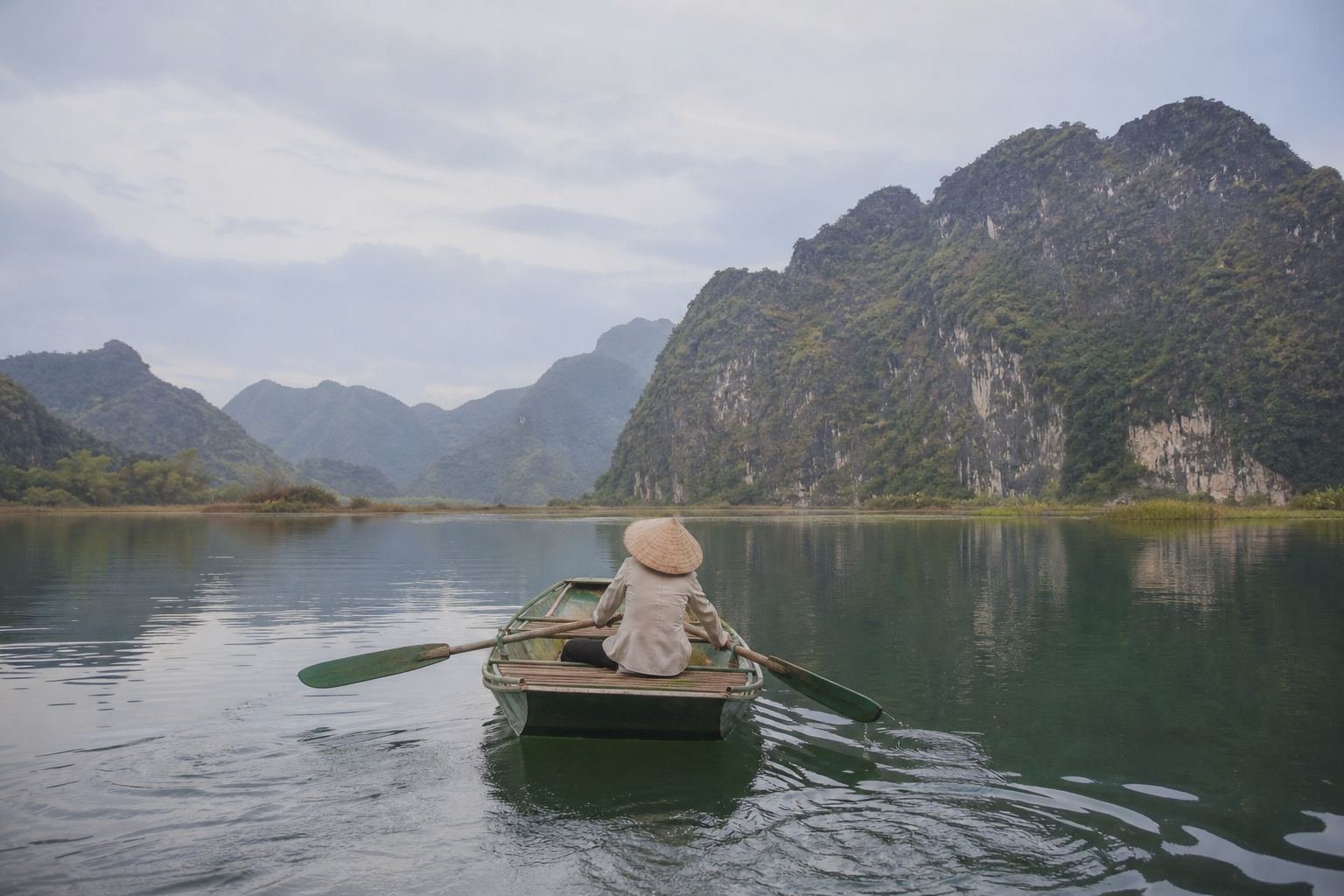
Wondering whether to plan around Tết or avoid it? This guide walks you through Vietnam month by month: weather in the north, centre and south, crowds, holidays and what each region is best for, so you choose dates that fit your trip.
See When to Go: Vietnam · $19 →Digital download · All sales final
3. The Lantern Festival and Pingxi’s sky lanterns (Taiwan)
The Lantern Festival closes the new year season on the 15th day of the first lunar month, usually in February or early March. In Pingxi District, New Taipei City, it’s marked by releasing large numbers of sky lanterns after dark, often with wishes written on them, in coordinated waves at designated open areas. Expect big crowds and arrive in the afternoon to find a spot.

The Smart Timing Bundle
Pick the month, book in the right order, pack once
Six printable timing tools for any trip: the Trip Timing Planner, When to Book, When NOT to Go, the Shoulder Season Playbook, the family timing guide and the Packing by Season System.
See the bundle · $37Six products, $100 separately · Digital download · All sales final
4. Chingay Parade (Singapore)
Singapore’s Chingay Parade is held as part of the Chinese New Year festivities: a street parade of floats, acrobatic acts, lion and dragon dances and stilt walkers. It has been multicultural for decades, with Malay, Indian and other community groups taking part. Venues have changed over the years, so check the route and viewing arrangements for your year.
5. Losar (Tibet, Bhutan, Ladakh)
Losar, the Tibetan New Year, follows the Tibetan lunisolar calendar and usually falls in February or March. It’s celebrated for 15 days, with the main celebrations on the first three, in Tibetan communities and in Bhutan, where the first day is called Dawa Dangpa Losar, and Ladakh. It’s a family and monastery festival rather than a show, so travel with a local guide who can explain what you’re seeing.
Full-Moon Festivals: Thaipusam and Magha Puja
These two are religious observances first and foremost. Visitors are welcome at many sites, but they’re not performances, so dress modestly and follow the lead of the people around you.
6. Thaipusam (Malaysia and Singapore)
Thaipusam falls on the full moon of the Tamil month of Thai, which corresponds to January–February, so it usually lands in late January or early February. Devotees of the Hindu deity Murugan carry kavadi, offerings that range from pots of milk to elaborate frames attached to the body with skewers and hooks, after weeks of prayer, fasting and a vegetarian diet. The best-known site is Batu Caves near Kuala Lumpur; in Singapore, the procession runs from Sri Srinivasa Perumal Temple to Sri Thendayuthapani Temple.
7. Magha Puja (Thailand, Laos, Cambodia, Sri Lanka, Myanmar)
Magha Puja (Makha Bucha in Thailand) falls on the full moon of the third lunar month, usually in February and sometimes in March. In the evening, Thai temples hold a candlelit procession, the wian thian, in which people walk three times around the main ordination hall holding candles, incense and flowers. You can join quietly at most temples. Note that the sale of alcohol is prohibited in Thailand on the day.
If you’re planning Asia in February more broadly, see our guide to top February travel spots in Asia.
Carnival Season Beyond Rio and Venice
Carnival ends on Shrove Tuesday, the day before Lent begins, so every carnival here moves with Easter: usually February, sometimes early March. Rio and Venice get the headlines (our Valentine’s guide to European cities explains how Venice’s Carnival can overlap the 14th), but these five are just as memorable and, in several cases, more traditional.
8. Carnival of Oruro (Bolivia)
Oruro’s carnival, proclaimed a UNESCO Masterpiece of the Oral and Intangible Heritage of Humanity, is a religious pilgrimage as much as a party. Its highlight is a Saturday procession in which dozens of folk-dance groups travel about four kilometres to the Shrine of the Virgen del Socavón, led by the Diablada, the devil dance with its huge horned masks. It ends with mystery plays in which the Archangel Michael defeats the Devil.
9. Barranquilla’s Carnival (Colombia)
Barranquilla’s Carnival runs for the four days before Ash Wednesday and is also on UNESCO’s list of Masterpieces of the Oral and Intangible Heritage of Humanity. It opens on the Saturday with the Battle of Flowers (Batalla de Flores), its most anticipated parade, followed by the Great Parade on Sunday, the Great Fantasy Parade on Monday and the symbolic Burial of Joselito Carnaval on Tuesday.

The complete kit
Every country guide, every timing tool
All 24 When to Go country guides, the six Smart Timing tools and every 12-Month Map, with a Start Here that tells you what to open first.
See the kit · $127The five bundles cost $225 separately · Digital download · All sales final
10. Mardi Gras (New Orleans, USA)
In New Orleans, Carnival season starts on 6 January (Twelfth Night) and builds to Mardi Gras itself, Fat Tuesday, which can fall on any Tuesday between 3 February and 9 March. The biggest parades come in the last five days. They’re organised by krewes, social clubs that roll the same routes each year and toss “throws” (beads, doubloons, cups and small toys) to the crowd. Book a hotel on or near the parade routes as early as you can.
11. Battle of the Oranges (Ivrea, Italy)
Ivrea’s carnival, near Turin, is famous for one thing: on the carnival Sunday, Monday and Tuesday, nine teams on foot hurl oranges at teams riding in carts, re-enacting a historic revolt against a tyrant, the oranges standing in for stones and old weapons. It’s exhilarating and genuinely messy. Wear old clothes, keep well back from the throwing areas, and treat any fruit that flies your way as part of the experience.
12. Fête du Citron (Menton, France)
Menton’s Lemon Festival runs for about two weeks from mid-February, sometimes into early March, at the end of winter on the French Riviera. Every float and sculpture is built from lemons and oranges, a new theme is chosen each year, and the programme includes parades, confetti and flower battles. Afterwards, the fruit is sold off cheaply.
Fixed-Date Festivals You Can Plan a Year Ahead
These three always fall at the same time of year, which makes them the easiest to build a trip around.
13. Fiesta de la Virgen de la Candelaria (Puno, Peru)
Held in the first fortnight of February, Puno’s Candelaria festival is one of the largest celebrations of music and dance in Peru: more than 200 dances, around 40,000 dancers and some 5,000 musicians, with native dances and costume dances that fill the streets of the city on Lake Titicaca. Puno is a high-altitude city, so build in rest days before the busiest events.
14. Festival of Iemanjá (Salvador, Brazil)
On 2 February, Salvador da Bahia honours Iemanjá, the Candomblé goddess of the sea. Thousands of people queue at dawn at her shrine in Rio Vermelho to leave offerings of flowers, perfume, combs and mirrors; local fishermen carry the gifts out to sea in large baskets, and a huge street party follows. Bring flowers if you’d like to take part, and arrive early.
15. Festes de Santa Eulàlia (Barcelona, Spain)
Barcelona’s winter festival is held around 12 February, Santa Eulàlia’s feast day. Barcelona City Council describes it as a small, intimate festival of popular culture for all ages: human towers (castells) built in Plaça de Sant Jaume on the Sunday, a parade of giants and big-heads, sardana dancing and a correfoc, the fire run with devils and fire beasts, including a version for children. Our guide to Europe in February has more ideas for the same trip.
How to Plan a Trip Around a February Festival
A festival trip has one fixed point, the main day, and everything else should flex around it.
Confirm the date for your year
For lunar, full-moon and carnival festivals, look up the exact date on the official tourism, city or festival site before you book. Never assume it matches last year.
Book the bed first
Rooms near the parade route, shrine or main square go first. Book as soon as the date is confirmed, on a flexible rate if you can.
Arrive a day early
Give yourself a buffer before the main event, especially at altitude (Puno, Oruro) or around lunar new year, when transport is stretched.
Plan the quiet days too
During Tết most businesses close for the main days and many restaurants shut for longer. Know where you’ll eat (hotel restaurants usually stay open) and what’s open.
Respect the religious events
Thaipusam, Magha Puja, Losar and Iemanjá are acts of faith. Dress modestly, keep a respectful distance and ask before taking close-up photos.
Check the season as well as the festival
Several festivals fall in a wet or cold season. The free Best Month Finder and Packing by Season Generator help you prepare.
🧧 Want the January ones too?
Lunar New Year sometimes falls in late January. Our guide to festivals in January covers that month.
🌎 Heading to South America?
See where to travel in South America in February for weather by country.
🍜 Travelling for food?
Festival food is half the fun. Our February guide for food lovers picks the best eating trips.
5 Festival-Trip Mistakes That Cost People the Main Day
1. Using last year’s date
Lunar and carnival dates move by weeks from one year to the next. Always check the date for the year you’re travelling.
2. Booking the room last
Flights can usually be found; a bed within walking distance of the parade often can’t. Book accommodation first.
3. Travelling on the busiest days
Around Lunar New Year and Tết, transport fills with people going home. Arrive before the rush and stay put through the holiday.
4. Treating a ceremony like a show
At Thaipusam, Losar, Magha Puja or Iemanjá, you’re a guest at a religious event. Modest clothing and a respectful distance matter more than the perfect photo.
5. Forgetting the weather
February festivals happen in very different seasons, from high-altitude Puno to winter in Ivrea. Pack for the place, not for the party.
Cultural Festivals Around the World in February: Your Questions
The secret to cultural festivals around the world in February is knowing which calendar each one follows: the moon, Easter or a fixed feast day. Check the date for your year, book the bed first and arrive early, and the festival will meet you halfway. For more ideas, browse the best travel destinations in February and our festival travel guides, see the full best places to travel in February, or plan any month from the month-by-month travel planner.
Still choosing? Compare all the options in where to go in February, rated by real weather and crowds.
Free download
See the whole year before you book
Our free 12-Month Map puts every month for one country on four pages: when the weather works, when the crowds and prices peak, and the weeks to skip.
- 24 countries to choose from
- Region-by-region verdicts
- Printable PDF
Your download page opens as soon as you sign up. 24 countries available.