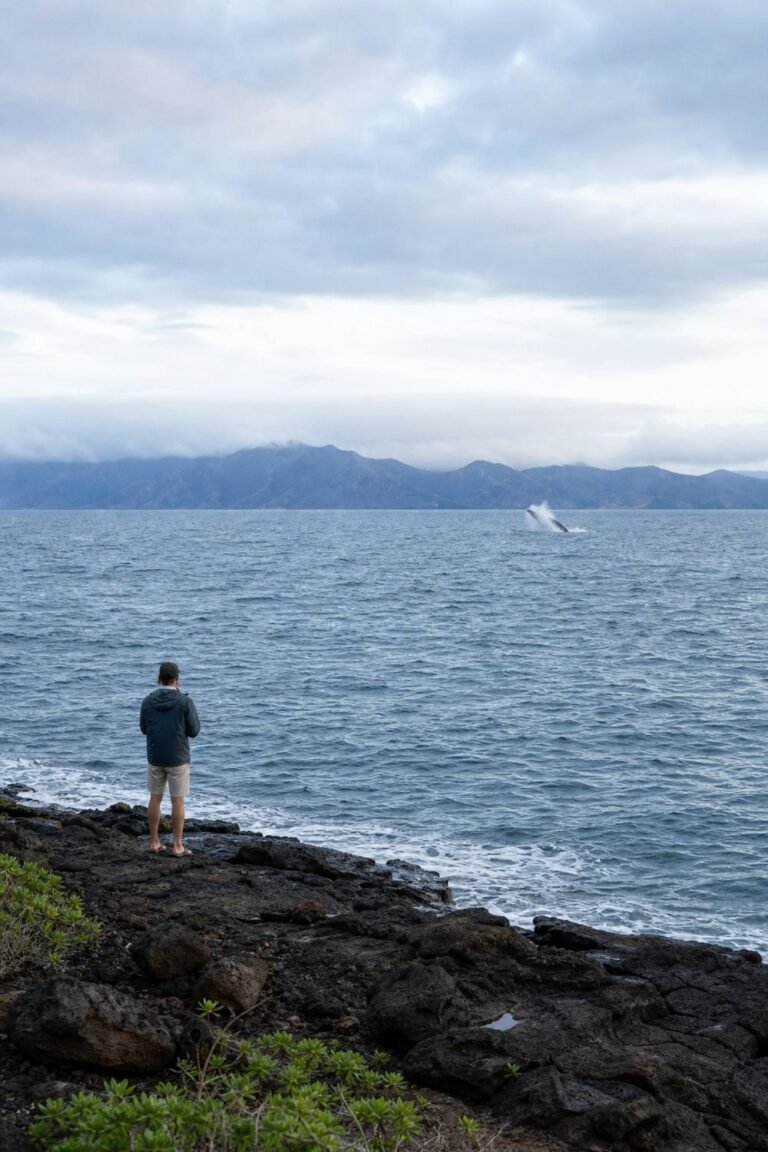
October is the month Hawaii changes direction. The summer south swells are winding down, the first north swells of the season start to show, and the famous breaks fill up the moment either one arrives. If you want waves without a pack of forty surfers on one peak, you need two things: a short list of less crowded surf spots in Hawaii that match your level, and the habit of checking which shore the swell is hitting before you choose. This guide gives you both, island by island.

The less crowded surf spots in Hawaii in October are usually the second-tier breaks near the famous ones: White Plains and Diamond Head Cliffs on Oahu, Ukumehame and Kihei Cove on Maui, Kahaluʻu and Pine Trees on the Big Island, and Kiahuna, Kalapaki and Shipwreck on Kauai. Pick by swell: south-facing breaks while summer swells last, sheltered north-shore spots such as Puaʻena Point when an early north swell arrives.
✅ Key takeaways
- ✓Hawaii Ocean Safety counts May to October as the calmer summer season and November to April as winter, when north and west shores often get very high surf, so October sits right on the hinge.
- ✓Check the National Weather Service Honolulu surf forecast every morning: it gives separate heights for north, west, south and east facing shores on each island.
- ✓A quieter break is not an easier break: several of the spots in this guide have shallow reef at low tide, so time beginner sessions for mid to high tide where the sources flag it.
- ✓Surf early. On Maui in particular the wind often picks up by 9 a.m., and on Oahu Diamond Head Cliffs tends to be calmer early and after about 4 p.m.
- ✓At small local breaks the unwritten rule is simple: locals go first, you wait your turn, and you never drop in on someone already riding.
Why October Changes Which Hawaiian Shore Works
October is a transition month, and that is the single most useful thing to know before you pick a break. The state’s lifeguard service, Hawaii Ocean Safety, splits the year into summer (May to October), when waters are generally calmer on most beaches and south shores catch swells from Southern Hemisphere winter storms, and winter (November to April), when north and west shores often get very high surf. October is the last summer month on that calendar, but the ocean doesn’t read calendars.
26.5°C
average Honolulu sea temperature in October (80°F)
31° / 23°C
Honolulu average high / low in October (87° / 74°F)
4 shores
north, west, south and east, forecast separately by the NWS
30 Nov
official end of the Central Pacific hurricane season
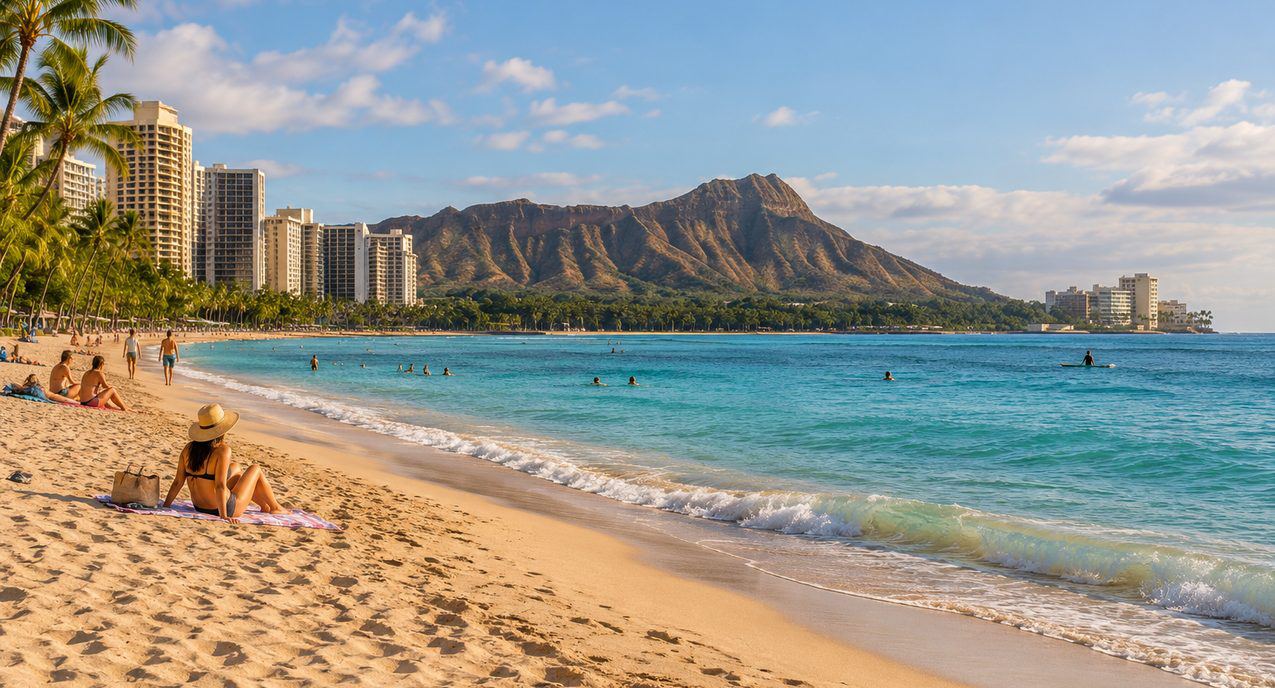
In practice that means two kinds of October day. On some, a late south swell is still running and south-facing breaks such as the ones off Waikīkī, Diamond Head and Ewa have the waves. On others, an early north or northwest swell arrives, the North Shore wakes up, and the south side goes small. Some weeks you get both at once. The famous names (Pipeline, Sunset, Waimea Bay, Honolua Bay, Hoʻokipa) are advanced breaks, and they draw a crowd of experts the moment they work. The quieter options sit next door.
The water is warm either way. Honolulu’s average sea temperature in October is about 26.5°C, so most people surf in boardshorts or a swimsuit, with a rash vest for sun and reef. Air temperatures average about 31°C by day and 23°C at night at Honolulu airport. October is also inside the Central Pacific hurricane season, which runs from 1 June to 30 November, so keep an eye on forecasts and use the Storm Season Check tool when you are choosing dates.
🧰 Try it while you read: a free tool for this trip
Free trip timing tool
Family Trip Timing Score
Score any country and month out of 10 for a family trip.
Loading the tool…
Read the Swell First, Then Pick the Break
The fastest way to find empty waves is to stop choosing a beach the night before and start choosing it after breakfast, once you know which shore has swell. The National Weather Service Honolulu surf forecast lists expected surf for north, west, south and east facing shores on Kauai, Oahu, Maui and the Big Island, morning and afternoon, with any high surf advisory at the top. Heights are given as face value, trough to crest, in feet.
| What the forecast shows | Shores with the waves | Where to look for quieter surf |
|---|---|---|
| South swell, small north | South-facing shores | Oahu: White Plains, Diamond Head Cliffs · Maui: Ukumehame, Kihei Cove · Kauai: Kiahuna (Poʻipū), Shipwreck |
| Early north or northwest swell | North and west-facing shores | Oahu: Puaʻena Point, Chun’s Reef on smaller days · Big Island: Pine Trees (Kona) · Kauai: Hanalei Bay inside areas (only if small) |
| Both swells running | South and north | Stay on the south side if you are a beginner; intermediate surfers can pick the side with fewer cars |
| Trade-wind swell only | East-facing shores | Kauai: Kalapaki (sheltered by its breakwall) · Oahu: Flat Island off Kailua for longboarders |
| High surf advisory anywhere | The advisory shore | Do not paddle out there; Ocean Safety says inexperienced surfers should stay out of the water during high surf |
🗓️ Free: the 12-Month Map for Hawaii
Every month on one page: best weeks, shoulder weeks and the ones to skip. Print it or keep it on your phone.
Before 7 a.m. · Open the NWS surf forecast
Note the height range for each shore on your island and whether there is a high surf advisory or warning in the headline.
Pick the shore, not the beach
Choose the side of the island where the waves suit your level today. Small and clean beats big and crowded.
Choose a quieter break on that shore
Use the island sections below. Have a second option on the same coast in case the car park is full.
Watch for ten minutes before you paddle out
Count the sets, find the channel, see where people are sitting and how the tide is treating the reef.
Be back on the sand before the wind
Morning glass usually beats the afternoon. Plan the beach, lunch or a drive for the windy hours.
Less Crowded Surf Spots in Hawaii: Oahu Beyond Waikīkī
Oahu has the most surfers and also the most options, so it rewards anyone willing to drive twenty minutes. Canoes at Waikīkī is the classic first wave, slow and forgiving, and it is busy for exactly that reason. These are the alternatives worth knowing.

The Smart Timing Bundle
Pick the month, book in the right order, pack once
Six printable timing tools for any trip: the Trip Timing Planner, When to Book, When NOT to Go, the Shoulder Season Playbook, the family timing guide and the Packing by Season System.
See the bundle · $37Six products, $100 separately · Digital download · All sales final
White Plains, Ewa Beach (south-west, beginner friendly)
White Plains sits inside the former Barbers Point Naval Air Station and works best on summer south swells, though it can be surfed year-round. Its big advantage is several peaks, so surfers spread out instead of stacking on one take-off spot. There is parking and board rental on site, but no lessons, so it suits someone who has already had a lesson or two and wants space to practise.
Diamond Head Cliffs, Honolulu (south, beginner to advanced)
Diamond Head has several breaks. Lighthouse is steeper and better left to shortboarders; Cliffs is the friendlier one, with inside peaks that suit improving beginners. It tends to be calmer early in the morning and after about 4 p.m. On a solid south swell, Cliffs gets sizeable, so check the forecast before you take a novice there.
Puaʻena Point, Haleʻiwa (North Shore, beginner to intermediate)
This is the spot to know when October brings an early north swell. Puaʻena Point sits next to Haleʻiwa Beach Park in a protected bay, and winter north swells arrive there at roughly half their size, with long rights and lefts. There are rentals and lessons nearby. Chun’s Reef, just outside Haleʻiwa, is another learning wave when it is calm, with waves breaking well out and long rides, which is why surf schools use it.
Mākaha and Flat Island (for intermediate surfers)
Mākaha Beach Park on the Waiʻanae coast is a reef break with four sections and surf through much of the year. Beginners can stay on the inside reef while experienced surfers take the outside peaks, and the etiquette there is strict: locals go first. On the windward side, Flat Island (Popoia), about a quarter of a mile off Kailua, is a favourite with longboarders and beginners; watch the reef at low tide.
Maui: Quieter Breaks Between the Famous Ones
Maui’s headline waves, Peʻahi (Jaws), Honolua Bay and Hoʻokipa, are advanced breaks; Hoʻokipa also brings wind and rip currents, and beginners are advised to watch from the sand. The good news for everyone else is that Maui’s south and south-west coasts have gentler, spread-out waves that suit October’s lingering south swells.
| Break | Where | Level | Best swell | Watch out for |
|---|---|---|---|---|
| Ukumehame Beach Park (“Thousand Peaks”) | Honoapiʻilani Hwy, near mile marker 12 | Beginner | South (summer) | Shallow reef on the inside at low tide |
| Launiupoko Beach Park | Honoapiʻilani Hwy, near mile marker 18 | Beginner, families | South (summer) | Check county park access before you drive to West Maui |
| Kihei Cove | South Maui, Kīhei | Beginner to intermediate | South | Wind often picks up by 9 a.m. |
| Guardrails | Roadside, named for the highway guardrails | Upper beginner to intermediate | South | Sharp coral and rocks on entry; go with a guide the first time |
| Kahului Harbor | Near Kahului Airport | Intermediate (small days) | North (winter) | Murky water from boat traffic |
Ukumehame earns its nickname from the number of take-off spots along the reef, which is exactly what you want when the car park looks full. Kihei Cove’s sloping waves can roll in for more than 100 yards, a great length for practising pop-ups. Kahului Harbor is the North Shore option for an early north swell: it produces a heavy wedge on big days, but smaller days suit intermediate surfers.
When to Go: Hawaii
Not sure October is your month? This guide walks through Hawaii month by month: weather, sea conditions, crowds and what each season suits, so you can match your dates to the trip you want, whether that’s surf, snorkelling or a quiet beach week.
See When to Go: Hawaii · $19 →Digital download · All sales final
The Big Island: Kona-Side Breaks With Room to Learn
The Big Island has fewer surfers than Oahu and Maui, and its west (Kona) side is where visitors usually start. Lava rock and reef shape most breaks here, so pick carefully and respect the experienced-only spots.
Kahaluʻu Beach Park (beginner, lifeguarded)
Kahaluʻu sits beside the lava-rock walls of an old surfing shrine south of Kailua-Kona. Its waves are described as manageable most of the year, there is a lifeguard on duty, and many of the people in the water are still learning, which makes the atmosphere friendly. It’s also popular for snorkelling, so expect swimmers.
Pine Trees at Kohanaiki (beginner bay, experienced outside)
Pine Trees, north of Kona airport, is a classic for experienced surfers, with a bay area where beginners can practise. It is busy at weekends, so go on a weekday morning. Access has historically needed a four-wheel-drive vehicle, so check the current road and parking situation before you rent a car for it.

The complete kit
Every country guide, every timing tool
All 24 When to Go country guides, the six Smart Timing tools and every 12-Month Map, with a Start Here that tells you what to open first.
See the kit · $127The five bundles cost $225 separately · Digital download · All sales final
Banyans, Lyman’s and the east side (watch, don’t paddle)
Banyans and Lyman’s, at either end of Holualoa Bay off Aliʻi Drive, are experienced-only breaks; if you are not sure, watch from the shore. On the east side near Hilo, Honoliʻi, Richardson’s Point, Hilo Bay Front Park and Pohoiki are generally best left to skilled or local surfers. Honoliʻi in particular is a locals’ wave with consistent surf.
The quietest lineup on the island is useless if the reef is two feet under you. Choose the break for your level first, the crowd second.
Kauai: Sheltered Bays and the October Hanalei Question
Kauai is the island where October timing matters most, because its most beautiful bay, Hanalei, faces north. In summer Hanalei Bay is calm enough for swimming and paddleboarding; in winter it is a big-wave surf spot. In October you can see either.
| Break | Shore | Level | October note |
|---|---|---|---|
| Kiahuna Beach (Poʻipū) | South-east | Novices and returning surfers | Beginners stay near shore; experienced surfers ride past the reef |
| Kalapaki Beach (Līhuʻe) | East, behind a breakwall | Families and beginners | Long, gentle waves; partly protected by the breakwall |
| Shipwreck Beach (Poʻipū) | South | Advanced beginners and intermediates in calm conditions | Fewer surfers because of sharp coral and rocks |
| Hanalei Bay | North | Range of levels, three distinct areas | Only for learners on small days; early north swells can make it big |
| Kealia (near Kapaʻa) | East | Intermediate and advanced | A local favourite: beginners should leave it |
For most visitors, the October plan on Kauai is simple: base your learning sessions on the south and east shores (Kiahuna, Kalapaki), and treat Hanalei as a bonus if the forecast shows small north-facing surf. Kauai’s trade winds blow much of the year and waves arrive in sets, so a calm spell can end with a bigger wave. Stand and watch long enough to see one.
Etiquette at Quiet Breaks: How to Be Welcome
Small breaks stay pleasant because the people who surf them follow the rules, and visitors who don’t are noticed quickly. You don’t need to be a great surfer to be a welcome one.
Wait your turn
The surfer closest to the peak has priority. Never drop in on someone already riding the wave.
Let locals go first
At breaks like Mākaha the sources say it plainly: locals always go first. Sit wide, take the leftovers, smile.
Paddle out through the channel
Don’t paddle straight through the line-up where people are riding. Find the deep-water channel first.
Hold your board
Never let go of your board in a crowd. A loose longboard can hurt someone behind you.
Go small, go early
Bring one or two friends, not a group of eight, and leave before the morning crowd fills the car park.
One more courtesy matters at quiet spots: keep them quiet. Share the island, not the exact pin. Respect turtles, monk seals and the reef too: stay well away from resting wildlife on the sand and don’t stand on coral.
A 7-Day October Surf Plan That Follows the Swell
This plan uses Oahu as the base because it has the widest spread of quieter breaks within driving distance, but the logic works on any island: decide each morning, keep a backup on the same coast and rest on the windy or big days.
| Day | If the south swell is running | If a north swell arrives |
|---|---|---|
| 1 | Lesson at Canoes to get your bearings, early | Same: Waikīkī stays the safest first session |
| 2 | White Plains, mid-morning, several peaks | Puaʻena Point, protected bay |
| 3 | Diamond Head Cliffs after 4 p.m. (if small) | Chun’s Reef on a small, clean day |
| 4 | Rest day: snorkel, hike, sleep in | Rest day: watch the big breaks from the beach |
| 5 | White Plains again or Flat Island (longboard) | Puaʻena Point again |
| 6 | Your favourite from the week, at dawn | Your favourite, at dawn |
| 7 | Short session, then pack | Short session, then pack |
If you are travelling as a family and want gentle beaches more than surf, read our guide to Hawaii in October for families. For the better-known breaks, see the best October surf spots in Hawaii and October in Hawaii as a surfing and beach break.
Common Mistakes When Hunting Less Crowded Surf Spots in Hawaii
1. Choosing the beach the night before
In October the shore that works can flip overnight. Pick the shore after you read the morning forecast, then pick the break.
2. Assuming empty means easy
Some breaks are quiet because they are shallow, rocky or powerful. Shipwreck, Banyans and Kahului Harbor all have reasons for their small crowds. Match the break to your level before you match it to the crowd.
3. Ignoring the tide
Ukumehame, Flat Island and Ala Moana Bowls all get shallow over reef at low tide. Check the tide times (the NWS forecast lists them by station) and plan learner sessions for higher water.
4. Surfing through the afternoon wind
Onshore wind turns clean waves into chop and makes it harder to paddle back. Surf early, then do something else.
5. Paddling out on a high surf day “just to look”
If there is a high surf advisory on your shore, watch from the sand. Ocean Safety advises inexperienced surfers to stay out of the water during high surf, and the strongest currents are not visible from the beach.
Less Crowded Surf Spots in Hawaii: Your Questions
The less crowded surf spots in Hawaii are rarely secret. They are simply the breaks that suit the swell on the day, a short drive from the famous names. Read the forecast, choose the shore, surf early and wait your turn, and October gives you warm water and room to ride. For more trip ideas, browse our best travel destinations in October, check the Hawaii in October trip tips, see the September surf spots in Hawaii if your dates are earlier, or plan any month from the month-by-month travel planner.
Free download
Which month for your country?
Get the free 12-Month Map: every month marked good, shoulder or avoid, region by region, on four printable pages.
- Greece to Japan, Morocco to Peru: 24 countries
- See the crowd and price peaks before you book
- Free, no purchase needed
Your download page opens as soon as you sign up. 24 countries available.