
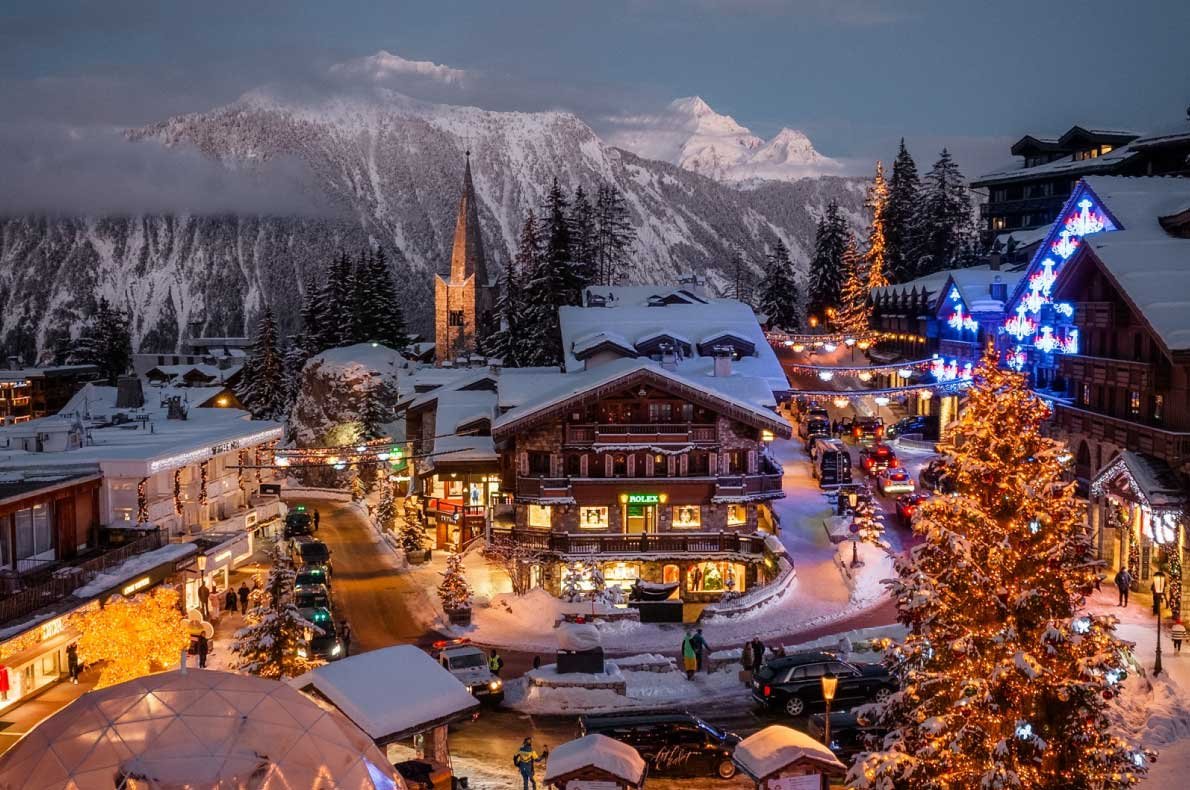
Most New Year’s Eve trips are planned around a city. This one is planned around the clock. If you’ve ever wanted to be among the first people on Earth to see the new year, to catch the very last midnight, or to celebrate New Year twice in one trip, the time zones decide whether it works, not the brochures. This guide gives you the full midnight order, the places at each end of it, the double-countdown routes that hold up against a real timetable, and the date-line traps that catch people out.

To celebrate New Year twice, you need two places on opposite sides of a time-zone line and a way to cross between them after the first midnight. The easiest options are border towns an hour apart, such as Tornio in Finland and Haparanda in Sweden, which run two fireworks shows an hour apart, or Tui in Spain and Valença in Portugal. The most dramatic is Samoa to American Samoa: a 35-minute flight across the date line and 24 hours apart.
✅ Key takeaways
- ✓Kiritimati in Kiribati (UTC+14) is the first inhabited place to reach the new year; American Samoa and Niue (UTC−11) are among the last, about 25 hours later.
- ✓Auckland is the first big city with a major fireworks show, two hours before Sydney; Sydney’s midnight lands at 1 p.m. in London and 8 a.m. in New York.
- ✓The simplest double countdown is a land border one hour apart: Tornio and Haparanda stage two fireworks shows, at midnight Finnish time and midnight Swedish time.
- ✓Most “fly across the Pacific and celebrate again” plans fail on the timetable, so check the actual 1 January departure before you book anything else.
- ✓Crossing the date line eastward gives you a calendar day back, so double-check hotel check-in dates; booking the wrong night is the classic mistake.
Who Reaches Midnight First? The New Year Order in One Table
New Year starts in the central Pacific and rolls west, one time zone at a time, until it finishes back in the Pacific a little over a day later. That’s because the International Date Line zigzags through the ocean: places just west of it are the furthest ahead on the calendar, places just east of it are the furthest behind. Kiribati and Samoa both moved the line in their favour, which is why the order isn’t as tidy as a map suggests.
Here’s the order for the late-December clocks, with what time it is in London and New York when each place hits midnight. Southern-hemisphere places are on summer time in December, which is why Sydney sits at UTC+11 rather than +10.
| Midnight in… | UTC offset (December) | London time | New York time |
|---|---|---|---|
| Kiritimati (Kiribati) | +14 | 10:00, 31 Dec | 05:00, 31 Dec |
| Chatham Islands (New Zealand) | +13:45 | 10:15, 31 Dec | 05:15, 31 Dec |
| Auckland, Apia (Samoa), Nukuʻalofa (Tonga) | +13 | 11:00, 31 Dec | 06:00, 31 Dec |
| Sydney, Melbourne | +11 | 13:00, 31 Dec | 08:00, 31 Dec |
| Brisbane | +10 | 14:00, 31 Dec | 09:00, 31 Dec |
| Tokyo, Seoul | +9 | 15:00, 31 Dec | 10:00, 31 Dec |
| Hong Kong, Singapore | +8 | 16:00, 31 Dec | 11:00, 31 Dec |
| Bangkok, Hanoi | +7 | 17:00, 31 Dec | 12:00, 31 Dec |
| Dubai | +4 | 20:00, 31 Dec | 15:00, 31 Dec |
| Paris, Madrid, Rome | +1 | 23:00, 31 Dec | 18:00, 31 Dec |
| London, Lisbon, Reykjavik, Canary Islands | 0 | 00:00, 1 Jan | 19:00, 31 Dec |
| Rio de Janeiro | −3 | 03:00, 1 Jan | 22:00, 31 Dec |
| New York | −5 | 05:00, 1 Jan | 00:00, 1 Jan |
| Los Angeles, Las Vegas | −8 | 08:00, 1 Jan | 03:00, 1 Jan |
| Honolulu | −10 | 10:00, 1 Jan | 05:00, 1 Jan |
| Pago Pago (American Samoa), Niue | −11 | 11:00, 1 Jan | 06:00, 1 Jan |
| Baker and Howland Islands (uninhabited) | −12 | 12:00, 1 Jan | 07:00, 1 Jan |
26 hrs
from the first midnight (UTC+14) to the last (UTC−12)
25 hrs
between the first and last inhabited midnights
+5:45
Kathmandu, one of the rare quarter-hour midnights
🧰 Try it while you read: a free tool for this trip
Free trip timing tool
Festival Month Matcher
Choose a month and see the festivals and events our guides list for it.
Loading the tool…
The First Midnights on Earth: Kiritimati, the Chathams and Auckland
If “first” is the whole point, you have three realistic choices, and they could hardly be more different. One is a remote atoll, one is a tiny island group, and one is a big city with a proper show.
Kiritimati: the very first, and very remote
Kiritimati (Christmas Island) in Kiribati’s Line Islands sits in the world’s furthest-forward time zone, UTC+14. It lies east of the 180th meridian, but Kiribati moved the date line so the whole country shares the same calendar day. The island has a few thousand residents, a paved runway at Cassidy International Airport, and a small tourism scene built mostly on bonefishing, surfing and seabirds. Scheduled flights are few, so this is a trip for people who want the record more than the party: you’ll greet the year on a quiet coral atoll, not under a fireworks show.
The Chatham Islands: 45 minutes ahead of New Zealand
The Chatham Islands belong to New Zealand but run 45 minutes ahead of the mainland, so in December they’re on UTC+13:45. They lie around 800 km east of the South Island, have a population of roughly 600, and are reached by Air Chathams flights from Auckland, Wellington or Christchurch (about two hours from Christchurch). It’s the first midnight you can reach from a major airline hub without much fuss, but plan rooms early: there aren’t many.

The Smart Timing Bundle
Pick the month, book in the right order, pack once
Six printable timing tools for any trip: the Trip Timing Planner, When to Book, When NOT to Go, the Shoulder Season Playbook, the family timing guide and the Packing by Season System.
See the bundle · $37Six products, $100 separately · Digital download · All sales final
Auckland: the first big-city fireworks
Auckland shares UTC+13 with Samoa and Tonga, which makes it the first major city to celebrate. The show is fired from the Sky Tower at midnight: one recent edition ran about five minutes, launched from three levels of the tower, with lasers and projections starting from 9 p.m. Crowds pack the waterfront and the city centre, while the volcanic cones of Maungawhau/Mt Eden, Takarunga/Mt Victoria and Maungauika/North Head give you a view from above the crush.
Sydney: The First Giant Harbour Show (and Why Brisbane Waits an Hour)
Two hours after Auckland, Sydney becomes the first city in the world to put a harbour-sized display in the sky. For a lot of people, that’s the real “first New Year”: big enough to feel like an event, early enough that the rest of the world watches it over breakfast or lunch.
Sydney does it twice. The official Sydney New Year’s Eve guide lists a 9 p.m. fireworks show described as suitable for families with young children, then the midnight fireworks. Some vantage points need tickets; others are free and first-come, first-served, and most don’t let you back in once you leave. Bring sunscreen, a hat, water, snacks and a blanket, and leave glass, alcohol and large bags behind, since they’re often banned. December is summer here, with average highs around 26 °C, so you’ll be sitting in the sun for hours if you claim a foreshore spot early.
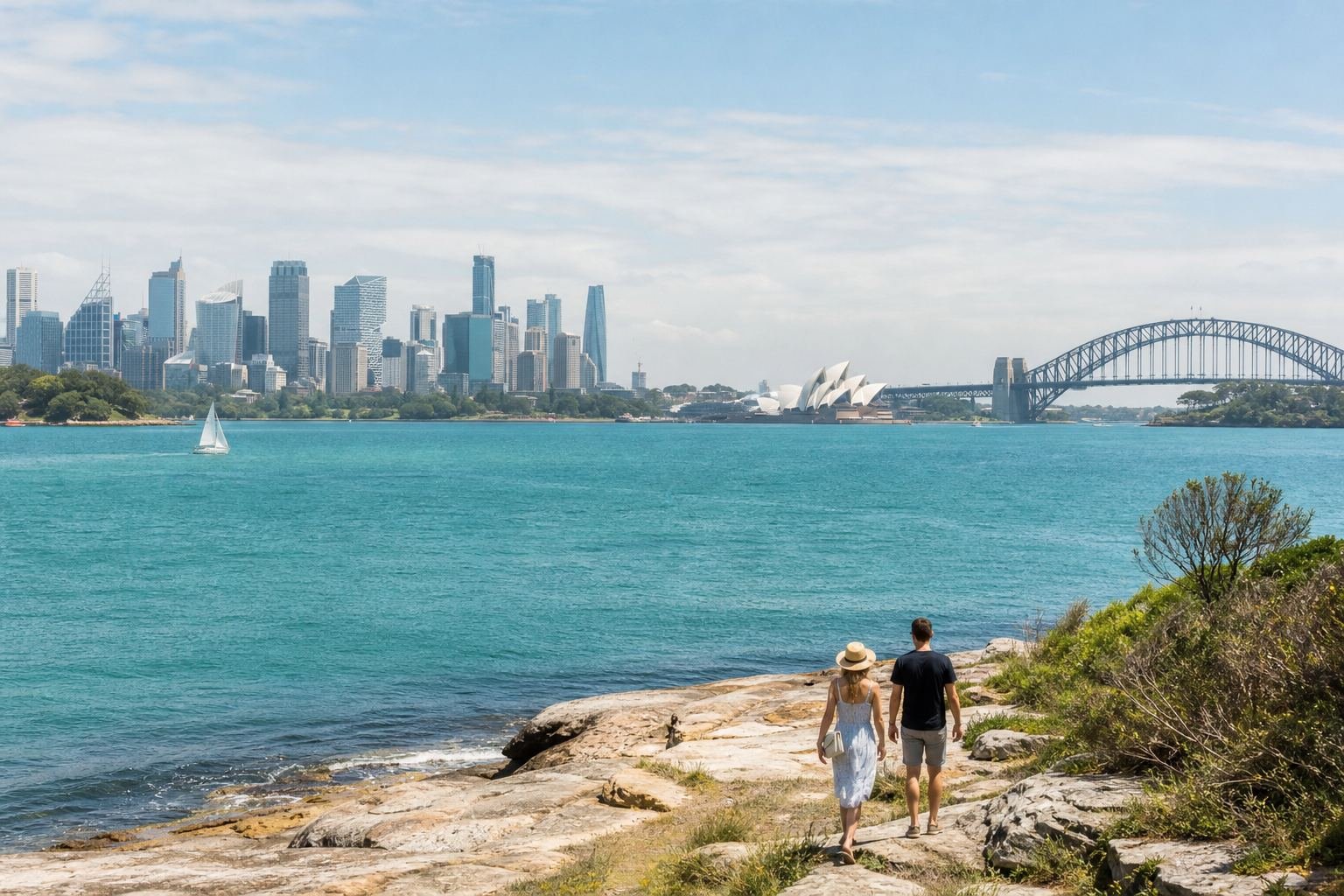
Here’s the quirk that trips people up: Queensland doesn’t use daylight saving. Brisbane stays on UTC+10, so its midnight comes an hour after Sydney’s. Melbourne and Canberra share Sydney’s time, Adelaide is half an hour later, and Darwin and Perth later still. If you’re flying around Australia over New Year, check the local time at your destination, not the one on your phone at take-off.
For viewing spots, crowd timing and how Sydney compares with the other headline shows, see our guide to the top cities for New Year’s Eve fireworks.
When to Go: Australia
Flying all that way for one midnight? Make the rest of the trip fit the season. This guide walks you through Australia month by month, region by region: heat, wet season in the north, school-holiday crowds and what each month suits best, so you know where to go after the fireworks.
See When to Go: Australia · $19 →Digital download · All sales final
The Midnight Wave: Following New Year From Tokyo to London
Once Australia is done, the new year sweeps across Asia, the Gulf and Europe in roughly hourly steps. You can’t physically chase it at that speed, but knowing the rhythm helps you choose the kind of midnight you want, and when to call home.
- Tokyo (UTC+9): midnight is quiet and reflective, with temple bells and shrine visits rather than a single big show. Our guide to New Year’s Eve food traditions covers the noodles, bells and three-day feast.
- Hong Kong and Singapore (UTC+8): harbour-front countdowns at 4 p.m. London time. Shows in some cities have been cancelled in individual years, so confirm the plan in December.
- Dubai (UTC+4): the Burj Khalifa show, eight hours before London. Roads into Downtown close early, which is why the Dubai section of our fireworks guide matters more than the timing.
- Europe (UTC+2 to 0): three midnights in two hours, from Athens and Helsinki to Paris and Madrid to London and Lisbon. Our pick of the best places for New Year’s Eve in Europe compares them.
Where New Year Comes Last: Hawaii, American Samoa and Niue
The last places to celebrate are on the other side of the date line, a short distance east of where it all began. Baker and Howland Islands, at UTC−12, are technically last, but they’re uninhabited US territories, so the last midnights with people to celebrate belong to American Samoa and Niue at UTC−11.
American Samoa is the interesting one for travellers. It sits right next to independent Samoa, and the two used to share a clock. Samoa then jumped to the other side of the date line, skipping a whole calendar day (30 December) to line up its working week with New Zealand and Australia. Now the neighbours show the same time on different dates: 24 hours apart, a short hop across the water.
If you’d rather be among the last with a beach and a big choice of hotels, Hawaii is the easy answer. Honolulu, at UTC−10, reaches midnight five hours after New York and ten after London, and December averages around 28 °C by day and 21 °C at night. You won’t be the very last, but you’ll be the last in any US state, and well after everyone back home has gone to bed.
First and last are only a few hundred kilometres apart. The whole new year happens between two sides of the same ocean.
How to Celebrate New Year Twice: 4 Routes That Hold Up
To celebrate New Year twice, you need two clocks and a short crossing. Here’s the honest bit most lists skip: the long-haul version rarely works. Auckland’s midnight and Honolulu’s are 23 hours apart and the flight takes about eight and a half hours, which sounds perfect until you look at the timetable. The nonstop service on that route has been scheduled as an evening departure that lands in Honolulu the next morning, so leaving after Auckland’s midnight gets you there after Honolulu’s too. The routes below are the ones that actually fit.
Tornio (Finland) and Haparanda (Sweden) · 1 hour apart
The twin towns in Lapland run a free event called Happy New Twice on the border square, with live music and two fireworks shows: one at midnight Finnish time, one an hour later at midnight Swedish time. You don’t even have to move. Dress for deep Arctic cold.
Tui (Spain) and Valença (Portugal) · 1 hour apart
Mainland Spain is an hour ahead of Portugal. Tui faces Valença across the Minho river, linked by two bridges, with no border checks inside Schengen. Toast midnight in Tui, walk across the old international bridge, and do it again in Valença. Book a room on the Portuguese side so the walk home is short.
Samoa to American Samoa · 24 hours apart
Celebrate in Apia, then fly to Pago Pago. The flight from Fagali’i airport takes about 35 minutes and, according to a NZ Herald account of the route, lands nearly a day before it took off. Flights are not daily on every schedule, so confirm one operates on 1 January before you build the trip.
Watch one live, celebrate one in person · any gap
Not a cheat, a plan. Watch Auckland or Sydney live wherever you are, then do your own midnight properly. In Spain, people often hear the radio and TV add “one hour less in the Canary Islands”, a reminder that the Canaries share Portugal’s clock.
For the details of the Lapland event, see Visit Finland’s listing for Happy New Twice, which gives the start time as 23:45 Finnish time (22:45 in Sweden) on Victoria Square in Tornio.
Planning a Time-Zone New Year: Bookings, Flights and Date-Line Traps
A time-zone trip has more moving parts than a normal New Year break. Work through it in this order and the clock stays on your side.
| If you want… | Go to | Plan around |
|---|---|---|
| To be first, full stop | Kiritimati | Very limited flights; a quiet night, not a party |
| First with a real fireworks show | Auckland | Hilltop or waterfront spot; showery weather possible |
| The first giant harbour show | Sydney | Free spots fill early; 9 p.m. family show |
| The easiest double countdown | Tornio–Haparanda or Tui–Valença | Arctic cold in Lapland; a short walk across the bridge on the Minho |
| The biggest time-gap double | Apia then Pago Pago | A 1 January flight must exist; hotel dates across the date line |
| To be last with a beach | Honolulu | Warm evening, five hours after New York |
Check the current UTC offset of every stop
Daylight saving rules change. Write each midnight in UTC on one line so you can see the real gaps.
Find the 1 January departure before anything else
For a two-country plan, the connecting flight is the whole trip. No flight that day means no double countdown, however good the theory looks.
Book hotels by local date, not by travel day
Across the date line you gain or lose a calendar day. Write out each night’s local date before you pay.
Keep a buffer day on the far side
Small Pacific routes get delayed and cancelled. A spare day protects your flight home, and you’ll want the rest anyway.
New Year flights are rarely cheap, and remote island rooms are few. If cost matters as much as the clock, our guide to New Year’s Eve travel on a budget covers when to fly and book. Still choosing the style of night rather than the time zone? Start with our guide to where to spend New Year’s Eve, then narrow it with the romantic New Year’s Eve getaways, the luxury New Year’s Eve escapes or the family-friendly New Year’s Eve destinations.
5 Time-Zone Mistakes That Cost People Their Midnight
1. Trusting an old “first and last” list
Plenty of lists still show Samoa on summer time or Rio at UTC−2. Both are out of date. Verify current offsets yourself; it takes two minutes.
2. Building a double plan on a flight that doesn’t exist
The maths can work while the timetable doesn’t. Long-haul routes across the Pacific often leave in the evening, which is too late. Find the real 1 January departure first.
3. Booking the wrong hotel night across the date line
Fly east across the line and you arrive “yesterday”. Your booking must match the local arrival date, or you’ll have nowhere to sleep on the second New Year’s Eve.
4. Forgetting that Australia isn’t one time zone
Brisbane is an hour behind Sydney in December, and Adelaide half an hour. If your countdown city changes, so does your midnight.
5. Expecting a party at the record-breaking spots
Kiritimati and the Chathams are about being first, not about fireworks. If you want both the record and a show, Auckland is the honest compromise.
Celebrate New Year Twice and Other Time-Zone Questions
The clock is the one thing about New Year you can plan with total certainty, so use it. Choose first, last or both, check the real offsets and the 1 January timetable, and book your rooms by local date; that’s how you celebrate New Year twice without missing either midnight. For more ideas, browse our best travel destinations in December or plan any other month from the month-by-month travel planner.
Free download
See the whole year before you book
Our free 12-Month Map puts every month for one country on four pages: when the weather works, when the crowds and prices peak, and the weeks to skip.
- 24 countries to choose from
- Region-by-region verdicts
- Printable PDF
Your download page opens as soon as you sign up. 24 countries available.


[…] and lower prices? Compare our picks of the best warm-weather destinations in December, or see our best destinations for New Year’s Eve round-up for New Year ideas […]