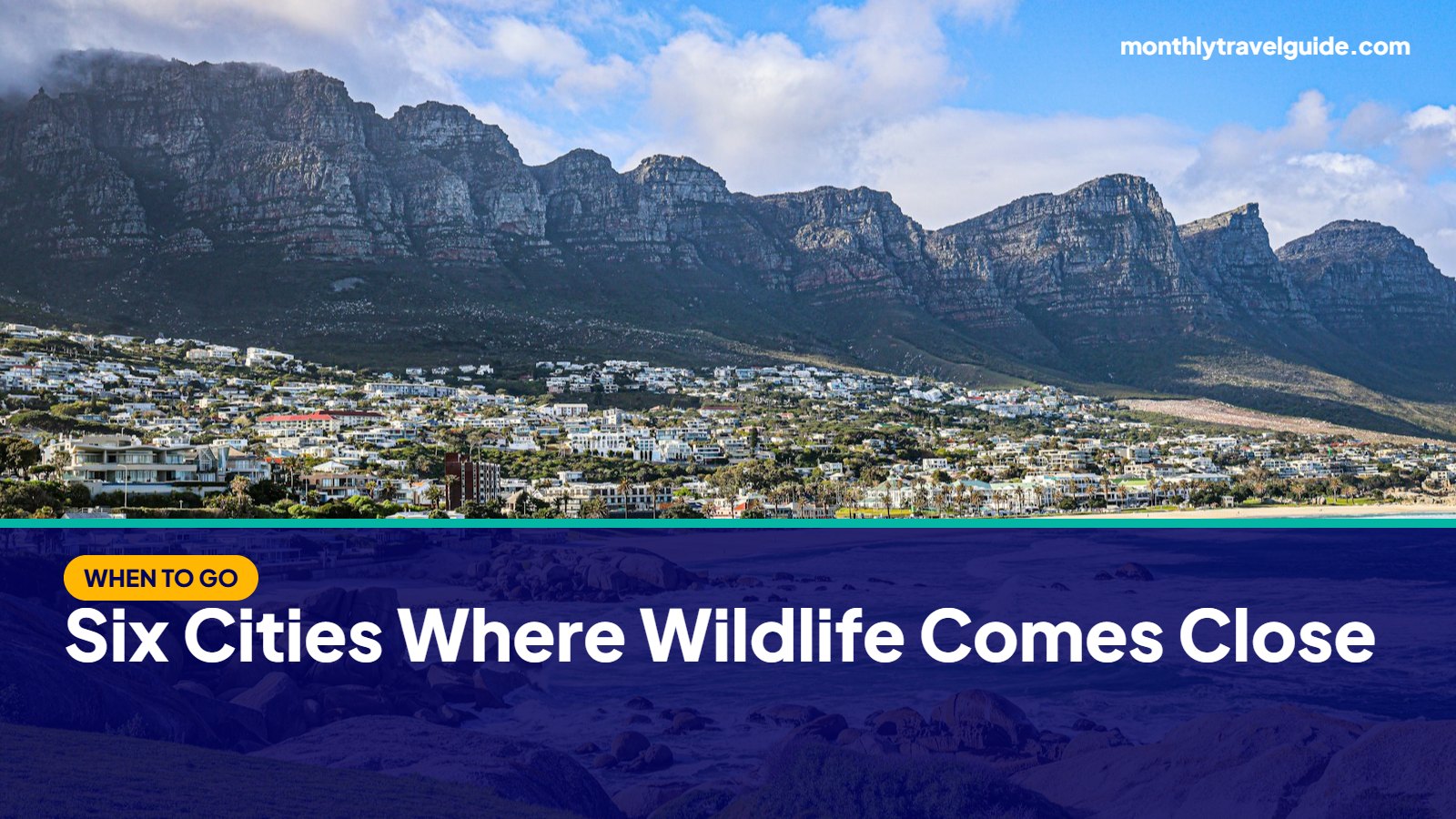
City breaks with nature give you two trips in one: a few days of cafés, museums and good food, plus whales, penguins, puffins or wild coast within an hour of your hotel. The catch is timing, because the wildlife keeps its own calendar and it rarely matches the city’s best-weather weeks. This guide picks six cities where nature sits on the doorstep (Cape Town, Vancouver, Sydney, Ljubljana, Reykjavik and Wellington) and gives the best month for each, the animals you can expect and the weeks to avoid.

When to Go guides
Choose your country, then your month
24 country guides, each about 100 pages: every month rated for weather, crowds and prices, region by region, with a 7-day booking plan. Six guides per region bundle.
Browse the 24 guides · $19 eachRegion bundles: Europe, Asia & Pacific, Sun Souks & Safari, Americas · $47 each
Quick answer: For whales close to a city, go to Cape Town from July to November, Sydney from late May to November or Reykjavik in any month. For puffins near a capital, Reykjavik from May to mid-August. For green parks, rivers and mountain day trips, Ljubljana in May, June or September. Vancouver works best from May to September, and Wellington in spring, from September to November.
Key takeaways
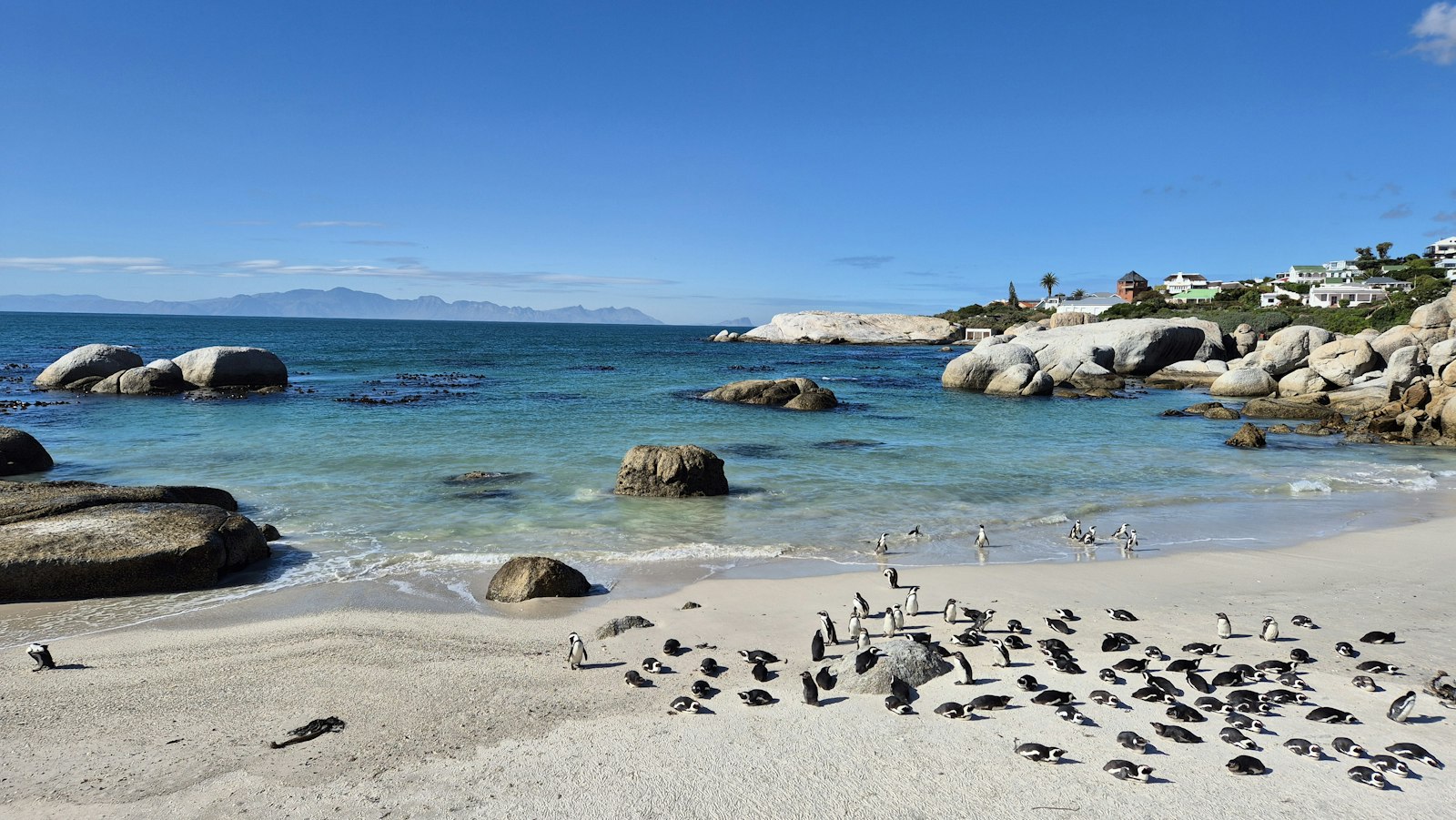
Southern right whales visit the Cape coast from June to November, and Boulders Beach penguins are there all year.
Vancouver’s whale-watching season runs from about April to October, peaking from May to September.
Humpbacks pass Sydney from mid-May, peak in late June and early July, then return with calves in October and November.
Puffin boats from Reykjavik’s Old Harbour run from May to about mid-August; whale tours run all year.
Ljubljana’s strongest months are May, June and September; November brings fog to the basin.
City Breaks With Nature: The Six Cities Compared
This section compares the six cities side by side, so you can match one to the month you have free. Each was chosen because you can reach real wildlife or wild landscape from the centre in a day, without a long safari or an internal flight.
| City | Nature on the doorstep | Best month | Wildlife window |
|---|---|---|---|
| Cape Town | Table Mountain, False Bay, Boulders Beach | October | Whales June to November; penguins all year |
| Vancouver | Stanley Park, the Salish Sea, North Shore mountains | September | Whales about April to October |
| Sydney | Harbour headlands, Royal National Park | October | Humpbacks May to November |
| Ljubljana | Tivoli Park, Ljubljana Marshes, the Julian Alps | May or September | Birdlife and green parks in spring and summer |
| Reykjavik | Faxaflói Bay, puffin islands, lava fields | June | Puffins May to mid-August; whale tours all year |
| Wellington | Zealandia sanctuary, the harbour, the south coast | November | Native birds most visible in spring |
🗓️ Free: a 12-Month Map for your country
Every month on one page: best weeks, shoulder weeks and the ones to skip. Print it or keep it on your phone.
Most picks sit in the shoulder months either side of summer, when viewpoints are quieter. The free Shoulder Season Detector shows the calmer weeks for any destination.
Season verdicts for nature city breaks
Go = weather and wildlife line up · Go with care = one of the two is weaker · Skip = both are poor for a short trip
Cape Town
Wind in summer, rain in winter
Vancouver
Wet winters, dry bright summers
Sydney
Hot spells in summer; whales from May
Ljubljana
Fog late in the year; hot July and August
Reykjavik
Short winter days, long summer light
Wellington
Strong winds common in winter
Built from long-term climate averages and the wildlife seasons cited in each section below. Every year differs.
🧰 Try it while you read: a free tool for this trip
Free trip timing tool
What Kind of Traveller Are You?
Seven quick taps pick your travel type, then show the countries and months where it shines.
Loading the tool…
Cape Town: Whales and Penguins in October
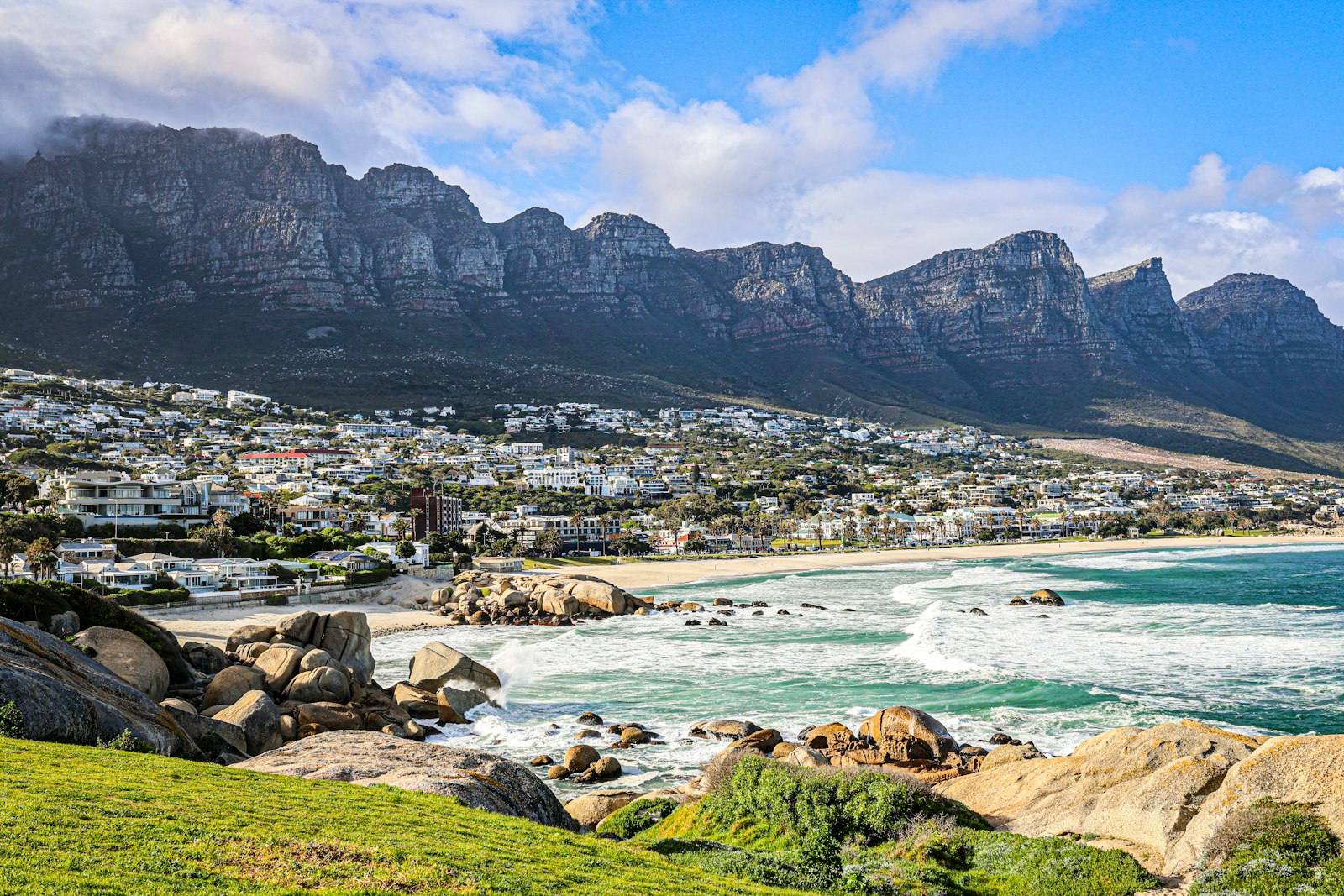
This section covers Cape Town, the most complete city break with wildlife on this list. Table Mountain rises straight out of the centre, and the coast either side holds whales, seals, penguins and dolphins.
Southern right whales come to the Cape coast from June to November to calve and nurse, and they come close to shore in False Bay and around Hermanus, according to Getaway. Cape Tourism adds that humpbacks are seen off Hout Bay and the West Coast from November to February, when group feeding is common. The high roads of Boyes Drive above Muizenberg and Kalk Bay give wide views over False Bay without a boat.
The African penguins at Boulders Beach in Simon’s Town are there all year, seen from boardwalks that keep you out of the colony. The breeding season runs from February to August, peaking from March to May. September and October are the one weak spot: many birds are at sea feeding, so fewer stand on the sand (Tintswalo Boulders). Seals haul out on Duiker Island off Hout Bay all year, and boats run out to see them.
Best month
October, for whales plus spring weather
Also good
March to May, for mild days and penguin breeding
Wettest
June and July, about 7 to 8 rainy days each
Windiest
December to February, the south-easter
The weather pulls the other way from the whales. Winter, from June to August, is cool, with highs of about 13 to 21 °C, and June and July are the wettest months. Summer, from December to February, brings heat up to about 29 °C, the busiest weeks and the gusty south-easter known as the Cape Doctor. City of Cape Town tourism names March to May and September to November as the best balance, which is why October wins: whales still in the bay, spring flowers and longer dry spells. For the full whale picture along this coast, read our guide to Hermanus whale season.

The Smart Timing Bundle
Pick the month, book in the right order, pack once
Six printable timing tools for any trip: the Trip Timing Planner, When to Book, When NOT to Go, the Shoulder Season Playbook, the family timing guide and the Packing by Season System.
See the bundle · $37Six products, $100 separately · Digital download · All sales final
Vancouver: Whales and Salmon in September
This section covers Vancouver, where a forested park sits at the end of downtown and whale-watching boats leave from inside the city.
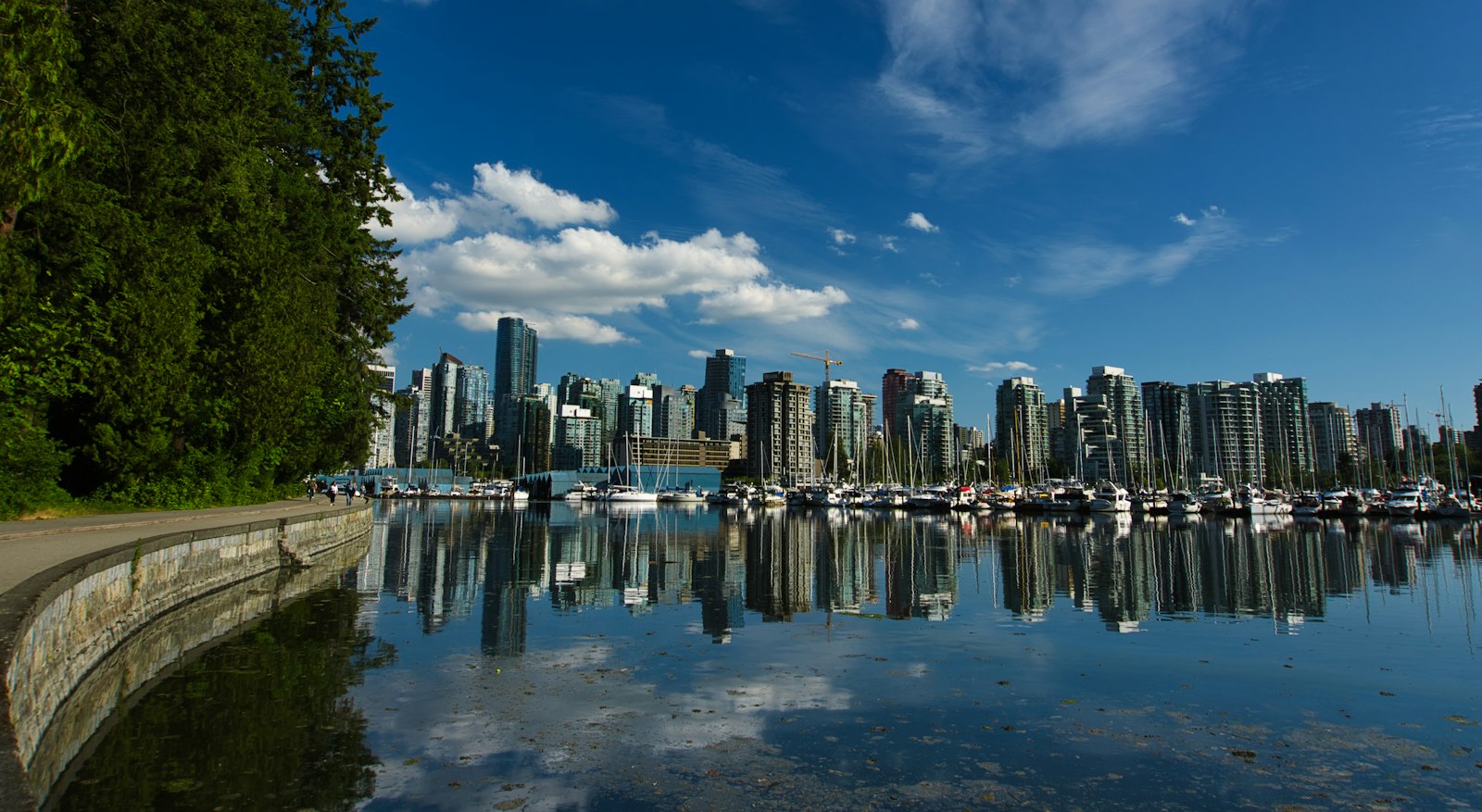
According to Destination Vancouver, whale-watching season runs from roughly April to October, peaking from May to September. Grey whales pass in April and May on their way north, Bigg’s orcas turn up more often in May and June, and humpbacks return in May and June and are often most active in September and October. July and August give the best chance of more than one species on a single trip. Most tours last three to five hours; boats from Steveston, about 35 minutes’ drive south of downtown, reach open water faster than those from Granville Island.
Best month
September: humpbacks, salmon run, fewer crowds
Peak summer
July and August: sunny, busy, highest prices
Wettest
November; the rains set in by late October
Quieter
March to April and October to November
Lonely Planet calls July and August the classic time, with highs in the mid-20s °C and plenty of sun, but also crowds, higher hotel prices and wildfire risk. It notes that the salmon run begins in September, when bears feed on the fish, and that the rainy season sets in by the end of October, with November usually the wettest month. September keeps most of summer’s dry weather, the humpbacks are active and schools are back in session, so Stanley Park’s seawall is calmer.
Sydney: Humpbacks From the Headlands in October
This section covers Sydney, where you can watch whales from city clifftop walks and a national park sits at the southern edge of the metropolitan area.
Each year from May to November, an estimated 40,000 or more humpback whales pass the coast, according to Sydney’s official tourism site. From mid-May they head north from Antarctic waters, with the peak in late June and early July. On the way back south, mothers and calves swim more slowly and closer to shore, and are most visible in October and November. Good land spots include Cape Solander in Kamay Botany Bay National Park, North Head at Manly, Barrenjoey Lighthouse at Palm Beach, the Bondi to Coogee walk and the Coast Track in Royal National Park.
| Month | Average high | Rainfall | What it means |
|---|---|---|---|
| January | about 28 °C | about 80 mm | Hot, busy, sea at its warmest; no whales |
| June | about 18 °C | about 125 mm | Wettest month; northbound whales arrive |
| July | about 18 °C | about 70 mm | Peak northbound whales, cool and clear days |
| September | about 22 °C | about 60 mm | Mild and dry; whales heading south |
| October | about 24 °C | about 55 mm | Driest month; mothers and calves close to shore |
| November | about 25 °C | about 70 mm | Last whales; warmer, a little wetter |
Figures from Climates to Travel, which names September and October as the best months: mild, fairly dry and sunny. Summer heatwaves can push the city above 35 °C for a day or more, and the sea is warmest from January to March. October lines up the driest weather with calves close to the cliffs, and the beaches are warm enough for a walk on the sand. Our Bondi Beach guide covers the most famous of those clifftop walks.
Ljubljana: Green Parks and Alpine Day Trips in May or September
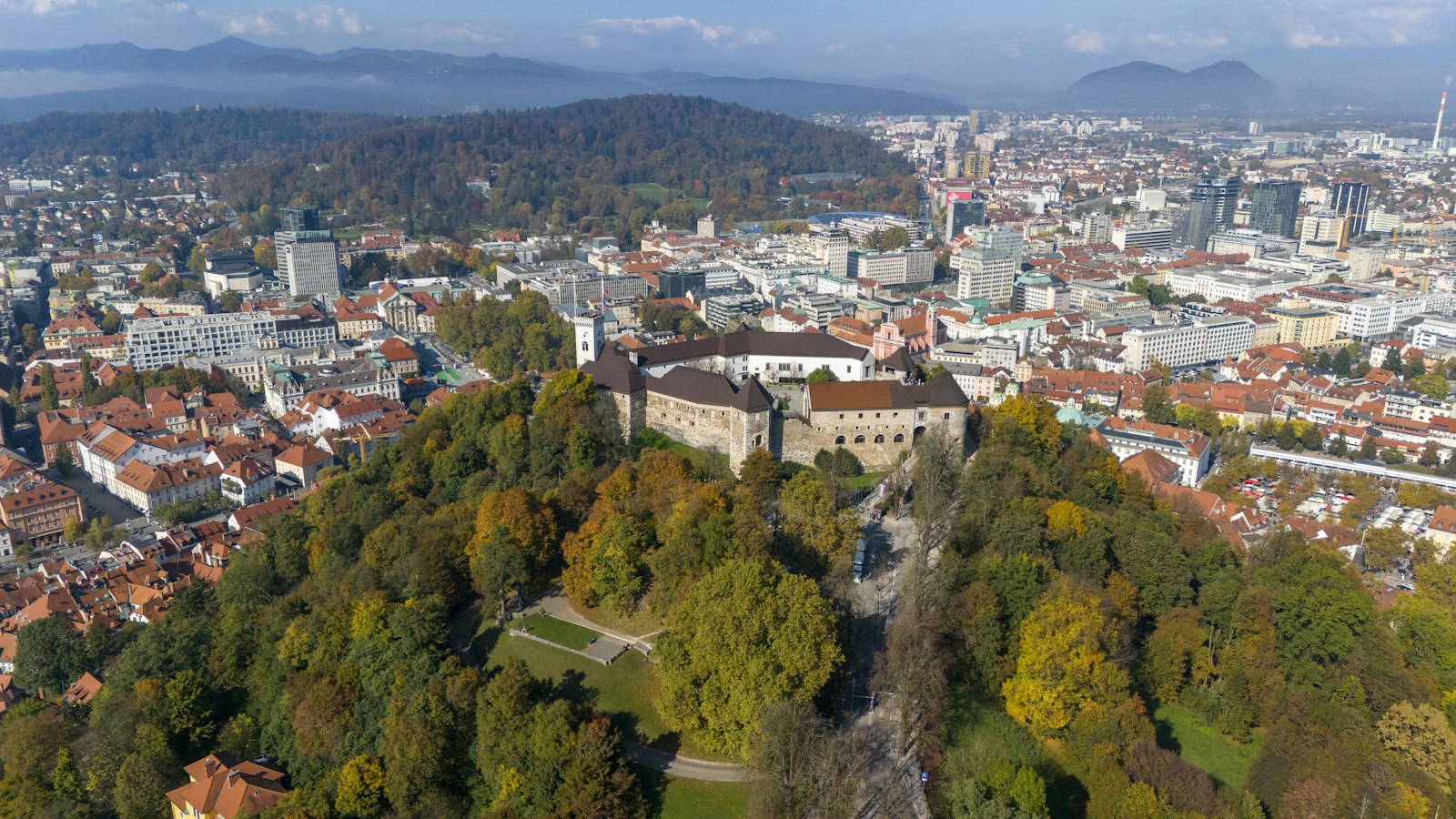
This section covers Ljubljana, the smallest city on the list and the easiest one to explore on foot. Tivoli Park runs right up to the centre, the Ljubljana Marshes nature park spreads out to the south, and lakes and mountains in the Julian Alps make easy day trips.
Average daytime highs climb from about 4 °C in January to about 22 °C in May and 26 °C in June, reach about 28 °C in July and August, then drop back to about 22 °C in September and 16 °C in October, according to Slovenian weather office figures quoted by In Your Pocket. Rain is spread fairly evenly across the year, at about 1,400 mm in total, and summer rain tends to come as showers and thunderstorms. The same source names May, June and September as the strongest months and notes that July and August often go above 30 °C.
Best months
May, June and September
Hottest
July and August, often above 30 °C
Foggiest
November, when cold air settles in the basin
Quiet
January and February: cold, calm, low season
Ljubljana suits travellers who want nature at a walking pace rather than a wildlife spectacle. September has warm days with the summer crowds gone from the Alpine lakes. Late autumn is the weak spot, because the city sits in a basin where cold, damp air gets trapped, and November is known for thick fog. For more European options, see our guide to January city breaks.

The complete kit
Every country guide, every timing tool
All 24 When to Go country guides, the six Smart Timing tools and every 12-Month Map, with a Start Here that tells you what to open first.
See the kit · $127The five bundles cost $225 separately · Digital download · All sales final
Reykjavik: Puffins, Whales and Long Light in June
This section covers Reykjavik, where boats for puffins and whales leave from the Old Harbour, a short walk from the centre.
Puffin trips from Reykjavik to the small islands of Akurey and Lundey run from May to about 15 August, and each one lasts about an hour (Hey Iceland). Whale-watching boats leave the harbour all year, and trips usually last about three hours. Minke and humpback whales are the most likely sightings, white-beaked dolphins are regular, and fin whales have their best odds in summer, according to Reykjavik Excursions.
| Month | High / low | Rain | Daylight and wildlife |
|---|---|---|---|
| January | about 3 / -2 °C | about 85 mm | Short days; whale tours still run |
| May | about 10 / 4 °C | about 50 mm | Puffins return; long evenings |
| June | about 13 / 7 °C | about 40 mm | Driest month; about 21 hours of daylight |
| July | about 15 / 9 °C | about 50 mm | Warmest; puffins and summer whales |
| August | about 14 / 9 °C | about 65 mm | Puffin trips end in mid-August |
| December | about 4 / -2 °C | about 100 mm | Wettest; about 4.5 hours of daylight |
Climate figures from Climates to Travel, which names June to August as the best time and warns that clouds, rain and cool winds are common even then, so pack a warm layer. June is the driest month and gives nearly round-the-clock light for evening walks along the shore.
Wellington: Native Birds and Coast Walks in November
This section covers Wellington, New Zealand’s capital, where the Zealandia ecosanctuary sits in a valley minutes from the centre and the rugged south coast starts at the edge of the suburbs.
Temperatures stay fairly even through the year, and Intrepid Travel says there’s no single best time. Spring, from September to November, brings longer days, flowers in the Botanic Garden and good conditions for seeing native wildlife at Zealandia. Summer is mild, with highs of about 20 °C and strong sun. Winter, from June to August, averages highs of about 11 °C, and strong winds are common, which makes it feel colder.
November is the pick: late spring weather and birds active in the bush, before the summer holidays. Weather can turn from rain to gusty wind within a day, so save the museums for the windy ones.
How to Plan City Breaks With Nature, Step by Step
This section turns the six cities into a simple method you can use for any city with wildlife nearby.
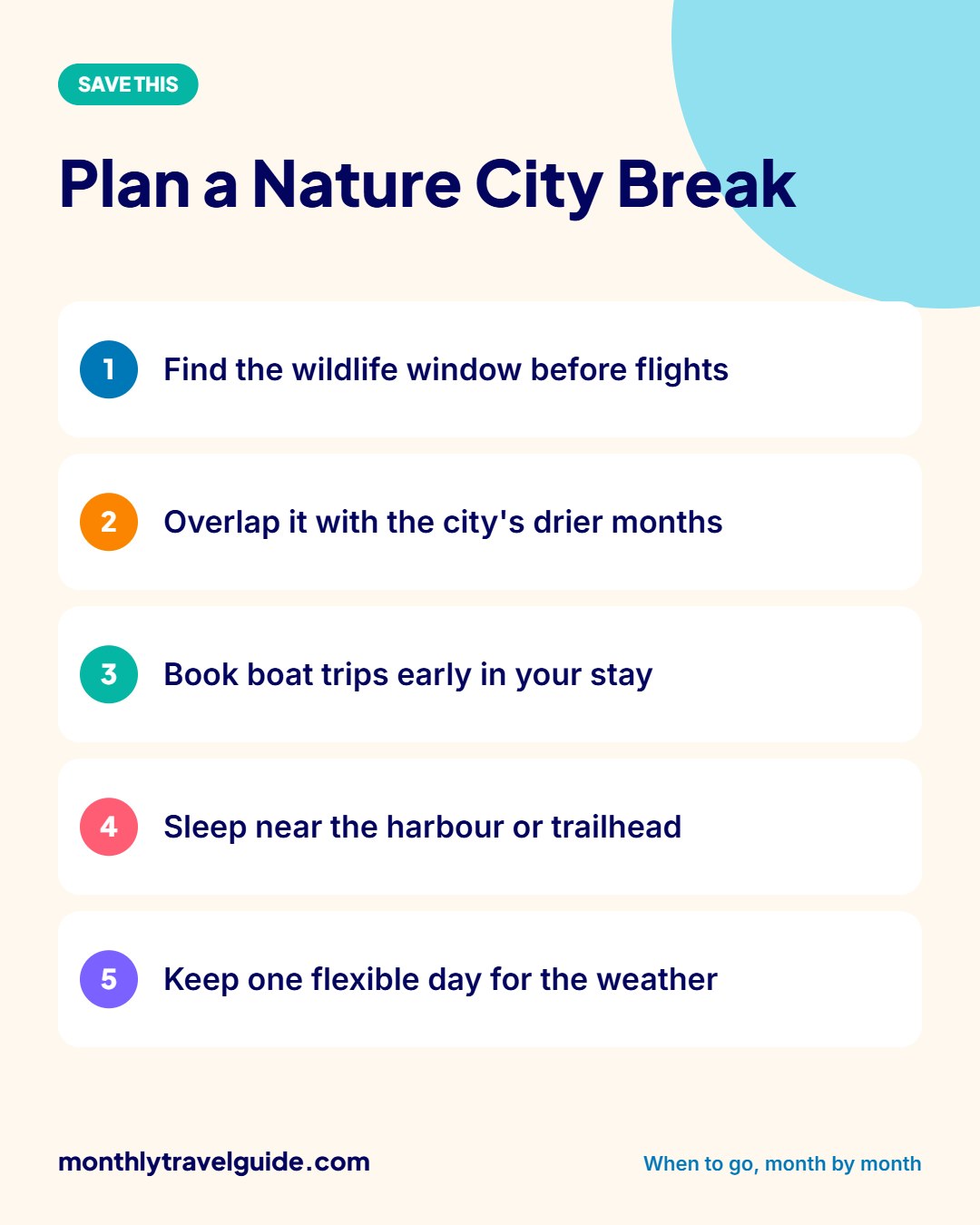
Choose the wildlife first
Whales, penguins, puffins and salmon all keep fixed calendars. Find the window before you look at flights.
Overlap it with the weather
Pick the weeks where the wildlife window meets the city’s drier, milder months. That’s usually a shoulder month.
Book the boat for day one or two
Sea trips cancel in wind. An early slot leaves spare days to rebook.
Stay near the departure point
A hotel near the harbour or the trailhead saves the early-morning transfer.
Keep one flexible day
Use it for the best-weather day: a ridge walk, a headland or a second boat.
To check which month suits a city you’re already considering, try the free Best Month Finder. For more trips built around animals rather than streets, see our picks for city wildlife in October and solo city breaks with wildlife, and our winter wildlife trips.
When Not to Go
This section lists the weeks that can spoil a nature city break in each place. None of these cities closes, but the wildlife or the weather lets you down.
| City | Avoid | Why |
|---|---|---|
| Cape Town | June and July for a short trip | The wettest months; boats and the mountain can be weathered out |
| Cape Town | September and October for penguins only | Many birds are at sea, so the beach is quieter |
| Vancouver | November to February | The wettest stretch; whale season is over |
| Sydney | December and January for whales | No whales off the coast, and peak summer crowds |
| Ljubljana | November | Fog trapped in the basin and short grey days |
| Reykjavik | Late August onward for puffins | Puffin trips end in mid-August |
| Wellington | June to August | Cold, with strong winds common |
Run your own dates through the free When Not to Go checker before you book anything that can’t be changed.
Better Month If You Want Something Else
This section helps if one goal matters more than the rest.
Whales from the shore, guaranteed season
Sydney from late June to early July, when the northbound migration peaks.
Penguin chicks and busy colonies
Cape Town from March to May, the peak of the breeding season at Boulders Beach.
Puffins and midnight-sun evenings
Reykjavik in June or July.
Bears and the salmon run
Vancouver in September, then head to the rivers outside the city.
Mild walking weather above all
Ljubljana in May or September.
Summer sun with the nature on top
See our picks of nature destinations in August.
5 Common Mistakes on Nature City Breaks
1. Booking the city’s best-weather month and assuming the wildlife will be there
Cape Town’s sunniest weeks fall in December to February, after the southern right whales have left. Check the animal’s calendar first.
2. Putting the boat trip on the last day
Whale and puffin boats cancel in strong wind or swell. If your only slot is the morning of your flight home, a single bad day ends the plan. Book early in the stay.
3. Skipping the land-based options
In False Bay and along Sydney’s headlands, you can watch whales from viewpoints and clifftop walks. They cost nothing, need no booking and work in weather that keeps boats in harbour.
4. Getting too close to the animals
Stay on the boardwalks at Boulders Beach and follow the rules at seal colonies and sanctuaries.
5. Packing for the city, not the coast
Clifftops, boats and lookouts are colder and windier than the streets. Pack a windproof layer, binoculars and shoes with grip.
City Breaks With Nature: FAQ
Which city is best for a break with nature and wildlife?
Cape Town is the strongest all-round choice. Table Mountain sits in the middle of town, penguins live at Boulders Beach all year, seals haul out off Hout Bay and southern right whales visit from June to November. Sydney is the best pick for watching whales from the shore, and Reykjavik is the easiest capital for puffins and whales by boat.
When is the best time to see whales in Cape Town?
Southern right whales visit the Cape coast from June to November and come close to shore in False Bay and around Hermanus. October combines whale activity with spring weather and longer dry spells. Humpbacks are seen off Hout Bay and the West Coast from November to February. Viewpoints on Boyes Drive give wide views over False Bay without a boat.
Can you see whales from land in Sydney?
Yes. From May to November, humpbacks pass Sydney on their migration, and you can watch them from headlands and clifftop walks. Good spots include Cape Solander in Kamay Botany Bay National Park, North Head at Manly, Barrenjoey Lighthouse and the Bondi to Coogee walk. The northbound peak is late June to early July; mothers and calves pass closest in October and November.
When can you see puffins near Reykjavik?
Puffin boats from Reykjavik’s Old Harbour run from May to about mid-August, visiting the small islands of Akurey and Lundey. Each trip lasts about an hour, with several departures a day. June and July are the most comfortable months, with the driest weather and very long days. After mid-August, the birds leave and the puffin tours stop for the year.
What is the best month for whale watching in Vancouver?
The season runs from about April to October, peaking from May to September. Grey whales pass in April and May, Bigg’s orcas are seen more often in May and June, and humpbacks are often most active in September and October. July and August give the best chance of more than one species, but September has calmer crowds and the salmon run.
Are city breaks with nature cheaper in the shoulder season?
Often, yes. The shoulder months either side of each city’s peak, such as March to April and October to November in Vancouver, tend to be quieter and cheaper for lodging. Wildlife is still around in many of them. Prices change, so check before you book, and avoid local school holidays, which can fill hotels even outside the main season.
The Bottom Line
The best city breaks with nature come down to one overlap: the weeks when the animals are present and the weather is kind. That usually means Cape Town in October, Vancouver in September, Sydney in October, Ljubljana in May or September, Reykjavik in June and Wellington in November. Browse more ideas in our nature travel guides.
Plan every trip in the right weeks
The Complete Travel Timing System
The full kit brings the timing guides and tools together: the best and worst months, shoulder-season windows, the weeks to avoid and when to book, so every city break, wildlife trip and long holiday lands at the right time of year.
Digital download · All sales final
Free download
See the whole year before you book
Our free 12-Month Map puts every month for one country on four pages: when the weather works, when the crowds and prices peak, and the weeks to skip.
- 24 countries to choose from
- Region-by-region verdicts
- Printable PDF
Your download page opens as soon as you sign up. 24 countries available.