The Amazon rainforest in September is in its low water season across most of the basin, which means falling rivers, open forest trails, sandy banks and animals drawn to the water’s edge. Peru and Brazil are at or near their driest weeks, with hot days and short afternoon storms, while Ecuador’s Amazon stays wet but enters a brief drier spell from mid-September. What you trade is reach: boats can’t push as deep into flooded forest as they do in the high water months. Below you’ll find what each country looks like in September, the river levels, the rain, the wildlife and the mistakes that catch first-time visitors.

September river check
Three countries, three different rivers
Peru
Iquitos & the north
River level:
Low water
About 100 mm of rain; hot days, short late-afternoon storms.
Brazil
Manaus & the Rio Negro
River level:
Falling fast
About 76 mm of rain; sandy river beaches appear.
Ecuador
Cuyabeno & Yasuní
River level:
Still high-ish
About 300 mm of rain; a drier spell from mid-month.
Gauges are illustrative, not measurements. Rainfall from Responsible Travel regional averages; seasons from Journey Latin America, Peru Jungle and Cuyabeno Lodge. Every year differs.
Key takeaways
In Peru and Brazil, September falls in the low water season; in Brazil the river runs 14 to 17 m lower than at its June peak.
Average September rain is about 100 mm in the Peruvian Amazon, about 76 mm around Manaus and about 300 mm in Ecuador’s Amazon.
Expect highs of about 32 to 33 °C in Peru and Brazil, and about 27 to 30 °C in Ecuador.
Trails that flood from March to June are walkable again, but boats reach fewer side creeks and some lodge trips take longer.
Animals gather near the remaining water, so caimans, wading birds and fishing are good; some river dolphins move out of shallow tributaries.
Lower water usually means fewer mosquitoes, though repellent is still essential in every month.
Amazon Rainforest in September: High Water vs Low Water
This section explains the one thing that shapes an Amazon trip more than the weather: the height of the river. As Journey Latin America puts it, when you go has more to do with the water level than with the rain on a given day. The basin runs on a slow, predictable cycle of rising and falling water, and each country sits at a different point on that cycle in September.
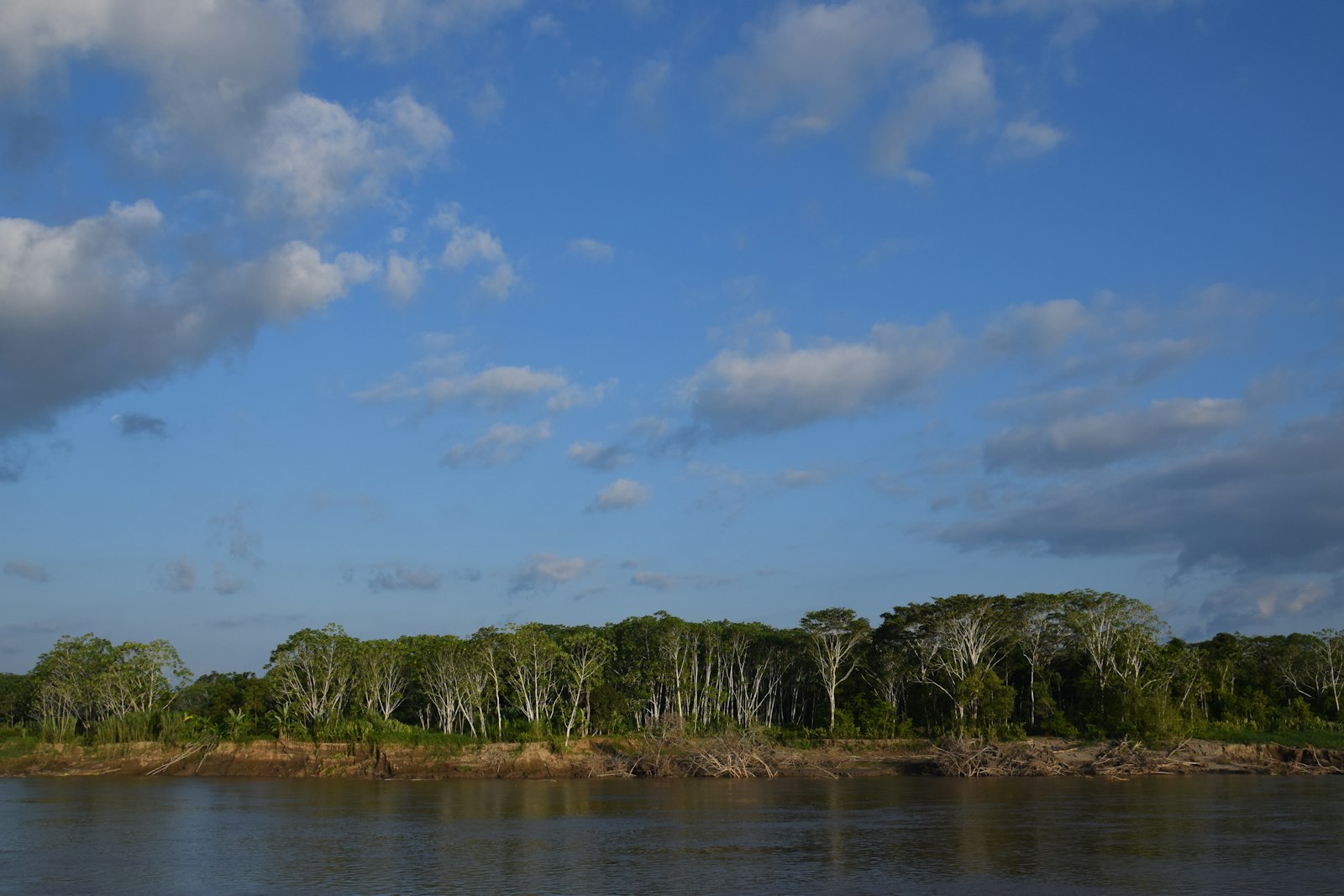
In the high water months, rivers spill into the forest. Adventure Life notes that rivers can rise up to about 7 m in parts of the basin, and Rainforest Cruises says the Amazon can rise and fall by as much as 12 m across the year. Around Manaus the swing is larger still: at the June peak, the water stands 14 to 17 m above its lowest level. When it drops, the forest floor reappears, trails reopen and the rivers pull back to their main channels.
| High water (roughly Dec/Jan to Jun) | Low water (roughly Jul to Nov/Dec) | |
|---|---|---|
| River level | Several metres higher; forest floor flooded | Rivers back in their channels; banks exposed |
| Getting around | Skiffs and canoes slip into flooded creeks and lakes | More walking on forest trails; some boat trips take longer |
| Wildlife | Boats glide closer to the canopy for birds and monkeys | Animals gather at remaining water; caimans easier to see |
| Mosquitoes | More | Fewer, though never none |
| September fits | Ecuador is still in its wet pattern | Peru and Brazil, both well into low water |
🗓️ Free: the 12-Month Map for Peru
Every month on one page: best weeks, shoulder weeks and the ones to skip. Print it or keep it on your phone.
Sources: Adventure Life, Aqua Expeditions and Responsible Travel for the seasons and what they change; Journey Latin America for the advice to plan around water rather than rain. The exact months shift by a few weeks from north to south and from one year to the next.
Note
There is no true dry season in the rainforest. Even in the low water months, short heavy storms are normal, usually in the late afternoon. Plan for one wet spell a day and you won’t be disappointed.
🧰 Try it while you read: a free tool for this trip
Free trip timing tool
Rainy Season Risk
Check how wet a month usually is, with rainfall and rain days by month.
Loading the tool…
Peru: The Driest Weeks of the Low Water Season
This section covers the Peruvian Amazon, where most trips start from Iquitos in the north and head to lodges on rivers such as the Tahuayo or into the flooded-forest reserves upstream. September here is a strong month, and Responsible Travel calls May to September the best time to visit, when wildlife gathers on shrinking riverbanks and mosquito numbers fall.
The same source’s averages show about 100 mm of rain in September, up from about 60 to 65 mm in June, July and August, with highs of about 32 °C and lows of about 16 °C. The lodge operator Peru Jungle places the flood peak at the end of April and describes August to November as the drier spell, adding that in September and October the daily chance of rain falls to about 35%, usually as a storm late in the afternoon.
The river is what you’ll notice most. Trails that were under water in April are open, and walking excursions take over from canoe trips. That has a cost: Peru Jungle notes that when rivers get very low, the boat ride to its main lodge takes longer, and that some pink river dolphins move out of the smaller Tahuayo River in the dry season.

The Smart Timing Bundle
Pick the month, book in the right order, pack once
Six printable timing tools for any trip: the Trip Timing Planner, When to Book, When NOT to Go, the Shoulder Season Playbook, the family timing guide and the Packing by Season System.
See the bundle · $37Six products, $100 separately · Digital download · All sales final
The Peruvian Amazon is a wet place even in its best months. Aqua Expeditions gives a yearly average of about 3.6 m of rain spread over some 250 rainy days, so September is drier by Amazon standards, not by anyone else’s. Pack for heat and short downpours in the same afternoon.
Brazil: Manaus, the Rio Negro and the River Beaches
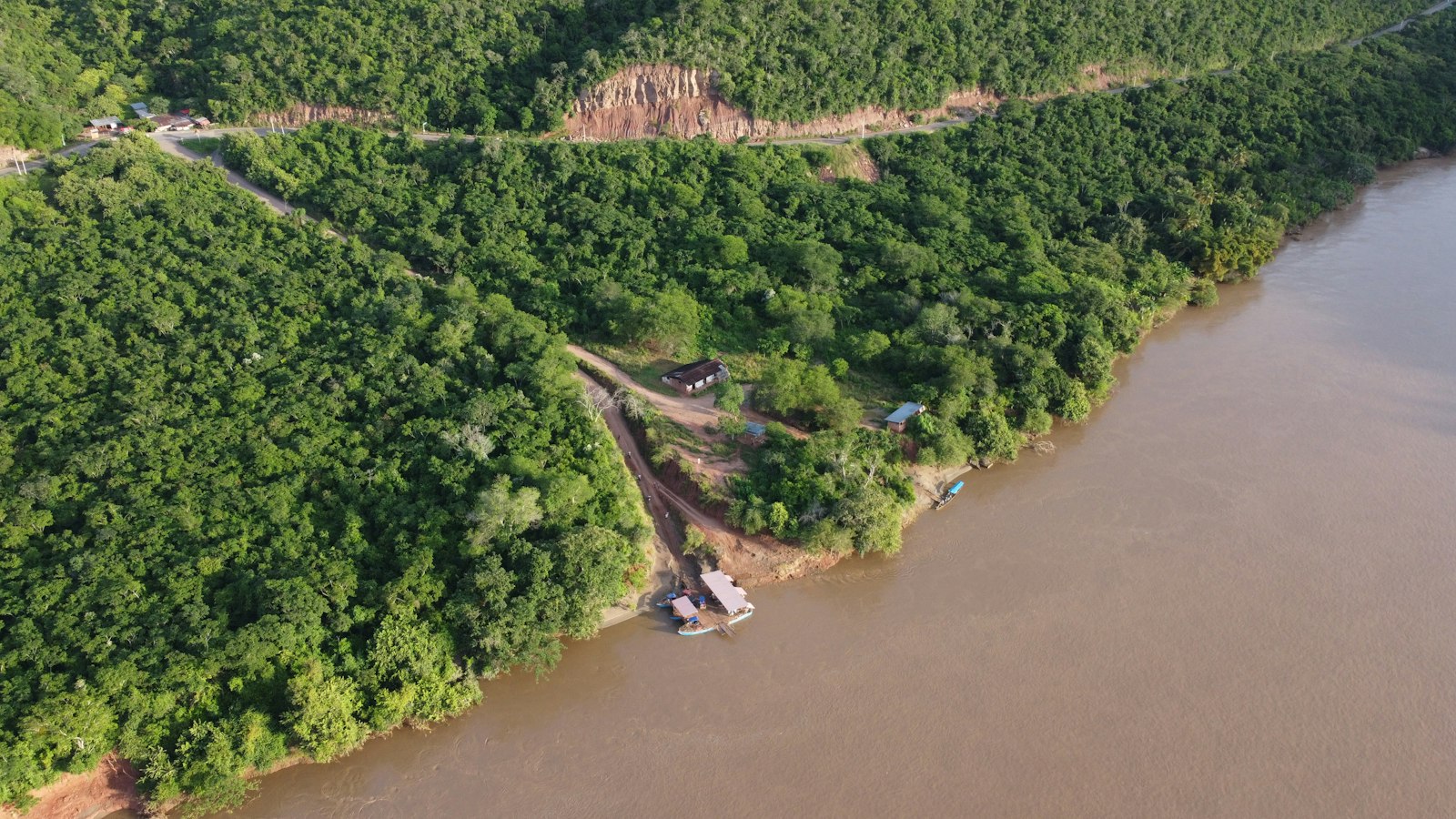
This section covers the Brazilian Amazon around Manaus, the usual base for lodges and river cruises on the Rio Negro and the Amazon itself. In September the region is deep in its dry season, which Aventura do Brasil dates from June to November, with daily highs of about 31 to 33 °C and 50 to 170 mm of rain a month across the season.
Responsible Travel’s averages for the Brazilian Amazon give about 76 mm of rain in September, with highs near 33 °C and lows near 24 °C, and the page names late June to October as the best period for wildlife watching. Journey Latin America describes September to November as the lower-water months, when forest trails can be walked, wildlife is easier to spot and there are fewer mosquitoes, with highs of about 32 °C and lows of about 23 °C.
Falling water also reveals sand. Rainforest Cruises notes that the dry season uncovers white sandy beaches along the river banks, and cruises on the Rio Negro stop at several of them. It’s one of the few times in the year when you can walk along the shore of a rainforest river rather than look at it from a boat.
The trade-off is humidity. The same source calls the dry season some of the hottest and most humid months of the year, so plan active outings for early morning and late afternoon, and use the middle of the day for rest, a swim where your guide says it is safe, or a slow boat ride.
Ecuador: Wetter, but a Drier Spell From Mid-September
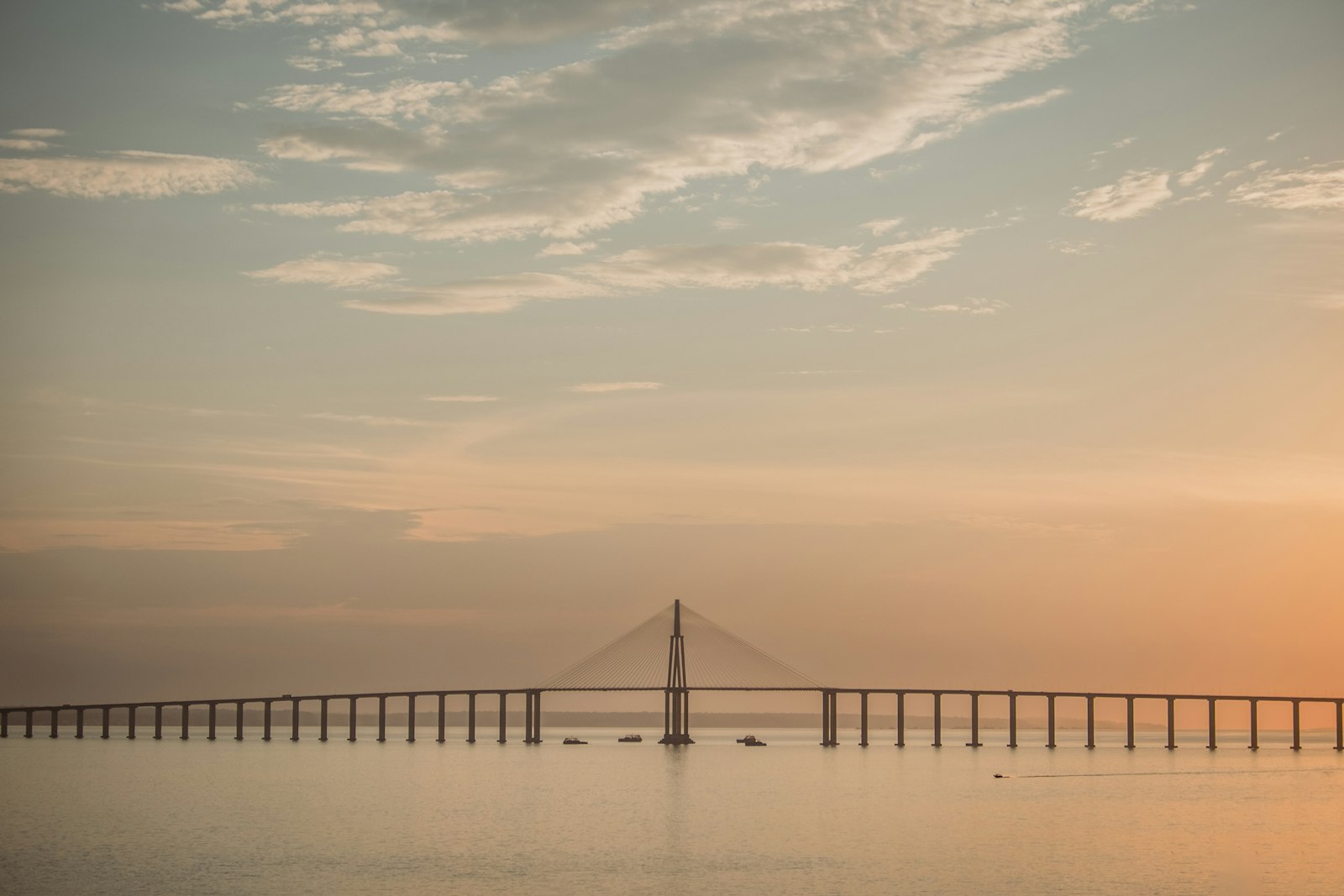
This section covers the Ecuadorian Amazon, reached by a flight from Quito to Lago Agrio for the Cuyabeno reserve, or by lodges along the relatively shallow Napo River. Ecuador sits close to the equator and the Andes, so its rain pattern differs from Peru and Brazil, and September is not its low water peak.
Responsible Travel’s averages show about 309 mm of rain in September, with highs of about 27 °C. Travel Dojo gives a similar figure for Cuyabeno, about 298 mm in September and temperatures of 20 to 30 °C, and lists May as the wettest month at about 376 mm. Rainforest Cruises describes August to December as a shoulder period in which the weather changes from hour to hour.
There is a useful window inside the month. Cuyabeno Lodge describes two drier spells in the reserve, from late January to early March and from mid-September to mid-October. As the water drops, anacondas and caimans gather at the remaining waterholes, and herons and kingfishers are often seen near them. Travel Dojo also notes that lower river levels make trails and oxbow lakes easier to get around, though transfers by road and boat take several hours and can run late.
Tip
In Ecuador, aim for the second half of September. You’ll still get rain, but you’ll catch the start of the drier spell, and lagoons and creeks still hold enough water for canoe trips.
Amazon Rainforest in September: Month Verdicts by Country
This section puts September next to the months on either side, so you can see whether moving your dates by a few weeks would help. Rainfall comes from Responsible Travel’s regional averages; verdicts weigh rain, river level and access together.

The complete kit
Every country guide, every timing tool
All 24 When to Go country guides, the six Smart Timing tools and every 12-Month Map, with a Start Here that tells you what to open first.
See the kit · $127The five bundles cost $225 separately · Digital download · All sales final
August, September, October
September highlighted
Peru
Aug
65 mm rain · Driest month; rivers dropping
GoPeru
Sep
100 mm rain · Low water, trails open
GoPeru
Oct
160 mm rain · Rain building; rivers very low
Go with careBrazil
Aug
55 mm rain · Driest month; banks emerging
GoBrazil
Sep
76 mm rain · Beaches, wildlife, fewer bugs
GoBrazil
Oct
120 mm rain · Still low water, rain returning
GoEcuador
Aug
306 mm rain · Changeable, hour by hour
Go with careEcuador
Sep
309 mm rain · Drier spell from mid-month
Go with careEcuador
Oct
323 mm rain · Drier spell to mid-month
Go with careAverage monthly rainfall from Responsible Travel. Local rain varies a lot even between nearby lodges.
The pattern is clear. If you’re set on Peru or Brazil, September is close to ideal, and Brazil keeps its edge into October. If Ecuador is the goal, September is workable rather than perfect, and the second half of the month beats the first. To test other months for any destination, try the free Best Month Finder.
Wildlife and Activities in the Low Water Season
This section covers what you can actually do in the Amazon in September, and what works less well. The short version: it’s a walking and wildlife-watching month more than a deep-canoe month.
Forest walks
Trails flooded from March to June are open again, so guided day and night walks reach more of the forest.
Caiman spotting
Adventure Life calls low water a great time to see caimans, which gather along banks and remaining pools.
Birding
Wading birds such as herons and kingfishers gather around shrinking waterholes.
Fishing
Adventure Life rates low water as the better season for fishing.
Canoeing flooded forest
The flooded-forest paddles of the high water months aren’t possible; side creeks may be too shallow.
River beaches
In Brazil, white sand banks appear along the Rio Negro.
Sources: Adventure Life for caimans, birding, fishing and mosquitoes; Cuyabeno Lodge for anacondas, caimans and wading birds at waterholes in Cuyabeno; Rainforest Cruises for river beaches.
High water has its own strengths, so don’t read September as better in every way. Aqua Expeditions points out that in the flood months boats sail closer to the canopy, which makes tree-dwelling birds and monkeys easier to see, and skiffs reach creeks and lakes that are out of reach at low water. If paddling silently through drowned forest is the picture in your head, September is the wrong month.
If the Amazon is one stop on a longer route, our guide to South America in September covers the rest of the continent, and adventure trips in South America in September lists the strongest active trips for the month.
Rain, Heat and Mosquitoes: How to Prepare
This section covers the practical side of a September trip. The low water season is easier on you than the flood months, but it’s still a hot, humid rainforest with insects, sudden storms and long boat transfers.
Light, long layers
Loose long sleeves and trousers protect against sun and insects better than shorts, and dry quickly after a storm.
Rain shell and dry bags
Short, heavy afternoon storms are normal even in Peru and Brazil; keep a phone, camera and documents in dry bags.
Repellent, always
Fewer mosquitoes is not zero. Adventure Life calls insect repellent a must in every season.
Boots for the trails
Walking takes over at low water; ask your lodge whether rubber boots are provided.
Health check first
Ask a travel clinic about vaccinations and anti-malarial advice for your exact region well before you go.
Lodges and cruises usually set the daily rhythm around the heat: an early walk, a quiet midday, then a boat outing at dusk and sometimes a night walk. Build in rest, drink more water than you think you need, and keep the last afternoon before a flight free in case a transfer runs late. For a full list, see our packing tips for adventure travel in September, or build one with the free Packing Generator.
When Not to Go to the Amazon Rainforest
This section is the honest part. September suits most travellers, but some plans clash with the low water season, and some months are harder everywhere.
| Avoid | Why | Do this instead |
|---|---|---|
| September, if you want flooded-forest canoeing | Low water keeps boats out of many side creeks | Go in the high water months, roughly March to June |
| Ecuador in April to June on a short trip | The wettest stretch; May averages about 376 mm in Cuyabeno | Go from mid-September to mid-October or late January to early March |
| Peru from December to February | Rain climbs to about 340 to 390 mm a month | Go from June to September |
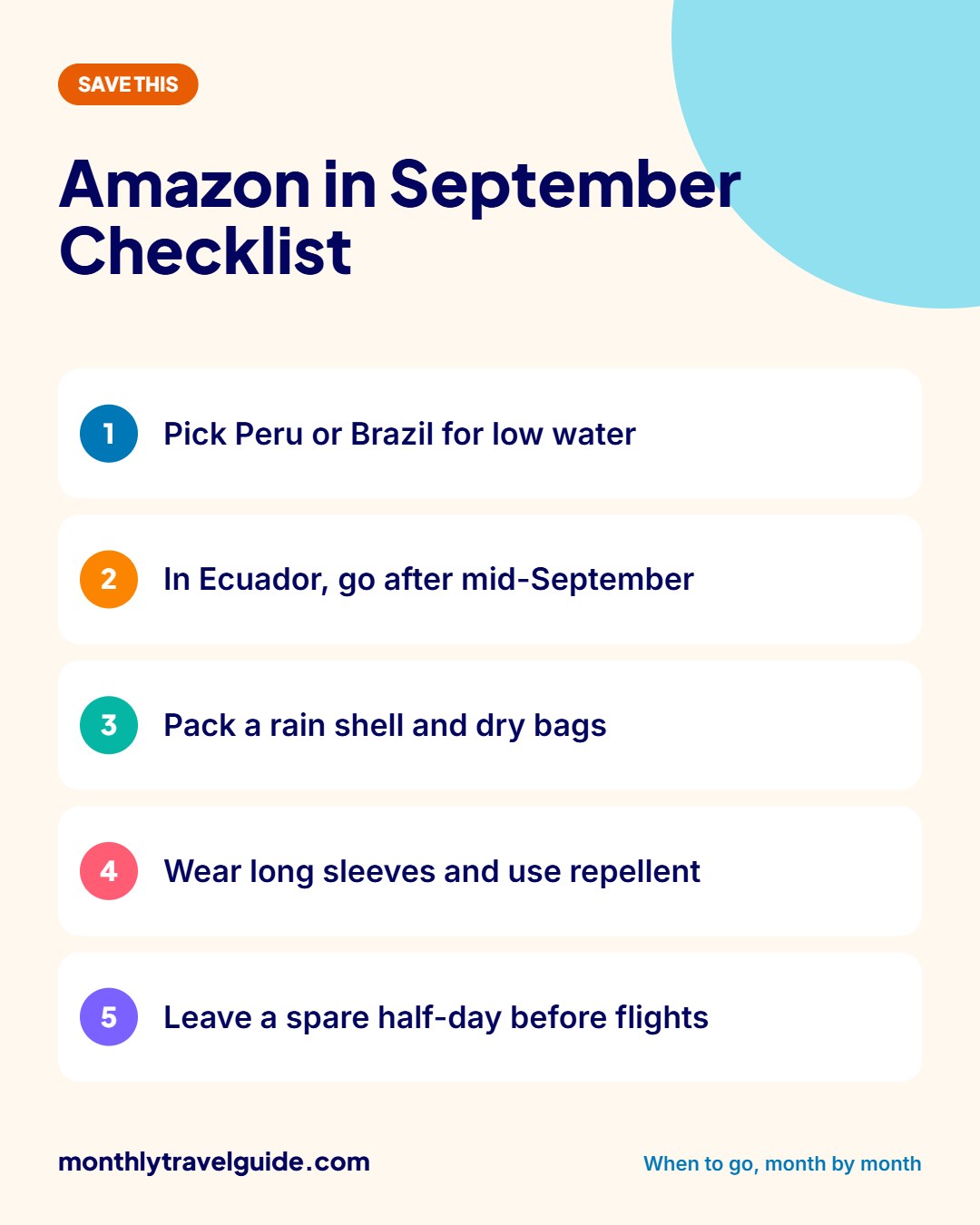
| A tight connection on the last day | Low rivers and storms can slow boat transfers | Leave a spare half-day before your flight |
| Peak low-water weeks without booking | This is a popular window in Peru and Brazil | Book lodges and cruises early; prices change, so check before you book |
Sources: Responsible Travel for monthly rainfall in Peru; Travel Dojo for Cuyabeno; Peru Jungle and Travel Dojo for slower transfers at low water. Not sure your dates are wise? Run them through the free When Not to Go checker.
Better Month If You Want Something Else
This section helps if September doesn’t fit, or if the Amazon is part of a bigger trip with other goals.
If you want
Flooded-forest canoe trips
Go in the high water season, around March to June, when skiffs reach creeks and lakes closed at low water.
If you want
The driest Peruvian weeks
Go in June to August, when Responsible Travel’s averages drop to about 60 to 65 mm a month.
If you want
Ecuador at its best
Aim for mid-September to mid-October or late January to early March, the two drier spells in Cuyabeno.
If you want
Patagonia on the same trip
September is early spring in the far south; see Patagonia in September.
If you want
Fewer people overall
Shoulder weeks at the edges of the low water season are quieter; see how to avoid crowds in September.
For more ideas for the month, our September travel guide compares the strongest picks worldwide, and our list of national parks in September covers protected areas at their seasonal best. The free Shoulder Season Detector shows the quieter weeks for any destination.
5 Common Mistakes on a September Amazon Trip
1. Treating the Amazon as one place
The basin spans several countries and climates. Peru and Brazil are in low water in September; Ecuador is still wet. Pick the country first, then judge the month.
2. Expecting a dry season with no rain
Even the driest months bring storms, usually late in the afternoon. A day lost to rain is rare, but a soaking is likely. Pack a rain shell and dry bags.
3. Booking for flooded-forest canoeing
If the trip you picture is paddling between tree trunks, September is the wrong month. Ask your lodge what its boat trips look like at low water before you book.
4. Leaving no slack in the schedule
Low rivers can slow transfers and storms can delay small flights. Don’t book the last boat out on the same day as an international flight.
5. Skipping the health check
Vaccination and anti-malarial advice varies by region and changes over time. See a travel clinic early, and treat repellent and long sleeves as daily kit, not extras.
Amazon Rainforest in September FAQ
Is September a good time to visit the Amazon rainforest?
Yes, for most trips. In Peru and Brazil, September falls in the low water season, with roughly 75 to 100 mm of rain, open forest trails, fewer mosquitoes and wildlife gathered along the riverbanks. The trade-off is that boats can’t reach as many flooded creeks. Ecuador’s Amazon is wetter, at about 300 mm, but a drier spell usually starts in mid-September.
Is September high or low water in the Amazon?
Low water in most of the basin. Around Manaus the river is falling well below its June peak, which can be 14 to 17 m higher, and in northern Peru the flood peaks at the end of April before dropping through the dry months. Ecuador runs on a different pattern: its Cuyabeno reserve has a drier, lower-water spell from mid-September to mid-October.
What is the weather like in the Amazon in September?
Hot and humid, with short storms. Average highs are about 32 °C in the Peruvian Amazon and about 33 °C around Manaus, with about 100 mm and 76 mm of rain respectively. Ecuador’s Amazon is a little cooler, with highs near 27 to 30 °C, but much wetter, at about 300 mm. Rain usually falls in heavy afternoon bursts rather than all day.
What animals can you see in the Amazon in September?
Low water concentrates wildlife around the remaining rivers, lakes and pools. Caimans are easier to spot, and wading birds such as herons and kingfishers gather at waterholes. In Ecuador’s Cuyabeno reserve, anacondas and caimans collect at shrinking water. Some river dolphins also leave smaller, shallow tributaries in the dry months.
When is the best time to visit the Amazon in Peru?
Responsible Travel names May to September as the best time for the Peruvian Amazon, when wildlife gathers on shrinking riverbanks and mosquito numbers drop. June to August is the driest stretch, at about 60 to 65 mm a month. Choose the high water months, around March to June, instead if you mainly want canoe trips through flooded forest.
Are there fewer mosquitoes in the Amazon in September?
Usually, yes. Lower water and less rain mean fewer breeding pools, and several operators note fewer mosquitoes in the low water season, including September to November around Manaus. They never disappear, though. Wear loose long sleeves and trousers, use repellent every day, and ask a travel clinic about anti-malarial advice for your exact region.
The Bottom Line
For most travellers, the Amazon rainforest in September means low water in Peru and Brazil: open trails, wildlife on the banks, river beaches near Manaus and manageable rain. Go to Ecuador in the second half of the month, and pick the high water season instead if flooded-forest canoeing is the goal. For more September trips, browse our September travel ideas.
Between the seasons
Find the weeks that work almost anywhere
September in the Amazon is a classic in-between window: past the floods, before the rains return. The Shoulder Season Playbook shows how to spot those windows for any destination, read crowd and weather trade-offs, and move your dates by a week or two to get the better trip.
Digital download · All sales final
Free download
The 12-Month Map, free
The whole year for one country on four printable pages, so you can see the right months before you read anything else.
- Good, shoulder and avoid months at a glance
- Region by region, not one average for the whole country
- Prints cleanly on US Letter
Your download page opens as soon as you sign up. 24 countries available.