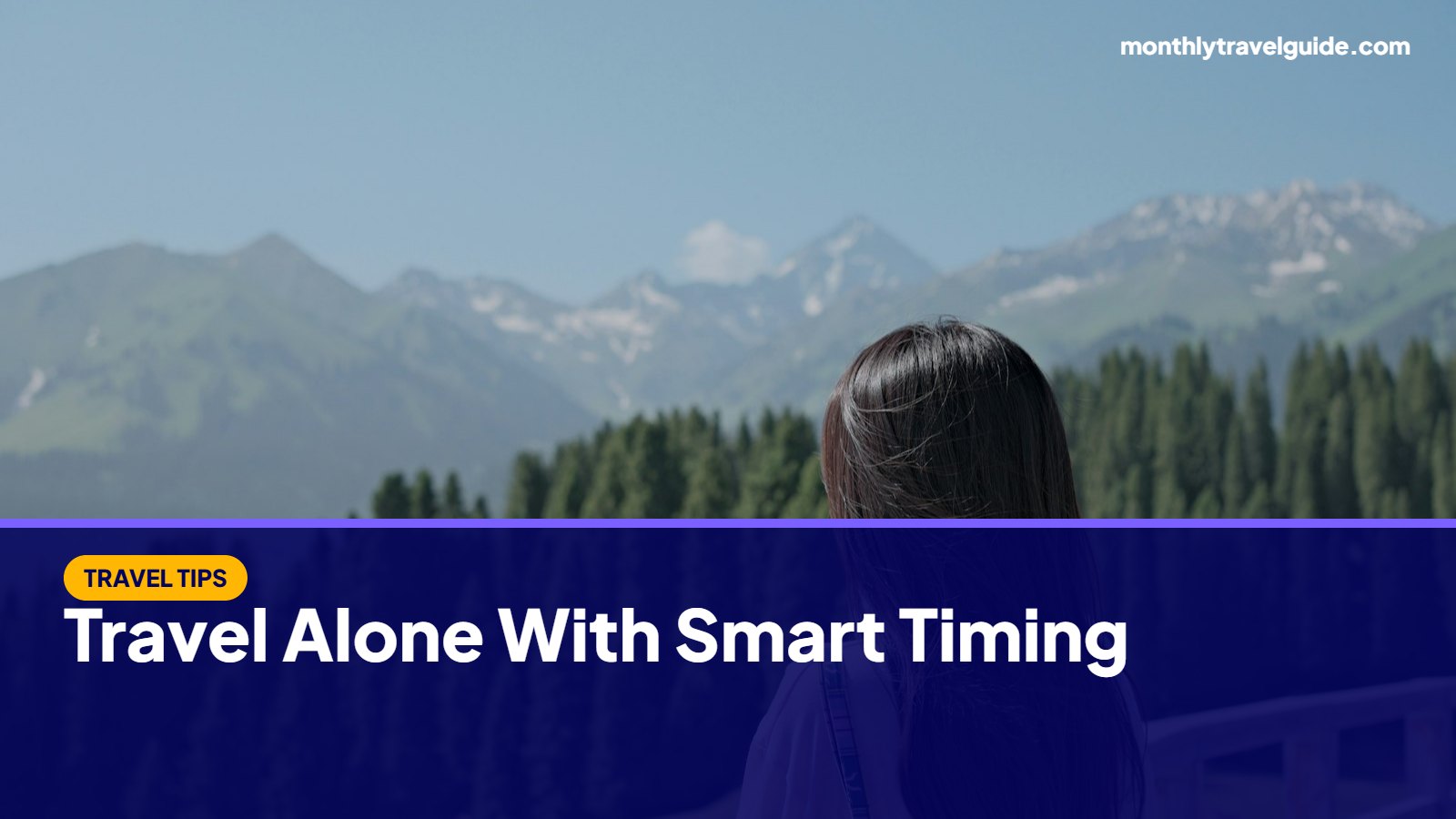
The most useful solo travel tips for women are less about fear and more about timing: when you land, which weeks you travel in and how busy the streets are around you. Most solo trips end with nothing worse than sore feet. What helps is a short list of habits that remove the avoidable risks, plus a calendar that works for you rather than against you. This guide covers both, with links to official government advice wherever a rule or a number matters.

When to Go guides
Choose your country, then your month
24 country guides, each about 100 pages: every month rated for weather, crowds and prices, region by region, with a 7-day booking plan. Six guides per region bundle.
Browse the 24 guides · $19 eachRegion bundles: Europe, Asia & Pacific, Sun Souks & Safari, Americas · $47 each
Three timing rules first
Travel alone, travel well
01
Arrive in daylight
Book flights and trains that land before dusk, so your first walk is in good light.
02
Pick shoulder weeks
Quieter streets, easier rooms and staff with time to help.
03
Plan festival nights
Big crowds are fun; know your route home before the party starts.
The short answer
Research the local laws and dress norms, book a first night with good reviews and a staffed desk, and arrive before dark. Travel in shoulder season when you can, share your plans with someone at home, watch your drink, use registered taxis and keep a charged phone with local emergency numbers saved. Trust your instincts: leaving a situation early is always allowed.
Key takeaways
Most risks for women travelling alone are the same as for anyone: theft, scams, traffic and getting lost after dark.
Landing in daylight is the single easiest safety upgrade you can make, and it costs nothing but a different flight time.
Shoulder season often means calmer streets, easier bookings and staff who have time to give directions.
Government advice pages for women travellers, from the UK, Canada and the US, are free, short and worth ten minutes.
Festivals and peak weeks are not off limits; they simply need a plan for the walk home and a meeting point.
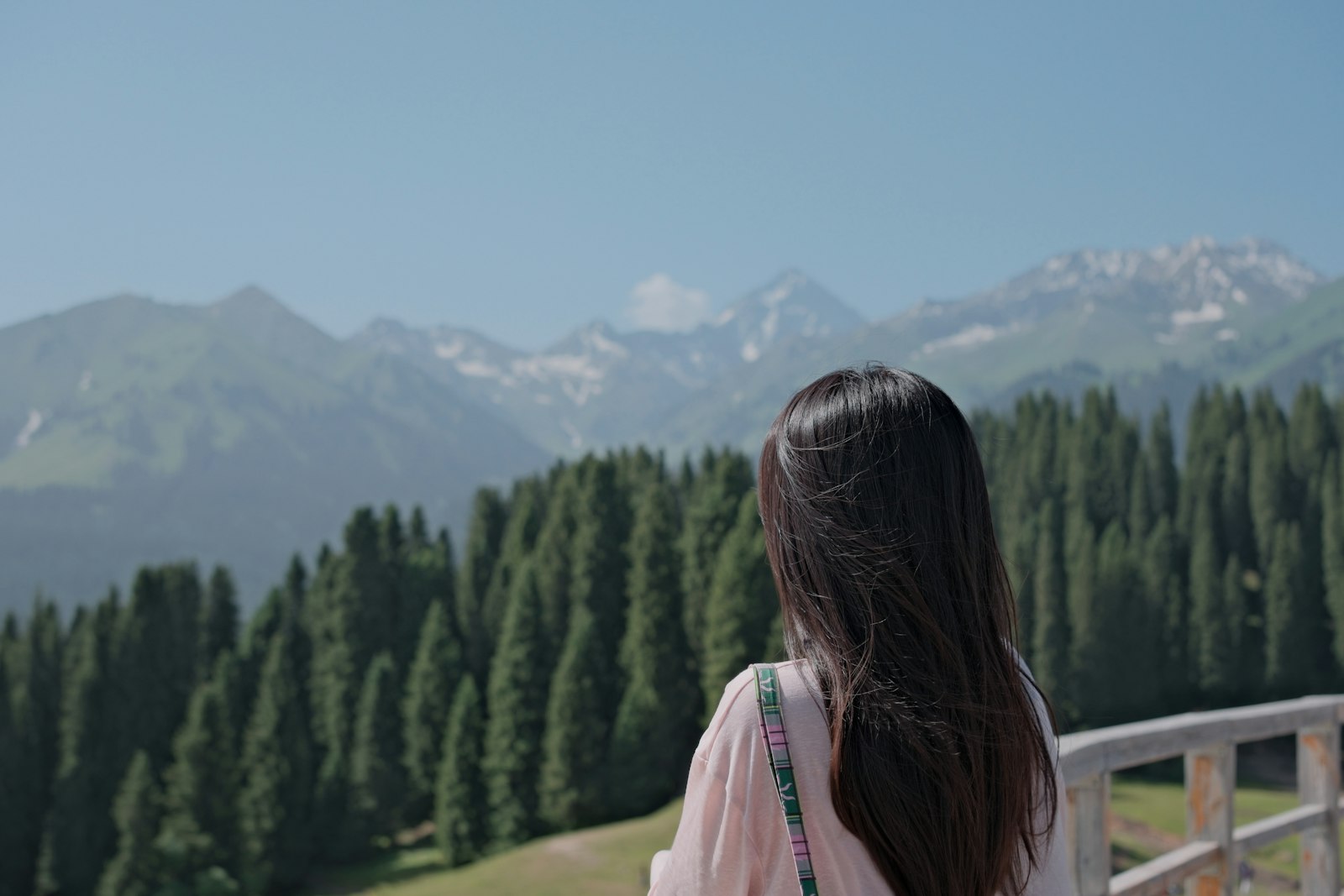
Solo Travel Tips for Women Before You Book
This section covers the research that takes an evening and saves the most trouble later. You need the official picture and a sense of local norms, not every forum thread.
Start with your own government’s travel advice page for the country, then the general page for women travellers. The UK Foreign, Commonwealth and Development Office suggests you research laws and attitudes towards gender equality before you go, and it points to guidebooks, online forums and people who have visited as useful extra sources. Its advice page also asks you to check that the destination can provide the healthcare you need, especially if you have a health condition or are pregnant.
Dress norms matter more in some places than others. The US State Department page for women travellers notes that tight-fitting clothes, sleeveless shirts or shorts may not be acceptable in some countries, and Canada’s advice says ignoring local clothing norms could put your safety at risk. A light scarf and one pair of loose trousers solve most of this, and they double as sun protection.
| Check | Where to look | Why it helps |
|---|---|---|
| Laws that affect women | Your government’s country advice page | Some rules on dress, alcohol or relationships differ sharply from home |
| Dress norms | Official advice, then a recent guidebook | Blending in reduces unwanted attention |
| Health care and medicines | Your doctor, then the embassy of the destination | Some medicines are restricted; some products are hard to find |
| Transport options | Official advice and the tourism board | Tells you which taxis and buses are licensed |
| Event and holiday calendar | Tourism board and our free tools | Shows crowd peaks and closures before you pick dates |
🗓️ Free: a 12-Month Map for your country
Every month on one page: best weeks, shoulder weeks and the ones to skip. Print it or keep it on your phone.
For health, Canada’s advice for women travellers suggests seeing a health professional about six weeks before departure, packing a travel health kit because some items, such as feminine hygiene products, may be hard to find, and checking that any medication you carry is legal at your destination (Travel.gc.ca).
🧰 Try it while you read: a free tool for this trip
Free trip timing tool
What Kind of Traveller Are You?
Seven quick taps pick your travel type, then show the countries and months where it shines.
Loading the tool…
Arrive in Daylight: The Easiest Safety Upgrade
This section explains why arrival time deserves as much thought as the hotel. The first hour in a new place is when you’re most tired, most loaded with bags and least sure of the way, so it’s worth giving yourself good light and open shops for it.
A daytime arrival means the information desk is staffed, the SIM card kiosk is open, public transport is running at full frequency and you can see the street outside your accommodation before you commit to the walk. If a late flight is much cheaper, compare the saving with the cost of a licensed transfer.

The Smart Timing Bundle
Pick the month, book in the right order, pack once
Six printable timing tools for any trip: the Trip Timing Planner, When to Book, When NOT to Go, the Shoulder Season Playbook, the family timing guide and the Packing by Season System.
See the bundle · $37Six products, $100 separately · Digital download · All sales final
Watch the season
Daylight changes a lot with latitude. In Reykjavik, four or five hours of daylight is the norm in midwinter and the sun sets before 4 pm throughout December, while in June sunset is around midnight (Perlan). A mid-afternoon arrival can already be after dark in a northern winter, so check sunset times for your exact dates.
Trains are often easier than flights for this. A morning departure that reaches the city by lunchtime gives you an afternoon to find your bearings. Where it is offered, Canada’s advice suggests reserved train seating and women-only carriages or buses, and it advises against public transport or walking alone at night (Travel.gc.ca). Treat that as a planning tool, not a curfew: if you know the route and it’s busy, an evening out is fine.
Save the address of your first night in the local script, screenshot the route from the station or airport and download an offline map before you fly. Our guide to location sharing and travel safety covers how to share a live location with someone at home without handing your data to every app on your phone.
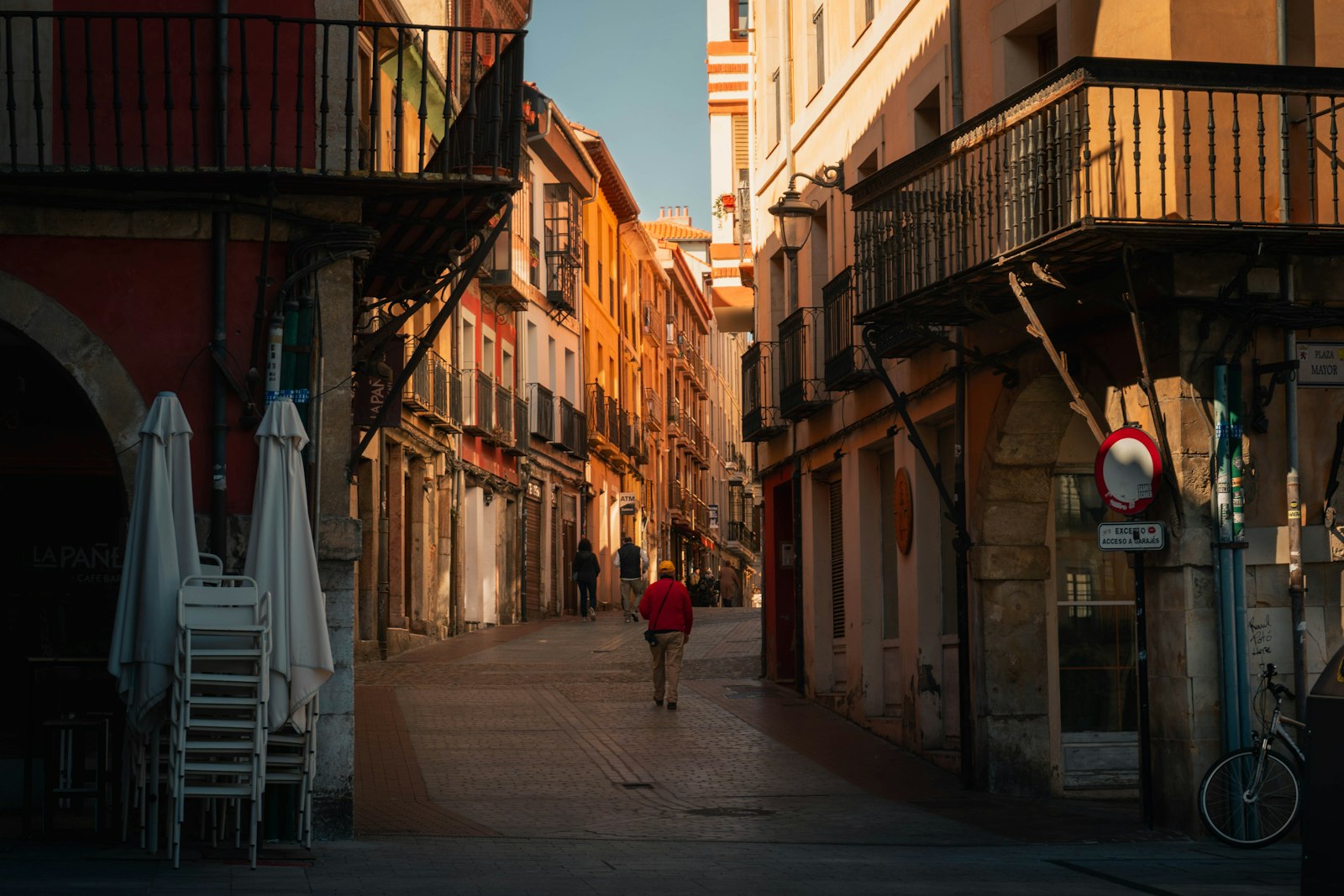
Why Shoulder Season Suits Women Travelling Solo
This section covers the weeks just before and after peak season, which tend to work especially well for solo trips. Prices and crowds vary by destination, so treat this as a pattern to test, not a rule.
In shoulder season, popular streets still feel lively without being packed, so pickpockets have less cover and you can see who’s around you. Rooms close to the centre are easier to find, and staff have more time to help. The trade-off is shorter opening hours for some attractions and, in some places, less reliable weather.
Month verdicts for a first solo city trip
Example: Southern Europe
Jan
Go with careShort days, quiet streets; plan evenings indoors
Feb
Go with careLow prices, but carnival weeks get busy
Mar
GoLengthening days, few crowds
Apr
GoMild, lively, before peak prices
May
GoLong light evenings, good bookings
Jun
Go with careCrowds rise late in the month
Jul
SkipPeak crowds, heat and full rooms
Aug
SkipBusiest weeks of the year in many places
Sep
GoWarm, calmer after school holidays
Oct
GoMild days, easy bookings
Nov
Go with careShort days, some places closed
Dec
Go with careFestive crowds, early dark
A general pattern for Mediterranean cities in the Northern Hemisphere, based on daylight, school holidays and crowd peaks. Every destination has its own calendar; check yours with the free Shoulder Season Detector.
The grid above shows the logic for a typical southern European city: spring and early autumn earn a clear Go, high summer is a Skip for a first solo trip because of crowds and heat, and the winter months come with short days that need a little more planning. The free Shoulder Season Detector finds the quieter weeks for any destination, and our pages on solo travel in October and solo destinations in September show the pattern in two of the strongest shoulder months.
Choosing Where to Stay When You Travel Alone
This section covers the choice that shapes every evening of a solo trip. A good base is central enough that you can walk home on lit, busy streets, and staffed enough that someone notices if you don’t come back.
Read recent reviews from women
Filter reviews for solo or female travellers where the site allows it, and look for comments about the street at night, the lock on the door and how staff handled problems.
Favour a staffed desk
A 24-hour reception or a host who lives on site is worth more than a slightly bigger room. Canada’s advice suggests places with security features such as cameras and guards.
Keep your room number private
If someone asks at the desk, staff shouldn’t say it aloud. Confirm the identity of anyone who knocks, including staff, before you open the door.
Pack a door wedge
A rubber wedge or a small door alarm weighs almost nothing and makes a cheap lock feel solid. Canada’s official advice lists both.
Choose the location for the walk home
Pay a little more to be near the areas you’ll visit in the evening. The cheapest room in town can cost you a long, dark walk every night.
Source for the security points: Government of Canada advice for women travellers. Some hostels offer women-only dorms, which are worth a look if you like the social side of hostels but want a quieter room.
Getting Around, Nights Out and Your Drink
This section covers transport and evenings, where most of the practical advice from governments is concentrated. None of it means staying in; it means deciding in advance how you’ll get home.
Use registered, reputable taxis or the official app-based services, and match the plate and driver to the booking before you get in. The US State Department warns that informal taxis or minibuses can be dangerous, particularly for women travelling alone, and suggests asking local authorities or tourism officials which options are safe. At airports and stations, use the official rank, not a driver who approaches you inside the terminal.

The complete kit
Every country guide, every timing tool
All 24 When to Go country guides, the six Smart Timing tools and every 12-Month Map, with a Start Here that tells you what to open first.
See the kit · $127The five bundles cost $225 separately · Digital download · All sales final
Drink spiking happens to travellers of every gender, and the advice is simple. The UK government says not to leave drinks unattended and not to accept drinks from strangers, and notes that the drugs used are usually colourless and tasteless and can be added to soft drinks too. If you suddenly feel strange, sick or very drunk after a small amount, tell someone you trust who can take you somewhere safe, or phone the local police (GOV.UK). Canada’s advice adds: watch your drink being made and served.
Tip
Before a night out, screenshot the route home, save the number of a licensed taxi firm and set a time to message someone at home. If you meet new people, keep your accommodation name to yourself until you know them better. Being safe is more important than being polite, as the US State Department puts it.
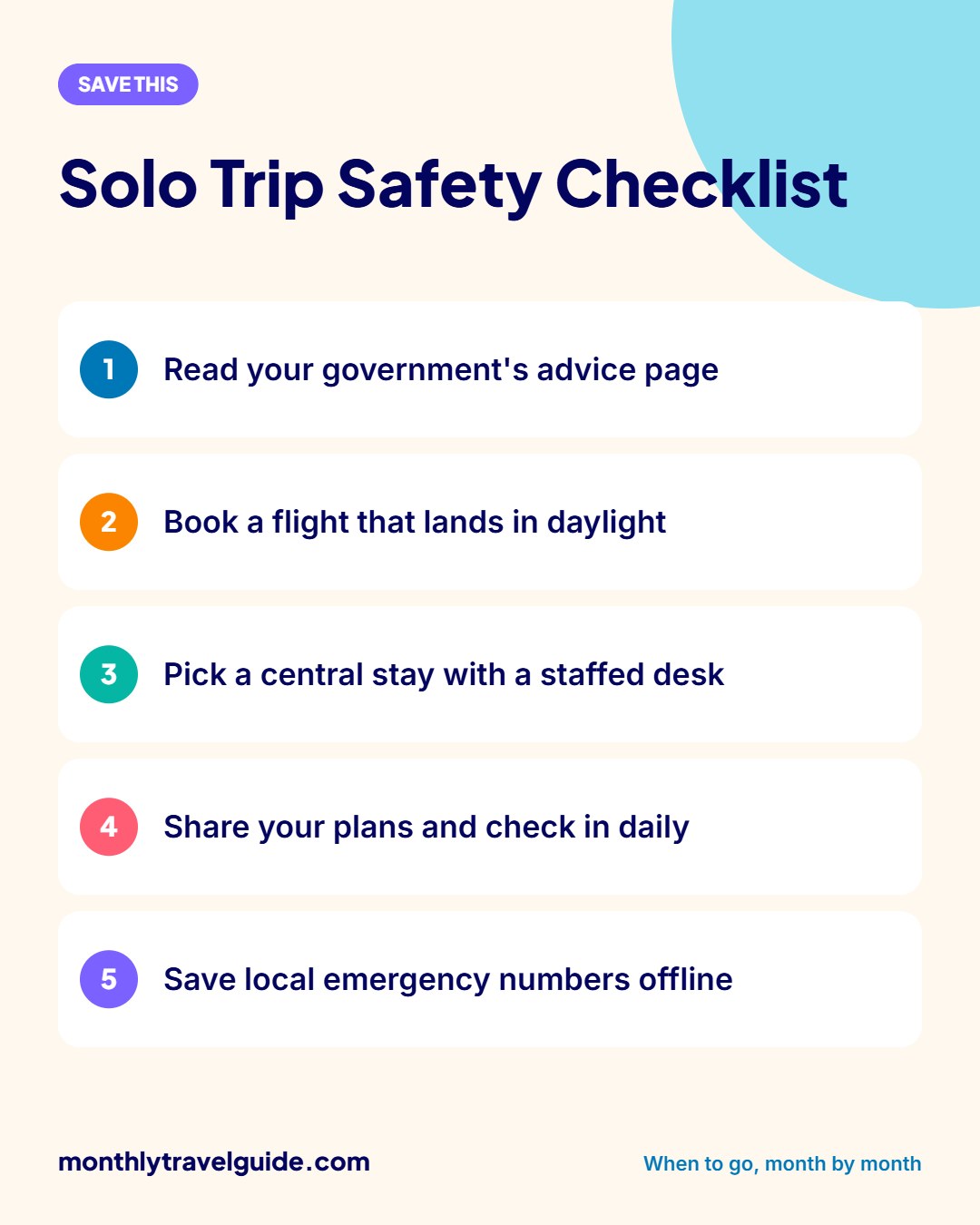
Festivals and Peak Crowds: Go, With a Plan
This section covers big events, which are among the best reasons to travel and also the busiest moments of any year. Huge crowds bring pickpockets, packed transport and, at some events, groping or unwanted attention, so they reward a little planning rather than avoidance.
Official advice is measured. For India, for example, the UK government advises taking particular care during periods of national or religious significance, notes that stampedes have occurred at some events with very large crowds, and says alcohol sales are often banned during major religious festivals (GOV.UK India advice). The same logic applies to street carnivals, New Year crowds and big music festivals anywhere.
| Situation | Plan | Why |
|---|---|---|
| Street festival or parade | Watch from the edge, near a side street | Easier to leave if the crowd surges |
| New Year or fireworks night | Book transport home or stay walking distance away | Taxis and trains are overwhelmed after midnight |
| Colour or water festivals | Join a group or a hosted event | Close, rowdy crowds are easier with company |
| Peak-week arrival | Arrive a day before the main event | Rooms and transfers are booked solid on the day |
| Festival with an alcohol ban | Check the dates before you plan a night out | Bars may close or stop serving |
Agree a fixed meeting point if you join others, keep your phone in a front pocket or cross-body bag, and carry a small amount of cash separately from your cards. To check whether your dates clash with a big event, use the free Festival Month Matcher.
Phone, Money and Emergency Plans
This section covers the backup plan you hope you’ll never use. Ten minutes of setup before you leave means one less thing to work out in a stressful moment.
Save the local emergency number for every country on your route. In the European Union, 112 is the emergency number you can dial free of charge from fixed and mobile phones everywhere in the EU (Your Europe). Elsewhere, numbers differ, so add them to your contacts before you fly, together with your embassy or consulate.
Many governments run a free or simple registration service so they can contact you in a crisis. Canadians can sign up for the free and confidential Registration of Canadians Abroad service (Travel.gc.ca). US citizens can enrol a trip with the nearest embassy or consulate through the Smart Traveler Enrollment Program and receive alerts about risks in the area (STEP overview). The UK government’s women’s advice page explains how to reach consular help and what support exists after a sexual assault abroad (GOV.UK).
Important
Split your money. Keep one card and some cash in your day bag, and a second card plus an emergency note with key numbers in your room or a separate pocket. If you are robbed, Canada’s advice is to stay calm and not resist, because resistance can increase the risk of violence. Belongings can be replaced.
Make sure your travel insurance covers medical treatment and evacuation, as the UK guidance recommends, and keep a copy of the policy number offline. Our list of essential travel apps covers offline maps, translation and transport apps that are worth installing before you leave.
When Not to Go: Weeks That Make Solo Trips Harder
This section is the honest part. No month is off limits, but some weeks add friction that is easier to handle in a pair than alone.
| Avoid | Why | Do this instead |
|---|---|---|
| A late-night arrival on your first trip | Closed desks, thinner transport, tired judgement | Pick a flight or train that lands before dusk |
| Peak school-holiday weeks | Full rooms push you to the outskirts; packed sights | Go two or three weeks either side |
| Midwinter in the far north on a tight plan | Very short days compress everything into a few hours | Go in spring or early autumn, or plan indoor evenings |
| The night of a giant street event, with no plan | Transport stops and crowds surge | Book walking-distance accommodation or a return transfer |
| Storm or monsoon peaks in remote areas | Cancelled ferries and roads can strand you | Check the storm season before you book |
Two free tools help here: the When Not to Go checker flags poor weeks for any destination, and the Storm Season Check shows hurricane, typhoon and cyclone seasons. For a winter trip with fewer crowds, our tips for avoiding crowds in December has more ideas.
Better Month If You Want Something Else
This section helps you match the month to the kind of solo trip you have in mind.
If you want
Your first solo trip
Choose spring or early autumn in a well-connected city, with long days and calm streets.
If you want
A winter escape
Look at warm, sunny places in their dry season; our solo trips in February has ideas.
If you want
Meeting other travellers
Go in late shoulder season, when hostels and tours still run but crowds have thinned.
If you want
Long, light evenings
Go close to midsummer at higher latitudes, when it barely gets dark.
If you want
A festival
Arrive a day early and stay within walking distance of the main venue.
For a wider overview of planning a trip alone, from budgets to first destinations, see our complete solo travel guide.
5 Common Mistakes Women Make on a First Solo Trip
1. Booking the cheapest flight without checking the landing time
A midnight arrival can turn a cheap fare into an expensive taxi and a stressful first hour. Compare the fare with the cost of a safe transfer, and favour daytime landings, especially in a country you don’t know.
2. Choosing the room before the neighbourhood
A lovely room on the edge of town means a long walk or ride home every evening. Pick the area first, based on where you’ll spend your nights, then find the best room within it.
3. Telling everyone where you’re staying
Friendly conversations are part of the joy of solo travel, but there’s no need to share your accommodation or room number with people you’ve just met. Meet new friends in public places until you know them better.
4. Skipping the official advice pages
Government pages for women travellers are short, free and updated. Ten minutes on them covers local laws, dress norms and how to get help, and it beats a dozen alarming forum threads.
5. Travelling in peak weeks by default
Many people travel in school holidays because everyone else does. If you’re free to choose, shoulder season usually brings calmer streets, easier bookings and more relaxed hosts, which all make a solo trip simpler.
Solo Travel Tips for Women: FAQ
How can a woman stay safe while travelling alone?
Research local laws and dress norms on official advice pages, book a central first night with a staffed desk and arrive before dark. Share your plans with someone at home, use registered taxis, never leave a drink unattended and keep a charged phone with emergency numbers saved. Trust your instincts and leave any situation that feels wrong without worrying about seeming rude.
What is the best time of year for a first solo trip?
For many destinations, shoulder season works best: the weeks just before or after the main holiday peak. Streets are lively but less crowded, rooms near the centre are easier to book and staff have more time to help. In southern Europe that usually means spring or September and October, but every destination has its own calendar, so check yours first.
Is it better to arrive at night or during the day?
During the day, especially on a first trip to a new country. Information desks and shops are open, public transport runs at full frequency and you can see your route clearly. If a late arrival can’t be avoided, pre-book a licensed transfer, save the address in the local script and let your accommodation know your arrival time.
What should I pack for solo travel as a woman?
Pack a rubber door wedge or small door alarm, a cross-body bag that zips closed, a power bank, a light scarf for covering up where needed and a basic travel health kit. Canada’s official advice notes that some items, such as feminine hygiene products, may be hard to find in some places, so bring what you need for the whole trip.
How do I avoid drink spiking when travelling?
Watch your drink being prepared, keep it with you and don’t accept drinks from strangers. The UK government notes that spiking drugs are usually colourless and tasteless and can be added to soft drinks too. If you feel unusually unwell or drunk after a small amount, tell someone you trust, get somewhere safe and contact local emergency services if needed.
Should I register my trip with my embassy?
It’s a good idea for longer trips or less familiar destinations. Canadians can use the free Registration of Canadians Abroad service, and US citizens can enrol a trip through the Smart Traveler Enrollment Program to receive alerts. In an emergency, these services help your government find and contact you, and the alerts flag new risks in the area you’re visiting.
The Bottom Line
The best solo travel tips for women are simple habits plus smart timing: land in daylight, pick shoulder weeks when you can, plan festival nights, and keep official advice and emergency numbers close. The rest is the trip itself. For more ideas and destinations, browse our solo travel guides.
Free download
See the whole year before you book
Our free 12-Month Map puts every month for one country on four pages: when the weather works, when the crowds and prices peak, and the weeks to skip.
- 24 countries to choose from
- Region-by-region verdicts
- Printable PDF
Your download page opens as soon as you sign up. 24 countries available.