Getting away for the holidays is spread over a week or more. Coming home isn’t. Millions of people try to fly back on the same handful of days in early January, right when winter storms are most likely to scramble the schedule, and that’s why the January airport rush can feel worse than the Christmas getaway itself. This guide shows you how to pick a calmer return date, which flights hold up best, how to move through the airport faster, and what to do in the first ten minutes when a storm starts cancelling flights.

The Smart Timing Bundle
Pick the month, book in the right order, pack once
Six printable timing tools for any trip: the Trip Timing Planner, When to Book, When NOT to Go, the Shoulder Season Playbook, the family timing guide and the Packing by Season System.
See the bundle · $37Six products, $100 separately · Digital download · All sales final
To beat the January airport rush, avoid flying home on the first weekend after New Year’s Day, when return travel peaks, and choose a midweek flight or stay on into mid-January instead. Book the earliest nonstop you can, because morning departures are the most likely to leave on time. Check in online, arrive two hours ahead for domestic and three for international flights (more at airports issuing peak warnings), and rebook the moment your airline posts a weather waiver.
✅ Key takeaways
- ✓Return days are busier than departure days, and Sundays are usually the worst: move your flight home off the first weekend after New Year’s Day if you can.
- ✓Book the first flight of the day: US on-time data shows departures between 6 and 11 a.m. hold their schedule best, and late-evening flights worst.
- ✓Follow your airport’s own advice in peak week: some airports ask for three hours even for short flights, and Emirates has asked Dubai passengers for four.
- ✓When a storm is forecast, check your airline’s travel alerts daily: a weather waiver lets you move your flight without a change fee before the queues form.
- ✓Carry gifts unwrapped and put liquid treats (wine, syrup, preserves) in checked bags, or the security line will cost you both time and the gift.
Why the January Airport Rush Hits Harder Than the Christmas Getaway
The January airport rush is a squeeze, not a wave. On the way out, people leave across ten days or more: the last day of work, the first day of school holidays, the weekend before Christmas. On the way back, almost everyone needs to be home before work and school restart, so the return compresses into a few days.
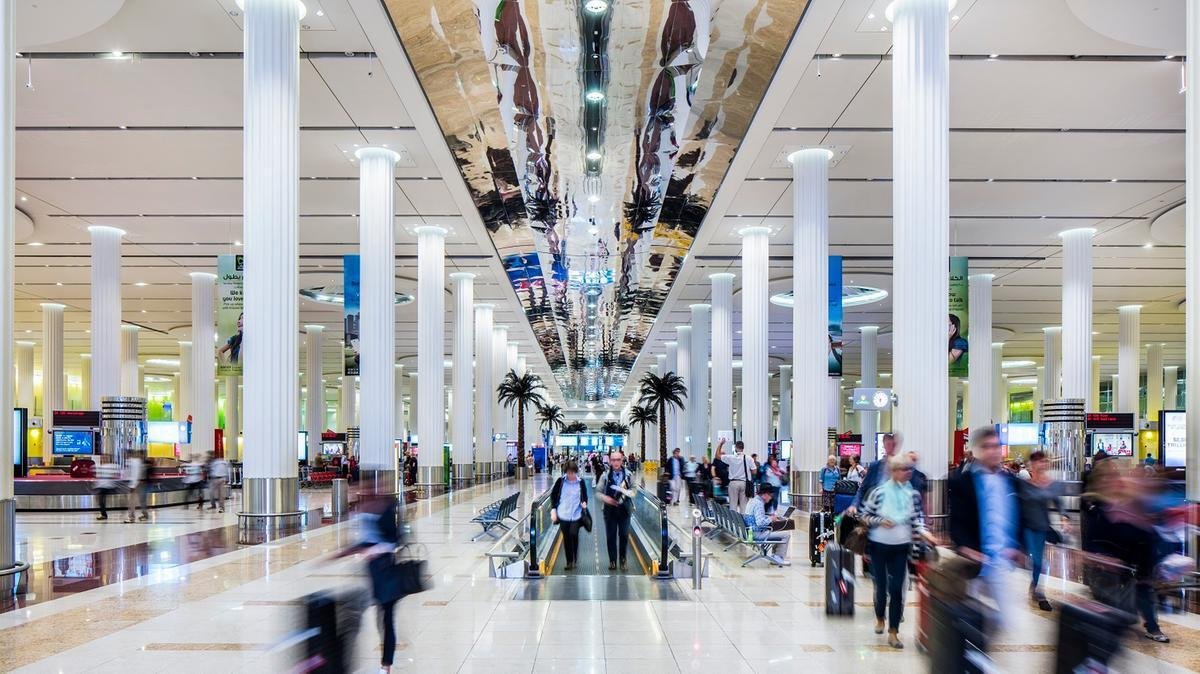
Travel-insurance analysis of US airport screening data puts it plainly: return travel days, especially Sundays, are even busier than departure days. And the effect isn’t only American. Ahead of one recent New Year, Emirates warned passengers that 2 to 5 January would be the busiest days at Dubai International and asked them to arrive four hours before departure. Orlando International, a major family-holiday gateway, forecast its heaviest days of the season for the Friday, Saturday and Sunday of the first weekend after New Year’s Day.
Then add winter. January is prime season for snow, freezing rain and de-icing delays across North America, northern Europe and East Asia. A storm that cancels flights on a quiet Tuesday is an inconvenience. The same storm on the busiest return Sunday leaves you competing with full planes for the few empty seats left that week.
| When you fly home | Crowds | Rebooking room if something goes wrong | Our verdict |
|---|---|---|---|
| 1 January (morning) | Before the main return wave | Moderate | Worth comparing if you can face an early start after New Year’s Eve |
| 2 January to the first weekend after New Year’s Day | Peak return days | Very little: planes are full | Avoid if you have any choice |
| The Monday to Wednesday after that weekend | Easing | Better | A strong option if work allows |
| Mid-January onwards | Quiet | Good | The calmest, and often the cheapest, way home |
🧰 Try it while you read: a free tool for this trip
Free trip timing tool
Storm Season Check
See whether our guides flag typhoons, hurricanes, cyclones or monsoon for your month.
Loading the tool…
Pick Your Return Date First: The 3-Question Rule
Your return date matters more than any airport trick, so choose it before you book anything else. Most people pick it last, after the outbound is locked, and end up on the worst day by default.
Ask yourself three questions, in this order:

When to Go guides
Choose your country, then your month
24 country guides, each about 100 pages: every month rated for weather, crowds and prices, region by region, with a 7-day booking plan. Six guides per region bundle.
Browse the 24 guides · $19 eachRegion bundles: Europe, Asia & Pacific, Sun Souks & Safari, Americas · $47 each
Can you come back before the crowd?
Flying home on New Year’s Day itself, or even on 31 December, gets you ahead of the main return wave. It’s not glamorous. It works.
Can you come back after it?
If you work remotely or the children’s term starts later, a return on the Monday to Wednesday after the first weekend of January, or later still, puts you on emptier planes with seats to spare if something breaks.
If you must fly on a peak day, can you leave a buffer?
Then fly at least one full day before you’re needed at work or school. A cancelled Sunday flight with Monday as your back-up day is a hassle; with no back-up day, it’s a crisis.
Most advice about holiday flights obsesses over the outbound. We’d argue the return deserves more thought, because that’s the leg with the fewest spare seats and the least flexibility in your life. If you’re travelling with children, the school calendar sets the hard edge; our tips for flying with kids help once the date is fixed.
Book the First Flight Out: Why Time of Day Matters More in January
The earlier your flight leaves, the better its chances. That’s not superstition. Early flights leave before the day’s delays have had time to build, while later flights inherit whatever went wrong earlier, because the same aircraft and crews fly several trips a day.
An analysis of US Department of Transportation on-time data by Thrifty Traveler found that the best departure hours were 6 to 11 a.m., with the 7 and 8 a.m. hours on time about 84% of the time, while the 7 p.m. to midnight stretch was the worst of the day and the 11 p.m. hour fell to under 57%. The sharpest drop came between 4 and 5 p.m. In winter, there’s a second benefit: if your morning flight is cancelled, there are still several flights left that day to rebook onto.
6–11 a.m.
the best-performing departure hours in US on-time data
~84%
on time for 7 and 8 a.m. departures
<57%
on time for the 11 p.m. hour, the worst of the day
Three more booking choices make a big difference on a peak return day:
- Pay for nonstop where you can. Every connection is a second chance for a delay to break your trip, and in January the connecting hub is often the snowy one.
- If you must connect, avoid the tightest connections. The airline may sell you a 45-minute connection at a big hub; on a full January day with de-icing queues, a longer layover is cheap insurance.
- Keep everything on one ticket. If a delay makes you miss a connection on the same booking, the airline rebooks you. On two separate tickets, the second airline usually has no obligation to help.
When to Book
The best holiday return flight, the early nonstop on a calm day, is usually the first to sell out. This guide sets out what to lock in first, how far ahead to book and when it’s safe to wait, so the flight you want is still there when you buy it.
See When to Book · $19 →Digital download · All sales final
How to Beat the January Airport Rush From Curb to Gate
Once you’re at the airport, the job is to cut out every queue you don’t need. The usual baseline is two hours before a domestic flight and three before an international one, which is what TSA has advised at busy airports such as Newark. In peak return week, follow your own airport’s warning instead: Orlando’s officials asked passengers to arrive at least three hours early during the post-holiday rush, and Emirates asked Dubai passengers for four.
The night before: check in and check the airport
Check in online as soon as it opens, save the boarding pass to your phone and screenshot it. Then look at the airport’s website or app for security wait times, parking and any peak-day advice.
Travel carry-on only if you can
No bag drop, no baggage hall and, if your flight is cancelled, no checked case stuck in the system. Our guide to travelling light without sacrificing comfort shows how to fit a winter trip into one bag.
Use the fast lanes you’re entitled to
With TSA PreCheck you keep shoes, belts, light jackets, laptops and 3-1-1 liquids where they are. Enrolment needs an in-person appointment, so apply well before the holidays, not the week of your flight.
Coming back into the US? Fill in passport control on your phone
US citizens and Canadian visitors can use Mobile Passport Control at participating airports: you submit your details in a free app and show a QR receipt to the officer. One phone can cover up to 12 family members.
Dress for the scanner, not the destination
Slip-on shoes, coat in your hand by the time you reach the trays, metal in your bag before the queue. Ten seconds saved per person adds up when you’re 200th in line.
Coming home after the holidays has one trap the outbound doesn’t: gifts. TSA recommends gift bags or boxes rather than wrapping paper, because if a wrapped present sets off an alarm, the wrapping has to come off. Solid treats such as fruitcake, chocolate and candy canes can go in your carry-on. Liquids and spreadables such as wine, eggnog, maple syrup and preserves count toward the 3-1-1 rule (3.4 oz, or 100 ml, containers in one quart-sized bag), so anything bigger goes in a checked bag.
The January rush isn’t beaten at the airport. It’s beaten when you choose the day and the hour you fly home.
When Snow Hits: How to Rebook Faster Than the Queue
When a winter storm threatens a peak return day, the travellers who get home first are the ones who move before the airline cancels anything. Seats on the remaining flights go to whoever asks first, and by the time a cancellation hits the departures board, hundreds of people are asking at once.
Your best tool is the weather waiver: a temporary policy an airline issues before a big storm, letting passengers booked to, from or through the affected airports on certain dates move their flight without a change fee. In past storms, American has waived change fees in every fare class, some United tickets have also had the fare difference waived, and Delta has offered free rebooking. The conditions differ every time (which airports, which travel dates, how far you can move the flight, sometimes a cut-off for when you bought the ticket), so read the airline’s travel alert itself, not a news summary.
| If this happens… | Do this |
|---|---|
| A storm is forecast for your travel day | Check your airline’s travel alerts every morning. If a waiver covers your flight, move a day earlier or later before the crowd does. |
| Your flight is cancelled | Rebook in the airline app first; join the desk queue and call at the same time. Take the first workable option and keep looking for a better one. |
| The app offers nothing for two days | Search nearby airports on the same airline, and flights through a different hub that’s away from the storm. |
| You decide not to travel at all | In the US, if the airline cancels or significantly changes your flight and you don’t accept the alternative, you’re entitled to a refund rather than a voucher. |
| Delays are building across the country | Check the FAA’s National Airspace System status for ground stops and delay programmes at your hub before you leave home. |
What you’re owed if the delay drags on (meals, hotels, compensation in the UK and EU) is a topic in itself, and we’ve covered it in detail in our guide on how to prepare for flight delays, along with the carry-on kit that makes a long wait bearable. For the apps that send gate changes and delay alerts before the airport screens do, see our roundup of travel apps for a January trip.

The complete kit
Every country guide, every timing tool
All 24 When to Go country guides, the six Smart Timing tools and every 12-Month Map, with a Start Here that tells you what to open first.
See the kit · $127The five bundles cost $225 separately · Digital download · All sales final
Turn the January Airport Rush Around: Fly When Everyone Else Is Home
Here’s the upside of the rush: once it’s over, airports empty out. The same travel-insurance analysis of screening data found that late January sees the lowest passenger numbers of the year, with mid-January to early February the slowest stretch and midweek days quietest of all.
That makes late January one of the easiest times of year to travel: shorter queues, emptier planes and, on many routes, lower demand after the holiday peak. If you’ve got time off left, or a flexible job, it’s worth planning a trip for those quiet weeks rather than fighting for a seat on 4 January. Our guide to low-season destinations in January picks places that are good value right then, and the Best Month Finder shows how any destination compares month by month.
Crossing time zones on the way home? Jet lag hits harder when you’re back at your desk the next morning, so our jet lag hacks for adjusting quickly are worth a read before the flight, not after.
5 Mistakes That Make the Trip Home the Worst Part of the Holidays
1. Booking the return last
People lock in the outbound in autumn and leave the return until it’s convenient, by which point the early nonstop on a calm day has gone. Book both legs together, and choose the return date with the same care as the departure.
2. Flying home the night before work starts
An evening flight on the last day of the holidays has two problems: it’s in the worst-performing part of the day, and it leaves you no room if it’s cancelled. Fly a day earlier, or take the first flight of that morning.
3. Waiting for the cancellation before acting
If a waiver has been posted for your airport, the airline is telling you disruption is likely. Moving voluntarily, while seats are still open, is almost always better than being rebooked automatically onto whatever’s left.
4. Checking a bag you didn’t need to
On a peak day the bag-drop queue can be longer than security, and if your flight is cancelled your case may travel without you. If the gifts made your luggage bigger on the way back, consider posting some home instead.
5. Trusting the general rule over the airport’s warning
Two hours is a baseline, not a promise. When an airport or airline publishes peak-day advice (three hours, even four), it’s because they can see the bookings. Follow it, and pack for winter on both ends with our winter packing list.
January Airport Rush: Your Questions Answered
The January airport rush is predictable, and that’s exactly why you can dodge it: choose a return day outside the first weekend after New Year’s Day, take the earliest nonstop, and move the moment a storm waiver appears. Get those three right and the trip home becomes the easy part. For more ideas, browse our best travel destinations in January, more travel tips, or plan your next trip with the month-by-month travel planner.
Free download
The 12-Month Map, free
The whole year for one country on four printable pages, so you can see the right months before you read anything else.
- Good, shoulder and avoid months at a glance
- Region by region, not one average for the whole country
- Prints cleanly on US Letter
Your download page opens as soon as you sign up. 24 countries available.



[…] Rough Guides describes short queues at Spain’s galleries and historic sites in January. Our guide to beating the January airport rush covers the first-week travel days if you can’t avoid […]