Italy in January is the country at its quietest and most honest: cold, often grey in the north, mild but showery in the south, snowy in the Alps and almost empty in the great museums once the Christmas holidays end on 6 January. It is one of the best months for art cities without queues, ski weeks and winter sales, provided you pack for rain and short days.
Quick answer
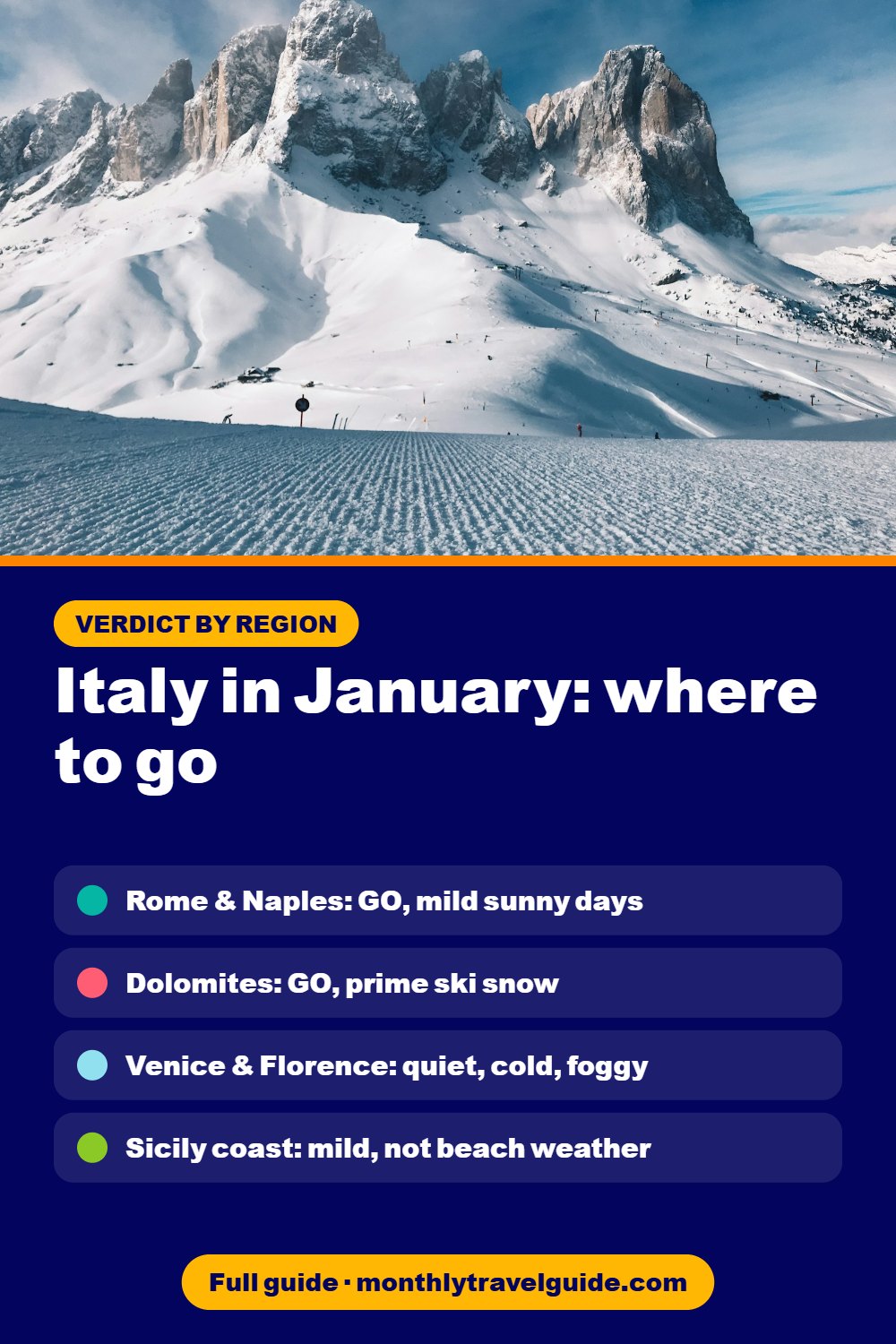
Yes, go for cities and snow, not for sun. Rome and Florence average 11 to 12 °C by day and 2 to 4 °C at night, Venice and Milan are colder and often foggy, and the Dolomites are in full ski season. After 6 January crowds and hotel rates drop sharply. Skip the Amalfi Coast and the islands for swimming.
Key facts
- Cool in the cities: Rome averages about 12 °C by day and 3.5 °C at night, Florence about 11 °C and 2 °C.
- Cold in the north: Venice and Milan average about 7 to 8 °C by day, with lows near 0 °C and frequent fog in the Po Valley.
- Mildest in the south: Palermo and Catania average about 15 to 16 °C, but Palermo has about 12 rain days.
- Snow in the Alps: the Dolomites are in full ski season, with average highs near 0 °C at 1,200 m.
- Quiet after 6 January: Epiphany closes the holidays, and the rest of the month is low season with winter sales in the shops.
Italy in January: Weather, Crowds and Prices by Region
This section is the reference table. January is the coldest month of the Italian year almost everywhere. The north is drier but cloudier, with fog in the Po Valley on still days; the south and the islands are milder but wetter. Read across for the place where you plan to sleep.
| Region (station) | Day / night | Rain | Sea | Sun per day | Crowds | Price level |
|---|---|---|---|---|---|---|
| Rome | About 12 °C / 3.5 °C | About 7 days, 65 mm | About 15 °C | About 4 h | Medium, low after 6 Jan | Medium |
| Florence | About 11 °C / 2 °C | About 8 days, 60 mm | — | About 4 h | Low to medium | Low to medium |
| Venice | About 7.5 °C / 0.5 °C | About 6 days, 45 mm | About 12 °C | About 3 h | Low after 6 Jan | Low to medium |
| Milan | About 7.5 °C / −0.5 °C | About 7 days, 65 mm | — | About 2 h | Low | Medium |
| Bolzano (South Tyrol, 250 m) | About 7 °C / −3 °C | About 4 days, 25 mm | — | About 3 h | Medium | Medium |
| Dolomites (Dobbiaco, 1,200 m) | About 0.5 °C / −7.5 °C | About 4 days, 25 mm | — | About 4 h | High at weekends | High |
| Naples (for the Amalfi Coast) | About 13.5 °C / 4.5 °C | About 10 days, 105 mm | About 15 °C | — | Low to medium | Low to medium |
| Bari (Puglia) | About 12.5 °C / 4.5 °C | About 7 days, 55 mm | About 14 °C | About 4 h | Low | Low |
| Palermo | About 15.5 °C / 9.5 °C | About 12 days, 90 mm | About 15 °C | About 5 h | Low | Low to medium |
| Catania (for Etna and Taormina) | About 16 °C / 5 °C | About 8 days, 75 mm | About 16 °C | About 5 h | Low | Low |
| Cagliari (Sardinia) | About 14.5 °C / 5.5 °C | About 8 days, 45 mm | About 15 °C | About 5 h | Low | Low |
🗓️ Free: the 12-Month Map for Italy
Every month on one page: best weeks, shoulder weeks and the ones to skip. Print it or keep it on your phone.
Temperatures, rain and sea are long-term January averages from Climates to Travel, rounded; sunshine hours come from the same publisher’s climate tables, which give no figure for Naples. No station sits on the Amalfi Coast itself, so Naples stands in for it, and Dobbiaco (Toblach), in the Alta Pusteria, stands in for the higher Dolomite valleys. Daylight in Rome runs from roughly nine hours at the start of the month to roughly ten at the end. Crowd and price levels are the Monthly Travel Guide editorial team’s ratings, not statistics.
12 °C
average afternoon in Rome
16 °C
average afternoon in Catania, the mildest city
2 h
of sun a day in Milan
12
rain days in Palermo
🧰 Try it while you read: a free tool for this trip
Free trip timing tool
Best Month Finder
Pick a country and your priorities; get the three months that suit you best.
Loading the tool…
Region by Region: Where to Go in Italy in January
This section gives each region a verdict. The rule of thumb: cities for art, the Alps for snow, the south for the mildest days, and no trip that depends on the sea.
Rome
Rome is the easiest big city in Italy in January. Afternoons average about 12 °C with about seven rain days. Nights fall to about 3.5 °C; snow is rare.
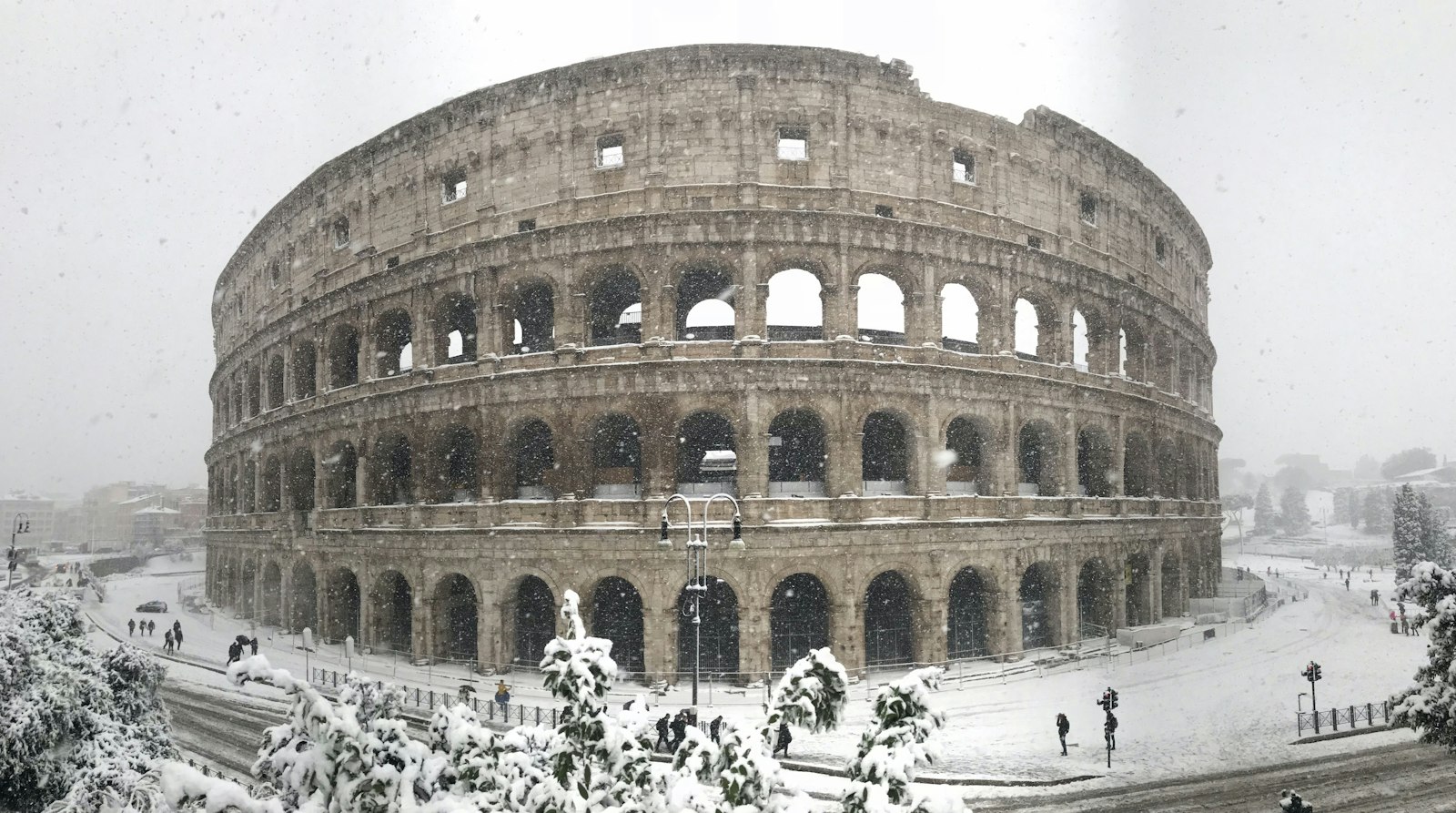
The first days of the month are busy: Italians are still on holiday until Epiphany, and the Vatican Museums and the Colosseum stay booked out. From about 7 January the city empties noticeably. On 6 January, Piazza Navona hosts a costume parade for the Befana, the old woman who brings children sweets or coal.
Florence, Siena and Tuscany
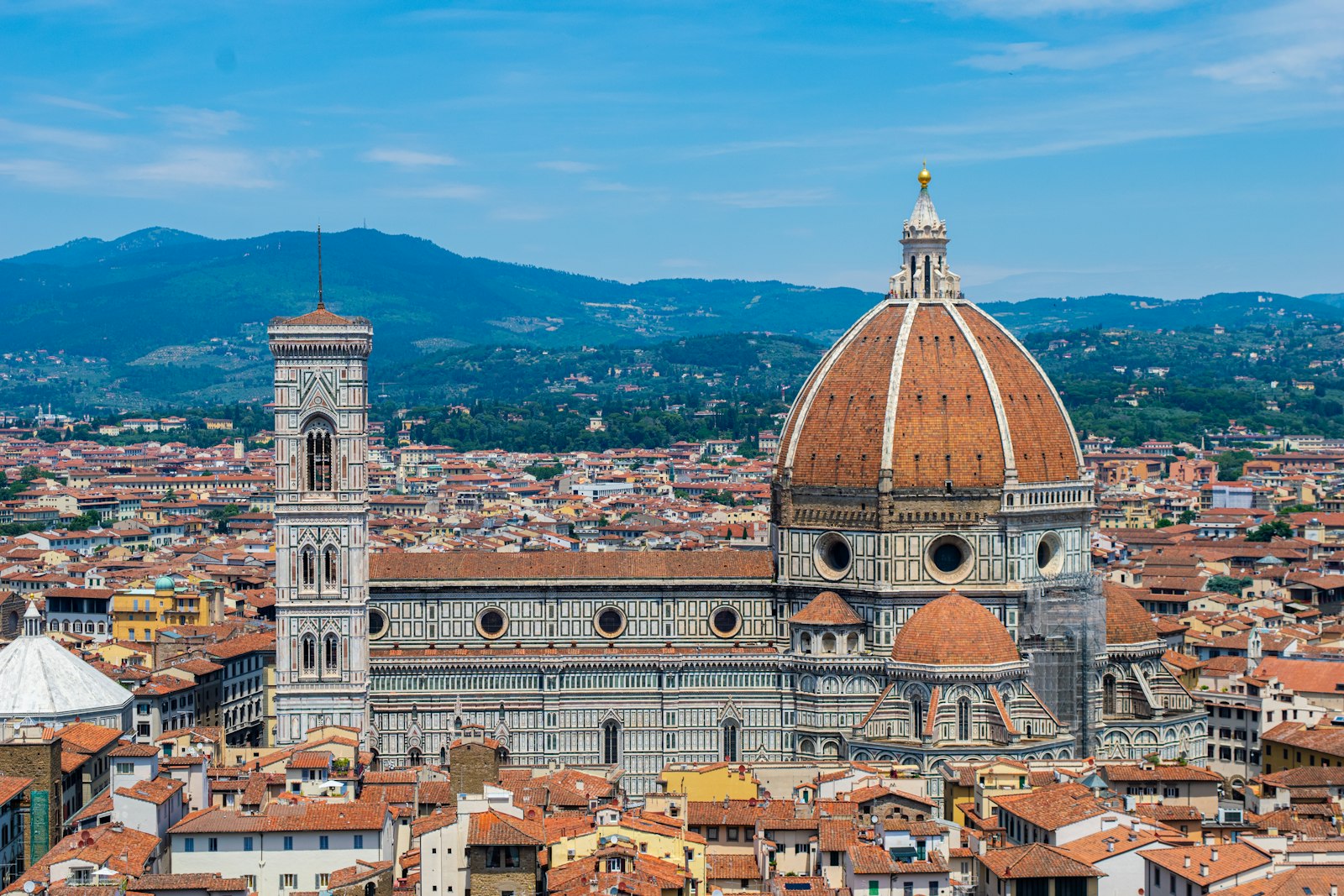
Florence is cold and often damp in January: about 11 °C by day, 2 °C at night and around eight rain days. Its reward is space. The Uffizi, the Accademia and Brunelleschi’s dome are far calmer than from Easter to October.

The Smart Timing Bundle
Pick the month, book in the right order, pack once
Six printable timing tools for any trip: the Trip Timing Planner, When to Book, When NOT to Go, the Shoulder Season Playbook, the family timing guide and the Packing by Season System.
See the bundle · $37Six products, $100 separately · Digital download · All sales final
In the countryside, many agriturismi, smaller wineries and rural restaurants close or cut their hours until spring, so base yourself in Florence or Siena and make day trips.
Venice and the Veneto
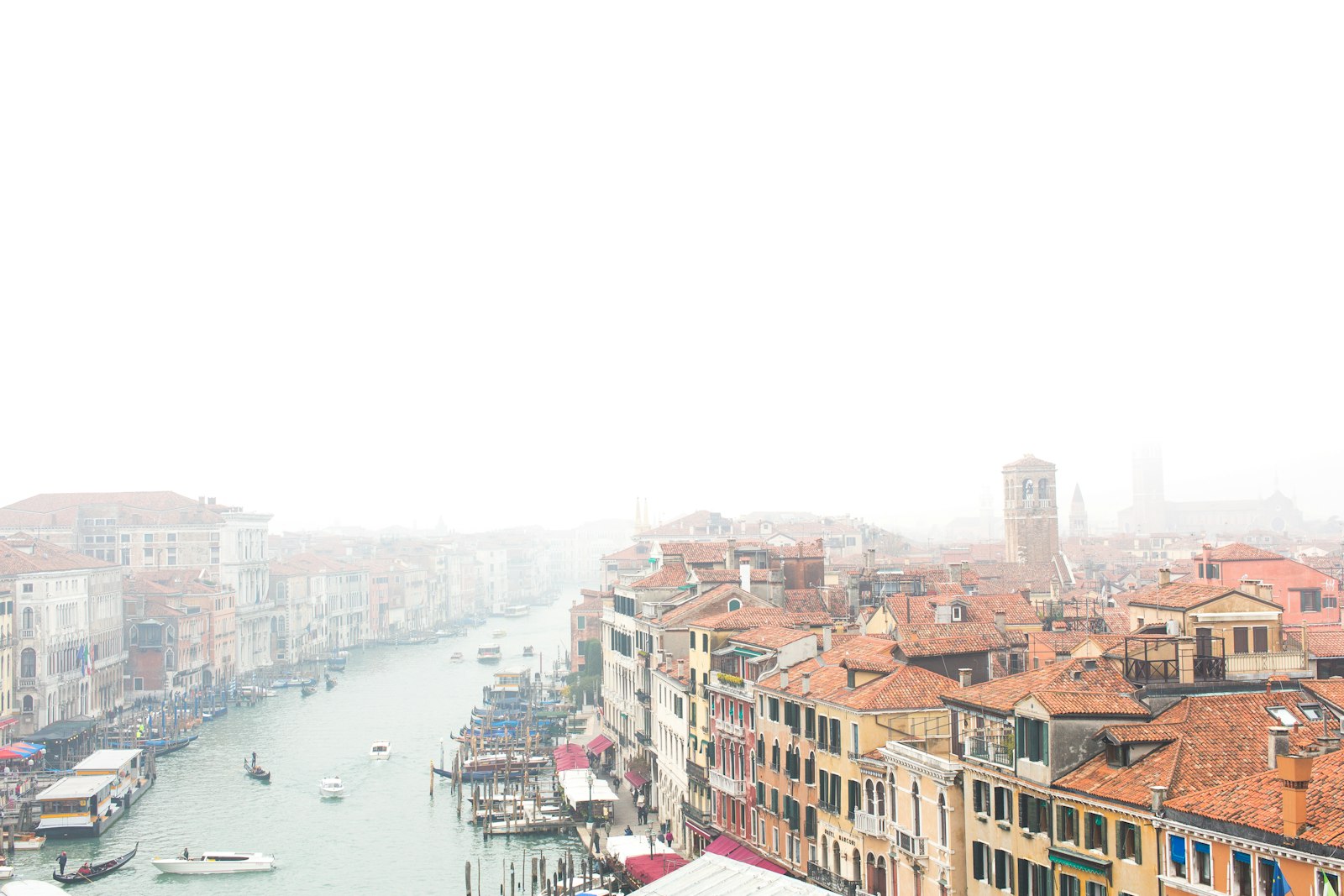
Venice in January is cold, still and often wrapped in fog, and for many travellers that is its best face. Afternoons average about 7.5 °C, nights hover just above freezing and the lagoon is about 12 °C. Once the New Year crowds leave, Cannaregio and Castello are close to empty and hotel rates are among the lowest of the year.
Acqua alta, the tidal flooding of low-lying parts of the city, is most likely between late September and April; according to Europe for Visitors, the highest risk is in November, then December and October, so January carries a smaller but real chance. Floods usually last a few hours around high tide, raised walkways go up, and the MOSE barriers are raised only for severe tides.
Milan, Turin and the lakes
The Po Valley is the gloomiest part of Italy in January. Milan averages about 7.5 °C by day and just below freezing at night, with only about two hours of sun a day, and fog can sit over the plain for days in calm weather. Milan is an indoor city, though: The Last Supper, the Brera gallery and La Scala’s season all work well.
The lakes are the weak point. Many lakeside hotels and villas close, ferries run reduced winter timetables and the gardens are bare, so visit Como as a day trip from Milan.
The Dolomites and the Alps
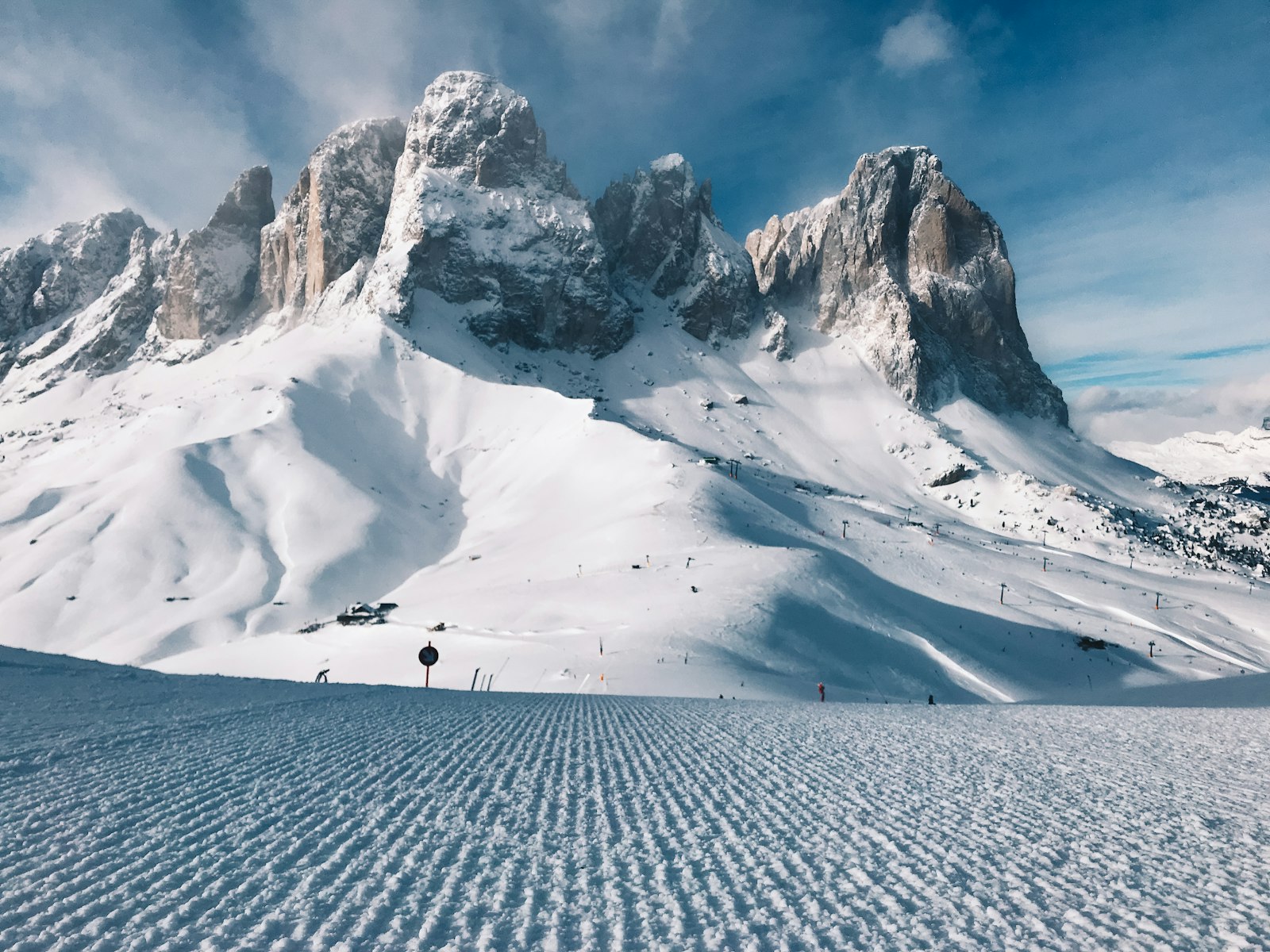
January is the core of the ski season. Dobbiaco, at 1,200 m in the Alta Pusteria, averages about 0.5 °C by day and −7.5 °C at night, with only around four days of precipitation, so the typical January pattern is cold, dry, bright days on groomed pistes. Bolzano, in the valley, is milder at about 7 °C by day.
Crowds follow the calendar. Christmas to Epiphany is peak season, with the highest prices and the busiest lifts; the weeks from about 7 January to the end of the month are usually calmer and better value, before the February school holidays across Europe fill the resorts again.
Plan the other eleven months
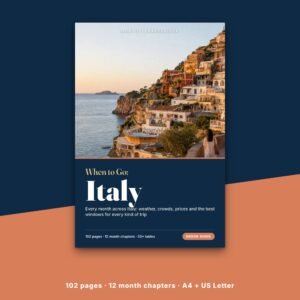
When to Go: Italy
January suits the art cities and the Alps, but Italy’s seasons pull in different directions: the coasts peak in summer, the cities in spring and autumn, the lakes from April, and August brings closed shutters and the highest prices. When to Go: Italy rates every month for each region, with weather, sea, crowd and price seasons, festival weeks and the dates to avoid.
See When to Go: ItalyDigital download · All sales final
Naples, the Amalfi Coast and Capri
Naples is one of the wettest big cities in Italy in January, with about 105 mm over ten days, but it is also lively and mild by northern standards at about 13.5 °C by day. Pompeii and Herculaneum are at their quietest.
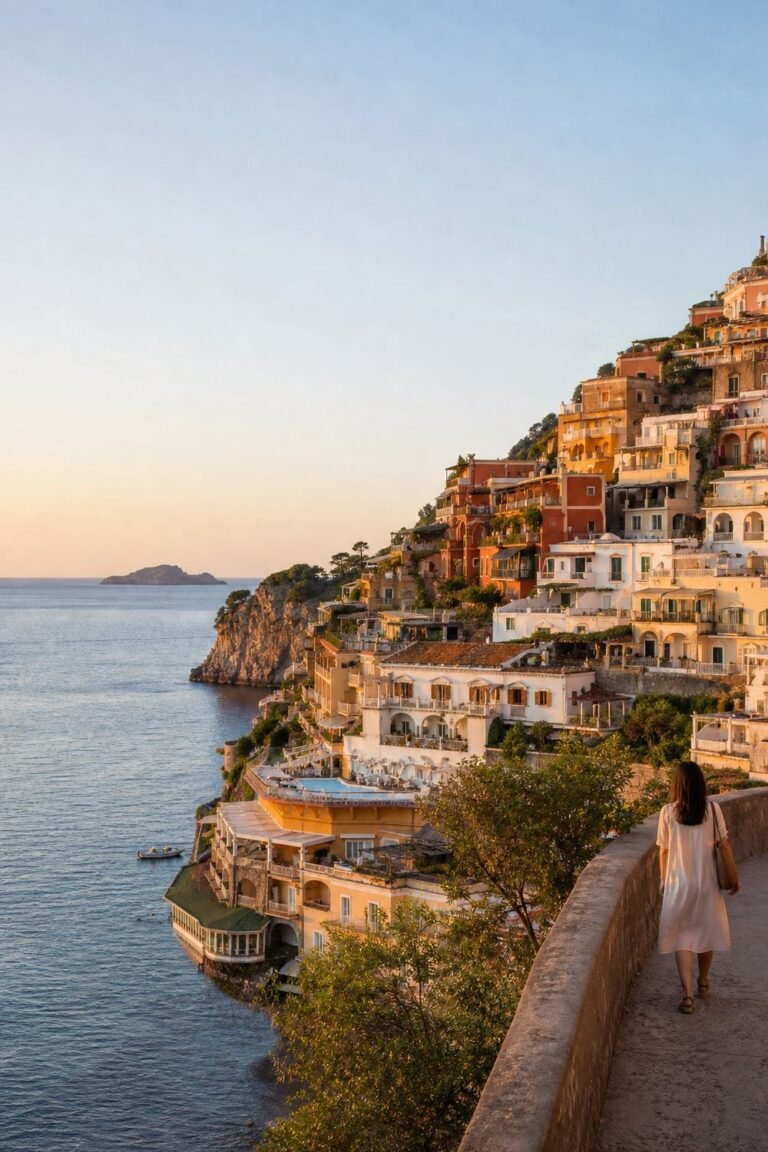
The Amalfi Coast and Capri are a different story. Many hotels and restaurants in Positano, Amalfi and on Capri close for winter, ferries are reduced and can be cancelled in rough seas, and the sea is about 15 °C. Base yourself in Naples or Sorrento and check that your hotel is open.

The complete kit
Every country guide, every timing tool
All 24 When to Go country guides, the six Smart Timing tools and every 12-Month Map, with a Start Here that tells you what to open first.
See the kit · $127The five bundles cost $225 separately · Digital download · All sales final
Sicily, Puglia and Sardinia
Sicily has the mildest January in Italy. Palermo averages about 15.5 °C by day with nights near 9.5 °C, and Catania about 16 °C, with around five hours of sun a day. The trade-off is rain: Palermo averages about twelve rain days, as the Maestrale wind brings showers to the west.
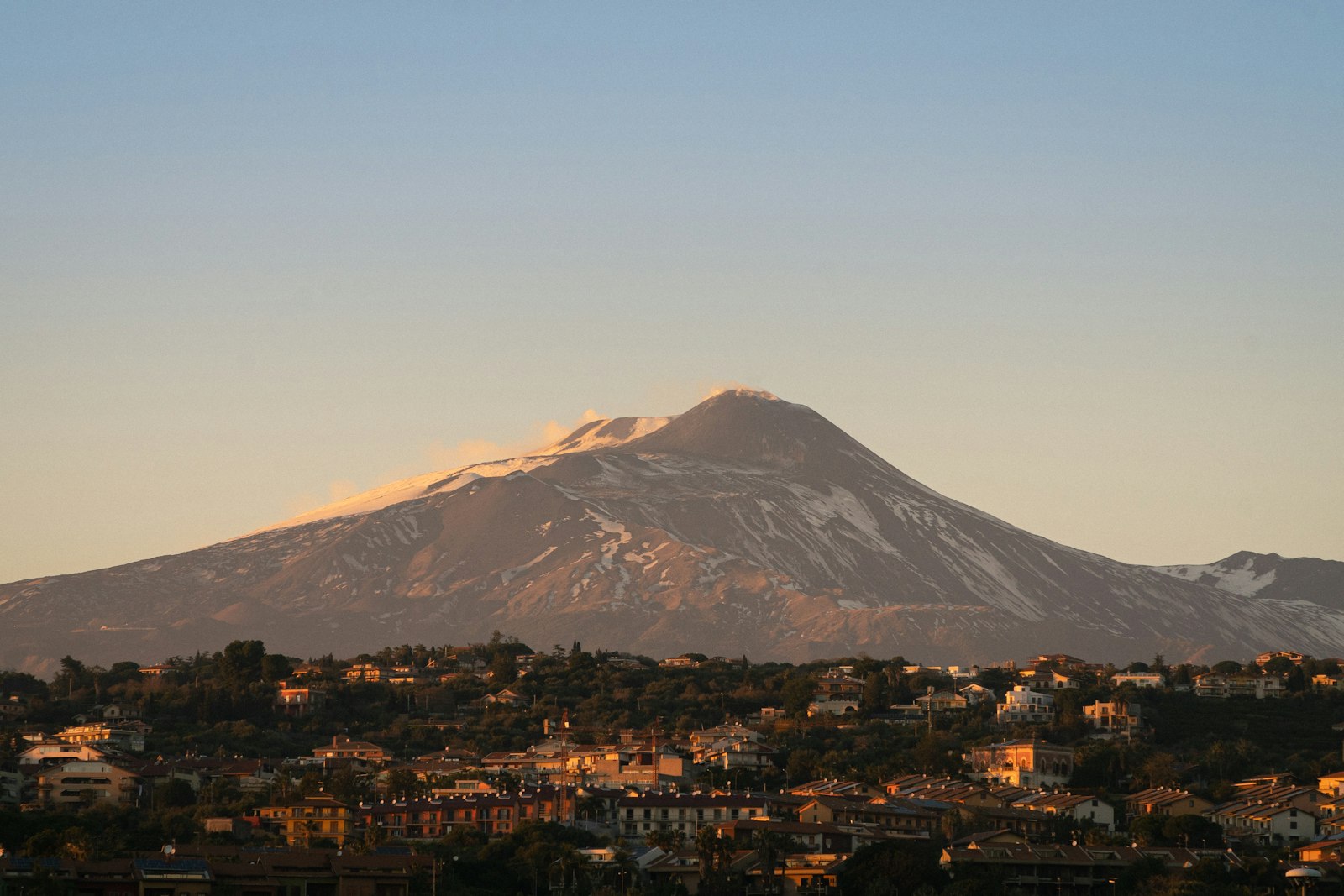
Mount Etna is often snow-capped in January, a striking sight above Catania and Taormina. Puglia and Sardinia are quiet and mild, but most beach resorts are shut until spring.
January Dates: Epiphany, the Winter Sales and the Quiet Weeks
This section shows how the month usually runs, because the week you travel matters as much as the region.
| Dates | What happens | Crowds | Price level |
|---|---|---|---|
| About 28 December to 6 January | Christmas and New Year holidays; Italian families travelling; ski resorts at their fullest | High | High |
| 1 January | New Year’s Day, a national public holiday; many sites closed or on short hours | High | High |
| Usually the first days of January | Winter sales (saldi) begin, on dates set region by region | High in shopping streets | Medium |
| 6 January | Epiphany (Epifania), a national public holiday; Befana events in Rome, Venice and many towns | High | High |
| About 7 to 31 January | Usually the quietest weeks of the year in the art cities; calmer ski slopes | Low | Low to medium |
The winter sales usually start in the first days of January in most regions, with each region publishing its own calendar, and run for several weeks into February or March. Epiphany is the closing line of the Italian holidays: an old proverb says that Epiphany takes all the holidays away. In Venice, rowers in Befana costumes race on the Grand Canal on 6 January.
Carnival is a February event in most years. It ends on Shrove Tuesday, the day before Ash Wednesday, which falls in February or early March, so the Venice Carnival and the Viareggio parades usually belong to February. Check the dates for your travel year.
⚑ Timing tip
For the best mix of quiet and value, travel between about 7 and 31 January. If your dates include the New Year or Epiphany, book Rome and Florence museum tickets, ski passes and Dolomite hotels first, as they are the first to sell out.
To compare other countries in January, see where to go in January, and for the month after, where to go in February. Planning a different season? Read Italy in December or why September suits Italy.
Who Italy in January Suits, and When Not to Go
January suits travellers who value empty museums, fair prices and snow over warm evenings and sea views:
Italy in January is a good fit for
- ✓Art and history trips to Rome, Florence and Venice without queues
- ✓Skiers and snowboarders in the Dolomites and the Alps
- ✓Shoppers who want the winter sales in Milan, Rome and Florence
- ✓Food travellers: truffle, citrus and winter dishes, and easy restaurant tables
- ✓Couples and photographers who like fog, low light and quiet streets
A beach or swimming holiday
The sea is about 12 to 16 °C around Italy and most beach resorts are shut.
The Amalfi Coast or Capri at their best
Many hotels close, ferries are reduced and about ten rain days are normal.
Lake Como villas and gardens
Gardens are bare and ferry timetables shrink.
Long evenings outdoors
Nights fall close to freezing in the north and to about 3 to 5 °C in Rome and Sicily.
Better month if you want…
Warm sea for swimming
About June to September
The Amalfi Coast fully open
About May, June and September
Rome and Florence in mild weather
About April to May and October
Lake Como gardens in bloom
About April to May
The Venice Carnival
Usually February
Fresh snow and longer ski days
About February to mid-March
Looking for more winter ideas nearby? See winter festivals in Europe in January and snowy January destinations, or read our Matera travel guide for a slower southern trip.
Free download
The 12-Month Map
One page that colour-codes every month for weather, crowds and prices, so you can see at a glance whether January, May or October fits your trip best.
What to Pack for Italy in January
Pack for real winter in the north and the mountains, and for cool, showery days in the south.
Pack and book for Italy in January
- ✓A warm, water-resistant coat, a scarf, gloves and a hat for Venice, Milan and evenings in Rome
- ✓Waterproof shoes or boots with grip: marble, cobbles and wet paving are slippery
- ✓A compact umbrella for Naples, Sicily and Florence, the wettest stops
- ✓Thermal layers, goggles and sunscreen for the Dolomites: the winter sun is strong at altitude
- ✓Layers that cover shoulders and knees for churches, including St Peter’s
- ✓Timed museum tickets for the first week, and hotel opening dates checked on the coasts
Common Mistakes With a January Italy Trip
1. Planning the Amalfi Coast like a summer trip
Many hotels and boat services on the Amalfi Coast and Capri close in winter. Treat the coast as a clear-day excursion from Naples or Sorrento.
2. Travelling in the first week and expecting low season
Until 6 January, Italy is still on holiday and prices are high. Quiet, good-value January starts on about the 7th.
3. Underestimating the cold in the north
Venice and Milan average lows near or below 0 °C. Pack a real winter coat, not a light jacket.
4. Booking a lake holiday instead of a lake day
Lake Como and Lake Maggiore run reduced ferry timetables in winter, many villas and gardens are closed or bare. Stay in Milan and visit on the clearest day of the forecast.
Italy in January: FAQ
Is January a good time to visit Italy?
Yes, for cities and snow. Rome and Florence are cool, at about 11 to 12 °C by day, and far quieter than in spring once the holidays end on 6 January. The Dolomites are in full ski season. It is a poor month for beaches, the Amalfi Coast and the lakes, and the north is often foggy and cold, so pack proper winter layers.
How cold is Rome in January?
Rome averages about 12 °C in the afternoon and 3.5 °C at night, with around seven rain days and four hours of sun a day. Snow is rare. Days feel pleasant in the sun for walking the Forum and the Palatine, but evenings are cold, so bring a warm coat, a scarf and shoes that cope with wet cobbles and marble.
Does it snow in Italy in January?
Yes, in the mountains. The Dolomites and the Alps are in their main ski season, with average highs near 0 °C at about 1,200 m, and Mount Etna in Sicily is often snow-capped. Snow in the cities is uncommon, though cold spells can occasionally bring it to the Po Valley, including Milan, and to the inland hills of central and southern Italy.
Is Venice flooded in January?
Not usually, but it can be. Acqua alta is most likely from late September to April, with the highest risk in November and December. In January a high tide may flood low areas such as San Marco for a few hours; raised walkways go up and the MOSE barriers protect the city from severe tides. Waterproof boots or overshoes solve most problems.
Where is the warmest place in Italy in January?
Sicily is warmest. Catania averages about 16 °C by day and Palermo about 15.5 °C, with nights from about 5 to 9.5 °C, and the small island of Lampedusa is milder still. Expect showers, though: Palermo averages around twelve rain days in January. It is mild enough for sightseeing in a light jacket, but far too cool for swimming.
Is January a cheap month to visit Italy?
After the first week, it is one of the best-value months of the year. From about 7 January, hotel rates in Rome, Florence and Venice usually drop, flights are easier to find and restaurants have space. The winter sales usually begin in the first days of January. The exceptions are the ski resorts, where January stays a high-season month.
When are the winter sales in Italy?
The winter sales, called saldi, usually start in the first days of January, on dates each region sets for itself, and run for several weeks into February or March. Expect busy shops and long outlet queues on the first weekend, especially in Milan, Rome and Florence, and keep receipts for any tax refund.
The Bottom Line
Italy in January rewards travellers who come for art, food and snow rather than sun: Rome and Florence without queues, fog-bound Venice at its most atmospheric, full ski season in the Dolomites and the mildest days in Sicily, all at low-season prices once Epiphany has passed. The Amalfi Coast, the lakes and the beaches are the places to save for another season. Your next step is to choose your dates around 6 January, then book museum tickets, ski passes and open hotels first, and let the weather decide which city gets the clear day.
Country guide
Time your whole Italy trip
When to Go: Italy covers all twelve months for the art cities, the lakes, the Alps, the coasts and the islands, with rain and heat seasons, sea temperatures, ski and festival timing, holiday weeks and the dates to avoid, so every stop on your route lands in its best season.
Digital download · All sales final
Free download
The 12-Month Map, free
The whole year for one country on four printable pages, so you can see the right months before you read anything else.
- Good, shoulder and avoid months at a glance
- Region by region, not one average for the whole country
- Prints cleanly on US Letter
Your download page opens as soon as you sign up. 24 countries available.