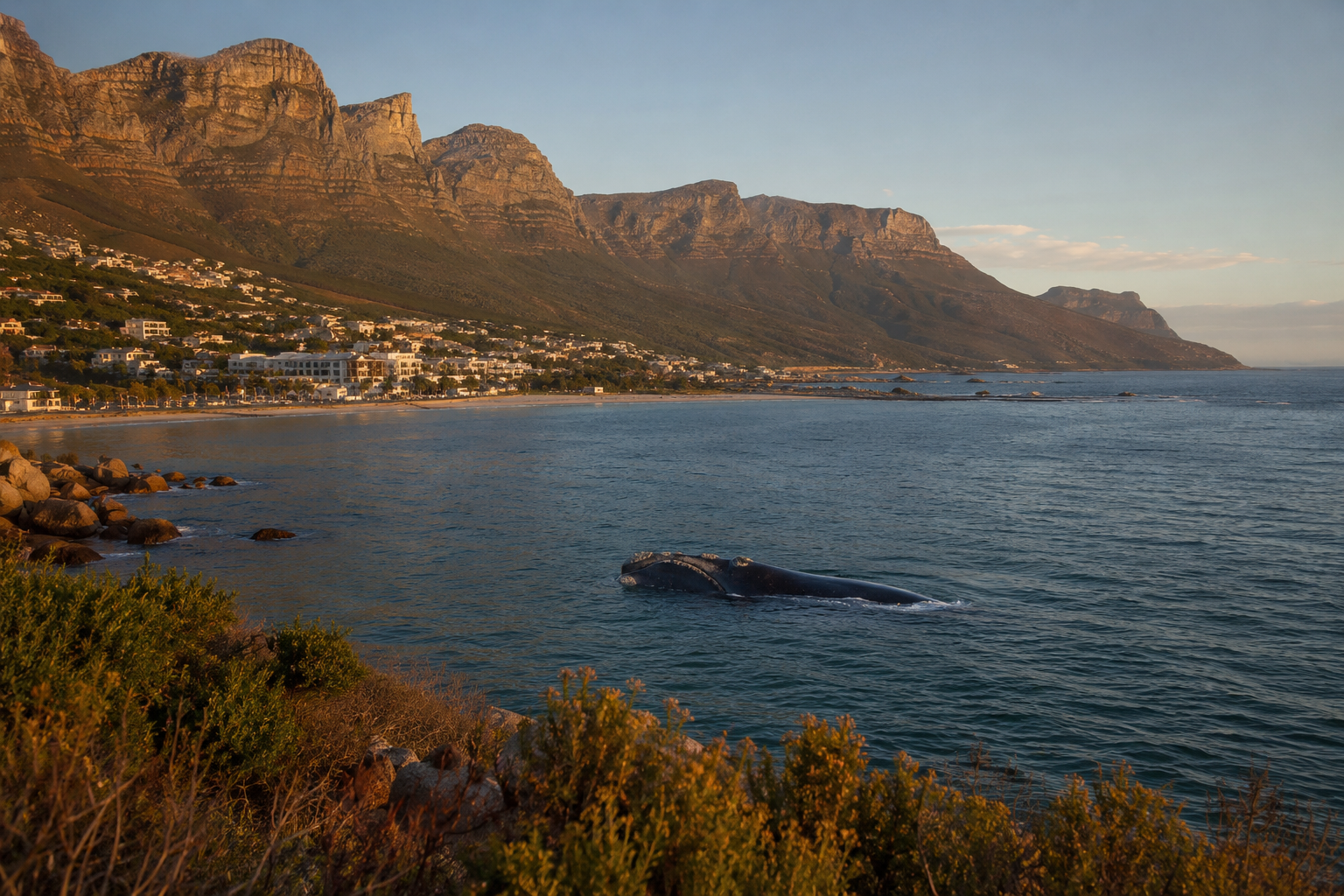
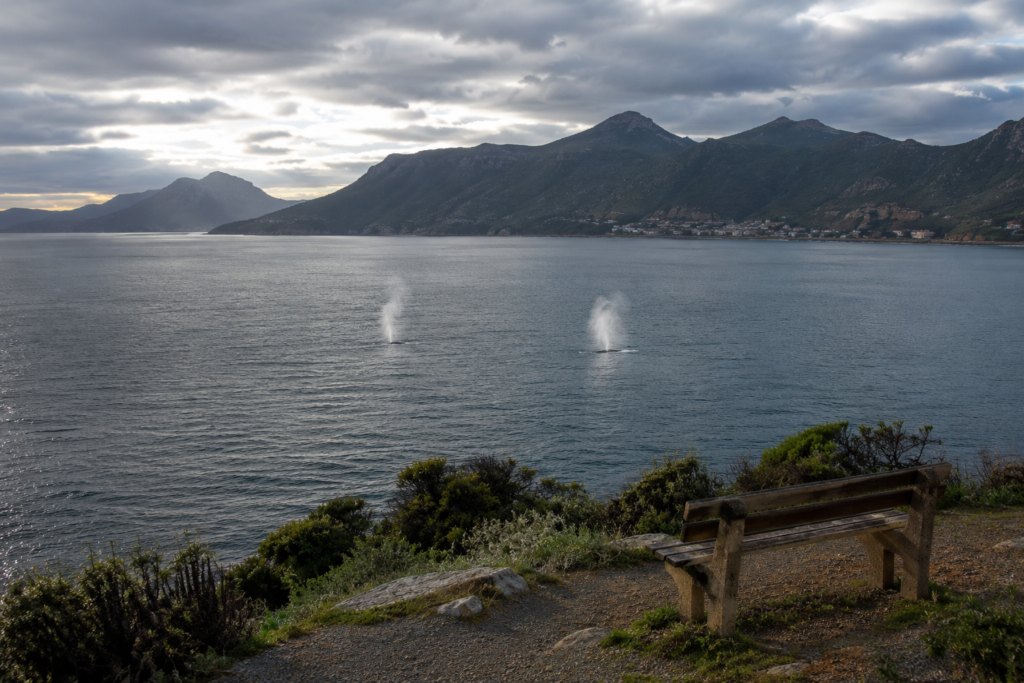
Most whale watching on Earth follows the same formula: buy a boat ticket, motor out for an hour, hope. Hermanus breaks the formula. Between June and December, southern right whales swim so close to this South African town that people watch them from park benches — and the hermanus whale season peaks in September and October, when mothers and calves fill Walker Bay just meters from a public cliff path. This guide covers exactly when to go, where to stand, what a boat trip adds, and what the whole thing costs in 2026.
The short answer: Hermanus whale season runs from June to early December, with the peak in September and October when southern right whales calve in Walker Bay. The town is widely rated the best land-based whale watching spot in the world — you can see whales for free from the 12 km cliff path, no boat required. Boat tours cost roughly R950–1,400 ($50–75), and the Hermanus Whale Festival runs October 2–4, 2026.
Key Takeaways
- Whales are present June to early December, but September–October is peak — the most whales, closest to shore, with newborn calves.
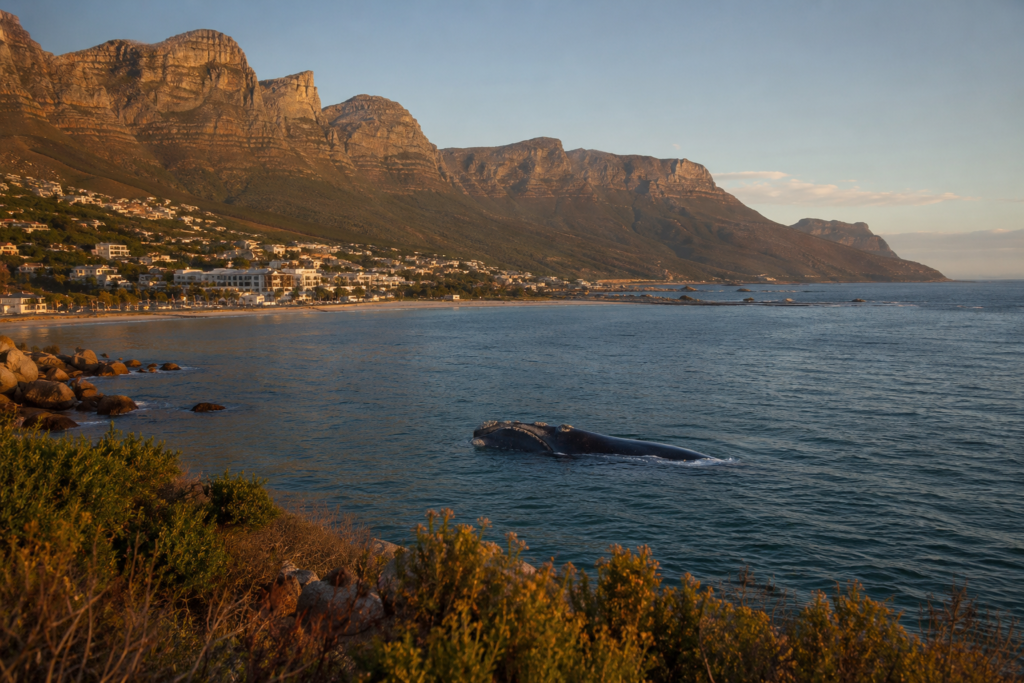
- The cliff path is free and often outperforms boat tours: whales calve within 50 meters of the rocks at spots like Gearing’s Point.
- Hermanus employs the world’s only whale crier, who blows a kelp horn to announce where whales are along the coast.
- Boat trips (about R950–1,400 / $50–75) add close-range encounters but are a supplement, not a requirement.
- Hermanus is a 1.5–2 hour drive from Cape Town (about 120 km) — an easy overnight or long day trip.
- The Whale Festival (October 2–4, 2026) is the busiest weekend of the year: brilliant atmosphere, booked-out accommodation.
When Is Hermanus Whale Season? The Month-by-Month Truth
This section maps the real rhythm of the season, because “June to December” hides a big quality gap between the edges and the middle.

Six regional clocks, twelve months, the calendar that moves and the cost curve — with the months that go wrong named rather than skipped.
See what's insideEvery winter, southern right whales migrate thousands of kilometers north from their sub-Antarctic feeding grounds to the sheltered, shallow waters of South Africa’s Cape coast. They come for two reasons: to mate, and to give birth. Walker Bay — the wide, protected bay Hermanus sits on — is one of their favorite nurseries on the planet.
June–July — the first whales arrive. Sightings are regular but scattered; you may need patience and a few sessions on the cliff path. Winter weather is at its most changeable.
August — numbers climb sharply. Mating groups become common, and the first calves appear. By late August, a slow walk along the cliff path on a calm day almost always produces whales.
September–October — peak season. This is the window the town’s reputation is built on: the maximum number of whales in the bay, mothers with newborn calves lolling in the shallows, breaching, lobtailing, and spyhopping often within 50 meters of the rocks. If you can only pick one month, pick September for slightly quieter crowds or early October for the festival energy. Both belong on any shortlist of the best travel destinations in September and the best travel destinations in October.
November — still very good, and underrated. Mothers with growing calves linger in the bay, crowds thin, and spring weather improves. The season officially runs to the end of November.
December — the stragglers depart in the first days of the month. By mid-December, the bay belongs to Bryde’s whales, dolphins, and summer swimmers.
Why Hermanus Owns the Title of Best Land-Based Whale Watching on Earth
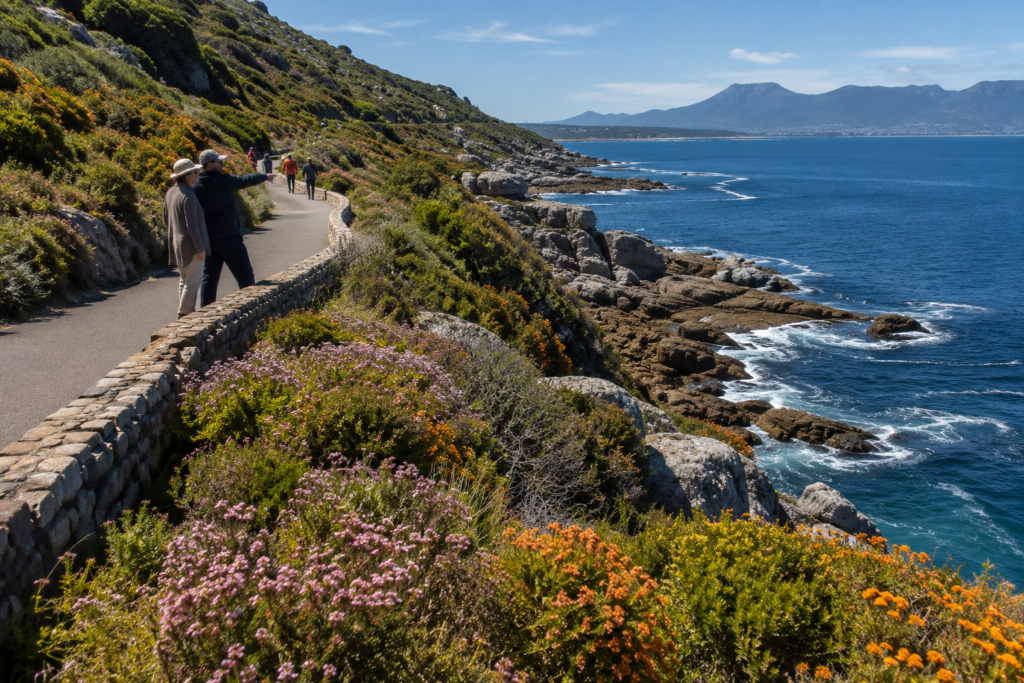
This section explains the geography behind the claim, because it isn’t marketing — it’s bathymetry.
Hermanus sits on low cliffs directly above deep, calm, protected water. There’s no wide shallow shelf pushing whales out to sea, no long beach separating you from them. The seafloor drops quickly enough that a 15-meter, 40-ton whale can float comfortably within a stone’s throw of the rocks — and southern rights, unlike most whale species, actively prefer these sheltered inshore waters for calving. The result is an alignment that exists almost nowhere else: the whales’ nursery of choice happens to sit directly below a town’s public walkway.
Then there’s the path itself. The Hermanus Cliff Path runs roughly 12 kilometers along the coastline from the New Harbour to Grotto Beach, paved and walkable, dotted with benches, viewpoints, and coves. During peak season it functions as a kilometers-long, free, all-day whale observatory. On good days in September, the problem isn’t finding a whale — it’s deciding which of several to watch.
And because this is Hermanus, there’s the whale crier — the only official one in the world. Since 1992, the town has employed a crier who patrols the center blowing coded blasts on a kelp horn, each code announcing whales at a different viewpoint. It sounds like a gimmick until you’re eating breakfast, hear the horn, and join half the café walking briskly toward Gearing’s Point.
Wildlife events this reliable are rare — most, like the Great Migration river crossings in August, force you to chase probability across a huge landscape. Hermanus inverts that: the animals come to the town. It’s why this stretch of coast anchors so many wildlife travel itineraries through South Africa.
The Cliff Path: Exactly Where to Stand
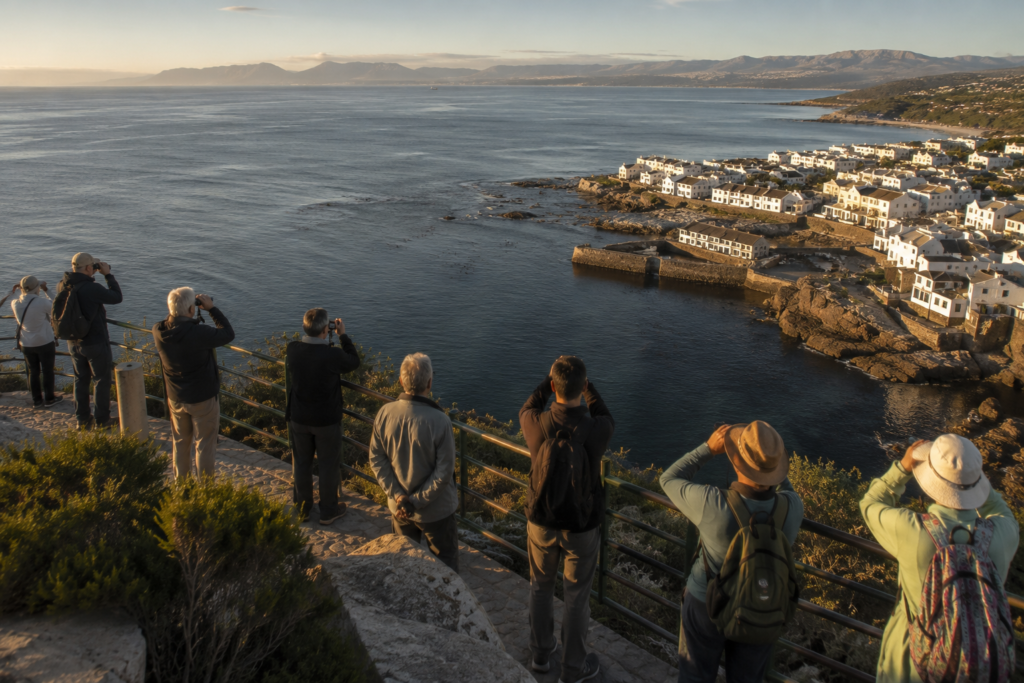
This section gets specific about viewpoints, because “walk the cliff path” is true but unhelpfully vague across 12 kilometers.
Gearing’s Point — the classic. A broad, elevated headland right at the town center, next to the Old Harbour. Whales frequently rest and nurse directly below it. If you have one hour in Hermanus, spend it here.
The Old Harbour and Market Square area — slightly lower vantage, cafés at your back, and the whale crier’s home turf. Ideal for a lazy morning of watching between coffees.
Sievers Point and Kwaaiwater — east of the center, quieter, with wide-angle views across the bay. Photographers favor these for breach sequences with the Kleinrivier Mountains behind.
Grotto Beach end — the eastern terminus. Fewer people, more walking, and whales often visible on the swim out toward the lagoon mouth.
De Kelders (Gansbaai) — the local secret, 35 minutes’ drive around the bay. The limestone cliffs here sit even closer to deep water, and on some September days De Kelders quietly beats Hermanus itself. If you have a car and a full day, do both sides of the bay.
Boat, Air, or Shore? The Honest Comparison
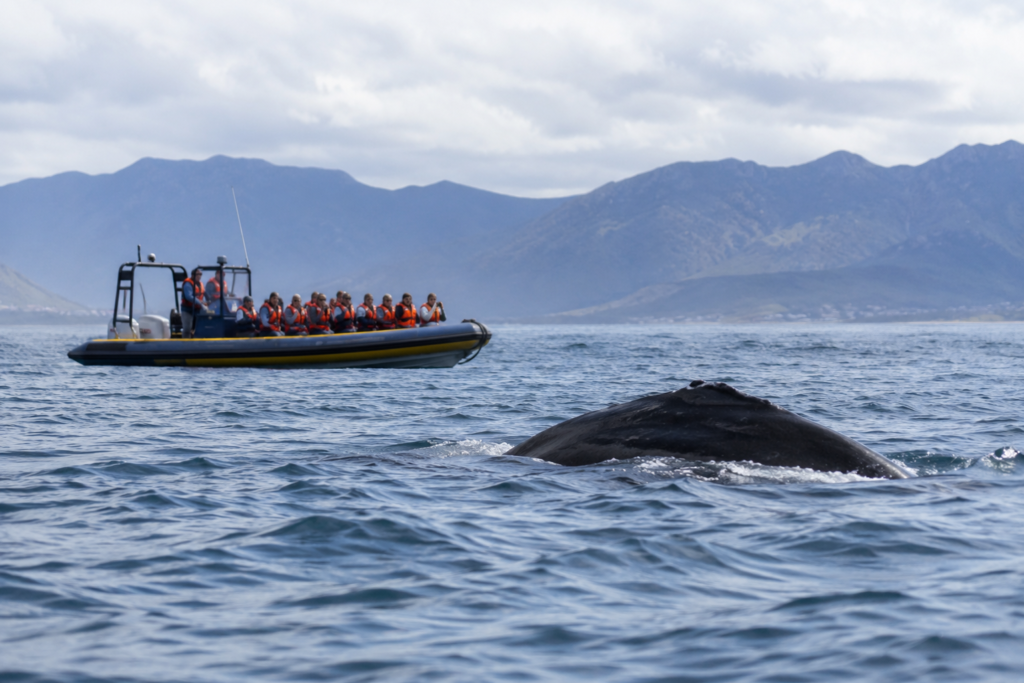
This section compares the three ways to watch, because the right answer depends on your budget and how close “close” needs to be.
Licensed boat operators run from the New Harbour throughout the season. Permits are tightly regulated — a limited number of boats hold whale-watching licenses, approach distances are enforced, and encounters happen on the whales’ terms. Curious southern rights frequently close the gap themselves, surfacing alongside the boat. Trips last about two hours.
| Option | Cost (2026) | What you get | Best for |
|---|---|---|---|
| Cliff path (land) | Free | All-day access, whales often 50–200 m, zero seasickness, repeatable | Everyone — this is the core Hermanus experience |
| Boat tour | R950–1,400 (~$50–75) | Eye-level encounters, ~2 hours, whales sometimes alongside | Travelers who want close range and photos |
| Scenic flight | From ~R2,000+ (~$110+) | Aerial view of mothers and calves, whole-bay perspective, 20–30 min | Special occasions, photographers with budget |
The honest ranking for a first visit: cliff path first, boat second, flight only if budget allows. Plenty of visitors do the boat trip and then admit their best sighting of the day came free from Gearing’s Point afterward. Whichever operator you choose, vet them the way you’d vet any guide — our piece on what happens when a traveler hires the wrong tour guide explains why the license and the reviews matter more than the price.
Hermanus Whale Season Costs and Logistics in 2026
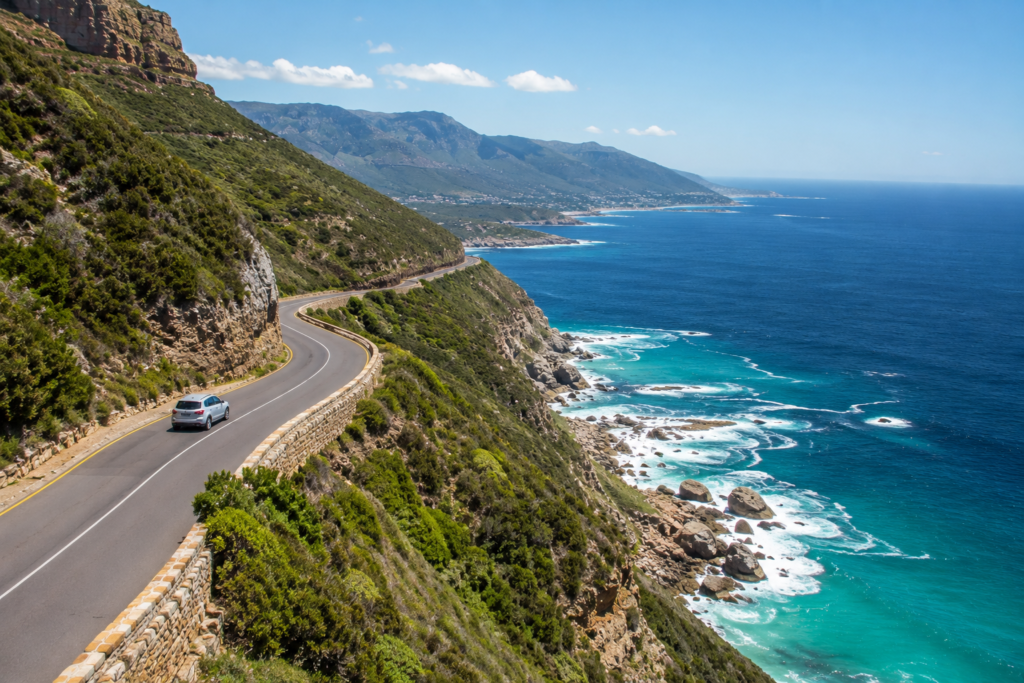
This section covers the practical math, because Hermanus is one of the cheapest world-class wildlife experiences anywhere — if you plan it right.
- Getting there: Hermanus is about 120 km from Cape Town — a 1.5 to 2 hour drive, much of it on the scenic coastal R44 via Clarence Drive if you take the pretty route (do). Rental cars are the standard approach; shuttle transfers and day tours from Cape Town also run daily in season.
- Whale watching: cliff path free; boat trips R950–1,400 (~$50–75); scenic flights from around R2,000.
- Accommodation: guesthouses from R800–1,500 a night; sea-view boutique spots R2,500+. Book months ahead for late September and festival weekend.
- Food: Hermanus sits in the Hemel-en-Aarde wine valley and was named Africa’s gastronomic region — excellent restaurant meals run R150–350 a main, and a wine-tasting detour costs less than a cocktail in most capitals.
- Festival: most of it — parade, markets, eco-marine village, land-based watching — is free.
A comfortable two-night whale weekend from Cape Town, including a boat trip, runs roughly $150–300 per person — remarkable value against boat-only whale destinations where a single tour can cost that much. September–October is also shoulder-to-peak season for the Cape generally, so the crowd-management habits in our guide to mastering peak season travel pay off, especially around the festival.
Many travelers fold Hermanus into a bigger southern Africa loop — it pairs naturally with safari timing, since the best wildlife and nature trips in August and September cluster in the same half of the continent, and beach add-ons like Zanzibar sit a direct flight away.
The Whale Festival: October 2–4, 2026 — Worth Planning Around?
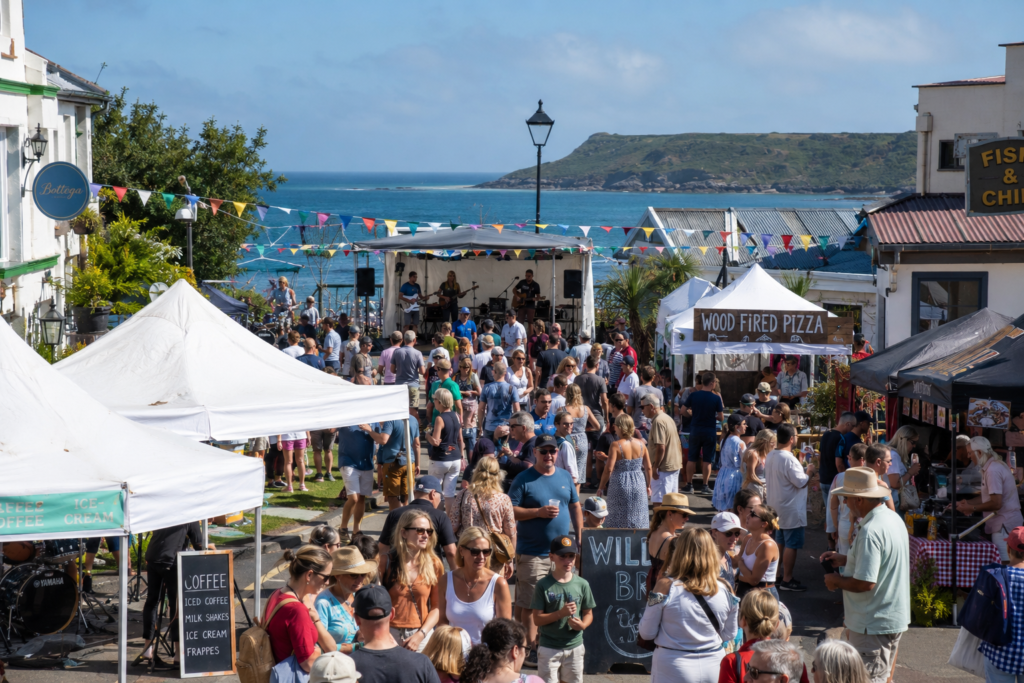
This section answers the festival question honestly, because the answer depends on what kind of traveler you are.
The Hermanus Whale Festival — the world’s only eco-marine festival — runs October 2–4, 2026, timed to the peak of the season. Expect a street parade, live music across multiple stages, food and craft markets, a marine eco-village focused on the “Marine Big 5” (whales, dolphins, seals, penguins, sharks), and up to 100,000 visitors over the weekend in a town of about 35,000 people.
Go for the festival if you want atmosphere: the combination of breaching whales and a town in full celebration is genuinely unlike anything else on the wildlife calendar. Most of it costs nothing.
Avoid the festival weekend if your priority is quiet, contemplative whale watching. The whales don’t care about the crowds — but you might, and accommodation prices spike while availability vanishes. The whales are just as abundant the week before and the week after.
Official sources: the Hermanus Whale Festival site for the 2026 program, and the town’s tourism portal at hermanus.co.za for accommodation and viewpoint maps.
Common Mistakes That Waste a Hermanus Whale Trip
These are the errors that catch even well-prepared travelers — not the obvious ones.
1. Day-tripping from Cape Town with two hours in town. Whale watching is a patience game with a fast payoff curve: an afternoon usually delivers, ten minutes may not. Tour buses that allot 90 minutes in Hermanus regularly leave with disappointed passengers while the whales breach an hour later. Stay at least one night.
2. Booking the boat before checking the sea state. Winter and spring bring swells; boats occasionally cancel or deliver a rough, green-faced ride. Book a morning boat slot early in your stay so a weather cancellation can roll to the next day — the same buffer logic that applies to any weather-dependent booking, as covered in our guide to navigating travel booking and planning.
3. Going in June and judging the season by it. Early-season sightings are real but sparse. Travelers who visit in June and shrug “it’s overrated” measured the season by its weakest month. September is a different universe.
4. Ignoring De Kelders. Almost every visitor stays on the Hermanus side of Walker Bay. The Gansbaai cliffs at De Kelders, 35 minutes away, often have whales closer with a fraction of the people — the easiest upgrade available.
5. Chasing every horn blast. The whale crier’s codes point to current sightings, but sprinting across town rarely beats simply settling at Gearing’s Point with coffee and letting the bay perform. Whales in September aren’t an event to catch; they’re the background condition.
FAQ
What is the best month to see whales in Hermanus?
September and October are peak months, with the highest whale numbers and mothers nursing newborn calves close to shore. September edges it for quieter viewing; the first weekend of October brings the Whale Festival. August and November are strong shoulder options with fewer people and still-reliable sightings.
Can you really see whales from land in Hermanus?
Yes — that’s the town’s entire claim to fame. Southern right whales calve in the deep, calm water directly below the 12 km cliff path, often within 50–200 meters of shore. During peak season, land-based watchers at spots like Gearing’s Point frequently get better, longer sightings than boat passengers.
How much does whale watching in Hermanus cost?
Watching from the cliff path is completely free. Licensed boat tours cost roughly R950–1,400 per person (about $50–75) for a two-hour trip, and scenic flights over Walker Bay start around R2,000. A full whale weekend from Cape Town, with a boat trip included, typically runs $150–300 per person.
How far is Hermanus from Cape Town?
About 120 km — a drive of 1.5 to 2 hours. The fastest route runs via the N2, but the coastal R44 through Clarence Drive is one of the most scenic drives in South Africa and adds only around 20 minutes. Day tours and shuttles operate daily during whale season.
What whales do you see in Hermanus?
Southern right whales dominate — they migrate from sub-Antarctic waters to mate and calve in Walker Bay between June and early December. Humpback whales pass through on migration, and Bryde’s whales live offshore year-round. Dolphins, Cape fur seals, and African penguins round out the marine lineup nearby.
Is the Hermanus Whale Festival free?
Mostly, yes. The street parade, markets, eco-marine village, live outdoor music, and all land-based whale watching cost nothing. Some specific performances, marquees, or activities charge tickets. The real cost of festival weekend is accommodation, which sells out months ahead and rises in price — book early.
The Bottom Line
Hermanus whale season is that rare wildlife phenomenon that asks almost nothing of you — no permits, no 4×4, no luck — and delivers 40-ton whales to a park bench with sea view. Aim for September or early October, stay at least one night, walk the cliff path before you consider a boat, and check the far side of the bay at De Kelders. Getting the month right is the whole game — it’s exactly the kind of timing call our When To Go: The Travel Timing Atlas scores month by month for 50 countries — and for Hermanus, the calendar is already written: the whales arrive in June, peak in September, and won’t wait past early December.
Three travel books.
One free taster.
21 pages — the single most useful chapter from each of our three books. Enter your email and it lands in your inbox instantly.
No spam · Instant PDF · Unsubscribe anytime