

The ancient port cities you can still visit tell a story the sea itself has partly erased: harbours that silted up, trading towns shaken by earthquakes and docks now stranded kilometres from the water. Six of them, spread from the Mediterranean to the Arabian Sea and the South China Sea, are easy to reach and rewarding to walk today. This guide covers what you will see at each site, the months that work and the weeks to avoid.

When to Go guides
Choose your country, then your month
24 country guides, each about 100 pages: every month rated for weather, crowds and prices, region by region, with a 7-day booking plan. Six guides per region bundle.
Browse the 24 guides · $19 eachRegion bundles: Europe, Asia & Pacific, Sun Souks & Safari, Americas · $47 each
Six harbours, one route
Where the ships once docked, and when to go
Stop 1 · Türkiye
Ephesus
Apr to May, Sep to Oct
Stop 2 · Italy
Ostia Antica
Mar to May, Sep to Oct
Stop 3 · Oman
Qalhat
Nov to Mar
Stop 4 · India
Lothal
Oct to Mar
Stop 5 · Sri Lanka
Galle
Dec to Mar
Stop 6 · Vietnam
Hoi An
Feb to Apr
Best windows based on the climate and visitor sources listed at the end of this guide. Every year differs.
Quick answer
For the Mediterranean ports, Ephesus and Ostia Antica, go in spring or early autumn and skip July and August, when the open ruins get very hot. For the Asian and Arabian ports, follow the dry season: November to March for Qalhat in Oman, October to March for Lothal in India, December to March for Galle in Sri Lanka and February to April for Hoi An in Vietnam.
Key takeaways
Ephesus now sits about 6 km from the Aegean, because river silt filled its harbour over centuries.
Ostia Antica, Rome’s old port on the Tiber, is about 30 minutes by train from central Rome and closed on Mondays.
Qalhat in Oman was a port of the Kingdom of Hormuz; Marco Polo and Ibn Battuta both called there.
Lothal in Gujarat holds a Harappan dock basin dated to about 2400 BCE, and its summer reaches 35 to 45 °C.
Galle and Hoi An are living towns: monsoon and flood months matter more there than heat.
Ancient Port Cities by Month: The Timing Chart
This section puts all six harbours on one calendar, so you can see at a glance which month suits which site. The verdicts weigh heat, rain, floods and crowds for a day spent walking open ruins or old streets, not for a beach holiday.
Month verdicts for six ancient harbours
GoGo with careSkip
Editorial verdicts based on the climate and visitor sources cited below. GO = go, ~ = go with care, X = skip.
Two patterns stand out. The Mediterranean sites suffer in July and August, when heat and crowds peak together. The Asian and Arabian sites follow the monsoon and the desert summer instead, so their best months run from late autumn to early spring.
🧰 Try it while you read: a free tool for this trip
Free trip timing tool
Shoulder Season Detector
Find the months just before and after the peak: good weather, fewer people.
Loading the tool…
Which Ancient Port City Suits Your Trip?
This section compares the six sites side by side, from how much is left to see to how hard they are to reach. Two are ruined cities, one is a lone tomb on a hill, one is a Bronze Age dock and two are towns where people still live and trade.
| Port | Era as a harbour | What you see now | Best months | Main risk |
|---|---|---|---|---|
| Ephesus, Türkiye | Greek and Roman | Marble streets, the harbour boulevard ending in fields | Apr to May, Sep to Oct | Summer heat, cruise crowds |
| Ostia Antica, Italy | Roman | A large excavated town near the Tiber mouth | Mar to May, Sep to Oct | July and August heat |
| Qalhat, Oman | Medieval, Hormuz era | The hilltop Tomb of Bibi Maryam above the sea | Nov to Mar | Extreme summer heat, no shade |
| Lothal, India | Harappan, about 2400 BCE | A brick dock basin and a small museum | Oct to Mar | 35 to 45 °C in Apr to Jun |
| Galle, Sri Lanka | Portuguese and Dutch | A walled fort town with ramparts and a lighthouse | Dec to Mar | Southwest monsoon, May and June |
| Hoi An, Vietnam | Trading port | An old town of merchant houses on the Thu Bon River | Feb to Apr | Floods in Oct and Nov |
🗓️ Free: a 12-Month Map for your country
Every month on one page: best weeks, shoulder weeks and the ones to skip. Print it or keep it on your phone.
Ephesus, Türkiye: The Harbour That Moved Away
This section covers Ephesus, the best known of the ancient port cities of the Aegean. Ships once sailed almost to its door, but the Küçük Menderes river, the ancient Cayster, carried silt into the bay for centuries until the harbour filled in. Today the sea is about 6 km from the ruins, according to The Ephesus, which also notes that Hellenistic and Roman engineers tried breakwaters, dredging and even a river diversion. Each fix bought a few decades; the silt won, the harbour turned to marsh and trade moved to rival ports.
The best way to feel the lost port is to walk the Arcadian Street, the colonnaded harbour boulevard that ran about half a kilometre from the docks to the city and was lit by lamps at night. Today it simply ends in fields. A plan to reconnect the site to the sea, reported by Hürriyet Daily News, has no completion date.
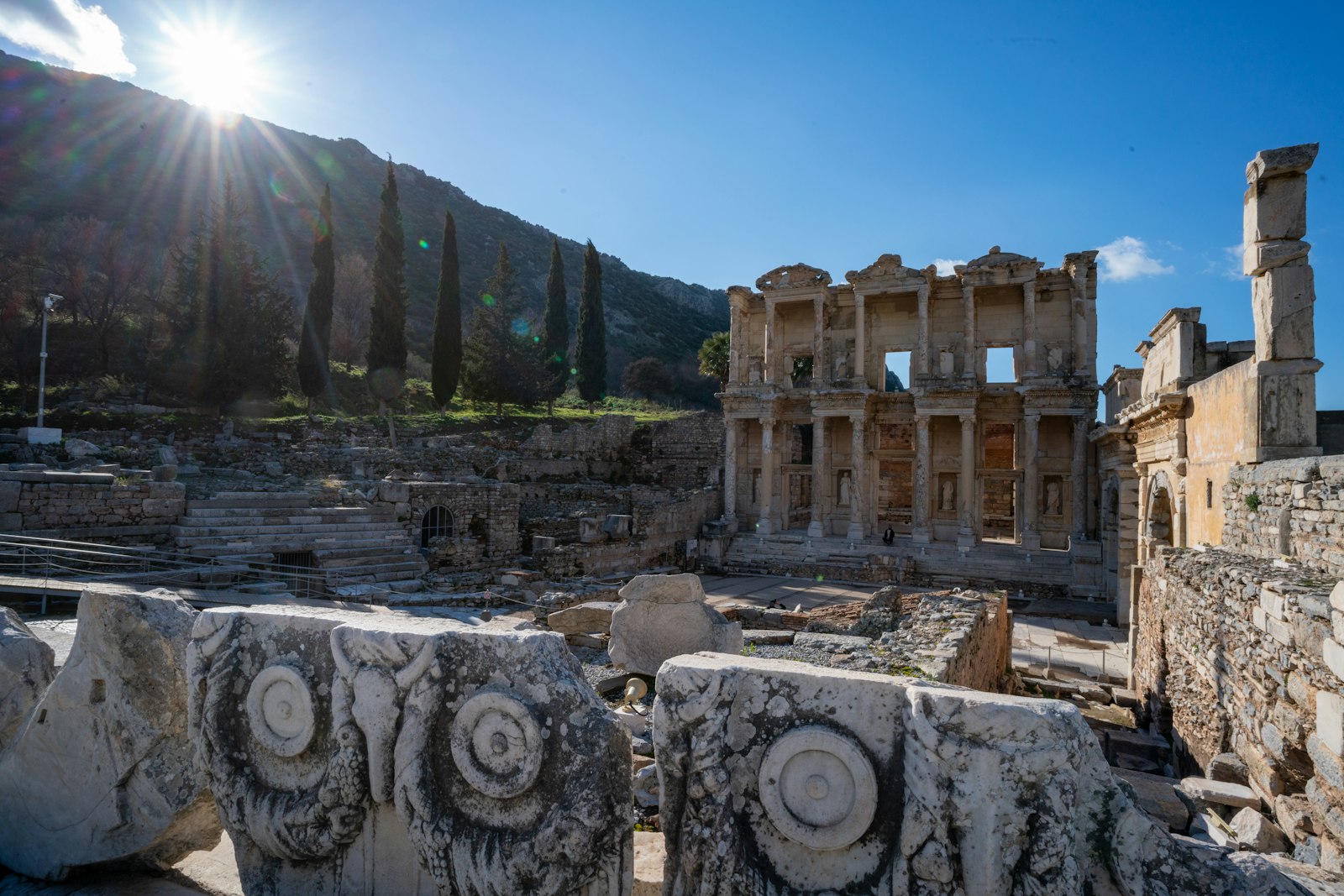
Timing matters more here than at most sites. Ephesus is mostly open marble with little shade, and the main street runs downhill in full sun, so a midday visit in July or August is hard work. It’s also a popular shore excursion from cruise ships calling at nearby Kuşadası, so the busiest hours fall in the middle of the day. Spring and early autumn are far more comfortable. Arrive at opening time or come for the last two hours of the day.

The Smart Timing Bundle
Pick the month, book in the right order, pack once
Six printable timing tools for any trip: the Trip Timing Planner, When to Book, When NOT to Go, the Shoulder Season Playbook, the family timing guide and the Packing by Season System.
See the bundle · $37Six products, $100 separately · Digital download · All sales final
Tip
Save the Arcadian Street for last: it is the clearest trace of the lost harbour. For more classical cities, see our guide to lost cities of Europe.
Ostia Antica, Italy: Rome’s Port on the Tiber
This section covers Ostia Antica, the old harbour town that linked Rome with the Mediterranean at the mouth of the Tiber. It’s one of the easiest ancient port cities to visit: take the Lido train from Piramide station, about 30 minutes, with trains roughly every 20 minutes, says Romewise. Ostia Antica is two stops before the Lido end of the line. Buy your return ticket before you set off.
The site is large, and it’s easy to spend a full day there without seeing everything. Trees give some shade in summer, but the site is exposed because it sits near the coast, so bring a hat and water. It’s closed on Mondays, Christmas Day and New Year’s Day.
Summer in Rome is the reason to avoid July and August. Climates to Travel gives a July average high of about 31 °C, with hot spells of 34 to 35 °C and some days near 37 to 38 °C. Spring and the autumn months of September and October are milder. Winter is quiet and cool, with December averaging about 13 °C by day.
Note
Ostia Antica pairs well with a coastal trip down the Adriatic too. Roman and Venetian ports line the eastern shore; see things to do in Split and the Bay of Kotor for two of them.
Qalhat, Oman: A Medieval Port on the Arabian Sea
This section covers Qalhat, near Sur on Oman’s east coast, the most remote harbour in this guide. It grew into a major port between the 11th and 15th centuries under the princes of Hormuz, according to Times of Oman, and was described as a twin capital of the Kingdom of Hormuz by Orient-Méditerranée. A natural disaster, believed to be an earthquake, struck the city in the 14th century, and the port never recovered its old role.
Both Marco Polo and Ibn Battuta visited Qalhat. The main standing structure is the Tomb of Bibi Maryam on a hilltop overlooking the Indian Ocean. the South China Morning Post describes a very isolated site with little infrastructure: no signs, no paths and no fences, reached by a walk of about 10 minutes from the parking area across a dry riverbed and up a winding track.
That walk is exactly why timing matters. Oman’s summer, from about May to September, is extremely hot, and the site has no shade. The cooler months are far easier: Climates to Travel gives Muscat, the nearest big climate station, an average high of about 26.5 °C in February; November averages run closer to 30 °C. Go early and carry plenty of water.
Warning
Qalhat has no staff or facilities. Wear proper shoes for the rocky path and avoid the hottest hours, even in winter.
Lothal, India: A Bronze Age Dock in Gujarat
This section covers Lothal, the oldest site in this guide by far. It was a port city of the Harappan, or Indus Valley, civilisation, dated to about 2400 BCE, and its best-known feature is an artificially built basin that is often described as one of the earliest known docks, according to India Guide. Around it you can trace the brick foundations of the town, and a small archaeological museum holds pottery, seals and beads found during the excavations.
Lothal lies about 80 km from Ahmedabad, a drive of 1.5 to 2 hours. The site itself needs 2 to 3 hours, and opening times are listed as roughly 09:00 to 17:00 for the site and 10:00 to 17:00 for the museum, per India Guide’s planning page; confirm before you go, as hours and closing days can change.
Here the calendar is unforgiving. October to March is pleasant and dry, with temperatures of about 20 to 35 °C. April to June brings 35 to 45 °C on a flat site with almost no shade, and the July to September monsoon can leave parts of the site waterlogged.

The complete kit
Every country guide, every timing tool
All 24 When to Go country guides, the six Smart Timing tools and every 12-Month Map, with a Start Here that tells you what to open first.
See the kit · $127The five bundles cost $225 separately · Digital download · All sales final
Source: India Guide. If you are building a wider India trip, see our guide to places to visit in India in May.
Galle, Sri Lanka: A Fortified Harbour on the Indian Ocean
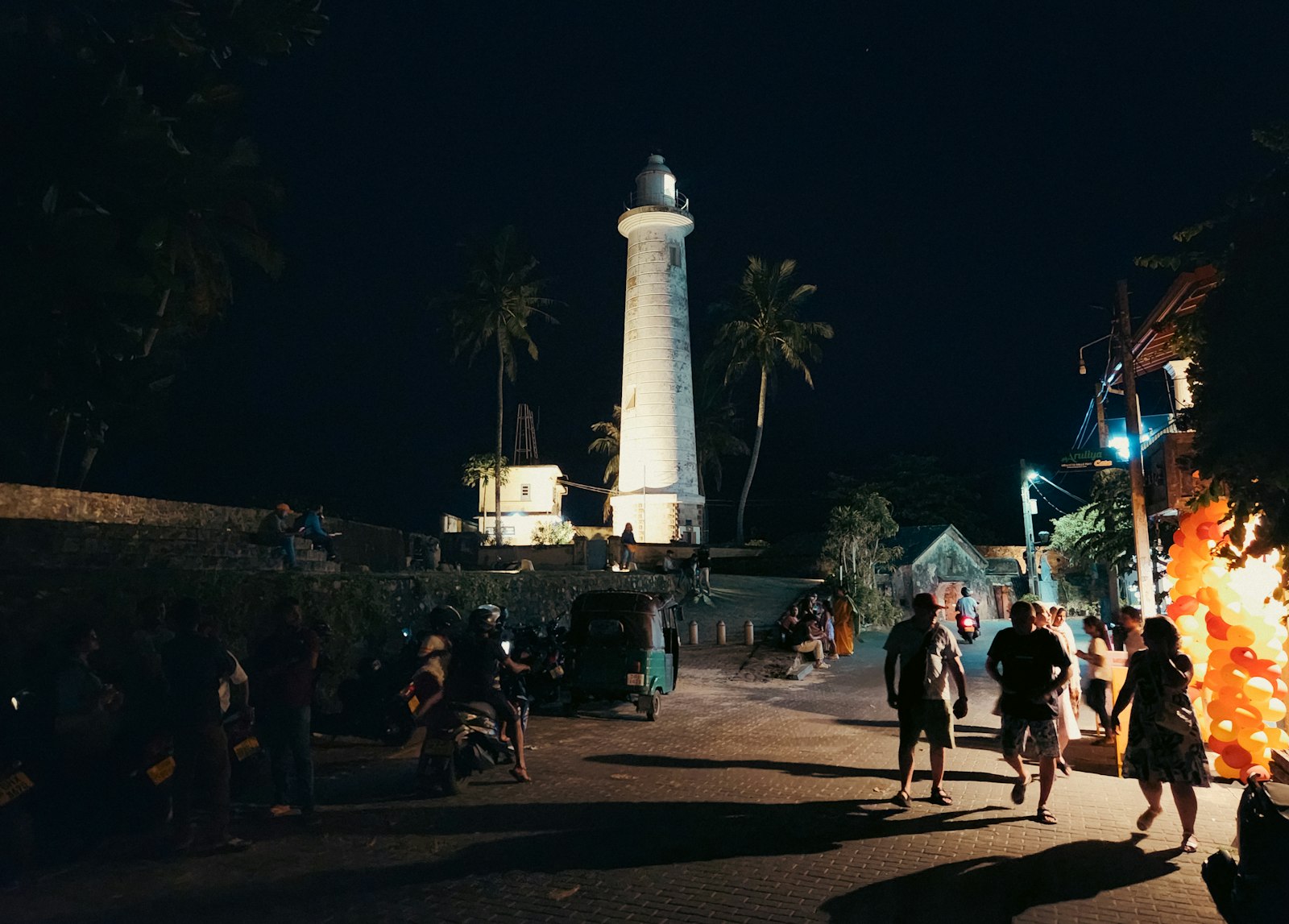
This section covers Galle, the most complete walled port in this guide. Portuguese traders set up an early fort here in the 16th century, and the Dutch largely rebuilt and enlarged the fortifications in the 17th century; the old town and its walls are now a World Heritage site, according to Travel Dojo. Stone ramparts and bastions wrap around the town, with views over the harbour and the ocean, and a working lighthouse stands at the seaward edge.
Galle’s timing follows the monsoons. The southwest monsoon brings rain to the west and south coasts from about April or May to September, and it’s wettest from April to June, says Rough Guides, which names December to March as the best time for the south and west coasts. Sri Lanka Travel Pages adds that temperatures stay between about 24 and 31 °C all year, that May to June and October to November are the wettest months, and that December to February dates sell out quickly.
The best plan is a late-afternoon walk on the ramparts, when the heat fades. The Galle Literary Festival, usually held in late January or early February, makes the town especially lively, so book early if your dates overlap. April and July to September bring fewer visitors and some rain.
Hoi An, Vietnam: The Old Trading Port of the Thu Bon River
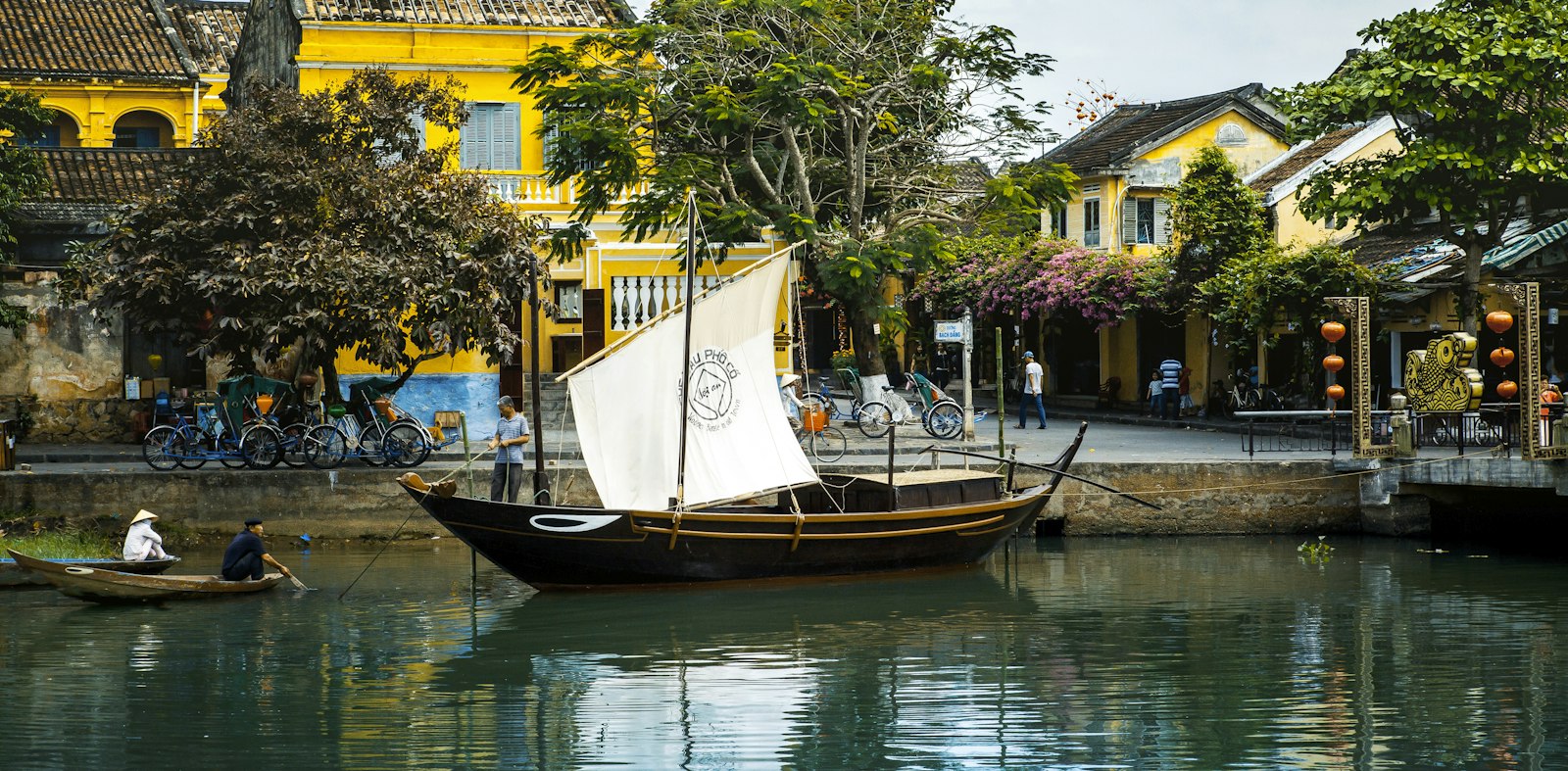
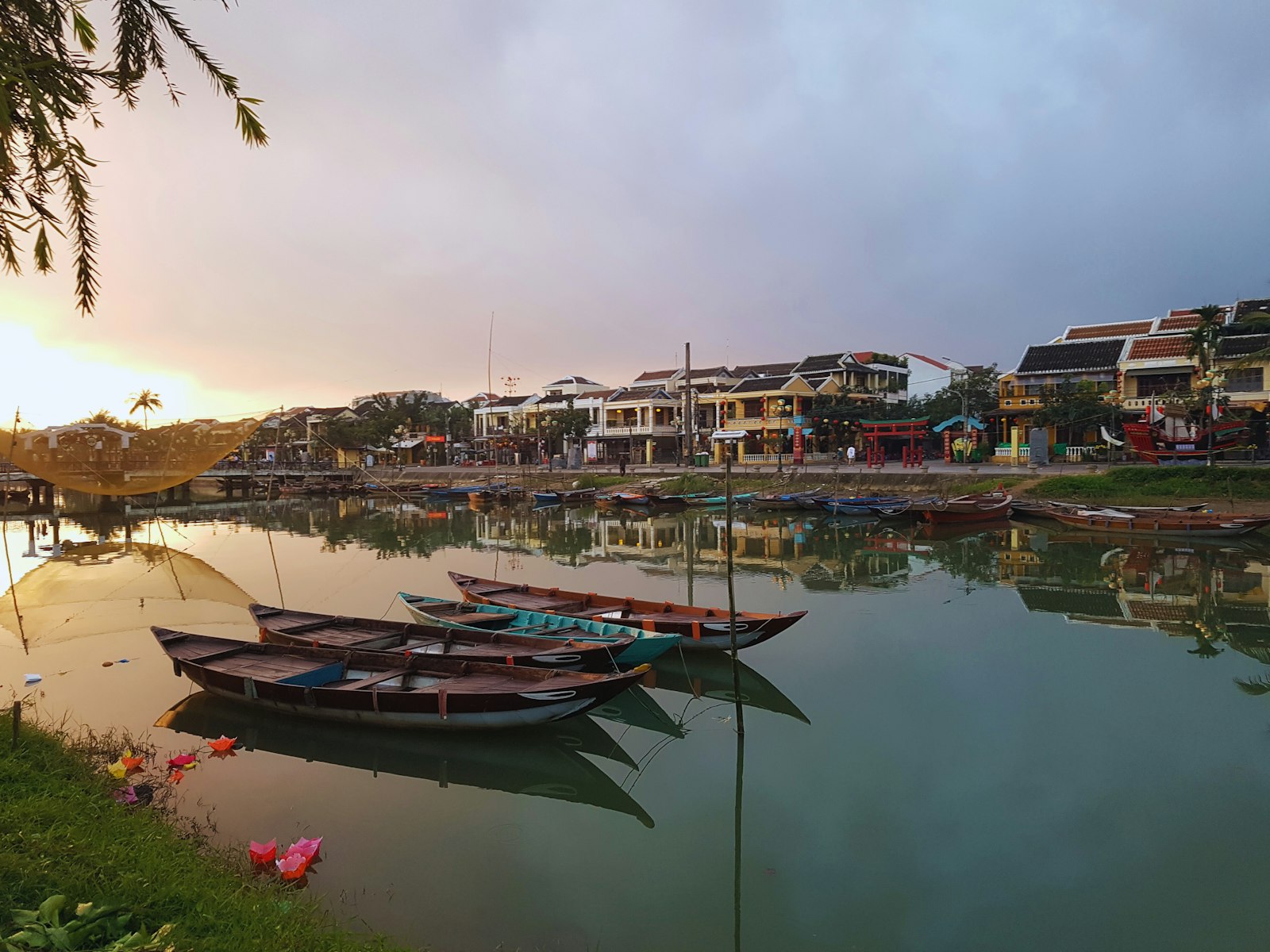
This section covers Hoi An, where the old trading quarter still stands along the Thu Bon River. Its pedestrian lanes are lined with merchant houses about 400 years old, and the whole old town is a World Heritage site, as Vietnam Tourism notes. Boats still crowd the riverbank, and on the 14th day of each lunar month the town switches off its electric lights for a full-moon lantern night.
Hoi An has the most dramatic weather swing of the six. Flood season peaks in October and November, with about 655 mm of rain in October and about 438 mm in November, and the riverside streets can go under water. The same source gives average highs of about 33 °C in May and 34 °C from June to August. Travelfish calls February to April the most comfortable stretch for temperature and humidity, and notes that flooding is most likely from late October to mid-December, though it doesn’t happen every year.
In the hot months, visit early and again after dark. For another old Asian trading port, read our Nagasaki travel guide.
How to Time a Trip to Ancient Port Cities
This section turns the six sites into practical rules for walking open, uneven ground in the sun.
Match the site to the season
Plan the Mediterranean ports for spring or autumn and the monsoon-belt ports for their dry season. Don’t try to see all six in one month.
Arrive at opening time
Mornings bring cooler air, softer light and fewer tour groups, especially at Ephesus and Ostia.
Check closing days
Ostia Antica is closed on Mondays. Confirm hours for every site the day before you go.
Carry water and a hat
Qalhat and Lothal have little or no shade, and even Galle’s ramparts are open to the sun.
Leave a spare day
Monsoon rain in Galle or floods in Hoi An can cancel plans. A free day saves the trip.
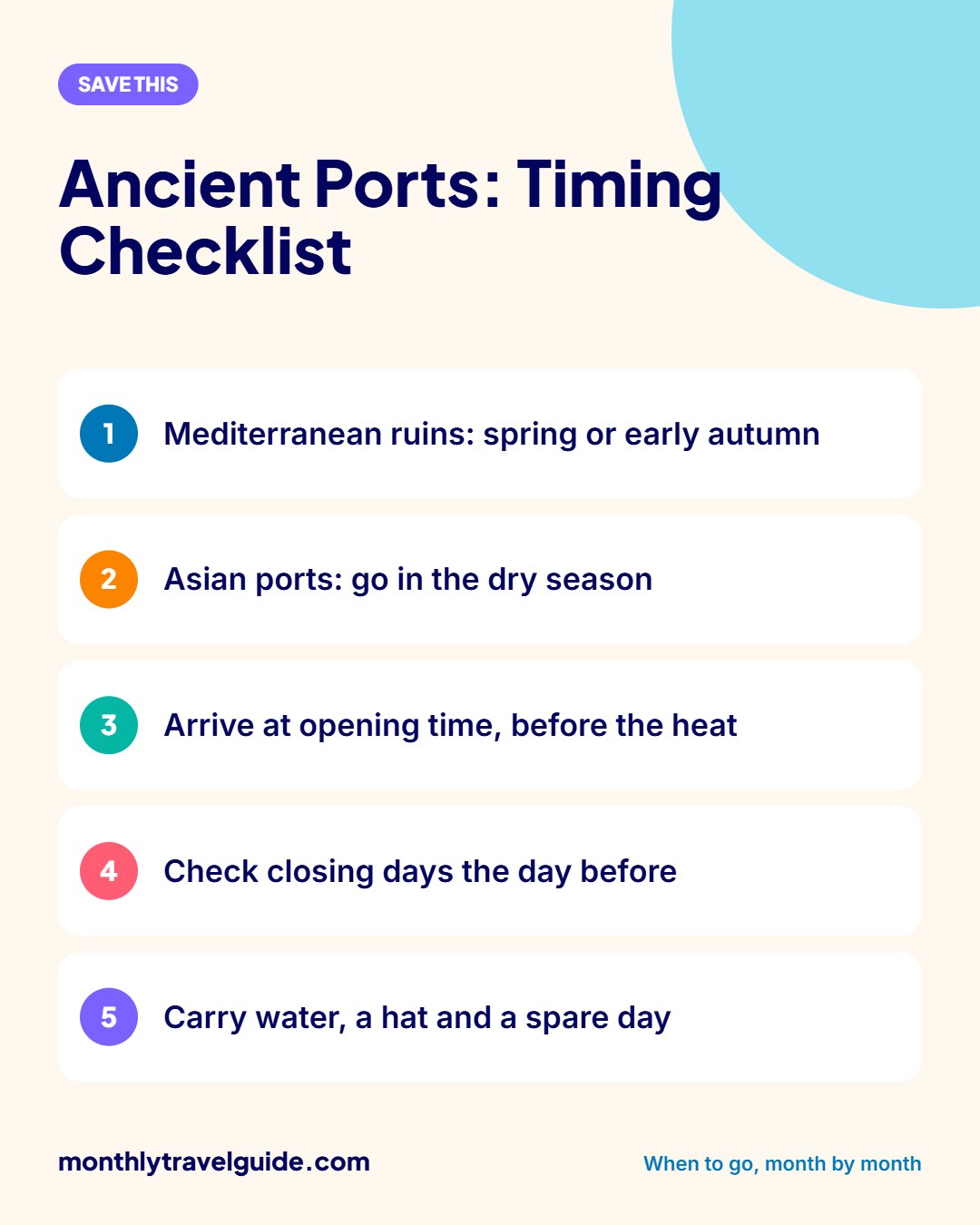
To check whether a date falls in a site’s bad weeks, run it through the free When Not to Go checker. To find the in-between weeks with milder weather and fewer people, try the Shoulder Season Detector, and for storm and cyclone risk on coastal trips use the Storm Season Check.
When Not to Visit Ancient Port Cities
This section lists the weeks that can spoil a visit. None of these sites closes for a season, but each has a hard stretch.
Ephesus in July and August
Open marble, little shade, midday cruise groups.
Instead: Go in late April, May, September or October.
Ostia Antica in high summer
Rome’s July average high is about 31 °C, with hotter spells.
Instead: Go in spring or early autumn, on a weekday.
Qalhat from May to September
Oman’s summer heat on a shadeless hilltop walk.
Instead: Go between November and March, early in the day.
Lothal from April to June
About 35 to 45 °C on an open site.
Instead: Go from October to March.
Galle in May and June
The wettest part of the southwest monsoon.
Instead: Go from December to March.
Hoi An in October and November
Peak flood season along the river.
Instead: Go from February to April.
Better Month If You Want Something Else
This section helps if the ports are part of a wider trip with other goals.
| If you want | Go to | When |
|---|---|---|
| Two harbours in one trip | Ostia Antica, then Ephesus | May or late September |
| Winter sun with history | Qalhat and the Omani coast | December to February |
| A festival in an old port town | Galle | Late January or early February |
| Lantern-lit evenings by the river | Hoi An | A full-moon night from February to April |
| The oldest dock you can see | Lothal | November to February |
For more ideas, see our list of February destinations for history lovers and the top destinations to visit in October.
5 Common Mistakes When Visiting Ancient Ports
1. Expecting to see the sea from every harbour
At Ephesus the coast is about 6 km away. The missing water is part of the story, so look for the clues: harbour streets and dock walls.
2. Visiting in the middle of the day
A late-morning summer arrival at Ephesus, Ostia or Lothal means the strongest sun and the biggest groups at once. Go at opening time instead.
3. Ignoring the monsoon calendar
Asian ports don’t follow European seasons. Galle is wet in May and June, and Hoi An floods most often in October and November. Check the local rainy season before you book flights.
4. Underestimating how remote some sites are
Qalhat has no visitor centre, signs or shade, and Lothal is about 80 km from Ahmedabad. Plan transport, water and time in advance rather than treating them as quick stops.
5. Forgetting closing days and holiday crowds
Ostia Antica is closed on Mondays, and holiday weeks bring the biggest crowds. Check hours before you travel.
Ancient Port Cities FAQ
Which ancient port cities can you still visit?
Many ancient port cities are open to visitors. In the Mediterranean, Ephesus in Türkiye and Ostia Antica near Rome are the best preserved. Further east, you can visit medieval Qalhat in Oman, the Harappan dock at Lothal in India, the fortified harbour of Galle in Sri Lanka and the old trading town of Hoi An in Vietnam. Each has its own best season.
Why is Ephesus no longer by the sea?
The Küçük Menderes river, known in ancient times as the Cayster, carried silt into the bay for centuries until the harbour filled in. Engineers tried breakwaters, dredging and a river diversion, but none lasted. The harbour became marsh, trade moved elsewhere, and today the coast lies about 6 km west of the ruins.
What is the best time to visit Ephesus?
April, May, September and October are the best months for most visitors. The site is open marble with little shade, so July and August are hot and tiring, and cruise groups crowd the middle of the day. Arrive at opening time or come for the last hours of the afternoon, and bring water and a hat in any season.
How do you get to Ostia Antica from Rome?
Take the Lido train from Piramide station in central Rome. The ride takes about 30 minutes, trains run roughly every 20 minutes, and Ostia Antica is two stops before the end of the line. Buy a return ticket before you set off. The site is closed on Mondays, Christmas Day and New Year’s Day, so plan around those dates.
Is Lothal worth visiting?
Yes, if you are interested in early civilisations. Lothal was a Harappan port dated to about 2400 BCE, and its brick dock basin is one of the earliest known. The site is small and flat, with a modest museum of pottery, seals and beads. Go between October and March, as April to June brings 35 to 45 °C with little shade.
When is the best time to visit Hoi An?
February to April is the best time to visit Hoi An, with drier weather, moderate heat and lower humidity. May to August is hot, with average highs of about 33 to 34 °C. October and November are the peak flood months, with the heaviest rain of the year, so avoid them if you want to walk the riverside old town.
The Bottom Line
The ancient port cities in this guide reward careful timing more than almost any other kind of trip: go to Ephesus and Ostia Antica in spring or early autumn, and to Qalhat, Lothal, Galle and Hoi An in their dry, cooler months. Start early, carry water and leave a spare day for the weather. For more historic places, browse our heritage travel guides.
Plan every trip in the right weeks
The Complete Travel Timing System
The full kit brings together the month-by-month country guides, the timing tools and the playbooks for booking windows, shoulder seasons and weeks to avoid, so a route that mixes Mediterranean ruins with Asian harbours lands in good weather at every stop.
See The Complete Travel Timing System →Digital download · All sales final
Free download
The 12-Month Map, free
The whole year for one country on four printable pages, so you can see the right months before you read anything else.
- Good, shoulder and avoid months at a glance
- Region by region, not one average for the whole country
- Prints cleanly on US Letter
Your download page opens as soon as you sign up. 24 countries available.