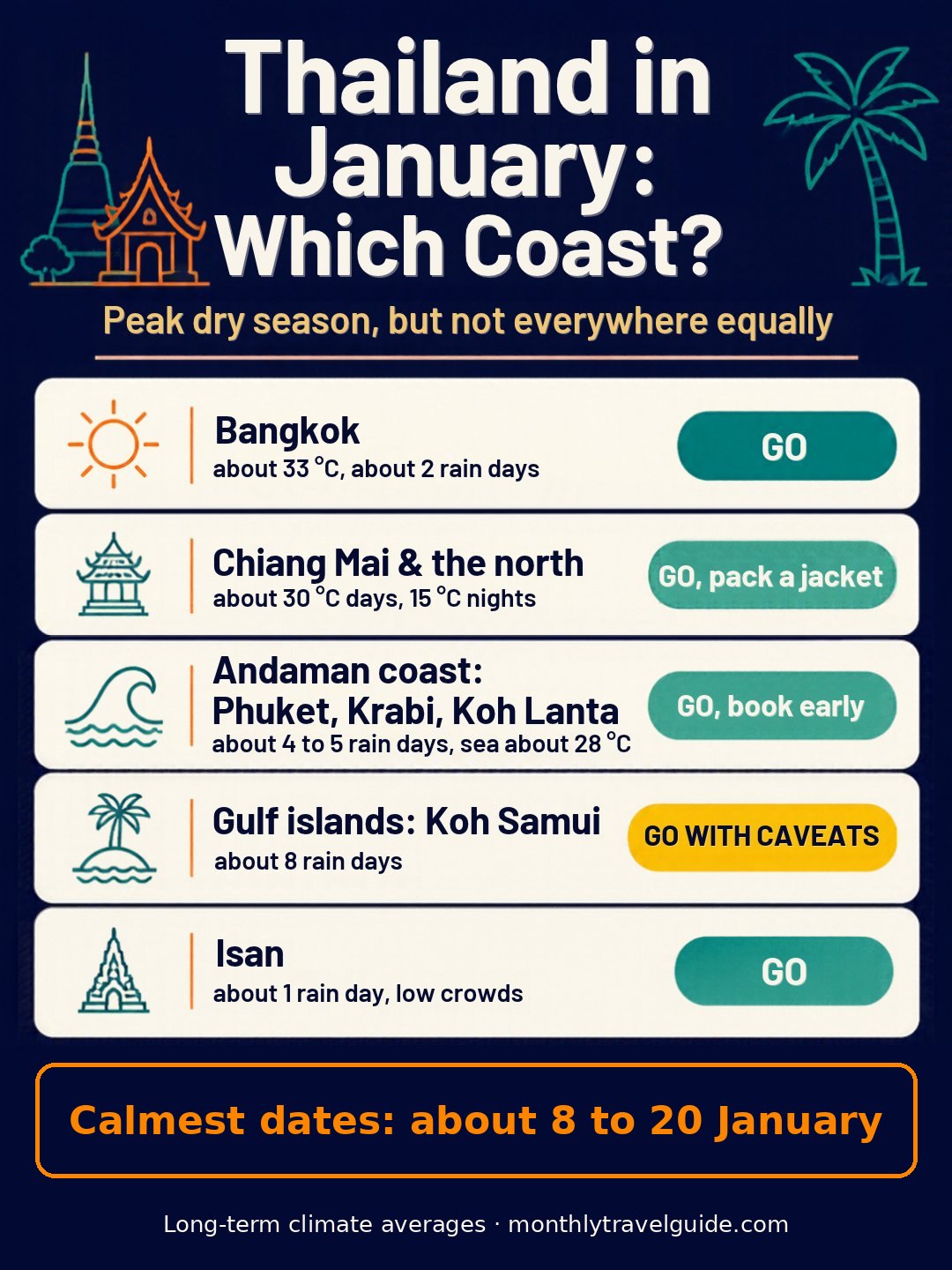
Thailand in January sits in the heart of the cool, dry season: Bangkok averages about 33 °C by day and 23 °C at night with only a couple of rain days, Chiang Mai has warm afternoons and fresh nights near 15 °C, and the Andaman coast around Phuket and Krabi is in its calmest, sunniest stretch. The one region that can still let you down is the Gulf of Thailand, where Koh Samui’s late rains sometimes run into the first half of the month. January is also the busiest and most expensive month of the year for beach islands, so timing inside the month matters as much as the region you pick.

Quick answer
Yes, January is one of the best months for most of Thailand. Bangkok, the north, Isan and the Andaman coast are dry, sunny and less humid than later in the year. Book Phuket, Krabi and Koh Lanta early because it is peak season, give Koh Samui a few spare days early in the month, and expect northern haze to start building towards the end of January.
Key takeaways
Dry and sunny almost everywhere: Bangkok, Chiang Mai and Isan see about one or two rain days.
The Andaman coast (Phuket, Krabi, Koh Lanta) is at its best, with sea near 28 °C and calm water.
The Gulf islands (Koh Samui, Koh Phangan, Koh Tao) can still be wet in early January; late January is safer.
Northern nights are cool, usually 14 to 17 °C, and occasionally much colder on cold snaps and in the hills.
Chinese New Year falls usually in late January or February and fills Bangkok’s Chinatown and Phuket Old Town.
January verdict map
Overall: go. Seven of eight areas are in good shape; the Gulf islands are the only real gamble, and mostly in the first two weeks.
Bangkok and central
GoDry, about 33 °C
Chiang Mai and the north
GoWarm days, cool nights
Phuket and Phi Phi
GoPeak dry season
Krabi and Koh Lanta
GoCalm seas, busy
Koh Samui
Go with careRain tail, early weeks
Koh Phangan and Koh Tao
Go with careShowers possible
Isan (north-east)
GoDry and quiet
Northern hills late in the month
Go with careHaze may start
Thailand in January: Weather and Crowds at a Glance
This section is the reference table. Thailand is long and split by two coasts, so January weather changes more with geography than with the calendar. The north and inland cool down at night, the Andaman coast is dry and calm, and the Gulf side is still shaking off the north-east monsoon rains. Read across for the place you plan to sleep.
| Area (station) | Day / night | Rain | Sun a day | Sea | Daylight | Crowds | Price level |
|---|---|---|---|---|---|---|---|
| Bangkok and central plain (Bangkok) | About 33 °C / 23 °C | About 2 days, 15 mm | About 9 h | About 28 °C (Pattaya) | About 11.5 h | High | High |
| North (Chiang Mai) | About 30 °C / 15 °C | About 1 day, 10 mm | About 9 h | — | About 11 h | High | High |
| Andaman coast (Phuket) | About 33 °C / 23 °C | About 4 days, 35 mm | About 8 h | About 28 °C | About 11.5 h | Very high | Highest of the year |
| Andaman coast (Krabi, for Koh Lanta too) | About 33 °C / 22 °C | About 5 days, 30 mm | About 6 h | About 28 °C | About 11.5 h | Very high | Highest of the year |
| Gulf islands (Koh Samui) | About 29 °C / 24 °C | About 8 days, 125 mm | About 6 h | About 28 °C | About 11.5 h | High, rising late in the month | High |
| Isan (Khon Kaen, Udon Thani) | About 30 to 31 °C / 16 to 18 °C | About 1 day, 5 mm | About 9 h | — | About 11 h | Low | Low to medium |
🗓️ Free: the 12-Month Map for Thailand
Every month on one page: best weeks, shoulder weeks and the ones to skip. Print it or keep it on your phone.
Temperatures, rain and sunshine are long-term climate normals compiled by Climates to Travel; the Thai Meteorological Department publishes the official 30-year national charts on its climate chart page. Rain days count days with meaningful rain, so expect the odd passing shower on top. Daylight figures are rounded for the latitude. Crowd and price levels are the Monthly Travel Guide editorial team’s ratings, not statistics, and they peak over the New Year holiday.
2
rain days in Bangkok
15 °C
average night in Chiang Mai
28 °C
sea off Phuket and Samui
125 mm
January rain on Koh Samui
🧰 Try it while you read: a free tool for this trip
Free trip timing tool
Rainy Season Risk
Check how wet a month usually is, with rainfall and rain days by month.
Loading the tool…
Region by Region: Where Thailand in January Works Best
This section gives a verdict for each of the five main travel regions. The country is dominated by the north-east monsoon in January, which blows dry air down from the Asian continent. That is why most of Thailand is dry and comparatively cool, and also why the Gulf coast, which faces that wind, can stay damp after the rest of the country has dried out.
Bangkok and central Thailand
Bangkok and the central plain
Bangkok, Ayutthaya, Kanchanaburi, Sukhothai
33 °C
by day
23 °C
at night
2
rain days
9 h
of sun
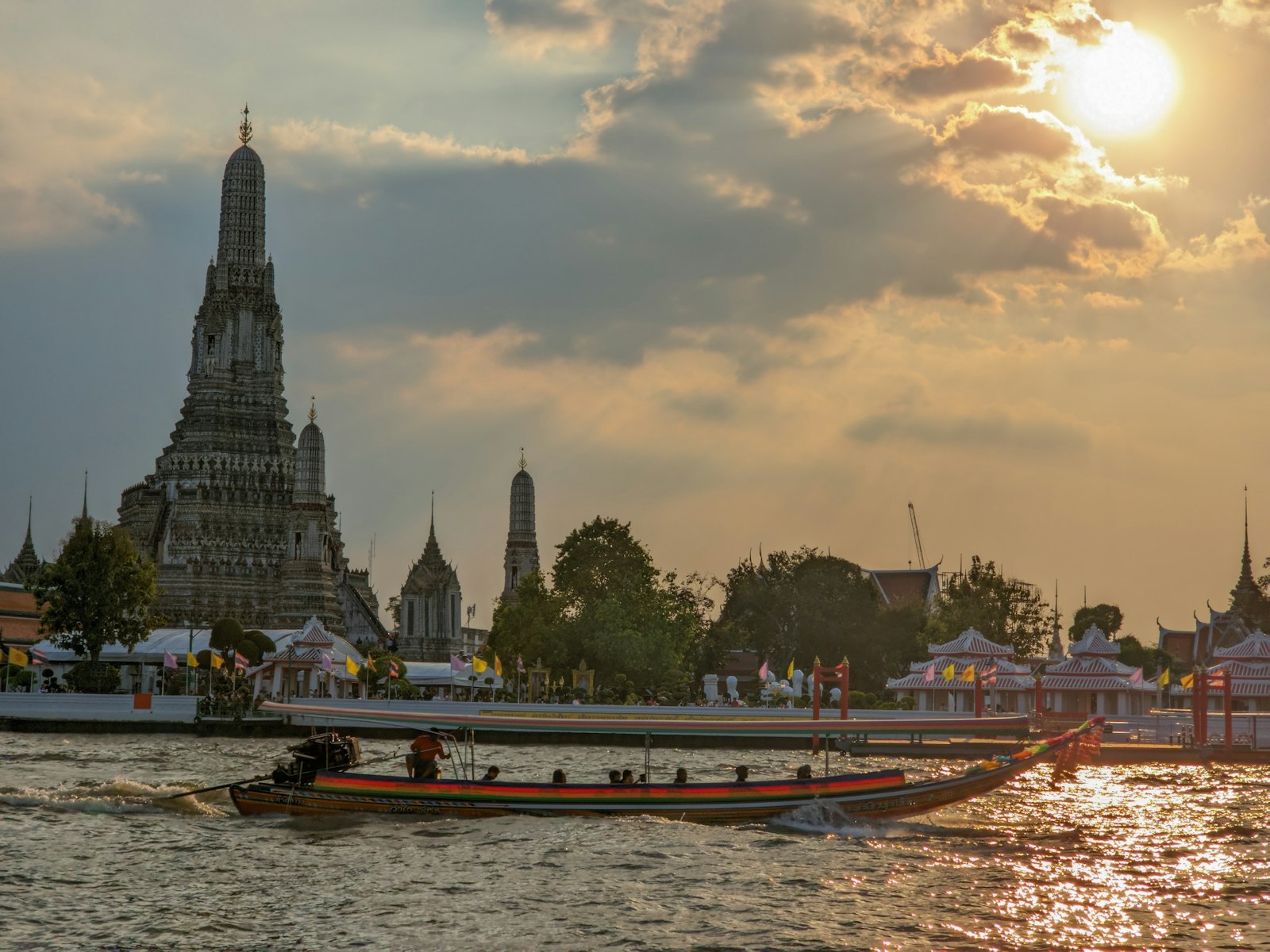
January is one of the most comfortable months for the capital. It is still hot at midday, but the air is drier than in the hot season that follows, and evenings by the Chao Phraya are pleasant for walking. Climates to Travel rates December to mid-February as the best window for Bangkok and the central plain. Use the cooler early mornings for the Grand Palace, Wat Pho and Wat Arun, and the afternoons for museums, malls or a river boat. Day trips to the old capital at Ayutthaya and to Kanchanaburi are easy in the dry weather.
Chiang Mai and the north
Chiang Mai, Chiang Rai and the northern hills
Chiang Mai, Chiang Rai, Pai, Doi Inthanon, Lampang
30 °C
by day
15 °C
at night
1
rain day
9 h
of sun
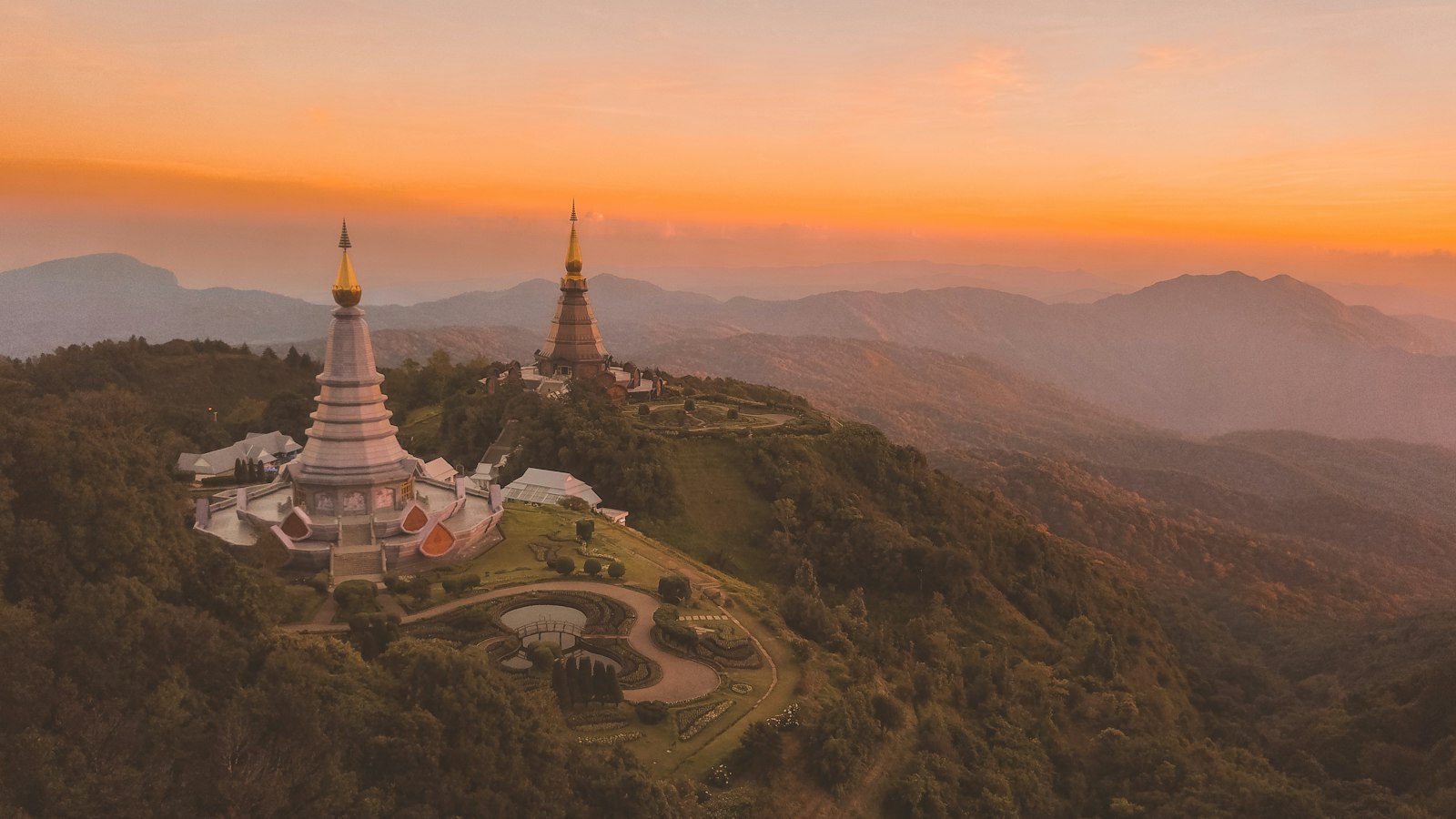
The north is at its freshest in January. Afternoons around 30 °C are good for temples, markets and trekking, and nights in Chiang Mai average about 15 °C, a little colder in Chiang Rai. On cold snaps, when cold air pushes down from China, Climates to Travel notes that northern cities can drop to around 5 °C at night, and the high viewpoints around Doi Inthanon, Thailand’s highest mountain, are colder still at dawn. Pack a fleece, long trousers and warm socks for early starts, and expect simple guesthouses to have no heating.
The catch is the burning season. Farmers burn crop stubble from about January to April, peaking in March, and smoke can collect in the valleys of Chiang Mai, Chiang Rai and Lampang. Early January is usually clear; towards the end of the month the haze can start to build. Check an air quality reading before long hikes, and carry a proper mask if you are sensitive to smoke.

The Smart Timing Bundle
Pick the month, book in the right order, pack once
Six printable timing tools for any trip: the Trip Timing Planner, When to Book, When NOT to Go, the Shoulder Season Playbook, the family timing guide and the Packing by Season System.
See the bundle · $37Six products, $100 separately · Digital download · All sales final
Andaman coast: Phuket, Krabi and Koh Lanta
Phuket, Krabi, Phi Phi and Koh Lanta
West coast beaches on the Andaman Sea
33 °C
by day
4 to 5
rain days
28 °C
sea
8 h
of sun, Phuket
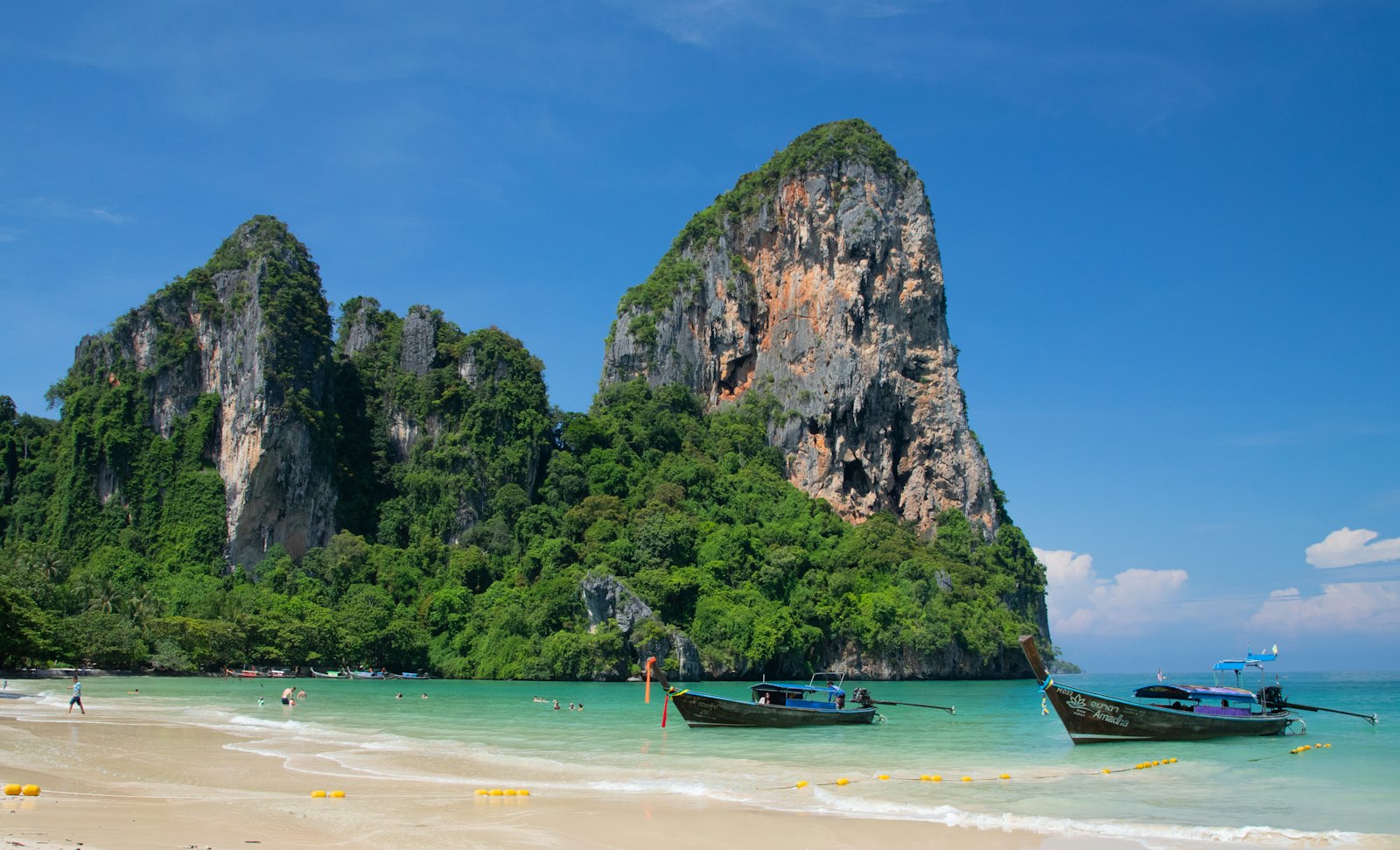
This is the coast January was made for. The south-west monsoon is long gone, the sea is usually calm and clear, and Phuket averages about four rain days with roughly eight hours of sunshine a day. Krabi, which also covers Koh Lanta and Railay, is very similar. Boat trips to Phi Phi, Phang Nga Bay and the outer islands run reliably, and the national marine parks that close during the monsoon, such as the Similan and Surin islands, are open for the season.
The price of perfect weather is demand. January is the top of the high season on the Andaman coast, and the New Year week is the busiest of all, with the fullest flights, ferries and hotels. Book rooms and island transfers well ahead, choose a quieter base such as Koh Lanta or the northern beaches of Phuket if crowds matter to you, and visit the famous bays early in the morning before the day boats arrive.
Plan the whole year
When to Go: Thailand
January is one month; Thailand has twelve very different ones, and the two coasts run on opposite seasons. When to Go: Thailand rates every month region by region, with weather, sea, crowd and price seasons, festival weeks and the dates to avoid, so you can match the right coast to your travel dates before you book.
See When to Go: Thailand →Digital download · All sales final
Gulf islands: Koh Samui, Koh Phangan and Koh Tao
Koh Samui, Koh Phangan and Koh Tao
Gulf of Thailand, east coast of the peninsula
29 °C
by day
24 °C
at night
8
rain days, Samui
125 mm
of rain
The Gulf islands run on a different clock. Their wettest stretch comes with the retreating monsoon from about October to December, and Climates to Travel notes that the rains sometimes continue until the beginning or the middle of January. Koh Samui still averages about eight rain days and 125 mm in January, far more than Phuket, with around six hours of sun a day. Most years the weather improves steadily through the month, and the same source names late January to April as the best period, with February the pick.
In practice, January on Samui, Phangan and Tao is usually a mix of bright days and passing downpours, with the odd grey, windy spell that can make ferry crossings rough. If your dates are fixed in early January, the Andaman coast is the safer beach bet. If you are set on the Gulf, aim for the second half of the month, keep a day or two of slack, and plan indoor or spa time for wet afternoons. On Koh Phangan, the full moon nights draw the biggest crowds of the month, so check the lunar calendar before booking a room near Haad Rin.
Isan: the north-east
Isan, the north-east plateau
Khon Kaen, Udon Thani, Ubon Ratchathani, Nong Khai and the Mekong
30 to 32 °C
by day
16 to 18 °C
at night
0 to 1
rain days
9 h
of sun
The north-east is the least visited big region of Thailand and arguably the most underrated in January. It is almost completely dry, days are warm rather than hot, and nights are cool, about 16 °C in Udon Thani and 18 °C in Khon Kaen and Ubon Ratchathani. It suits travellers who want Khmer-era temples such as Phanom Rung, sunsets over the Mekong on the Lao border, and local food and markets without the high-season crowds of the islands. Prices stay moderate. Several Khmer temples sit close to the Cambodian border, so read your government’s latest travel advice for border areas before you go.
January Dates: New Year Week, Quiet Middle and Chinese New Year
This section shows how the month runs. January opens at the peak of the high season, calms a little after the first week, and can end with Chinese New Year crowds if the lunar calendar falls early.
| Dates | What happens | Crowds | Price level |
|---|---|---|---|
| 31 December into 1 January | New Year’s Eve countdowns and fireworks in Bangkok and the beach towns; 1 January is a public holiday | Very busy | Highest |
| About 2 to 7 January | Holiday travellers head home; flights out of the islands and Bangkok are full | Busy | High |
| About 8 to 20 January | Usually the calmest part of the month, with peak-season weather | Medium to high | High, a little easier |
| Usually late January or February | Chinese New Year: lion and dragon dances, red lanterns and food stalls, biggest in Bangkok’s Yaowarat | Very busy in Chinatowns | High |
| Late January | Gulf islands drying out; haze can start in the north | Rising on the Gulf | High |
Chinese New Year follows the lunar calendar, so it falls usually in late January or February and moves every year. According to the Tourism Authority of Thailand, Yaowarat Road, Bangkok’s Chinatown, hosts the most popular party with dragon parades and acrobatic shows, Phuket celebrates with lanterns, a parade and a food fair in its Old Town of Sino-Portuguese shophouses, Nakhon Sawan holds a long procession with dragon and lion dances, and smaller events run in other provinces, including Chiang Mai. The festival also brings many visitors from across Asia, so if it lands inside your January dates, book Bangkok hotels and island flights early.
Tip
Check the Chinese New Year date for your travel year as soon as you pick a week. If it falls in late January, either lean into it with a night in Yaowarat or keep those days for the quieter north and Isan.
When Not to Go to Thailand in January
This section is the honest one. January is a strong month for most trips, but it is the wrong choice if any of these is your priority:
Guaranteed sun on Koh Samui
Early January can still be wet on the Gulf; February to April is more reliable.
Low beach prices and empty bays
It is the peak of the Andaman high season; prices are at their highest.
Clean mountain air for long treks
Burning-season haze can begin in the north late in the month; November and December are clearer.
Last-minute bookings over New Year
The first week sells out; book months ahead or travel after about 8 January.
Quiet Chinatown streets
If Chinese New Year lands in late January, Yaowarat is packed for days.
Better month if you want…
Driest Gulf islands
February to April
Lower prices on the Andaman coast
May to October
Clear northern skies
November and December
Loy Krathong lanterns
Usually November
Songkran water festival
Usually mid-April
Quiet peak-season weather
Mid-January
Thinking about the month before? Read Thailand in December. For other Asian winter trips, compare Vietnam in December and Bali in December. If you want milder winter sun closer to Europe, see the Canary Islands in January or Madeira in January.

The complete kit
Every country guide, every timing tool
All 24 When to Go country guides, the six Smart Timing tools and every 12-Month Map, with a Start Here that tells you what to open first.
See the kit · $127The five bundles cost $225 separately · Digital download · All sales final
Pack and book for Thailand in January
- ●Light clothes for the heat, plus a fleece and socks for northern nights
- ●Long trousers and covered shoulders for temple visits
- ●Reef-safe sunscreen and a hat: the Andaman sun is strong
- ●A mask for the north late in the month, when haze can begin
- ●Island rooms and transfers booked well ahead for peak season
5 Common Mistakes With a January Thailand Trip
1. Assuming every beach is dry
The Andaman coast is in its dry season, but the Gulf islands can still catch late rains in early January. Pick the coast to suit your dates, not the other way round.
2. Packing only for heat
Chiang Mai nights average about 15 °C and cold snaps go lower, especially in the hills and on dawn viewpoints. One warm layer saves a miserable early start.
3. Booking the New Year week late
The first days of January are the busiest of the whole year on the islands. Book flights, ferries and rooms early, or arrive after the holiday rush.
4. Forgetting Chinese New Year
It moves with the lunar calendar and can land in late January. Check the date before you book Bangkok or Phuket, and plan around the crowds.
5. Treating calm seas as risk-free
Even in the dry season, follow lifeguard flags and choose reputable boat operators. The UK government’s Thailand safety advice warns that people have drowned in strong riptides and that overloaded or poorly maintained boats have caused fatal accidents.
Thailand in January: FAQ
Q. Is January a good time to visit Thailand?
Yes, it is one of the best months for most of the country. Bangkok, Chiang Mai, Isan and the Andaman coast are dry and sunny, with only one to five rain days on long-term averages. The trade-offs are peak-season crowds and prices on the islands, possible late rains on the Gulf islands early in the month, and haze starting to build in the north.
Q. What is the weather like in Thailand in January?
Hot by day and dry in most regions. Bangkok averages about 33 °C by day and 23 °C at night, Chiang Mai about 30 °C and 15 °C, and Phuket about 33 °C and 23 °C. The sea is around 28 °C on both coasts. Koh Samui is the wet exception, with about eight rain days and 125 mm on average.
Q. Which coast is better in January, Andaman or Gulf?
The Andaman coast is the safer choice. Phuket, Krabi and Koh Lanta are in their peak dry season, with calm, clear water and about four or five rain days. The Gulf islands of Koh Samui, Koh Phangan and Koh Tao can still see heavy showers early in the month, as the late monsoon rains sometimes run into mid-January before clearing.
Q. Is it cold in Chiang Mai in January?
Not by day, when it usually reaches about 30 °C, but nights are fresh, averaging around 15 °C. During cold snaps from China, northern cities can drop to about 5 °C at night, and mountain viewpoints such as Doi Inthanon are colder at dawn. Pack a fleece, long trousers and socks, especially for early tours, motorbike rides and hill stays.
Q. Is Thailand crowded in January?
Yes, especially on the islands. January is the peak of the high season, and the New Year week is the busiest time of the whole year, with the highest prices. The middle of the month is a little calmer. If Chinese New Year falls in late January, Bangkok’s Chinatown and Phuket also get very busy. Isan stays quiet all month.
Q. When is Chinese New Year in Thailand?
It follows the lunar calendar, so it falls usually in late January or February and changes every year. The biggest celebrations are on Yaowarat Road in Bangkok’s Chinatown, with lion and dragon dances, red lanterns and street food. Phuket Old Town and Nakhon Sawan also hold large events. Check the date early, because hotels near the festivities fill quickly.
The Bottom Line
Thailand in January is the easy version of a Thailand trip: dry Bangkok, fresh northern nights, quiet Isan and the Andaman coast at its sunniest. The decisions that matter are which beach coast to choose, how to work around the New Year peak and whether Chinese New Year lands in your dates. Your next step is to fix your week, then book flights and Andaman rooms first, leaving Gulf islands for the second half of the month. For the month before, read Thailand in December.
The Complete Travel Timing System
Time every trip, not just this one
The Complete Travel Timing System brings together the When to Go country guides, the trip-timing tools and the 12-month maps in one kit, so you can compare destinations month by month and choose the right weeks for every trip you plan.
See the complete kitDigital download · All sales final
Free download
Which month for your country?
Get the free 12-Month Map: every month marked good, shoulder or avoid, region by region, on four printable pages.
- Greece to Japan, Morocco to Peru: 24 countries
- See the crowd and price peaks before you book
- Free, no purchase needed
Your download page opens as soon as you sign up. 24 countries available.