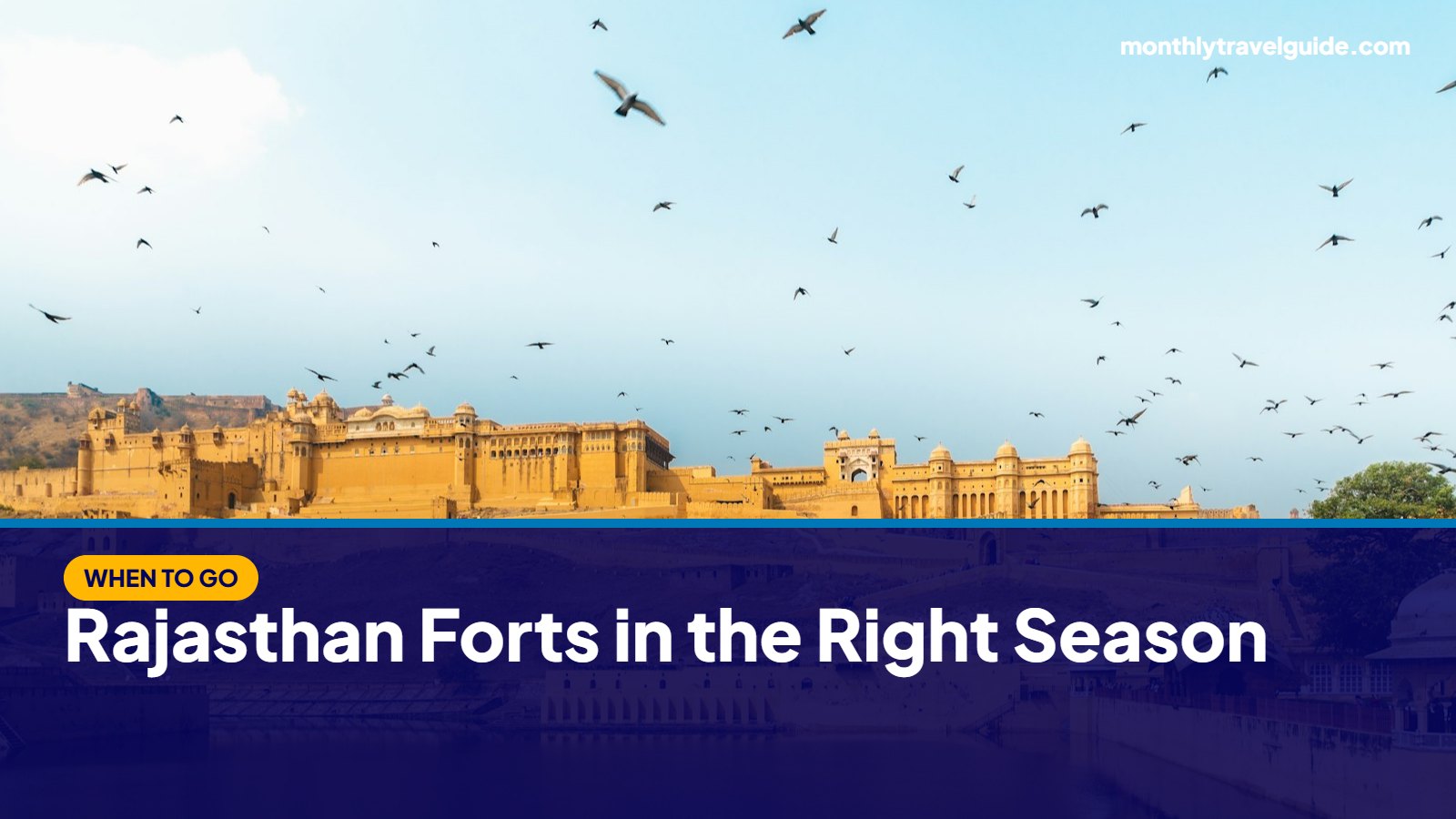
The forts in Rajasthan are best seen between mid-November and mid-February, when Jaipur and Jaisalmer sit at about 23 to 30 °C by day and the long climbs up ramps, gates and ramparts feel easy. From April to June the same walls hold heat like an oven, with highs above 40 °C, and the monsoon from about July to mid-September brings humid, sticky days in the east of the state. This guide covers Amber, Mehrangarh, Jaisalmer, Kumbhalgarh, Chittorgarh and the other hill forts, with month-by-month verdicts, festivals and the weeks to avoid.

When to Go guides
Choose your country, then your month
24 country guides, each about 100 pages: every month rated for weather, crowds and prices, region by region, with a 7-day booking plan. Six guides per region bundle.
Browse the 24 guides · $19 eachRegion bundles: Europe, Asia & Pacific, Sun Souks & Safari, Americas · $47 each
Fort season at a glance
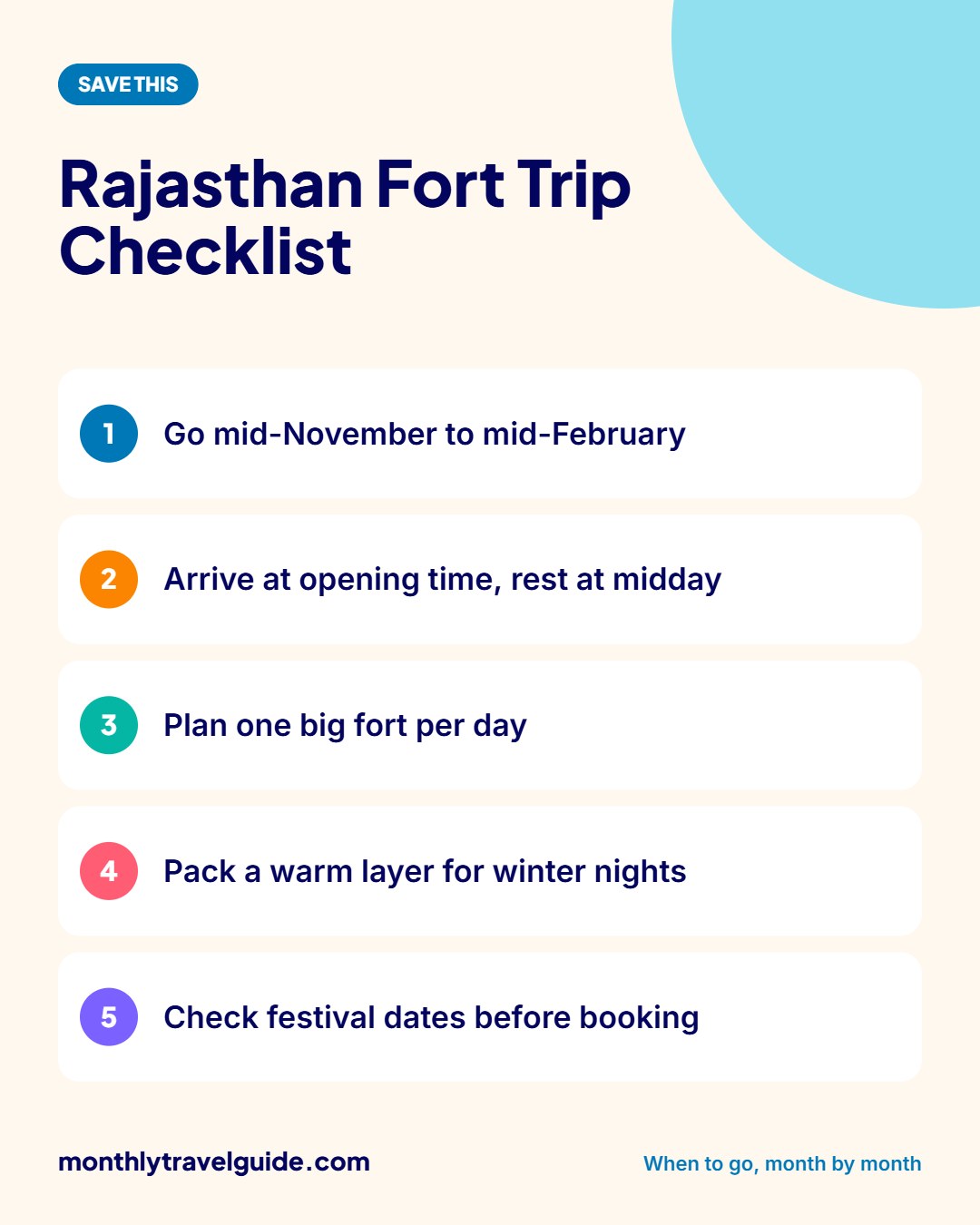
Go mid-November to mid-February
Amber
Jaipur
Mehrangarh
Jodhpur
Jaisalmer
Thar desert
Kumbhalgarh
Aravalli hills
Chittorgarh
Mewar
Ranthambore
Inside the tiger reserve
Short answer
The best time to visit the forts in Rajasthan is from mid-November to mid-February, the coolest part of the dry season, when days are warm, nights are cool and rain is close to zero. October and March work if you start early. Avoid April to June, when highs pass 40 °C, and expect humid heat and some closed paths in July and August.
Key takeaways
Six hill forts of Rajasthan are a single UNESCO World Heritage Site: Chittorgarh, Kumbhalgarh, Ranthambore, Gagron, Amber and Jaisalmer.
Jaipur averages about 23 °C by day in January and about 42 °C in May; Jaisalmer is a little hotter in summer and even drier all year.
Kumbhalgarh’s walls run for more than 36 km through the Aravalli hills.
Jaisalmer is a living fort: a large share of the old city’s people still live inside its walls.
Mehrangarh hosts a folk music festival every October, close to the full moon of Sharad Poornima.
Start every fort visit early; ramps, steps and open courtyards get hot by late morning, even in winter.
The Forts in Rajasthan Worth Planning a Trip Around
This section introduces the main forts and what makes each one different. Rajasthan has dozens of forts, from ruined hilltop outposts to palaces still owned by former royal families, but a handful carry most trips. Six of them were listed together by UNESCO as the Hill Forts of Rajasthan, chosen because they show how Rajput rulers used hills, rivers, forests and desert as part of their defences (Hill Forts of Rajasthan overview).
| Fort | Base | Why go | Allow |
|---|---|---|---|
| Amber (Amer) | Jaipur | Palace courtyards, mirror work, a lake below and Jaigarh above | Half a day |
| Mehrangarh | Jodhpur | A cliff-top citadel with one of India’s best fort museums | 3 to 4 hours |
| Jaisalmer | Jaisalmer | A golden sandstone fort where people still live and work | Half a day, plus a sunset |
| Kumbhalgarh | Near Udaipur | Walls of more than 36 km over forested hills | Half a day |
| Chittorgarh | Chittorgarh | One of India’s largest forts, with towers, temples and ruins | Half to a full day |
| Ranthambore | Sawai Madhopur | Ruins inside a tiger reserve | A morning, with a safari |
| Gagron | Jhalawar | A water fort where two rivers meet | 2 to 3 hours |
🗓️ Free: a 12-Month Map for your country
Every month on one page: best weeks, shoulder weeks and the ones to skip. Print it or keep it on your phone.
Sources: Wikipedia for the UNESCO group, Chittorgarh, Jaisalmer, Ranthambore and Gagron; Outlook Traveller for Kumbhalgarh; Lonely Planet for Amber and Lonely Planet for Mehrangarh. Visiting times are our own planning estimates.
Amber Fort, Jaipur
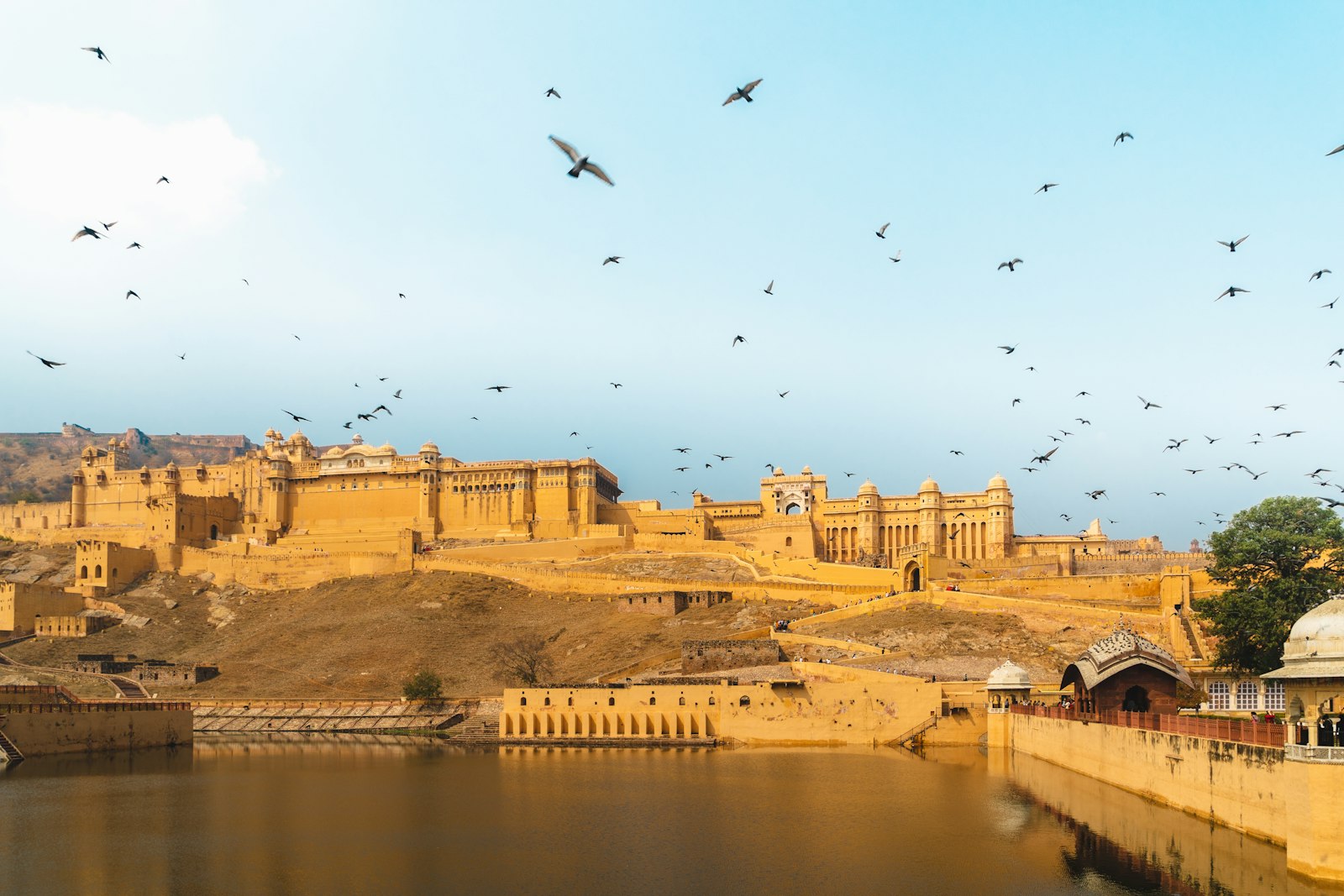
Amber is the fort most visitors see first. It sits on a hill above Maota Lake, which was its main water source, about 20 to 30 minutes from central Jaipur by bus, taxi or autorickshaw. A zigzag path from the ticket office takes about 10 minutes on foot, and the Ganesh Pol gateway, painted with foliage around an image of Ganesh, marks the start of the royal private quarters. A hidden passage links Amber to Jaigarh, the hilltop fortress above, where the royals could retreat under attack. Lonely Planet suggests at least half a day, or a full day with Jaigarh and the village below (Lonely Planet).
Important
Lonely Planet advises against elephant rides up to Amber, as carrying passengers can harm these vulnerable animals. Walk the ramp in the cool early morning, or take one of the jeep or electric buggy transfers instead.
Mehrangarh, Jodhpur
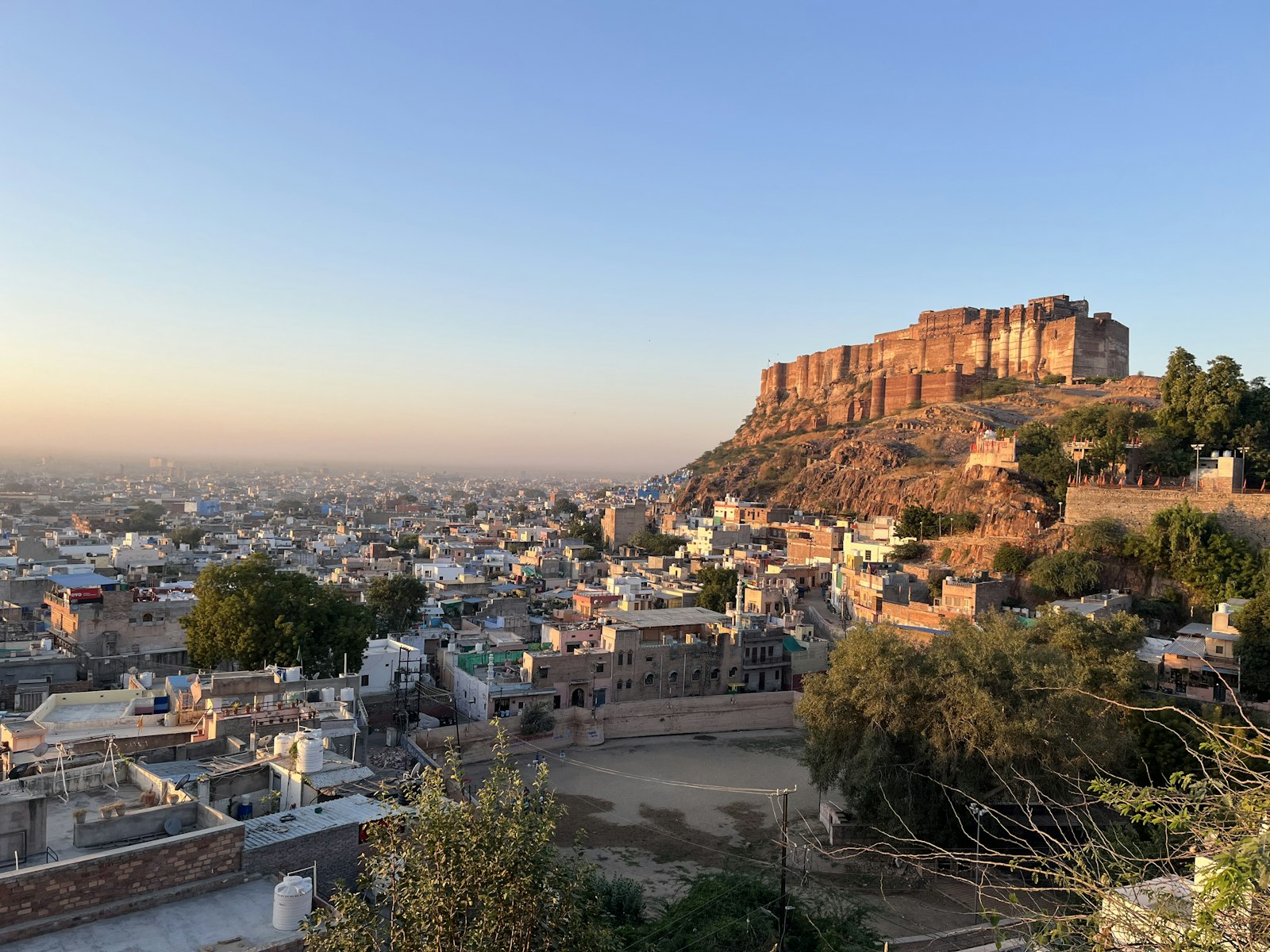
Mehrangarh rises from a rocky hill about 120 m above Jodhpur, looking down on the blue-painted old city. Inside, the former palace now holds a museum with royal howdahs and palanquins, textiles, miniature paintings, an armoury and a cradle gallery, plus the stained glass of the Moti Mahal. Lonely Planet notes that an audio guide comes with the ticket and that you need ID or a card as a deposit (Lonely Planet). Give it three to four hours, and finish on the ramparts in the late afternoon light.
Jaisalmer Fort
Jaisalmer is the fort that feels most like a town. Built of yellow sandstone on a ridge in the Thar desert, it is one of the few living forts in the world, with nearly a quarter of the old city’s population still living inside, along with shops, guesthouses and temples (Wikipedia). That also means narrow lanes, motorbikes and real daily life, so treat it as a neighbourhood rather than a museum. Climate data for the city shows it as the driest in India, with only about 200 mm of rain a year (Climates to Travel).
Kumbhalgarh
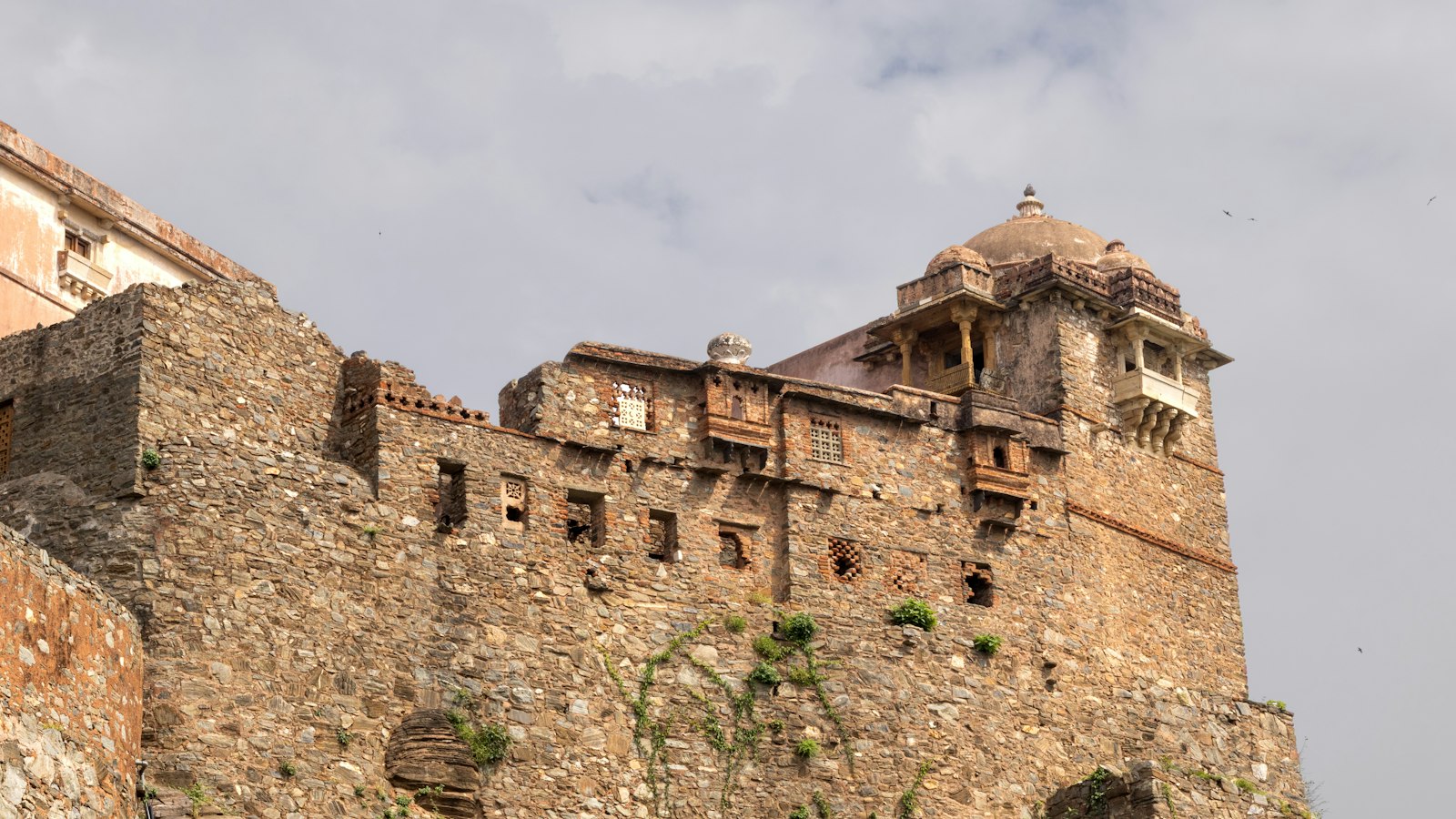
Kumbhalgarh, built by Rana Kumbha of Mewar in the 15th century, stands at about 1,100 m in the Aravalli hills, a long drive from Udaipur. Its walls run for more than 36 km, often called the second-longest continuous wall in the world, and more than 360 temples are spread inside. Udaipur’s airport is about 85 km away (Outlook Traveller). The setting is green after the monsoon and crisp in winter, and the hill air makes it a few degrees cooler than the plains.

The Smart Timing Bundle
Pick the month, book in the right order, pack once
Six printable timing tools for any trip: the Trip Timing Planner, When to Book, When NOT to Go, the Shoulder Season Playbook, the family timing guide and the Packing by Season System.
See the bundle · $37Six products, $100 separately · Digital download · All sales final
Chittorgarh, Ranthambore and Gagron
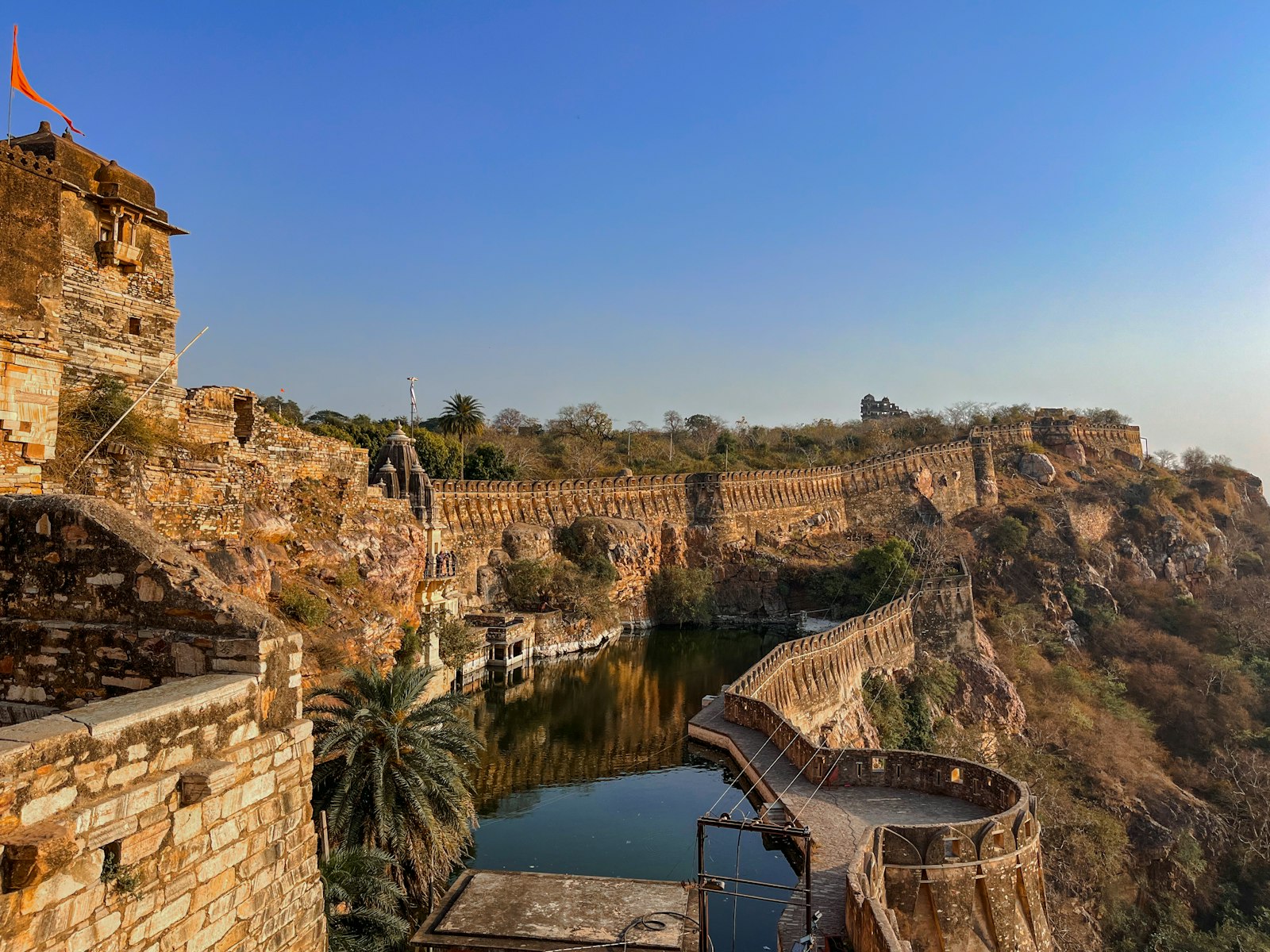
Chittorgarh is one of the largest forts in India, spread over about 280 ha on a hill about 180 m high, with towers, palaces, temples and water tanks across the plateau. Ranthambore sits inside Ranthambore National Park, so you can pair the ruins with a tiger safari. Gagron, in Jhalawar, is a water fort at the meeting of the Ahu and Kali Sindh rivers, which gave it the name Jaladurg (Wikipedia). These three see far fewer foreign visitors than Amber or Mehrangarh, which is a big part of their appeal.
🧰 Try it while you read: a free tool for this trip
Free trip timing tool
Festival Month Matcher
Choose a month and see the festivals and events our guides list for it.
Loading the tool…
Best Months to Visit the Forts in Rajasthan
This section rates every month for fort visits, using long-term averages for Jaipur and Jaisalmer from Climates to Travel. The verdicts assume you want to climb ramps, walk ramparts and stay out for sunset, not sit by a pool.
Rajasthan fort months
Average daytime high °C
Jan
Jaipur 23° · Jaisalmer 24°
Cool, clear; cold nights in the desert
GoFeb
Jaipur 27° · Jaisalmer 27°
Ideal; desert festival in Jaisalmer
GoMar
Jaipur 33° · Jaisalmer 33°
Warming fast; go early in the month
Go with careApr
Jaipur 38° · Jaisalmer 39°
Heat builds above 37 °C
SkipMay
Jaipur 42° · Jaisalmer 42°
The hottest month; 45 °C is possible
SkipJun
Jaipur 40° · Jaisalmer 41°
Heat, then the first monsoon storms
SkipJul
Jaipur 36° · Jaisalmer 38°
Monsoon in the east; green but humid
Go with careAug
Jaipur 33° · Jaisalmer 37°
Wettest month in Jaipur
Go with careSep
Jaipur 35° · Jaisalmer 37°
Rain fades by mid-month
Go with careOct
Jaipur 35° · Jaisalmer 37°
Dry and still hot by day; folk festival
Go with careNov
Jaipur 30° · Jaisalmer 31°
The season opens; camel fair at Pushkar
GoDec
Jaipur 25° · Jaisalmer 25°
Cool and dry; busy holiday weeks
GoLong-term averages from Climates to Travel, rounded. Every year differs, and the hill forts run a little cooler.
The pattern is simple. In Jaipur the average daytime high climbs from about 23 °C in January to about 42 °C in May, then eases as the monsoon arrives, while nights drop to about 9 °C in January. Rain is close to zero from October to May; the wet months are July and August, at about 180 to 190 mm each in Jaipur, according to Climates to Travel. Jaisalmer follows the same curve but stays much drier, with about 60 to 70 mm in July and August and almost nothing for the rest of the year (Climates to Travel).
Both sources name the same best window: mid-November to mid-February, the coolest part of the dry season. The catch is that mid-December to mid-January can feel genuinely cold at night, especially in the desert, where Jaisalmer has recorded frost. Pack a warm layer for dawn starts and evening ramparts.
Summer Heat and the Monsoon: What They Mean for Fort Visits
This section covers the two seasons that change a fort trip the most. Neither closes the forts, but both change what you can do in a day.
| Season | Typical weather | What it means at the forts |
|---|---|---|
| Mid-March to June | Very hot; Jaipur highs of about 38 to 42 °C, and 45 °C or more on the worst days | Stone ramps and courtyards radiate heat; visit at opening time and rest from late morning |
| Mid-June to mid-September | Monsoon; Jaipur gets most of its rain in July and August | Greener hills and fewer visitors, but humid heat and slippery steps |
| Late September to October | Rain ends, days still hot at about 35 °C | Good if you start early; festival season begins |
| Mid-November to mid-February | Dry, sunny, highs about 23 to 30 °C | The best fort weather of the year; cold early mornings |
| Late February to mid-March | Warming, still dry | A short, quieter shoulder window |
Sources: Climates to Travel for Jaipur and Climates to Travel for Jaisalmer, including the hot season from mid-March to early July in the desert, when sandstorms can also blow through.
Warning
Heat is the real risk on a summer fort day. Fort complexes are big, shade is limited and many rooms are reached by steep ramps and steps. From April to June, plan one fort per day, arrive at opening time, carry plenty of water and be back indoors by late morning.
The monsoon has a softer side. Kumbhalgarh and the Aravalli hills turn green, dust settles and crowds are thin. If heat does not bother you and you like moody skies over stone walls, late August and September can work for the eastern and southern forts, but keep plans flexible on heavy rain days.
Fort Festivals in Rajasthan and the Months They Usually Fall
This section lists the festivals that bring the forts and fort towns to life. Many follow the Hindu lunar calendar, so the dates move each year; always check before you book.
Usually mid-January
Kite Festival, Jaipur
Rooftops across the city fill with kites around Makar Sankranti.
Usually February
Desert Festival, Jaisalmer
Folk music, camel events and dance in the desert below the golden fort.
Usually March to April
Gangaur and the Mewar Festival, Udaipur
Processions and celebrations around the lakes, close to Kumbhalgarh and Chittorgarh.
Usually July to August
Teej, Jaipur
The monsoon festival, with processions and swings.
Usually October
Marwar Festival and the folk music festival at Mehrangarh, Jodhpur
The folk festival runs over four nights at the fort, close to the Sharad Poornima full moon.
Usually October or November
Diwali
Forts, palaces and old towns are lit with lamps; trains and rooms fill fast.
Usually November
Pushkar Camel Fair
Held in the month of Kartik, ending on the full moon; a short drive from Ajmer.
Sources: Skyscanner India for the Kite Festival, Desert Festival, Mewar Festival, Teej, Marwar Festival and Pushkar fair; Original Travel for the folk music festival at Mehrangarh.

The complete kit
Every country guide, every timing tool
All 24 When to Go country guides, the six Smart Timing tools and every 12-Month Map, with a Start Here that tells you what to open first.
See the kit · $127The five bundles cost $225 separately · Digital download · All sales final
Festivals are worth timing a trip around, but they also mean higher demand and fuller trains. Prices change; check before you book. The free Festival Month Matcher shows which festivals fall in your travel month, and our cultural festivals in February and October travel ideas cover more events.
Want the good weather without the peak weeks?
The Shoulder Season Playbook
Rajasthan shows the trade-off clearly: the coolest weeks are also the busiest. The playbook explains how to find the weeks just before and after a peak, when weather is still good and crowds and demand drop, and how to apply it to any destination on your list.
Digital download · All sales final
How to Plan a Rajasthan Fort Route
This section turns the forts into a route. The state is large and drives are long, so the order you choose matters as much as the month.
A loop of about two weeks
Jaipur
Amber, Jaigarh and Nahargarh; two nights.
Ranthambore (optional)
Fort ruins plus a safari; one or two nights.
Chittorgarh
A long stop on the way to Udaipur, or one night.
Udaipur and Kumbhalgarh
Lake city base; Kumbhalgarh as a day trip or one night in the hills.
Jodhpur
Mehrangarh and the blue old city; two nights.
Jaisalmer
The living fort and the desert; two nights.
Two weeks is a comfortable pace for this loop, with one fort a day and time left for markets, stepwells and old towns. With one week, pick a pair: Jaipur and Jodhpur, or Udaipur with Kumbhalgarh and Chittorgarh. If you can only manage one desert stop, give it to Jaisalmer in the coolest months, since it is the hottest and most remote base on the route.
Build each day around the light. Arrive at opening time, when ramps are cool and coach groups have not yet arrived, take a long break in the middle of the day, and return to a rampart or viewpoint for the last hour before sunset. Amber also has an evening sound-and-light show, watched from below the main gate (Lonely Planet).
When Not to Visit the Forts in Rajasthan
This section is the honest part. The forts stay open most of the year, but some weeks make a first trip harder than it needs to be.
| Avoid | Why | Go instead |
|---|---|---|
| Late April to June | Highs of about 38 to 42 °C on average, and 45 °C or more on hot days | Mid-November to mid-February |
| Jaisalmer from April to early July | Desert heat, and sandstorms are possible | December to February |
| Diwali week on a tight budget | Domestic holiday travel fills trains and rooms | Late November |
| Christmas and New Year week | Peak demand at heritage hotels | Early December or late January |
| A fixed, tight schedule in July and August | Heavy downpours can slow road travel | Late September or October |
Sources: Climates to Travel and Climates to Travel for temperatures and rain. Holiday crowding reflects general travel demand, so treat it as a pattern, not a rule. For a second opinion on your dates, use the free When Not to Go checker.
A Better Month If You Want Something Else
This section helps if the forts are only part of a wider India or Asia trip with other goals.
If you want
The calmest crowds
Late February and early March, before the heat, or October after the rain.
If you want
Green hills
Late August and September around Kumbhalgarh and Udaipur, if you accept humidity.
If you want
A summer trip to India
Head for the hills instead; our guide to India in May covers the cooler options.
If you want
More history trips
Browse February trips for history lovers and ancient ports of the old world.
Not sure which month fits your whole route? The free Best Month Finder compares months across destinations, and the Shoulder Season Detector flags the quieter weeks just outside each peak.
5 Common Mistakes When Visiting Forts in Rajasthan
1. Arriving at midday
Most people reach the big forts mid-morning, just as the heat and the tour groups peak. Go at opening time instead. Even in December the sun on pale stone is strong by noon, and the courtyards are far calmer early on.
2. Trying to see two big forts in one day
Amber, Mehrangarh and Chittorgarh each deserve several hours, and the distances between cities are long. One major fort a day, with time for the town around it, makes a far better trip than a rushed checklist.
3. Underestimating winter nights
Daytime in January feels warm, so many travellers pack only summer clothes. In Jaipur nights average about 9 °C in January, and the desert can be colder. Bring a fleece or light jacket for dawn and evening.
4. Booking a festival week at the last minute
Diwali, the Pushkar fair and the year-end holidays pull in huge domestic and international demand. If your dates overlap, book rooms and trains early, or shift your trip by a week.
5. Riding elephants up to Amber
It may look traditional, but animal welfare groups and guidebooks advise against it. The walk up takes about 10 minutes in the cool of the morning, and jeeps and buggies run for anyone who needs them.
Forts in Rajasthan FAQ
What is the best time to visit forts in Rajasthan?
The best time is from mid-November to mid-February, the coolest part of the dry season. Jaipur averages about 23 to 30 °C by day and rain is close to zero, so long climbs and rampart walks are comfortable. October and March also work if you start early. Avoid April to June, when daytime highs often pass 40 °C.
Which is the most famous fort in Rajasthan?
Amber Fort near Jaipur is the most visited, thanks to its lake setting, palace courtyards and easy access from the city. Mehrangarh in Jodhpur and the living fort of Jaisalmer are close rivals. For scale, Chittorgarh is one of the largest forts in India, and Kumbhalgarh is known for walls that run for more than 36 km.
How many forts in Rajasthan are UNESCO World Heritage Sites?
Six forts are listed together as the Hill Forts of Rajasthan: Chittorgarh, Kumbhalgarh, Ranthambore, Gagron, Amber and Jaisalmer. They were grouped because they show how Rajput rulers used hills, rivers, forest and desert in their defences. Mehrangarh, one of the most visited forts in the state, is not part of the listing.
Is it too hot to visit Rajasthan forts in summer?
For most travellers, yes. From April to June Jaipur averages about 38 to 42 °C by day, and Jaisalmer can reach 45 °C or more, with sandstorms possible. The forts stay open, but stone ramps and courtyards hold heat. If you must go, visit at opening time, rest from late morning and carry plenty of water.
Can you visit Rajasthan forts during the monsoon?
Yes. The monsoon runs from about mid-June to mid-September, with most rain in July and August in Jaipur. Hills turn green and crowds thin out, especially around Kumbhalgarh and Udaipur. Expect humid heat, slippery steps and the odd washed-out afternoon. Jaisalmer gets very little rain, but it stays hot through the season.
How many days do you need to see the forts of Rajasthan?
About two weeks covers the main forts at a relaxed pace: Jaipur, Chittorgarh, Udaipur with Kumbhalgarh, Jodhpur and Jaisalmer, plus Ranthambore if you want a safari. With one week, pair Jaipur with Jodhpur, or base yourself in Udaipur for Kumbhalgarh and Chittorgarh. Plan for one major fort a day, with time left for the town around it.
The Bottom Line
Plan the forts in Rajasthan for mid-November to mid-February, start every visit at opening time, and give each big fort its own day. Skip the hot months from April to June, and check festival dates before you book. For more trip ideas across the country, browse our India travel guides.
Free download
Which month for your country?
Get the free 12-Month Map: every month marked good, shoulder or avoid, region by region, on four printable pages.
- Greece to Japan, Morocco to Peru: 24 countries
- See the crowd and price peaks before you book
- Free, no purchase needed
Your download page opens as soon as you sign up. 24 countries available.