

Planning a Hawaii trip with kids is mostly a timing puzzle. Park entries open on different days, a car seat rule you didn’t know about can hold you up at the rental desk, and a five-hour flight with a toddler goes very differently with the right seat. October is a lovely month to make it work, because the weather is warm, the ocean is warm and the school-holiday rush has passed. This guide gives you the checklist: what to book, in what order, what to pack and how to shape each day.

The complete kit
Every country guide, every timing tool
All 24 When to Go country guides, the six Smart Timing tools and every 12-Month Map, with a Start Here that tells you what to open first.
See the kit · $127The five bundles cost $225 separately · Digital download · All sales final
To plan a Hawaii trip with kids in October, pick one island and one or two bases, then book in this order: flights and a kitchen-equipped room, the rental car and car seats, timed park entries (Haleakalā sunrise up to 60 days ahead, Hāʻena and Waiʻānapanapa up to 30 days ahead, Hanauma Bay 2 days ahead), and finally the Akamai Arrival agriculture form in the 5 days before you fly. Pack mineral sunscreen, rash guards and one warm layer per person.
✅ Key takeaways
- ✓Several of Hawaii’s most family-friendly sights now need a timed reservation for visitors, so put the booking dates in your calendar the day you buy flights.
- ✓Hawaii law requires a harness seat or booster for children under 10 unless a child aged 7 or older is over 4 ft 9 in and fits the lap-and-shoulder belt, so reserve or bring seats before you land.
- ✓Hawaii doesn’t use daylight saving time, so in October it sits 3 hours behind the US West Coast and 6 behind the East Coast; shift bedtimes before you go.
- ✓Hawaii bans the sale of sunscreen containing oxybenzone or octinoxate, so pack a mineral formula and rash guards to cut how much you need.
- ✓Plan beach time for the morning, keep afternoons slow, and choose lifeguarded beaches, which matter more as autumn swells start to build.
Why October Suits a Hawaii Trip With Kids (and the Two Things to Watch)
October gives families summer conditions without summer’s school-holiday crowds. Honolulu’s long-term October averages sit around 30.5 °C (87 °F) by day and 23 °C (74 °F) at night, and the sea is around 26.5 °C (80 °F), warm enough for little ones to stay in the water until their lips go purple from excitement rather than cold. Rain tends to come as passing showers rather than washed-out days, though the wetter windward sides of each island see more of it.
30.5 °C
Honolulu average October high · 87 °F
26.5 °C
average October sea temperature · 80 °F
UTC−10
all year, no daylight saving
Jun–Nov
Central Pacific hurricane season
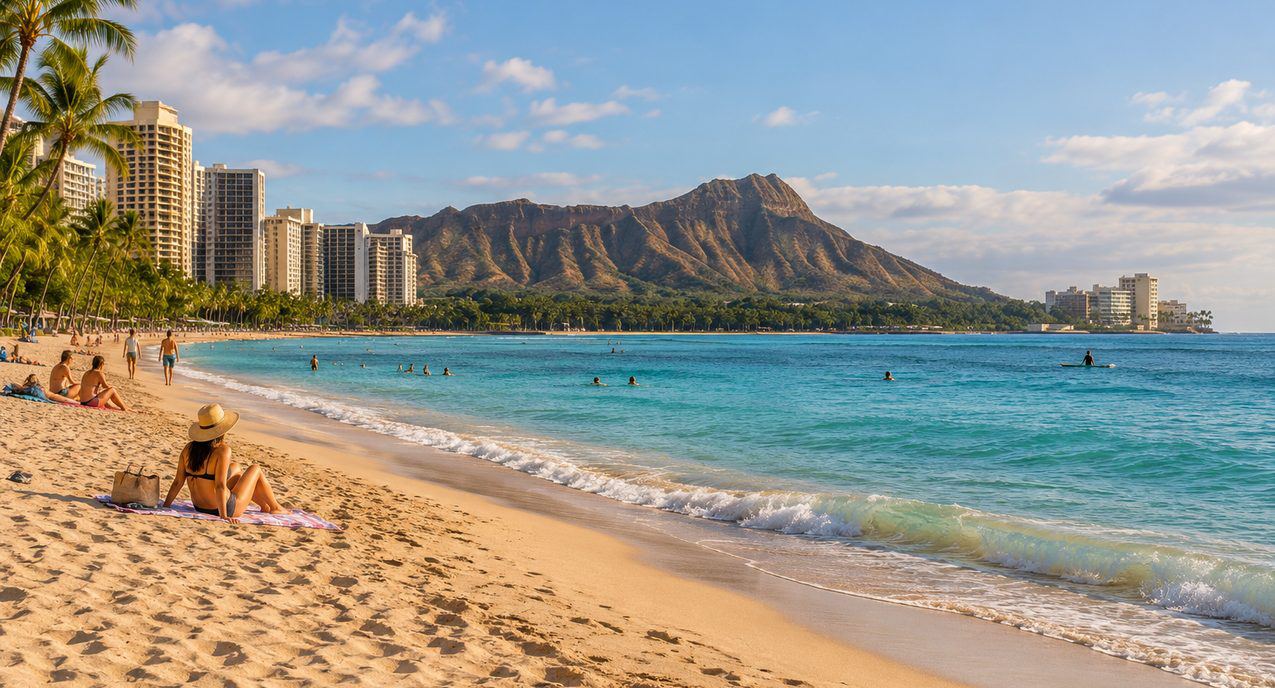
Two things deserve a place on your radar. First, October falls inside the Central Pacific hurricane season, which officially runs from 1 June to 30 November. Direct hits are rare, but a passing storm can bring big surf and heavy rain for a few days, so travel insurance and flexible bookings earn their keep. Second, the ocean starts to change late in the month. Winter swells begin to reach north and west shores in autumn, and the famously big North Shore winter surf can start in early November. A beach that was a paddling pool in August can have a strong shore break by Halloween.
If you’re still deciding which island fits your family, our guide to Hawaii in October for families compares Oahu, Maui and Kauai island by island. This article is the planning layer that sits underneath it.
🧰 Try it while you read: a free tool for this trip
Free trip timing tool
Packing by Season Generator
A packing checklist built from the month's temperature, rain and sea.
Loading the tool…
The Booking Countdown for Planning a Hawaii Trip With Kids
The order you book in matters more than the speed. Some of Hawaii’s best family outings now run on timed entries for out-of-state visitors, and each one opens on its own schedule.
| What to book | Island | When it opens | Family note |
|---|---|---|---|
| Flights, room with a kitchen, rental car | All | As soon as dates are fixed | Reserve car seats or boosters with the car, or plan to bring your own |
| Haleakalā sunrise (3–7 a.m.) | Maui | Up to 60 days ahead on recreation.gov, 7 a.m. HST; some released 48 hours ahead | Below-freezing summit before dawn: only for kids who can handle a 2 a.m. wake-up |
| Hāʻena State Park entry and parking | Kauai | Up to 30 days ahead | Every person in the car needs an entry reservation |
| Waiʻānapanapa State Park entry and parking | Maui | Up to 30 days ahead, with a time slot | The black-sand beach visit on the Road to Hāna |
| Diamond Head State Monument | Oahu | Reserve once your Oahu days are set | 0.8-mile steep climb, 1.5–2 hours round trip, last slot 4 p.m.; under-4s enter free |
| Hanauma Bay Nature Preserve | Oahu | 2 days ahead, 7 a.m. HST | Closed Mondays and Tuesdays; kids 12 and under free |
| Akamai Arrival agriculture declaration | Arrival | Up to 5 days before departure | One form can cover a household travelling together |
Write every booking date into your phone calendar
Count back 60, 30 and 2 days from each outing and set an alarm for 7 a.m. Hawaii time, converted to your home time zone. This one habit prevents most sold-out disappointments.
Book outings for the middle of the trip
Keep day one and the last day free of timed entries. Kids are tired after the flight, and the final morning is for packing and one last swim.
Fill in the arrival form on the last evening at home
Travellers arriving from the continental US complete the Akamai Arrival agriculture declaration. It opens 5 days before departure, and one form covers a household sharing an address.
Flights With Little Ones: Seats, Security and the Time Difference
The flight is the longest single stretch of the trip, so it’s worth planning like an outing of its own. Start with the seat. Children under 2 can fly on a parent’s lap, but the US Federal Aviation Administration strongly discourages it and recommends an approved child restraint in the child’s own seat for the whole flight. Look for the label that reads “This restraint is certified for use in motor vehicles and aircraft”, and check the seat is no wider than about 16 inches, which fits most airline seats. For kids who can sit upright alone and weigh roughly 22 to 44 pounds, the FAA-approved CARES harness is a lighter alternative. The FAA’s flying with children page sets out the details.

Security is simpler than many parents fear. Under TSA rules, formula, breast milk, toddler drinks and baby food pouches are allowed in carry-on bags in larger amounts and don’t need to fit in the quart-size liquids bag; tell the officer at the start of screening. Children 12 and under can keep shoes, light jackets and hats on. Strollers, car seats and baby carriers all go through the X-ray, so fold them before you reach the belt.
Kids flying west tend to wake early for the first couple of days, which suits calm morning beaches. For more on the airport side of the trip, our family travel tips for flying with kids cover boarding, snacks and in-flight routines.
Car Seats and Getting Around: The Rule That Catches Visitors Out
Hawaii’s child restraint law is stricter than many visitors expect, and it runs longer into childhood. Under the state statute, children under 2 ride rear-facing in a harnessed seat, children aged 2 to under 4 use a rear- or forward-facing harnessed seat, and children aged 4 to under 10 need a harnessed seat or a booster. The only way out of the booster for a child aged 7 to 9 is if they’re over 4 feet 9 inches tall and correctly restrained by a lap-and-shoulder belt. Both conditions have to be true.
| Child’s age | What Hawaii law requires | Practical choice |
|---|---|---|
| Under 2 | Rear-facing seat with harness | Bring your own: you’ll want it on the plane anyway |
| 2 to under 4 | Rear- or forward-facing seat with harness | Bring your own or reserve with the rental car |
| 4 to under 10 | Harnessed seat or booster | A light travel booster in a backpack is easy to carry |
| 7 to under 10, over 4 ft 9 in | Seat belt allowed if it fits correctly (lap and shoulder) | Check the belt crosses the shoulder, not the neck |
So which is better, bringing seats or renting them? If you have a baby or toddler, bring your own: you already know how to fit it, and you can use it on the plane. For school-age kids, a compact booster is light enough to carry on. Rental seats are convenient, but you can’t choose the model.
Even on one island, distances add up. With kids, keep drives under about an hour where you can, and pick a base close to the beach you’ll use most. A car is close to essential on Maui, Kauai and the Big Island; on Oahu, a Waikīkī base lets you skip the car for a few days and rent one only for the North Shore or windward side.
When to Go: Hawaii
Not set on October yet? This guide walks through Hawaii month by month: weather, ocean conditions, crowds and what each season is best for, so you choose dates that suit your family before you start the booking countdown.
See When to Go: Hawaii · $19 →Digital download · All sales final
One Island, One Base: How to Choose Where You Stay
Most families get more from one island and one or two bases than from island-hopping. Seven nights in one place, or a four-and-three split on a single island, gives you time for the slow beach mornings that young children remember most.
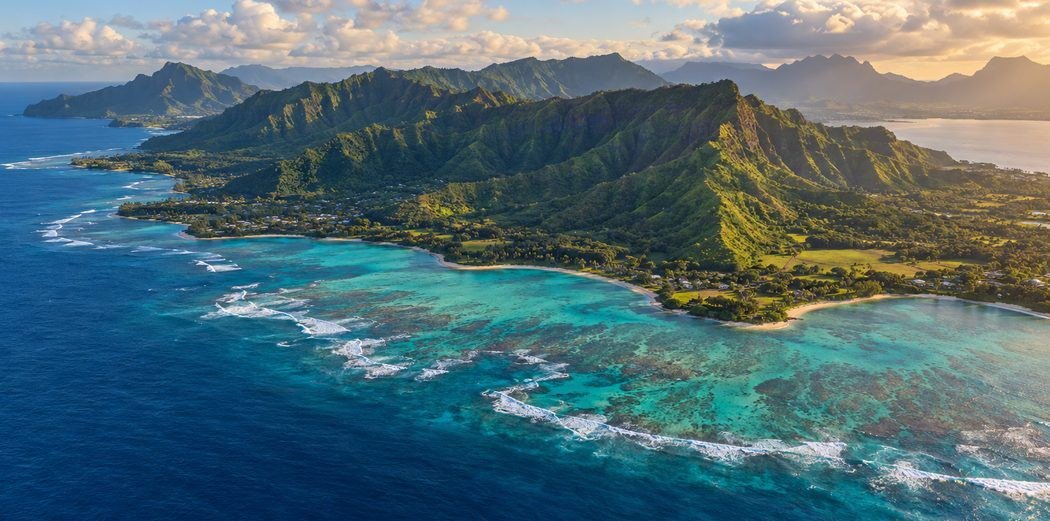
When you compare rooms, use a family checklist rather than the photos:
- A kitchen or kitchenette. Breakfast and a packed lunch at “home” save time and money, and they keep fussy eaters fed between outings.
- A lifeguarded beach within walking distance or a short drive. In autumn, when swells start to build, this matters more than a sea view.
- A separate sleeping space. With an early-waking toddler and a 7 p.m. bedtime, a door between rooms gives the adults their evening back.
If wildlife is a big part of the plan, our pick of family-friendly islands for nature and adventure in October and our round-up of family wildlife holidays in October show how Hawaii compares with other autumn options.
The Kid-Proof Packing List for Hawaii in October
Pack for sun, salt and one cold morning. A sunrise visit to Haleakalā’s summit can be wet, windy and below freezing before dawn, and air-conditioned planes and cars feel chilly after a day on the beach.
☀️ Sun and water
- Mineral sunscreen (zinc oxide or titanium dioxide)
- Long-sleeved rash guard per child
- Wide-brim hats with a chin strap
- Water shoes for rocky entries
- Kids’ snorkel mask that actually fits
🧥 Layers and rain
- One fleece or warm hoodie per person
- Light rain jacket for windward showers
- Long trousers for summit or forest hikes
- Quick-dry clothes, 4–5 days’ worth
- Closed shoes for trails
🎒 Day-bag kit
- Refillable water bottle per person
- Small dry bag for phones and car keys
- Plasters, after-sun and any medicines
- Snacks for the drive back
- A lightweight beach tent for shade
The sunscreen point isn’t just eco-advice. Hawaii made it unlawful to sell or distribute sunscreen containing oxybenzone or octinoxate without a prescription, so the familiar chemical formulas may not be on local shelves. Buy a mineral sunscreen at home, test it on your child’s skin before the trip, and let rash guards do most of the work so you need less of it.
A Daily Rhythm That Works for Kids (and Keeps Them Safe in the Water)
The best family days in Hawaii follow the sun and the sea. Mornings are usually calmer, with lighter winds and smoother water, and kids have the most energy. Midday is the hottest stretch, and afternoons are made for the pool, a nap or an indoor stop such as an aquarium.
7:00–11:00 · Beach or the day’s booked outing
Use the jet-lag early starts. Snorkel, swim or hike while it’s cooler and the water is calmer.
11:00–15:00 · Shade, lunch and rest
Back to base for lunch, a nap or the pool. This is when sunburn and meltdowns both happen.
15:00–18:00 · A short second outing
A walk, a playground, a sunset paddle at a sheltered beach or a quick shopping stop for tomorrow’s picnic.
Evening · Early dinner, early night
Sunset in October comes early in the evening, and kids still on mainland time will be ready for bed soon after.
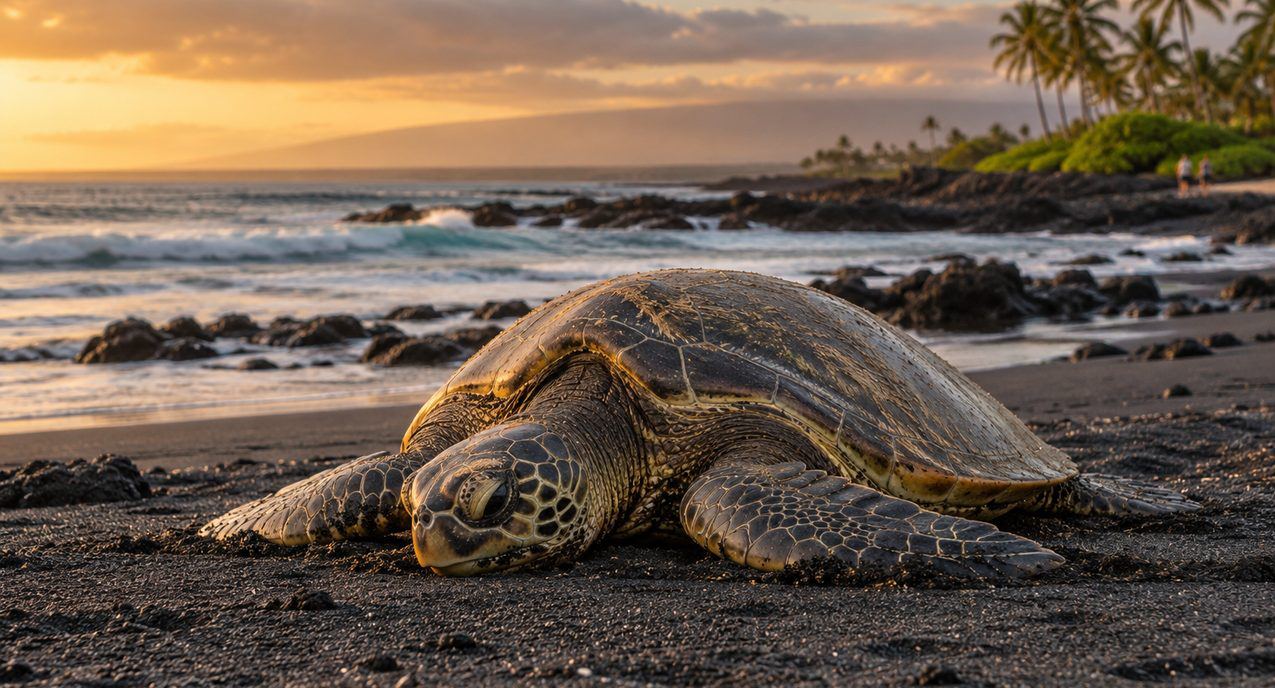
Ocean safety is the part of the plan that can’t be improvised. Swim at lifeguarded beaches, ask the guard about the day’s conditions, and keep small children within arm’s reach. Conditions on each shore change with the swell, and the state’s Hawaii Ocean Safety surf-seasons page explains why a calm beach on one side of an island can sit next to dangerous surf on the other. Want to try surfing as a family? Our guide to less crowded surf spots in Hawaii covers gentle October breaks.
Turn wildlife rules into a game kids can win. Stay at least 10 feet (3 m) from sea turtles, keep about 50 feet (15 m) from monk seals or behind any barrier, and never touch or feed either. Make “three big steps back” a game for the kids.
With kids in Hawaii, the morning is for the ocean and the afternoon is for the shade. Plan the rhythm first and the itinerary fits around it.
Rain, Swell and Storm Days: Your Plan B Checklist
Every Hawaii family trip needs a Plan B, and October makes it more likely you’ll use it. A passing system can bring a day of heavy rain, and a building swell can close the beach you’d planned around.
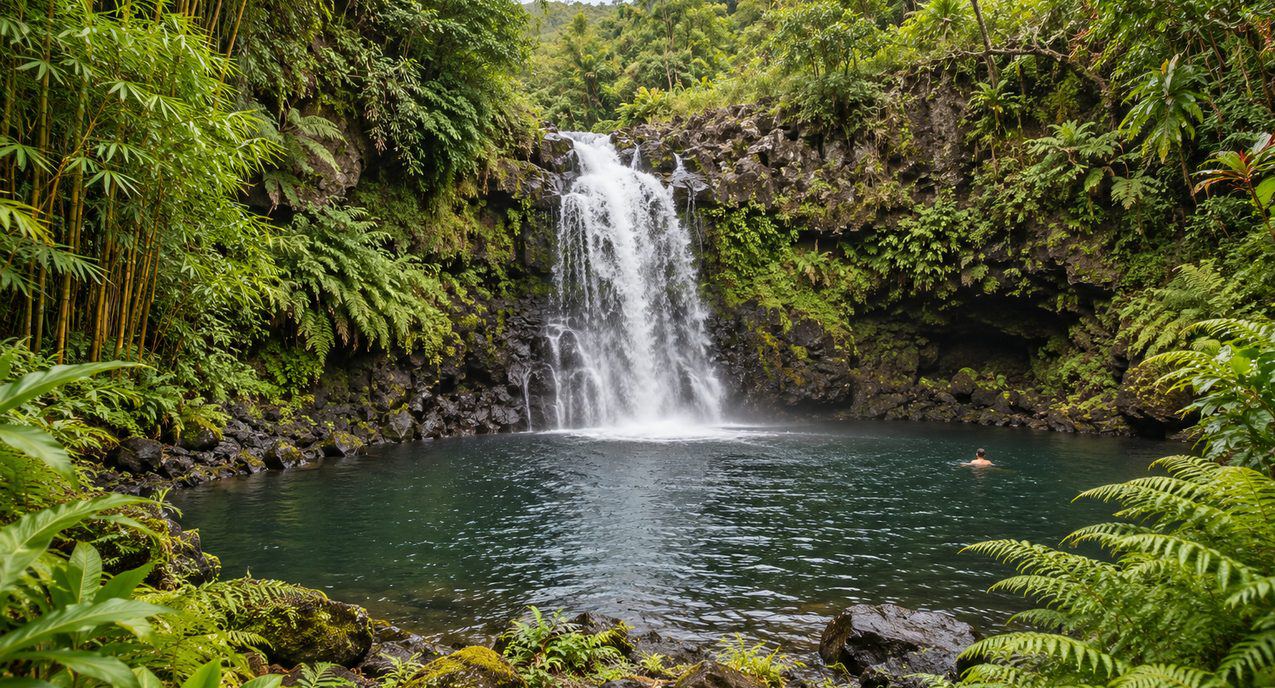
- Switch shores before you switch plans. Rain and swell are often local. If the windward side is wet or the north shore is rough, the leeward or south side may be fine.
- Keep one indoor outing per island in your back pocket. On Maui, the Maui Ocean Center in Māʻalaea has a living reef with dozens of Hawaiian coral species, green sea turtles, a touch pool and a shark tunnel.
- Watch flood warnings near streams and waterfalls. Heavy rain upstream can raise water quickly. Don’t cross a swollen stream with children, even if it looks shallow.
- Check the storm picture a week out. Our free Storm Season Check shows where your dates sit in the season, and the National Weather Service in Honolulu posts any watches or warnings.
- Book flexible where it counts. Keep at least one night on a free-cancellation rate.
Visiting during the busier stretches of the month? Our tips on making the most of Hawaii in October and navigating Hawaii with kids in October add on-the-ground ideas for the trip itself.
4 Planning Mistakes That Make a Family Hawaii Trip Harder
1. Booking flights, then forgetting the park windows
Families often sort flights and hotels months ahead, then discover on day three that Hāʻena or the Haleakalā sunrise is gone. The fix costs nothing: set calendar alarms for every booking window the day you buy flights.
2. Assuming a seat belt is fine for an 8-year-old
In many places it would be. In Hawaii, children under 10 need a seat or booster unless a 7-to-9-year-old is over 4 ft 9 in and fits the belt properly. Sort the booster before you reach the rental counter.
3. Packing only for heat
A summit sunrise, a rainy windward hike or a cold plane can leave a child in a T-shirt miserable. One warm layer and one light rain jacket per person take little space and save the outing.
4. Treating every beach as a swimming beach
Some of Hawaii’s most photographed beaches have strong currents or a heavy shore break, and conditions shift as autumn swells arrive. Choose lifeguarded beaches, ask before you swim, and stay out when in doubt.
Planning a Hawaii Trip With Kids: Your Questions Answered
Planning a Hawaii trip with kids comes down to doing the right things in the right order: dates and the booking windows first, seats and safety second, and a gentle daily rhythm once you land. Get those in place and October hands you warm water, quieter beaches and a family trip that feels like a holiday for the adults too. For more autumn ideas, browse our best travel destinations in October, explore more family vacation guides, or plan another month from the month-by-month travel planner.

The Smart Timing Bundle
Pick the month, book in the right order, pack once
Six printable timing tools for any trip: the Trip Timing Planner, When to Book, When NOT to Go, the Shoulder Season Playbook, the family timing guide and the Packing by Season System.
See the bundle · $37Six products, $100 separately · Digital download · All sales final
Free download
The 12-Month Map, free
The whole year for one country on four printable pages, so you can see the right months before you read anything else.
- Good, shoulder and avoid months at a glance
- Region by region, not one average for the whole country
- Prints cleanly on US Letter
Your download page opens as soon as you sign up. 24 countries available.

[…] around them is what these hacks are for. If you’re still at the booking stage, start with our checklist for planning a Hawaii trip with kids and come back here once you’ve […]