
Searching for sightseeing places near me usually means you have a free day, a car or a train line, and no wish to waste either on a packed car park or a grey view. The good news is that most regions hold far more than the obvious top three: a state park with a waterfall, a viewpoint above a river, an old town with a walkable main street, a museum or a garden that changes with the seasons. The trick is less about finding them than about timing them. This guide shows you how to find sights near you, which season and hour suit each type, and how to dodge the crowds.

When to Go guides
Choose your country, then your month
24 country guides, each about 100 pages: every month rated for weather, crowds and prices, region by region, with a 7-day booking plan. Six guides per region bundle.
Browse the 24 guides · $19 eachRegion bundles: Europe, Asia & Pacific, Sun Souks & Safari, Americas · $47 each
Sight-type finder
Match the sight to the season and the hour
Parks
Best season
Spring and autumn
Best hour
Weekday mornings
Viewpoints
Best season
Clear autumn days
Best hour
First and last light
Historic towns
Best season
Spring, autumn, December
Best hour
Late afternoon
Museums
Best season
Rainy or hot days
Best hour
Last two hours
Gardens
Best season
Peak bloom weeks
Best hour
Opening time
Waterfalls
Best season
Snowmelt season
Best hour
Early morning
General patterns for temperate regions; local climate, elevation and school calendars shift every window.
Quick answer
To find good sightseeing places near you, search a map for parks, viewpoints, waterfalls, historic districts, museums and gardens within a 30- to 90-minute radius, then check each one’s official page for hours, closures and seasonal notes. Go in spring or autumn where you can, on a weekday, and arrive at opening time or in the last hours of the day, when car parks have space.
Key takeaways
Every region has a season when its best sight is at its best: blossom, waterfalls in full flow, autumn colour or crisp winter views.
Busy parks fill in the middle of the day; Arches National Park, for example, reports long lines from about 8 am to 3 pm in peak season.
Waterfalls fed by snowmelt are strongest in spring and early summer, and some run dry by late summer.
Holiday weekends and the weeks around Easter are the worst days for popular sights.
Museums and covered sights are your backup plan for heat, storms and rain.
A weekday visit is the single easiest way to halve the queue.
How to Find Sightseeing Places Near Me
This section covers the practical search: where to look, what to type and how to sort a long list into a short one. Map apps are the obvious start, but they favour famous, heavily reviewed places, so the best finds often come from official lists.
Draw your radius
Decide how far you will travel for a day out. Around 30 to 90 minutes each way keeps most of the day for the sight itself.
Search by type, not by “attractions”
Type “state park”, “scenic overlook”, “waterfall”, “historic district”, “botanical garden” or “museum” into your map app. Each search turns up places a generic search hides.
Check official park lists
In the USA, the National Park Service Find a Park page lists its sites state by state, including historic sites, seashores, battlefields and trails, not only the big national parks. State park and county park websites do the same for smaller places.
Read the visitor page, not just reviews
Official pages show opening hours, seasonal road closures, timed-entry or parking rules and the busiest days. Reviews rarely tell you any of that.
Shortlist three, not ten
Pick one main sight, one nearby extra and one bad-weather backup, such as a museum or covered market.
Local tourism offices are worth a look too. County and city visitor bureaus list seasonal events, garden open days, scenic drives and walking tours that map apps miss, and they flag the weekends when a town festival will close the main street. Libraries often lend free or reduced passes to local museums and gardens, so check yours before you buy anything.
Tip
Save the official page of each shortlisted sight to your phone. Many parks have weak signal, and you’ll want the closing time, trail map and parking notes when you arrive.
🧰 Try it while you read: a free tool for this trip
Free trip timing tool
What Kind of Traveller Are You?
Seven quick taps pick your travel type, then show the countries and months where it shines.
Loading the tool…
Types of Sights Near You and When Each Is at Its Best
This section compares the six main kinds of nearby sights by best season, best hour and the main thing that goes wrong. Use it to match the place to the date you have, rather than the other way round.
| Sight type | Best season | Best time of day | What spoils it |
|---|---|---|---|
| Parks and nature reserves | Spring and autumn | Opening time or late afternoon | Full car parks on weekends; summer heat at midday |
| Viewpoints and overlooks | Clear, dry autumn and winter days | Sunrise and the hour before sunset | Haze, fog and summer heat |
| Historic towns and old districts | Spring, autumn and December | Late afternoon into the evening | Coach groups from mid-morning; summer crowds |
| Museums and galleries | Any season; best on wet or hot days | The last two hours before closing | Free-entry days and school holidays |
| Gardens and arboretums | Peak bloom, which differs by plant | Opening time, before the heat | Rain at bloom peak; weekend crowds |
| Waterfalls | Spring snowmelt and after heavy rain | Early morning, for light and parking | Low flow in late summer and droughts |
🗓️ Free: a 12-Month Map for your country
Every month on one page: best weeks, shoulder weeks and the ones to skip. Print it or keep it on your phone.
Most of these patterns hold across temperate regions, from the US East Coast to Europe. In hot climates, flip the summer advice: the cool, dry months become the main season, and midday becomes the time for indoor sights. In mountain areas, roads and high viewpoints may only be open for part of the year, so check the opening dates first.
Parks and nature reserves
Spring brings green woods and wildflowers; autumn brings colour and cooler walking. In Great Smoky Mountains National Park, the National Park Service says the spring wildflower peak usually comes in mid- to late April at lower elevations, so even a single valley trail has a clear best fortnight. Summer works for lakes and forest shade, but midday heat cuts what you can do.
Viewpoints and scenic overlooks
A viewpoint is only as good as the air in front of it. Clear, dry days after a cold front give the longest views, and early morning or the hour before sunset gives soft side light. Summer haze can flatten a view that looks endless in October. Along the Blue Ridge Parkway, the high overlooks colour first in autumn and the lower ones follow, so one drive can show several stages of the season.

The Smart Timing Bundle
Pick the month, book in the right order, pack once
Six printable timing tools for any trip: the Trip Timing Planner, When to Book, When NOT to Go, the Shoulder Season Playbook, the family timing guide and the Packing by Season System.
See the bundle · $37Six products, $100 separately · Digital download · All sales final
Historic towns
Small historic towns are at their best when they are lived in rather than packed. Spring and autumn give pleasant walking, and December brings lights and markets in many places. Arrive in late afternoon, when day-trippers leave, and stay for dinner: main streets often look their best in the early evening.
How to Dodge Crowds at Popular Sights
This section covers the weekday and hour rules that make the biggest difference. Crowds follow a simple pattern: weekends, school holidays and holiday weekends, from mid-morning to mid-afternoon. Step outside that pattern and even famous places feel calm.
Rule 1
Go on a weekday
Tuesday to Thursday is usually the quietest stretch at parks, gardens and museums. Shenandoah National Park, for one, tells autumn visitors to come on weekdays to avoid the longest waits (NPS Shenandoah).
Rule 2
Arrive early or late
At Arches National Park, the NPS reports long lines and busy lots from about 8 am to 3 pm in peak season, notes that many trailhead car parks fill by 7:30 am in summer, and says late afternoon and evening bring reduced crowding (NPS Arches).
Rule 3
Skip the holiday weeks
The same Arches page names the weeks around Easter, Memorial Day weekend and Labor Day weekend as the busiest. Most popular sights follow that calendar.
Rule 4
Go when it is not perfect
A cloudy day, a light drizzle or the week after peak colour often means a third of the people and most of the view.
Rule 5
Do the famous bit first
Head straight to the main waterfall, overlook or gallery, then explore the quieter side trails or rooms as the crowds build.
Beaches and seashores follow the same logic. At Assateague Island National Seashore, rangers suggest arriving before 10 am or after 3 pm in summer to find parking and space (NPS). If a car park is full, don’t circle: go to your second sight and come back later.
Warning
Midday heat is a safety issue, not just a comfort one. At Grand Canyon, the National Park Service discourages strenuous hiking between 10 am and 4 pm from May to September (NPS Grand Canyon). On hot days, put the walk at the start or end of the day and keep the museum or shaded garden for the middle.
Want to know which weeks to avoid for a bigger trip? The free When Not to Go checker flags crowd and weather risk for any month, and the Shoulder Season Detector finds the calmer weeks either side of peak season.
Waterfalls, Gardens and Blooms: Timing the Short Windows
This section covers the sights with the narrowest windows. A waterfall or a garden can be spectacular for three weeks and ordinary for the rest of the year, so the date matters more than the place.
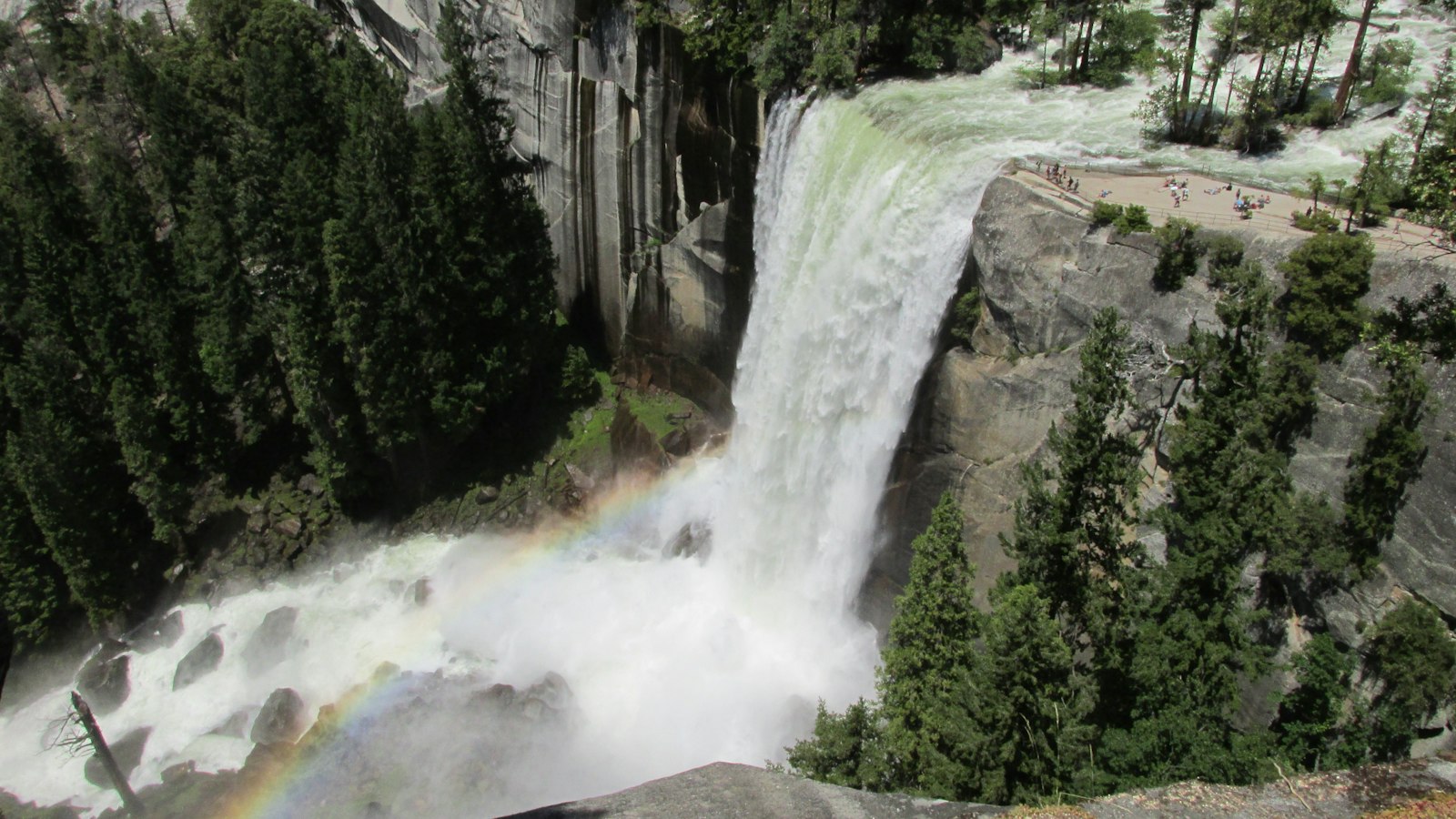
Snow-fed waterfalls peak with the melt. In Yosemite, the National Park Service says peak runoff typically happens in May or June, and some falls, including Yosemite Falls, are often only a trickle or completely dry by August. Late autumn storms can bring some back. Rain-fed falls nearer the coast and in the eastern hills run best a day or two after heavy rain, not in a dry spell.
Blooms move with the weather. In Washington, DC, the NPS puts the most likely cherry blossom peak between the last week of March and the first week of April, with extremes from mid-March to mid-April (NPS bloom watch). The California poppy reserve in Antelope Valley usually peaks in late March or early April, and its intensity varies a great deal from year to year (California State Parks). Most gardens post a bloom report or calendar on their website; check it the week before you go.
Autumn colour works the same way, moving downhill and south over several weeks. In the Great Smokies, colour above 4,000 feet can start in mid-September and typically peaks in early to mid-October, while lower slopes are best from mid-October to early November; October is also the park’s busiest month (NPS). In Vermont, the last week of September and the first week of October are when the hills usually turn, starting high and moving into the valleys (Vermont Vacation). For routes, see our guide to fall foliage drives in the USA.
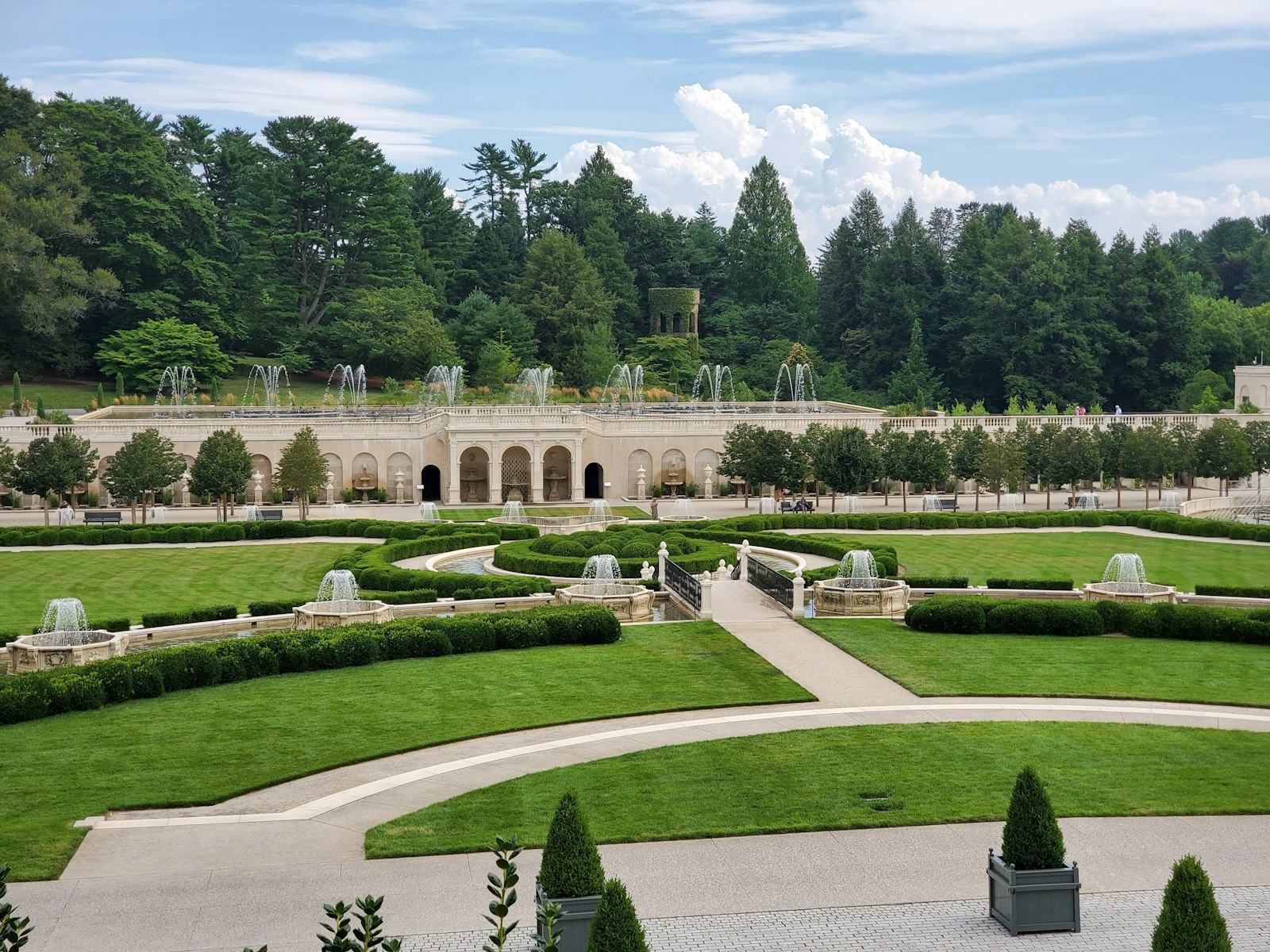
A Seasonal Calendar of Nearby Day-Trip Ideas
This section turns the patterns above into a twelve-month plan for a temperate, four-season region such as most of the US, Canada and Europe. Each month suggests the nearby sight type most likely to be at its best, and a verdict for crowds and weather at popular spots.

The complete kit
Every country guide, every timing tool
All 24 When to Go country guides, the six Smart Timing tools and every 12-Month Map, with a Start Here that tells you what to open first.
See the kit · $127The five bundles cost $225 separately · Digital download · All sales final
Nearby sights, month by month
Verdict = crowds and weather at popular sights
Jan
Museums, winter viewpoints, frozen falls
GoQuiet after the holidays
Feb
Clear-air overlooks, conservatories
GoCalm, except long weekends
Mar
Early blossom, rain-fed waterfalls
Go with careBloom crowds, mixed weather
Apr
Wildflowers, blossom, gardens
Go with careEaster week is busy
May
Gardens, snowmelt falls, parks
GoLong weekend at the end
Jun
Lakes, forest walks, evening towns
Go with careSchool holidays begin
Jul
Early-morning walks, museums at midday
SkipPeak crowds and heat
Aug
Shaded gorges, coast at dawn
SkipPeak crowds; some falls dry
Sep
Historic towns, first high colour
GoCalm after Labor Day
Oct
Foliage drives, viewpoints
Go with carePeak colour weekends
Nov
Late lowland colour, museums
GoQuiet; shorter days
Dec
Old towns with lights, markets
Go with careFestive weekends busy
For a four-season, northern-hemisphere region. In the southern hemisphere, shift by six months; in hot climates, the cool season is the main season.
The pattern is clear: spring and autumn give the most good options, high summer is the hardest time for popular sights, and winter rewards anyone happy with short days and fewer people. A “Skip” here does not mean stay home; it means pick the quieter sight, go at dawn, or head indoors for the middle of the day.
Need ideas for particular months? Our guides cover where to travel in the USA in May, September hikes in the USA, quieter national parks in September and where to go in the USA in November, and the list of day trips from Washington, DC works for a weekend out of the capital.
Sightseeing Places Near Me: A Step-by-Step Day Planner
This section turns a list of sights into a day that works. It takes ten minutes the night before and saves an hour of queues and backtracking on the day.
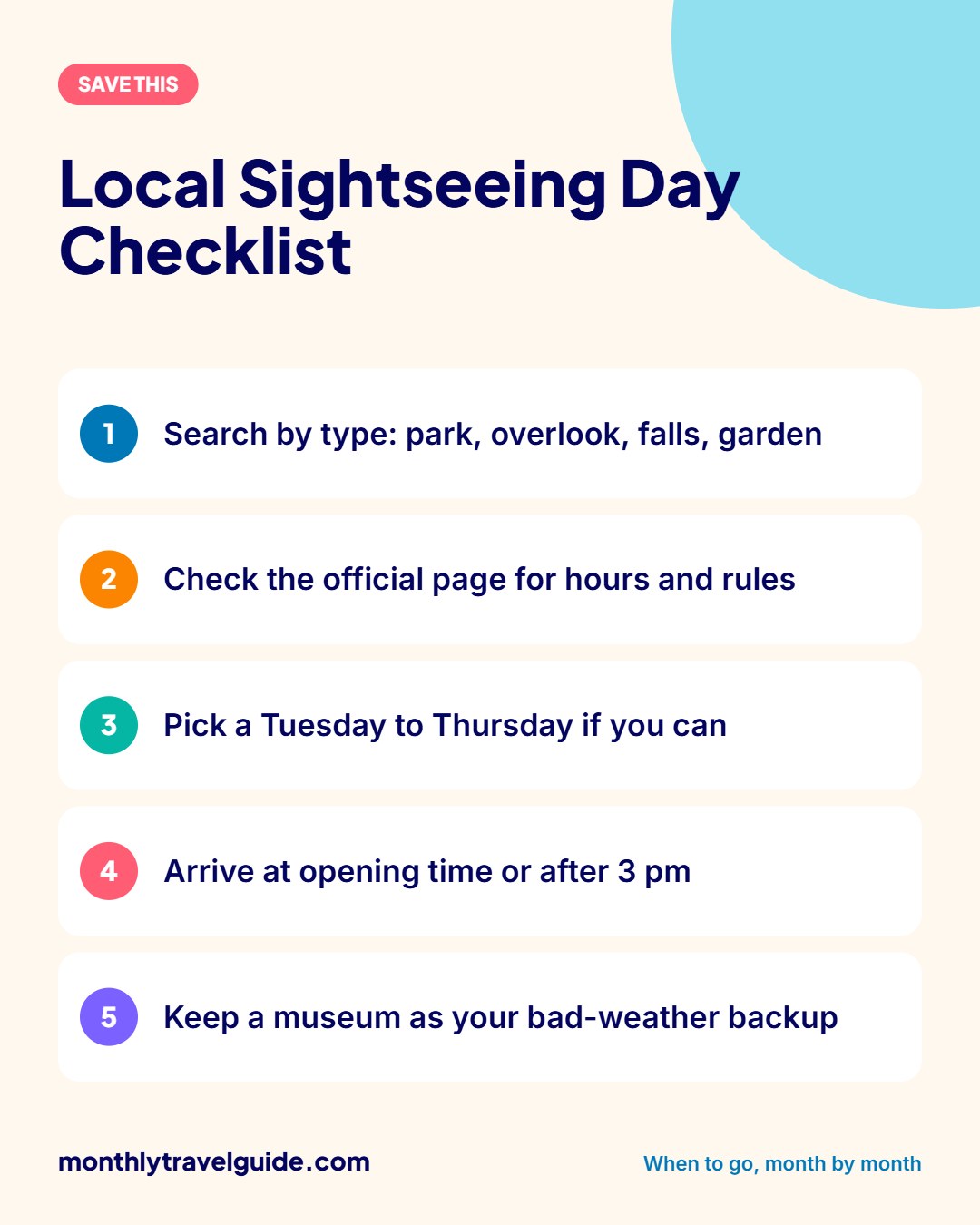
Check the official page of your main sight for hours, closures, timed entry or parking rules. Note any holiday or festival that falls on your date.
Look at the forecast. Swap a viewpoint for a museum if fog, storms or haze are likely; move a waterfall to after rain.
Save maps offline, pack water, layers and snacks, and set the alarm for an arrival at opening time.
Go straight to the main sight while car parks have space and the light is soft.
Move to the indoor or shaded backup: a museum, a covered market, lunch in town.
Finish at a viewpoint or a historic main street as the day-trippers leave, and stay for the evening light.
Two free tools help with the bigger picture. The Best Month Finder suggests the strongest month for a place and a travel style, and the Packing Generator builds a list for the season and the kind of day out you plan.
When Not to Go Sightseeing Nearby
This section is the honest part. Most local sights are open all year, but some days turn a pleasant outing into a long queue.
| Avoid | Why | Do this instead |
|---|---|---|
| Holiday weekends | Popular parks and towns hit their busiest days | Go the weekday before or after |
| Midday in summer | Heat, haze and full car parks | Go at dawn; spend midday indoors |
| Free-entry days at museums | The biggest crowds of the month | Pay to go on a quiet weekday |
| Peak-colour or peak-bloom Saturdays | Traffic and long entry lines | Go midweek, or a week early or late |
| Waterfalls in a dry late summer | Flow can drop to a trickle | Go in spring or after heavy rain |
| Mountain roads in early spring and late autumn | Seasonal closures and sudden snow | Check the road status the day before |
If you can only go on a weekend, aim for Sunday morning or late Saturday afternoon, which tend to be calmer than late Saturday morning, and pick the second-best sight over the famous one. For bigger trips, the free Storm Season Check shows hurricane and storm seasons by destination.
Better Month If You Want Something Else
This section helps when you have one particular kind of day in mind and some freedom on the date.
If you want
Wildflowers and blossom
Go from late March to May, depending on how far north and how high you are.
If you want
Waterfalls in full flow
Go in spring during the snowmelt, or a day after heavy rain.
If you want
Autumn colour
Go from mid-September in the high north to early November in lower, southern hills.
If you want
Empty viewpoints
Go in January or February on a clear, cold morning.
If you want
Historic towns with lights
Go in December on a weekday evening.
For festival days near you, run your dates through the Festival Month Matcher; for a longer trip, the When to Book calculator shows how far ahead to book.
5 Common Mistakes When Sightseeing Near Home
1. Picking the most-reviewed place on a Saturday
The top result in a map app is the place everyone else picked too. On a weekend, choose the second or third result, or save the famous sight for a weekday.
2. Ignoring the season
A waterfall in a dry August or a garden a fortnight after peak bloom is a letdown. Check what the place is known for and when that happens before you go.
3. Arriving at 11 am
Late morning is when car parks fill and coaches arrive. Arrive at opening time or after 3 pm and the same place feels different.
4. No plan B for the weather
Fog hides viewpoints and storms close trails. Keep a museum, covered market or indoor sight on your list so a bad forecast does not end the day.
5. Not checking the official page
Opening hours, road closures, timed entry and parking rules change with the season. A two-minute check the night before can save a wasted drive.
Sightseeing Places Near Me: FAQ
Q. How do I find sightseeing places near me?
Search your map app by type rather than for “attractions”: state park, scenic overlook, waterfall, historic district, botanical garden or museum. Then check official lists, such as the National Park Service Find a Park page by state, your state park site and the local visitor bureau. Shortlist one main sight, one extra nearby and one indoor backup for bad weather.
Q. What is the best time of day for sightseeing?
Opening time and the last two or three hours before sunset are the best times for most outdoor sights. Car parks have space, the light is softer and it is cooler in summer. At Arches National Park, the NPS reports long lines from about 8 am to 3 pm in peak season and reduced crowding in the late afternoon and evening.
Q. What is the least crowded day to visit tourist attractions?
Tuesday, Wednesday and Thursday are usually the quietest days at parks, gardens and museums, outside school holidays. Mondays can be calm too, but many museums close that day, so check first. Avoid holiday weekends, the weeks around Easter and free-entry days, which bring the biggest crowds of the month to popular sights.
Q. What is the best season for sightseeing?
Spring and autumn suit most sightseeing in four-season regions. Spring brings blossom, wildflowers and strong waterfalls; autumn brings colour, clear air and calmer weeks once school starts. Summer is the busiest and hottest season, so go early or late in the day. Winter is quiet and good for museums, historic towns and clear viewpoints.
Q. How far should a day trip be?
Around 30 to 90 minutes each way works best for most day trips. It keeps the drive to a small part of the day and leaves time for the sight, lunch and a second stop. Up to about two hours each way can work for a major sight, but start early and plan to arrive before the midday crowds.
Q. When are waterfalls at their best?
Snow-fed waterfalls are strongest in spring and early summer, during the melt. In Yosemite, the NPS says peak runoff typically comes in May or June, and some falls are only a trickle or dry by August. Rain-fed waterfalls are best a day or two after heavy rain. Early morning brings softer light and easier parking.
The Bottom Line
Finding sightseeing places near me is easy; timing them is what makes the day. Search by sight type, check the official page, go in spring or autumn where you can, choose a weekday and arrive at opening time or late in the afternoon. For more trip ideas across the country, browse our USA travel guides.
The full kit
The Complete Travel Timing System
Day trips are practice for the big ones. The kit brings together the country guides, timing tools and bundles from Monthly Travel Guide, so every trip, near or far, starts with the right month, the right week and the right time to book.
Digital download · All sales final
Free download
The 12-Month Map, free
The whole year for one country on four printable pages, so you can see the right months before you read anything else.
- Good, shoulder and avoid months at a glance
- Region by region, not one average for the whole country
- Prints cleanly on US Letter
Your download page opens as soon as you sign up. 24 countries available.