
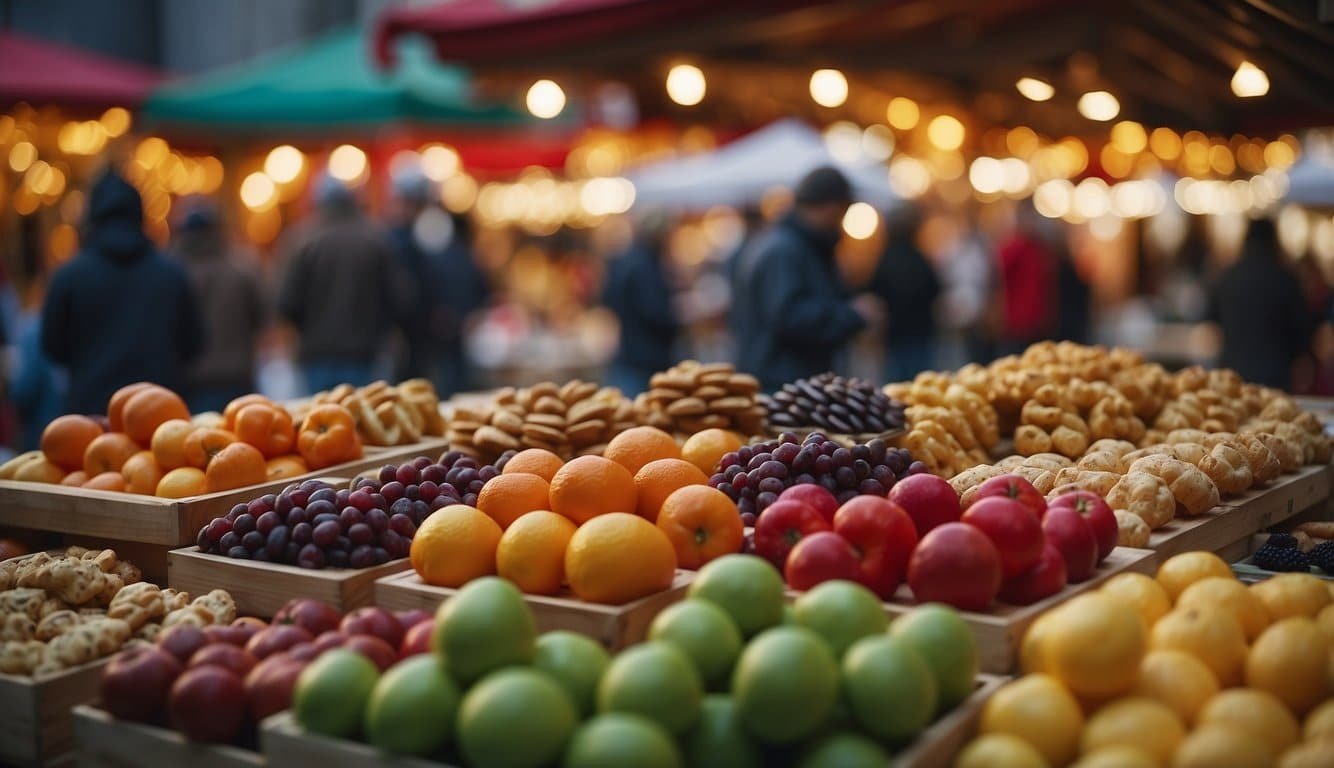
Christmas market food is the part of a December market trip people remember longest: a marjoram-scented sausage in Nuremberg, a paper bag of Alsatian biscuits in Strasbourg, a hot mug of punch you can keep as a souvenir in Vienna. Each market has its own menu, and knowing it before you land turns a crowded square into a proper tasting trip. This guide goes city by city through what to eat and drink, what to carry home, and when to visit so you are queuing for food, not for space.

The complete kit
Every country guide, every timing tool
All 24 When to Go country guides, the six Smart Timing tools and every 12-Month Map, with a Start Here that tells you what to open first.
See the kit · $127The five bundles cost $225 separately · Digital download · All sales final
The best Christmas market food depends on the city: Nuremberg is known for its small Rostbratwurst sausages and protected Lebkuchen gingerbread, Dresden for the Stollen fruit loaf, Strasbourg for bredele biscuits and mulled Alsatian white wine, Vienna for fruit punch and roast chestnuts, Budapest for chimney cake and stuffed cabbage, and Copenhagen for æbleskiver with gløgg. Most big markets run through Advent and close on or just before Christmas Eve, so go on a weekday in late November or early December for the shortest queues.
✅ Key takeaways
- ✓Every famous market has a signature: plan your evening around the two or three things that city is known for rather than grazing at random.
- ✓Many mugs come with a returnable deposit: hand the mug back for your money, or keep it as a cheap souvenir.
- ✓Some “traditional” treats are newer than they look; trdelník in Prague is a modern tourist favourite with roots in Slovakia and Hungary.
- ✓Biscuits, gingerbread and Stollen travel well, so the market is also where you buy edible gifts to take home.
- ✓Weekday evenings early in Advent are the calmest time to eat; the last weekend before Christmas is the busiest.
How Christmas Market Food Works: Drinks, Street Snacks and Edible Gifts
Most European Christmas markets follow the same pattern, so a few basics help everywhere. Food is eaten standing at high tables or on the move. Savoury stalls sell sausages, potato pancakes, soups and cured meats; sweet stalls sell gingerbread, roasted nuts, waffles and regional cakes. Hot drinks are the social glue: mulled wine (Glühwein in German, vin chaud in French), fruit punches, and alcohol-free versions for children.
When to Go: Morocco
Coast, cities, mountains or desert?
Every month across Morocco rated for heat, crowds and prices, region by region, with Ramadan and festival timing explained and a 7-day booking plan.
See the Morocco guide · $19112 pages · PDF, US Letter and A4 · Digital download · All sales final
1434
Dresden’s Striezelmarkt first held
1570
Strasbourg’s market first recorded
3
Nuremberg sausages in one roll
Advent
the main season for most markets
Mugs are the one system worth understanding before you queue. At many markets in Germany and Austria, your drink comes in a ceramic mug with a returnable deposit added to the price. Hand it back at any stall from the same market and you get the deposit back; keep it and the mug is yours. Each market usually has its own design, which is why collectors keep one from every city.
🍷
Hot drinks
Mulled red or white wine, fruit punch, mulled beer in Strasbourg, gløgg in Copenhagen. Ask for the child-friendly version if you need it.
🌭
Savoury
Sausages in rolls, potato pancakes, soup in a bread loaf, cured ham with horseradish. Eat these first, before the sugar.
🍪
Sweet
Gingerbread, Stollen, bredele, chimney cake, roasted nuts and chestnuts, waffles and doughnuts.
🎁
Take home
Gingerbread tins, Stollen, biscuit bags and bottles of local wine or liqueur. Check your airline’s liquid rules first.
🧰 Try it while you read: a free tool for this trip
Free trip timing tool
Festival Month Matcher
Choose a month and see the festivals and events our guides list for it.
Loading the tool…
Nuremberg and Dresden: Sausages, Gingerbread and the Original Stollen
If you want the classic German menu, these two cities are the reference points. Nuremberg’s Christkindlesmarkt is built around two local products. The first is Nuremberg Rostbratwurst, a small, finger-sized sausage flavoured with marjoram and made only within the city limits. At the market it comes as “Drei im Weggla”: three sausages in a white bread roll, the standard order. In the sausage kitchens around the old town you can also sit down to a pewter plate of them with sauerkraut or horseradish.

The second is Nürnberger Lebkuchen, the city’s protected gingerbread and its best-known Christmas export. It is sold loose or in decorated tins that survive a suitcase well. The city tourism office also points visitors to Baggers, crisp Franconian potato pancakes, and to a giant Feuerzangenbowle at the edge of the market: a red wine and rum punch with a sugar cone flamed over the top, which the city describes as the largest in the world.
Dresden adds the cake. Its Striezelmarkt was first held in 1434 as a one-day market on the Altmarkt, and its name comes from “Strüzel”, the old word for the fruit loaf now called Stollen. Genuine Dresdner Stollen is baked in and around the city and carries a seal showing Augustus II. The market also sells Pflaumentoffel, little chimney-sweep figures made from dried prunes, which are decorations first and snacks after Christmas. A Stollen festival is usually held on one of the Advent weekends.
When to Go: Japan
Blossom, autumn colour or quiet temples?
Every month across Japan rated for weather, crowds and prices, region by region, from Hokkaido to Okinawa, with a 7-day booking plan and the free 12-Month Map.
See the Japan guide · $19About 100 pages · PDF, US Letter and A4 · Digital download · All sales final
Strasbourg and Alsace: Bredele, Mulled White Wine and Foie Gras
Strasbourg’s Christkindelsmärik has been recorded since 1570, which makes it one of the oldest Christmas markets in Europe, and the city now presents itself as the “Capital of Christmas”. The stalls spread across several squares, including Place Broglie, Place Kléber and the streets around the cathedral, so it feels more like a whole old town in market mode than a single square.

The food is distinctly Alsatian. The official Strasbourg tourism guide to market specialities starts with mulled wine, and here it is often made from dry Alsatian white wine as well as red. Then come bredele, the small Christmas biscuits families bake by the dozen in Advent: butter biscuits, almond-cinnamon Schwowebredle, aniseed Anisbredle and cinnamon stars. You will find them in pastry shops and at the stalls.
- Mannele: a little brioche man with raisin or chocolate-chip eyes, traditionally eaten for Saint Nicholas on 6 December.
- Berewecke: a dense Christmas bread of dried pears, nuts and candied fruit soaked in schnapps, served in thin slices.
- Gingerbread: flat, shaped biscuits or soft sliceable loaves with a gentle honey flavour, a local speciality since the Middle Ages.
- Mulled beer: local beer heated with spices and honey, found at Place Broglie.
- Foie gras: sold at the gourmet market on Place du Marché aux Poissons; Alsace claims the terrine style was invented here in the late 18th century.
If Strasbourg is on your list, it helps to see December in the context of the whole French calendar. Lyon’s Festival of Lights usually falls around 8 December, Paris is calm in the first half of the month, and ski resorts fill from the Christmas school holidays. Our guide to Lyon in December covers the second great French winter city.
When to Go: France
Choosing between a Christmas-market trip, a ski week or a calm city break? This guide walks you through France month by month, with weather, crowds and the seasonal events worth timing a trip around, so you can pick the December dates (or a better month) that suit you.
See When to Go: France · $19 →Digital download · All sales final
Vienna: Punch, Roast Chestnuts and Soup in a Bread Bowl
Vienna has many markets rather than one, and its menu has a few words worth learning. The drink to order is Punsch, a hot, usually fruit-based punch (apple, berry, orange, strawberry) served from a Punschstand; Glühwein is the classic mulled wine, and Kinderpunsch is the alcohol-free version. Your drink comes in a Häferl, a mug, often with a returnable deposit.
For food, look for a Maronistand: a small stand with its own oven selling Maroni (roast chestnuts), baked potato slices, wedges and potato fritters. Savoury stalls sell Leberkäse in a roll, Ofenkartoffel (filled baked potatoes), Speckbrot (cured ham on bread with Kren, Austrian horseradish) and soup served inside a bread loaf. Sweet stalls run from Bratapfel (baked apple) and caramelised nuts to Krapfen (jam doughnuts) and Lebkuchen hearts.
Start at a Maronistand
A paper cone of chestnuts or potato slices is cheap, hot and easy to eat while you walk.
Order Punsch, not just Glühwein
Fruit punch is the Viennese habit. Taste one, then decide whether to keep the mug.
Sit down for something savoury
Soup in bread or a filled baked potato turns a snack stop into dinner.
Finish with a sweet
Baked apple or a Krapfen, then return the mug for your deposit on the way out.
Budapest and Prague: Chimney Cakes and the Trdelník Question
Budapest’s main Christmas fair fills Vörösmarty Square, and its menu leans hearty. Stalls sell kürtőskalács (chimney cake: sweet dough wound around a spit, roasted and rolled in sugar), stuffed cabbage, sausages, goulash soup (also served in a bread loaf), stews and roast chestnuts. Even the organisers describe the prices as premium, so treat it as a meal on your feet rather than a cheap snack.

Prague raises a fair question. The spiral pastry you see on every corner, trdelník, is sold as a “traditional Czech” treat, but its history points mainly to Slovakia and Moravia, with a close relative, kürtőskalács, in Hungarian-speaking Transylvania. The Slovak town of Skalica even holds EU protected status for its version. In Prague it became a tourist favourite only in recent decades. It is still good, warm and sugary, so eat it if you like it, just don’t mistake it for the city’s old Christmas table.

Copenhagen and Bolzano: Æbleskiver, Gløgg and Alpine Speck
Two very different markets for travellers who want something beyond the German classics. In Copenhagen, Tivoli Gardens turns into a Nordic-style Christmas market, and four central markets line a 1.5 km stretch between Strøget and Nyhavn. The pairing to try is æbleskiver, fluffy round dough balls served with jam and powdered sugar, traditionally eaten with warm gløgg, the Danish spiced mulled wine. Hviids Vinstue, a wine bar founded in 1723, is famous locally for its own gløgg.
In northern Italy, Bolzano’s market fills Piazza Walther under the cathedral bell tower and mixes Alpine and Italian food. Expect speck and other cured meats, fritters, strudel, Christmas biscuits, local apple juice, mulled wine and regional wines such as Lagrein and Santa Maddalena. For a full Italian December with markets, nativity scenes and the Dolomites ski opening, see our plan for a DIY December trip to Italy, and for a quieter Adriatic option, Trieste in December.
The complete kit
Every country guide, every timing tool
All 24 When to Go country guides, the six Smart Timing tools and every 12-Month Map, with a Start Here that tells you what to open first.
See the kit · $127The five bundles cost $225 separately · Digital download · All sales final
| City | Eat | Drink | Take home |
|---|---|---|---|
| Nuremberg | Drei im Weggla (3 Rostbratwurst in a roll), Baggers | Glühwein, Feuerzangenbowle | Nürnberger Lebkuchen |
| Dresden | Stollen, Pflaumentoffel | Glühwein | Sealed Dresdner Stollen |
| Strasbourg | Bredele, mannele, foie gras | Mulled white or red wine, mulled beer | Bredele bags, gingerbread |
| Vienna | Maroni, soup in bread, Speckbrot | Punsch, Kinderpunsch | Your Häferl mug |
| Budapest | Chimney cake, stuffed cabbage, goulash in bread | Mulled wine | Paprika and sweets |
| Copenhagen | Æbleskiver with jam | Gløgg | Christmas biscuits |
| Bolzano | Speck, strudel, fritters | Lagrein, mulled wine, apple juice | Speck and Alpine biscuits |
How to Eat Your Way Around a Christmas Market in One Evening
A market is at its best for food in the hour after dark, when the lights come on but before the after-work crowd peaks. A simple order of play keeps you warm and stops you filling up on the first sweet stall you pass.
Walk the whole market first
Do one lap without buying. Note where the queues are local (a good sign) and where the specialities are.
Savoury before sweet
Sausage, potato pancake or soup first, while you are hungry and cold. It makes the rest of the evening comfortable.
One hot drink, then water
Mulled wine is stronger than it tastes when you are cold. Alternate with tea, punch for children or water.
Share the sweets
Buy one of each and split them; gingerbread, chimney cake and Stollen are all rich.
Buy gifts last
Pick up biscuits, Lebkuchen or Stollen on the way out so you are not carrying them all evening.
Dress for standing still outdoors. Our winter packing list for December travel covers warm layers and boots, and the free Packing by Season Generator builds a list around your dates.
When Not to Go: The Weeks and Hours to Avoid
The food is the same all season, but the experience is not. These are the windows that most often spoil a Christmas market food trip:
- Weekend evenings, especially Saturdays: the most crowded hours at almost every famous market, with long queues at the best food stalls.
- The last weekend before Christmas: local shoppers and visitors overlap, and hotel prices in the market cities are high.
- 24 to 26 December: most big markets close on or just before Christmas Eve, and restaurants and shops close for the holidays. Do not plan a market trip for Christmas week itself.
- Mid-afternoon on weekdays: calm, but some stalls open late and the lights, half the atmosphere, are not on yet.
The sweet spot is a weekday from the opening days in late November to about the middle of December. Not sure whether your dates fall in a bad window? Our free tool lets you check whether your month is a bad one, and our tactics guide to avoiding crowds and saving money in December covers booking timing. If you would rather skip the crowds altogether, see the places that stay quiet in December.
Pick the city for its food, the weekday for the queues, and the last day for the gifts.
5 Christmas Market Food Mistakes to Avoid
1. Filling up at the first stall
The entrance stalls are rarely the best. Walk the full market first, then choose.
2. Forgetting the mug deposit
If a deposit was added to your drink, return the mug to get it back. Over a few evenings for a family, unreturned deposits add up.
3. Eating only sweets
Gingerbread, chimney cake and punch are delicious, but a savoury stop makes the evening warmer and longer. Nuremberg sausages, Viennese soup in bread and Budapest’s stuffed cabbage are all proper meals.
4. Ordering by weight without asking the price
Nuts, grilled meat and some cheeses are priced per 100 g. Ask what your portion will cost before it is cut.
5. Saving the trip for Christmas week
Many markets are closed or closing by then. Plan for Advent instead, and use the days after Christmas for a quieter city break or a ski trip. If you are building a December trip around food, our guide to New Year’s Eve food traditions around the world picks up where the markets stop.
Christmas Market Food: Questions Travellers Ask
Christmas market food rewards a little planning: pick the city for what it cooks, go on a weekday early in Advent, and leave room in your bag for gingerbread. For more December ideas, browse our best travel destinations in December, explore more food travel guides, compare Ghent in December and Hallstatt in December, or plan any other month from the month-by-month travel planner.
Free download
Which month for your country?
Get the free 12-Month Map: every month marked good, shoulder or avoid, region by region, on four printable pages.
- Greece to Japan, Morocco to Peru: 24 countries
- See the crowd and price peaks before you book
- Free, no purchase needed
Your download page opens as soon as you sign up. 24 countries available.


[…] crush? Smaller cities often run their own markets with a fraction of the visitors. Our round-up of December markets and seasonal food treats helps you pick one, and weekday afternoons are always calmer than weekend evenings. […]
[…] December in Nuremberg averages around 4 °C by day and −1 °C at night, so warm layers and waterproof boots are enough. For more festive food stops across Europe, see our guide to the best December markets and seasonal treats. […]
[…] Ghent against other festive cities? Our guide to December markets and seasonal food treats compares the big names, and our Lyon in December guide covers a city where December is all about […]