Most travel advice tells you to visit Pico Island in spring, when blue and fin whales pass through on their migration and the species count climbs highest. That advice isn’t wrong, but it’s incomplete, and it’s led almost every guide to skip straight past what makes Pico Island in September genuinely worth booking: resident sperm whales you’re almost guaranteed to see, dolphins in real numbers, a UNESCO wine harvest happening in the same black volcanic vineyards you’ll be driving past, and a noticeably thinner crowd than the July–August rush.
Here’s the direct answer: September on Pico Island gives you warm, settled weather, calm-enough seas for reliable boat trips, sperm whales and dolphins on most outings (rather than the rarer blue whale sightings spring is famous for), the start of the island’s grape harvest in its UNESCO-listed vineyards, and meaningfully lower crowds and prices than the summer peak. If you want variety over rarity, and a working island over a tourist performance, September beats the “best time” spring consensus for most travelers.
Key Takeaways
Spring wins for whale species diversity, but September wins for reliability, crowds, weather, and the harvest happening alongside it.
Sperm whales are resident to Pico’s waters year-round, so September sightings are consistently good, not seasonal luck.
Pico’s UNESCO-listed vineyards begin their grape harvest around mid-September, running roughly a month.
Mount Pico, Portugal’s highest peak, is still climbable in September without the winter closures or wind risk.
You’ll need a rental car — Pico is not a walk-everywhere island, and the good stuff is spread across it.
Three full days is the practical minimum: one for the mountain, one for whale watching, one for the vineyards and coast.
Pico Island in September: Why Most Advice Points You to the Wrong Season
Nearly every whale-watching guide for the Azores says the same thing: go in spring. And for one specific goal — seeing the widest possible range of species, including blue, fin, and sei whales passing through on migration — that’s genuinely correct. Specialist operators like Naturetrek build entire dedicated tours around this exact April-to-June window for good reason: species diversity genuinely peaks around Pico’s waters in spring.
Morocco runs on six clocks, not one. The full guide works each region out separately, then shows you where the answers overlap.
Read what's inside
But most travelers aren’t marine biologists chasing a species checklist. Most travelers want a good chance of seeing whales, decent weather, a manageable crowd, and something to do besides sit on a boat. On every one of those measures, September holds up better than the guides suggest, mostly because they’re written by whale specialists optimizing for one variable and ignoring the rest of the trip.
September also sits in a genuinely useful gap on the calendar: past the July–August crowd surge, when Pico’s limited guesthouses and rental cars book out and prices climb, but before the shorter days and rougher Atlantic weather of November settle in. You get most of the good weather with a fraction of the competition for a table at dinner.
This is also a pattern worth recognizing beyond just Pico. A lot of the world’s best wildlife travel gets marketed around a single “peak” month that maximizes one specific, rare sighting, while quietly burying a quieter, more reliable alternative window that suits most travelers better. It’s the same logic behind why Hermanus’s whale season spans several genuinely good months rather than one, and why our September destination guides keep surfacing these “second-best but actually better for most people” months instead of just repeating the obvious peak-season advice.
💡 Tip: If seeing a blue whale specifically is the entire point of your trip, book spring instead. If you want a good, reliable, well-rounded Pico trip without spring’s price premium and crowd levels, September is the smarter call.
What You’ll Actually See on the Water in September
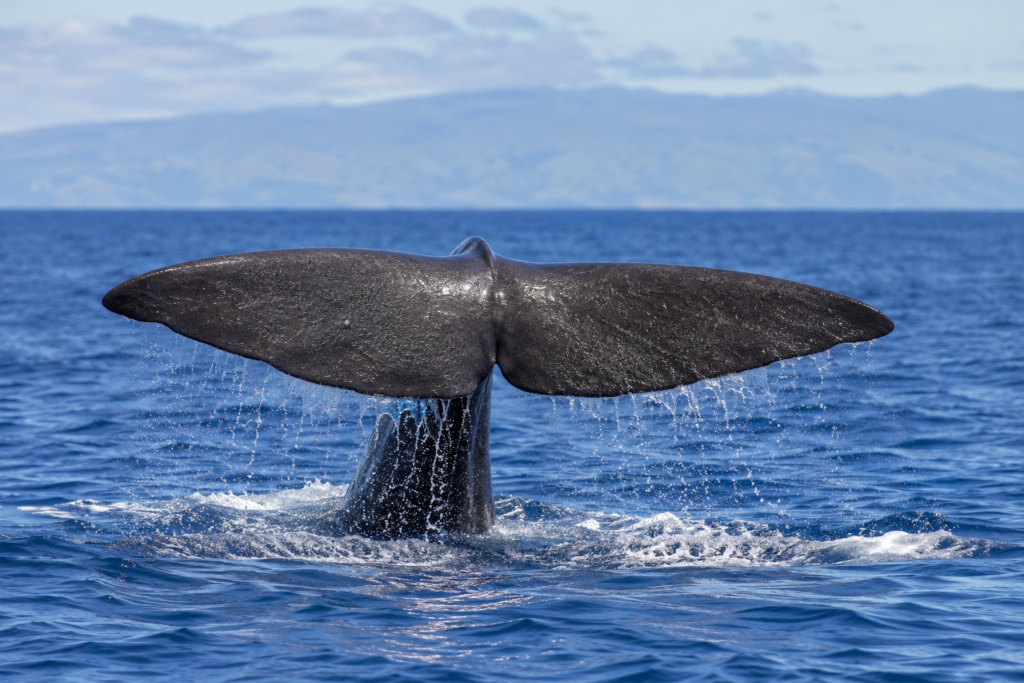
The headline fact that most guides bury: sperm whales are resident around Pico, not migratory, which means they’re a realistic sighting nearly any month of the year, September included. Boats work with a network of shore-based lookouts called vigias — a tradition left over from the island’s whaling history, now repurposed entirely for spotting rather than hunting — who radio boats the moment a whale surfaces, which keeps search time down and sighting odds up regardless of season.
Alongside sperm whales, September brings strong numbers of common and bottlenose dolphins, often in pods large enough to surround a boat for several minutes at a time. Sei whales and the occasional Bryde’s whale also pass through in early autumn, and calmer late-summer seas make for a more comfortable ride than the wind-heavier winter months. What you’re less likely to see is a blue whale — that’s the one real trade-off, and it’s worth being upfront about rather than overselling September as strictly better in every dimension.
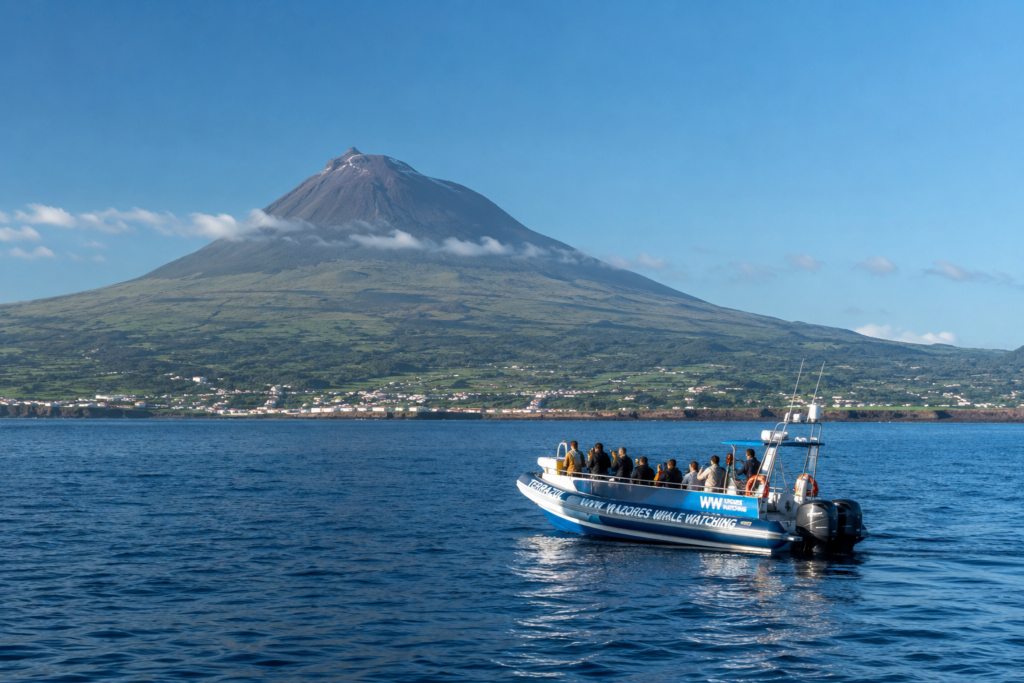
Most trips go out on small rigid-hull boats holding a dozen or so passengers rather than large tourist catamarans, which keeps the experience closer to what serious wildlife-focused travelers look for — the same instinct that draws people toward smaller-boat, less-scripted experiences covered in our sailing trips for solo travellers guide. Trips typically run three to four hours, and operators cap group sizes deliberately, both for the whales’ sake and because a smaller boat means everyone actually gets a clear view when something surfaces.
| Season | Best for | Trade-off |
|---|---|---|
| April–June | Widest species diversity (blue, fin whales) | Cooler, choppier seas, less to do on land |
| July–August | Warmest weather, longest days | Highest prices, fullest guesthouses, busiest boats |
| September–early October | Sperm whales, dolphins, harvest, quieter island | Lower odds of a blue whale sighting |
The UNESCO Harvest Happening at the Exact Same Time
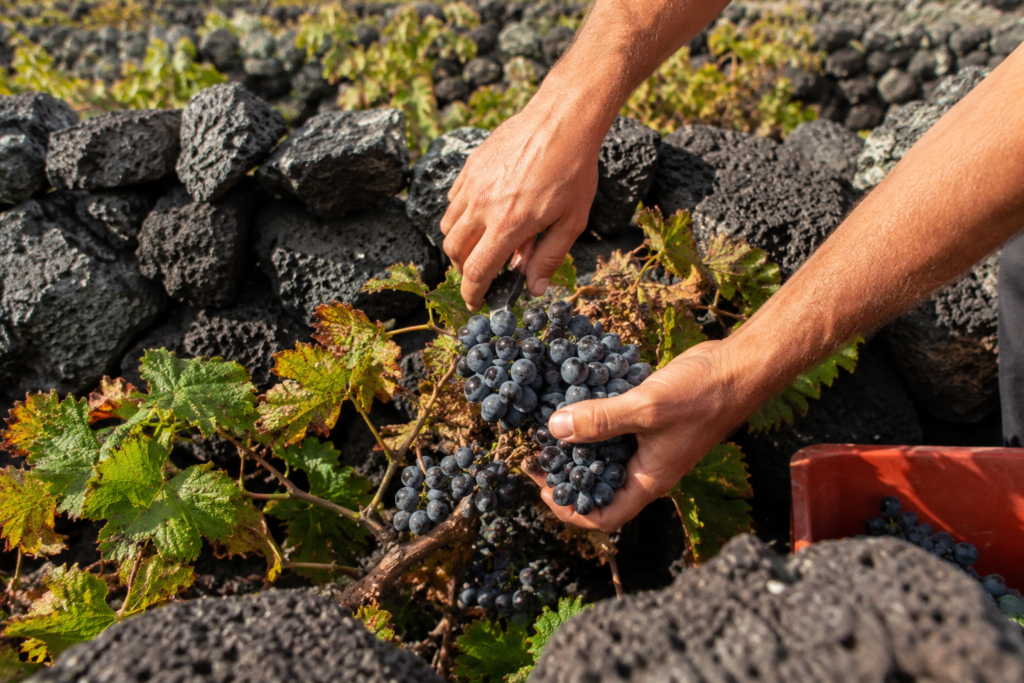
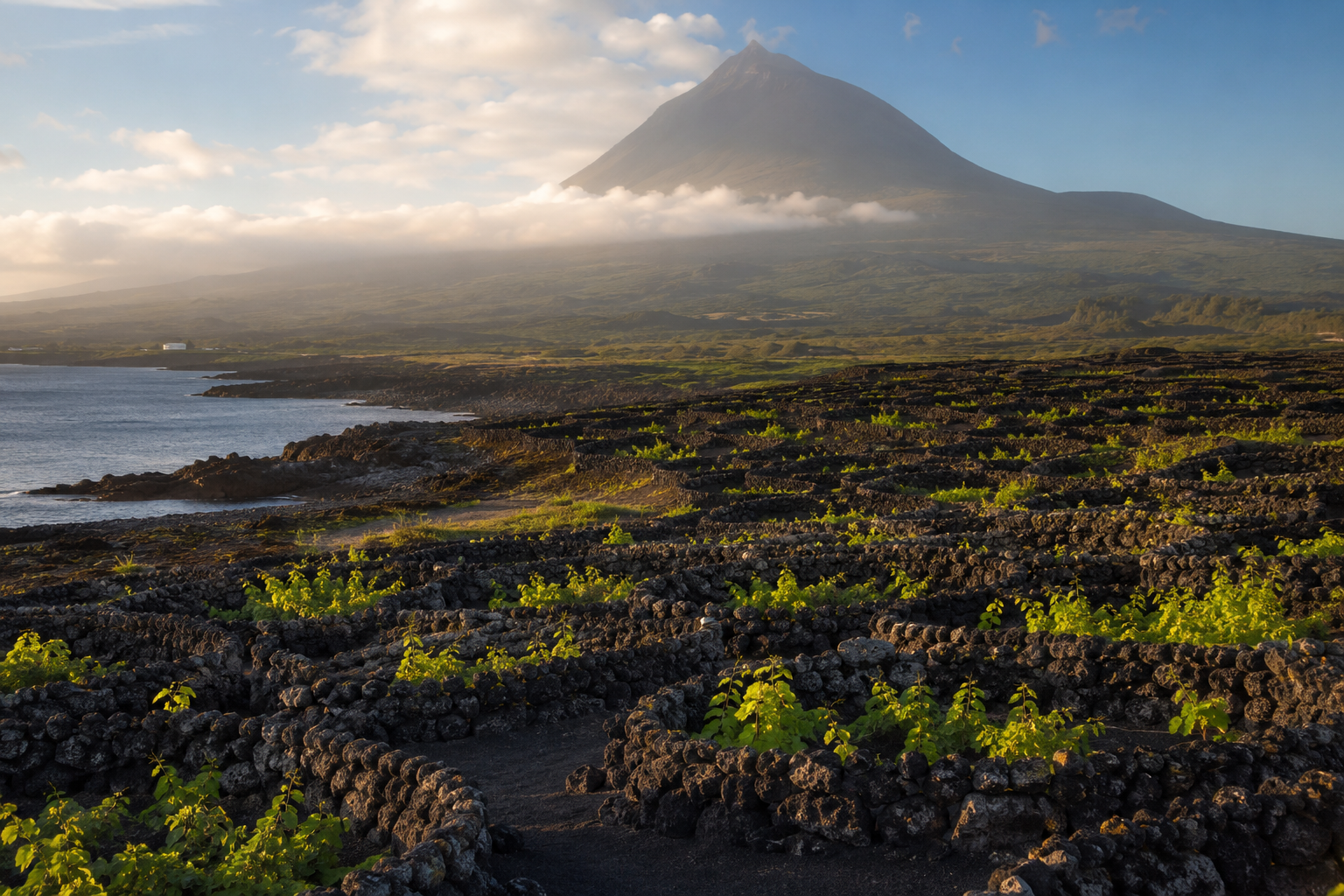
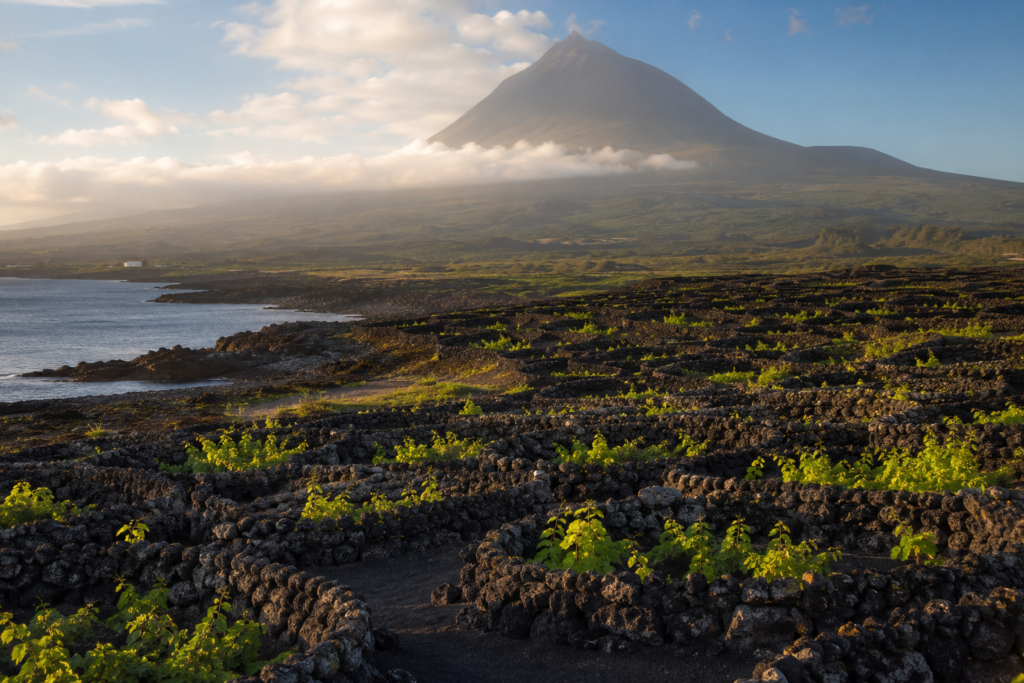
This is the part almost no whale-watching guide mentions at all: Pico’s vineyards, protected as a UNESCO World Heritage landscape, begin their grape harvest around mid-September and run for roughly a month. The vines here don’t look like anywhere else in wine country — they’re grown low, inside small rectangular enclosures built from black volcanic rock, called currais, which shield the grapes from Atlantic wind and salt spray. Seen from above, the coastline looks like a hand-laid stone mosaic.
You don’t need an invitation to appreciate it. Several small producers around Madalena and Criação Velha welcome visitors during harvest for tastings, and the island’s Wine Museum puts the volcanic-soil, hand-built landscape in context if you want the history before the tasting. Pair a harvest-season wine tasting with a whale-watching trip and you’ve covered two things most Azores itineraries treat as belonging to entirely different seasons — because, on Pico in September, they don’t.
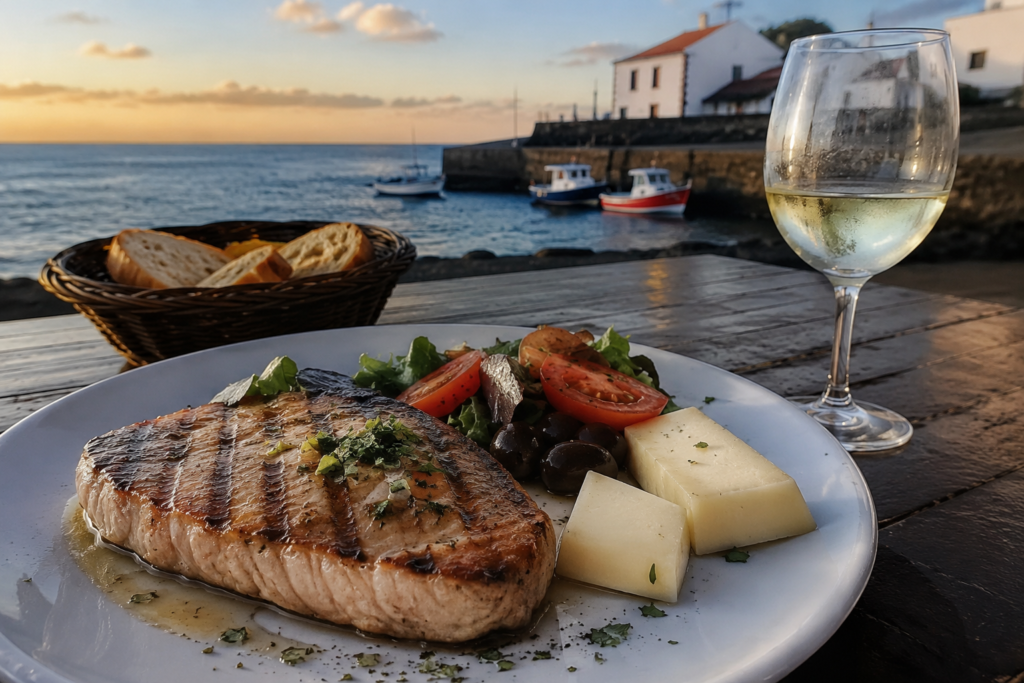
The harvest also spills over into the kitchen. September dinners around Madalena and Lajes lean into whatever just came off the vines and out of the water — fresh tuna and limpets (lapas) grilled simply with garlic and butter, local São Jorge-style cheese from the neighboring island, and a glass of the island’s dry white made from Verdelho grapes that survived the volcanic soil and salt air. None of this is dressed up for tourists; it’s just what a small Atlantic island eats in early autumn, which is arguably the better reason to time a visit around the harvest in the first place.
📝 Note: Harvest timing shifts slightly year to year depending on the season’s weather, so treat “mid-September” as a window to build a visit around rather than a fixed date to plan flights against.
If you want a photograph of the currais vineyards without another visitor in frame, go right after sunrise rather than midday — the low light picks out the texture of the black volcanic stone far better than the flat overhead sun most day-trippers shoot in, and the harvest crews are often already out working the vines by 7am, which adds life to the shot without adding crowds.
Climbing Mount Pico: Why September Is the Sweet Spot
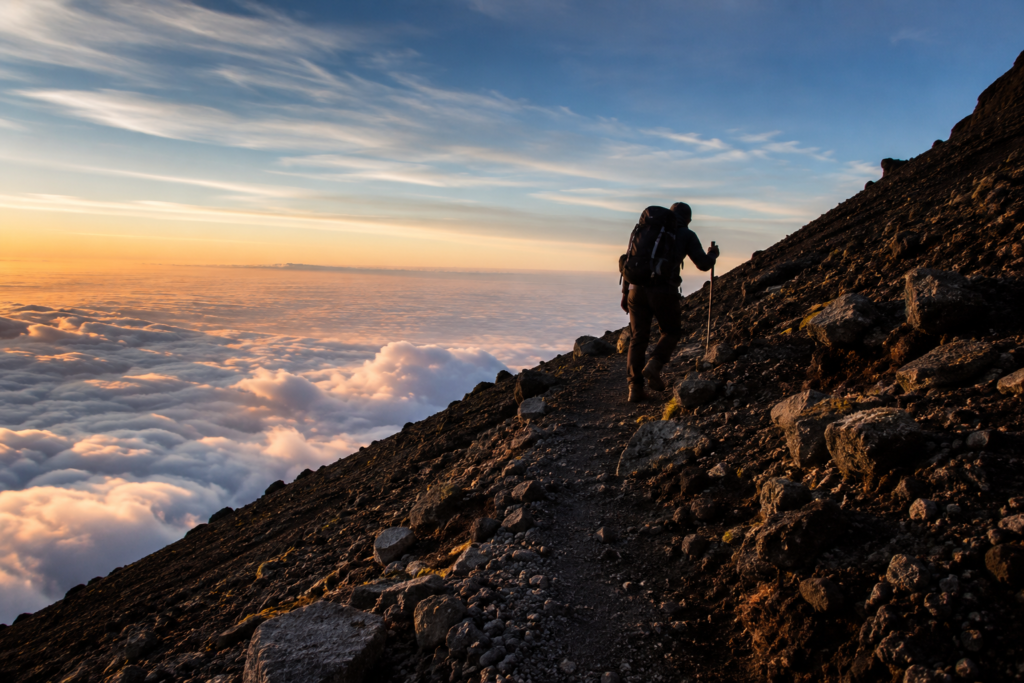
At 2,351 meters, Mount Pico is Portugal’s highest point, and the climb is a genuine full-day undertaking — a guided round trip typically runs five to six hours, along a marked but steep volcanic path with a safety briefing required before you start. September gives you some of the most stable conditions of the year for it: past the risk of summer thunderstorm buildup, before the wind and rain that can shut the trail down entirely in winter.
Weather can still turn quickly at altitude even in good months, so a guide isn’t a formality here — it’s the difference between a rewarding hike and a genuinely dangerous one if cloud rolls in fast. Book it for your first full day on the island if possible, since it’s the one activity most likely to get rescheduled by weather, and you want spare days in reserve rather than gambling your only shot on day one.
Book the mountain first
It’s weather-dependent above everything else on the island — give yourself buffer days by climbing early in your trip, not the last day before your flight home.
Fit in a morning whale-watching trip
Mornings tend to have the calmest seas, which means a smoother ride and better odds of a long, close sighting.
Spend a slower day on the vineyard coast
Criação Velha, the Wine Museum, and a harvest-season tasting make for an easy, low-effort day after the mountain climb.
Where to Base Yourself: Madalena vs Lajes do Pico
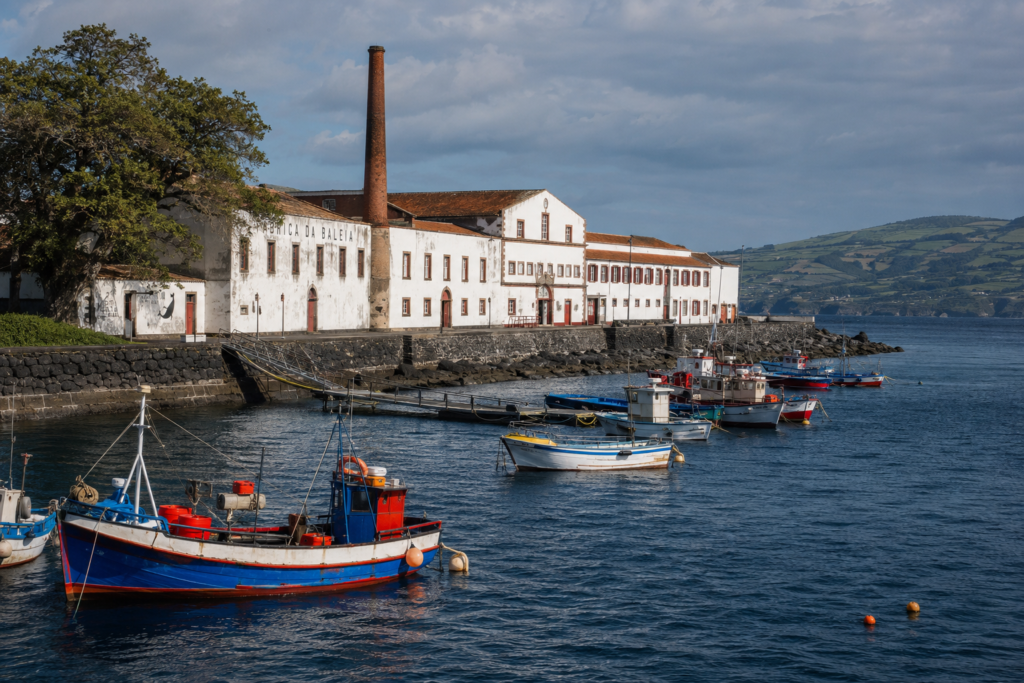
Pico has two realistic bases, and picking the right one shapes the whole trip. Madalena, on the west side, is the busier of the two, with the most restaurants, the ferry connection to Faial’s town of Horta (a 30-minute crossing that lets you day-trip to a genuinely different island), and easy access to the harvest-season vineyards around Criação Velha. Lajes do Pico, on the south coast, is quieter and has deeper roots in the island’s whale-watching history — it’s home to the Whaling Museum, housed in a former whale-processing station, and most whale-watching boats depart from here.
If you can only pick one, Madalena gives you more flexibility for a shorter trip, since it puts the ferry, the wine region, and a wider range of dinner options within easy reach. If you have four or more nights, splitting your stay between both towns lets you treat the mountain and vineyards as a Madalena chapter and the whale-watching as a Lajes chapter, without long transfers eating into your days. Neither base is a resort town in the Mediterranean sense — Responsible Travel’s Pico Island guide describes it well as a fantastic base for whale and dolphin watching rather than a beach destination, and if you’re coming from an island trip like Mallorca, reset your expectations toward a working fishing island with a handful of good guesthouses, not a beach-resort strip.
Pico Island in September: Who This Trip Actually Suits
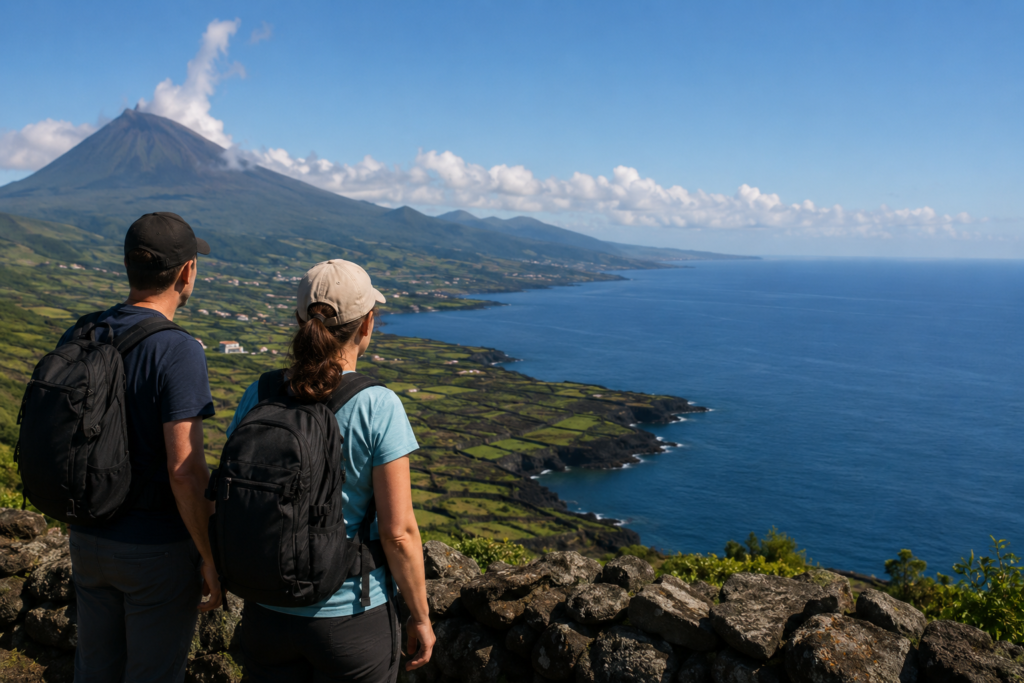
This isn’t a trip for travelers who want guaranteed sunshine, beach days, and a predictable itinerary — it’s a better match for couples and solo travelers who like a bit of physical activity built into a trip, and families with older kids or teenagers who can handle a full-day mountain climb and don’t need constant entertainment. If you’re traveling with younger children, the calmer, more resort-style options covered in our family-friendly nature islands guide are likely a better fit than Pico’s steep trails and open-ocean boat trips.
Getting There and Getting Around
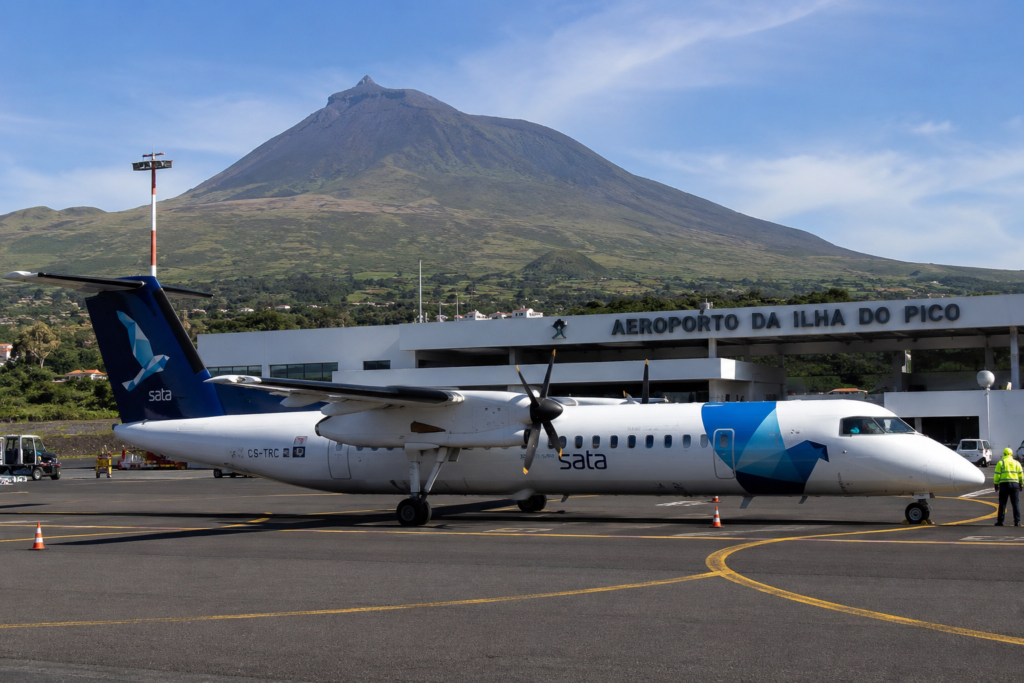
Pico’s small airport (PIX) connects via Lisbon or Porto with a stop or connection through Ponta Delgada or Horta, depending on the route SATA Azores Airlines is running that season — flight schedules on inter-island hops shift year to year, so confirm current routings when you book rather than assuming last year’s schedule holds. The alternative, and arguably the more scenic one, is flying into Faial’s Horta airport and taking the short ferry across to Madalena, which also lets you tack on a day or two in Horta’s well-known marina town before you even reach Pico.
Once you’re on the island, a rental car isn’t optional — Pico’s attractions are spread across an island roughly 42 kilometers long, public transport is minimal, and taxis between towns add up fast. Book the car well ahead for September, since the fleet is small and doesn’t stretch as far as a mainland rental agency’s. Roads are narrow and winding in places, particularly near the volcanic vineyard zones, so budget more driving time than the map distance suggests.
Photograph the rental car thoroughly before you drive off — every scratch, every scuff on the bumper — with a staff member present, since small island rental fleets tend to have more pre-existing wear than mainland cars, and you don’t want to be billed for damage that was already there. It’s a five-minute habit that avoids a genuinely annoying conversation at drop-off, and it applies just as much here as it does on any other island rental you’ve done before.
2,351m
Height of Mount Pico, Portugal’s tallest peak
~4 weeks
Typical length of the September–October grape harvest
30 min
Ferry crossing between Faial and Pico
Before You Book Anything
Compare Every Azorean Island’s Best Month, Not Just Pico’s
“When To Go: The Travel Timing Atlas” scores 50 countries across weather, crowds, price, and events, so you can weigh Pico’s September window against São Miguel, Faial, or a completely different destination before you commit to flights.
See the Travel Timing Atlas →Planning Your Trip: Budget, Timing, and a Simple 3-Day Plan
Three full days is a realistic minimum for Pico, and it maps cleanly onto the island’s three main draws. Day one: climb Mount Pico, starting early to beat any afternoon cloud buildup, and treat the evening as a recovery night with an easy dinner in Madalena or Lajes. Day two: a morning whale-watching trip out of Lajes do Pico, followed by an afternoon at the Whaling Museum if the history interests you, or simply resting your legs after the climb. Day three: the vineyard coast around Criação Velha, the Wine Museum, a harvest-season tasting, and — if timing allows — the ferry across to Horta on Faial for a half-day before flying home.
September rates for guesthouses and whale-watching tours sit comfortably below the July–August peak, which is one more argument in the month’s favor beyond the whale-watching case itself. Pack layers rather than pure summer clothing — mornings on the water and any altitude on Mount Pico both run cooler than the daytime coastal temperature suggests, and a lightweight waterproof shell earns its space in the bag even on a mostly dry week, since Atlantic weather can shift with little warning. Our general packing hacks guide covers the layering logic in more depth if you’re trying to fit a mountain climb and a boat trip into one carry-on.
Because so much of this trip depends on weather windows — the mountain, the boat trips, even the harvest timing — it’s worth having offline maps, a downloaded ferry schedule, and a translation app ready before you land, since signal on parts of the island is patchy. Our essential travel tech tools guide covers exactly this kind of preparation, and it’s a more useful ten minutes of pre-trip planning here than on a typical city break, this island belongs in the same category as the island travel destinations that reward a bit of extra homework before you land.
Common Mistakes People Make Planning a Pico Island Trip
- Booking September expecting a blue whale. September is a reliable sperm whale and dolphin month, not a rare-species month — go in spring instead if a blue whale sighting is the entire goal of the trip.
- Skipping the rental car to save money. Pico’s main attractions sit far enough apart that taxis between them cost more over three days than a rental car for the whole trip, and you lose the flexibility to chase good weather windows for the mountain.
- Scheduling Mount Pico for the last day of the trip. If weather closes the trail, you want spare days left to reschedule — not a missed flight and a missed summit on the same afternoon.
- Treating Pico as a one-island stop instead of pairing it with Faial. The ferry to Horta is short, cheap, and turns a Pico-only trip into a two-island experience for very little extra planning.
- Assuming Azores weather behaves like mainland Portugal. Atlantic conditions change fast even in a generally good month like September — build a weather buffer into your schedule rather than planning back-to-back activities with no flexibility.
Frequently Asked Questions
Planning More Than One Trip This Year?
The Complete Travel System bundles the Timing Atlas with an 86-page emergency-handling guide and an AI trip-planning prompt library — 311 pages covering when to go, how to plan it, and what to do when something goes wrong.
Explore the Complete Travel System →Pico Island in September won’t give you the widest whale species count of the year, and it’s honest to say so upfront. What it gives you instead is a working island at its most relaxed — resident whales showing up reliably, a UNESCO harvest unfolding in the vineyards, Portugal’s highest summit in climbable condition, and none of the July crowd fighting you for a dinner table. For most travelers planning around a single trip rather than a marine-biology checklist, that trade is an easy one to make. Book the mountain first, keep your evenings loose, and let the harvest and the whales fill in the rest of the week on their own schedule.

The Modern Traveler's Starter Kit
The best chapter from each of our three travel books — one free PDF:
- The first-5-minutes protocol for any travel emergency
- A full country timing scorecard, every month scored
- 5 AI prompts that turn ChatGPT into a travel agent
No spam. Instant download. Unsubscribe anytime.