Tortuguero turtle season is the stretch from July to October when green turtles haul themselves out of the Caribbean and dig their nests on the long black-sand beach of Tortuguero National Park, on Costa Rica’s northeast coast. Timing decides almost everything: how many turtles you’re likely to see, whether hatchlings are possible and how wet the trip will be. This guide sets out the months, the species, the night-tour rules, the weather and the access, so you can pick dates that match what you want to see.

Quick answer
When is the best time to see turtles in Tortuguero?
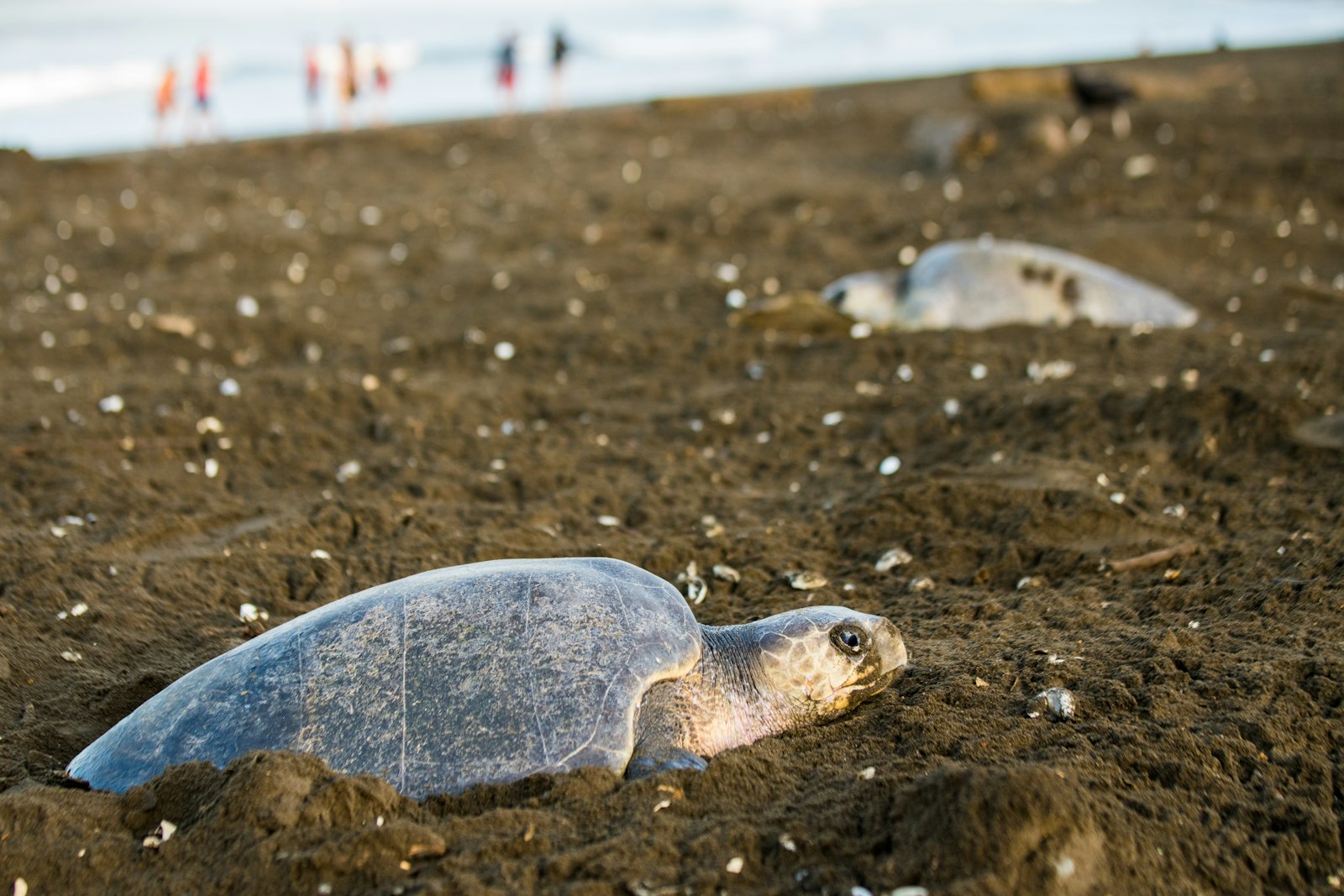
August and September are usually the best months. Green turtles nest from July to October, and the peak normally falls in those two months, when a guided night walk has the highest chance of finding a nesting female. Late August to October also brings a chance of hatchlings.
Key facts
- What months do green turtles nest in Tortuguero? Green turtles nest in Tortuguero from July to October.
- Can you see turtles in Tortuguero without a guide? Not at night.
- Are turtle sightings guaranteed in Tortuguero? No.
- Is it worth going to Tortuguero outside turtle season? Yes, if you come for the canals and rainforest rather than turtles.
Key takeaways
Season
Green turtles nest from July to October, with August and September usually the busiest months on the beach.
Leatherbacks
Leatherbacks come ashore from about March to May, mostly in the south of the park, and sightings are rare.
Hatchlings
Eggs hatch about 60 days after laying, so the chance of hatchlings runs from late August into October and beyond.
Rules
Nobody may walk the nesting beach after 6 pm without a licensed guide, and lights and flash photography are banned.
Weather
Rain falls in every month. Weather2Travel gives about 300 mm in September against about 625 mm in July.
Access
There is no road. You arrive by boat from La Pavona or Caño Blanco, or by small plane from San José.

When Is Tortuguero Turtle Season? The Months by Species
This section covers which turtles nest in Tortuguero and when. Four species use this coast, but they don’t arrive together, and one of them makes up almost every sighting.
Green turtles are the stars. Tour operators, the park authority and the guidebooks all give the nesting season as July to October. Frommer’s narrows it a little: green turtles nest from July to mid-October, with the peak months in August and September. Numbers build through July and thin out through October, so the middle of the window gives the best odds.
Leatherbacks, the largest sea turtles, nest from about March to May. Frommer’s says their season can run from late February to June and that they favour the southern part of the park. They’re seen far less often than greens; kimkim’s park guide calls a leatherback sighting in Tortuguero very rare. Hawksbills nest in small numbers between March and October, and loggerheads turn up only occasionally.
Sources: Frommer’s and kimkim for species and months; the Tortuguero Conservation Area brochure for the park’s own season table; the Sea Turtle Conservancy on the long-running monitoring programme. The beach the turtles use stretches about 35 km (22 miles), from the mouth of the Tortuguero River south to Parismina.
🧰 Try it while you read: a free tool for this trip
Free trip timing tool
Best Month Finder
Pick a country and your priorities; get the three months that suit you best.
Loading the tool…
Tortuguero Turtle Season Month by Month: Go, Go With Care or Skip
This section turns the nesting calendar and the rain into a verdict for every month. Green means the turtle odds and the trip both work, amber means it works with lower odds or more rain, and red means you’d be visiting for the canals and wildlife rather than turtles.
Not sure how your exact dates score across Costa Rica? The free Best Month Finder ranks every month for a destination, and the When Not to Go checker flags the weeks to avoid.

The Smart Timing Bundle
Pick the month, book in the right order, pack once
Six printable timing tools for any trip: the Trip Timing Planner, When to Book, When NOT to Go, the Shoulder Season Playbook, the family timing guide and the Packing by Season System.
See the bundle · $37Six products, $100 separately · Digital download · All sales final

How Tortuguero Turtle Tours Work at Night
This section explains what actually happens on a turtle walk, because the rules shape the experience as much as the season does. Turtle watching here is tightly controlled to protect nesting females, and that’s a good thing for anyone who wants to see natural behaviour rather than a crowd.
Book a licensed guide
Night visits to the nesting beach require a licensed guide, and kimkim notes that no visitor may be on the beach unaccompanied after 6 pm. In the nesting months, book a day or more ahead; lodges and village guides arrange it.
Pick your slot
The park brochure lists two turtle-watching departures, at 8 pm and 10 pm, for the March to October season (Tortuguero Conservation Area). Tours usually last about two hours.
Wait for the spotters
Trained local spotters from the Sea Turtle Conservancy’s programme walk the beach first and find nesting turtles before the groups arrive, as the Going guide describes. You may wait a while until a turtle is ready.
Watch in the dark
Groups are small, often about ten people. Flashlights, flash cameras and lit video cameras are banned, and white shirts aren’t allowed (Frommer’s).
Leave quietly
You watch the laying and covering of the nest, then move off so the turtle can return to the sea undisturbed.
Wear dark clothes, closed shoes and a light rain jacket; the beach is soft sand and showers can arrive without warning. Turtles are easily disturbed while they’re still searching for a spot or digging, and a single light can send a female back to the sea. Tours are part of the conservation effort: the Sea Turtle Conservancy says village guides complete a training programme and receive a government permit, and tour fees support the spotter programme.

Important
No sighting is guaranteed, even at peak. Turtles choose their own nights, and some walks end without a nesting female. Staying two or three nights, with a tour booked on each evening if needed, gives you far better odds than a single overnight trip.Seeing Hatchlings During Tortuguero Turtle Season
This section is for travellers who care more about baby turtles than nesting mothers. Hatchlings follow the nesting season by about two months, so their window is later and less predictable.
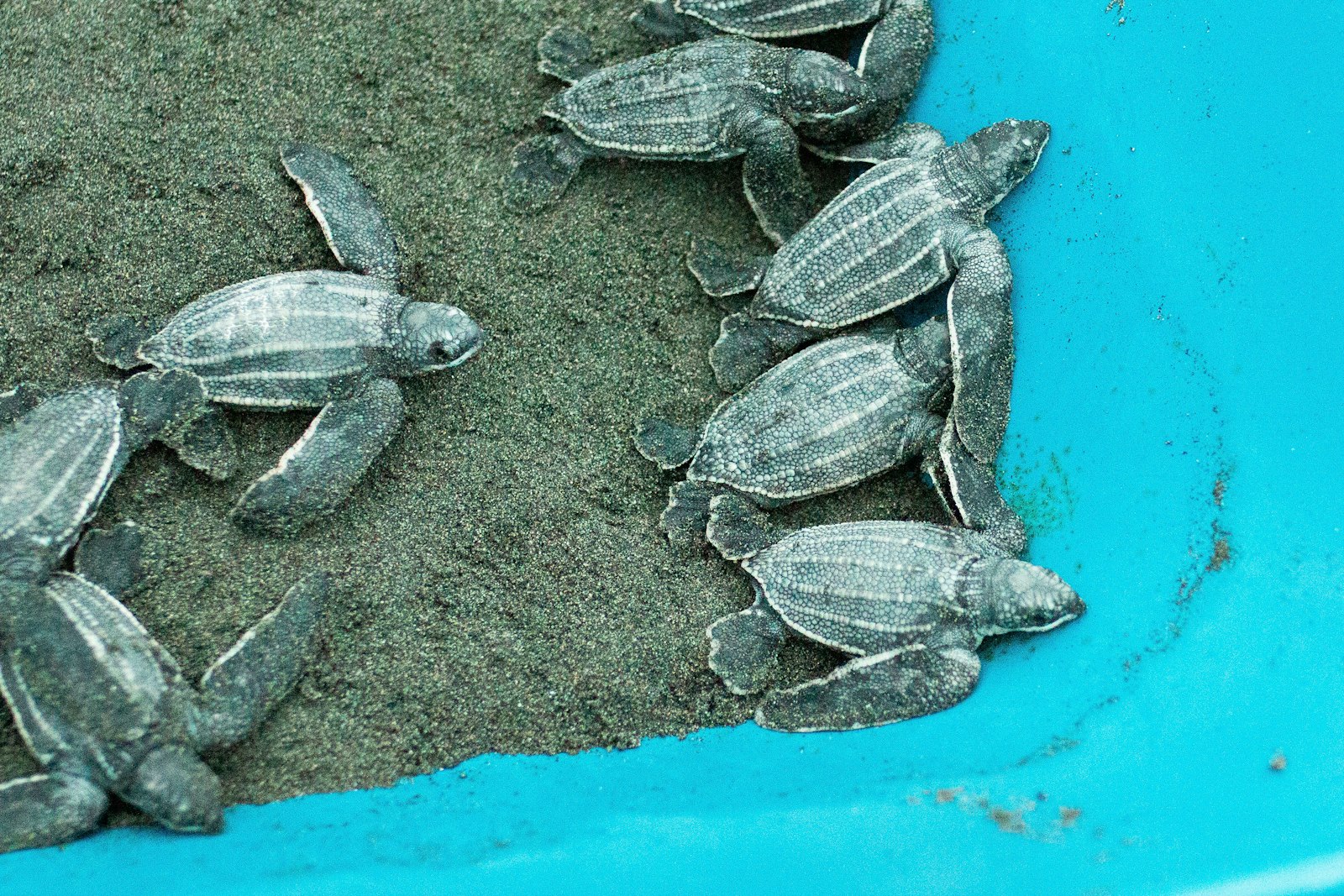
Green turtle eggs usually hatch about 60 days after they’re laid. That puts the first hatchlings around late August, with most emerging through September and October; the park brochure gives hatching months as September to December, and kimkim says September to November. Hatchlings mostly leave the nest after dark or at first light, when the sand is cool.
Seeing them is down to luck. There’s no scheduled hatchling tour that guarantees an emergence, and the Going guide describes the chance as small. Your best odds come from a stay that covers several dawns in September or October. Don’t touch hatchlings, don’t pick them up to help them, and keep any light away from them; it can turn them inland.
Tortuguero Weather in Turtle Season: Rain, Heat and Sea
This section shows the climate in the turtle months. Tortuguero sits in one of the wettest corners of Costa Rica, and the Costa Rica Tourism Board explains that the Caribbean side has no well-defined dry season at all. Instead, it has two relatively dry spells, the first in February and March and the second in September and October, which is the opposite of the Pacific side, where September and October are the wettest months.
| Month | Typical high / low | Rain (mm, rain days) | Sea | Turtle verdict |
|---|---|---|---|---|
| March | About 31 °C / 24 °C | About 180 mm, 7 days | About 27 °C | Leatherbacks, few |
| May | About 31 °C / 24 °C | About 340 mm, 17 days | About 28 °C | Last leatherbacks |
| July | About 30 °C / 24 °C | About 625 mm, 22 days | About 28 °C | Greens arrive |
| August | About 29 °C / 23 °C | About 460 mm, 22 days | About 28 °C | Peak nesting |
| September | About 29 °C / 23 °C | About 300 mm, 22 days | About 29 °C | Peak nesting, hatchlings |
| October | About 29 °C / 23 °C | About 400 mm, 22 days | About 28 °C | Season tails off |
| November | About 29 °C / 22 °C | About 600 mm, 18 days | About 28 °C | Late hatchlings only |
| December | About 29 °C / 22 °C | About 620 mm, 17 days | About 27 °C | No nesting |
🗓️ Free: the 12-Month Map for Costa Rica
Every month on one page: best weeks, shoulder weeks and the ones to skip. Print it or keep it on your phone.
Figures are long-term averages from Weather2Travel, converted to Celsius and rounded. The pattern is clear: July is usually the wettest of the turtle months, and September is the driest. The tourism board notes that rain on this coast falls mostly at night and in the morning. Pack a rain jacket whatever the month, and expect the sea to be rough; swimming is not allowed at the park beach because of strong currents.
Plan the rest of Costa Rica
When to Go: Costa Rica
Turtle season falls in the green season, when the Caribbean and the Pacific behave very differently. The guide goes month by month through every region, from Tortuguero and the south Caribbean to Guanacaste, Arenal, Monteverde and the Osa Peninsula, so you can pair turtle nights with the parts of the country that are drier at the same time.
Digital download · All sales final
Getting to Tortuguero and How Long to Stay
This section covers access, which takes more planning than in most of Costa Rica. Tortuguero has no road connection, and that isolation is part of what keeps the beach dark enough for turtles.
| Route | How it works | Good for |
|---|---|---|
| Boat from La Pavona | Drive or ride about two hours from San José on the Guápiles highway, then take a boat of about 90 minutes along the rivers and canals | Independent travellers and those with a rental car (secure parking at the dock) |
| Shuttle and boat via Caño Blanco | Shared shuttle from San José or the Caribbean coast to the Caño Blanco dock, then a boat through the canals; door to door can take four to five hours | Package and lodge transfers |
| Small plane | A short domestic flight from San José to the Tortuguero airstrip | Short stays and travellers who want to save a day |
Sources: kimkim for La Pavona and the boat time; Going for Caño Blanco and the domestic flight. Schedules and operators change, so confirm departure times before you travel.

The complete kit
Every country guide, every timing tool
All 24 When to Go country guides, the six Smart Timing tools and every 12-Month Map, with a Start Here that tells you what to open first.
See the kit · $127The five bundles cost $225 separately · Digital download · All sales final
Two nights is the realistic minimum. The travel day eats most of the first afternoon, so a single night gives you one shot at a turtle walk and no margin for a quiet beach or a washed-out evening. Three nights add a dawn canal tour and extra turtle walks. Book August and September stays well ahead; prices change, so check before you book.
Tip
Canal tours go out early. The park lists water trail departures from 6 am, and the first boat of the day is usually the best for monkeys, birds, caimans and sloths along the waterways. Combine one dawn boat with one evening turtle walk on the same day if you are short of time.Tortuguero or Another Beach? Comparing Costa Rica’s Turtle Options
This section compares Tortuguero with Ostional, the Pacific beach most often weighed against it. The two offer very different experiences, and the best months overlap only in part.
| Tortuguero (Caribbean) | Ostional (Pacific, Nicoya) | |
|---|---|---|
| Main species | Green turtle | Olive ridley |
| What you see | Single females nesting at night, on a guided walk | Arribadas: mass nesting events over several days |
| Best months | August and September | Biggest events usually September and October |
| Timing tool | The calendar | The moon: arribadas often start before a new moon |
| Access | Boat or small plane only | By road on the Nicoya Peninsula |
| Weather in September | One of the drier spells | One of the wettest months on the Pacific side |
The Tico Times explains that arribadas happen year-round but are largest in the rainy season, especially from July through November, with September and October tending to produce the biggest events; hundreds of thousands of turtles may come ashore over three or four days. Visits are guided only, and flash photography is banned there too. If your dates are fixed in October, Ostional may give you the bigger spectacle; if you want August or a quieter one-to-one encounter, Tortuguero is the better pick.
For more wildlife ideas in the same window, see our beaches with wildlife in October, family wildlife trips in October and solo nature trips in October.
When Not to Go, and the Better Month If You Want Something Else
This section is the honest part: some trips are a poor fit for certain months.
| Avoid | Why | What to do instead |
|---|---|---|
| November to February for turtles | No green turtles nesting; November and December average around 600 mm of rain | Come for canals and wildlife, or move to August or September |
| A single night in peak season | One walk, no margin for a slow beach or a storm | Stay two or three nights |
| June for nesting | The gap between leatherbacks and greens | Wait for late July |
| Late October for peak numbers | Nesting thins out after mid-October | Go in late August or September |
Better month if you want
The most nesting turtles
August and September, the peak green turtle months.
The best chance of hatchlings
September and October, with several dawns in your stay.
Leatherbacks
April, the middle of the short leatherback season, accepting that sightings are rare.
The driest Tortuguero trip
March, the driest month on average, though without green turtles.
A mass nesting event
Ostional in September or October, timed around the new moon.
Turtles plus a Caribbean beach trip
September, when the south Caribbean coast is also in its drier spell.
If you’re building a wider September trip, our September travel guide and national parks in September cover the rest of the month, and Caribbean beaches in September rounds up the islands nearby. For Central America beyond Costa Rica, see these things to do in Belize.
What Else to Do in Tortuguero During Turtle Season
This section covers the daytime, because turtle walks only fill a couple of hours each evening. The rest of the time, Tortuguero is one of the best places in Costa Rica to see rainforest wildlife from the water.
Guided canal tours by motorboat or canoe follow the narrow channels behind the beach, and they usually last three to four hours. Expect howler, spider and white-faced monkeys, herons and kingfishers, caimans, river turtles and, with a sharp-eyed guide, sloths. Canoes are quieter than motorboats, which helps on the narrower channels.
On foot, the short trails near the ranger station run through coastal forest, and they’re often very muddy, so wear boots rather than sandals. Outside the park, the El Gavilán trail starts just outside the village, and Cerro Tortuguero, a forested hill north of the village, gives a rare high view over the lagoon, the canals and the sea.
Pack a rain jacket, quick-dry clothes, dark layers, repellent and a dry bag; the free Packing Generator builds a full list.
Common Mistakes When Planning Tortuguero Turtle Season
This section lists the slips that most often turn a turtle trip into a missed one.
1. Treating July as peak season
Green turtles do start nesting in July, but numbers build through the month and July is usually the wettest month of the season. If you can choose, go in August or September.
2. Staying only one night
A one-night trip gives you a single walk. If the beach is slow, the rain is heavy or the turtle you find has already started back to sea, there’s no second chance. Two or three nights make a real difference.
3. Expecting leatherbacks
Leatherbacks are possible from about March to May, but they’re rare here and nest mostly in the south of the park. Plan a Tortuguero trip around green turtles, and treat any leatherback as a bonus.
4. Bringing a camera to the nesting beach
Photographing nesting turtles is not allowed, and lights of any kind are banned on the night walk. Leave cameras and phones in your bag and take photographs on the daytime canal tour instead.
5. Leaving bookings to the last minute
Lodges, boat transfers and licensed guides are limited, and August and September are the busiest months. Book transport and rooms early, and arrange your turtle walk on arrival day at the latest.
Tortuguero Turtle Season: FAQ
The Bottom Line
Tortuguero turtle season runs from July to October, and August and September give you the best balance of nesting turtles, possible hatchlings and one of the coast’s drier spells. Book a licensed guide, stay at least two nights and keep your expectations open. For more trips in the region, browse our Costa Rica travel guides.
Turtles in August, sunshine where?
When to Go: Costa Rica
A turtle trip usually sits inside a longer Costa Rica itinerary. The guide shows, month by month and region by region, where the rain falls, which wildlife is around and which weeks are busiest, so the days before and after Tortuguero go to the parts of the country that suit the same dates. Travelling further in the region? The Americas Bundle covers several countries in one set.
Get When to Go: Costa Rica →Digital download · All sales final
Free download
The 12-Month Map, free
The whole year for one country on four printable pages, so you can see the right months before you read anything else.
- Good, shoulder and avoid months at a glance
- Region by region, not one average for the whole country
- Prints cleanly on US Letter
Your download page opens as soon as you sign up. 24 countries available.