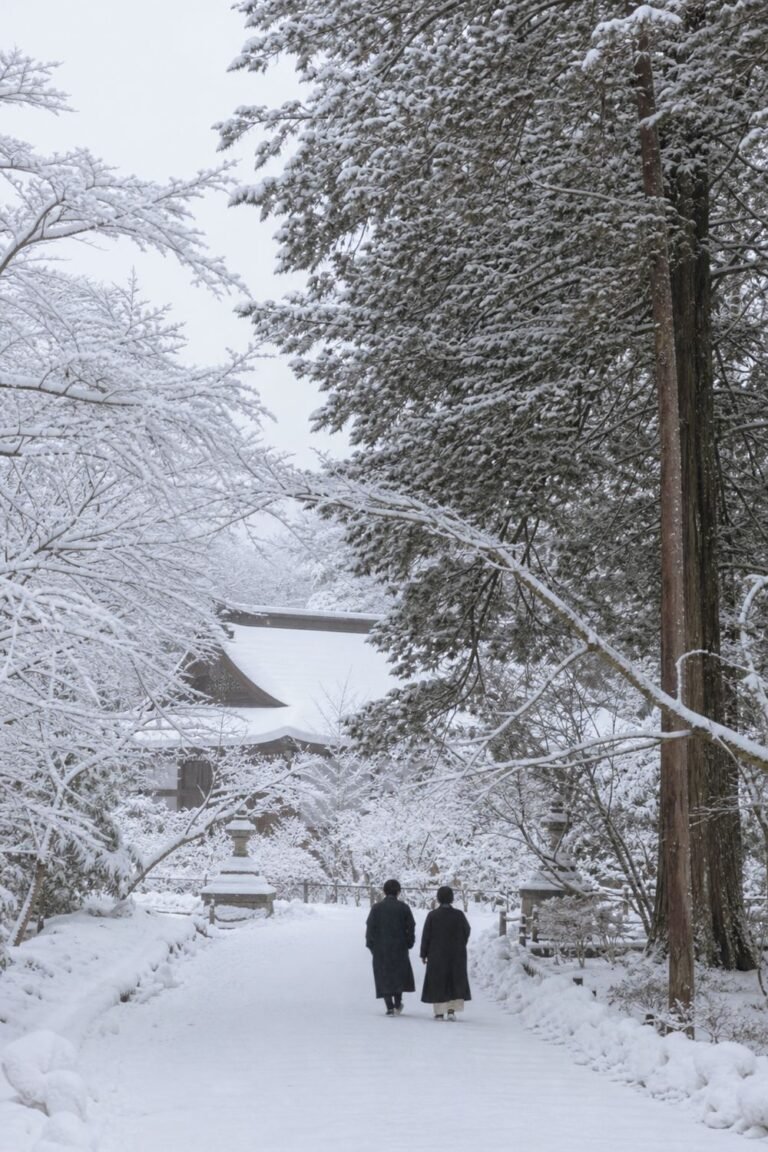

This Fukuoka travel guide is built around one question: when should you go? Fukuoka is Kyushu’s biggest city and one of Japan’s easiest to visit, with an airport five minutes from the main station, a compact centre and an evening food scene built around open-air yatai stalls. The best months are usually March to May and October to November, when the weather is mild and dry enough for long walks and late dinners outdoors. June and July bring the rainy season, August is hot and humid with the highest typhoon risk, and winter is cool but quiet.

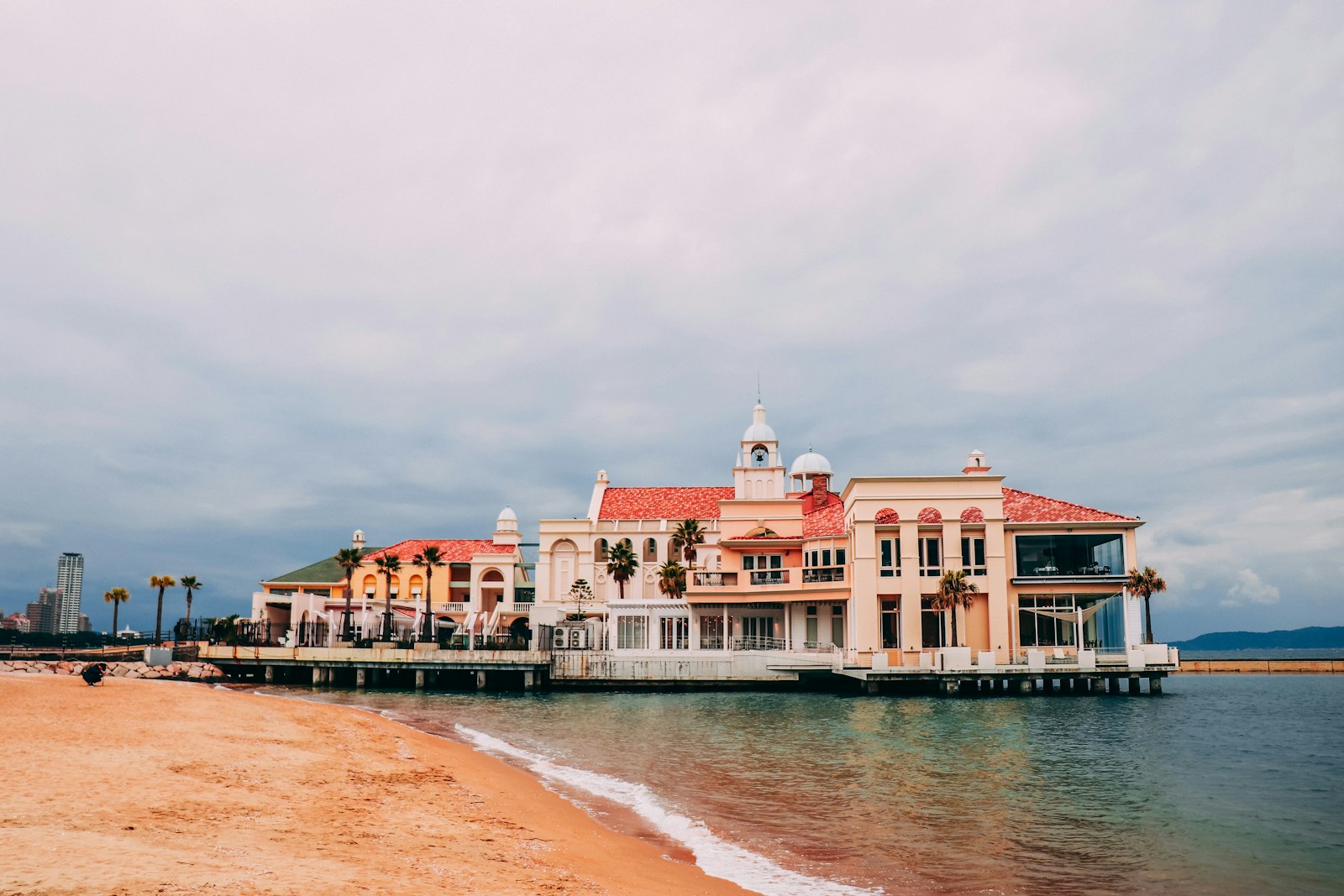
Hakata and Tenjin, northern Kyushu
Fukuoka by season
Best: Mar to May · Oct to Nov
Spring
Mar to May · 14 to 23 °C highs
Cherry blossom late March to early April; Hakata Dontaku on 3 and 4 May
GoSummer
Jun to Aug · 26 to 32 °C highs
Rainy season about June to mid or late July; peak typhoon odds in August
Go with careAutumn
Sep to Nov · 28 falling to 17 °C
Hojoya in mid-September; dry, clear October; sumo in November
GoWinter
Dec to Feb · 9 to 12 °C highs
Coolest and quietest months; frequent light rain or drizzle
Go with careTemperatures are long-term average highs from Weather2Travel. Bloom and rainy-season dates move by a week or two from year to year.
Short answer
Visit Fukuoka from late March to May or from October to November. Spring brings cherry blossom at Maizuru Park and the big Hakata Dontaku parade, while autumn is the driest, clearest stretch for walking and eating at yatai stalls. Avoid June and July if rain bothers you, and keep plans flexible in August and September, when typhoons can close outdoor stalls and disrupt ferries and flights.
Fukuoka Travel Guide: Month-by-Month Verdicts
This section rates every month for a city trip to Fukuoka, using long-term averages for temperature, rain and storm risk. A dry June or a stormy October can still happen, so check the forecast before you fly.
When to go to Fukuoka
City sightseeing, yatai evenings and day trips. Climate figures from Weather2Travel.
Jan
9 °C highs, cold and grey, very quiet
Go with careFeb
10 °C highs, cool, short days, quiet
Go with careMar
14 °C highs, cherry blossom late in the month
GoApr
19 °C highs, blossom then fresh green
GoMay
23 °C highs, Dontaku on 3 and 4 May
GoJun
Rainy season, about 269 mm
SkipJul
Wettest month, about 301 mm; Yamakasa
Go with careAug
32 °C highs, humid, top typhoon odds
Go with careSep
28 °C highs, typhoons still possible
Go with careOct
23 °C highs, about 93 mm, clear days
GoNov
17 °C highs, sumo tournament, clear days
GoDec
12 °C highs, driest month, quiet
Go with careThe two clear winners are spring and autumn. From late March to May, highs climb from about 14 °C to 23 °C, rain is moderate and the city’s parks are at their best. From October to November, highs fall from about 23 °C to 17 °C, rain drops to 78 to 93 mm a month and storm risk fades, which makes these the most reliable weeks for outdoor eating. Winter is cool rather than cold, with highs of 9 to 12 °C, and December is the driest month at about 55 mm.
Summer is the hard season. June and July together bring roughly 570 mm of rain, July and August highs reach 31 to 32 °C with high humidity, and August has the highest share of tropical-storm days of the year (Weather2Travel).
🧰 Try it while you read: a free tool for this trip
Free trip timing tool
Festival Month Matcher
Choose a month and see the festivals and events our guides list for it.
Loading the tool…
Fukuoka Weather by Month
This section gives the numbers behind the verdicts. All figures are long-term averages for Fukuoka city from Weather2Travel, so treat them as a guide to the season, not a forecast.
| Month | High / low | Rain | Sun per day | Sea | Storm odds |
|---|---|---|---|---|---|
| January | 9 / 2 °C | 75 mm | 3 h | 15 °C | None |
| February | 10 / 3 °C | 77 mm | 4 h | 14 °C | None |
| March | 14 / 5 °C | 108 mm | 5 h | 14 °C | None |
| April | 19 / 10 °C | 154 mm | 6 h | 15 °C | None |
| May | 23 / 14 °C | 166 mm | 6 h | 18 °C | None |
| June | 26 / 19 °C | 269 mm | 5 h | 21 °C | Low |
| July | 31 / 24 °C | 301 mm | 6 h | 25 °C | Moderate |
| August | 32 / 24 °C | 163 mm | 7 h | 27 °C | Highest |
| September | 28 / 20 °C | 191 mm | 5 h | 25 °C | Moderate |
| October | 23 / 14 °C | 93 mm | 6 h | 22 °C | Low |
| November | 17 / 8 °C | 78 mm | 4 h | 20 °C | None |
| December | 12 / 4 °C | 55 mm | 4 h | 17 °C | None |
🗓️ Free: a 12-Month Map for your country
Every month on one page: best weeks, shoulder weeks and the ones to skip. Print it or keep it on your phone.
Storm odds reflect the share of each month affected by tropical storms in Weather2Travel’s records: about 7 percent of August and 5 percent of September. One storm can still cancel a day and close every yatai, so build in a spare day from July to September.
Rainy Season and Typhoon Season in Fukuoka
This section covers the two weather periods that can upset a trip, and how to plan around them. Neither is a reason to cancel, but both change what a day in the city looks like.
When to Go: Japan
Blossom, autumn colour or quiet temples?
Every month across Japan rated for weather, crowds and prices, region by region, from Hokkaido to Okinawa, with a 7-day booking plan and the free 12-Month Map.
See the Japan guide · $19About 100 pages · PDF, US Letter and A4 · Digital download · All sales final
The rainy season (tsuyu)
Northern Kyushu’s rainy season usually begins in early June and ends around the third week of July. Local news reports from Fukuoka Now describe the start against a usual date in the first week of June and the end against an average of about 19 July. The real dates move by a week or more either way. Expect long spells of grey skies, warm humidity and heavy downpours rather than nonstop rain, with highs of 26 to 31 °C.
June is the weakest month for a first visit. The underground malls around Tenjin keep a rainy day useful, but parks, the bay and outdoor stalls lose their appeal. If you can only travel in early summer, late May beats June, and the last week of July usually beats the first (Fukuoka Now).
Typhoon season
Typhoons can reach Kyushu from about June to October, with the greatest odds in August and September. A passing storm usually means a day or two of strong wind and heavy rain, with ferries, some flights and many trains suspended. Yatai stalls close in typhoons, strong wind and heavy rain, according to Gltjp’s yatai guide, so a storm night means eating indoors.
Warning
From July to September, keep one flexible day in your plan and avoid booking the Busan ferry or a tight flight connection for the day after a storm warning. Follow the Japan Meteorological Agency’s forecasts once you arrive, and check the free Storm Season Check before you choose your dates.
Yatai in Fukuoka: How the Food Stalls Work
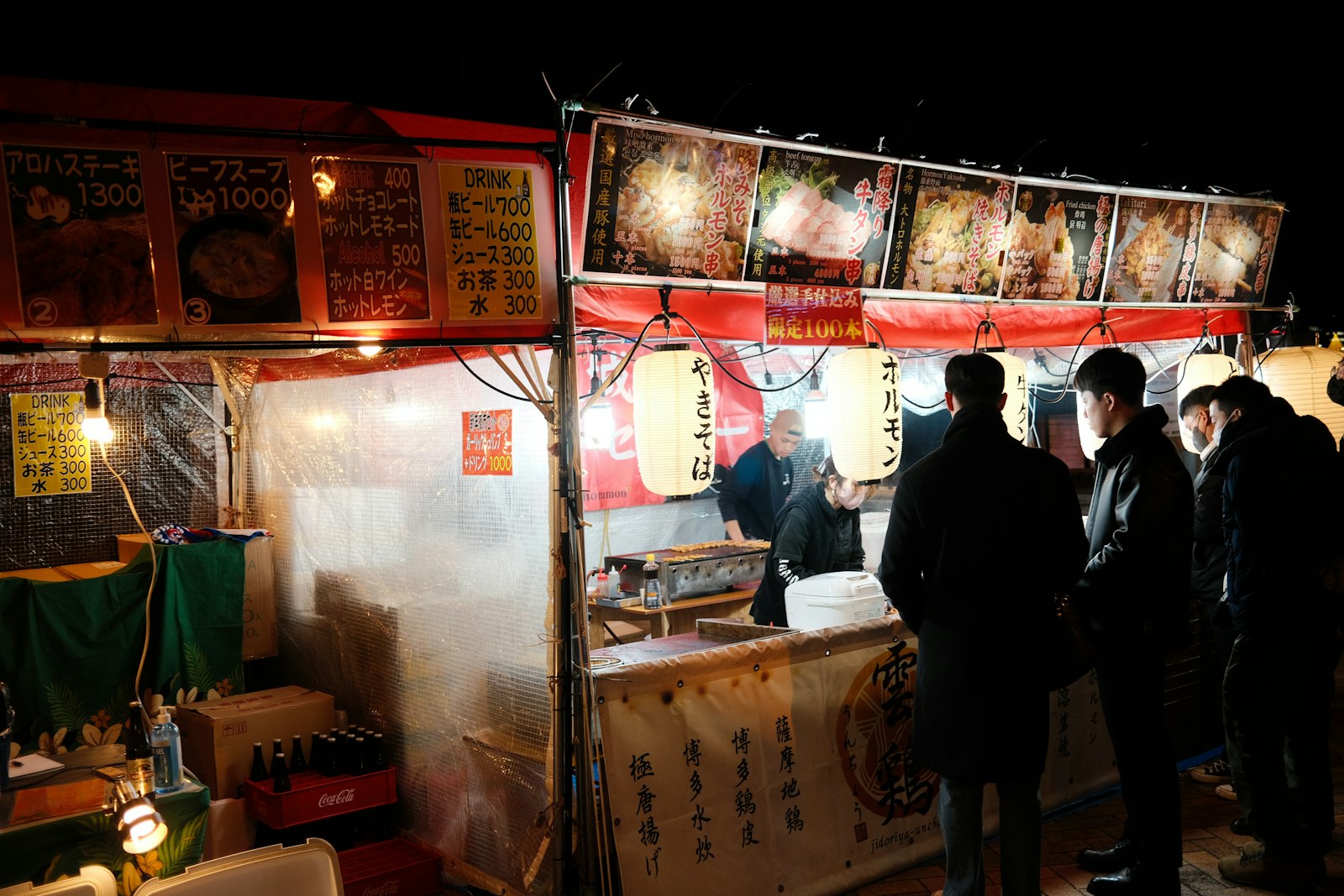
This section explains the yatai, the open-air food stalls that make Fukuoka’s evenings different from any other Japanese city. Each stall is a small mobile kitchen with a counter, usually seating five or six people, set up on the pavement each evening and packed away at night (Go Fukuoka).
Yatai date from the years just after the Second World War. Gltjp’s guide notes that the city had more than 400 stalls in the 1960s and that the number has fallen since, so today’s stalls are concentrated in a few clusters. Go Fukuoka places them mainly in the Tenjin and Nakasu areas, with the row along the river on Nakasu Island the best known and a one-minute walk from Kushida Shrine Station.
| What to know | The usual pattern |
|---|---|
| Opening hours | Many open around 6 pm and close around 2 am; days off vary by stall |
| Busiest time | About 7 pm to 10 pm at popular stalls |
| Best arrival time | Around 6 pm for shorter queues and time to talk with the owner |
| Weather | Temporary closures for typhoons, strong wind or heavy rain; many open in light rain |
| Payment | Bring cash, as some stalls take no cards or phone payments |
| Classic dishes | Tonkotsu ramen, yaki ramen, oden and yakitori |
Source: Gltjp for hours, crowds, closures, payment and dishes; Go Fukuoka for seating and locations.
Tip
Yatai etiquette is simple. Leave large luggage at the hotel or in a coin locker, ask the owner before sitting down, order at least one dish per person, and don’t stay long when people are waiting. Outside food and drink are not allowed. Check posted prices before you order, and if none are shown, ask first.
Timing matters for yatai more than for almost anything else in the city. Dry, mild evenings from October to November and from late March to May are the most comfortable, and stalls are least likely to close for weather. Summer nights are hot and sticky at a counter next to a ramen pot, and winter evenings are cold. For a wider view of the region’s dishes, read our Kyushu food guide.
Fukuoka Festivals and Events by Month
This section lists the events that shape crowds and hotel prices in Fukuoka, some worth planning around and some worth avoiding.
Golden Week, which usually runs from late April to early May, is the busiest travel period in Japan, and Dontaku falls right in the middle of it. Hotels fill early. Prices change; check before you book. If you want blossom without the holiday crowds, aim for the first days of April instead. To match your dates with events, try the free Festival Month Matcher.

The Smart Timing Bundle
Pick the month, book in the right order, pack once
Six printable timing tools for any trip: the Trip Timing Planner, When to Book, When NOT to Go, the Shoulder Season Playbook, the family timing guide and the Packing by Season System.
See the bundle · $37Six products, $100 separately · Digital download · All sales final
Where to Stay and What to See in Fukuoka
This section compares the main districts. Fukuoka is compact, and the subway links the airport, Hakata, Nakasu and Tenjin in minutes, so your base matters less than in Tokyo or Osaka.
| Area | Character | Best for | Good season |
|---|---|---|---|
| Hakata | Main rail hub, Kushida Shrine and old temples nearby | Shinkansen day trips, early starts | All year |
| Nakasu | Island between two rivers; the best-known yatai row | Night food and river walks | Spring and autumn evenings |
| Tenjin | Shopping district with underground malls | Rainy days, first-time visitors | June, July and winter |
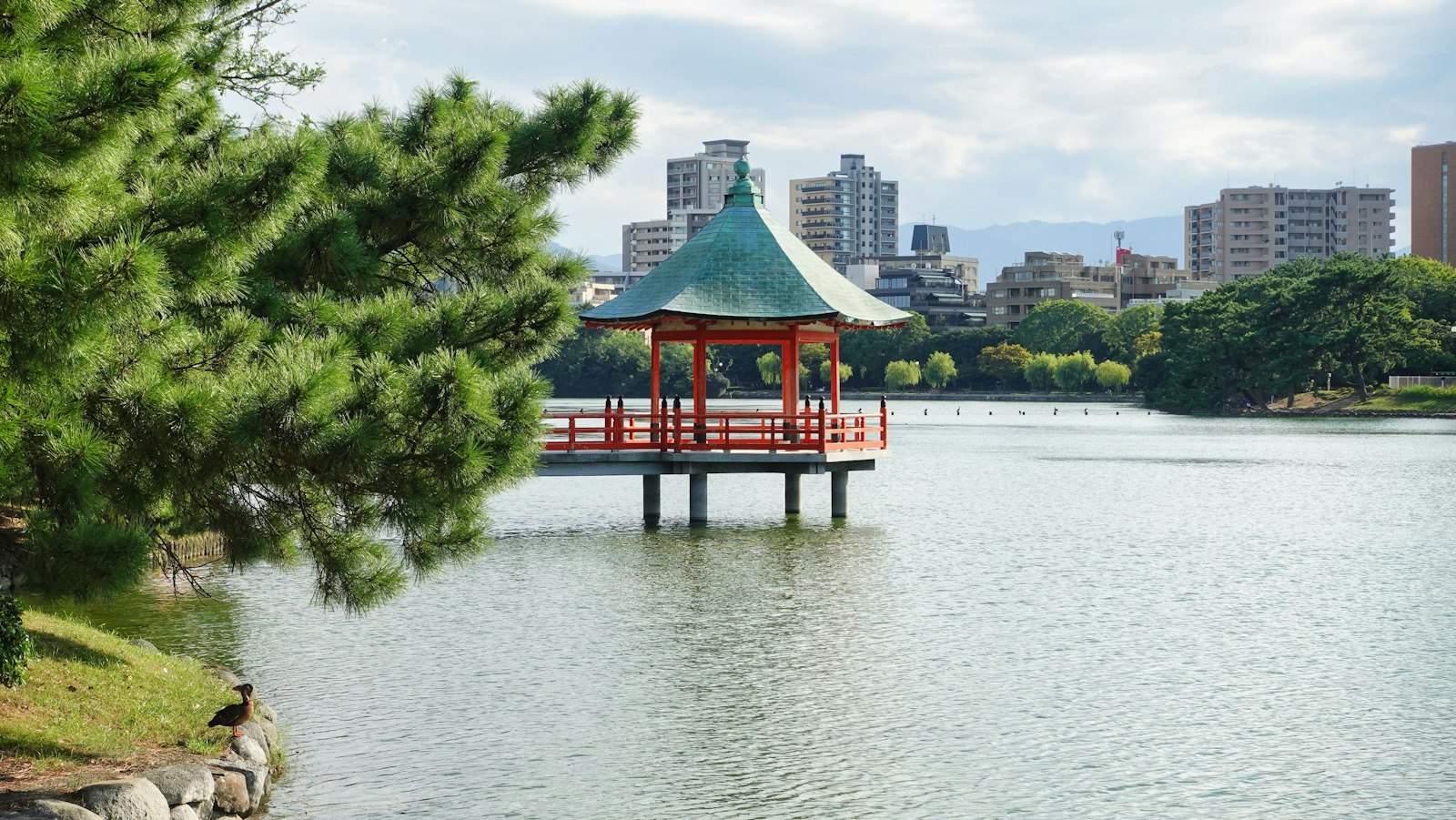
| Ohori Park and Maizuru Park | Large lake park beside the castle ruins | Walks, blossom, picnics | Late March to May, October and November |
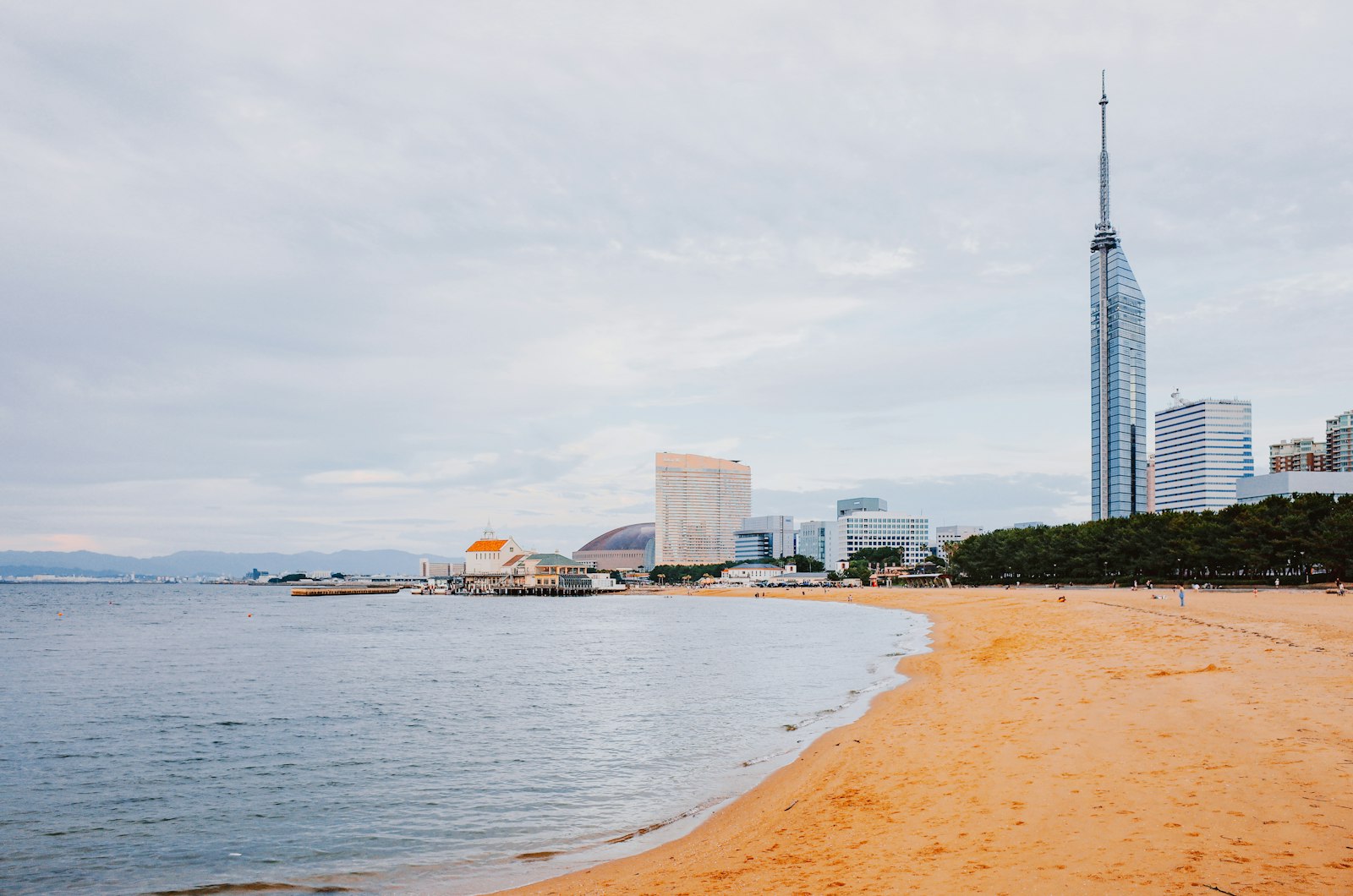
| Momochi seaside | Bay, beach and Fukuoka Tower | Sunset, sea views | May, September and October |
Hakata suits travellers who want to explore the island by train, while Tenjin is the easiest base on wet days because so much of it is linked underground. Nakasu has the most atmosphere after dark, but light sleepers may prefer a room across the river. For options across the whole island, see where to stay in Kyushu.
Fukuoka Travel Guide: How to Plan Your Trip
This section covers transport and turns the season advice into a short plan. Fukuoka is one of the few big cities in Japan where you can land and be eating dinner in town within half an hour.
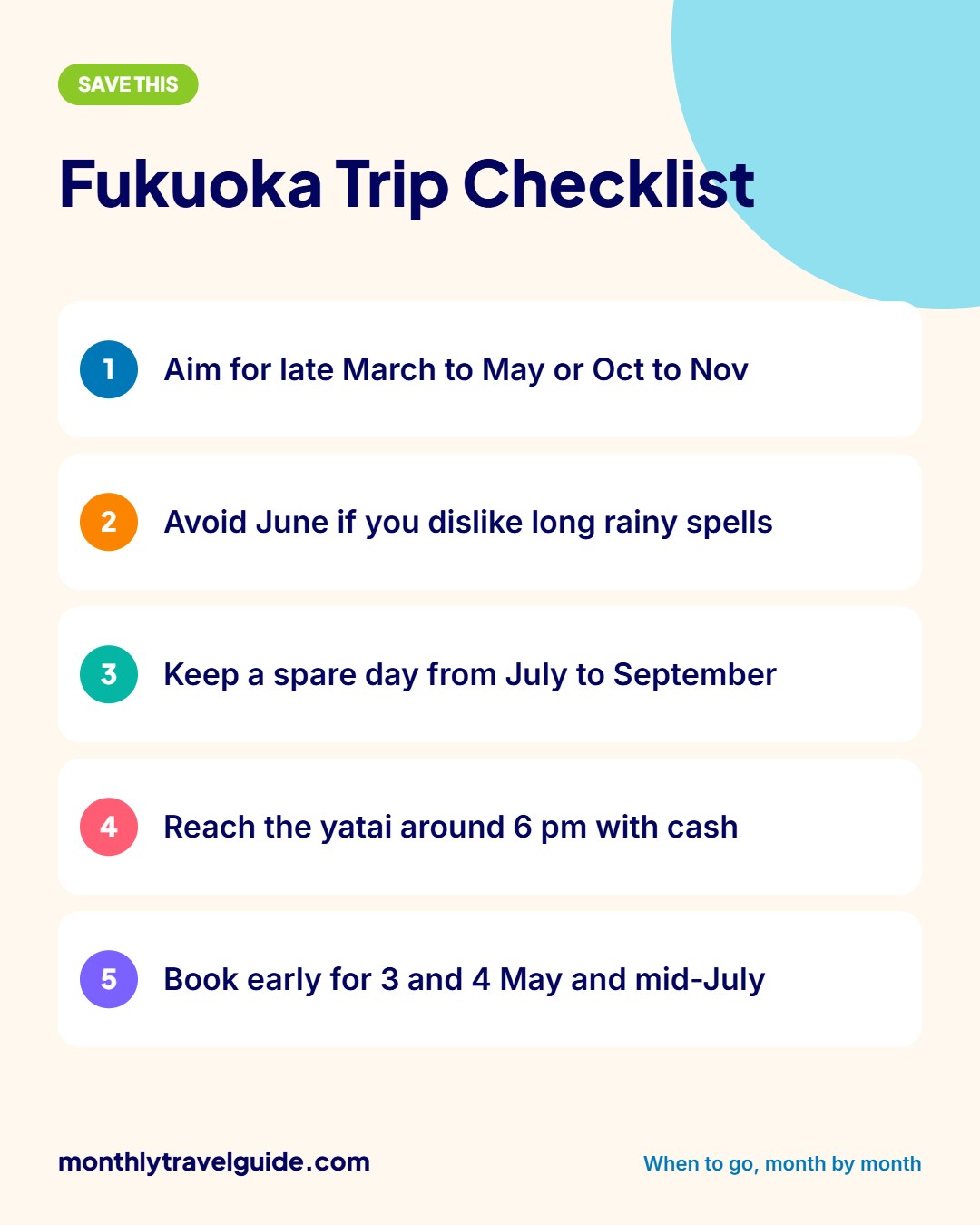
1
Fly in or arrive by train
Fukuoka Airport is about 5 minutes from Hakata and about 10 minutes from Tenjin by subway. From Hakata, the shinkansen reaches Hiroshima in about 1 hour 10 minutes, Shin-Osaka in about 2 hours 30 minutes and Tokyo in about 5 hours.
2
Pick your season first
Choose late March to May or October to November if you can. If you travel in June to September, add one spare day for rain or storms.
3
Book festival weeks early
Golden Week with Dontaku, the first half of July with Yamakasa and the November sumo fill Hakata and Tenjin hotels first.
4
Plan two yatai nights
One night may be lost to weather or a closed stall. Arrive around 6 pm with cash and no large bags.
5
Add Kyushu or Korea
Kagoshima is about 1 hour 16 minutes away by shinkansen, and an international ferry links the Port of Hakata with Busan in South Korea.
Transport times are from Go Fukuoka, the city’s official tourism site. For a route around the whole island, our seven-day Kyushu itinerary strings the main stops together, and the Kyushu travel guide gives the wider picture.
When Not to Go to Fukuoka
This section is the honest part. Fukuoka works all year, but some weeks make a short break much harder.
| Avoid | Why | Do this instead |
|---|---|---|
| June on a first visit | Rainy season, about 269 mm, with long grey spells | Go in late May or October |
| A tight August or September plan | Highest typhoon odds; yatai, ferries and flights can stop | Keep a spare day, or move to October |
| Golden Week on a budget | National holiday peak plus Dontaku crowds | Go in mid-April or mid-May |
| 15 July if you dislike crowds | Huge early-morning crowds for the Oiyama race | See the decorated floats earlier in the month |
| Midsummer afternoons outdoors | Highs of 31 to 32 °C with high humidity | Sightsee early, rest at midday, eat out late |
Unsure whether your dates land in a weak week? Run them through the free When Not to Go checker.
Better Month If You Want Something Specific
This section matches common trip goals to the month that suits them best. If you’re flexible, use it to move your dates by a few weeks.
If you want
Cherry blossom
Late March to early April at Maizuru Park, with evening light-ups.
If you want
Big festival energy
3 and 4 May for Dontaku, or the first half of July for Yamakasa.
If you want
Yatai evenings
October and November: mild nights, little rain and low storm risk.
If you want
Beach and warm sea
Late July and August, with sea temperatures of about 25 to 27 °C.
If you want
Sumo
November, when the 15-day tournament runs in Hakata.
For a wider look at the island’s seasons, read the best time to visit Kyushu. If spring is your window, our guide to where to travel in May compares Fukuoka with other places at their best that month.
5 Common Mistakes When Planning Fukuoka
1. Treating June like spring
June looks like a mild early-summer month on paper, but it falls in the rainy season and averages about 269 mm of rain. Plan indoor time, or move the trip to late May or October.
2. Leaving yatai to the last night
Stalls close for strong wind and heavy rain, and each one has its own days off. Plan yatai for the first suitable evening and keep a second night as a back-up.
3. Ignoring Golden Week
Dontaku on 3 and 4 May sits inside Japan’s biggest holiday period. Rooms and trains fill early, and prices rise. Book well ahead or travel in mid-April instead.

The complete kit
Every country guide, every timing tool
All 24 When to Go country guides, the six Smart Timing tools and every 12-Month Map, with a Start Here that tells you what to open first.
See the kit · $127The five bundles cost $225 separately · Digital download · All sales final
4. Booking a tight onward connection in typhoon season
From July to September, a storm can stop ferries, flights and trains for a day. Avoid the ferry to Busan or a long-haul connection the day after a storm warning.
5. Staying only one night
Fukuoka’s appeal builds over evenings: a yatai, a river walk, a park morning. Two or three nights let you enjoy the city slowly and leave room for weather.
Fukuoka Travel Guide FAQ
What is the best month to visit Fukuoka?
October is usually the best single month. Highs are about 23 °C, rain falls to roughly 93 mm, storm odds are low and evenings are pleasant for yatai stalls. Late March to May is a close second, with cherry blossom in Maizuru Park and the Hakata Dontaku festival on 3 and 4 May. November also works well, with cooler days and the sumo tournament.
When is the rainy season in Fukuoka?
The rainy season in northern Kyushu usually starts in early June and ends around the third week of July, though actual dates move by a week or more each year. June and July are the wettest months, with about 269 mm and 301 mm of rain on average. Expect grey, humid days with heavy showers rather than constant rain.
Does Fukuoka get typhoons?
Yes. Typhoons can reach Kyushu from about June to October, and August and September carry the highest risk. Most storms bring a day or two of strong wind and heavy rain, when ferries, some flights and many trains stop and yatai stalls close. Keep a spare day in your plan and follow official forecasts once you arrive.
What time do Fukuoka yatai open?
Many yatai open around 6 pm and close around 2 am, but each stall sets its own hours and days off. Popular stalls are busiest from about 7 pm to 10 pm, so arriving around 6 pm cuts the wait. Stalls close temporarily in typhoons, strong wind or heavy rain. Bring cash and leave large bags at your hotel.
How many days do you need in Fukuoka?
Two or three nights cover the main districts, a park morning, a river walk and at least two yatai evenings. Add a day or two if you plan day trips by train, or if you travel between June and September, when rain or a typhoon can cost you a day. Many visitors combine Fukuoka with a longer route around Kyushu.
When is the Hakata Gion Yamakasa festival?
Hakata Gion Yamakasa runs from 1 to 15 July each year. Decorated floats stand at 14 places around the city from the first day, and the climax is the Oiyama race early on the morning of 15 July, starting at Kushida Shrine and running over a 5 km course. Crowds are huge on the final morning, so arrive very early.
The Bottom Line
This Fukuoka travel guide comes down to two windows: late March to May for blossom and festivals, and October to November for dry, mild evenings at the yatai. Summer works with flexibility and a spare day, and winter is quiet and cool. For more on the country, browse our Japan travel guides.
Rain, storms and holiday peaks
Time the rest of your Japan trip
When to Go: Japan maps the best and worst months for each region, the rainy season and typhoon weeks, blossom and autumn-colour timing and the holiday weeks that fill trains and hotels, so Fukuoka and every other stop land in good weather.
Digital download · All sales final
Free download
The 12-Month Map, free
The whole year for one country on four printable pages, so you can see the right months before you read anything else.
- Good, shoulder and avoid months at a glance
- Region by region, not one average for the whole country
- Prints cleanly on US Letter
Your download page opens as soon as you sign up. 24 countries available.