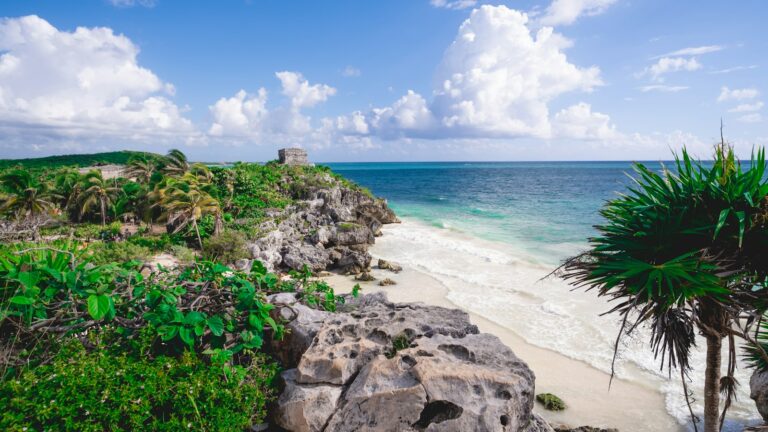
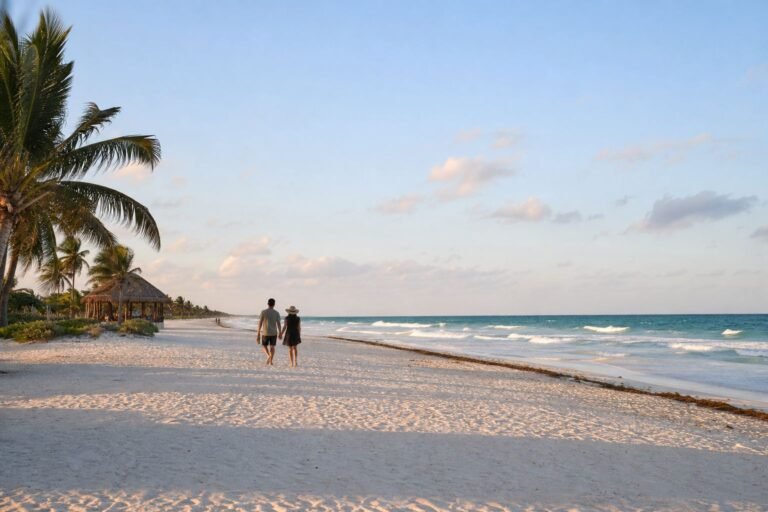
Caribbean beaches in September come with one big catch: the month sits at the statistical peak of the Atlantic hurricane season. That doesn’t rule the region out, but it does change where you should go. The southern islands, Aruba, Bonaire, Curaçao and Trinidad and Tobago, lie at the far edge of the storm zone, where hurricanes are rare, while most of the island chain to the north sits closer to the usual tracks. This guide shows which beaches make sense in September, what the weather is really like, and how to plan around a storm if one does form.

When to Go guides
Choose your country, then your month
24 country guides, each about 100 pages: every month rated for weather, crowds and prices, region by region, with a 7-day booking plan. Six guides per region bundle.
Browse the 24 guides · $19 eachRegion bundles: Europe, Asia & Pacific, Sun Souks & Safari, Americas · $47 each
September storm map, in words
The further south, the safer the beach
North
Bahamas, Puerto Rico, Virgin Islands, northern Leewards
Closer to the usual storm tracks. Cheaper and quieter, but keep plans flexible.
Middle
Windwards and the eastern chain
Still inside the season’s risk zone; storms can pass on their way west.
South
Aruba, Bonaire, Curaçao, Trinidad and Tobago
On the southern edge of the belt. Direct hits are rare, though not unknown.
Based on the hurricane season climatology of the US National Hurricane Center (NOAA) and island climate notes from Climates to Travel. Every season differs.
Quick answer
For a September beach trip, pick Aruba, Bonaire or Curaçao. They are hot and dry, with highs around 33 °C, only about 35 to 50 mm of rain in the month and sea water near 29 °C, and they sit on the southern edge of the hurricane belt. Tobago is a good second choice if you can live with tropical showers. Elsewhere, keep your dates flexible and watch the NOAA outlooks.
Key takeaways
The Atlantic hurricane season runs from June 1 to November 30, and NOAA puts its peak on September 10.
Most storm activity falls between mid-August and mid-October, so September is the riskiest single month.
Aruba gets about 45 mm of rain in September, Bonaire about 35 mm and Curaçao about 50 mm.
Trinidad and Tobago are rarely affected by hurricanes, but September is in their rainy season.
The September sea is around 29 °C across the southern islands, among the warmest of the year.
Wherever you go, a flexible booking and a spare day matter more than any forecast.
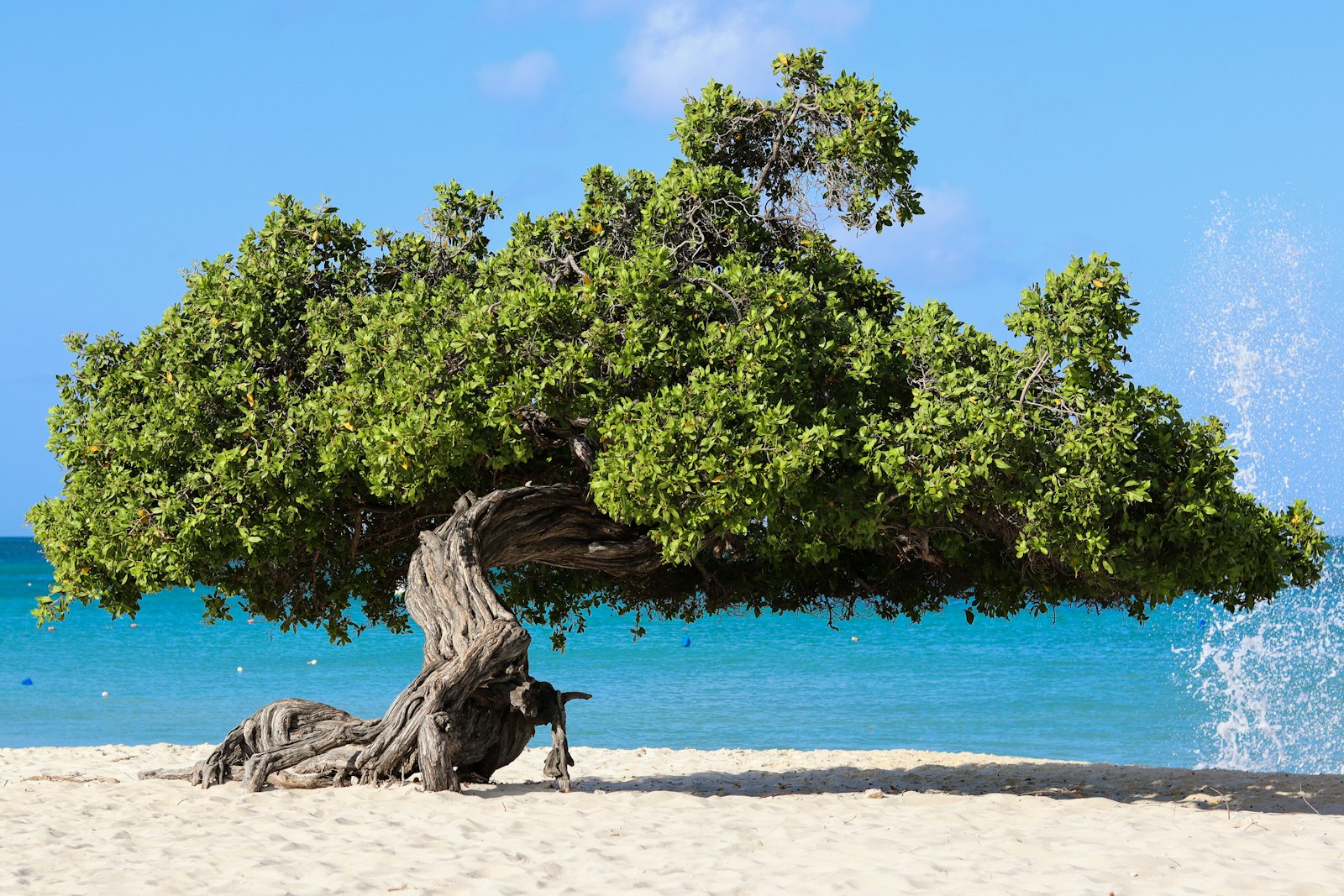
Caribbean Beaches in September: Why the Month Is Tricky
This section explains the storm calendar, because it decides everything else. According to the US National Hurricane Center (NOAA), the Atlantic hurricane season runs from June 1 to November 30, the peak falls on September 10, and most activity comes between mid-August and mid-October. In plain terms, September is the month when a tropical storm or hurricane is most likely to be somewhere in the basin.
That is a statement about odds, not a forecast. Many September weeks pass with clear skies over a given island, and a single storm usually affects a limited stretch of the region for a few days. The problem is that you can’t know in advance which weeks those will be, and a direct hit can close airports, ports and beaches, or wreck a short holiday with days of wind and rain.
Geography is your best defence. The islands off the coast of Venezuela sit at the southern edge of the hurricane belt. Climates to Travel describes storms there as rare at these latitudes, while still listing the hurricanes that have reached Aruba, Bonaire and Curaçao over the decades. Trinidad and Tobago are described as in theory outside the belt and very rarely affected (Climates to Travel). So the honest message is: much lower risk, not zero risk.
Note
September also brings the usual off-season trade-off: fewer visitors and, often, softer prices than in winter. Prices change; check before you book. For a wider look at the quieter months across the region, see our guide to the Caribbean off-season.
🧰 Try it while you read: a free tool for this trip
Free trip timing tool
Storm Season Check
See whether our guides flag typhoons, hurricanes, cyclones or monsoon for your month.
Loading the tool…
The Best Caribbean Beaches in September, Island by Island
This section rates the main beach areas for a September trip, using storm exposure and long-term weather averages. The verdicts assume you want reliable beach days, warm water and a low chance that weather wrecks the trip.
September beach verdicts
Best bet: the ABC islands
Aruba
Dry, breezy, rarely hit
GoBonaire
Driest of the three, top diving
GoCuraçao
Dry, many small coves
GoTobago
Showers, quiet beaches
Go with careTrinidad
Rainy season; beaches not the main draw
Go with careGrenadines and Windwards
Inside the season’s risk zone
Go with carePuerto Rico and Virgin Islands
Close to the main storm tracks
Go with careBahamas and northern Leewards
Close to the main storm tracks
Go with careA fixed-date wedding up north
No room to move if a storm comes
SkipVerdicts by the Monthly Travel Guide editorial team, based on NOAA season climatology and Climates to Travel averages.
| Island | September high / low | Rain in September | Sea temperature | Storm exposure |
|---|---|---|---|---|
| Aruba (Oranjestad) | 33 °C / 27 °C | About 45 mm, 3 rainy days | About 29 °C | Southern edge; rare |
| Bonaire (Kralendijk) | 33 °C / 28 °C | About 35 mm, 5 rainy days | About 29 °C | Southern edge; rare |
| Curaçao (Willemstad) | 33 °C / 27 °C | About 50 mm, 5 rainy days | About 29 °C | Southern edge; rare |
| Tobago (Scarborough) | 32 °C / 25 °C | About 170 mm, 14 rainy days | About 29 °C | Very rarely affected |
| Trinidad (Port of Spain) | 33 °C / 24 °C | About 180 mm, 14 rainy days | About 29 °C | Very rarely affected |
🗓️ Free: a 12-Month Map for your country
Every month on one page: best weeks, shoulder weeks and the ones to skip. Print it or keep it on your phone.
Sources: long-term averages from Climates to Travel for Aruba, Bonaire, Curaçao and Trinidad and Tobago. Rain in the tropics tends to come as short, heavy showers, so a wet month on paper can still give you sunny mornings.
Aruba in September: The Safest Bet for Pure Beach Time
This section covers Aruba, the westernmost of the three ABC islands and the easiest choice for a classic beach holiday. The island is arid, with cactus scrub inland and long white-sand beaches on its sheltered west and south coasts.

The Smart Timing Bundle
Pick the month, book in the right order, pack once
Six printable timing tools for any trip: the Trip Timing Planner, When to Book, When NOT to Go, the Shoulder Season Playbook, the family timing guide and the Packing by Season System.
See the bundle · $37Six products, $100 separately · Digital download · All sales final
September is one of the hottest months, with highs of about 33 °C and lows around 27 °C, but the steady trade wind takes the edge off the heat. Rain is low: Climates to Travel gives about 45 mm over 3 rainy days, and the sea reaches about 29 °C. The wetter stretch on Aruba runs from October to January, when the trade winds weaken and can bring showers, with about 75 to 85 mm a month from October to December (Climates to Travel).
For calm, shallow water, stay on the west coast: Eagle Beach and Palm Beach face the sheltered side of the island. The windward north-east coast is rugged and rough, good for a drive or a hike but not for swimming. Bring strong sun protection; with little cloud and constant breeze, it is easy to underestimate the sun.
Tip
Aruba’s steady wind is a plus in September. It keeps beach afternoons bearable and is the reason the island is popular for windsurfing and kitesurfing. If you want the stillest water for small children, look for the most sheltered bays on the west and south coasts.
Bonaire and Curaçao: Reefs, Coves and Dry Weather
This section covers the other two ABC islands, which share Aruba’s dry climate but suit slightly different trips. On paper, Bonaire is the driest of the three in September.
Bonaire: for divers and snorkellers
Bonaire averages about 35 mm of rain over 5 days in September, with highs of 33 °C and a sea at about 29 °C (Climates to Travel). The island is best known for diving and snorkelling, much of it straight from the shore rather than from a boat. Trade winds blow constantly and temper the heat; the source notes that the north-east trade winds weaken a little and can bring rain from October to January.

Curaçao: for small beaches and a colourful capital
Curaçao gets about 50 mm of rain over 5 days in September, with the same 33 °C highs and 29 °C sea (Climates to Travel). Its coastline is broken into many small coves, especially on the western side, and Willemstad’s waterfront makes an easy break from the beach. The same source notes that rain increases from August and that November is the island’s wettest month, at about 120 mm.
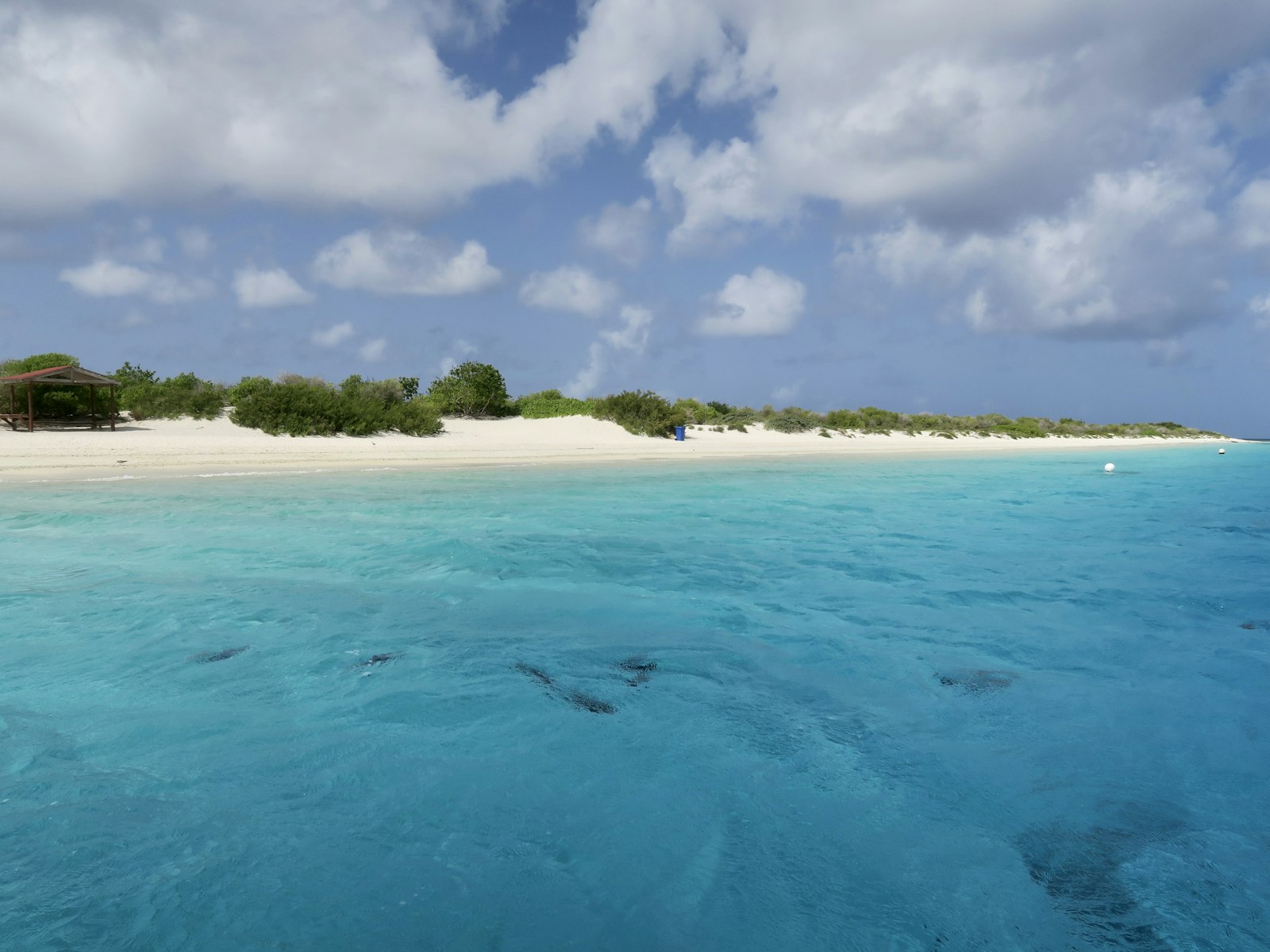
Climates to Travel lists the same handful of historic hurricanes for both islands, spread over several decades. The point is not to scare you, but to make clear that low risk still deserves a backup plan.
Trinidad and Tobago in September: Green, Wet and Rarely Hit
This section covers the twin-island nation just off Venezuela, the most southerly choice in this guide. Tobago is the beach island; Trinidad is larger, busier and better known for its culture, food and rainforest than for its beaches.
Hurricanes very rarely affect these islands, but September falls inside their rainy season, which runs from June to December. Climates to Travel gives about 170 mm of rain over 14 days in Scarborough, Tobago, and about 180 mm over 14 days in Port of Spain, with highs of 32 to 33 °C and a sea at about 29 °C. The rain mostly falls as showers or thunderstorms, so sunny spells are common, but it is a much greener, more humid trip than the ABC islands (Climates to Travel).
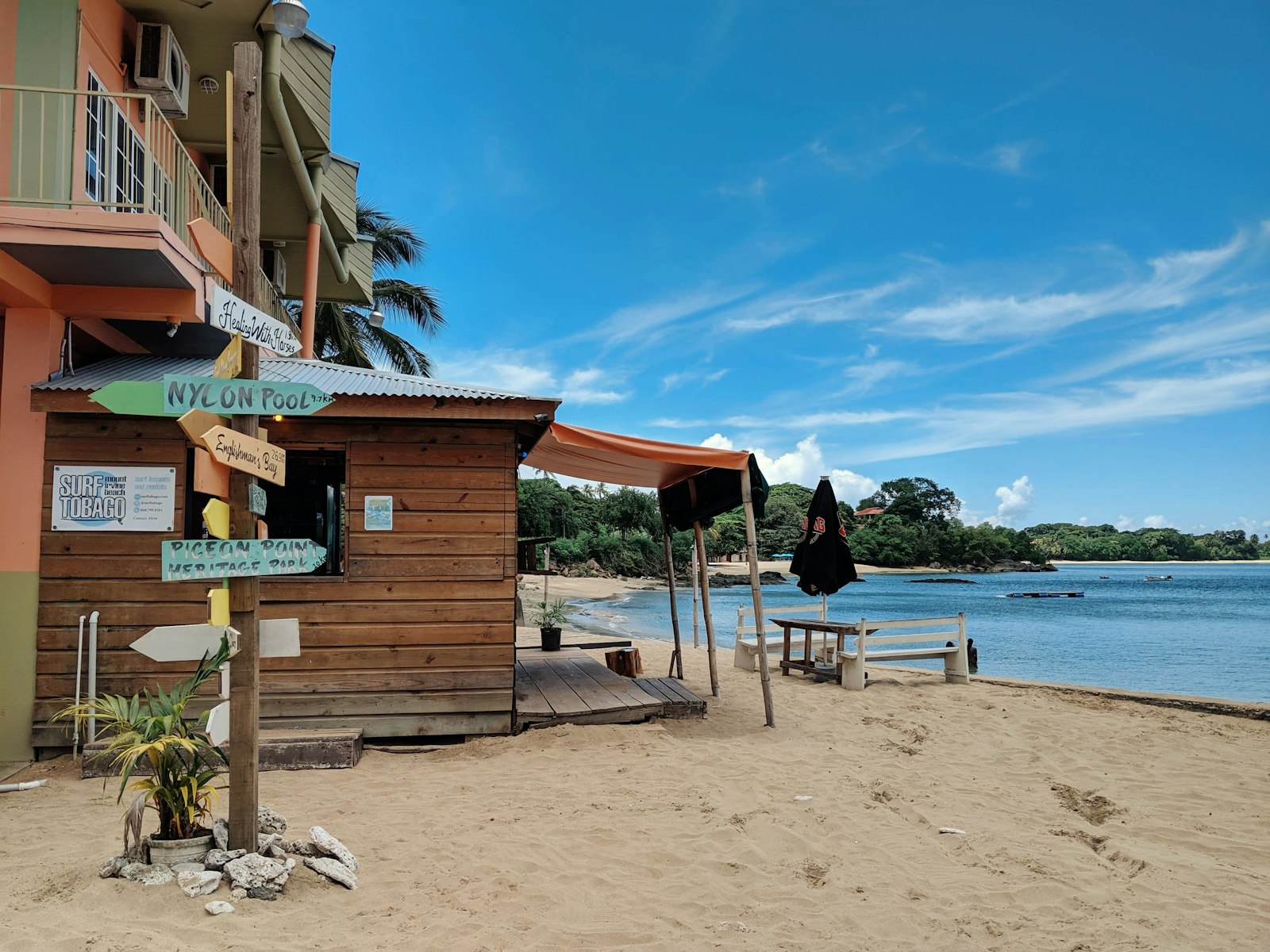
There is a wildlife bonus in Tobago. According to Discover Trinidad and Tobago, the national tourism site, the leatherback nesting season runs from March to September, with the peak for nesting turtles and hatchlings from June to August. Early September can still bring late activity on beaches such as Turtle Beach, Mt Irvine and Stonehaven. If you go out at night, avoid torches and flash photography, keep noise down and go with a recognised local group.

The complete kit
Every country guide, every timing tool
All 24 When to Go country guides, the six Smart Timing tools and every 12-Month Map, with a Start Here that tells you what to open first.
See the kit · $127The five bundles cost $225 separately · Digital download · All sales final
Important
Tobago in September is a good pick if you like green hills, quiet beaches and nature, and don’t mind a daily shower. If what you want is guaranteed blue sky every day, the ABC islands are the better match.
How to Plan Caribbean Beaches in September Around Storms
This section turns the storm risk into a simple plan. Even on the southern islands, a few habits make a September trip far more robust, and on the islands further north they are essential.
Choose the south first
Start with Aruba, Bonaire, Curaçao or Tobago. Lower exposure is the single biggest thing you can control.
Book flexible
Pick fares and rooms you can change or cancel, and read the terms before you pay. Prices change; check before you book.
Check cover early
Many policies may not cover a storm that already had a name when you bought them. Check the wording.
Watch the NOAA outlook
From about a week before you fly, check the National Hurricane Center’s 7-day outlook each day.
Keep a spare day
Don’t fly home the day before work, and avoid tight connections on the last day of the trip.
The NOAA Graphical Tropical Weather Outlook is the official tool to follow. It maps active storms and areas that could develop, with a chance of formation over the next 2 days and over the next 7 days, and it is updated about four times a day from June 1 to November 30, with special updates when needed. A low chance a week out usually means you can relax; a medium or high chance near your island is the moment to talk to your airline and hotel.

Warning
If a storm is forecast to approach the island you are on, follow the instructions of local authorities and your accommodation, not social media. Airlines may cancel flights well before the weather turns, so act early if you need to leave. For a quick view of storm-season risk for any destination, try the free Storm Season Check.
When Not to Go: Caribbean Trips to Avoid in September
This section is the honest part. September can work well, but some plans carry too much risk for the month.
| Avoid | Why | Do this instead |
|---|---|---|
| A fixed-date wedding or event on a northern island | Peak storm month; no room to move dates | Hold it in the ABC islands, or move it to winter or spring |
| A short trip with a non-refundable package up north | One storm can take out the whole stay | Choose flexible terms or a southern island |
| A sailing week through the Leewards or Virgin Islands | Open water and harbours are exposed to passing storms | Sail in the drier winter and spring months instead |
| Tobago if you need sun every day | Rainy season with about 14 rainy days in September | Go to Aruba or Bonaire |
| Booking without checking cover | A policy may not pay for a storm already named | Buy cover as soon as you book |
Not sure about your dates? Run them through the free When Not to Go checker, or use the Best Month Finder to find the strongest month for the island you have in mind.
Better Month If You Want Something Else
This section helps if September is not fixed, or if the Caribbean is only one of your options for the month.
If you want
The driest ABC weather
Go from mid-February to late May, which Climates to Travel names as the driest period for Aruba, Bonaire and Curaçao, and it is outside hurricane season.
If you want
Dry days in Tobago
Go from February to April, the drier season for Trinidad and Tobago.
If you want
Nesting turtles in Tobago
Go from June to August, the peak for nesting leatherbacks and hatchlings.
If you want
A quieter Caribbean in general
Read our guide to the Caribbean off-season for the shoulder months on each side of the busy winter.
If you want
Other September beaches
Compare Mediterranean beaches in September and Maui in September, which are outside the Atlantic storm zone.
If you want
Warm water for diving
Bonaire is the Caribbean pick; for another option, see Red Sea diving in September.
For a broad view of the month, start with our September travel guide, then compare where to travel in September and our shortlist of September sun destinations.
5 Common Mistakes With a September Caribbean Trip
1. Treating the whole Caribbean as one place
The region stretches a long way from north to south, and storm exposure changes a lot along the way. A September plan that suits Curaçao can be a poor idea for an island much further north. Pick the island first, then the dates.
2. Reading a long-range forecast as a promise
Detailed forecasts are only useful a few days ahead. A sunny two-week outlook in an app says little about storms. The NOAA 2-day and 7-day outlooks are the right tools, and they only start to matter about a week before you travel.
3. Buying insurance after a storm has a name
Many travellers buy cover once they get nervous, which is often too late for that storm. Buy it when you book, and read what it says about named storms, delays and missed connections.
4. Expecting Tobago to be as dry as Aruba
Both are low-risk for hurricanes, but they have very different weather. Tobago’s September has about 14 rainy days; Aruba’s has about 3. Choose by the trip you want, green and lush or dry and sunny.
5. Packing for the heat but not the sun
Highs near 33 °C with steady wind feel pleasant, which makes sunburn easy. Pack reef-friendly sun cream, a hat, a light long-sleeved top and plenty of water for beach days and drives.
Caribbean Beaches in September FAQ
Is September a good time to go to the Caribbean?
It can be, if you choose well. September is the peak of the Atlantic hurricane season, so the risk of a storm is at its highest. The southern islands of Aruba, Bonaire, Curaçao and Trinidad and Tobago sit at the edge of the belt and are rarely hit, which makes them the safest choices for a September beach trip.
Which Caribbean islands are safe from hurricanes in September?
No island is completely safe, but Aruba, Bonaire and Curaçao lie on the southern edge of the hurricane belt and are rarely affected. Trinidad and Tobago are also very rarely hit. Hurricanes have reached the ABC islands in the past, so even there a flexible booking, good insurance and a quick look at the NOAA outlook before you fly are sensible.
What is the weather like in Aruba in September?
September is hot and dry in Aruba. Highs reach about 33 °C and lows about 27 °C, with only around 45 mm of rain over 3 rainy days, according to Climates to Travel. The sea is about 29 °C, among its warmest of the year. A constant trade wind keeps the heat manageable, so beach days are usually sunny and breezy.
When is the peak of hurricane season in the Caribbean?
The US National Hurricane Center puts the statistical peak of the Atlantic season on September 10. The season runs from June 1 to November 30, and most activity happens between mid-August and mid-October. That window is when you should be most flexible with bookings, especially on islands further north and east in the region.
Is it cheaper to go to the Caribbean in September?
September is part of the low season for much of the Caribbean, so many travellers find more availability and lower rates than in winter. That is largely the price of the storm risk. Prices vary a lot by island, hotel and departure city, and they change often, so compare a few options and check before you book.
Does it rain a lot in Tobago in September?
Yes, September is in the rainy season for Trinidad and Tobago, which runs from June to December. Scarborough averages about 170 mm of rain over 14 days. Most of it falls as showers or thunderstorms, so sunny spells are common, but the islands feel green and humid. For drier weather in Tobago, go from February to April.
The Bottom Line
For Caribbean beaches in September, head south: Aruba, Bonaire and Curaçao give you the driest weather and the lowest storm exposure, and Tobago is a greener, wetter alternative. Book flexibly, buy cover early and watch the NOAA outlook in the week before you fly. For more ideas for the month, browse our September travel destinations.
Storm seasons, peak weeks, booking windows
Time every trip, not just this one
The Smart Timing Bundle gathers our planning tools in one set: when to book, when not to go and how to use shoulder seasons, so you can move a trip away from storm months, school holidays and price peaks before you pay.
Digital download · All sales final
Free download
The 12-Month Map, free
The whole year for one country on four printable pages, so you can see the right months before you read anything else.
- Good, shoulder and avoid months at a glance
- Region by region, not one average for the whole country
- Prints cleanly on US Letter
Your download page opens as soon as you sign up. 24 countries available.