Every hot springs list on the internet tells you winter is the season, snow falling around a steaming pool, all very postcard. Nobody mentions that in the busiest onsen towns and thermal parks, winter also means the longest lines, the highest prices, and a bath you’re sharing with forty other people who read the same article. October gets none of the attention and most of the payoff.
The best hot springs to visit in October share one thing: air cool enough to make 100°F water feel dramatic again, without the holiday-season crowds or the premium pricing that shows up the moment the calendar hits December. Japan’s onsen towns time their prettiest month around it. Iceland’s quieter pools are still easy to reach before winter roads complicate things. Chile’s forest springs and Colorado’s mountain pools are simply having their best weather of the year. This guide covers seven of them, with the temperatures, costs, and crowd realities that actually matter for booking a trip, not just admiring a photo.
Key Takeaways
October’s cooler air makes the same water temperature feel more intense everywhere from Japan to Colorado — nothing about the springs themselves changes, just the contrast.
Crowds thin out right after summer bookings end and before winter holiday travel begins, roughly a three-week window in most destinations.
Japan and Colorado both pair hot springs season directly with peak foliage, so you get two seasonal payoffs on one trip.
Pool temperatures vary far more than people expect, from 92°F kiddie-warm to 113°F at the hottest pools in Chile, so check ranges before you go.
Booking ahead matters more in October than in the dead of winter, because it’s the month everyone quietly figured out is better.
Why October Produces the Best Hot Springs Trips of the Year
Hot spring water temperature doesn’t change with the seasons. A pool that runs 104°F in July runs about the same in October. What changes is the air around it, and that’s most of the experience. Drop the surrounding temperature from a summer 85°F down to a crisp 50°F, and the same water suddenly feels like the point of the trip instead of a warm-ish afterthought to a beach day.

A hundred pages on timing one country properly — six regions, twelve months, and the weeks that go wrong.
There’s a practical booking window hiding inside this, too. Most hot springs destinations see their heaviest traffic in two bursts: summer vacation season, and the mid-December-through-New-Year holiday stretch. October sits in the gap. School’s back in session, the summer road-trip crowd has gone home, and the people who book winter trips around Christmas and New Year haven’t started yet. Staff at Strawberry Park Hot Springs in Colorado and the Secret Lagoon in Iceland both describe roughly the same pattern: a quiet stretch from mid-September through late October, before things pick back up.
None of the destinations below require you to gamble on weather the way a beach trip does. Hot springs work in light rain, in overcast skies, in the exact conditions that would ruin a poolside vacation anywhere else. That’s part of why October suits this kind of trip better than most: the weather that makes other October travel a coin flip is precisely the weather that makes a hot spring feel better, not worse.
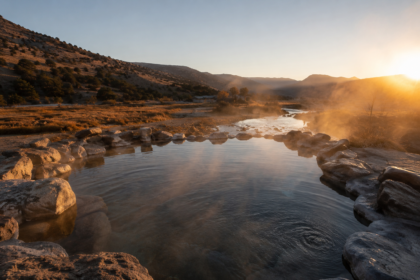
💡 Tip: If you’re choosing between two destinations on this list purely for weather, favor whichever one pairs hot springs with autumn foliage. Japan and Colorado both do — the visual payoff on top of the soak is worth the tiebreak.
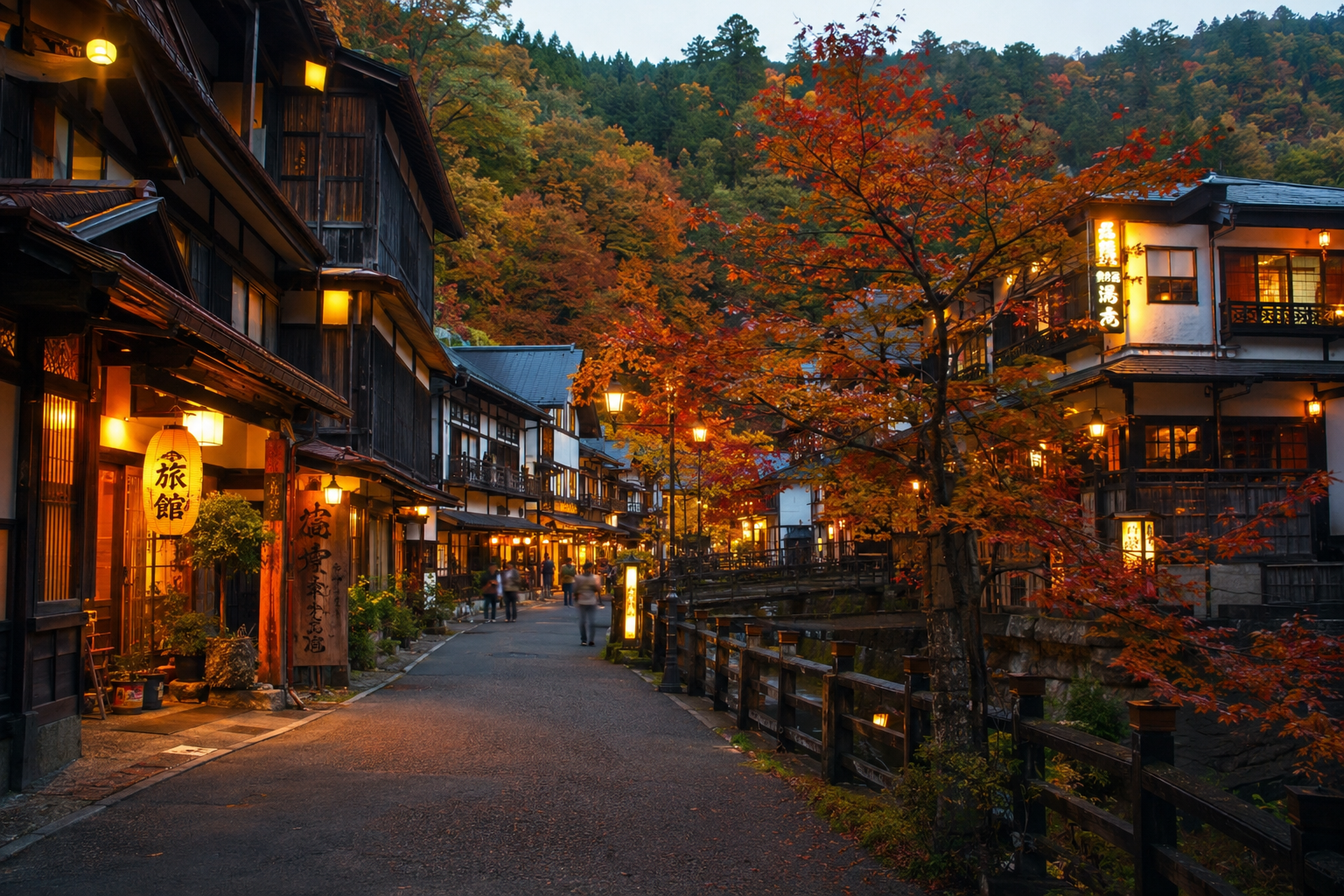
Japan’s Onsen Towns Hit Their Stride Once the Leaves Turn
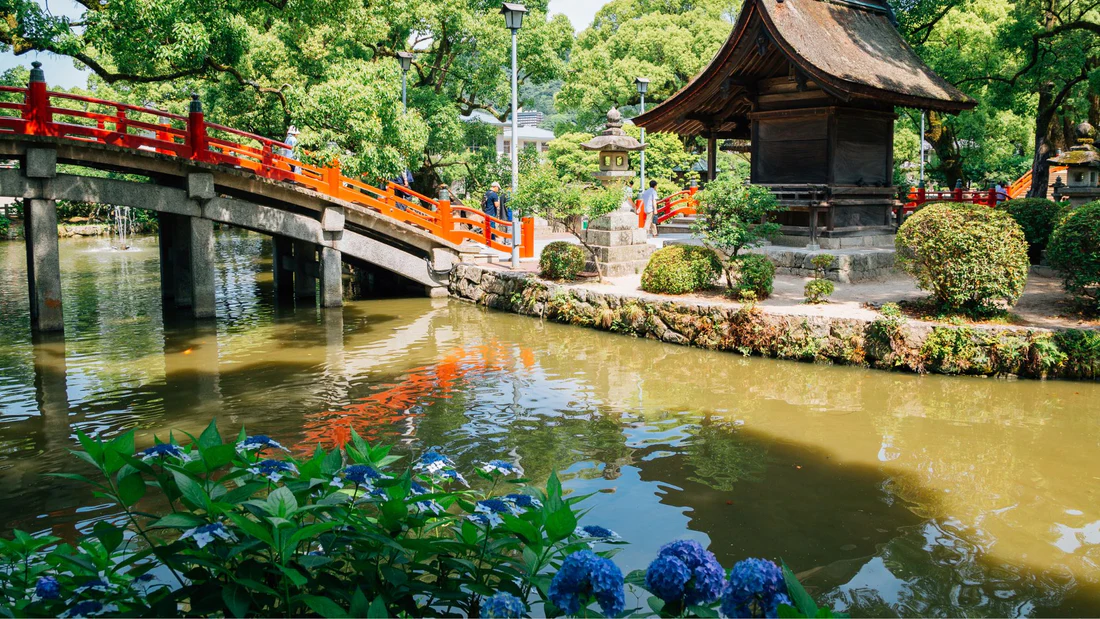
Japan’s onsen culture runs year-round, but October is when the country’s tourism board itself points people toward hot springs specifically. The logic is simple: nights cool down enough that soaking outdoors stops being a novelty and starts being genuinely comfortable, while the humidity and rain that define Japanese summer have mostly cleared out.
Three towns cover most of what a first trip needs. Hakone, about 90 minutes from Tokyo, is the easiest to reach and pairs open-air baths with views of Mount Fuji on clear days. Kusatsu, in Gunma Prefecture, is built around a steaming central plaza and some of the highest-volume natural hot spring output in the country. Beppu, down in Kyushu, has eight distinct “hells” (jigoku) of geothermal activity and enough onsen density that you could spend a week without repeating a bath. Foliage timing runs late in the month at lower elevations and starts earlier at higher ones, so a late-October trip catches color almost anywhere you go.
None of this requires guesswork on etiquette if you’ve never done an onsen before: wash thoroughly at the stations provided before getting in, keep your small towel out of the water, and don’t expect to wear a swimsuit — most traditional onsen are bathed nude, by gender-separated area. It sounds more intimidating on paper than it feels once you’re there.
Kyushu, where Beppu sits, also has a broader food and travel identity worth building a longer trip around — our Kyushu travel guide covers the region beyond just the springs, and the Kumamoto guide is useful if you’re routing through Mount Aso, which sits within a couple of hours of several onsen towns.
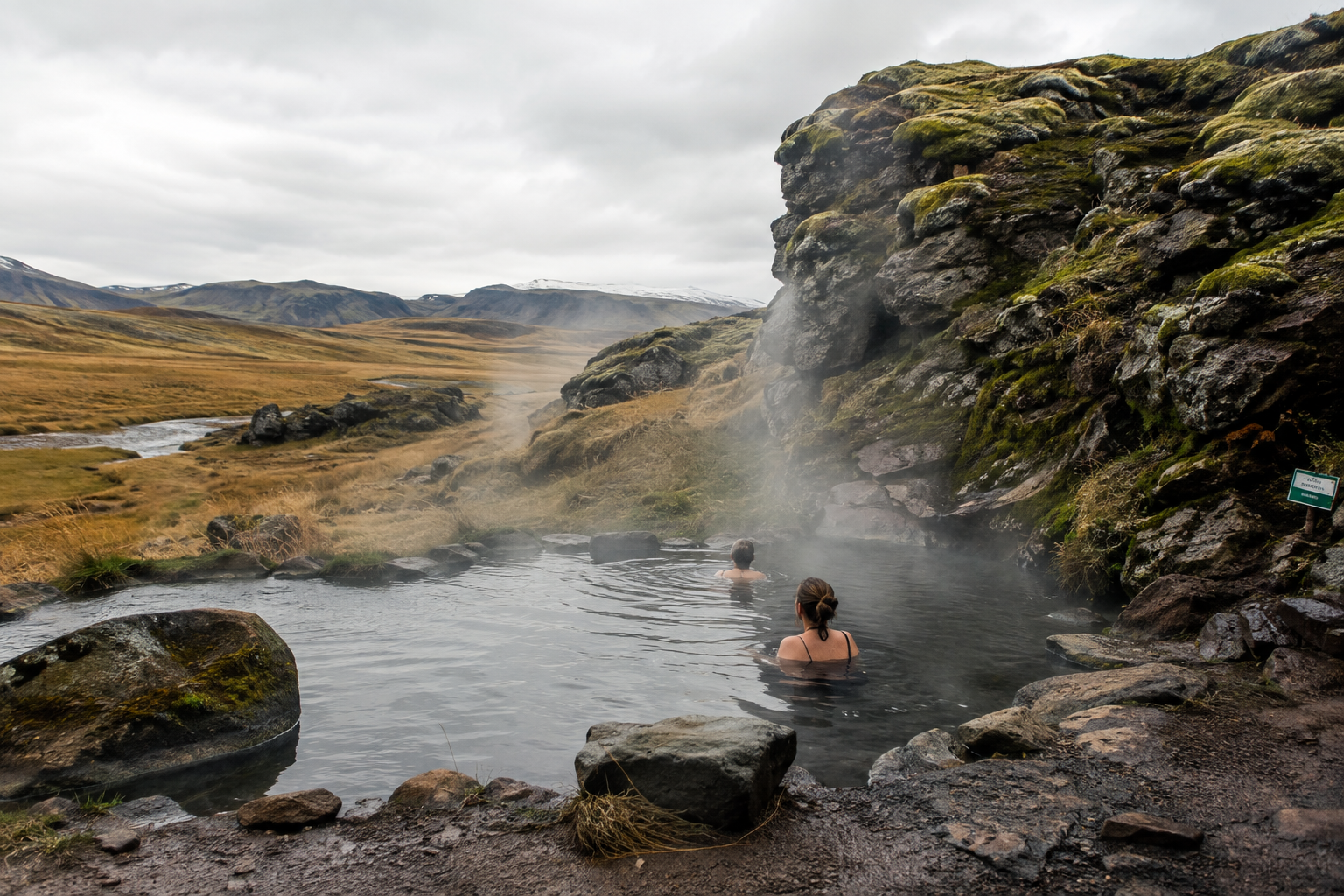
Iceland’s Lesser-Known Pools Beat the Blue Lagoon Line
The Blue Lagoon gets the marketing budget. The Secret Lagoon, known locally as Gamla Laugin, gets the actual local history — it’s Iceland’s oldest swimming pool, built in 1891 in the village of Flúðir, and it’s held a steady 100–104°F year-round ever since. A small geyser beside the pool erupts every few minutes, which is more novelty than most manufactured spa features manage. Entry runs around $22 for adults, a fraction of Blue Lagoon pricing, and it sits close enough to the Golden Circle route (Gullfoss, Geysir, Þingvellir) that it slots naturally into a day already built around those stops.
October in Iceland means shorter days and a real chance of the season’s first snow at higher elevations, but the Golden Circle route itself stays fully drivable without 4WD. It’s also early enough in the aurora season that a clear night at the Secret Lagoon can turn into a lucky double: warm water, cold air, and a decent shot at the northern lights overhead, months before winter road closures start complicating the more remote hot springs further from Reykjavik.
If a maintained pool isn’t the point and you’d rather earn the soak, Reykjadalur, about 45 minutes from Reykjavik near the town of Hveragerði, is a free alternative: a roughly 5.5-mile round-trip hike through an active geothermal valley that ends at a naturally warm river running 97–104°F. There’s no entry fee beyond a small parking charge, and wooden changing screens sit along the riverbank, though there are no toilets past the trailhead. October’s shorter days mean starting earlier than a summer hike would require, but the crowds thin out considerably compared to peak season, when the car park can fill before 11am.
⚠️ Warning: Some of Iceland’s smaller natural pools, like Hrunalaug near Flúðir, are fragile enough that a busy tour bus can genuinely damage them. If a spot looks tiny and unmanaged, treat it gently or skip it for a maintained pool like the Secret Lagoon instead.
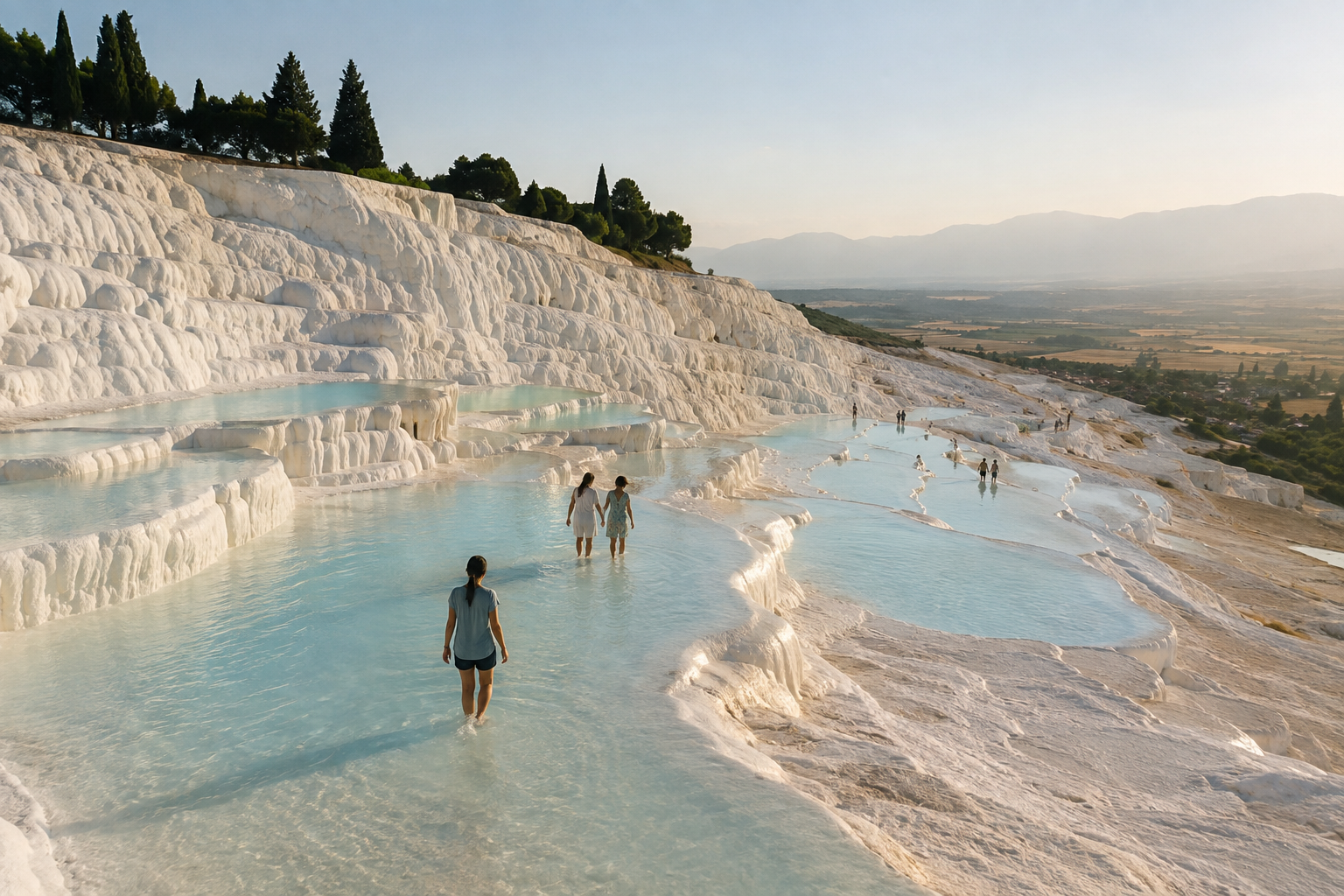
Pamukkale’s White Terraces Without the Summer Crowds
Pamukkale, in southwestern Turkey, is one of the odder-looking hot springs destinations on this list: calcite-rich water flowing down a 200-meter cliff has built up brilliant white travertine terraces that look more like a snowfield than a thermal pool. The site is a UNESCO World Heritage Site, inscribed jointly with the adjacent Roman-era ruins of Hierapolis, and people have been bathing here since at least the 2nd century B.C.
Summer in this part of Turkey runs uncomfortably hot for walking a bright white, sun-reflecting terrace for hours, which is exactly why October works better logistically as well as visually. Temperatures settle into the mid-70s during the day, the tour bus volume drops off from its August peak, and the ancient theatre and necropolis at Hierapolis become genuinely pleasant to explore on foot rather than a heat-driven sprint between shade patches. Visitor access to the terraces themselves is managed carefully — walking is restricted to designated paths to protect the formations, and a specific bathing area is set aside for swimming among the ruins of the old Roman baths.
Getting there is straightforward: Pamukkale sits in Denizli Province, reachable by a short flight into Denizli Çardak Airport or a longer bus ride from Istanbul. Most visitors base themselves in the modern town of Pamukkale itself, at the foot of the terraces, which keeps the site accessible on foot without joining a tour bus schedule. The area’s protection status means hotels that once sat directly on the terraces have been removed entirely, and private vehicles can no longer drive into the site — a deliberate tradeoff that keeps the formations intact but means budgeting a short walk or shuttle ride from the entrance either way.
From Monthly Travel Guide
When To Go: The Travel Timing Atlas
Every country, every month, scored on weather, crowds, price, and events — so you’re not guessing whether October is actually the right call for a destination like this one.
Get the Timing Atlas →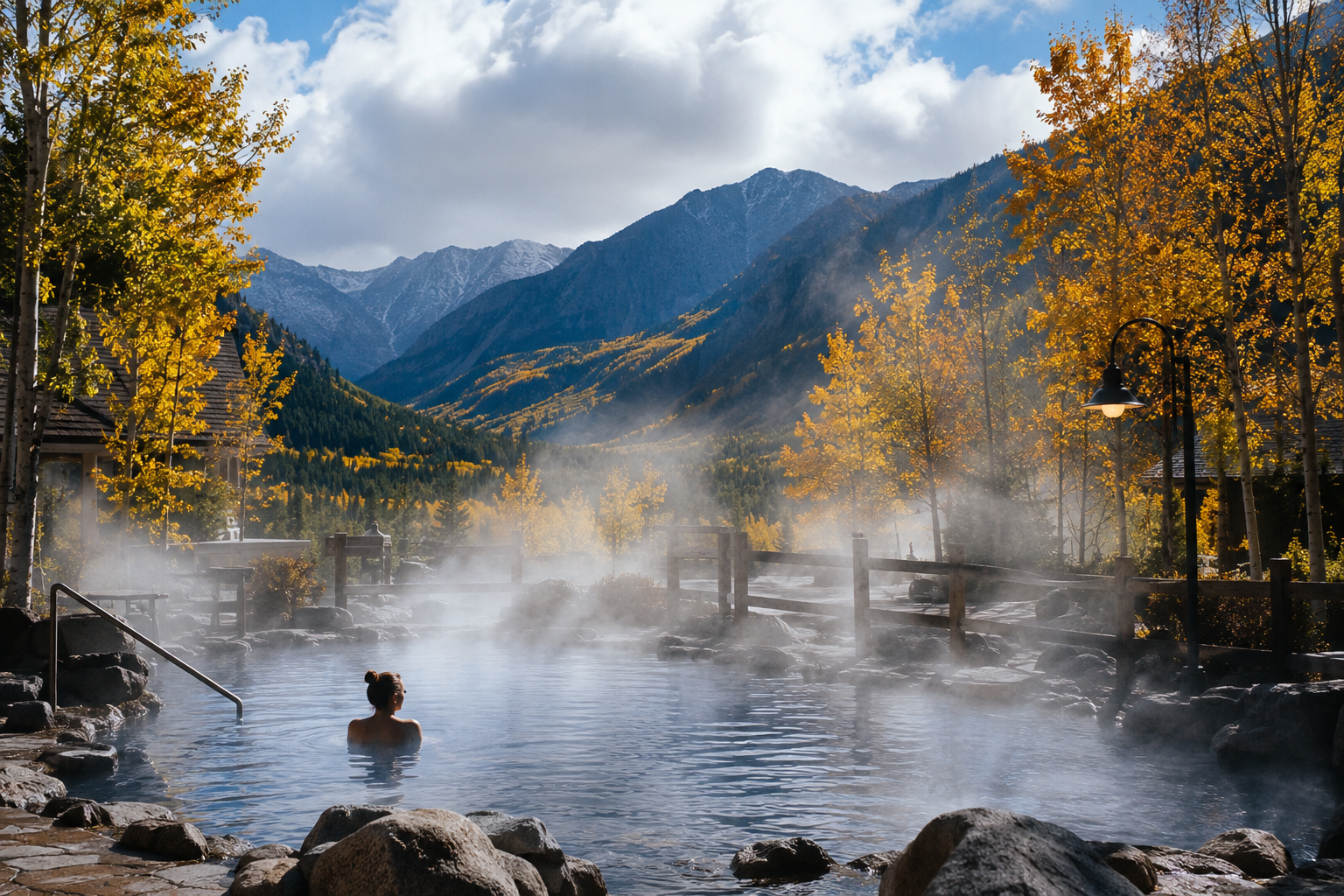
Colorado’s Hot Springs Loop Is Built for October Road Trips
Strawberry Park Hot Springs, just outside Steamboat Springs, is the anchor of this one. Five stone-walled pools, fed by a 147°F source and cooled by creek water down to a soakable 101–107°F range, sit in a mountain valley where the aspens are usually somewhere between green and full gold through most of October. Roads stay paved and accessible without snow tires until the county’s November 1 4WD requirement kicks in, which makes this one of the last easy weeks of the year to visit without special equipment.
Entry runs $15–20 for adults, and the pools go clothing-optional after dark for guests 18 and up — worth knowing before you show up with the wrong expectations. Because it’s a working geothermal creek and not a manufactured spa, temperatures shift between pools rather than staying uniform, so it’s worth walking the full layout before settling into one.
If Strawberry Park’s rustic, unheated-cabin version of hot springs isn’t the vibe, Old Town Hot Springs sits right in downtown Steamboat and runs a more developed setup: eight pools ranging roughly 89–103°F, fed by the same Heart Spring source that’s been used since Ute communities first gathered there, plus two 230-foot water slides if kids are along for the trip. It’s open year-round with no reservation required, which makes it a reliable backup if Strawberry Park’s 30-day booking window fills before you plan.
Steamboat is also one of five stops on the Colorado Historic Hot Springs Loop, a roughly 720-mile driving route connecting hot springs destinations across the western part of the state. If you’re building a longer trip, it’s worth using as a rough itinerary spine — October’s cooler mountain weather works in your favor at every stop on it, right up until the passes start seeing real snow in November.
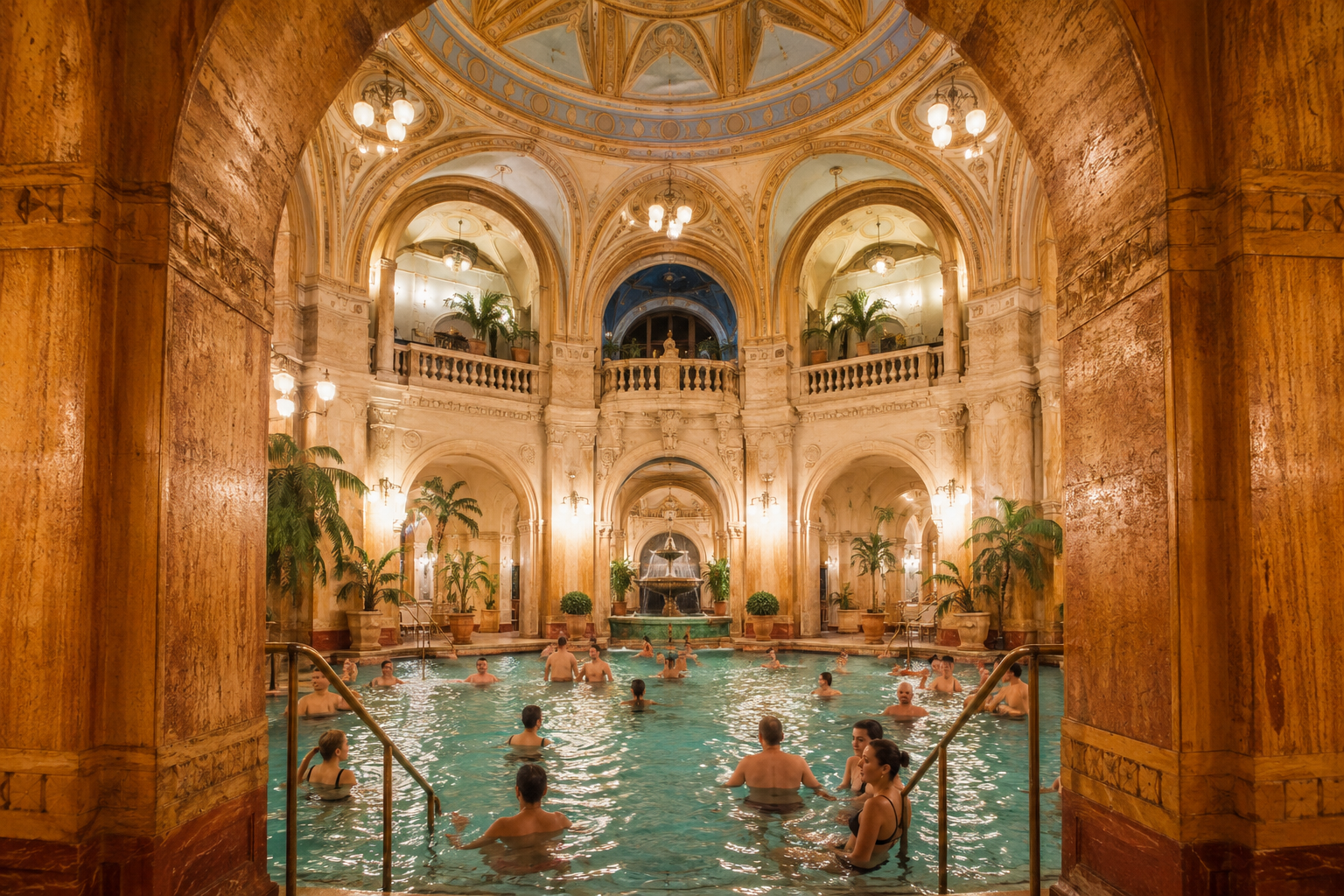
Budapest Turns Cold Mornings Into a Thermal Bath Ritual
Budapest sits on more than a hundred thermal springs, and Széchenyi Baths is the one most people picture: a neo-Baroque, mustard-yellow palace built in 1913 around three large outdoor pools, fed by water that reaches the surface at roughly 76°C before it’s cooled for bathing. The main thermal pool runs 96–100°F, the leisure pool a slightly cooler 86–93°F, and the lap pool a brisk 79–82°F for people who want to actually swim rather than soak. Locals play chess at floating boards in the thermal pool regardless of the season, which is either charming or slightly surreal depending on how cold the morning is.
October crowds are noticeably thinner than the summer tourist peak, and the temperature contrast between crisp autumn air and a 98°F pool is, by most accounts from repeat visitors, better than the muggier version of the same experience in July. Gellért Baths, across the river, is the more architecturally ornate alternative if Széchenyi’s outdoor-focused layout isn’t the draw.
📝 Note: Bring your own towel and flip-flops if you have them. Rentals are available at both Széchenyi and Gellért, but they cost extra and the lines for rental counters get long on weekend mornings.
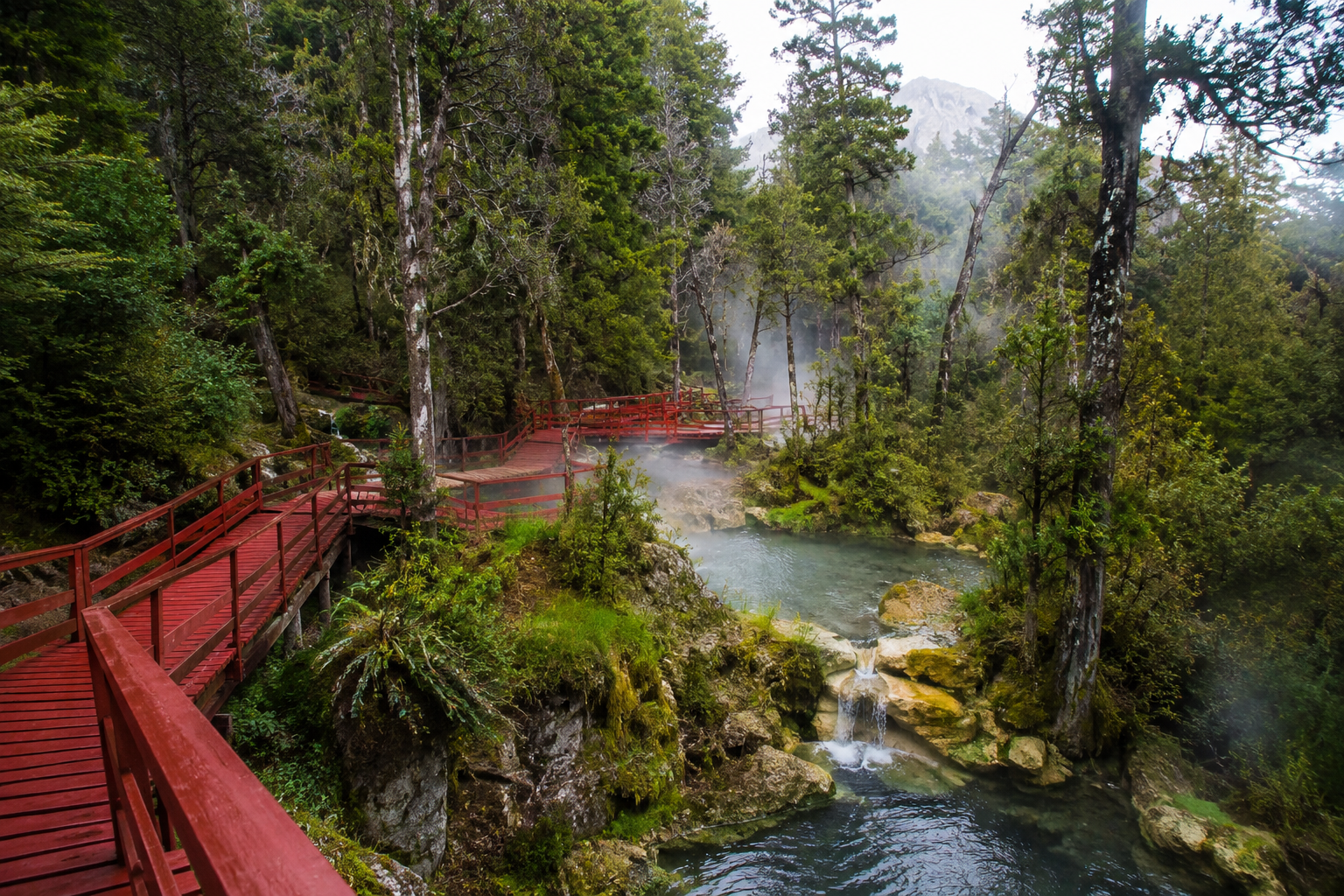
Chile’s Termas Geométricas Pairs Steam With Autumn Color
Worth remembering: October in Chile is spring, not fall, since it sits south of the equator. That’s actually the appeal here rather than a complication. Termas Geométricas, in Villarrica National Park near Pucón, is 17 slate-lined pools connected by a bright red wooden boardwalk that winds through a narrow forest ravine for about 500 meters, ending at a cold waterfall most visitors dare each other into. Water comes from more than 60 thermal springs along the ravine and gets distributed to the pools by a gravity-fed system, holding a steady 96–106°F depending on which pool you’re in.
Springtime in this part of Chile’s Lake District means wildflowers coming back, snowmelt swelling the stream that runs beside the pools, and noticeably fewer visitors than the January–February peak of the Southern Hemisphere’s actual summer. It’s also close enough to Villarrica volcano, one of Chile’s most active, that the whole valley sits on the geothermal fault line responsible for the springs in the first place.
The pools were designed by architect Germán del Sol, who built the wooden walkways and slate-lined baths to work with the ravine’s natural contours rather than flatten them, drawing loose inspiration from Japanese onsen architecture. It’s about a 90-minute drive from Pucón, and while it’s the priciest entry on this list, most visitors treat it as a full-day trip rather than a quick stop — there’s an on-site restaurant, and between soaks, the boardwalk itself is worth wandering for the waterfall at the far end alone.
If a Southern Hemisphere spring trip is on the table, it’s worth combining with our guide to Patagonia in October, which covers the neighboring Argentine side of the same season, or with our guide to Rotorua, New Zealand in October, another Southern Hemisphere geothermal destination hitting its own good season at the same time.
92–113°F
Typical pool range across all 7 spots
3
Continents represented
1891
Year Iceland’s oldest pool was built
A Quick Comparison Before You Book
| Destination | Typical Water Temp | Entry Cost | Best For |
|---|---|---|---|
| Hakone / Kusatsu / Beppu, Japan | 100–108°F | $5–15 (day-use varies) | Foliage + traditional onsen culture |
| Secret Lagoon, Iceland | 100–104°F | ~$22 | Golden Circle day trip, aurora chances |
| Pamukkale, Turkey | 95–100°F (bathing area) | ~$10–15 entry to site | Ancient history + a genuinely strange landscape |
| Strawberry Park, Colorado | 101–107°F | $15–20 | Mountain road trip, DIY pool-hopping |
| Széchenyi Baths, Budapest | 79–100°F (multiple pools) | ~$25–30 | City break with a bathhouse afternoon |
| Termas Geométricas, Chile | 96–113°F | ~$40–45 | A splurge day trip from Pucón |
Common Mistakes: Booking the Best Hot Springs to Visit in October
Assuming every pool at a given site is the same temperature. Multi-pool spots like Termas Geométricas and Széchenyi range 15–20°F between their hottest and coolest pools. Walk the layout first, then pick where to settle in.
Skipping reservations because “it’s not summer.” October is exactly the month enough people have figured this out that walk-up availability at places like the Secret Lagoon or Strawberry Park can’t be assumed, especially on weekends.
Packing like it’s still summer. A 100°F pool feels incredible; the walk back to the car in 45°F air afterward does not, if all you brought was a swimsuit and a thin towel. Bring a warm layer and closed shoes for the transition.
Ignoring hemisphere seasons when planning South American trips. Chile’s Termas Geométricas is having spring, not fall, in October — the crowd patterns and what’s blooming around the pools are closer to a Northern Hemisphere April than a Northern Hemisphere October.
Treating fragile natural pools like commercial ones. Iceland’s smaller, unmanaged hot springs can be damaged by heavy visitor traffic in a way maintained sites like the Secret Lagoon are built to withstand. If a spot looks small and untouched, tread carefully or find a managed alternative instead.
❗ Important: If your trip involves flights, hotels, or gear bought through links on this page, some of those links are affiliate links — we may earn a small commission at no extra cost to you. It doesn’t change which places made this list.
FAQ
Is October a good time to visit hot springs?
Yes, and for most destinations it’s a better window than winter. Water temperature stays the same year-round; October’s cooler (but not yet extreme) air makes the contrast feel more dramatic, and it falls in the gap between summer crowds and holiday-season crowds.
What are the best hot springs to visit in the fall?
Japan’s Hakone, Kusatsu, and Beppu are the strongest fall picks because hot springs season overlaps directly with peak foliage. Iceland’s Secret Lagoon and Colorado’s Strawberry Park are close seconds for the same cooler-air, thinner-crowd logic.
Which countries have the best natural hot springs?
Japan, Iceland, Turkey, Chile, and the United States all have significant natural hot spring geology, thanks to volcanic or tectonic activity. Japan has the highest density of developed onsen; Iceland and Chile have some of the most dramatic natural settings.
Do hot springs get crowded in October?
Less than summer or the winter holidays, but not empty. Weekends still draw meaningful crowds at popular spots like Széchenyi Baths or the Secret Lagoon. Weekday visits, especially mid-month, are noticeably quieter across almost every destination on this list.
Do I need to book hot springs visits in advance?
For commercial sites like the Secret Lagoon, Széchenyi, and Termas Geométricas, yes — same-day walk-up isn’t guaranteed, especially on weekends. Strawberry Park in Colorado opens pool reservations 30 days out. Smaller, free natural springs generally don’t take bookings at all.
What should I pack for a hot springs trip in October?
A swimsuit, a warm layer for before and after, closed shoes for wet ground, and your own towel where rentals cost extra. In Japan, skip the swimsuit entirely for traditional onsen — bathing is typically done nude, by gender-separated area.
Plan the Rest of the Trip
The Complete Travel System
311 pages covering when to go, how to plan it, and what to do when something goes sideways, across 50 countries. If a hot springs trip is the anchor, this fills in everything around it.
Get the Complete System →None of these seven destinations require winter to be worth booking. What they need is exactly what October already offers everywhere on this list: cooler air, thinner crowds, and water that hasn’t changed a degree. Pick the one that fits the rest of your month-by-month plans, and book it before the rest of the internet finishes reading this same article.
Stop planning trips the hard way.
Get the best of all three of our travel books in one free 21-page PDF — crisis protocols, country timing scorecards, and 5 AI travel-planning prompts.
Free · Instant download · No spam, ever