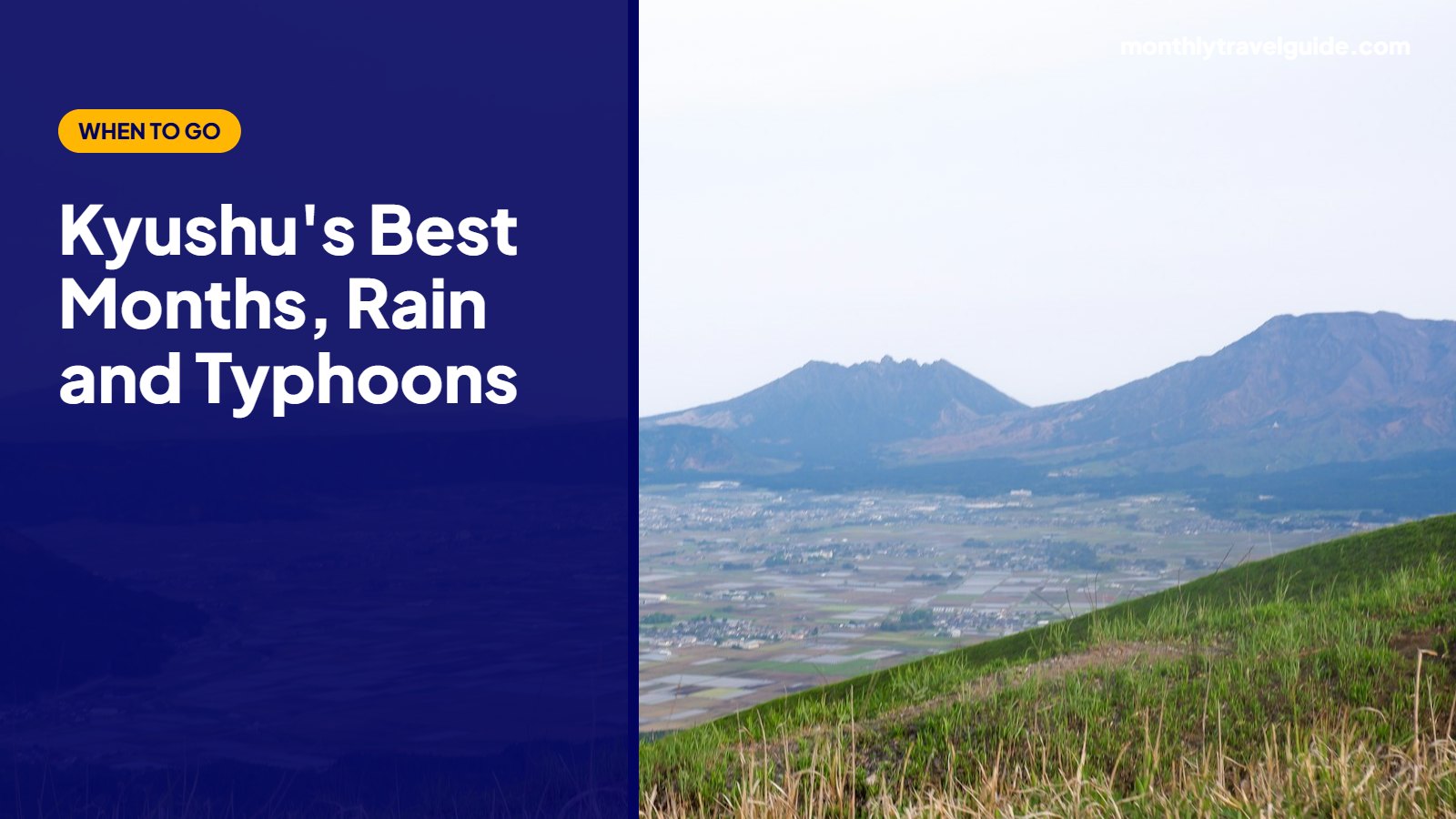
The best time to visit Kyushu is mid-October to late November, with late March to mid-April a close second. Both windows bring mild days, lower rain and clear views over the volcanoes, gorges and hot spring towns of Japan’s southern main island. Summer is a different trip: the rainy season soaks June and much of July, the heat peaks in August, and typhoons are most likely from August to early October. This guide sets out every month, the three regions, the festivals and the weeks to avoid.

Short answer
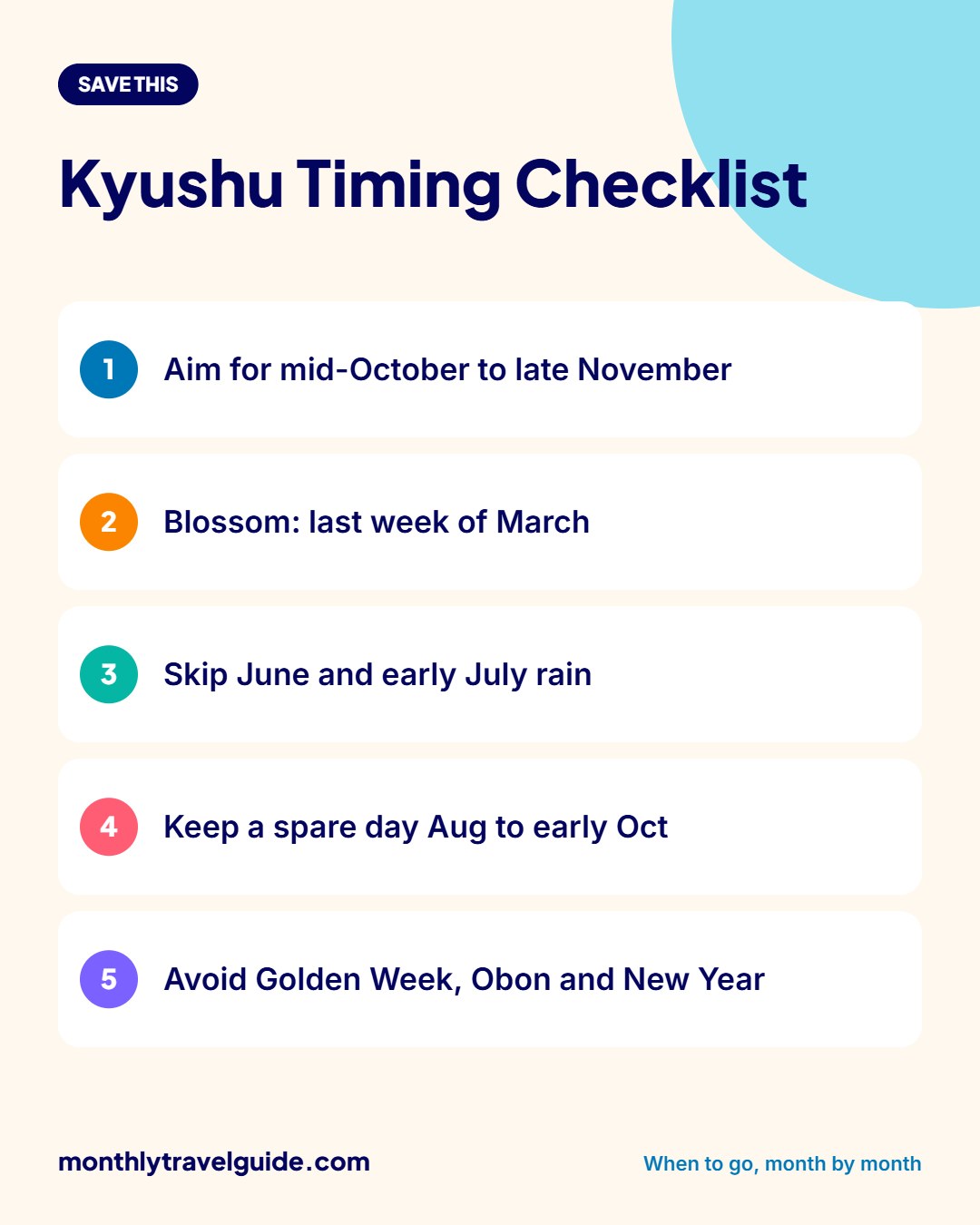
Go from mid-October to late November for the most reliable weather: Fukuoka averages about 93 mm of rain in October and highs of 17 to 23 °C. Late March to mid-April is next, with cherry blossom at the end of March. Avoid June and early July for rain, early to mid-August for heat and Obon crowds, and a fixed travel day in September, the strongest typhoon month.
Key takeaways
Kyushu has no true dry season; even the plains get about 1,700 to 2,500 mm of rain a year, but winter and late autumn are the driest stretches.
In northern Kyushu the rainy season usually starts in early June and ends around 20 July; the south often starts earlier, in late May.
Typhoon risk runs from June to October and is highest from August to early October, with the south coast most exposed.
Cherry blossom usually peaks at the end of March, and the gorges turn red from early to late November.
Golden Week, Obon and New Year fill trains and inns; Hakata Dontaku, Hakata Gion Yamakasa, Nagasaki Kunchi and Karatsu Kunchi fill their cities.
Best Time to Visit Kyushu: Month-by-Month Table
This section rates every month for a general sightseeing trip around Kyushu, using long-term averages for Fukuoka in the north and Kagoshima in the south. Highs and lows are in °C; rainfall is the monthly average in millimetres.
| Month | Fukuoka high / low | Fukuoka rain | Kagoshima high / rain | Verdict |
|---|---|---|---|---|
| January | 9 / 2 °C | 75 mm | 11 °C / 88 mm | Go with care: cold, quiet, good onsen weather |
| February | 10 / 3 °C | 77 mm | 12 °C / 103 mm | Go with care: cold; Nagasaki Lantern Festival some years |
| March | 14 / 5 °C | 108 mm | 16 °C / 156 mm | Go: blossom from the last week |
| April | 19 / 10 °C | 154 mm | 21 °C / 222 mm | Go: mild, green; Golden Week starts at the end |
| May | 23 / 14 °C | 166 mm | 24 °C / 255 mm | Go with care: Golden Week crowds, then fine weeks |
| June | 26 / 19 °C | 269 mm | 27 °C / 396 mm | Skip: rainy season, wettest month in the south |
| July | 31 / 24 °C | 301 mm | 31 °C / 315 mm | Skip: rain until around 20 July, then heat |
| August | 32 / 24 °C | 163 mm | 31 °C / 223 mm | Go with care: hottest; Obon; typhoons |
| September | 28 / 20 °C | 191 mm | 29 °C / 215 mm | Go with care: peak typhoon month |
| October | 23 / 14 °C | 93 mm | 24 °C / 109 mm | Go: clear, mild, festival season |
| November | 17 / 8 °C | 78 mm | 19 °C / 88 mm | Go: autumn leaves, dry, cool |
| December | 12 / 4 °C | 55 mm | 14 °C / 73 mm | Go with care: driest, cold; New Year rush |
🗓️ Free: the 12-Month Map for Japan
Every month on one page: best weeks, shoulder weeks and the ones to skip. Print it or keep it on your phone.
Sources: Weather2Travel for Fukuoka and Weather2Travel for Kagoshima. The two cities show how the island works. The south is a couple of degrees warmer all year and much wetter in spring and early summer, while the north gets most of its rain in June and July. Both dry out sharply in October, and December is the driest month in both.
Kyushu month verdicts
Where each month works best on the island
Jan
Go with careOnsen towns, Nagasaki
Mar
GoKumamoto, Fukuoka blossom
Apr
GoAso, Takachiho, Beppu
May
Go with careAso grasslands, after Golden Week
Jun
SkipIndoor cities only
Jul
SkipFukuoka for Yamakasa
Aug
Go with careNorth coast beaches
Sep
Go with careFlexible plans only
Oct
GoNagasaki, Aso, Kirishima
Nov
GoGorges, Karatsu, Yabakei
Dec
Go with careKagoshima, onsen stays
🧰 Try it while you read: a free tool for this trip
Free trip timing tool
Is This a Bad Month to Go?
Pick a country and a month. See if it is a month to skip, what goes wrong, and the better month next to it.
Loading the tool…
Kyushu by Region: North, Centre and South
This section compares the three parts of the island, because one month can feel very different in Fukuoka, on the Aso plateau and in Kagoshima. Kyushu is small enough to cross in a day by train, but its altitude and latitude spread the seasons out.
| Region | Main stops | Best months | Watch out for |
|---|---|---|---|
| North | Fukuoka, Karatsu, Nagasaki | Mar to May, Oct to Nov | Rain in June and July; humid August |
| Centre and highlands | Kumamoto, Aso, Kuju, Beppu, Yufuin | Apr to May, Oct to Nov | Heavy June rain on Aso; snow and ice on high roads in winter |
| South | Kagoshima, Kirishima, Miyazaki, Takachiho | Oct to Dec, Mar to Apr | Wettest June; most exposed to typhoons |
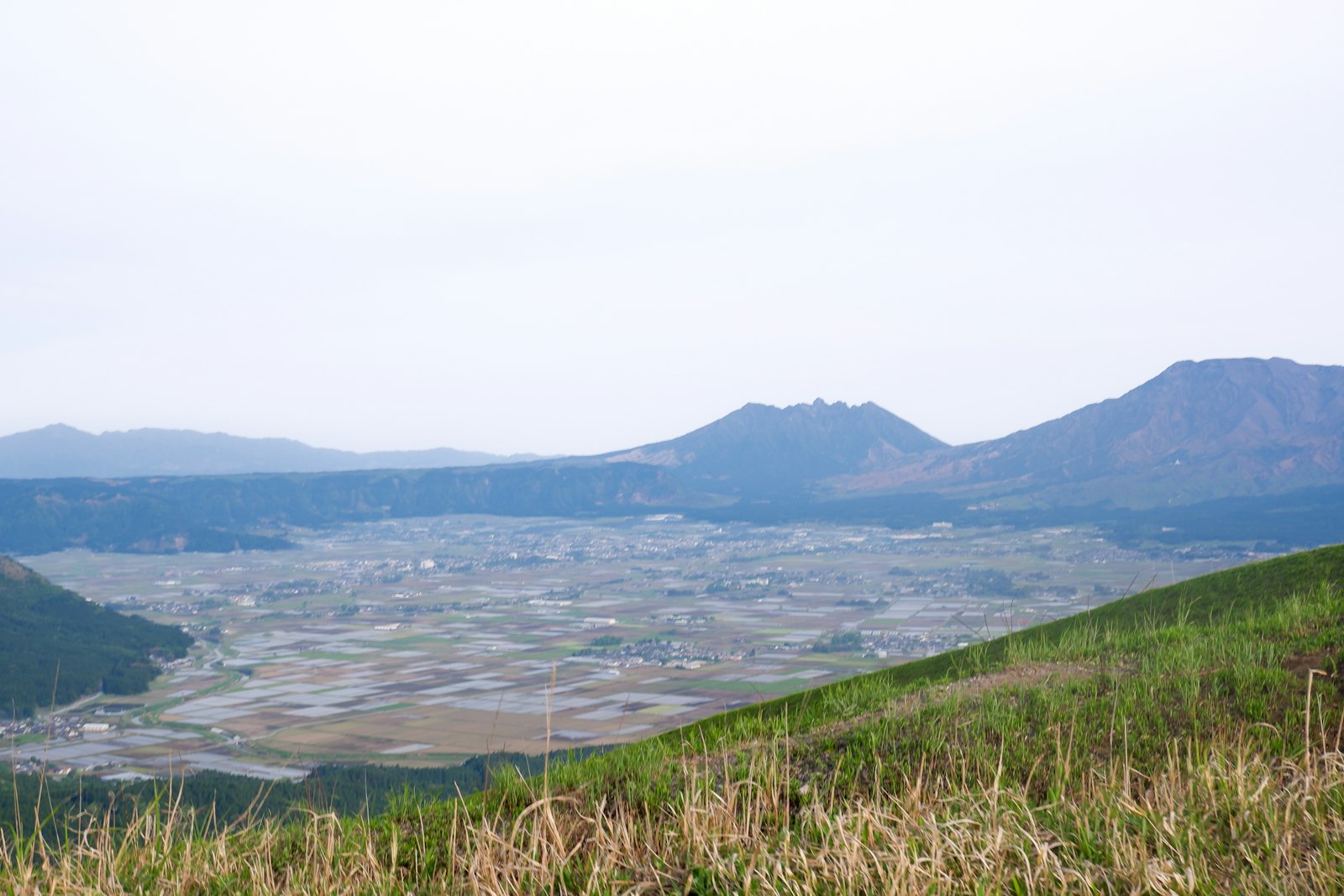
The highlands deserve their own plan. The weather station on Mount Aso, at 1,143 m, records a January mean of about -1.3 °C and a June total of about 713 mm, according to Climates to Travel, far colder and wetter than the coast. Heavy snow can fall there in winter, so a winter drive across the caldera needs care, while spring and autumn bring the clearest views over the grasslands.
The north is the easiest base for a short trip. Our Fukuoka travel guide and Nagasaki travel guide cover the two main cities in the north, and the Kumamoto travel guide covers the castle city that sits between the coast and Aso.
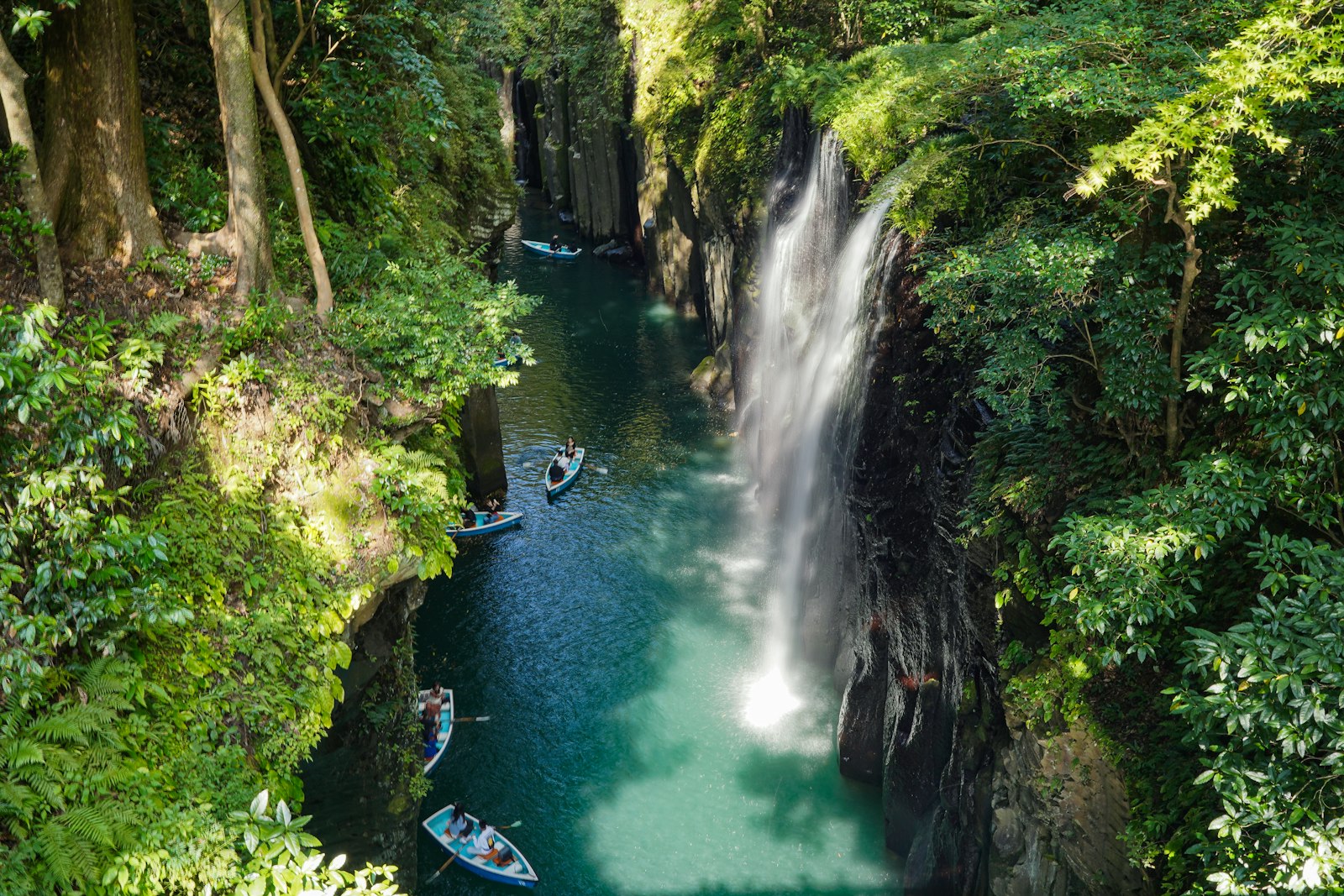
Rainy Season and Typhoons in Kyushu
This section covers the two weather risks that shape a summer trip. Neither shuts the island, but both can turn a tight itinerary into a run of cancelled plans.
When to Go: Japan
Blossom, autumn colour or quiet temples?
Every month across Japan rated for weather, crowds and prices, region by region, from Hokkaido to Okinawa, with a 7-day booking plan and the free 12-Month Map.
See the Japan guide · $19About 100 pages · PDF, US Letter and A4 · Digital download · All sales final
The rainy season (tsuyu)
Kyushu is among the first main-island regions to enter the rainy season. In northern Kyushu it usually begins in early June and ends around 20 July, according to Nippon.com; southern Kyushu often starts in late May. June is the wettest month in Kagoshima, with about 396 mm on average, and July is the wettest in Fukuoka, with about 301 mm (Weather2Travel). Rain does not fall all day, every day, but grey skies, humidity and the odd downpour are normal, and mountain roads and hiking trails are at their worst.
Typhoon season
Climates to Travel puts the typhoon season from June to October, with the highest risk from August to early October; the strongest storms have tended to come in September, and the south coast is the most exposed. Fukuoka sees about three to five typhoons approach a year, mostly from August to October, though the city and Saga face north and are less likely to take a direct hit, according to Go Fukuoka.
Warning
When a typhoon nears southern Kyushu, warnings usually start a few days before it passes the north. Shinkansen services, ferries and flights can be suspended for a day or more, while the Fukuoka subway usually keeps running. From August to early October, keep a spare day before any flight home and follow the Japan Meteorological Agency forecasts. Check any trip window with our free Storm Season Check.
| Period | What usually happens | What to do |
|---|---|---|
| Late May to early June | Rainy season starts, south first | Plan cities and indoor sights for wet days |
| June to around 20 July | Heaviest rain, high humidity | Avoid long hikes and island ferries |
| Late July to August | Heat in the low 30s °C, sea about 25 to 28 °C | Beach days on the north coast; hikes at dawn |
| August to early October | Peak typhoon risk | Book flexible fares and keep a buffer day |
| Mid-October onwards | Rain falls by half or more | The most reliable weather of the year |
Kyushu Festivals and the Months They Fall In
This section lists the big festivals by month, since each one changes how full a city feels. Some dates are fixed every year; others move with the lunar calendar, so check before you book.
Usually January or February
Nagasaki Lantern Festival
Lights fill the city for about 15 days around the Lunar New Year (Discover Nagasaki).
Usually early May
Hakata Dontaku, Fukuoka
Held on 3 and 4 May during Golden Week, with a parade and a mass dance on the last evening; organisers say it draws over two million visitors (Go Fukuoka).
Usually July
Hakata Gion Yamakasa, Fukuoka
Runs from 1 to 15 July and ends with the Oiyamakasa, a full-speed race of the decorated floats through the city (Go Fukuoka).
Usually mid-August
Shoro Nagashi, Nagasaki
The spirit boat procession is held on 15 August, during Obon (Discover Nagasaki).
Usually October
Nagasaki Kunchi
The city’s great shrine festival is held from 7 to 9 October (Discover Nagasaki).
Usually early November
Karatsu Kunchi, Saga
Fourteen huge hikiyama floats are pulled through Karatsu from 2 to 4 November (Karatsu tourism).
Beppu’s onsen festival is usually held in early April; our Beppu travel guide has the details. To match festivals to your dates, try the free Festival Month Matcher.
Cherry Blossom and Autumn Leaves in Kyushu
This section covers the two colour seasons, which are the strongest reasons to choose spring or autumn. Kyushu runs early for blossom and late for leaves compared with central Japan.
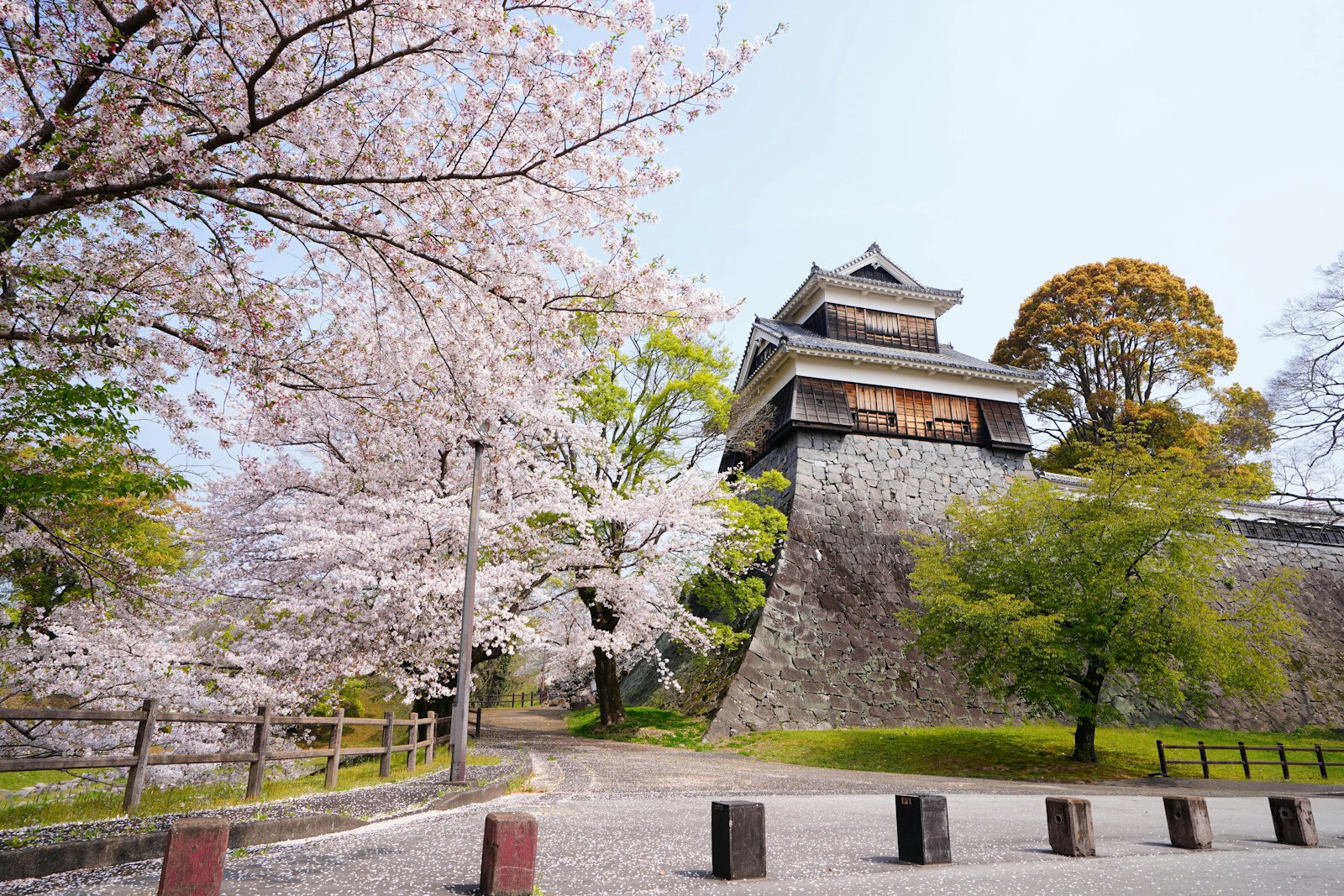
Cherry blossom across much of the island usually peaks around the end of March, and a few days later in Kagoshima; it takes about eight to nine days to go from the first flowers to full bloom, according to Climates to Travel. That puts Kumamoto Castle, Fukuoka’s parks and the Nagasaki hills at their best in the last days of March and the first days of April. Book early: Japanese visitors plan around the same forecast.
Autumn colour arrives later than in most of Japan. FUN! JAPAN gives Kyushu a typical window of mid to late November, with Yabakei Gorge in Oita at its best from early to late November and Yusuikyo Gorge in Kumamoto earlier, in early November. Temple gardens around Fukuoka peak from early to mid-November. For the wider country, see autumn leaves in Japan.
Tip
If you want blossom and festival crowds without Golden Week, aim for the last week of March and the first ten days of April. For leaves, the third and fourth weeks of November are the safest bet in the gorges; the higher spots turn first.
Spring, Summer, Autumn and Winter in Kyushu
This section sums up each season in practical terms, so you can judge what you’ll actually do on the ground.
Spring (March to May)
Spring warms quickly, from about 14 °C in March to 23 °C in May in Fukuoka. Blossom season and the green Aso grasslands make it a strong time for walking and driving. The catch is Golden Week, a run of national holidays from late April into early May, when Hakata Dontaku also fills Fukuoka. Rain rises through spring, especially in the south.

The Smart Timing Bundle
Pick the month, book in the right order, pack once
Six printable timing tools for any trip: the Trip Timing Planner, When to Book, When NOT to Go, the Shoulder Season Playbook, the family timing guide and the Packing by Season System.
See the bundle · $37Six products, $100 separately · Digital download · All sales final
Summer (June to August)
June and the first half of July are the wettest weeks. Once the rainy season lifts, highs sit around 31 to 32 °C and the sea off Fukuoka reaches about 25 to 28 °C, warm enough for the beaches. Mid-August brings Obon, when many Japanese travel home and trains and inns fill.
Autumn (September to November)
September is still hot and is the riskiest typhoon month. By mid-October rain drops to about 93 mm in Fukuoka and 109 mm in Kagoshima, the air dries out and the mountain views open up. November is cool and crisp, with highs of about 17 to 19 °C and the gorges in full colour.
Winter (December to February)
Winter is the driest season, with highs of about 9 to 14 °C on the coast and frost or snow in the highlands. It’s the cheapest-feeling time for onsen towns outside New Year, and the south stays mildest. Compare winter hot spring trips if baths are the point of your trip.
When Not to Go to Kyushu
This section is the honest list. Kyushu works in every month, but these weeks can spoil a short or fixed trip.
| Avoid | Why | Do this instead |
|---|---|---|
| Mid-June to around 20 July | Peak rainy season across the island | Go in late March to April or October to November |
| Late April to early May | Golden Week; full trains, inns and attractions | Go in mid-April or mid-May |
| Mid-August | Obon crowds plus the hottest weeks | Go in late October |
| A fixed travel day in September | Peak typhoon month; trains and flights can stop | Keep a buffer day or move to mid-October |
| Late December to early January | New Year rush; some shops and baths close | Go in mid-December or mid-January |
Run your own dates through the free When Not to Go checker, or find calmer weeks with the Shoulder Season Detector.
A Better Month If You Want Something Specific
This section matches common trip goals to the month that suits them best.
Cherry blossom
Last week of March to the first days of April, north and centre first.
Autumn leaves
Early to late November in the gorges, peaking mid to late month.
Hot springs
December to February, outside New Year; for an autumn option, see hot springs in October.
Beaches
Late July and August, after the rainy season, accepting heat and typhoon risk.
Festivals
Early July in Fukuoka, early October in Nagasaki, early November in Karatsu.
Hiking Aso and Kirishima
Mid-October to November, or April to mid-May for green slopes.
Not sure which month fits your own list? The free Best Month Finder weighs weather, crowds and events for you.
5 Common Mistakes When Timing a Kyushu Trip
1. Treating Kyushu as one climate
The coast, the Aso plateau and the far south can feel like three different trips in the same week. Pack layers for the highlands, even in spring and autumn, and check mountain road conditions in winter.
2. Booking a tight loop in typhoon season
A seven-day loop with one fixed train each day is fragile from August to early October. Build in a spare day, put flights at the end of a buffer, and choose flexible fares.
3. Forgetting the Japanese holiday weeks
Golden Week, Obon and New Year push domestic travel to its peak. Trains, inns and the famous onsen towns fill early, and Saturday nights are always busier than midweek.
4. Expecting blossom on central Japan dates
Kyushu blooms early. Arrive in mid-April and the petals may already be gone in Fukuoka and Kumamoto. Track the forecast and aim for the last days of March.

The complete kit
Every country guide, every timing tool
All 24 When to Go country guides, the six Smart Timing tools and every 12-Month Map, with a Start Here that tells you what to open first.
See the kit · $127The five bundles cost $225 separately · Digital download · All sales final
5. Writing off winter
Winter is dry, quiet and ideal for hot springs, and the south stays mild. Outside the New Year week it can be one of the easiest times to travel.
Best Time to Visit Kyushu: FAQ
The Bottom Line
The best time to visit Kyushu is mid-October to late November, with late March to mid-April as the spring alternative. Avoid the rainy weeks of June and July, the Obon heat and a fixed plan in typhoon season, and treat winter as a quiet onsen season. For more on the country, browse our Japan travel guides.
Rainy season, typhoons, blossom and leaves
Put every stop in its best weeks
When to Go: Japan sets out the best and worst months for each region, the rainy season and typhoon timing, blossom and autumn leaf windows, Golden Week and Obon peaks and when to book, so Kyushu and the rest of your route fall in the right weeks.
Digital download · All sales final
Free download
Which month for your country?
Get the free 12-Month Map: every month marked good, shoulder or avoid, region by region, on four printable pages.
- Greece to Japan, Morocco to Peru: 24 countries
- See the crowd and price peaks before you book
- Free, no purchase needed
Your download page opens as soon as you sign up. 24 countries available.