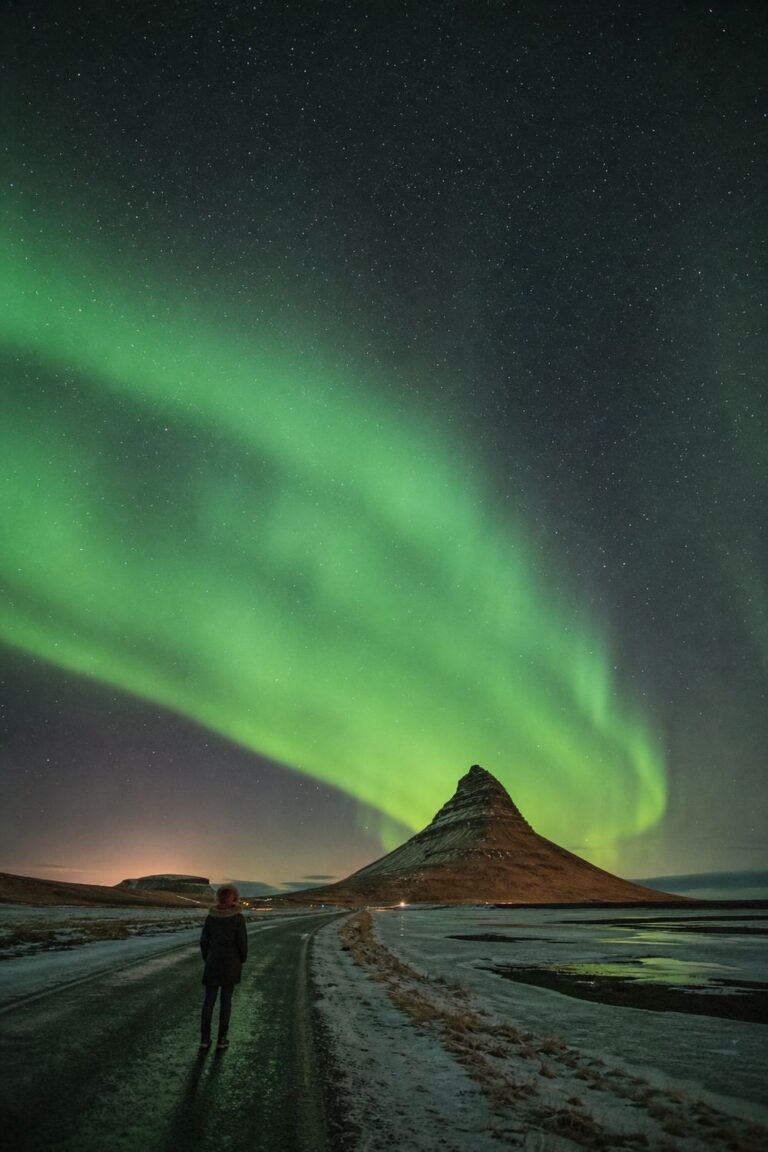
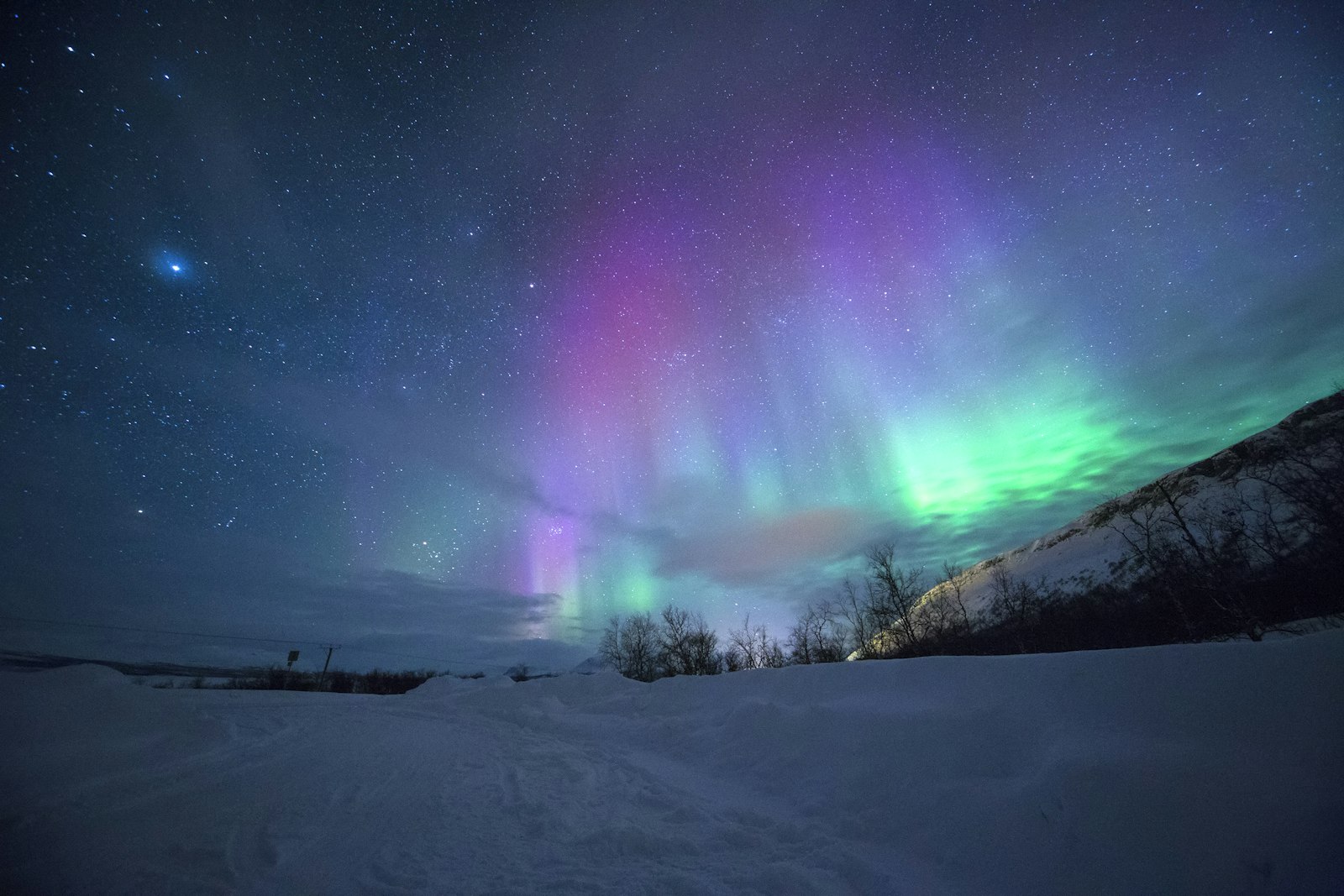
Seeing the northern lights in March is a different plan from seeing them in midwinter. The nights are shorter, the days are bright and long enough for skiing, sledding and proper sightseeing, and the Sun and Earth line up in a way that tends to make the sky more active. It is also the last full month of the season in most of the Arctic. This guide explains what the equinox effect really is, how much darkness you still get, how the main destinations compare on weather, and how to plan your nights so that the last-chance month works in your favour.

Quick answer
Is March a good month to see the northern lights?
Yes. Geomagnetic activity tends to be higher around the spring equinox, and a long-term study found March has more active days than any other month. Arctic destinations still have many hours of darkness, particularly in the first three weeks. Sightings are never guaranteed, because cloud and moonlight matter as much as solar activity.
Key facts
- Why are the northern lights stronger around the equinox? Because of how Earth’s magnetic field lines up with the solar wind. Near the equinoxes, the two connect more easily, which lets more energy into the upper atmosphere.
- Where is the best place to see the northern lights in March? Anywhere in the auroral zone with clear skies. Abisko in Swedish Lapland and Yellowknife in Canada are known for dry, clear weather.
- What time of night is best for the aurora in March? m.m. local time, according to the US Space Weather Prediction Center.m. in places such as Iceland, so plan to stay up past midnight.
- When does the northern lights season end? In most of the European Arctic the season runs to early April. Tromsø’s tourist board gives late August to early April, and in Iceland twilight has taken most of the night by about 20 April.
March is one of the best months to see the northern lights. Geomagnetic activity tends to peak around the spring equinox, which falls around 20 March, and Arctic destinations still have many hours of darkness, especially in the first three weeks. Go to the auroral zone (northern Norway, Swedish or Finnish Lapland, Iceland or northern Canada), stay at least three or four nights, and watch between about 10 p.m. and 2 a.m. under clear, dark skies. By mid-April the nights are too light.
✅ Key takeaways
- ✓The US space weather agency says the best seasons for aurora watching are around the spring and autumn equinoxes, because geomagnetic storms tend to be larger then.
- ✓A long-term study found March has more geomagnetically active days than any other month: about six on average, against about three in December.
- ✓The cost is darkness. Nights shorten quickly through March, so the first three weeks are stronger than the last one.
- ✓Cloud still decides everything. Inland places such as Abisko are far drier than the Norwegian coast or Iceland.
- ✓March days are a bonus: more light and deep snow for daytime activities, which midwinter trips cannot offer.
Why the Northern Lights in March Have an Edge
The aurora happens when charged particles from the Sun are funnelled by Earth’s magnetic field into the upper atmosphere, where they make the air glow. How much gets in depends partly on geometry, and that geometry is most favourable twice a year.
Scientists have known since the nineteenth century that geomagnetic activity is higher around the equinoxes than at midsummer or midwinter. The leading explanation is called the Russell–McPherron effect. Near the equinoxes, Earth’s magnetic field is oriented so that it connects more easily with the magnetic field carried by the solar wind, which lets more energy through. Near the solstices the connection is less favourable.
≈6 days
of high geomagnetic activity in an average March
≈3 days
in an average December, for comparison
~20 March
the spring equinox: day and night about equal
10pm–2am
when displays are usually strongest
The practical version comes from the US Space Weather Prediction Center. Its tips on viewing the aurora state: “The best Seasons for aurora watching are around the spring and fall equinoxes.” Reporting on a 75-year study by a retired NASA solar physicist, Space.com adds the numbers above and notes that geomagnetic disturbances are almost twice as likely in spring and autumn as in winter and summer.
🧰 Try it while you read: a free tool for this trip
Free trip timing tool
Northern Lights Window
Check whether your month falls in the aurora season our guides describe.
Loading the tool…
The Trade-Off: More Activity, Less Darkness
The same agency adds the catch in the next breath: nights are getting shorter at the spring equinox, so you need to plan around the hours of darkness. In December the Arctic sky is dark for most of the day. By the equinox, day and night are roughly equal everywhere on Earth, and from then on the far north gains light very quickly.
| Early March | Around the equinox | Late March | |
|---|---|---|---|
| Darkness | Long nights; fully dark by mid-evening | About half of every 24 hours | Shortening fast; fully dark only late in the evening |
| Iceland example (Reykjavík area) | Dark from about 8:30 p.m.; roughly 10 to 11 dark hours | About 8 to 9 dark hours | Dark from about 10 p.m.; around 13 hours of daylight |
| Aurora odds | Good | Often the most active stretch | Still good, with a shorter window each night |
| Daytime | Proper winter days, cold | Bright, snowy, long enough for full-day activities | Spring light; snow softening at lower levels |
| Our call | Best for darkness | Best balance if your dates are flexible | Fine, but do not push into mid-April |
🗓️ Free: a 12-Month Map for your country
Every month on one page: best weeks, shoulder weeks and the ones to skip. Print it or keep it on your phone.
Tromsø, in northern Norway, shows the change in a single number. Its long-term average is 36 hours of sunshine in February and 111 in March. That extra light is exactly what makes March pleasant by day, and exactly why the aurora season is nearly over. Tromsø’s tourist board gives the season as late August to early April, and from late April to mid-August the sky there never gets dark enough.

The Smart Timing Bundle
Pick the month, book in the right order, pack once
Six printable timing tools for any trip: the Trip Timing Planner, When to Book, When NOT to Go, the Shoulder Season Playbook, the family timing guide and the Packing by Season System.
See the bundle · $37Six products, $100 separately · Digital download · All sales final
Where to See the Northern Lights in March: Five Regions Compared
All five regions below sit in or near the auroral zone, the ring around the magnetic pole where displays are most frequent. NOAA’s scale puts the edge of the aurora at about 66 degrees of magnetic latitude even on a quiet night, so in these places you do not need a big storm. What separates them in March is weather, cost and what you can do during the day.
| Region | March weather (long-term averages) | Strengths | Watch out for |
|---|---|---|---|
| Tromsø and northern Norway | About 1 °C by day, −4 °C at night (33 / 24 °F); around 97 mm of precipitation | Easy flights, mild for the latitude, fjord scenery, plenty of guided chases | Coastal cloud; you often need to drive inland to find clear sky |
| Abisko, Swedish Lapland | About −2 °C by day, −10 °C at night (28 / 13 °F); only about 20 mm of precipitation | Sits in a rain shadow and is one of the driest places in Sweden; very little light pollution | Colder; small village with limited rooms, so book early |
| Finnish Lapland | Inland and cold, similar latitude to Abisko | Snowy forest setting, glass-roofed cabins, strong winter-activity scene | Check how far north your resort is: the further north, the better the odds |
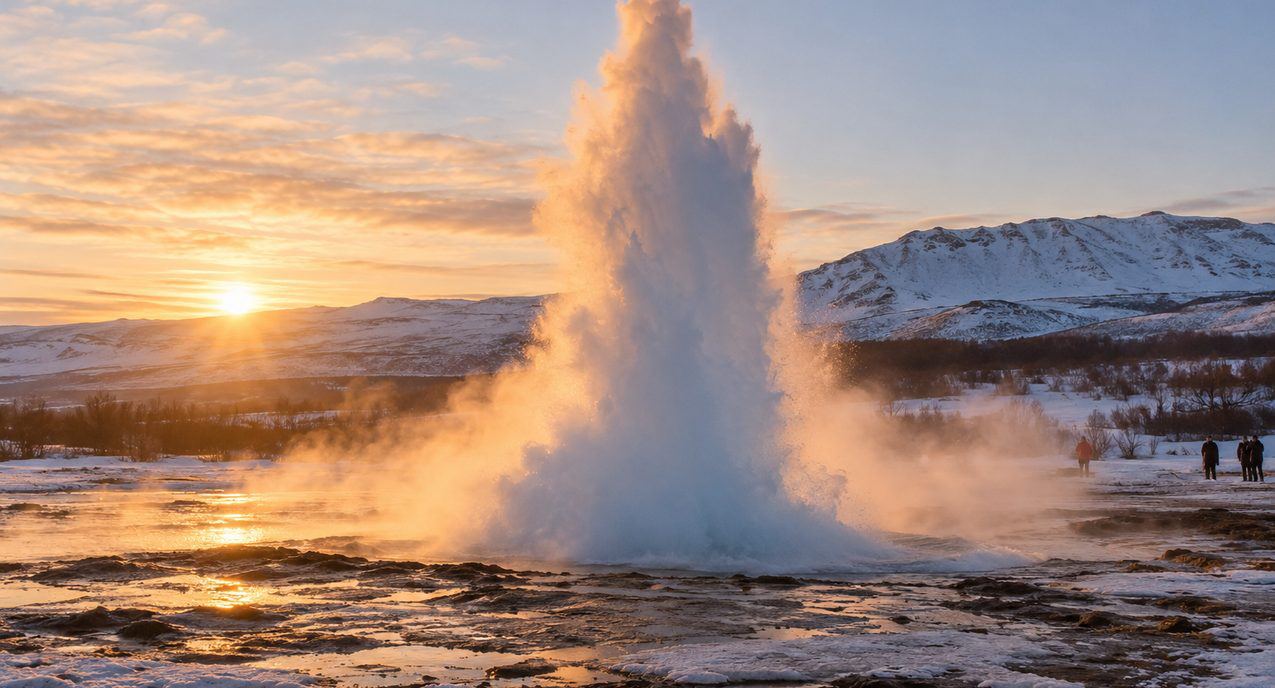
| Iceland | About 3 °C by day, −4 °C at night in the southern lowlands (37 / 26 °F); wet and often cloudy | Aurora plus waterfalls, geysers and hot pools in one short trip; roads improving through the month | Cloud cover is as high as in midwinter; storms still pass through |
| Yellowknife and Canada’s Northwest Territories | Deep cold, dry air, frozen lakes | Directly under the auroral oval, with clear nights and very low humidity; winter season runs to early April | Long journey; proper Arctic clothing needed |
How to choose
- For the best odds of clear sky: go inland. Abisko and northern Canada are much drier than the Atlantic coasts.
- For the easiest trip from Europe: Tromsø. Read our guide to the northern lights in Norway in February for the detail on Tromsø, Alta, Senja and Lofoten; most of it holds for early March.
- For variety by day: Iceland. If you are weighing it against midwinter, see how Iceland in January compares on daylight and roads.
- For scenery with your aurora: the Lofoten Islands, accepting more cloud risk in exchange for mountains that rise straight out of the sea.
- For North American travellers: Yellowknife, or see our Canada country guide for how the seasons run across the north.
Our free Northern Lights Odds tool lets you compare months and places side by side before you commit.
When to Go: Iceland
Iceland in March is a very different trip from Iceland in January or June, and the aurora is only one part of it. This guide takes you through Iceland month by month, with daylight, weather, roads, crowds and what each season is best for, so you can pick the weeks that fit the whole trip. It covers Iceland only, not the other aurora countries in this article.
See When to Go: Iceland · $19 →Digital download · All sales final
How to Plan the Nights
Good aurora trips are built on a routine, not on luck. These six habits matter more than which country you choose.
Stay at least three or four nights
Coastal weather can stay cloudy for days at a time. Every extra night improves your chances more than any tour upgrade.
Check cloud before activity
Look at the local cloud forecast at dinner time. A modest aurora under clear sky beats a strong one hidden by cloud. If your area is overcast, a guided chase can drive you to a gap.
Learn the Kp scale, loosely
Kp runs from 0 to 9. NOAA describes Kp 0 to 2 as dim and far north, and Kp 3 to 5 as brighter and “very pleasing” if you are well placed. Inside the auroral zone, low numbers are often enough.
Be outside around midnight
NOAA says the best aurora is usually within an hour or two of midnight, roughly 10 p.m. to 2 a.m. In late March it is not fully dark until late evening, so do not give up at ten.
Get away from lights and face north
Leave town, find an open view to the north and give your eyes a few minutes away from your phone screen.
Mind the moon
A full moon does not weaken the aurora but it makes it look fainter. If you can, aim for the darker half of the lunar month.
The equinox loads the dice. Clear sky, dark surroundings and enough nights are what let you roll them.
What March Days Add to the Trip
This is the quiet advantage of March. A midwinter aurora trip is mostly night: a few hours of blue twilight, then dark. In March you get a full, bright day on deep snow and still have a proper night afterwards.
- Snow sports at their best. Aurora specialists note that Arctic snow is usually at its deepest in March while the daylight is growing, which suits dog sledding, snowshoeing, cross-country skiing and snowmobile trips.
- Milder temperatures. March is typically less harsh than January and February in the European Arctic. You still need full winter clothing at night.
- Easier travel in Iceland. Lowland routes such as the Golden Circle are usually clear by late March, though higher stretches hold ice longer. Natural ice caves are usually still accessible through March, with a guide.
- Time to see the place. Fjord cruises, museums, Sámi cultural visits and hot pools all fit into a March day without eating into your night.
Pack for standing still in the cold, not for walking: insulated boots, a down or synthetic jacket over warm layers, windproof trousers, mittens over thin gloves and chemical hand warmers. Our winter packing list covers the layering system, and the free Packing by Season Generator builds a list for your dates. For cabin stays that suit this kind of trip, see our pick of Scandinavian cabin retreats.
A five-night March plan
Night 1 · Arrive and rest
Fly in, collect warm gear, eat early. If the sky is clear, step outside for half an hour, but do not exhaust yourself on day one.
Night 2 · Guided chase
Book a small-group chase for your first full evening. Guides read the cloud maps and know the roads, and you learn what to look for.
Day 3 · Big daytime activity
Dog sledding, a fjord trip or, in Iceland, the Golden Circle. Keep the evening free and check the sky from your base.
Night 4 · Out of town
Move to a rural cabin or lodge for two nights. Darker skies, and aurora-watching from the door.
Night 5 · Spare night
Your insurance against cloud. If you have already had a good display, enjoy a sauna or hot pool with one eye on the sky.
When Not to Go for the Northern Lights
The aurora never stops; what stops is the darkness you need to see it. These are the periods to avoid, and the reasons:
| Period | Why it does not work | What to do instead |
|---|---|---|
| Late April to mid-August | The far north has no real night. In Tromsø the aurora cannot be seen at all in this period, and Iceland has no proper darkness from about mid-May | Come for the midnight sun, and return from September |
| The first weeks of April | Only a few dark hours remain, and twilight takes more each night. Odds are fair but falling | Move the trip into March if you can |
| The days around full moon | Moonlight makes fainter displays hard to see | Choose the darker half of the month, or go somewhere under the auroral oval where displays are brighter |
| One- or two-night trips at any time | A single cloudy night ends the trip empty-handed | Three nights minimum, four or five if you can |
For any other destination on your list, you can check whether your month is a bad one with our free checker or browse the When Not to Go hub. And if March is already too soon, the other equinox works as well: see our guide to the northern lights in September, when the nights are lengthening instead of shrinking. For a far-north alternative in the dark season, read about Svalbard in January.
Northern Lights in March: Questions Travellers Ask
The case for the northern lights in March is simple: more active skies on average, kinder weather, real days as well as nights, and a season with only a few weeks left to run. Go in the first three weeks, go inland if you can, and stay long enough for the clouds to move. For more ideas for the month, browse our best travel destinations in March, see more winter travel guides, read our Finland country guide, or plan any other month from the month-by-month travel planner.
Free download
The 12-Month Map, free
The whole year for one country on four printable pages, so you can see the right months before you read anything else.
- Good, shoulder and avoid months at a glance
- Region by region, not one average for the whole country
- Prints cleanly on US Letter
Your download page opens as soon as you sign up. 24 countries available.