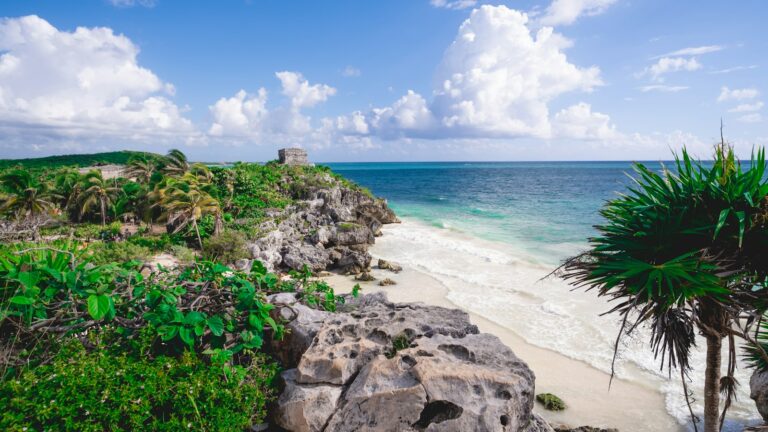
This solo travel guide is built for the moment you’ve decided to go alone but haven’t picked where or when. Travelling solo rewards good timing more than any other kind of trip: you have no one to share a bad-weather day with, no one to split a taxi at midnight and no one to talk you out of a crowded peak week. Get the destination and the month right, and the rest becomes far easier. Below you’ll find how to choose a first destination, the best months to go solo, budgeting habits that work without a calculator, safety basics with official advisory links, and simple ways to meet people on the road.

When to Go guides
Choose your country, then your month
24 country guides, each about 100 pages: every month rated for weather, crowds and prices, region by region, with a 7-day booking plan. Six guides per region bundle.
Browse the 24 guides · $19 eachRegion bundles: Europe, Asia & Pacific, Sun Souks & Safari, Americas · $47 each
Quick answer
For a first solo trip, choose a compact, walkable city with good public transport, such as Lisbon, Edinburgh or Ljubljana, and go in shoulder season, generally April and October in Europe, when crowds thin but days stay mild. Book a hostel or guesthouse with a common room, land in daylight, register your trip with your government and keep one buffer day. Avoid peak summer weeks and storm seasons.
Key takeaways
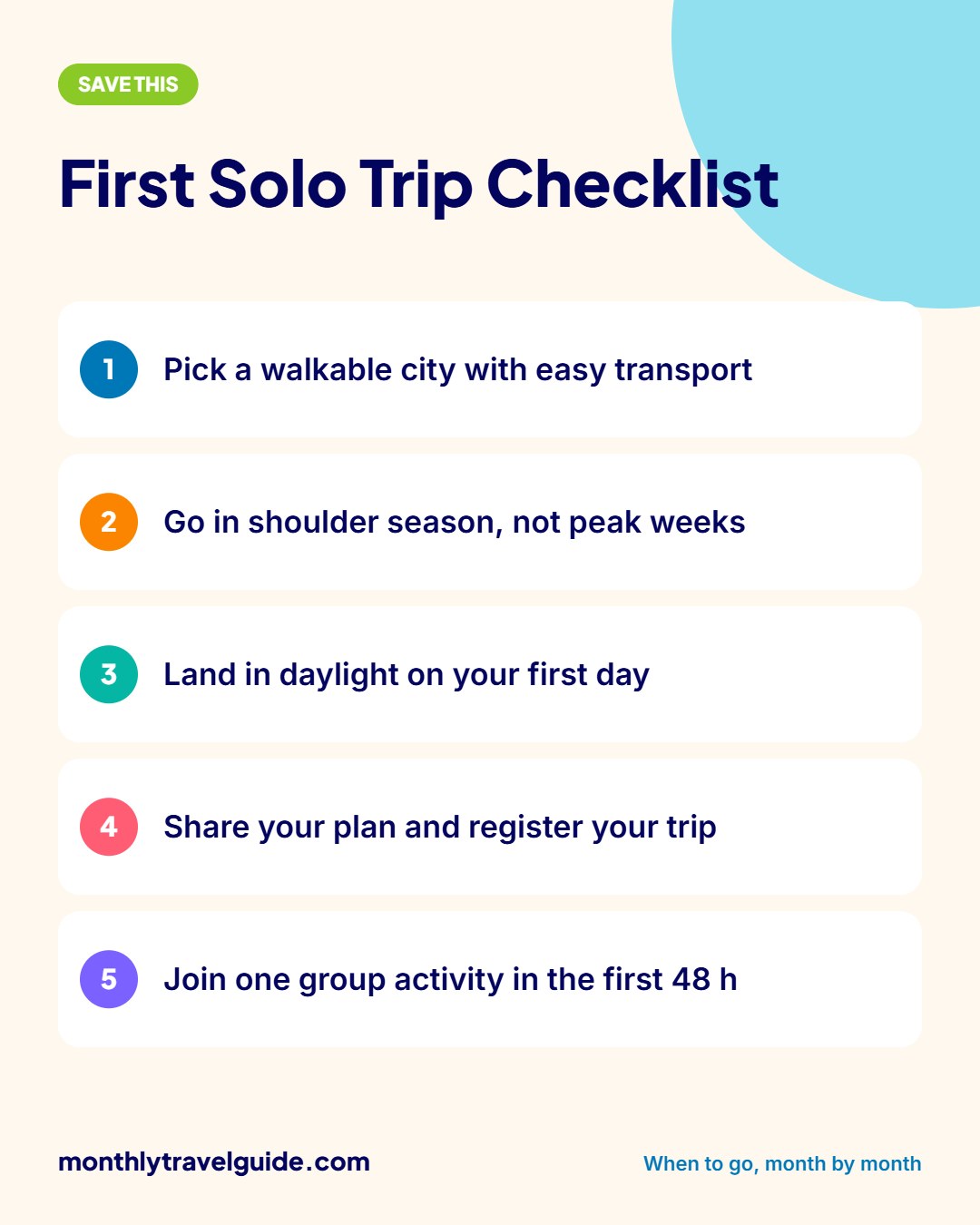
The best first destinations are compact, walkable and easy to reach by public transport.
Shoulder season suits solo travellers best: milder weather, thinner crowds and more space in hostels and on tours.
Budget by habit rather than by figure: watch single supplements, eat your main meal at lunch and keep refundable bookings.
Read your government’s travel advice before you book, and sign up for its updates.
Meeting people is easiest through hostel activity boards, walking tours, classes and group day trips.
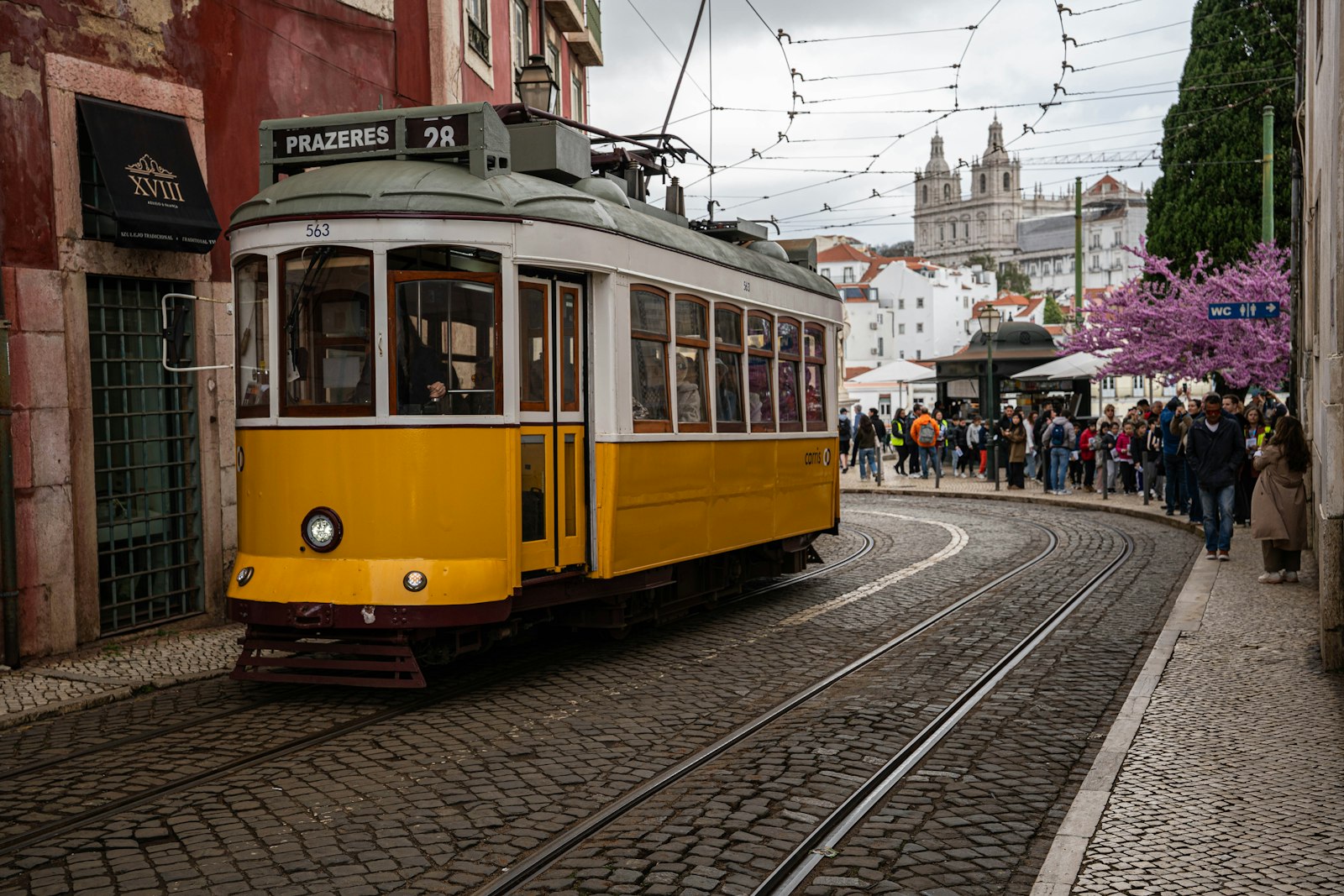
Solo Travel Guide: Choosing Your First Destination
This section covers how to pick the place for your first trip alone. The right first destination is rarely the most exotic one on your list. It’s the one where you can find your way on day one, eat well without a reservation and get home after dinner without a long, dark walk.
Five tests do most of the work. First, can you walk the centre, or reach it by tram, metro or a frequent bus? Second, is there a strong hostel or guesthouse scene, which signals plenty of other independent travellers? Third, will you manage the language for signs, menus and tickets? Fourth, does the weather in your month allow long days outdoors? Fifth, is the official advice for the country at its lowest or second-lowest level? A place that passes all five makes a gentle first trip.
| Destination | Why it suits a first solo trip | Good solo months |
|---|---|---|
| Lisbon, Portugal | Compact hills, trams and a large hostel scene; mild in winter, about 16 °C by day in February | February to May, October |
| Edinburgh, Scotland | Walkable old town, English-speaking, easy rail links | May, June, September |
| Ljubljana, Slovenia | Small, car-free centre and a calm pace; crowds decline in September | May, June, September |
| Kyoto, Japan | Excellent public transport and a strong solo-dining culture | Late March to April, October to November |
| Chiang Mai, Thailand | Walkable old city, cooking classes and day trips; dry in February | November to February |
| Old San Juan, Puerto Rico | Compact and walkable, with a free trolley; no passport needed for US citizens | December to April |
| Queenstown, New Zealand | Built around group activities and day tours; about 22 °C by day in February | November to April |
🗓️ Free: a 12-Month Map for your country
Every month on one page: best weeks, shoulder weeks and the ones to skip. Print it or keep it on your phone.
The figures above are long-term averages for each city, and every year differs. Chiang Mai has a smoky period from about December to April, with March usually the worst month, so February is the safer choice there. Old San Juan sits inside the Atlantic hurricane season from 1 June to 30 November, with the peak around 10 September according to the US National Hurricane Center.
Tip
If you can’t decide, choose the place where you could happily spend a rainy day. A city with good museums, covered markets and cafes keeps a solo trip on track when the weather turns, while a beach-only destination can feel very quiet when you’re on your own.
Islands and boats can work too, once you’ve done one easier trip. Our guides to Caribbean islands for solo travellers and sailing trips for solo travellers cover the angles that need more planning, such as ferries, group cabins and the hurricane months.
🧰 Try it while you read: a free tool for this trip
Free trip timing tool
What Kind of Traveller Are You?
Seven quick taps pick your travel type, then show the countries and months where it shines.
Loading the tool…
Solo Travel Guide: The Best Months to Go Alone
This section rates the twelve months for a solo trip in general terms. The verdicts weigh crowds, daylight, weather risk and how easy it is to find space in hostels, tours and shared tables. They describe broad patterns, not a single destination, so check the place you have in mind with the free Best Month Finder.
Solo travel month by month
General pattern · check your destination
Based on Rick Steves (European seasons), the US National Hurricane Center (Atlantic storm season), New Zealand DOC (Great Walks season) and long-term city climate averages. Every year differs.
Shoulder season is the solo traveller’s friend. Rick Steves describes European peak season as roughly May to September, with the shoulder generally in April and October, and warns that the Mediterranean shoulder can still bring near-peak crowds. In practice, that means late April, May and late September to October give you mild days and room to breathe, while July and August bring the fullest dorms, the longest queues and the least flexible bookings.

The Smart Timing Bundle
Pick the month, book in the right order, pack once
Six printable timing tools for any trip: the Trip Timing Planner, When to Book, When NOT to Go, the Shoulder Season Playbook, the family timing guide and the Packing by Season System.
See the bundle · $37Six products, $100 separately · Digital download · All sales final
The southern hemisphere flips the calendar. New Zealand’s Great Walks season runs from 1 November to 30 April, and the Department of Conservation notes that bookings are required for huts and campsites, which makes these walks a sociable choice when it’s winter in the north. In February, Lisbon averages about 16 °C by day, while October brings about 23 °C to both Lisbon and Kyoto, and about 28 °C to Marrakech.
For month-specific picks, see our guides to February trips for solo travellers, the best September solo destinations and solo travel in October. Each one names the places that fit that month best.

Budgeting Habits for Travelling Alone
This section covers how to keep a solo trip affordable without a single figure. Prices change; check before you book. What doesn’t change is that travelling alone removes the two biggest savings of a group trip: a shared room and shared transport. Good habits put most of that back.
Know the single supplement
Many tours, cruises and package holidays price per person on the basis of two sharing. Ask about the single supplement before you compare trips, and look for operators that offer room-share or no-supplement departures.
Mix dorms and private rooms
A dorm bed for most nights and a private room every third or fourth night keeps costs down without wearing you out. Most hostels offer private rooms as well as dorms.
Make lunch the main meal
Set lunch menus are common in much of Europe and Asia, and solo diners are welcome at counters and bars. Cook a simple dinner in a shared kitchen.
Buy transport by the week
City passes and multi-day transit tickets often beat single fares when you’re the only one paying for every ride. Walk whenever the centre allows it.
Travel in shoulder weeks
Moving your trip from peak season to the shoulder is the single biggest saving available. Use the free When to Book calculator to plan the booking window.
Two more habits pay off. Keep a daily spending cap in your head rather than a spreadsheet, and check it each evening: one expensive day is fine if the next is a walking day. And book refundable rooms for the first and last nights, which are the ones most likely to change. To time your booking, try the free When to Book calculator.
Note
Travel insurance matters more when you travel alone, because there’s no companion to handle a hospital stay or a missed flight. GOV.UK’s advice for travellers suggests a policy that covers medical treatment and evacuation; read the exclusions before you buy.
Solo Travel Safety Basics, With Official Advice
This section covers the safety habits that matter most for a solo traveller. Most solo trips pass without trouble; these steps simply remove the most common risks and make help easier to reach if something goes wrong.
| Country | Where to check the advice | What it offers |
|---|---|---|
| United Kingdom | GOV.UK foreign travel advice | Entry rules, safety and security for each country, plus email alerts |
| United States | US State Department travel advisories | Four advisory levels; STEP enrolment for alerts and embassy help (USA.gov) |
| Australia | Smartraveller | Four levels, from “Exercise normal safety precautions” to “Do not travel”; email updates |
| Canada | Travel.gc.ca | Country advice, women-traveller guidance and free registration abroad |
Smartraveller explains that its advice isn’t updated on a fixed schedule but when risks change, such as unrest, disease outbreaks, new entry rules or natural disasters. Subscribe to updates for your destination when you book, not the night before you fly. In the European Union, 112 is free from fixed and mobile phones in every member country (Your Europe).
Habits that work everywhere
Plan to arrive in daylight on your first day, with the route from the airport or station written down. Share your itinerary and accommodation with someone at home, and agree a simple check-in time. Use registered taxis or official ride apps, and keep your room number to yourself. Canada’s travel advice advises watching your drink being prepared and never leaving it unattended, and the US State Department’s advice for women travellers puts it plainly: being safe is more important than being polite.
Women travelling alone will find more detail in GOV.UK’s advice for women travelling abroad and in our guide to solo travel tips for women, which covers dress norms, transport at night and accommodation choices.
Warning
Large festivals and national holiday weeks bring packed transport, full rooms and crowds that can be overwhelming on your own. Check whether your dates clash with one using the free Festival Month Matcher before you commit.
How to Meet People When You Travel Alone
This section covers the easiest ways to find company on the road, whenever you want it. Solo doesn’t have to mean lonely, and the best solo trips usually mix time alone with a few shared meals and day trips.

The complete kit
Every country guide, every timing tool
All 24 When to Go country guides, the six Smart Timing tools and every 12-Month Map, with a Start Here that tells you what to open first.
See the kit · $127The five bundles cost $225 separately · Digital download · All sales final
Hostel activity boards
Many hostels run free tours and activities and list them on a board in the common room. Hostelling International USA calls joining them a great way to meet new people, and private rooms give you your own space when you want it.
Walking tours on day one
A city walking tour on your first morning gives you the layout of the place and a group to ask about dinner.
Classes and workshops
Cooking classes, language lessons and craft workshops put you at a shared table for a few hours, with something to talk about.
Group day trips
Small-group day trips to hard-to-reach sights solve transport and company in one booking.
Counter seats and shared tables
Food halls, markets and bar counters are built for solo diners, and conversation comes naturally.
Shared kitchens
Cooking in a hostel or guesthouse kitchen is one of the simplest ways to start a conversation.
Timing helps here too. In shoulder season, tours run with smaller groups and hostel common rooms are relaxed rather than packed, so conversations start more easily. In deep low season, some tours stop running and smaller hostels close, so a city break works better than a remote area. Our guide to making the most of solo travel in September has more ideas for the first days of a trip.
When Not to Travel Solo, and Better Months for What You Want
This section is the honest part. Almost any month can work for a solo trip somewhere, but some timing choices make travelling alone harder than it needs to be.
| Avoid | Why | Do this instead |
|---|---|---|
| Peak summer weeks in southern Europe | Full dorms, long queues and rigid bookings | Go in late April, May or late September |
| The Caribbean from mid-August to mid-October | The most active part of hurricane season | Go from December to April |
| Japan in a fixed window in September | Peak typhoon month; trains can stop | Go in October or November |
| Northern Thailand in March | Usually the smokiest month of the burning season | Go from November to February |
| Big national holiday weeks | Packed transport and full rooms | Shift by a week either side |
Not sure about your dates? Run them through the free When Not to Go checker, or check storm risk with the Storm Season Check.
Better month if you want…
If you want
Long daylight
Go to northern Europe from May to July, when evenings stay light late.
If you want
Snow and winter cities
Go to Sapporo in February for the snow festival, held over a week.
If you want
Warm winter sun
Go to the Caribbean or Thailand from December to February, out of storm season.
If you want
Hiking with company
Go to New Zealand between November and April, when the Great Walks huts are open.
If you want
Quiet museums and cafes
Go to European cities in November or early March, outside holiday weeks.
Solo Travel by Angle: Where to Read Next
This section gathers the solo guides on this site, so you can go from general planning to a specific month or style of trip. Each one keeps the same timing-first approach.
By month · February
Mild cities, dry tropics and winter festivals for a late-winter trip alone.
Read: February solo destinations →By month · September
Places where crowds fall away as summer ends.
Read: September solo destinations →By month · October
Ten reasons October suits a first solo trip.
Read: why October works for solo travel →Planning · Tips
Practical habits for the first days of a September trip alone.
Read: solo travel tips for September →Who · Women
Accommodation, transport and dress norms for women travelling alone.
Read: tips for women travelling solo →Where · Caribbean
Islands with easy transport for a solo traveller, and the storm months to avoid.
Read: Caribbean islands for one →5 Common Mistakes on a First Solo Trip
1. Booking the busiest weeks of the year
Peak season is harder alone: dorms fill, tours sell out and every queue is longer when no one can hold your place. Move the trip a few weeks into shoulder season and almost everything gets easier.
2. Arriving after dark in a new city
A late arrival means finding your way to an unfamiliar address, tired, at the quietest hour. Choose a daytime arrival for the first night, or book a room close to the station with the route saved offline.
3. Packing every day full
A tight plan leaves no room for a rainy day, a new friend’s suggestion or simple tiredness. Keep one free day for every four or five planned ones, and treat it as part of the itinerary.
4. Skipping the official advice
Travel advice changes when risks change. Read your government’s page for the destination before you book, subscribe to updates and register your trip where your country offers it.
5. Comparing tour prices without the single supplement
Two tours can look similar until you add the supplement for a single room. Ask for the solo price up front, and look for room-share or no-supplement departures.
Solo Travel Guide FAQ
How do I start travelling solo?
Start small. Choose a walkable city with easy public transport, a few hours away, for three to five nights in shoulder season. Book a hostel or guesthouse with a common room, plan a daylight arrival and join a walking tour on the first morning. Share your plan with someone at home and check your government’s travel advice before you book. Confidence builds quickly after one easy trip.
Where is the best place to travel solo for the first time?
Good first choices are compact cities with simple transport and many independent travellers, such as Lisbon, Edinburgh, Ljubljana or Kyoto. Further afield, Chiang Mai in the dry season and Queenstown in the southern summer both suit solo travellers well. Pick the one whose best months match your dates rather than the one that sounds most impressive, and check the official advice first.
What is the best month to travel alone?
For Europe, April, May, late September and October are usually the best months to travel alone, with mild days and thinner crowds than July and August. In the southern hemisphere, November to April suits New Zealand. Tropical trips work best in each region’s dry season, outside hurricane or typhoon peaks. Check your destination with a month-by-month tool before you commit.
Is solo travel more expensive?
It can be, because you pay for a room and taxis alone, and many tours add a single supplement. You can close most of the gap with habits: mix dorm and private rooms, make lunch your main meal, buy weekly transport passes and travel in shoulder season. Prices change, so compare the real solo price for your dates before you book anything.
How do I stay safe when travelling alone?
Read your government’s travel advice and subscribe to updates, share your itinerary with someone at home and arrive in daylight on day one. Use registered taxis or official apps, keep your room number private and never leave a drink unattended. Carry travel insurance that covers medical treatment and evacuation. In the European Union, 112 reaches emergency services free from any phone.
How do solo travellers meet people?
The easiest ways are hostel activity boards, free or paid walking tours, cooking classes and small-group day trips. Counter seats in food halls and markets make conversation natural, and shared hostel kitchens bring people together every evening. Shoulder season helps too, because smaller groups and quieter common rooms make it easier to start talking. Mix social days with time on your own.
The Bottom Line
Choose an easy, walkable first destination, go in shoulder season and let good habits handle the budget and the safety basics. Use this solo travel guide as your starting point, then pick a month and a place from our solo travel guides.
Plan every trip by the calendar
The Complete Travel Timing System
The full kit brings together the month-by-month country guides, the timing tools and the bundles in one place, so you can choose the right weeks for your first solo trip and every one after it, compare destinations side by side and see the months to avoid before you book.
Digital download · All sales final
Free download
The 12-Month Map, free
The whole year for one country on four printable pages, so you can see the right months before you read anything else.
- Good, shoulder and avoid months at a glance
- Region by region, not one average for the whole country
- Prints cleanly on US Letter
Your download page opens as soon as you sign up. 24 countries available.