The Czech countryside is where the country opens up beyond Prague: sandstone towers and gorges in Bohemian Switzerland, vineyard slopes and wine cellars in South Moravia, and the river towns of South Bohemia, with Český Krumlov at their heart. The best months are May, June and September, with early October a close fourth, when days are mild and the trails, castles and cellars are all open. September adds the grape harvest festivals, usually held on September weekends. Below you’ll find month-by-month verdicts, the three regions worth the trip, the harvest calendar and the weeks to avoid.

When to Go guides
Choose your country, then your month
24 country guides, each about 100 pages: every month rated for weather, crowds and prices, region by region, with a 7-day booking plan. Six guides per region bundle.
Browse the 24 guides · $19 eachRegion bundles: Europe, Asia & Pacific, Sun Souks & Safari, Americas · $47 each
Beyond Prague
Czech countryside regions at a glance
Bohemian Switzerland
North, on the German border
Best: May to Jun, Sep to Oct
GoSandstone arch, gorges, forest walks
South Moravia
South-east, on the Austrian border
Best: Sep to early Oct
GoVineyards, cellars, harvest festivals
Český Krumlov and South Bohemia
South, near the Austrian border
Best: May to Jun, Sep
GoRiver town, castle, forests
Bohemian wine towns
Mělník and Litoměřice, north of Prague
Best: Mid to late Sep
Go with careSmall harvests, easy from Prague
Verdicts use long-term climate averages from Climates to Travel and opening seasons from the national park and regional tourism sites. Every year differs.
Quick answer
Visit the Czech countryside from mid-May to June or in September, when highs sit around 20 to 24 °C and rain is moderate. September is the wine month: the big harvest festivals in Mikulov and Znojmo are usually held on September weekends, with young burčák in every cellar. July and August are warmest but stormier and busier. From November to March, short cold days and reduced opening hours make it a quieter, harder trip.
Key takeaways
✓May, June and September are the most reliable months for walking, cycling and touring by car.
✓South Moravia holds about 96 percent of the country’s registered vineyards, so it is the place for a wine trip.
✓Grape harvest festivals (vinobraní) are usually held in September; the Pálava festival in Mikulov is usually on the second weekend.
✓Pravčice Gate, the largest natural sandstone arch in Europe, opens daily from April to October and mostly at weekends in winter.
✓July and August bring the warmest days, but also the most rain, afternoon thunderstorms and the odd heatwave.
✓Winter is cold and often grey, with frosts that can turn severe in a cold spell.
Czech Countryside by Month: When Each Season Works
This section rates every month for a trip into the Czech countryside, using long-term averages for Brno, the gateway to South Moravia, and České Budějovice, the nearest city to Český Krumlov. The verdicts assume you want to walk, drive between villages and visit castles and cellars, not ski.
Month verdicts beyond Prague
Average daytime highs, °C
Jan
Brno 2° · Č. Budějovice 3°
Coldest month, short grey days
SkipFeb
Brno 4° · Č. Budějovice 5°
Still freezing at night
SkipMar
Brno 10° · Č. Budějovice 10°
Thaw, muddy trails, few crowds
Go with careApr
Brno 16° · Č. Budějovice 16°
Trails and arch reopen daily
Go with careMay
Brno 20° · Č. Budějovice 20°
Green hills, longer days
GoJun
Brno 24° · Č. Budějovice 24°
Warm; wettest in South Bohemia
GoJul
Brno 26° · Č. Budějovice 26°
Warmest; storms and summer crowds
Go with careAug
Brno 26° · Č. Budějovice 26°
Warm, busy, showers
Go with careSep
Brno 20° · Č. Budějovice 20°
Harvest festivals, burčák
GoOct
Brno 14° · Č. Budějovice 14°
Cool, quiet, autumn colour
GoNov
Brno 8° · Č. Budějovice 8°
Young wine on 11 Nov; short days
Go with careDec
Brno 3° · Č. Budějovice 4°
Cold and dark in the hills
SkipHighs from Climates to Travel long-term averages. Hills and the sandstone gorges run cooler than the cities.
The climate data from Climates to Travel shows a simple pattern. Highs climb from about 2 °C in January to about 26 °C in July and August, then fall back to about 20 °C in September and 14 °C in October. Rain peaks in summer: about 70 mm a month in Brno in June and July, and up to about 100 mm in June around České Budějovice, much of it from afternoon showers and thunderstorms. October is one of the drier months, with about 35 mm in Brno.
| Season | Brno (South Moravia) | České Budějovice (South Bohemia) | What it means |
|---|---|---|---|
| Spring (Mar to May) | Highs about 10 to 20 °C | Highs about 10 to 20 °C, wetter in May | Fresh green landscapes; cold nights until May |
| Summer (Jun to Aug) | Highs about 24 to 26 °C, 60 to 70 mm rain | Highs about 24 to 26 °C, 90 to 100 mm rain | Warmest, but stormy afternoons and heat spells |
| Autumn (Sep to Nov) | Highs about 20 °C falling to 8 °C | Highs about 20 °C falling to 8 °C | Harvest, colour and quiet villages |
| Winter (Dec to Feb) | Highs about 2 to 4 °C | Highs about 3 to 5 °C | Frost, short days, reduced opening hours |
🗓️ Free: a 12-Month Map for your country
Every month on one page: best weeks, shoulder weeks and the ones to skip. Print it or keep it on your phone.
Climates to Travel also notes that summer heatwaves can reach 35 °C or more, and that cold outbreaks in winter can push temperatures down to around -20 to -25 °C. In Český Krumlov itself, Weather2Travel counts about 15 to 17 rainy days a month from May to August against 11 to 12 in September and October, which is why early autumn often feels clearer.
🧰 Try it while you read: a free tool for this trip
Free trip timing tool
Shoulder Season Detector
Find the months just before and after the peak: good weather, fewer people.
Loading the tool…
Bohemian Switzerland: Sandstone, Gorges and Pravčice Gate
This section covers the national park on the German border, the most dramatic walking country in the Czech Republic. The area is a maze of sandstone towers, deep forested valleys and narrow river gorges, and most visits start in the village of Hřensko, near the Elbe.
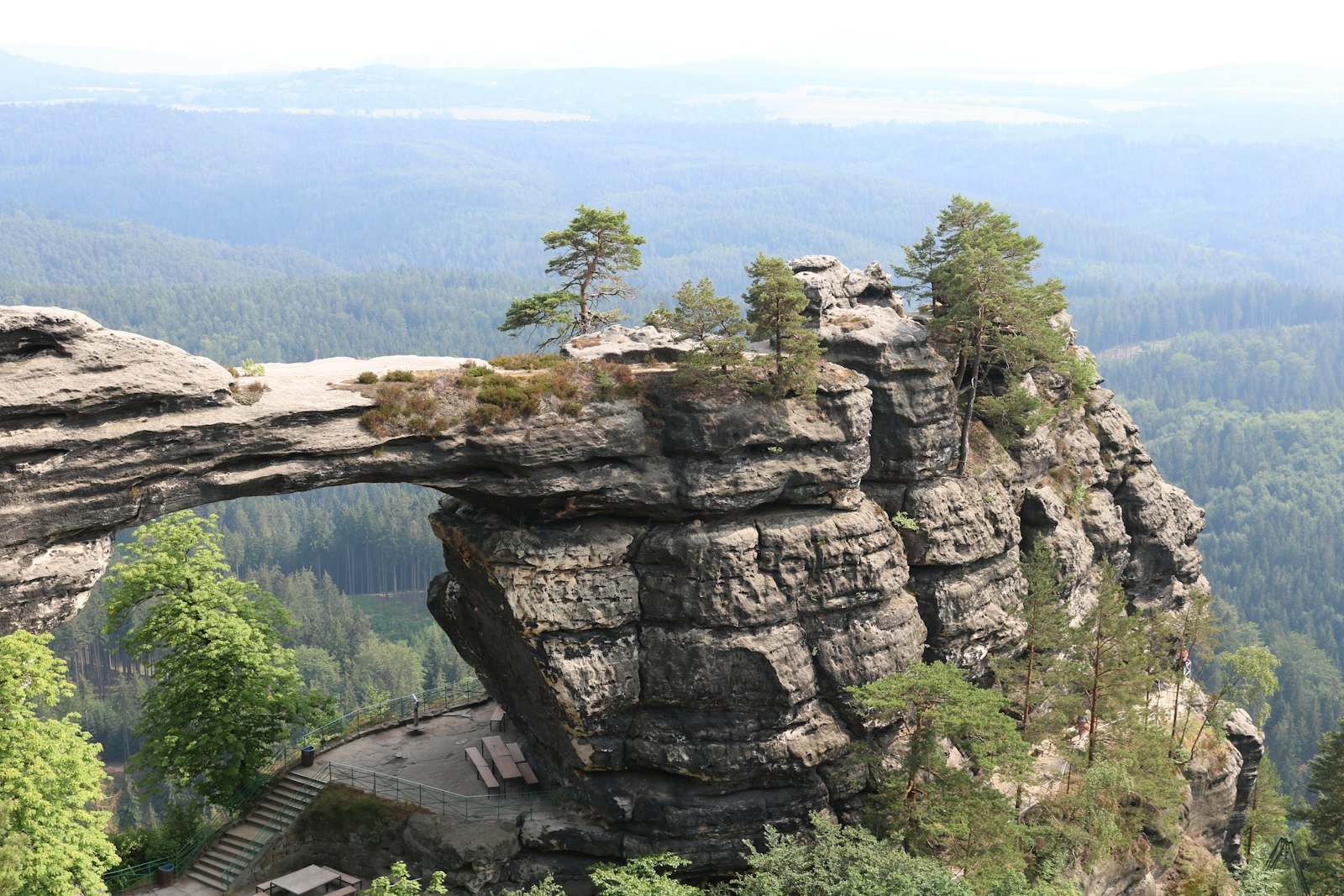
The headline sight is Pravčická brána, or Pravčice Gate. The national park administration describes it as the largest natural sandstone arch in Europe, about 16 m high with a span of almost 27 m. It sits about 3 km from Hřensko, and walkers have not been allowed on top of it for decades, to protect the rock. You see it from viewpoints and the terrace by the Falcon’s Nest restaurant.
| Walk or sight | What you get | Timing note |
|---|---|---|
| Pravčice Gate | The great arch and views over the forest | Daily April to October, 10:00 to 18:00 |
| Gabriela’s Trail | 6 km from the gate to Mezní Louka, about 2.5 hours at a calm pace | Long descent; tiring in hot weather |
| Tři prameny to the gate | The shortest climb from the Kamenice valley side | About 45 minutes |
| Wild Gorge boat | A ride of about 10 minutes between rock walls | Starts upstream from Mezní můstek |
| Edmund’s Gorge | The second gorge, entered with a guide | Tickets from the Hřensko information centre or online |
Sources: the Pravčice Gate site for opening hours, the national park for the arch and Gabriela’s Trail, and the Hřensko visitor leaflet for the gorges, walking times and bus stops.

The Smart Timing Bundle
Pick the month, book in the right order, pack once
Six printable timing tools for any trip: the Trip Timing Planner, When to Book, When NOT to Go, the Shoulder Season Playbook, the family timing guide and the Packing by Season System.
See the bundle · $37Six products, $100 separately · Digital download · All sales final
Tip
From November to March, Pravčice Gate changes its schedule: Fridays without services, and Saturdays and Sundays with the restaurant and toilets, from 10:00 to 16:00. Buy tickets online to skip the queue at busy times, and come early on summer weekends, when the paid car parks in Hřensko fill first.
Winter has its own appeal if you plan around it. The park’s winter guide lists the Tisá rock labyrinth as open in winter, with ice cleats recommended, and the Brtnice ice falls, which form only after a run of freezing days. It is a niche trip, though: most first-time visitors are better off in May, June, September or early October, when everything is open daily and the trails are dry.
South Moravia Wine Country and the Czech Countryside Harvest
This section covers the wine region along the Austrian border and the question most visitors ask: when is the wine harvest? According to Expats.cz, about 96 percent of the country’s registered vineyards are in Moravia, spread across subregions around Mikulov, Znojmo, Velké Pavlovice and Slovácko. The main Moravian wine cycling trail runs from Znojmo to Uherské Hradiště.
The harvest celebrations, called vinobraní, are usually held in September. VisitCzechia lists the Pálava festival in Mikulov on the second weekend of September, the historical harvest in Znojmo in September, described as the largest event of its kind in the country, and a folklore-led festival in Velké Pavlovice in late September. Znojmo also runs Burčákfest in late September, with young wine tasted in the Louka monastery.
| Festival | Where | Usually held | What happens |
|---|---|---|---|
| Pálava harvest (Pálavské vinobraní) | Mikulov | Second weekend of September | Historic fair, costume parade, concerts, wine competition at the castle |
| Historical harvest | Znojmo | September | The country’s largest harvest festival, with many stages in the old centre |
| Velké Pavlovice harvest | Velké Pavlovice | Late September | Folk music, dance, customs, wine and burčák |
| Burčákfest | Znojmo | Late September | Young wines tasted at the Louka monastery |
| Mělník harvest | Mělník, Bohemia | Mid to late September | Castle and old town, tastings in the town hall courtyard |
| Litoměřice harvest | Litoměřice, Bohemia | Mid-September | Music and tastings in the old town |
Sources: VisitCzechia and Best Prague Guide for timing; the South Moravia tourism site for the Mikulov programme.
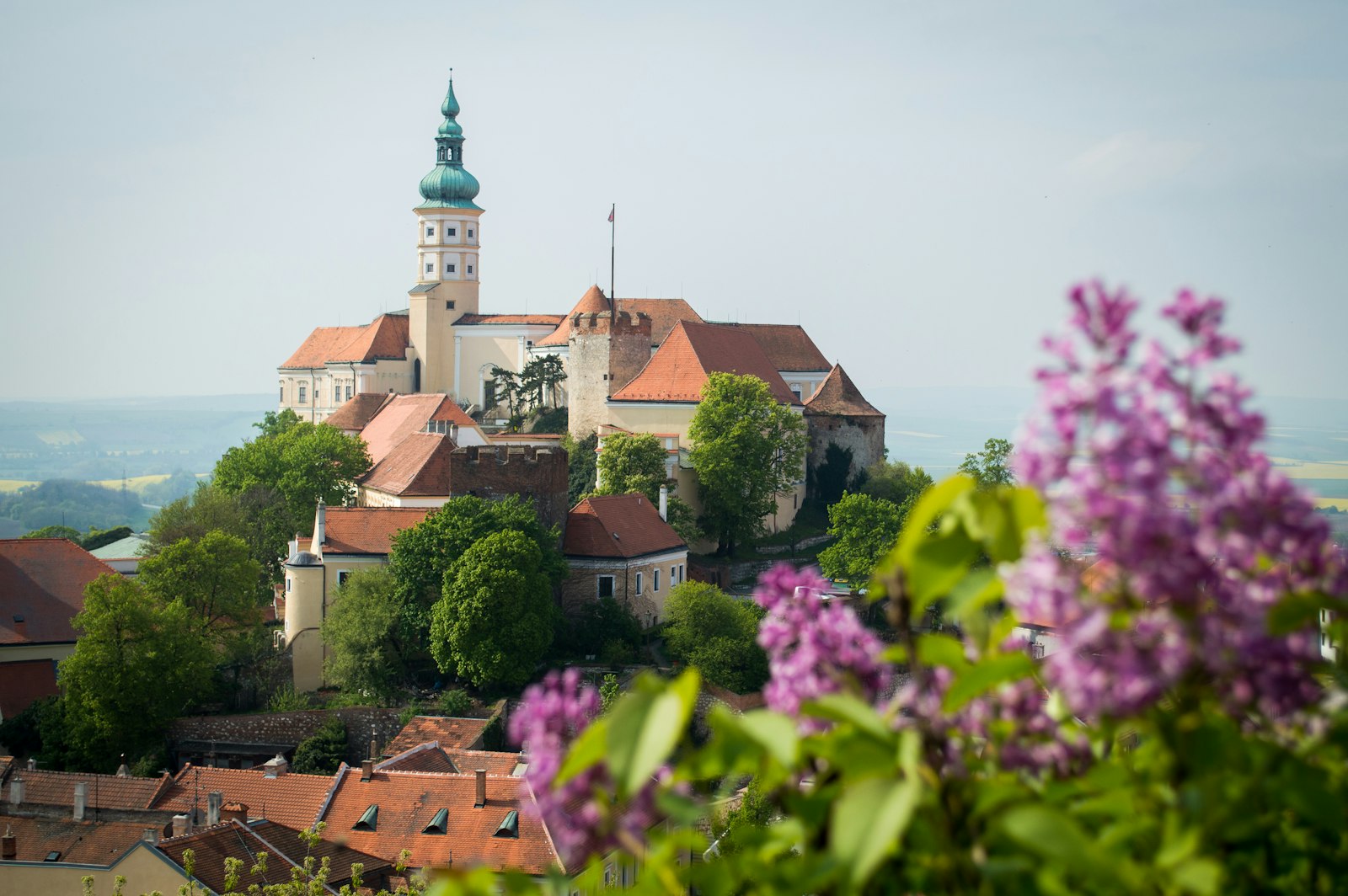
The drink of the season is burčák, partly fermented young wine that Radio Prague International describes as sweet and cloudy, more like juice than wine. It only appears in autumn and keeps fermenting, so it is stronger than it tastes: sources put it at roughly 4 to 8 percent alcohol. Drink it fresh and plan a lift home rather than a drive. Later in the year, St Martin’s Day on 11 November marks the first young wines of the vintage, with roast goose on many menus.
Important
Festival weekends are the busiest days of the Moravian year. Mikulov and Znojmo fill with visitors, rooms in the small towns go early and some cellars only take groups. Expats.cz notes that many Mikulov cellars ask for groups of at least ten. If you want quiet tastings, come the week before or after a festival weekend.
For a Bohemian alternative closer to Prague, VisitCzechia notes that Mělník is one of only two wine regions in Bohemia, with a harvest in mid to late September at its castle above the river. In Prague itself, Troja Chateau and several city vineyards hold small harvest events in September, a gentle start before you head south.
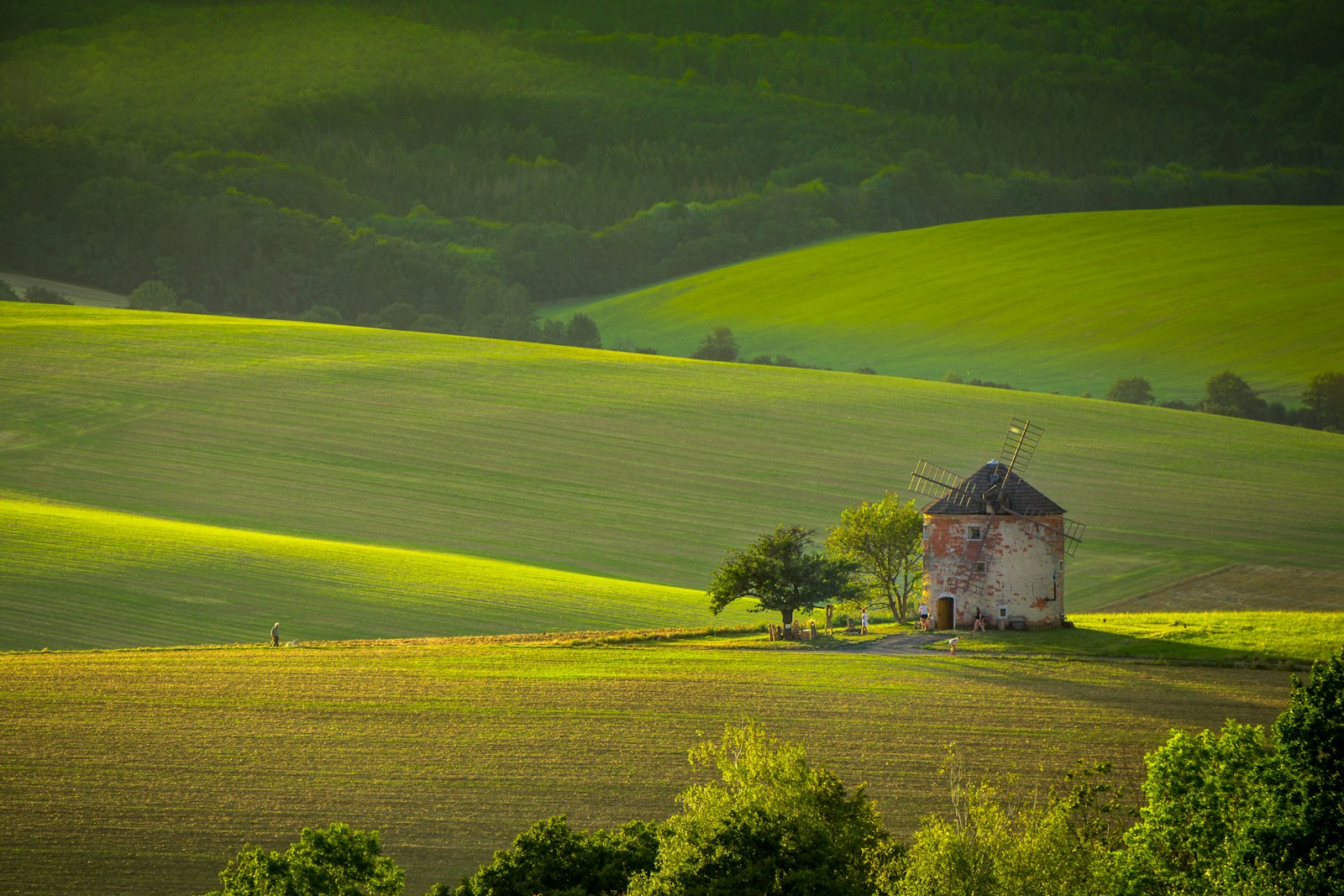
Český Krumlov and South Bohemia
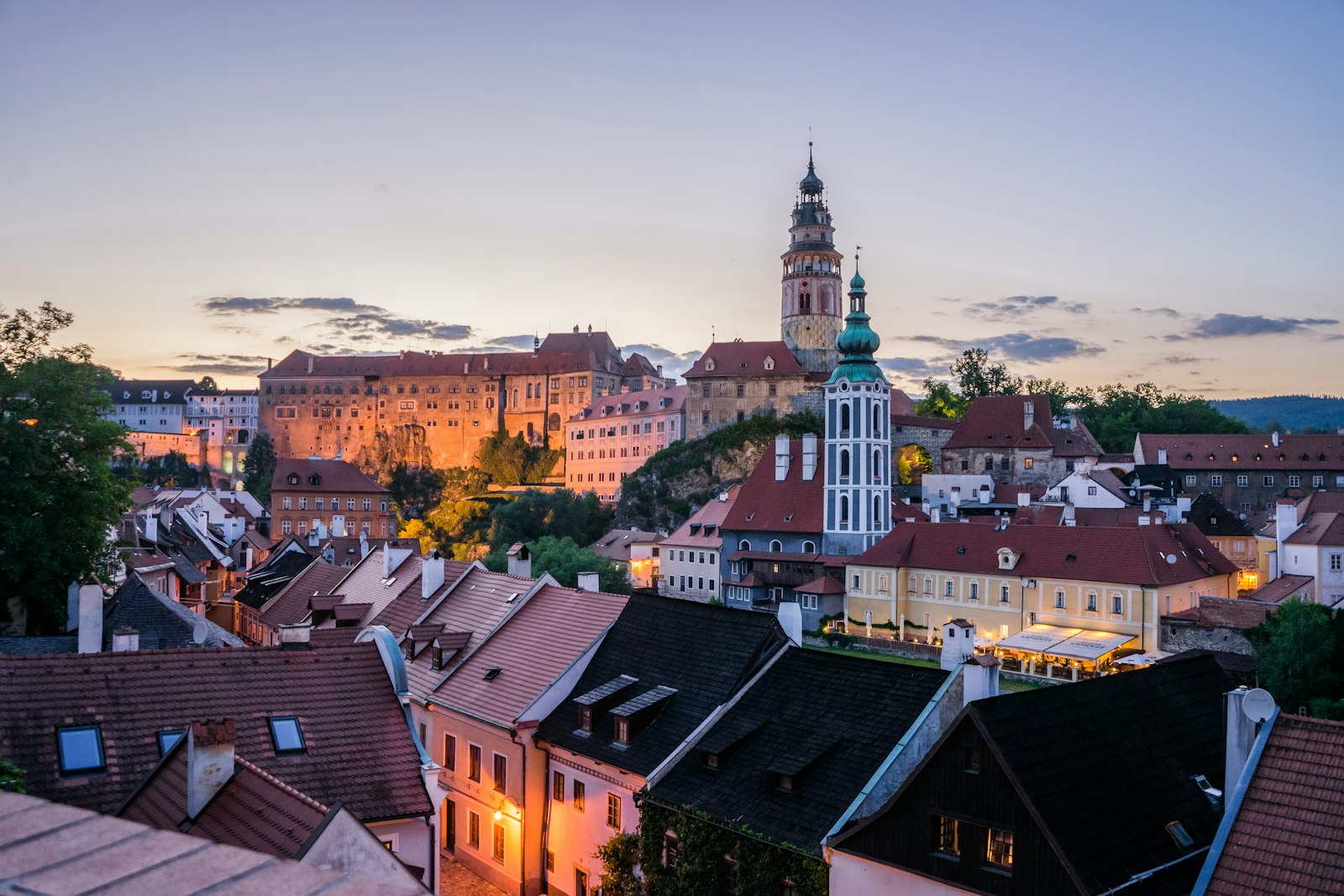
This section covers the south of Bohemia, where the Vltava river loops through Český Krumlov below a large castle complex, and the countryside around it is a patchwork of forest and farmland. It is one of the busiest stops on a Czech countryside trip, so timing matters here.
The weather follows the South Bohemian pattern: highs of about 20 °C in May and September, about 24 to 26 °C in summer, and the wettest month in June, with about 100 mm of rain around České Budějovice according to Climates to Travel. Summer days are the longest, but they also bring the most rain and the most tour groups. The best balance is late May, June before the school holidays, and September.
Plan your day around the crowds. Day trips from Prague squeeze the town into the middle of the day, so an overnight stay gives you the old town and the river bends almost to yourself in the early morning and the evening. Outside the summer peak the town is far calmer, but opening times for tours and river activities vary by season, so check them before you go.

The complete kit
Every country guide, every timing tool
All 24 When to Go country guides, the six Smart Timing tools and every 12-Month Map, with a Start Here that tells you what to open first.
See the kit · $127The five bundles cost $225 separately · Digital download · All sales final
If Český Krumlov is part of a longer trip south, it combines well with Austria: our Salzburg month by month covers the timing on the other side of the border. To compare the wider region, see our Czechia country guide and European cities in September.
Planning a Czech Countryside Route
This section turns the regions into a trip. The three areas sit in different corners of the country, so most visitors either pick one region for a few slow days or link two with Prague or Brno as a hinge.
| Trip style | Route | Best months | Suits |
|---|---|---|---|
| Short nature break | Prague to Bohemian Switzerland, two or three nights | May to June, September to October | Walkers, families with older children |
| Wine and villages | Brno, Mikulov, Znojmo and Velké Pavlovice | September for festivals; late May and June for quiet cellars | Wine lovers, cyclists |
| River towns | Prague to Český Krumlov and South Bohemia | Late May, June, September | First-time visitors, couples |
| Big loop | Bohemian Switzerland, Prague, Český Krumlov, South Moravia | September | A week or more by car |
A car makes the countryside far easier, especially for villages and cellars, but trains and buses cover the main towns. In Bohemian Switzerland, regular buses stop at Hřensko, and a ferry crosses from Schöna on the German side. In Moravia, the wine trail is built for bikes, and cycling between cellars is the most relaxed way to taste without driving.
To test your own dates, try the free Best Month Finder, which compares months at a glance, or the Shoulder Season Detector, which flags the quieter weeks around the peak. If walking is the main goal, our guide to September hiking trails has more ideas for autumn trails.
When Not to Go to the Czech Countryside
This section is the honest part. The countryside works for much of the year, but a few periods can spoil a short trip.
| Avoid | Why | Do this instead |
|---|---|---|
| December to February for walking | Highs of about 2 to 5 °C, frost and short, often grey days | Go in May or late September |
| Midsummer weekends in Hřensko | Full car parks and queues on the main trails | Walk midweek or start early |
| Festival weekends without a booking | Mikulov and Znojmo rooms go early | Book ahead or come the week before |
| June in South Bohemia on a tight plan | The wettest month there, about 100 mm of rain | Keep a spare day or choose September |
| Hot spells in July and August | Heat can pass 35 °C; steep sandstone trails get tiring | Hike early and rest in the afternoon |
Not sure about your dates? Run them through the free When Not to Go checker.
Better Month If You Want Something Else
This section helps if your plans have a different focus from a classic countryside trip.
If you want
Wine and harvest
Go in September, ideally around the second weekend for Mikulov, or later in the month for Velké Pavlovice and Znojmo.
If you want
Quiet hiking
Go in late May, early June or early October, on weekdays.
If you want
Young wine and goose
Go around 11 November for St Martin’s Day, and accept short days.
If you want
Ice and empty trails
Go in a cold spell in January or February, with ice cleats.
If you want
Forest foraging
Early autumn is mushroom time across Central Europe; see mushroom picking in Poland.
5 Common Mistakes on a Czech Countryside Trip
1. Seeing only Prague and calling it the Czech Republic
Prague is a city break. The sandstone gorges, the wine villages and the river towns need at least two or three extra nights, and they show a very different side of the country.
2. Turning up at Pravčice Gate in winter midweek
From November to March the arch site keeps reduced hours, with full services only at weekends. Check the schedule first, or plan your visit between April and October.
3. Expecting walk-in tastings everywhere
Many small Moravian cellars are family-run and some only take groups. Book ahead, join a tasting at a larger winery, or visit during a festival when cellars open their doors.
4. Driving after burčák
Young wine tastes like sweet juice but carries real alcohol. If you plan to taste, use trains, buses, a bike or a driver for the day.
5. Ignoring summer storms
July and August are warm, but afternoon thunderstorms are common. Start hikes early, carry a rain layer and keep exposed viewpoints for the morning.
Czech Countryside FAQ
The Bottom Line
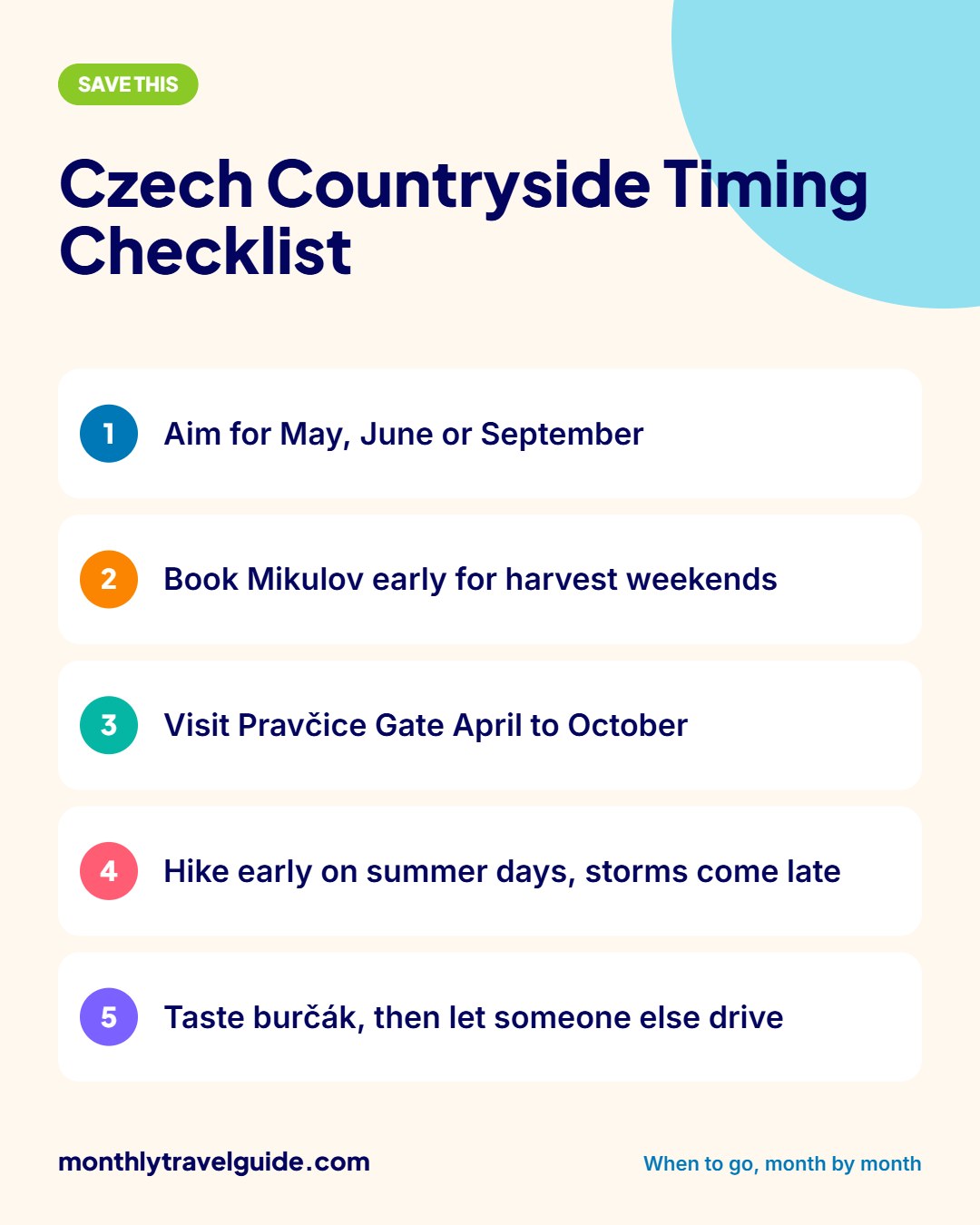
For the Czech countryside, aim for May, June or September, and pick September if wine is the point, with the harvest festivals usually held on its weekends. Avoid the cold, short days of December to February and midsummer weekends at the busiest sights. For more trips in the region, browse our Europe travel guides.
Planning more of Europe?
The Europe Bundle
Pair a Czech countryside trip with the rest of the continent. The Europe Bundle gathers our month-by-month timing guides for Europe in one download, so you can line up wine harvests, hiking weather, city breaks and quiet weeks across several countries.
See The Europe Bundle →Digital download · All sales final
Free download
The 12-Month Map, free
The whole year for one country on four printable pages, so you can see the right months before you read anything else.
- Good, shoulder and avoid months at a glance
- Region by region, not one average for the whole country
- Prints cleanly on US Letter
Your download page opens as soon as you sign up. 24 countries available.